19 Results for "

SAHA

" in MedChemExpress (MCE) Product Catalog:
Products (19)

19 Results for "SAHA" in MCE Product Catalog:

171
171 Cited Publications
Cat. No.: HY-10221
CAS No.: 149647-78-9
Purity:  99.58%
Synonyms: SAHA; Suberoylanilide hydroxamic acid
Research Areas:  

Infection Cancer

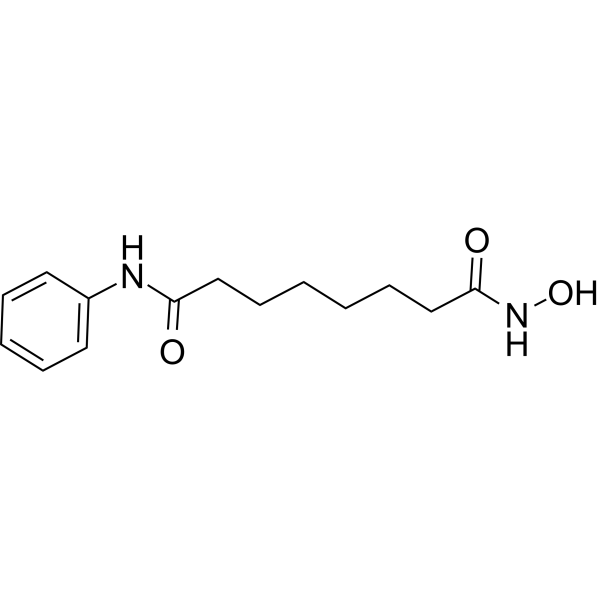
Vorinostat (SAHA) is a potent and orally active pan-inhibitor of HDAC1, HDAC2 and HDAC3 (Class I), HDAC6 and HDAC7 (Class II) and HDAC11 (Class IV), with ID50 values of 10 nM and 20 nM for HDAC1 and HDAC3, respectively. Vorinostat induces cell apoptosis . Vorinostat is also an effective inhibitor of human papillomaviruse (HPV)-18 DNA amplification .
loading...
    loading...
Cat. No.: HY-12954
CAS No.: 848354-66-5
Purity:  97.01%
Synonyms: NCH-51
Target:  

HDAC HIV

Research Areas:  

Infection Cancer

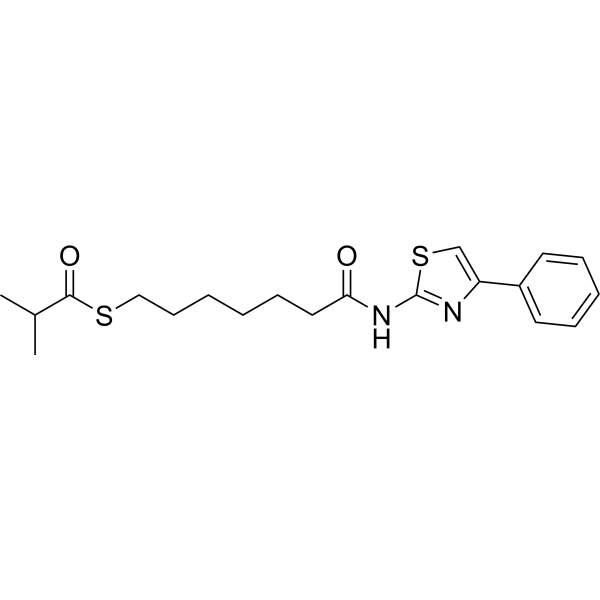
PTACH (NCH-51) is a potent HDAC inhibitor with IC50s of 48 nM, 32 nM, and 41 nM for HDAC1, HDAC4, and HDAC6, respectively. PTACH exerts potent growth inhibition against various cancer cells (EC50s of 1.1-9.1 μM) .
loading...
    loading...
Cat. No.: HY-10221R
CAS No.: 149647-78-9
Synonyms: SAHA (Standard); Suberoylanilide hydroxamic acid (Standard)
Vorinostat (Standard) is the analytical standard of Vorinostat. This product is intended for research and analytical applications. Vorinostat (SAHA) is a potent and orally active pan-inhibitor of HDAC1, HDAC2 and HDAC3 (Class I), HDAC6 and HDAC7 (Class II) and HDAC11 (Class IV), with ID50 values of 10 nM and 20 nM for HDAC1 and HDAC3, respectively. Vorinostat induces cell apoptosis . Vorinostat is also an effective inhibitor of human papillomaviruse (HPV)-18 DNA amplification .
loading...
    loading...
Cat. No.: HY-111595
CAS No.: 1613617-05-2
Purity:  97.00%
Research Areas:  

Cancer

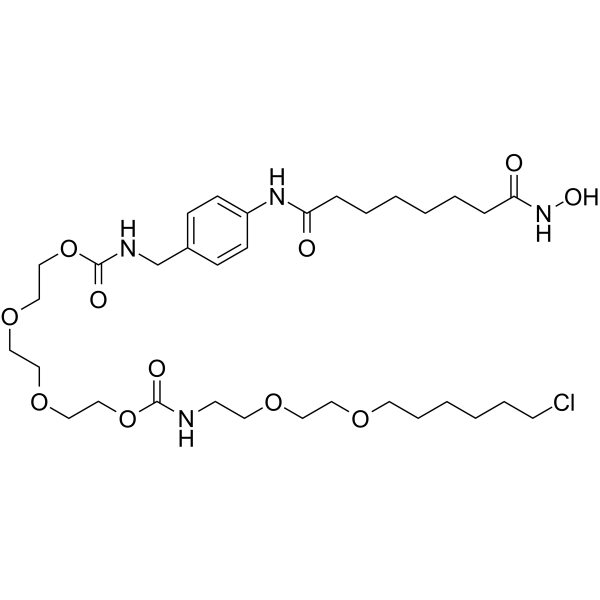
SAHA chloroalkane T1 is a chloroalkane capture tag by tethering Vorinostat (SAHA) and a chloroalkane tag T1 .
loading...
    loading...
Cat. No.: HY-159045
CAS No.: 149648-08-8
Purity:  99.90%
Synonyms: p-Fluoro-SAHA
Target:  

HDAC

Research Areas:  

Cancer

F-SAHA is a HDAC inhibitor (HDACi) and its 18F labeled derivative can be used in tumor imaging research .
loading...
    loading...
Cat. No.: HY-117617
CAS No.: 1243583-88-1
Research Areas:  

Cancer

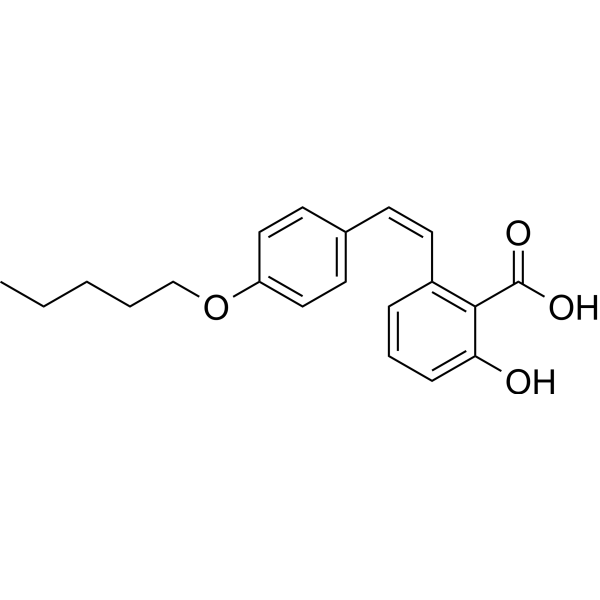
CAY10669 (compound 6d) is an anacardic acid (HY-N2020) derivative that inhibits histone acetyltransferase PCAF with an IC50 of 662 μM . CAY10669 enhances the SAHA-induced acetylation in HEPG2 cells, exhibits cytotoxicity in zebrafish embryo, promotes transgene expression in CHO-K1 cells .
loading...
    loading...
Cat. No.: HY-126943
CAS No.: 930772-88-6
Target:  

Fluorescent Dye

Research Areas:  

Others

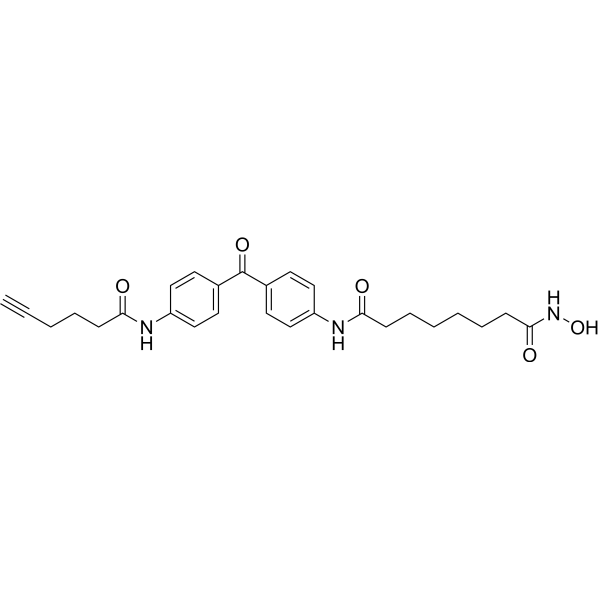
SAHA-BPyne is an activity-based protein profiling (ABPP) probe for detecting HDAC activity, which covalently labels the proximal proteins through a photoactivation. SAHA-BPyne inhibits HDAC activity in HeLa nuclear lysate with an IC50 of less than 5 μM .
loading...
    loading...
Cat. No.: HY-115412
CAS No.: 1132749-48-4
Purity:  ≥99.0%
Synonyms: SAHA-d5; Suberoylanilide hydroxamic acid-d5
Research Areas:  

Infection Cancer

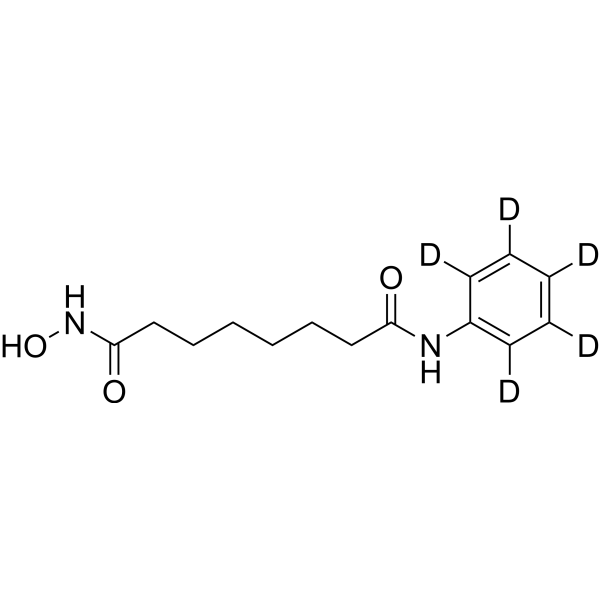
Vorinostat-d5 (SAHA-d5) is the deuterium labeled Vorinostat. Vorinostat (SAHA) is a potent and orally active pan-inhibitor of HDAC1, HDAC2 and HDAC3 (Class I), HDAC7 (Class II) and HDAC11 (Class IV), with ID50 values of 10 nM and 20 nM for HDAC1 and HDAC3, respectively. Vorinostat induces cell apoptosis . Vorinostat is also an effective inhibitor of human papillomaviruse (HPV)-18 DNA amplification .
loading...
    loading...
Cat. No.: HY-124007
CAS No.: 1219807-87-0
Synonyms: ISAHA
Target:  

HDAC

Research Areas:  

Cancer

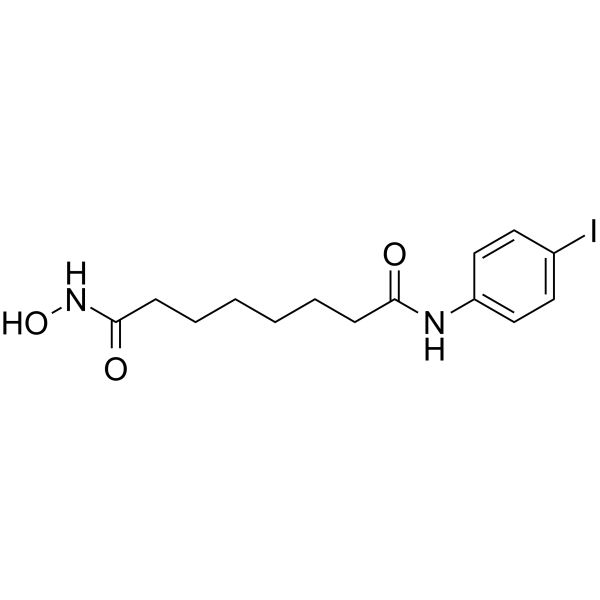
4-Iodo-SAHA (1k) is an orally active class I and class II histone deacetylase (HDAC) inhibitor with EC50s of 1.1, 0.95, 0.12, 0.24, 0.85 and 1.3 μM for Skbr3, HT29, U937, JA16 and HL60 cell lines, respectively. 4-Iodo-SAHA (1k) can be used for the research of cancer .
loading...
    loading...
Cat. No.: HY-Z12208
CAS No.: 1305124-48-4
N1-Phenylsuberamide is an organic amide compound, and its structure can be regarded as a simplified analogue of Vorinostat (HY-10221). N1-Phenylsuberamide exhibits moderate anti-proliferative activity against MDA-MB-231 and MCF-7 cells. N1-Phenylsuberamide does not show significant HDAC inhibitory activity and can only weakly induce the expression of the p21 gene. N1-Phenylsuberamide has extremely low relative binding affinity of estrogen receptor. N1-Phenylsuberamide can be used as a control compound .
loading...
    loading...
Cat. No.: HY-151569
CAS No.: 2857098-30-5
Target:  

HDAC Apoptosis

Research Areas:  

Inflammation/Immunology

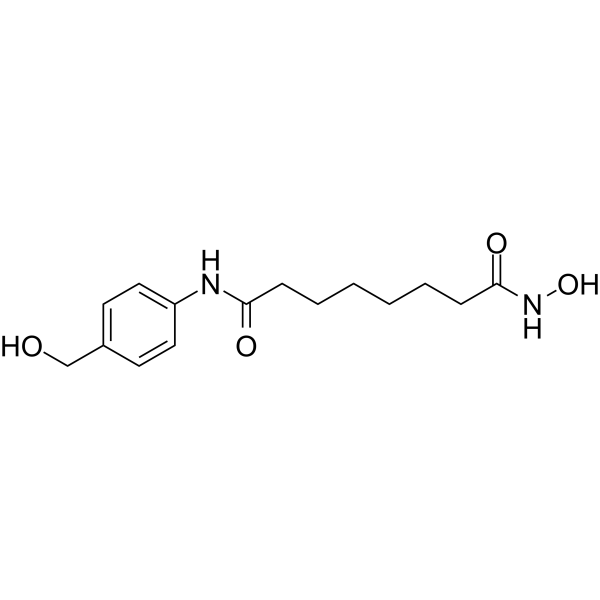
SAHA-OH is a selective HDAC6 inhibitor (IC50=23 nM), shows a 10- to 47-fold selectivity for HDAC6 compared to HDAC 1, 2, 3, and 8. SAHA-OH shows anti-inflammatory activity, and attenuates macrophage apoptosis .
loading...
    loading...
Cat. No.: HY-10221G
CAS No.: 149647-78-9
Synonyms: SAHA (GMP); Suberoylanilide hydroxamic acid (GMP)
Vorinostat (GMP) is a GMP grade Vorinosta (HY-10221). GMP-grade small molecules can be used as auxiliary agents in cell therapy. Vorinostat is a potent, orally available HDAC1, HDAC2, HDAC3 (Class I), HDAC6 and Inhibitors of HDAC7 (Class II) and Class IV (HDAC11) .
loading...
    loading...
Cat. No.: HY-164816
CAS No.: 1160823-10-8
Target:  

HDAC

Research Areas:  

Neurological Disease Cancer

FITC-SAHA is SAHA (HY-10221) conjugated with fluorescein. SAHA is an inhibitor of histone deacetylase (HDAC). FITC-SAHA can be used in cancer and Alzheimer's disease related research .
loading...
    loading...
Cat. No.: HY-W016689
CAS No.: 2010-06-2
Target:  

Drug Intermediate

Research Areas:  

Cancer

2-Amino-4-phenylthiazole is a synthetic intermediate useful for pharmaceutical synthesis. 2-Amino-4-phenylthiazole can be used to synthesize suberoylanilide hydroxamic acid (SAHA) analogs with cancer cell growth inhibitory activities. 2-Amino-4-phenylthiazole also can be used to synthesize ketone histone deacetylase inhibitors with antitumor activity in vivo .
loading...
    loading...
Cat. No.: HY-149577
CAS No.: 394668-43-0
Purity:  98.27%
Target:  

EBV

Research Areas:  

Cancer

Epstein-Barr virus (EBV) lytic cycle inducer-1 Dp44mT (compound C7) is an iron-chelatoe-like compound. Dp44mT cooperates with HDAC inhibitor Romidespin (HY-15149) and SAHA to induce EBV lytic cycle. Dp44mT reactivates EBV lytic cycle by activating the ERK1/2-autophagy axis in epithelial cancers .
loading...
    loading...
Cat. No.: HY-126829
CAS No.: 1260635-77-5
Target:  

HDAC

Research Areas:  

Cancer

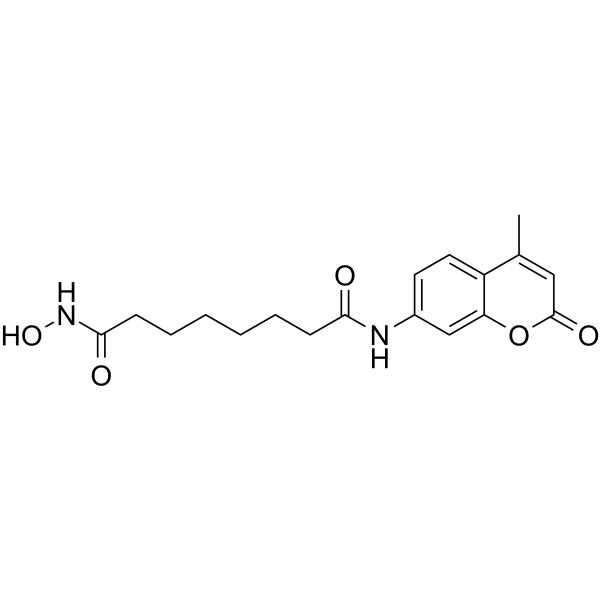
Coumarin-SAHA is a fluorescent probe for determining the binding affinities (kd) and the dissociation off-rates (koff) of the HDAC8-inhibitor complexes .
loading...
    loading...
Cat. No.: HY-151872
CAS No.: 3031411-05-6
Target:  

HDAC Ferroptosis

Research Areas:  

Cancer

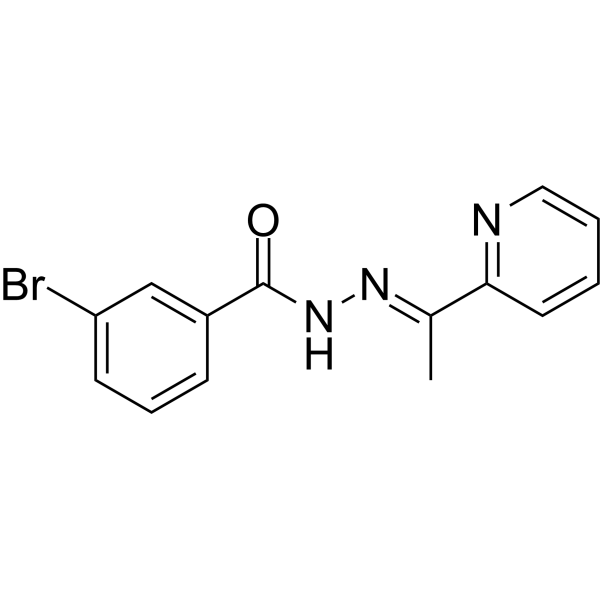
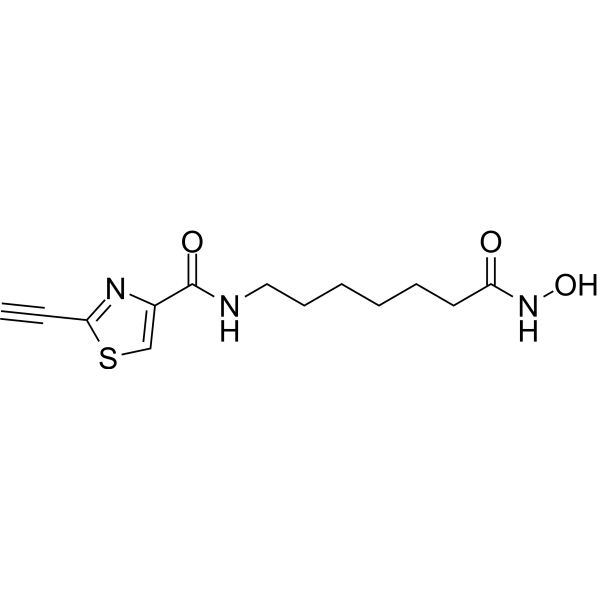
HDAC-IN-48 is a potent HDAC inhibitor. HDAC-IN-48 is a hybrid molecule with great cytotoxic profile (GI50~20 nM). HDAC-IN-48 consists of harmacophores of SAHA and CETZOLE molecules. HDAC-IN-48 induces ferroptosis and inhibits HDAC proteins . HDAC-IN-48 is a click chemistry reagent, it contains an Alkyne group and can undergo copper-catalyzed azide-alkyne cycloaddition (CuAAc) with molecules containing Azide groups.
loading...
    loading...
Cat. No.: HY-159966
CAS No.: 3059615-90-3
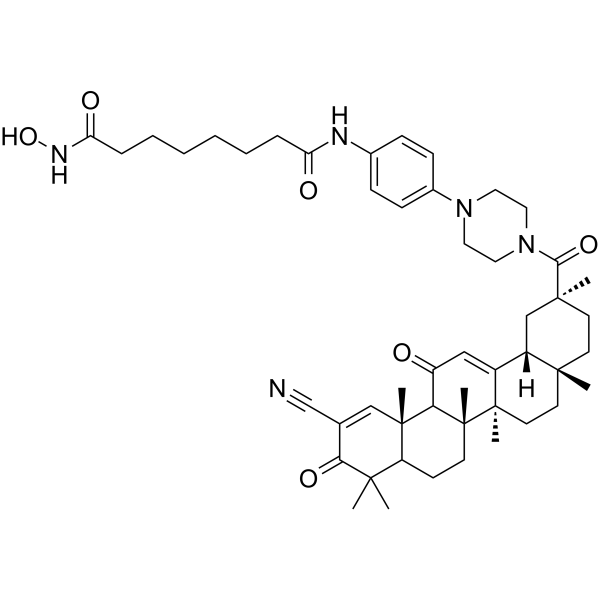
Top/HDAC-IN-3 (Compound 31) is an orally active dual inhibitor of Topoisomerase and HDAC. Top/HDAC-IN-3 increases reactive oxygen species (ROS) levels, leading to DNA damage, thereby inhibiting cancer cell colony formation and migration, inducing cancer cell Apoptosis, and causing cell cycle arrest. In the NSCLC model, Top/HDAC-IN-3 exhibited significant antitumor effects, with a tumor growth inhibition (TGI) of 77.5% at 100 mg/kg, surpassing the efficacy of the HDAC inhibitor SAHA (HY-10221) and the combination of SAHA (HY-10221) with the topoisomerase inhibitor Irinotecan (HY-16562) .
loading...
    loading...
Cat. No.: HY-133147
CAS No.: 2417510-17-7
Target:  

HDAC Apoptosis

Research Areas:  

Cancer

HDAC3/6-IN-2 (compound 15) is a potent HDAC6 and HDAC3 inhibitor, with IC50 values of 0.368 and 0.635 μM, respectively. HDAC3/6-IN-2 shows antitumor activity, and induces cancer cell apoptosis. HDAC3/6-IN-2 decreases the levels of HDAC6 and HDAC3, associated with upregulation of acetylated H3 and α-tubulin .
loading...
    loading...
  • 1

