

From 11:00 pm to 12:00 pm EST ( 8:00 pm to 9:00 pm PST ) on January 6th, the website will be under maintenance. We are sorry for the inconvenience. Please arrange your schedule properly.
Barzolvolimab is a humanized anti-KIT IgG1 monoclonal antibody. Barzolvolimab specificity and potently inhibits KIT activation by SCF. Barzolvolimab can reduce skin mast cells and disease activity in chronic inducible urticaria .
SZL P1-41 is a specific Skp2 inhibitor, binds to the F-box domain of Skp2 to prevent Skp1 association and Skp2 SCF complex formation. SZL P1-41, like Skp2 deficiency, augments p27-mediated apoptosis/senescence, while it impairs Akt-driven glycolysis. Anti-tumor activities .
Labuxtinib (EVT-8565072; THB335) is a potent dual inhibitor of c-Kit and PDGFR. Labuxtinib exhibits potent inhibitory activity against wild-type c-Kit (IC50 = 0.005 μM). Labuxtinib inhibits SCF-dependent and PDGF-dependent cell proliferation, and blocks the proliferation of cells dependent on c-Kit or PDGFR signaling pathways. In animal models of skin allergy, Labuxtinib depletes skin mast cells and significantly alleviates anaphylactic shock responses. Labuxtinib can be used in research on mast cell-related diseases, respiratory diseases, inflammatory diseases, fibrotic diseases, metabolic diseases, and other related conditions .
Briquilimab (JSP-191 or AMG-191) is a humanized IgG1 monoclonal antibody that binds human CD117 (c-Kit). Briquilimab blocks the interaction between CD117 receptor and stem cell factor on various CD117 expressing tissues. Briquilimab can lead to inhibition of SCF/c-Kit signaling and MC apoptosis. Briquilimab is a non-toxic approach to target and deplete HSC, enabling blood and immune reconstitution with minimal toxicity with the other agents being used for transient immune suppression to prevent immunologic rejection. Briquilimab can be used in various disease research such as severe combined immunodeficiency (SCID), myelodyplastic syndromes (MDS), acute myeloid leukemia (AML), chronic spontaneous urticarial (CSU), chronic inducible urticarial (CIndU) and asthema .
GS143 is a selective IκBα ubiquitination inhibitor with an IC50 of 5.2 μM for SCFβTrCP1-mediated IκBα ubiquitylation. GS143 suppresses NF-κB activation and transcription of target genes and does not inhibit proteasome activity. GS143 has anti-asthma effect .
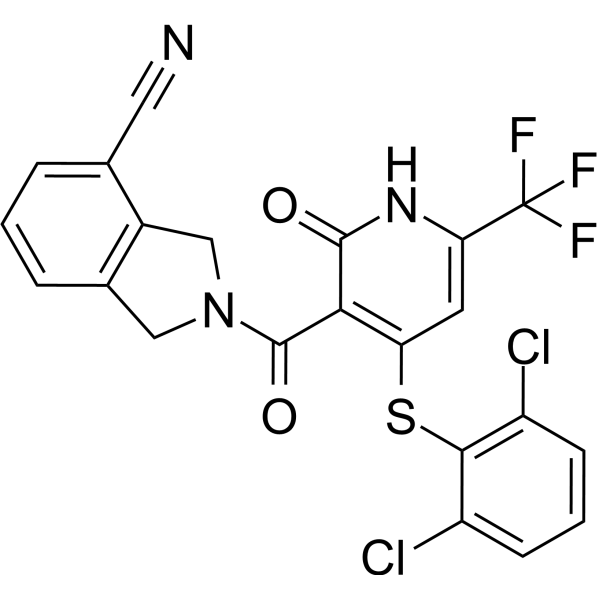
NRX-252262 is a potent enhancer of the interaction between β-Catenin, and its cognate E3 ligase, SCFβ-TrCP, induces mutant β-catenin degradation, with an EC50 of 3.8 nM .
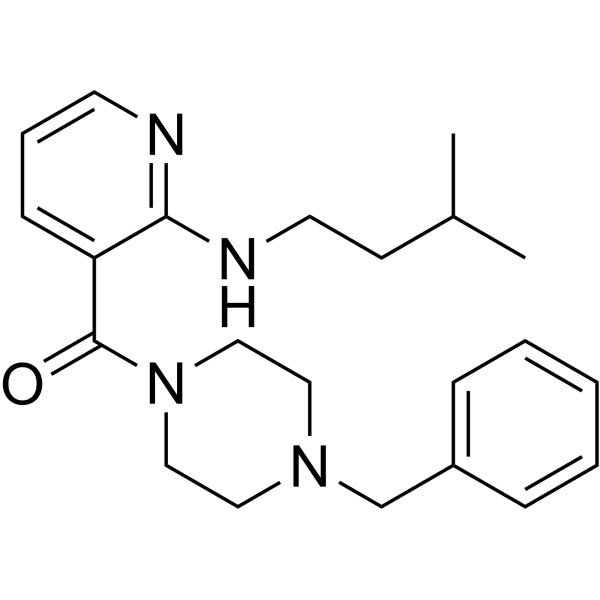
Amdiglurax (NSI-189) is an orally active chemical entity with enhanced neurogenic activity. Amdiglurax up-regulates neurogenic factors such as BDNF (brain derived-neurotrophic factor) and SCF. Amdiglurax exhibits anti-depressant effect. Amdiglurax enhances synaptic plasticity and reduces cognitive dysfunction. Amdiglurax holds potential for psychiatric disorder research .
SMER3, a Rapamycin enhancer, is a selective Skp1-Cullin-F-box (SCF) Met30 ubiquitin ligase inhibitor. SMER3 enhances Rapamycin's growth inhibitory effect by inhibition of SCFMet30 .
NRX-2663 is an enhancer of the interaction between β-catenin, and its cognate E3 ligase, SCFβ-TrCP. NRX-2663 enhances the binding of β-catenin peptide for β-TrCP with an EC50 of 22.9 μM and a Kd of 54.8 nM .
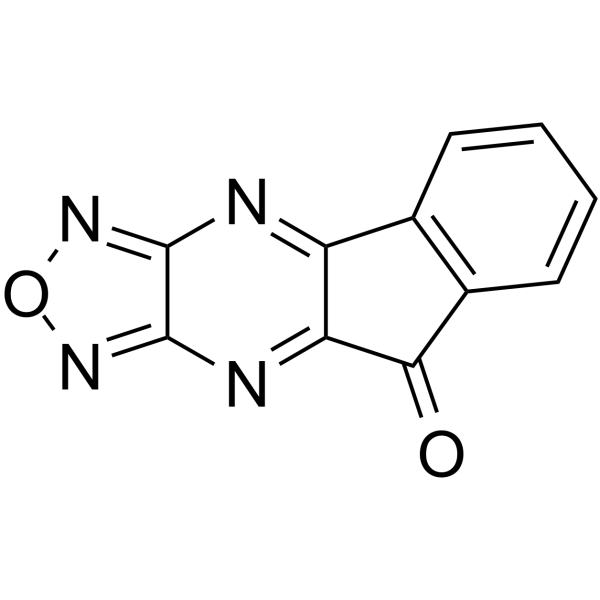
NSC689857 is a potent EGFR and SCFSKP2 inhibitor with an IC50 value of 36 μM for Skp2-Cks1. NSC689857 can inhibit p27 ubiquitylation (IC50=30 μM). NSC689857 has varied activity across cancer types, with more activity against leukemia cell lines than others .
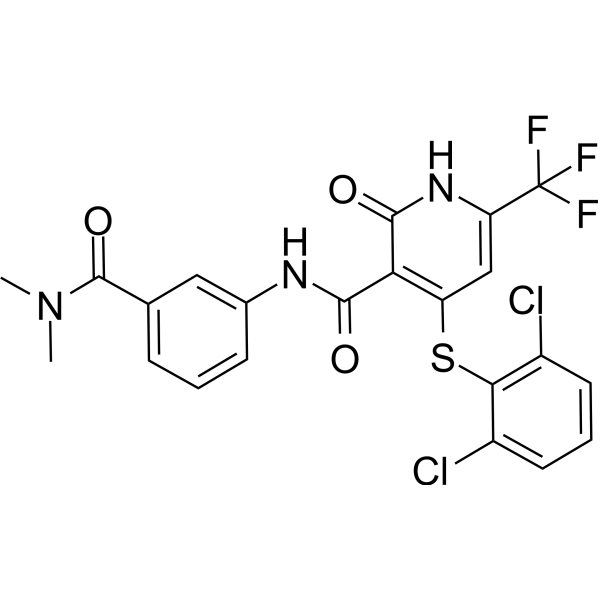
NRX-252114 is a potent enhancer of the interaction between β-catenin, and its cognate E3 ligase, SCFβ-TrCP. NRX-252114 enhances the binding of pSer33/S37A β-catenin peptide for β-TrCP with an EC50 of 6.5 nM and a Kd of 0.4 nM. NRX-252114 induces mutant β-catenin degradation .
NRX-103095 is an enhancer of the interaction between β-catenin, and its cognate E3 ligase, SCFβ-TrCP. NRX-103095 enhances the binding of pSer33/Ser37 β-catenin peptide for β-TrCP with an EC50 of 163 nM .
NRX-103094 is a potent enhancer of the interaction between β-catenin, and its cognate E3 ligase, SCFβ-TrCP. NRX-103094 enhances the binding of pSer33/Ser37 β-catenin peptide for β-TrCP with an EC50 of 62 nM and a Kd of 0.6 nM .
NN3201 is a c-Kit-targeting antibody-drug conjugate (ADC) with high affinity (KD = 0.19 pM). NN3201 is composed of 4-(3-Tosyl-2-(tosylmethyl)propanoyl)benzoic acid-glu(PEG24-Me)-val-cit-NH-benzyloxyformic acid-MMAE (HY-178219) and an anti-c-Kit human monoclonal antibody NN2101 (HY-P991293). NN3201 rapidly internalizes and inhibits stem cell factor (SCF)-driven signaling, thereby delivering its payload to induce cell cycle arrest and apoptosis. NN3201 exhibits no Fc-mediated effector functions antibody-dependent cell-mediated cytotoxicity (ADCC)/complement-dependent cytotoxicity (CDC) due to reduced FcγR binding. NN3201 exhibits significant c-Kit-dependent anti-tumor efficacies in various tumor models. NN3201 can be used in small cell lung cancer (SCLC) and gastrointestinal stromal tumor (GIST) and acute myeloid leukemia (AML) research [1][2].
SP3N hydrochloride is a specific degrader of the prolyl isomerase (FKBP12). The alkylamine of SP3N hydrochloride is metabolized to a reactive aldehyde (SP3CHO), which recruits the SCFFBXO22 ligase for FKBP12 degradation. SP3N hydrochloride may be used in research for cancer .
Amdiglurax (NSI-189) phosphate is an orally active chemical entity with enhanced neurogenic activity. Amdiglurax phosphate up-regulates neurogenic factors such as BDNF (brain derived-neurotrophic factor) and SCF. Amdiglurax phosphate exhibits anti-depressant effect. Amdiglurax enhances synaptic plasticity and reduces cognitive dysfunction. Amdiglurax phosphate holds potential for psychiatric disorder research .
Bis-sulfone-(PEG24)-Glu-Val-Cit-PAB-MMAE is a drug-linker conjugate for ADC. Bis-sulfone-(PEG24)-Glu-Val-Cit-PAB-MMAE contains a linker and bioactive small molecule toxins MMAE (HY-15162). Bis-sulfone-(PEG24)-Glu-Val-Cit-PAB-MMAE can conjugate with NN2101 (HY-P991293) (anti c-Kit) for synthesizing NN3201. NN3201 rapidly internalizes and inhibits SCF-driven signaling, thereby delivering its payload to induce cell cycle arrest and apoptosis. NN3201 exhibits significant c-Kit-dependent anti-tumor efficacies in various tumor models, such as small cell lung cancer (SCLC) and gastrointestinal stromal tumor (GIST) .
Anti-c-Kit/CD117 Antibody (SR-1) is a kind of mouse IgG2a κ chimeric antibody inhibitor, targeting to human c-Kit/CD117. Anti-c-Kit/CD117 Antibody (SR-1) binds to the extracellular domain of human c-Kit (also known as CD117) and blocks stem cell factor (SCF) binding to CD117. Anti-c-Kit/CD117 Antibody (SR-1) can be used for the researches of cancer and immunology, such as gastrointestinal stromal tumor (GIST) and xenograft .
SP3N is a specific degrader of the prolyl isomerase (FKBP12). The alkylamine of SP3N is metabolized to a reactive aldehyde (SP3CHO), which recruits the SCFFBXO22 ligase for FKBP12 degradation. SP3N may be used in research for cancer .
UNC10088 is a molecular glue targeting NSD2. UNC10088 mediates the formation of a stable ternary complex between SCFFBXO22 and the NSD2 PWWP1 domain. UNC10088 promotes ubiquitination of the SCFFBXO22-dependent NSD2 PWWP1 domain through reversible covalent bonding with the C326 region of FBXO22. UNC10088 could be used in cancer research .
Kitlg Rat Pre-designed siRNA Set A contains three designed siRNAs for Kitlg gene (Rat), as well as a negative control, a positive control, and a FAM-labeled negative control.
KITLG Human Pre-designed siRNA Set A contains three designed siRNAs for KITLG gene (Human), as well as a negative control, a positive control, and a FAM-labeled negative control.
dHTC3 is a selective BRD4 molecular glue degrader. dHTC3 specifically recruits the first bromodomain of BRD4 to the E3 ubiquitin ligase complex (SCFFBXO3), thereby triggering the ubiquitination and degradation of BRD4 .
SZL P1-41 (Standard) is the analytical standard of SZL P1-41 (HY-100237). This product is intended for research and analytical applications. SZL P1-41 is a specific Skp2 inhibitor, binds to the F-box domain of Skp2 to prevent Skp1 association and Skp2 SCF complex formation. SZL P1-41, like Skp2 deficiency, augments p27-mediated apoptosis/senescence, while it impairs Akt-driven glycolysis. Anti-tumor activities .
CP2-CPP is a conjugate of p27 Analogue CP2 (HY-P11020) and Antennapedia Peptide (HY-P0307). CP2-CPP crosses cell membranes and localizes to live cell cytosol. CP2-CPP blocks SCFSkp2/Cks1-p27 interaction to inhibit p27 ubiquitination and degradation, restoring p27 levels and inhibiting cell proliferation. CP2-CPP can be used for the research of cancer, such as breast cancer .
Proteolysis-targeting chimera (PROTAC) has been developed to be a useful technology for targeted protein degradation. PROTACs consist of a ligand for E3 ligase (E3 ligase binder), a linker and a ligand (mostly small-molecule inhibitor) for protein of interest(target binder). Upon binding to the target protein, the PROTACs can recruit E3 for target protein ubiquitination, which is subjected to proteasome-mediated degradation.
Although there are more than 600 E3 ubiquitin ligases, only several with small molecule ligands have been used for designing PROTACs, including Skp1-Cullin-F box complex containing Hrt1 (SCF), Von Hippel-Lindau tumor suppressor (VHL), Cereblon (CRBN), inhibitor of apoptosis proteins (IAPs), and mouse double minute 2 homolog (MDM2).
MCE carefully prepared a unique collection of 174 ligands for E3 ligase, which have been reported to be used in PROTAC design. MCE E3 ligase ligand library is a useful tool for PROTAC development.
CP2-CPP is a conjugate of p27 Analogue CP2 (HY-P11020) and Antennapedia Peptide (HY-P0307). CP2-CPP crosses cell membranes and localizes to live cell cytosol. CP2-CPP blocks SCFSkp2/Cks1-p27 interaction to inhibit p27 ubiquitination and degradation, restoring p27 levels and inhibiting cell proliferation. CP2-CPP can be used for the research of cancer, such as breast cancer .
Barzolvolimab is a humanized anti-KIT IgG1 monoclonal antibody. Barzolvolimab specificity and potently inhibits KIT activation by SCF. Barzolvolimab can reduce skin mast cells and disease activity in chronic inducible urticaria .
Briquilimab (JSP-191 or AMG-191) is a humanized IgG1 monoclonal antibody that binds human CD117 (c-Kit). Briquilimab blocks the interaction between CD117 receptor and stem cell factor on various CD117 expressing tissues. Briquilimab can lead to inhibition of SCF/c-Kit signaling and MC apoptosis. Briquilimab is a non-toxic approach to target and deplete HSC, enabling blood and immune reconstitution with minimal toxicity with the other agents being used for transient immune suppression to prevent immunologic rejection. Briquilimab can be used in various disease research such as severe combined immunodeficiency (SCID), myelodyplastic syndromes (MDS), acute myeloid leukemia (AML), chronic spontaneous urticarial (CSU), chronic inducible urticarial (CIndU) and asthema .
Anti-c-Kit/CD117 Antibody (SR-1) is a kind of mouse IgG2a κ chimeric antibody inhibitor, targeting to human c-Kit/CD117. Anti-c-Kit/CD117 Antibody (SR-1) binds to the extracellular domain of human c-Kit (also known as CD117) and blocks stem cell factor (SCF) binding to CD117. Anti-c-Kit/CD117 Antibody (SR-1) can be used for the researches of cancer and immunology, such as gastrointestinal stromal tumor (GIST) and xenograft .
OpSCF (INS1148) is an antibody that specifically binds and inactivates inflammatory stem cell factor (SCF), blocks the positive feedback cycle of chronic inflammation, and aids tissue repair.
SCF proteins are ligands for the KIT receptor-type protein tyrosine kinase and regulate a variety of cellular processes, including survival, proliferation, hematopoiesis, stem cell maintenance, gametogenesis, mast cell development, migration, and melanogenesis. Binding to KIT activates signaling pathways involving PIK3R1, AKT1, GRB2, RAS, RAF1, MAP kinase, STAT family members, and PLCG1, producing diacylglycerol and inositol 1,4,5-trisphosphate. SCF Protein, Human (HEK293) is the recombinant human-derived SCF protein, expressed by HEK293, with tag free.
SCF proteins are ligands for the KIT receptor-type protein tyrosine kinase and regulate a variety of cellular processes, including survival, proliferation, hematopoiesis, stem cell maintenance, gametogenesis, mast cell development, migration, and melanogenesis. Binding to KIT activates signaling pathways involving PIK3R1, AKT1, GRB2, RAS, RAF1, MAP kinase, STAT family members, and PLCG1, producing diacylglycerol and inositol 1,4,5-trisphosphate. SCF Protein, Human (HEK293, His) is the recombinant human-derived SCF protein, expressed by HEK293 , with C-6*His labeled tag.
SCF proteins are ligands for the KIT receptor-type protein tyrosine kinase and regulate a variety of cellular processes, including survival, proliferation, hematopoiesis, stem cell maintenance, gametogenesis, mast cell development, migration, and melanogenesis. Binding to KIT activates signaling pathways involving PIK3R1, AKT1, GRB2, RAS, RAF1, MAP kinase, STAT family members, and PLCG1, producing diacylglycerol and inositol 1,4,5-trisphosphate. SCF Protein, Human is the recombinant human-derived SCF protein, expressed in E. coli.
SCF proteins are ligands for the KIT receptor-type protein tyrosine kinase and regulate a variety of cellular processes, including survival, proliferation, hematopoiesis, stem cell maintenance, gametogenesis, mast cell development, migration, and melanogenesis. Binding to KIT activates signaling pathways involving PIK3R1, AKT1, GRB2, RAS, RAF1, MAP kinase, STAT family members, and PLCG1, producing diacylglycerol and inositol 1,4,5-trisphosphate. Animal-Free SCF Protein, Human (His) is the recombinant human-derived animal-FreeSCF protein, expressed by E. coli , with C-His labeled tag. This product is for cell culture use only.
SCF proteins are ligands for the KIT receptor-type protein tyrosine kinase and are critical for multiple cellular processes, including survival, proliferation, hematopoiesis, stem cell maintenance, gametogenesis, mast cell development, migration, and melanogenesis.Binding to KIT activates multiple signaling pathways involving PIK3R1, AKT1, GRB2, RAS, RAF1, MAP kinase, STAT family members and PLCG1, producing signaling molecules.SCF Protein, Mouse is the recombinant mouse-derived SCF protein, expressed by E.coli , with tag free.
SCF proteins are ligands for the KIT receptor-type protein tyrosine kinase and are critical for multiple cellular processes, including survival, proliferation, hematopoiesis, stem cell maintenance, gametogenesis, mast cell development, migration, and melanogenesis. Binding to KIT activates multiple signaling pathways involving PIK3R1, AKT1, GRB2, RAS, RAF1, MAP kinase, STAT family members and PLCG1, producing signaling molecules. Animal-Free SCF Protein, Mouse is the recombinant mouse-derived Animal-Free SCF protein, expressed by E. coli, with tag free.
SCF proteins are ligands for the KIT receptor-type protein tyrosine kinase and are critical for multiple cellular processes, including survival, proliferation, hematopoiesis, stem cell maintenance, gametogenesis, mast cell development, migration, and melanogenesis. Binding to KIT activates multiple signaling pathways involving PIK3R1, AKT1, GRB2, RAS, RAF1, MAP kinase, STAT family members and PLCG1, producing signaling molecules. SCF Protein, Human (Biotinylated, HEK293, His-Avi) is the recombinant human-derived SCF protein, expressed by HEK293 , with C-Avi, C-His labeled tag.
Stem cell factor (SCF), as a key ligand of KIT, regulates cell survival, proliferation, hematopoiesis, stem cell maintenance, gametogenesis, mast cell development, migration, and melanogenesis. Binding to KIT activates signaling pathways involving phosphorylation events, key kinases (AKT1, RAS, RAF1, MAPK1/ERK2, MAPK3/ERK1), STAT family members, and PLCG1. SCF Protein, Rat (His) is the recombinant rat-derived SCF protein, expressed by E. coli , with C-6*His labeled tag.
SCF Protein, Mouse (P.pastoris) is the ligand for the receptor-type protein-tyrosine kinase KIT.It plays an essential role in the regulation of cell survival and proliferation, hematopoiesis, stem cell maintenance, gametogenesis, mast cell development, migration and function, and in melanogenesis.
SCF Protein, Human (P.pastoris), the c-kit ligand, is a two disulfide bridge-containing cytokine in the regulation of the development and function of hematopoietic cell lineages and other cells such as mast cells, germ cells, and melanocytes.
SCF Protein, Rat (P.pastoris) is a hematopoietic cytokine, triggered by binding to its ligand c-kit, and plays an important role in hematopoiesis, spermatogenesis, and melanogenesis.
SCF Protein, Rat (HEK293) is a hematopoietic cytokine, triggered by binding to its ligand c-kit, and plays an important role in hematopoiesis, spermatogenesis, and melanogenesis.
SCF proteins are ligands for the KIT receptor-type protein tyrosine kinase and regulate a variety of cellular processes, including survival, proliferation, hematopoiesis, stem cell maintenance, gametogenesis, mast cell development, migration, and melanogenesis. Binding to KIT activates signaling pathways involving PIK3R1, AKT1, GRB2, RAS, RAF1, MAP kinase, STAT family members, and PLCG1, producing diacylglycerol and inositol 1,4,5-trisphosphate. GMP SCF Protein, Human (HEK293, His) is the recombinant human-derived SCF protein, expressed by HEK293 , with C-6*His labeled tag.
SCF proteins are ligands for the KIT receptor-type protein tyrosine kinase and regulate a variety of cellular processes, including survival, proliferation, hematopoiesis, stem cell maintenance, gametogenesis, mast cell development, migration, and melanogenesis. Binding to KIT activates signaling pathways involving PIK3R1, AKT1, GRB2, RAS, RAF1, MAP kinase, STAT family members, and PLCG1, producing diacylglycerol and inositol 1,4,5-trisphosphate. SCF Protein, Human (sf9, His) is the recombinant human-derived SCF protein, expressed by Sf9 insect cells , with C-His labeled tag.
SCF proteins are ligands for the KIT receptor-type protein tyrosine kinase and are critical for multiple cellular processes, including survival, proliferation, hematopoiesis, stem cell maintenance, gametogenesis, mast cell development, migration, and melanogenesis.Binding to KIT activates multiple signaling pathways involving PIK3R1, AKT1, GRB2, RAS, RAF1, MAP kinase, STAT family members and PLCG1, producing signaling molecules.SCF Protein, Mouse (sf9, His) is the recombinant mouse-derived SCF protein, expressed by Sf9 insect cells , with C-His labeled tag.
SCF proteins are ligands for the KIT receptor-type protein tyrosine kinase and are critical for multiple cellular processes, including survival, proliferation, hematopoiesis, stem cell maintenance, gametogenesis, mast cell development, migration, and melanogenesis.Binding to KIT activates multiple signaling pathways involving PIK3R1, AKT1, GRB2, RAS, RAF1, MAP kinase, STAT family members and PLCG1, producing signaling molecules.SCF Protein, Mouse (Biotinylated, sf9, His) is the recombinant mouse-derived SCF protein, expressed by Sf9 insect cells , with C-His labeled tag.
SCF protein critically promotes mast cell proliferation, enhancing both myeloid and lymphoid hematopoietic progenitor proliferation in bone marrow. Additionally, SCF facilitates cell-cell adhesion and synergizes with other cytokines, potentially interleukins. As a homodimer, SCF is connected non-covalently, contributing to hematopoietic processes and immune responses. SCF Protein, Canine is the recombinant canine-derived SCF protein, expressed by E. coli , with tag free.
Stem cell factor (SCF), as a key ligand of KIT, regulates cell survival, proliferation, hematopoiesis, stem cell maintenance, gametogenesis, mast cell development, migration, and melanogenesis. Binding to KIT activates signaling pathways involving phosphorylation events, key kinases (AKT1, RAS, RAF1, MAPK1/ERK2, MAPK3/ERK1), STAT family members, and PLCG1. SCF Protein, Rat (HEK293, His) is the recombinant rat-derived SCF protein, expressed by HEK293 , with C-6*His labeled tag.
SCF proteins are ligands for the KIT receptor-type protein tyrosine kinase and are critical for multiple cellular processes, including survival, proliferation, hematopoiesis, stem cell maintenance, gametogenesis, mast cell development, migration, and melanogenesis.Binding to KIT activates multiple signaling pathways involving PIK3R1, AKT1, GRB2, RAS, RAF1, MAP kinase, STAT family members and PLCG1, producing signaling molecules.SCF Protein, Mouse (HEK293, His) is the recombinant mouse-derived SCF protein, expressed by HEK293 , with C-6*His labeled tag.
Kitlg Rat Pre-designed siRNA Set A contains three designed siRNAs for Kitlg gene (Rat), as well as a negative control, a positive control, and a FAM-labeled negative control.
KITLG Human Pre-designed siRNA Set A contains three designed siRNAs for KITLG gene (Human), as well as a negative control, a positive control, and a FAM-labeled negative control.
Inquiry Online
Your information is safe with us. * Required Fields.
Western blot analysis of extracts from THP-1(lane 2(20μg), Jurkat (lane 3(20μg) and NIH3T3(lane 4(20μg) using FOXO1A (HY-P80132) Rabbit mAb. Proteins were transferred
to a PVDF membrane and blocked with 5% non-fat milk in TBST for 2 hour at room temperature. The primary antibody (1/1000) and Loading control antibody (Beta Actin, HY-P80438, 1/10000) was
used in 5% non-fat milk in TBST at 4°C overnight. Goat Anti-Mouse/Rabbit IgG-HRP Secondary Antibody (1/10000) was used for 1 hour at room temperature.
Western blot analysis of extracts from THP-1(lane 2(20μg), Jurkat (lane 3(20μg) and NIH3T3(lane 4(20μg) using FOXO1A (HY-P80132) Rabbit mAb. Proteins were transferred
to a PVDF membrane and blocked with 5% non-fat milk in TBST for 2 hour at room temperature. The primary antibody (1/1000) and Loading control antibody (Beta Actin, HY-P80438, 1/10000) was
used in 5% non-fat milk in TBST at 4°C overnight. Goat Anti-Mouse/Rabbit IgG-HRP Secondary Antibody (1/10000) was used for 1 hour at room temperature.
Western blot analysis of extracts from THP-1(lane 2(20μg), Jurkat (lane 3(20μg) and NIH3T3(lane 4(20μg) using FOXO1A (HY-P80132) Rabbit mAb. Proteins were transferred
to a PVDF membrane and blocked with 5% non-fat milk in TBST for 2 hour at room temperature. The primary antibody (1/1000) and Loading control antibody (Beta Actin, HY-P80438, 1/10000) was
used in 5% non-fat milk in TBST at 4°C overnight. Goat Anti-Mouse/Rabbit IgG-HRP Secondary Antibody (1/10000) was used for 1 hour at room temperature.
Western blot analysis of extracts from THP-1(lane 2(20μg), Jurkat (lane 3(20μg) and NIH3T3(lane 4(20μg) using FOXO1A (HY-P80132) Rabbit mAb. Proteins were transferred
to a PVDF membrane and blocked with 5% non-fat milk in TBST for 2 hour at room temperature. The primary antibody (1/1000) and Loading control antibody (Beta Actin, HY-P80438, 1/10000) was
MedchemExpress Validation 03
Western blot analysis of extracts from THP-1(lane 2(20μg), Jurkat (lane 3(20μg) and NIH3T3(lane 4(20μg) using FOXO1A (HY-P80132) Rabbit mAb. Proteins were transferred
MedchemExpress Validation 04
Western blot analysis of extracts from THP-1(lane 2(20μg), Jurkat (lane 3(20μg) and NIH3T3(lane 4(20μg) using FOXO1A (HY-P80132) Rabbit mAb. Proteins were transferred
to a PVDF membrane and blocked with 5% non-fat milk in TBST for 2 hour at room temperature. The primary antibody (1/1000) and Loading control antibody (Beta Actin, HY-P80438, 1/10000) was
used in 5% non-fat milk in TBST at 4°C overnight. Goat Anti-Mouse/Rabbit IgG-HRP Secondary Antibody (1/10000) was used for 1 hour at room temperature.
MedchemExpress Validation
Western blot analysis of extracts from THP-1(lane 2(20μg), Jurkat (lane 3(20μg) and NIH3T3(lane 4(20μg) using FOXO1A (HY-P80132) Rabbit mAb. Proteins were transferred
to a PVDF membrane and blocked with 5% non-fat milk in TBST for 2 hour at room temperature. The primary antibody (1/1000) and Loading control antibody (Beta Actin, HY-P80438, 1/10000) was
used in 5% non-fat milk in TBST at 4°C overnight. Goat Anti-Mouse/Rabbit IgG-HRP Secondary Antibody (1/10000) was used for 1 hour at room temperature.
Western blot analysis of extracts from THP-1(lane 2(20μg), Jurkat (lane 3(20μg) and NIH3T3(lane 4(20μg) using FOXO1A (HY-P80132) Rabbit mAb. Proteins were transferred
to a PVDF membrane and blocked with 5% non-fat milk in TBST for 2 hour at room temperature. The primary antibody (1/1000) and Loading control antibody (Beta Actin, HY-P80438, 1/10000) was
used in 5% non-fat milk in TBST at 4°C overnight. Goat Anti-Mouse/Rabbit IgG-HRP Secondary Antibody (1/10000) was used for 1 hour at room temperature.
MedchemExpress Validation
Western blot analysis of extracts from THP-1(lane 2(20μg), Jurkat (lane 3(20μg) and NIH3T3(lane 4(20μg) using FOXO1A (HY-P80132) Rabbit mAb. Proteins were transferred
to a PVDF membrane and blocked with 5% non-fat milk in TBST for 2 hour at room temperature. The primary antibody (1/1000) and Loading control antibody (Beta Actin, HY-P80438, 1/10000) was
used in 5% non-fat milk in TBST at 4°C overnight. Goat Anti-Mouse/Rabbit IgG-HRP Secondary Antibody (1/10000) was used for 1 hour at room temperature.
MedchemExpress Validation
Western blot analysis of extracts from THP-1(lane 2(20μg), Jurkat (lane 3(20μg) and NIH3T3(lane 4(20μg) using FOXO1A (HY-P80132) Rabbit mAb. Proteins were transferred
to a PVDF membrane and blocked with 5% non-fat milk in TBST for 2 hour at room temperature. The primary antibody (1/1000) and Loading control antibody (Beta Actin, HY-P80438, 1/10000) was
used in 5% non-fat milk in TBST at 4°C overnight. Goat Anti-Mouse/Rabbit IgG-HRP Secondary Antibody (1/10000) was used for 1 hour at room temperature.
MedchemExpress Validation
Western blot analysis of extracts from THP-1(lane 2(20μg), Jurkat (lane 3(20μg) and NIH3T3(lane 4(20μg) using FOXO1A (HY-P80132) Rabbit mAb. Proteins were transferred
to a PVDF membrane and blocked with 5% non-fat milk in TBST for 2 hour at room temperature. The primary antibody (1/1000) and Loading control antibody (Beta Actin, HY-P80438, 1/10000) was
used in 5% non-fat milk in TBST at 4°C overnight. Goat Anti-Mouse/Rabbit IgG-HRP Secondary Antibody (1/10000) was used for 1 hour at room temperature.
MedchemExpress Validation
Western blot analysis of extracts from THP-1(lane 2(20μg), Jurkat (lane 3(20μg) and NIH3T3(lane 4(20μg) using FOXO1A (HY-P80132) Rabbit mAb. Proteins were transferred
to a PVDF membrane and blocked with 5% non-fat milk in TBST for 2 hour at room temperature. The primary antibody (1/1000) and Loading control antibody (Beta Actin, HY-P80438, 1/10000) was
used in 5% non-fat milk in TBST at 4°C overnight. Goat Anti-Mouse/Rabbit IgG-HRP Secondary Antibody (1/10000) was used for 1 hour at room temperature.
MedchemExpress Validation
Western blot analysis of extracts from THP-1(lane 2(20μg), Jurkat (lane 3(20μg) and NIH3T3(lane 4(20μg) using FOXO1A (HY-P80132) Rabbit mAb. Proteins were transferred
to a PVDF membrane and blocked with 5% non-fat milk in TBST for 2 hour at room temperature. The primary antibody (1/1000) and Loading control antibody (Beta Actin, HY-P80438, 1/10000) was
used in 5% non-fat milk in TBST at 4°C overnight. Goat Anti-Mouse/Rabbit IgG-HRP Secondary Antibody (1/10000) was used for 1 hour at room temperature.
MedchemExpress Validation
Western blot analysis of extracts from THP-1(lane 2(20μg), Jurkat (lane 3(20μg) and NIH3T3(lane 4(20μg) using FOXO1A (HY-P80132) Rabbit mAb. Proteins were transferred
to a PVDF membrane and blocked with 5% non-fat milk in TBST for 2 hour at room temperature. The primary antibody (1/1000) and Loading control antibody (Beta Actin, HY-P80438, 1/10000) was
used in 5% non-fat milk in TBST at 4°C overnight. Goat Anti-Mouse/Rabbit IgG-HRP Secondary Antibody (1/10000) was used for 1 hour at room temperature.
MedChemExpress values your privacy and your trust is important to us. We use cookies to enhance your website experience. Some cookies are necessary to run the website.
Privacy and Cookie Policy

