



GS143
Based on 2 publication(s) in Google Scholar
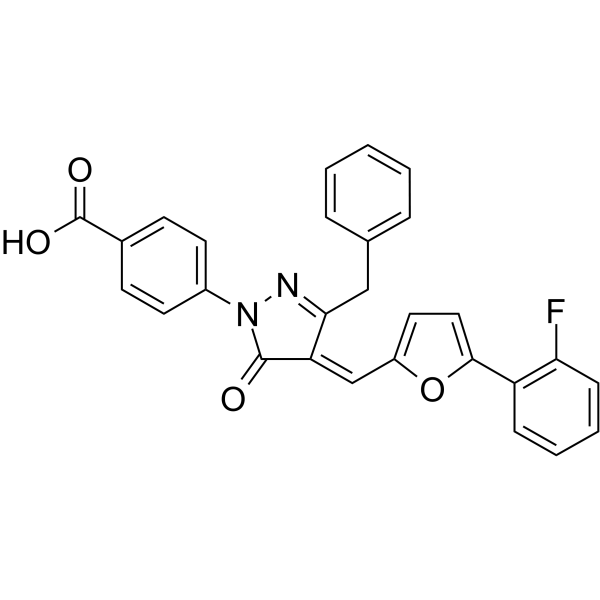
GS143 is a selective IκBα ubiquitination inhibitor with an IC50 of 5.2 μM for SCFβTrCP1-mediated IκBα ubiquitylation. GS143 suppresses NF-κB activation and transcription of target genes and does not inhibit proteasome activity. GS143 has anti-asthma effect.
Nos produits utilisent uniquement pour la recherche. Nous ne vendons pas aux patients.
- Pureté : 99.09%
- CAS No.: 916232-21-8
- Formule: C28H19FN2O4
- Masse moléculaire:466.46
-
Stockage:Powder -20°C, 3 years , 4°C, 2 years ; In solvent -80°C, 6 months , -20°C, 1 month

To place orders, for customer services and technical support, please contact: MedChemExpress USA
Tel: 609-228-6898 E-mail: [email protected] [email protected]


-
 Activité biologique
-
Chemical Information
-
Solvant et solubilité
- Protocole
- Pureté et documentation
- Références
-
 Help & FAQs


-
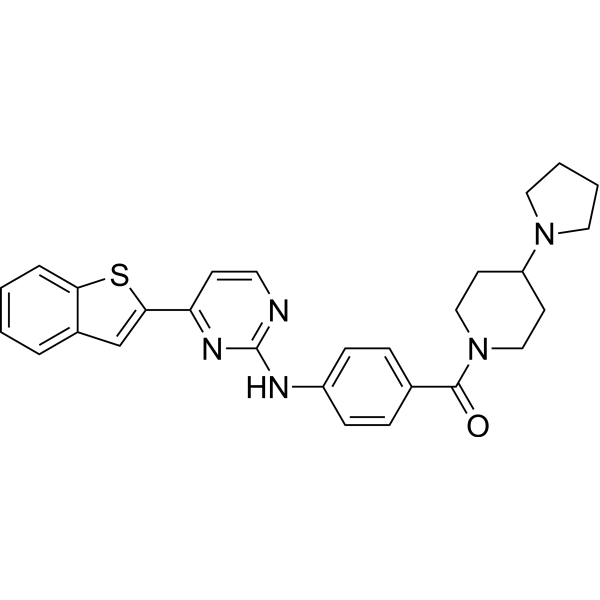
HY-13687
IKK 16IKK Inhibitor -
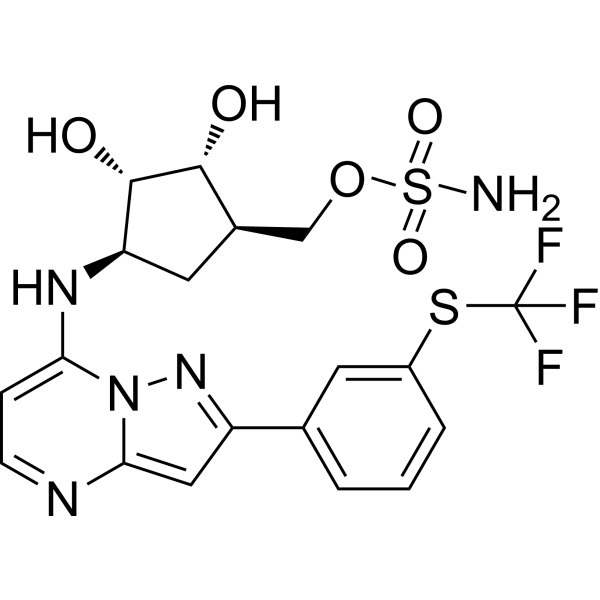
HY-100487
TAK-243UAE/E1 Inhibitor -
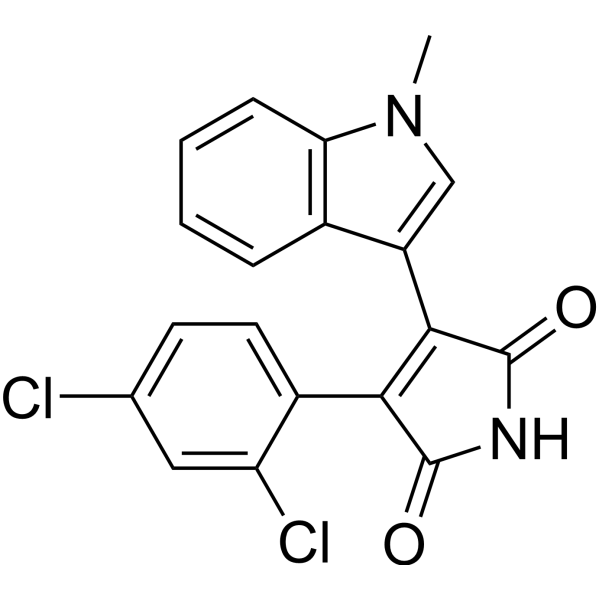
HY-12012
SB 216763Autophagy Inducer -
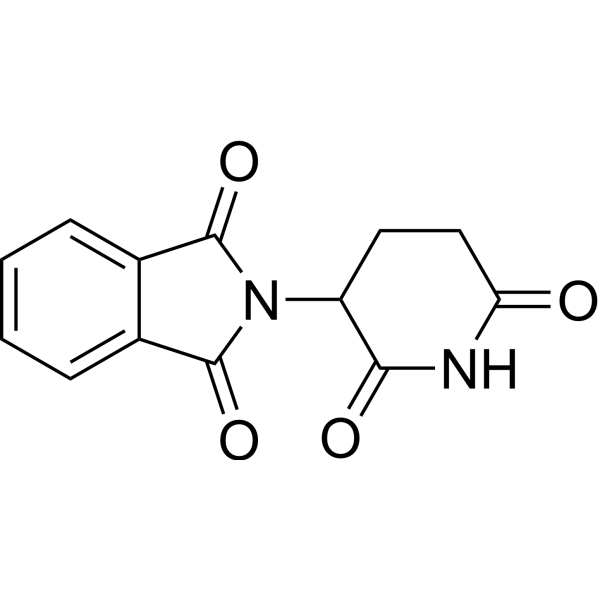
HY-14658
ThalidomideCereblon Inhibitor -
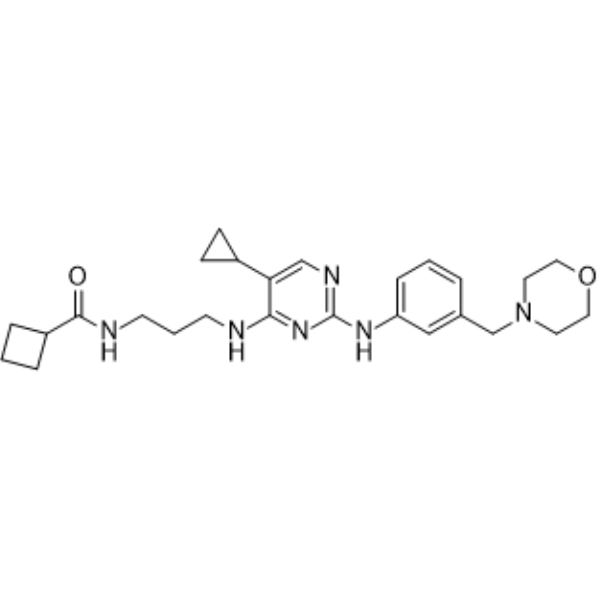
HY-13018
MRT67307IKKε/TBK-1 Inhibitor -
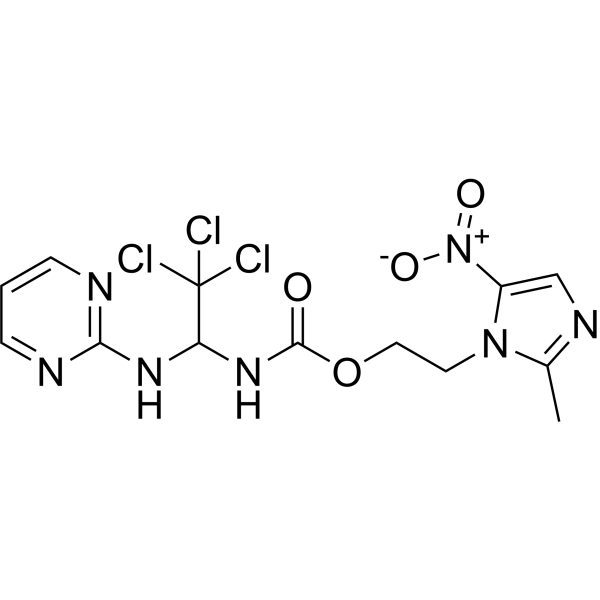
HY-110287
ApcinAPC/C Inhibitor -
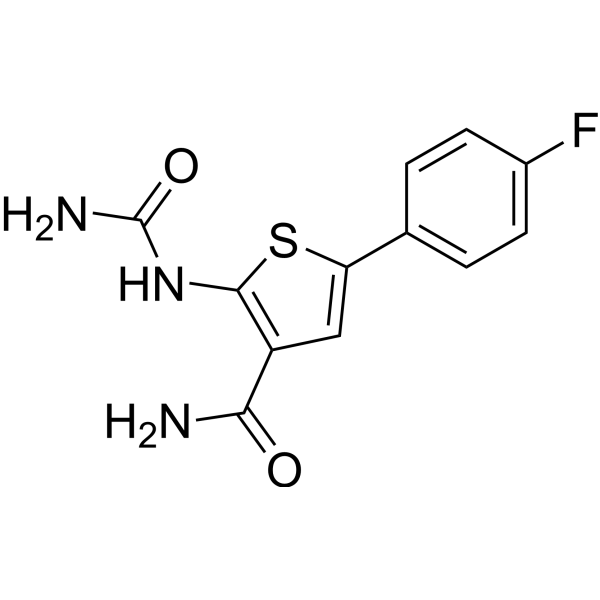
HY-10074
TPCA-1IKK-2 Inhibitor -
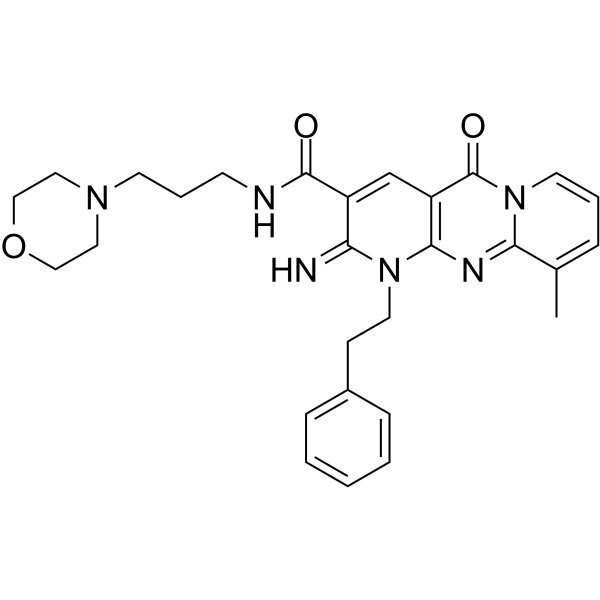
HY-122615
SPOP-IN-6bSPOP Inhibitor -
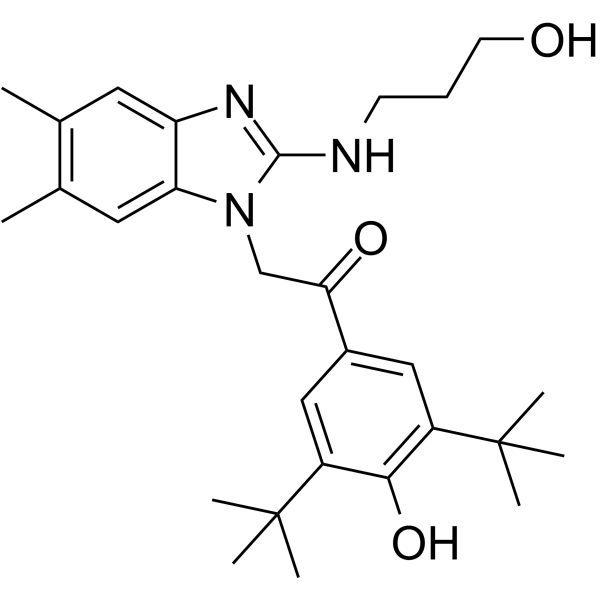
HY-15530
CID-2858522NF-κB Inhibitor -
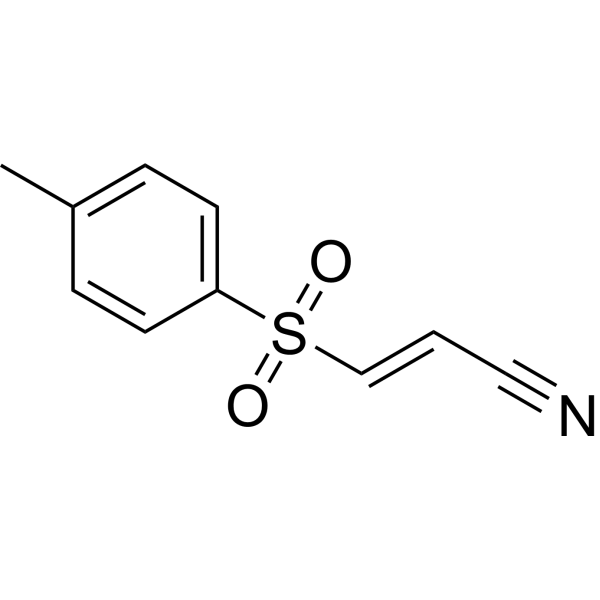
HY-13453
BAY 11-7082IκBα/NF-κB Inhibitor -
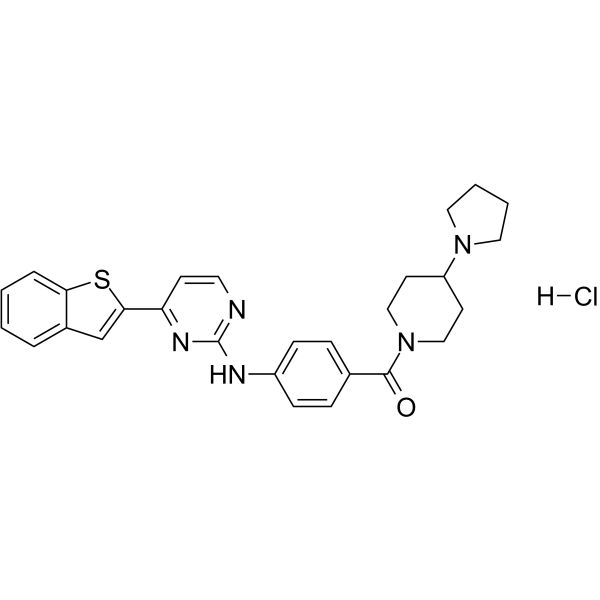
HY-13687A
IKK 16 hydrochlorideIKK Inhibitor -
HY-18008
PS-1145Apoptosis Inducer
Publications Citing Use of MedChemExpress (MCE) GS143
More

Activité biologique
Description
IC50 & Target
IC50: 5.2 μM (SCFβTrCP1-mediated IκBα ubiquitylation)[2]
In Vitro
GS143 (10 μM or 20 μM) inhibits antigen-induced differentiation of Th2 cells but not of Th1 cells in vitro. The IL-4 pro-duc-tion in Th2-polar-iz-ing con-di-tion is mark-edly sup-pressed by GS143 in a dose-depen-dent man-ner[1].
?
GS143 suppresses the transcription of TNFα-induced NF-κB with a mean IC50 value of 10.5 μM. GS143 also inhibits TNFα-induced expression of ICAM-1 in HT-29 colon cancer cells with an IC50 value of 6.1 μM. The production levels of TNFα and IL-1β in LPS-activated THP-1 cells are inhibited with IC50 values of 5.3 μM and 2.1 μM, respectively. GS143 does not inhibit p53 and β-catenin[2].
MedChemExpress (MCE) has not independently confirmed the accuracy of these methods. They are for reference only. Further protocols information, click here.
In Vivo
MedChemExpress (MCE) has not independently confirmed the accuracy of these methods. They are for reference only.
-
Animal Model:BALB/c mice (age 7-8weeks) injected with ovalbumin[1]
-
Dosage:16 μg/body or 32 μg/body
-
Administration:Intranasal administration; once
-
Result:Suppressed antigen-induced NF-κB activation in the lung of sensitized mice.


Chemical Information
-
CAS No. 916232-21-8
-
Appearance Solid
-
Masse moléculaire 466.46
-
Formule C28H19FN2O4
-
Color Pink to red
-
SMILES
FC(C=CC=C1)=C1C2=CC=C(O2)/C=C3C(CC4=CC=CC=C4)=NN(C5=CC=C(C(O)=O)C=C5)C\3=O
-
Livraison
Room temperature in continental US; may vary elsewhere.
-
Stockage
Powder -20°C 3 years 4°C 2 years In solvent -80°C 6 months -20°C 1 month


Publications (2)
-
Journal Impact Factor
-
Most Recent
-
J Immunother Cancer
Chemotherapy-induced cellular senescence promotes stemness of aggressive B-cell non-Hodgkin's lymphoma via CCR7/ARHGAP18/IKBα signaling activation. [Abstract]2025 Jan 7;13(1):e009356. PMID: 39773566 -
Cell Rep
Microenvironmental β-TrCP negates amino acid transport to trigger CD8+ T cell exhaustion in human non-small cell lung cancer. [Abstract]2025 Jan 3;44(1):115128. PMID: 39754718


Solvant et solubilité
In Vitro:
DMSO : 37.5 mg/mL (80.39 mM; ultrasonic and warming and heat to 60°C; Hygroscopic DMSO has a significant impact on the solubility of product, please use newly opened DMSO)
Please refer to the solubility information to select the appropriate solvent. Once prepared, please aliquot and store the solution to prevent product inactivation from repeated freeze-thaw cycles.
Storage method and period of stock solution: -80°C, 6 months; -20°C, 1 month. When stored at -80°C, please use it within 6 months. When stored at -20°C, please use it within 1 month.
Please refer to the solubility information to select the appropriate solvent. Once prepared, please aliquot and store the solution to prevent product inactivation from repeated freeze-thaw cycles.
Storage method and period of stock solution: -80°C, 6 months; -20°C, 1 month. When stored at -80°C, please use it within 6 months. When stored at -20°C, please use it within 1 month.
Concentration (start) × Volume (start) = Concentration (final) × Volume (final)
In Vivo:
Select the appropriate dissolution method based on your experimental animal and administration route.
- For the following dissolution methods, please ensure to first prepare a clear stock solution using an In Vitro approach and then sequentially add co-solvents:
- To ensure reliable experimental results, the clarified stock solution can be appropriately stored based on storage conditions. As for the working solution for In Vivo experiments, it is recommended to prepare freshly and use it on the same day.
- The percentages shown for the solvents indicate their volumetric ratio in the final prepared solution. If precipitation or phase separation occurs during preparation, heat and/or sonication can be used to aid dissolution.
Add each solvent one by one: 10% DMSO 40% PEG300 5% Tween-80 45% Saline
Solubility: 1.88 mg/mL (4.03 mM); Suspended solution; Need ultrasonic
This protocol yields a suspended solution of 1.88 mg/mL. Suspended solution can be used for oral and intraperitoneal injection.
Taking 1 mL working solution as an example, add 100 μL DMSO stock solution (18.8 mg/mL) to 400 μL PEG300, and mix evenly; then add 50 μL Tween-80 and mix evenly; then add 450 μL Saline to adjust the volume to 1 mL.
Preparation of Saline: Dissolve 0.9 g sodium chloride in ddH₂O and dilute to 100 mL to obtain a clear Saline solution.
In Vivo Dissolution Calculator
Please enter the basic information of animal experiments:
-
-
-
-
Recommended: Prepare an additional quantity of animals to account for potential losses during experiments.
Please enter your animal formula composition:
-
%DMSO +
Recommended: Keep the proportion of DMSO in working solution below 2% if your animal is weak.
-
%+
-
+%Tween-80 + +
-
%Saline +
The co-solvents required include: DMSO, . All of co-solvents are available by MedChemExpress (MCE). , Tween 80. All of co-solvents are available by MedChemExpress (MCE).
Working solution concentration: 0.22 mg/mL
Method for preparing stock solution: mg drug dissolved in μL DMSO. Stock solution concentration: mg/mL.
1. Take μL DMSO stock solution;
2. Add μL .
μL , mix evenly;
3. Then add μL Tween 80, mix evenly;
4. Then add μL
Please ensure that the stock solution in the first step is dissolved to a clear state, and add co-solvents in sequence. You can use ultrasonic heating (ultrasonic cleaner, recommended frequency 20-40 kHz), vortexing, etc. to assist dissolution.

Protocole
-
Research Protocol for Inflammation-related Diseases
The NLRP3 inflammasome is a cytosolic innate immune signaling platform that integrates priming signals and danger-signal activation to promote caspase-1 activation, maturation of IL-1β and IL-18, and gasdermin D-mediated pyroptotic cell death. The core experimental logic is to determine whether inflammatory disease phenotypes are driven by increased NLRP3 expression, ASC-containing inflammasome assembly, caspase-1 cleavage, GSDMD cleavage, and extracellular release of IL-1β/IL-18 rather than by nonspecific cell injury alone. The pathway is strongly linked to inflammation-related disease phenotypes because monosodium urate crystals activate NALP3/NLRP3 inflammasome signaling in gout-like crystal inflammation, cholesterol crystals activate NLRP3 inflammasomes in atherogenesis models, and DSS-induced intestinal inflammation has been reported to involve NLRP3 inflammasome activity. However, experimental colitis studies also show context-dependent protective effects of NLRP3 inflammasome co


Pureté et documentation
-
Fiche technique (277 KB)
-
SDS (393 KB)
- English - EN (393 KB)
- Français - FR (393 KB)
- Deutsch - DE (393 KB)
- Norwegian - NO (393 KB)
- Español - ES (393 KB)
- Swedish - SV (393 KB)
- Italian - IT (393 KB)
- Korean - KR (393 KB)
- Portuguese - PT (393 KB)
-
Instruction de manipulation (2659 KB)
Références
[1]. Koichi Hirose, et al. GS143, an IkappaB ubiquitination inhibitor, inhibits allergic airway inflammation in mice. Biochem Biophys Res Commun. 2008 Sep 26;374(3):507-11. [Content Brief]
[2]. Hiroto Nakajima, et al. A novel small-molecule inhibitor of NF-kappaB signaling. Biochem Biophys Res Commun. 2008 Apr 18;368(4):1007-13. [Content Brief]


Complete Stock Solution Preparation Table
Please refer to the solubility information to select the appropriate solvent. Once prepared, please aliquot and store the solution to prevent product inactivation from repeated freeze-thaw cycles.
Storage method and period of stock solution: -80°C, 6 months; -20°C, 1 month. When stored at -80°C, please use it within 6 months. When stored at -20°C, please use it within 1 month.
| Optional Solvent | Concentration Solvent Mass | 1 mg | 5 mg | 10 mg | 25 mg |
|---|---|---|---|---|---|
| DMSO | 1 mM | 2.1438 mL | 10.7190 mL | 21.4381 mL | 53.5952 mL |
| 5 mM | 0.4288 mL | 2.1438 mL | 4.2876 mL | 10.7190 mL | |
| 10 mM | 0.2144 mL | 1.0719 mL | 2.1438 mL | 5.3595 mL | |
| 15 mM | 0.1429 mL | 0.7146 mL | 1.4292 mL | 3.5730 mL | |
| 20 mM | 0.1072 mL | 0.5360 mL | 1.0719 mL | 2.6798 mL | |
| 25 mM | 0.0858 mL | 0.4288 mL | 0.8575 mL | 2.1438 mL | |
| 30 mM | 0.0715 mL | 0.3573 mL | 0.7146 mL | 1.7865 mL | |
| 40 mM | 0.0536 mL | 0.2680 mL | 0.5360 mL | 1.3399 mL | |
| 50 mM | 0.0429 mL | 0.2144 mL | 0.4288 mL | 1.0719 mL | |
| 60 mM | 0.0357 mL | 0.1787 mL | 0.3573 mL | 0.8933 mL | |
| 80 mM | 0.0268 mL | 0.1340 mL | 0.2680 mL | 0.6699 mL |


GS143 Related Classifications
HY-110261 Related Classifications
 Powered by Bioz