20 Results for "

SK-HEP-1 cells

" in MedChemExpress (MCE) Product Catalog:
Products (20)

20 Results for "SK-HEP-1 cells" in MCE Product Catalog:

8
8 Publications Verification
Cat. No.: HY-B0689
CAS No.: 150378-17-9
Synonyms: MK-639 free base; L-735524 free base
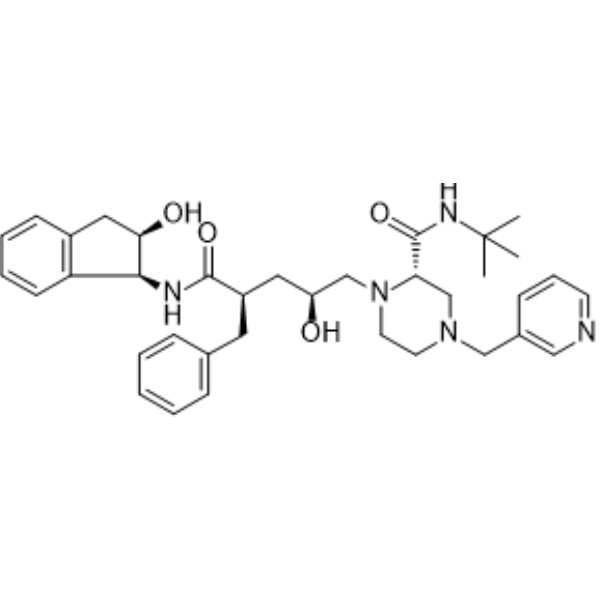
Indinavir (MK-639 free base) is an orally active and selective HIV-1 protease inhibitor with a Ki of 0.54 nM for PR. Indinavir exhibits anticancer activity by inhibiting the activation of MMPs-2 hydrolysis, anti-angiogenesis and inducing apoptosis. Indinavir is also a SARS-CoV 3CL pro inhibitor .
loading...
    loading...
8
8 Publications Verification
Cat. No.: HY-B0689A
CAS No.: 157810-81-6
Synonyms: MK-639; L735524
Research Areas:  

Infection Cancer

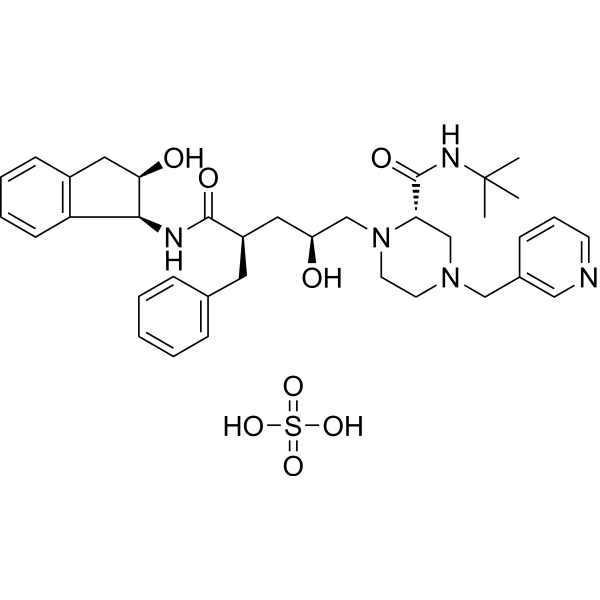
Indinavir sulfate (MK-639) is an orally active and selective HIV-1 protease inhibitor with a Ki of 0.54 nM for PR. Indinavir sulfate exhibits anticancer activity by inhibiting the activation of MMPs-2 hydrolysis, anti-angiogenesis and inducing apoptosis. Indinavir sulfate is also a SARS-CoV 3CL pro inhibitor .
loading...
    loading...
2
2 Cited Publications
Cat. No.: HY-B1260
CAS No.: 57-09-0
Synonyms: CTAB; Cetyltrimethylammonium bromide; Hexadecyltrimethylammonium bromide
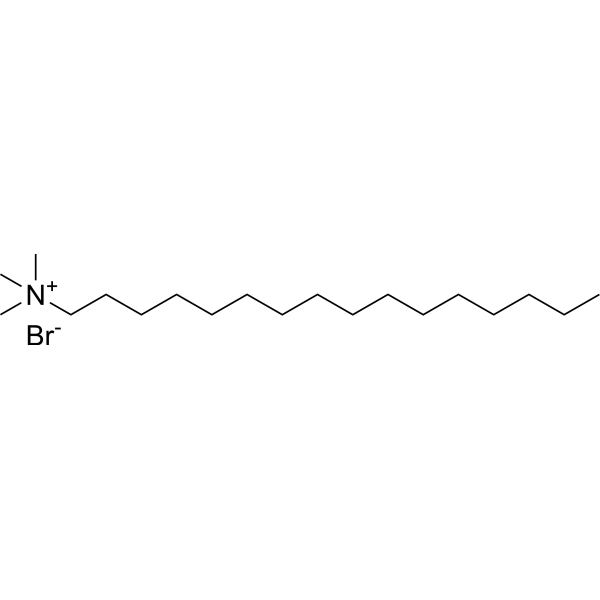
Cetrimonium bromide (CTAB), a quaternary ammonium, is an orally active cationic surfaetant. Cetrimonium bromide has toxicity and anticancer effect. Cetrimonium bromide inhibits cell migration and invasion through modulating the canonical and non-canonical TGF-β signaling pathways. Cetrimonium bromide can be used for DNA extraction .
loading...
    loading...
Cat. No.: HY-D0195
CAS No.: 55589-62-3
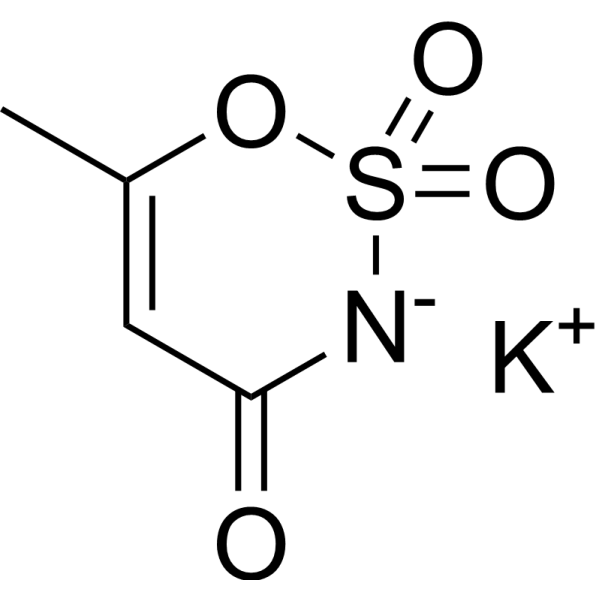
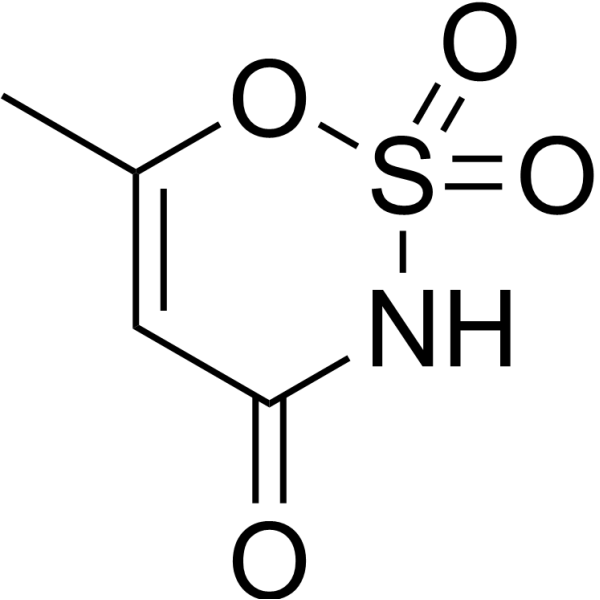
Acesulfame potassium is a synthetic sweetener. Long-term use of Acesulfame potassium can affect cognitive function, possibly by altering the neurometabolic functions in mice. Acesulfame potassium can suppress autophagic degradation of PD-L1 in RIL-175 and SK-Hep1 cells through the ERK1/2-mTORC1-ULK1 pathway, which may be related to immune evasion in cancer cells. Acesulfame potassium can be used in research on neurological diseases, metabolic disorders, cancer, and immune evasion .
loading...
    loading...
Cat. No.: HY-168574
CAS No.: 3059333-98-8
Target:  

PROTACs Sirtuin Apoptosis

Research Areas:  

Cancer

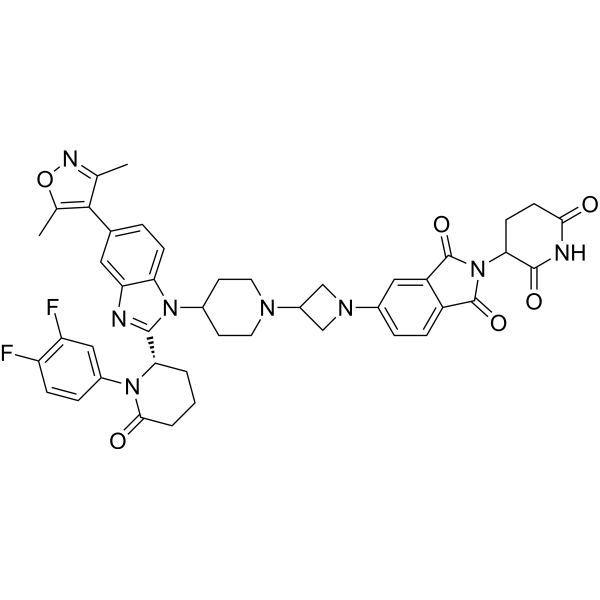
SZU-B6 is an orally active SIRT6 PROTAC degrader with DC50 values of 45 nM in SK-HEP-1 cells and 154 nM in Huh-7 cells, respectively. SZU-B6 mediates proteasome-dependent degradation of SIRT6 by recruiting the CRBN E3 ubiquitin ligase. SZU-B6 impairs DNA damage repair and promotes radiosensitization of cancer cells. SZU-B6 induces cell cycle arrest and apoptosis in cancer cells. SZU-B6 inhibits the proliferation of liver cancer cells. SZU-B6 suppresses the tumor growth of hepatocellular carcinoma and intrahepatic cholangiocarcinoma in mice. SZU-B6 can be used in research related to hepatocellular carcinoma and intrahepatic cholangiocarcinoma .
loading...
    loading...
Cat. No.: HY-162259
CAS No.: 3032646-96-8
Research Areas:  

Cancer

QC-182 is a p300/CBP PROTAC degrader with a DC50 of 93 nM against p300. QC-182 induces ubiquitination and proteasomal degradation of p300 and CBP in a CRBN-dependent manner. QC-182 induces Apoptosis. QC-182 exhibits anticancer activity against liver cancer cells. QC-182 can be used for the research of hepatocellular carcinoma .
loading...
    loading...
Cat. No.: HY-172885
Research Areas:  

Cancer

TRBP-IN-1 (Compound 13j) is an orally active TAR RNA binding protein 2 (TRBP) inhibitor (IC50: 12.72 μM). TRBP-IN-1 has significant anti-hepatocellular carcinoma (HCC) activity and can inhibit the proliferation and metastasis of HCC cells (HCCLM3 cells (IC50: 18.96 μM); SK-Hep-1 cells (IC50: 16.45 μM)). TRBP-IN-1 regulates miRNA biogenesis and inhibits oncogenic miRNA expression by targeting TRBP. TRBP-IN-1 induces apoptosis and pyroptosis in HCC cells by inhibiting the level of miRNA. TRBP-IN-1 can be used for targeted therapy research of HCC .
loading...
    loading...
Cat. No.: HY-125570
CAS No.: 194861-70-6
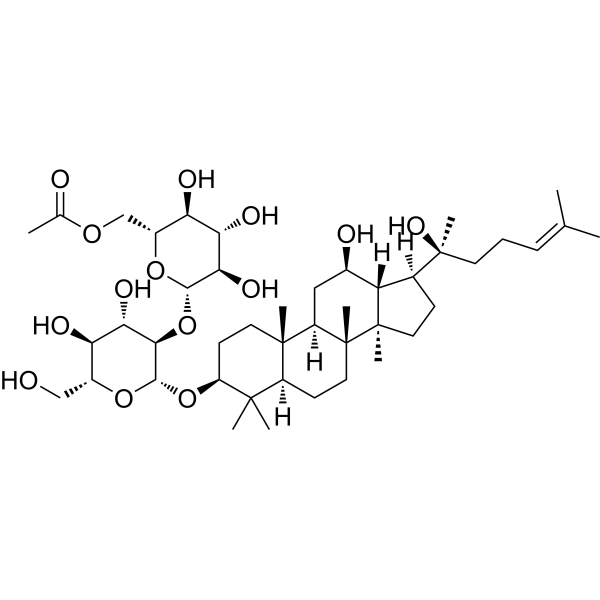
Ginsenoside Rs3 is a natural diol-type ginseng saponin with anticancer effects. Ginsenoside Rs3 selectively elevates protein levels of p53 and p21WAF1 leading to induction of apoptosis in SK-HEP-1 cells .
loading...
    loading...
Cat. No.: HY-18165
CAS No.: 1221878-06-3
Target:  

LPL Receptor

Research Areas:  

Cancer

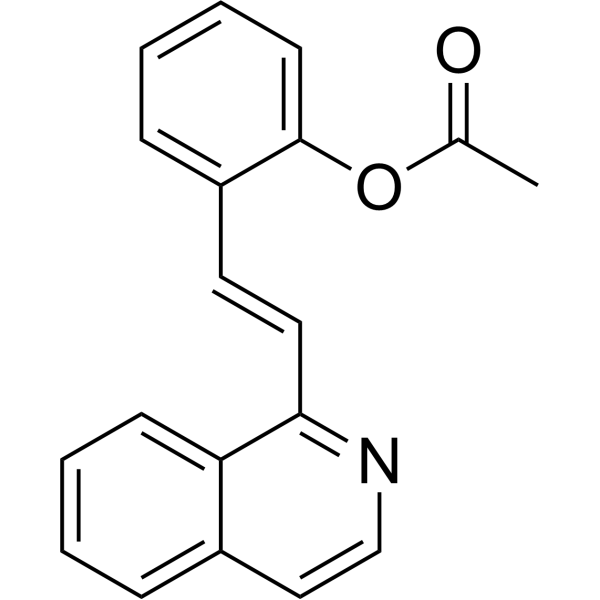
XL541 is a potent, selective S1P1 antagonist. XL541 inhibits GDP-GTP exchange. XL541 causes frank surface hemorrhaging of tumors. XL541 collaborates with Paclitaxel (HY-B0015) to exhibit antitumor activity against breast cancer and lung cancer .
loading...
    loading...
Cat. No.: HY-155124
CAS No.: 2925814-05-5
Target:  

Apoptosis

Research Areas:  

Cancer

Antiproliferative agent-32 (Compound 1c) inhibits the phosphorylation of PI3K/Akt/mTOR signaling pathway. Antiproliferative agent-32 inhibits Huh7 and SK-Hep-1 cells proliferation, and induce cells apoptosis, causes mitochondrial damage. Antiproliferative agent-32 can be used for research of hepatocellular carcinoma .
loading...
    loading...
Cat. No.: HY-W550739
CAS No.: 33665-90-6
Acesulfame is a synthetic sweetener. Long-term use of Acesulfame can affect cognitive function. Acesulfame potassium can suppress autophagic degradation of PD-L1 in RIL-175 and SK-Hep1 cells through the ERK1/2-mTORC1-ULK1 pathway, which may be related to immune evasion in cancer cells. Acesulfame can be used in research on neurological diseases, metabolic disorders, cancer, and immune evasion .
loading...
    loading...
Cat. No.: HY-D0195R
CAS No.: 55589-62-3
Acesulfame potassium (Standard) is the analytical standard of Acesulfame potassium (HY-D0195). This product is intended for research and analytical applications. Acesulfame potassium is a synthetic sweetener. Long-term use of Acesulfame potassium can affect cognitive function, possibly by altering the neurometabolic functions in mice. Acesulfame potassium can suppress autophagic degradation of PD-L1 in RIL-175 and SK-Hep1 cells through the ERK1/2-mTORC1-ULK1 pathway, which may be related to immune evasion in cancer cells. Acesulfame potassium can be used in research on neurological diseases, metabolic disorders, cancer, and immune evasion .
loading...
    loading...
Cat. No.: HY-162657
Target:  

Cholinesterase (ChE)

Research Areas:  

Cancer

AChE-IN-74 (Compound 10) is a modulator for cholinesterase. AChE-IN-74 inhibits the proliferation of liver cancer cell Hep3B and SkHep1 with IC50 of 3.6 and 19.9 μM. AChE-IN-74 exhibits a low embryonic toxicity in zebrafish models (10-15 μM) .
loading...
    loading...
Cat. No.: HY-181651
Research Areas:  

Cancer

SZU305 is a RAD51 PROTAC degrader, with DC50 values of 307.45 nM and 84.19 nM in SK-HEP-1 and Huh-7 cells, respectively. SZU305 inhibits DNA damage repair, induces cell cycle arrest and apoptosis. SZU305 moderately reduces the protein levels of IKZF1 and IKZF3 at high concentrations. SZU305 can be used in studies related to hepatocellular carcinoma .
loading...
    loading...
Cat. No.: HY-B0689B
CAS No.: 2563866-80-6
Synonyms: MK-639 ethanolate; L735524 ethanolate
Research Areas:  

Infection Cancer

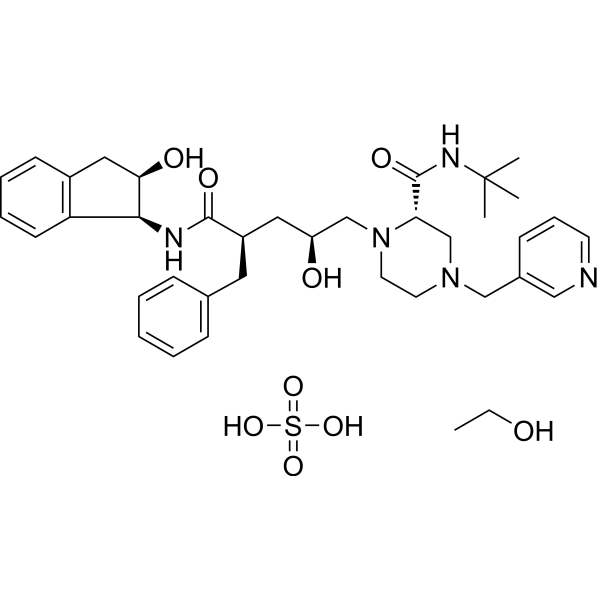
Indinavir sulfate ethanolate (MK-639 ethanolate) is an orally active and selective HIV-1 protease inhibitor with a Ki of 0.54 nM for PR. Indinavir sulfate ethanolate exhibits anticancer activity by inhibiting the activation of MMPs-2 hydrolysis, anti-angiogenesis and inducing apoptosis. Indinavir sulfate ethanolate is also a SARS-CoV 3CL pro inhibitor .
loading...
    loading...
Cat. No.: HY-162392
Target:  

Drug Derivative

Research Areas:  

Cancer

Anticancer agent 203 (compound 27) is an anticancer agent. Anticancer agent 203 shows cytotoxicity. Anticancer agent 203 has the potential for the research of hepatoma .
loading...
    loading...
Cat. No.: HY-181723
CAS No.: 3115940-07-0
Research Areas:  

Cancer

Anticancer agent 304 is an anticancer agent. Anticancer agent 304 binds to CDC45 with a Kd value of 83.0 μM. Anticancer agent 304 arrests the cell cycle of liver cancer cells at the G2/M phase, induces Apoptosis by upregulating C-PARP-1 and downregulating PARP-1 and BCL-2, and inhibits the migration, invasion and proliferation of liver cancer cells. Anticancer agent 304 suppresses tumor growth in animal models of hepatocellular carcinoma. Anticancer agent 304 is applicable to research related to liver cancer .
loading...
    loading...
Cat. No.: HY-183753
Target:  

YAP Apoptosis

Research Areas:  

Cancer

LC-TD-05 is a non-covalent inhibitor of TEAD1, TEAD2 and TEAD4, with IC50 values of 116.6 nM, 168.7 nM and 68.3 nM, respectively; it shows weak activity against TEAD3, with a human IC50 of 1261.0 nM. LC-TD-05 induces apoptosis in hepatocellular carcinoma cells. LC-TD-05 can be used for the research of hepatocellular carcinoma .
loading...
    loading...
Cat. No.: HY-P11938
Target:  

Glycoprotein VI

Research Areas:  

Cancer

GPC3-targeting peptide 2, scrambled control serves as the scrambled negative control for GPC3-targeting peptide 2. GPC3-targeting peptide 2, scrambled control can be used as a control peptide to verify the specific binding of GPC3-targeting peptides to cancer cells and tumors overexpressing GPC3 .
loading...
    loading...
Cat. No.: HY-133151
CAS No.: 2579689-85-1
Target:  

CXCR

Research Areas:  

Cancer

CXCR6 antagonist 1 (Compound 81) is an orally active CXCR6 antagonist. CXCR6 antagonist 1 inhibits the CXCR6 receptor signaling pathway, including β-arrestin recruitment and Forskolin (HY-15371)-induced cAMP production. CXCR6 antagonist 1 reduces tumor growth in a mouse xenograft model of hepatocellular carcinoma. CXCR6 antagonist 1 can be used in research related to hepatocellular carcinoma .
loading...
    loading...
  • 1

