








113 Results for "

T cell lymphoma,

" in MedChemExpress (MCE) Product Catalog:
Products (113)

113 Results for "T cell lymphoma," in MCE Product Catalog:

52
52 Publications Verification
Cat. No.: HY-15676
CAS No.: 1229705-06-9
Purity:  99.93%
Synonyms: RG7388
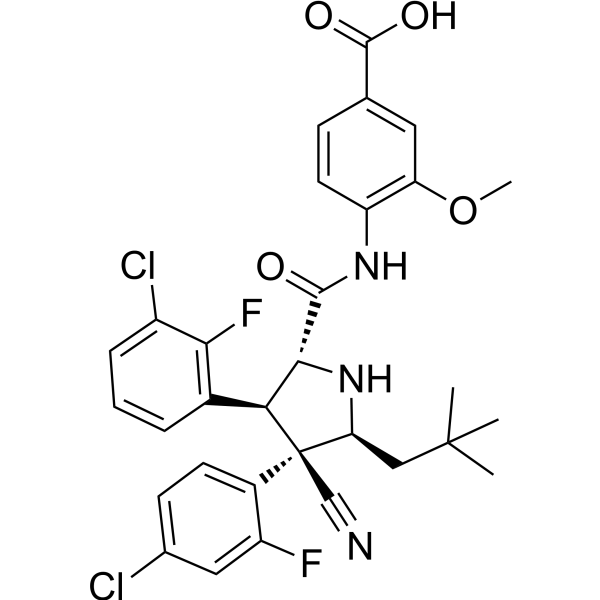
Idasanutlin (RG7388) is an orally bioavailable MDM2 inhibitor with an IC50 of 6 nM. Idasanutlin disrupts MDM2-p53 binding, stabilizes and activates p53, triggering cell cycle arrest, apoptosis, and reduced cancer cell viability. Idasanutlin reduces EGFR protein expression and phosphorylation, suppresses downstream SHP2, MEK1/2, ERK1/2, AKT, mTOR, p70(S6K1), and S6 signaling. Idasanutlin induces mitochondrial ROS production, drives p38 MAPK phosphorylation, upregulates NOXA, and mediates caspase-3-dependent apoptosis and gasdermin E-mediated pyroptosis. Idasanutlin can be used for the research of TP53-mutant non-small cell lung cancer, T-cell acute lymphoblastic leukemia, colorectal carcinoma, melanoma, diffuse large B-cell lymphoma, mantle cell lymphoma, non-Hodgkin lymphoma, severe fever with thrombocytopenia syndrome, neuroblastoma, acute lymphoblastic leukemia, relapsed or refractory acute myeloid leukemia, osteosarcoma, solid tumors, and hematological tumors .
loading...
    loading...
23
23 Cited Publications
Cat. No.: HY-14171
CAS No.: 153559-49-0
Purity:  99.92%
Synonyms: LGD1069
Target:  

RAR/RXR Autophagy

Research Areas:  

Cancer

Bexarotene (LGD1069) is a high-affinity and selective retinoid X receptors (RXR) agonist with EC50s of 33, 24, 25 nM for RXRα, RXRβ, and RXRγ, respectively. Bexarotene shows limited affinity for RAR receptors (EC50 >10000 nM) . Bexarotene can be used for the research of cutaneous T-cell lymphoma.
loading...
    loading...
11
11 Cited Publications
Cat. No.: HY-10446
CAS No.: 146464-95-1
Purity:  99.22%
Target:  

Antifolate Apoptosis

Research Areas:  

Cancer

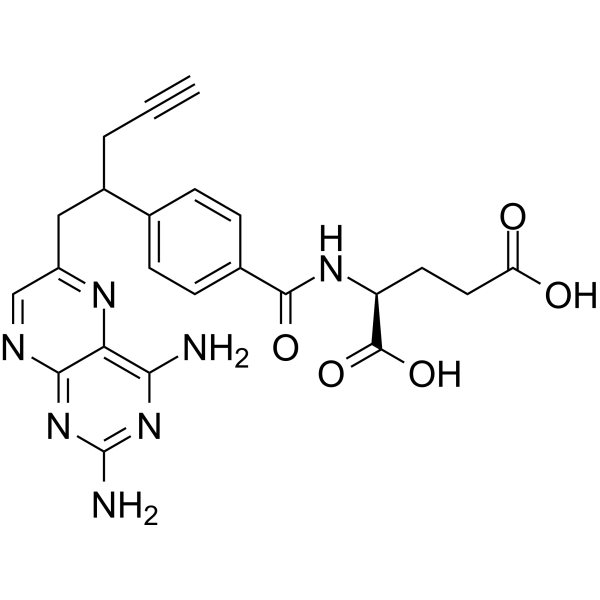
Pralatrexate is an antifolate and is a potent dihydrofolate reductasean (DHFR) inhibitor with a Ki of 13.4 pM. Pralatrexate is a substrate for folylpolyglutamate synthetase with improved cellular uptake and retention. Pralatrexate has antitumor activities and has the potential for relapsed/refractory T-cell lymphoma treatment . Pralatrexate is a click chemistry reagent, it contains an Alkyne group and can undergo copper-catalyzed azide-alkyne cycloaddition (CuAAc) with molecules containing Azide groups.
loading...
    loading...
5
5 Cited Publications
Cat. No.: HY-109108
CAS No.: 1809336-39-7
Purity:  99.68%
Synonyms: DS-3201
Research Areas:  

Cancer

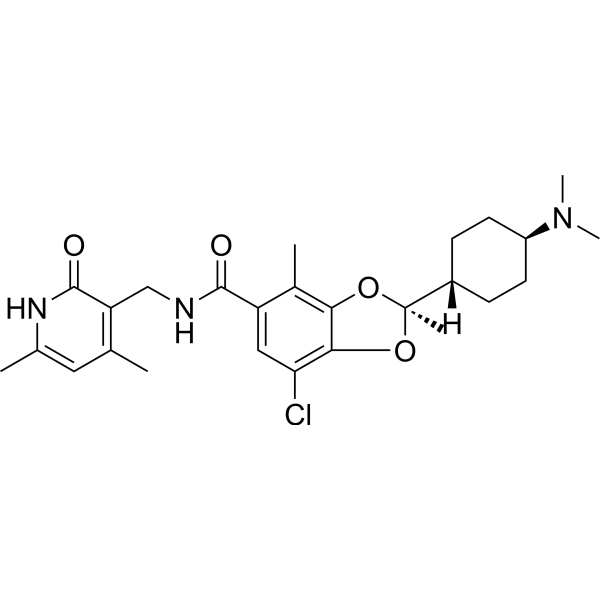
Valemetostat (DS-3201), a first-in-class EZH1/2 dual inhibitor with IC50 values <10 nM. Valemetostat can be used for the research of relapsed/refractory peripheral T-cell lymphoma .
loading...
    loading...
5
5 Cited Publications
Cat. No.: HY-109108A
CAS No.: 1809336-93-3
Purity:  99.84%
Synonyms: DS-3201 tosylate
Research Areas:  

Cancer

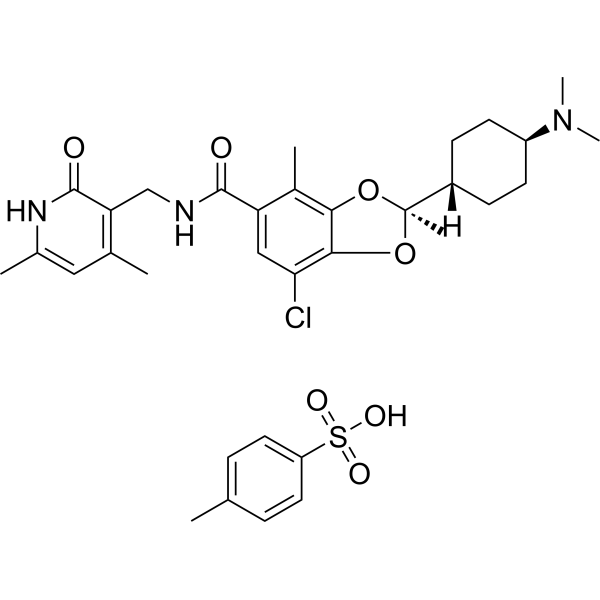
Valemetostat (DS-3201) tosylate, a first-in-class EZH1/2 dual inhibitor with IC50 values <10 nM. Valemetostat tosylate can be used for the research of relapsed/refractory peripheral T-cell lymphoma .
loading...
    loading...
4
4 Cited Publications
Cat. No.: HY-19816
CAS No.: 1557267-42-1
Synonyms: Abivertinib; AC0010
Target:  

EGFR Btk Apoptosis

Research Areas:  

Cancer

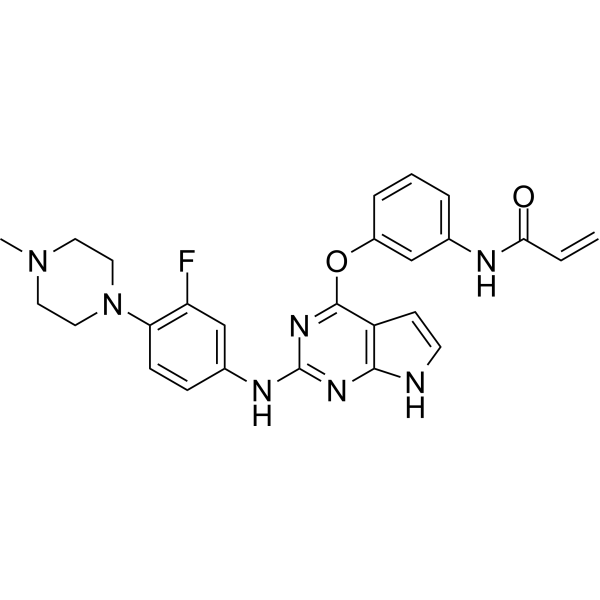
Avitinib (Abivertinib) is a third-generation, irreversible and orally active selective EGFR inhibitor, with IC50 values of 0.18 nM, 0.18 nM, 7.68 nM and against EGFR L858R, EGFR T790M and wild-type EGFR. Avitinib is also a BTK inhibitor that induces apoptosis and inhibits phosphorylation of BTK in mantle cell lymphoma. Avitinib shows anticancer effects .
loading...
    loading...
4
4 Cited Publications
Cat. No.: HY-19816A
CAS No.: 1557268-88-8
Synonyms: Abivertinib maleate; AC0010 maleate
Target:  

EGFR Btk Apoptosis

Research Areas:  

Cancer

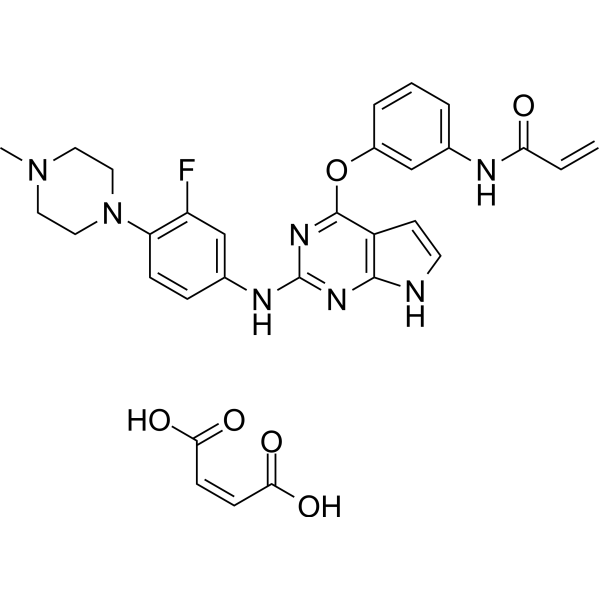
Avitinib (Abivertinib) maleate is a third-generation, irreversible and orally active selective EGFR inhibitor, with IC50 values of 0.18 nM, 0.18 nM, 7.68 nM and against EGFR L858R, EGFR T790M and wild-type EGFR. Avitinib maleate is also a BTK inhibitor that induces apoptosis and inhibits phosphorylation of BTK in mantle cell lymphoma. Avitinib maleate shows anticancer effects .
loading...
    loading...
4
4 Cited Publications
Cat. No.: HY-108831
CAS No.: 189261-10-7
Purity:  99.10%
Natalizumab (AN100226; BG00002) is a humanized monoclonal IgG4 antibody inhibitor that selectively targets α4 integrin (CD49d). It blocks the interaction of integrins such as α4β1 (VLA-4) with vascular cell adhesion molecule VCAM-1, intercellular adhesion molecule ICAM-1, and fibronectin by competitively binding to the α4 subunit. Natalizumab inhibits the adhesion, retention, and transendothelial migration of immune cells (such as CD4 + T cells), reducing the infiltration of inflammatory cells into the central nervous system or lesion sites, thus exerting anti-inflammatory and immunomodulatory activity. Natalizumab is used in the study of relapsing-remitting multiple sclerosis (RRMS) and also has applications in the study of autoimmune or inflammation-related diseases such as Crohn's disease, B-cell lymphoma, and non-infectious uveitis. Natalizumab can also prevent lymphocytes from entering the central nervous system, thereby preventing acute demyelinating relapses .
loading...
    loading...
4
4 Cited Publications
Cat. No.: HY-108831A
CAS No.: 189261-10-7
Purity:  98.72%
Synonyms: AN100226; BG00002
Natalizumab (Anti-CD49d) (AN100226; BG00002) Solution is a humanized monoclonal IgG4 antibody inhibitor that selectively targets α4 integrin (CD49d), blocking the interaction of integrins such as α4β1 (VLA-4) with vascular cell adhesion molecule VCAM-1, intercellular adhesion molecule ICAM-1, and fibronectin by competitively binding to the α4 subunit. Natalizumab solution inhibits the adhesion, retention, and transendothelial migration of immune cells (such as CD4 + T cells), reducing the infiltration of inflammatory cells into the central nervous system or lesion sites, thereby exerting anti-inflammatory and immunomodulatory activity. Natalizumab (Anti-CD49d) solution is used in the study of relapsing-remitting multiple sclerosis (RRMS) and is also applied in the research of autoimmune or inflammation-related diseases such as Crohn's disease, B-cell lymphoma, and non-infectious uveitis. Natalizumab (Anti-CD49d) can also prevent lymphocytes from entering the central nervous system, thus preventing acute demyelinating relapses .
loading...
    loading...
3
3 Cited Publications
Cat. No.: HY-P99052
CAS No.: 1858168-59-8
Synonyms: BGB-A317
Target:  

PD-1/PD-L1

Research Areas:  

Inflammation/Immunology Cancer

Tislelizumab is a monoclonal antibody that specifically binds to programmed cell death receptor 1 (PD-1), blocking its interaction with programmed death ligand 1 (PD-L1) and programmed death ligand 2 (PD-L2). Tislelizumab can reactivate immune cells such as T lymphocytes and enhance anti-tumor activity. Tislelizumab can be used for the research of a variety of tumors including typical Hodgkin's lymphoma, urothelial carcinoma, non-small cell lung cancer and hepatocellular carcinoma .
loading...
    loading...
3
3 Cited Publications
Cat. No.: HY-P99048
CAS No.: 2072873-06-2
Synonyms: IBI308

Target:  

PD-1/PD-L1

Research Areas:  

Inflammation/Immunology Cancer

Sintilimab (IBI308) is a safe and effectivel humanized IgG4 monoclonal antibody that binds to PD-1 with a KD value of 74 pM. Sintilimab blocks the interaction of PD-1 with its ligands (PD-L1 and PL-L2), consequently helping to restore the endogenous antitumour T-cell response. Sintilimab combined with prebiotics inhibits tumor volume and regulates immune cell subpopulation balance in lung adenocarcinoma mice. Sintilimab can be used for the research of classical Hodgkin's lymphoma, non-small cell lung cancer and oesophageal cancer .
loading...
    loading...
2
2 Cited Publications
Cat. No.: HY-108691
CAS No.: 1407966-77-1
Purity:  99.48%
Target:  

Itk Btk CXCR PD-1/PD-L1 LAG-3

Research Areas:  

Cancer

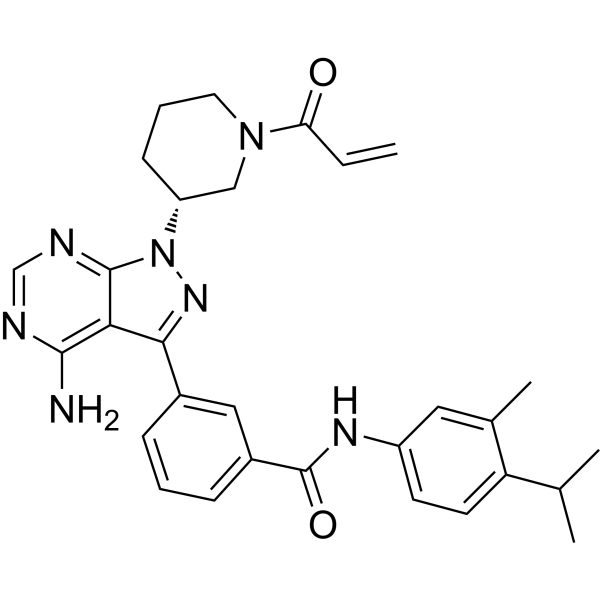
PF-06465469 is a covalent inhibitor of ITK with an IC50 of 2 nM. PF-06465469 also inhibits BTK. PF-06465469 inhibits cell migration in response to CXCL12. PF-06465469 decreases PD-1 and LAG-3 expression. PF-06465469 can be used to study leukemia and T-cell lymphoma .
loading...
    loading...
2
2 Cited Publications
Cat. No.: HY-118119
CAS No.: 938069-71-7
Purity:  99.12%
CAY10526 is an inhibitor of Y-box binding protein 1 (YB-1) and microsomal prostaglandin E2 synthase 1 (mPGES1). CAY10526 inhibits the production of PGE2 by suppressing YB-1 and mPGES1. CAY10526 induces cell apoptosis (apoptosis) and inhibits the JAK/STAT, TGF-β/Smad3 and PI3K/AKT signaling pathways. CAY10526 can be used in research related to melanoma, prostate cancer, esophageal adenocarcinoma, T-cell lymphoma, etc .
loading...
    loading...
1
1 Cited Publications
Cat. No.: HY-P99055
CAS No.: 934823-49-1
Synonyms: BMS-663513
Target:  

TNF Receptor

Research Areas:  

Inflammation/Immunology Cancer

Urelumab, a fully human, non-ligand binding, CD137 agonist IgG4 monoclonal antibody, enhances T-cell and natural killer-cell antitumor activity, and may enhance cytotoxic activity of Rituximab (HY-P9913). Urelumab can be used for the research of diffuse large B-cell lymphoma (DLBCL), follicular lymphoma (FL), and other types of non-Hodgkin lymphoma (NHL) .
loading...
    loading...
1
1 Cited Publications
Cat. No.: HY-P99024
CAS No.: 2229047-91-8
Synonyms: RO7082859; RG-6026

Target:  

CD20 CD3

Research Areas:  

Inflammation/Immunology Cancer

Glofitamab (RO7082859) is a T-cell-engaging bispecific antibody possessing a novel 2:1 structure with bivalency for CD20 on B cells and monovalency for CD3 on T cells. Glofitamab leads to T-cell activation, proliferation, and tumor cell killing upon binding to CD20 on malignant cells. Glofitamab induces durable complete remissions in relapsed or refractory B-Cell non-Hodgkin lymphoma (B-NHL) .
loading...
    loading...
1
1 Cited Publications
Cat. No.: HY-P99033
CAS No.: 1905409-39-3
Synonyms: BTCT-4465A; RG-7828; RO7030816
Target:  

CD20 CD3

Research Areas:  

Cancer

Mosunetuzumab (BTCT-4465A) is a full-length, fully humanized immunoglobulin G1 (IgG1) T-cell-dependent bispecific (TDB) antibody targeting CD20 (B cells) and CD3 (T cells). Mosunetuzumab redirects T cells to engage and eliminate malignant B cells and can be used for the research of relapsed or refractory (R/R) B-cell non-Hodgkin lymphomas (B-NHLs). The Fc region of Mosunetuzumab incorporates a "knob-into-hole" structural modification and an N297G point mutation to achieve heterodimerization and eliminate Fc glycosylation, thereby effectively silencing antibody effector functions .
loading...
    loading...
1
1 Cited Publications
Cat. No.: HY-153084A
Target:  

mRNA CD19

Research Areas:  

Cancer

CD19 CAR mRNA (Human) expresses CAR protein that specifically targets human CD19. CD19 CAR mRNA can trigger transitory expression of CAR, allowing T cells to be targeted without permanent genetic modification. CD19 CAR mRNA targets CD19 which is a transmembrane glycoprotein primarily expressed on B lymphocytes and is important in B cell activation. CD19 CAR mRNA can be studied in cancer research such as lymphoma and leukemia .
loading...
    loading...
1
1 Cited Publications
Cat. No.: HY-P99253
CAS No.: 1159266-37-1
Synonyms: KW-0761

Target:  

CCR

Research Areas:  

Inflammation/Immunology Cancer

Mogamulizumab (KW-0761) is a recombinant anti-CCR4 monoclonal antibody (MAb). Mogamulizumab can eliminate tumor cells by antibody-dependent cellular cytotoxicity (ADCC). Mogamulizumab can be used in the research of cancers, adult T-cell leukemia/lymphoma (ATLL), cutaneous T-cell lymphoma (CTCL) .
loading...
    loading...
1
1 Cited Publications
Cat. No.: HY-158421
CAS No.: 63498-32-8
Purity:  99.95%
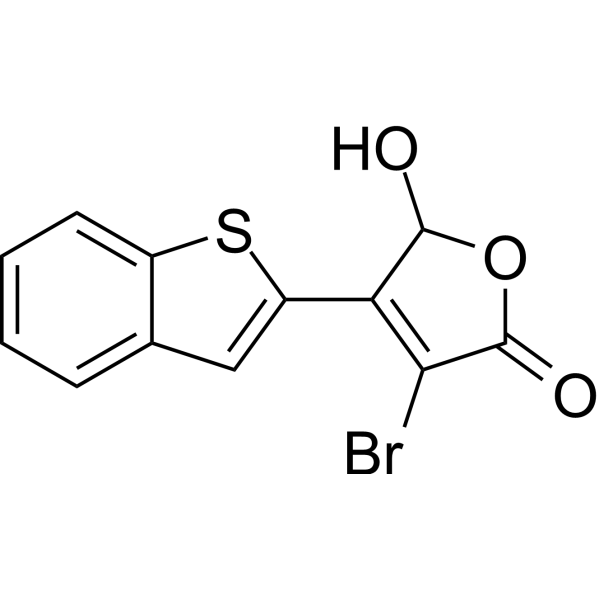
MS-L6 is a OXPHOS inhibitor and antimalarial agent. MS-L6 inhibits NADH oxidation and electron transport. MS-L6 induces OXPHOS uncoupling, dissipates mitochondrial membrane potential, increases non-ATP-coupled oxygen consumption, and reduces ATP synthesis. MS-L6 triggers the production of ROS. MS-L6 exhibits anti-amoebic activity. MS-L6 exerts antitumor activity in mouse lymphoma xenograft models. MS-L6 can be used in research related to B-cell lymphoma, T-cell lymphoma, and non-Hodgkin B-cell lymphoma .
loading...
    loading...
1
1 Cited Publications
Cat. No.: HY-106934A
CAS No.: 2772702-10-8
Purity:  99.63%
Synonyms: BCX 34 dihydrochloride
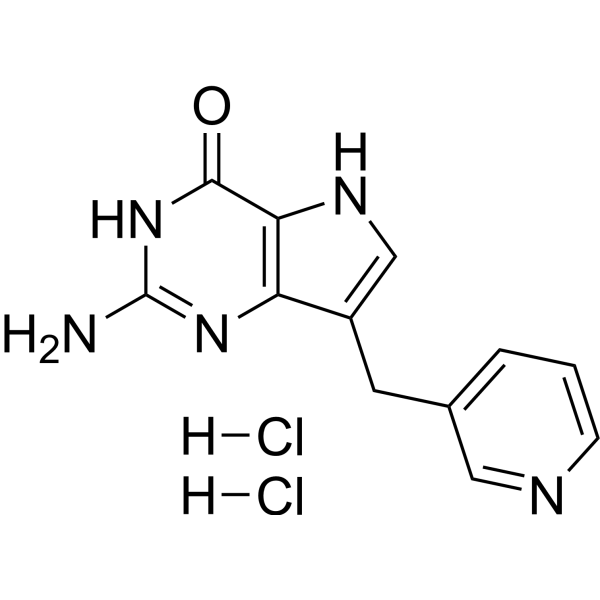
Peldesine (BCX 34) dihydrochloride is a potent, competitive, reversible and orally active purine nucleoside phosphorylase (PNP) inhibitor with IC50s of 36 nM, 5 nM, and 32 nM for human, rat, and mouse red blood cell (RBC) PNP, respectively. Peldesine dihydrochloride is also a T-cell proliferation inhibitor with an IC50 of 800 nM. Peldesine dihydrochloride has the potential for cutaneous T-cell lymphoma, psoriasis and HIV infection research .
loading...
    loading...

