22 Results for "

TASK-1

" in MedChemExpress (MCE) Product Catalog:
Products (22)

22 Results for "TASK-1" in MCE Product Catalog:

12
12 Publications Verification
Cat. No.: HY-103371
CAS No.: 82749-70-0
Purity:  99.83%
Research Areas:  

Neurological Disease

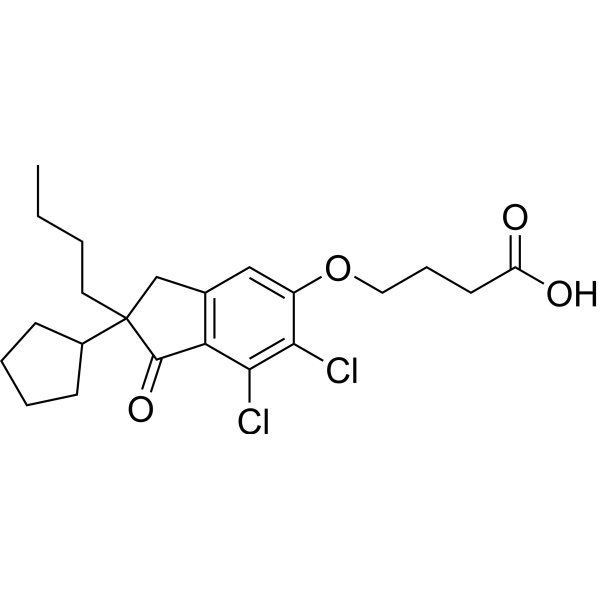
DCPIB is a selective, reversible and potent inhibitor of volume-regulated anion channels (VRAC). DCPIB voltage-dependently activates potassium channels TREK1 and TRAAK, and inhibits TRESK, TASK1 and TASK3 (IC50s: 0.14, 0.95, 50.72 μM, respectively). DCPIB is also a selective blocker of swelling-induced chloride current (ICl,swell), with an IC50 of 4.1 μM. DCPIB is a useful tool for investigating structure-function studies of K2P channels [1] .
loading...
    loading...
6
6 Cited Publications
Cat. No.: HY-12345
CAS No.: 947914-18-3
Purity:  98.62%
Target:  

Potassium Channel

Research Areas:  

Cardiovascular Disease

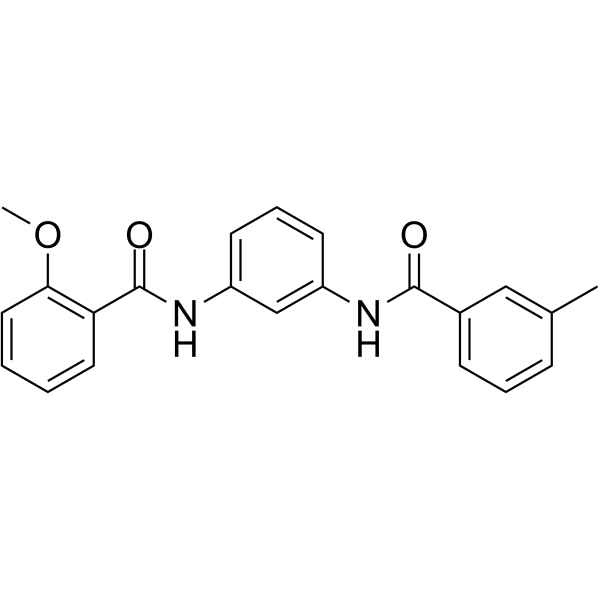
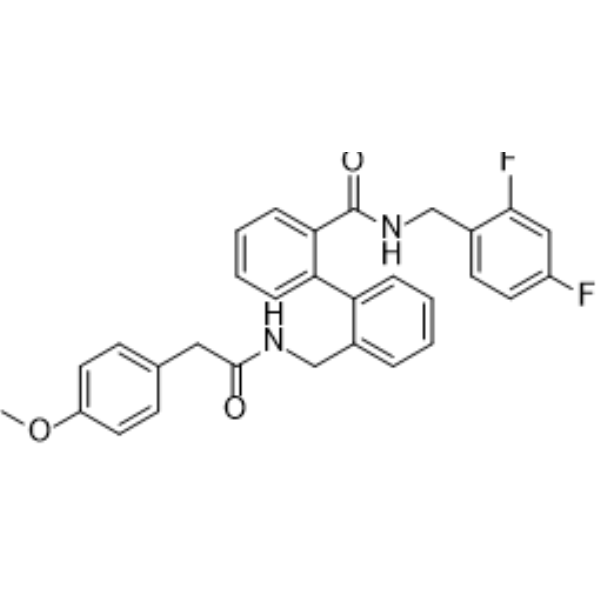
ML365 is a selective two-pore domain potassium channel KCNK3/TASK1 inhibitor, with an IC50 of 4 nM. ML365 acts as a pharmacological tool that can be used to examine the specific roles of TASK1 channels [1].
loading...
    loading...
2
2 Cited Publications
Cat. No.: HY-151891
CAS No.: 600125-11-9
Purity:  98.36%
Target:  

Potassium Channel

Research Areas:  

Cancer

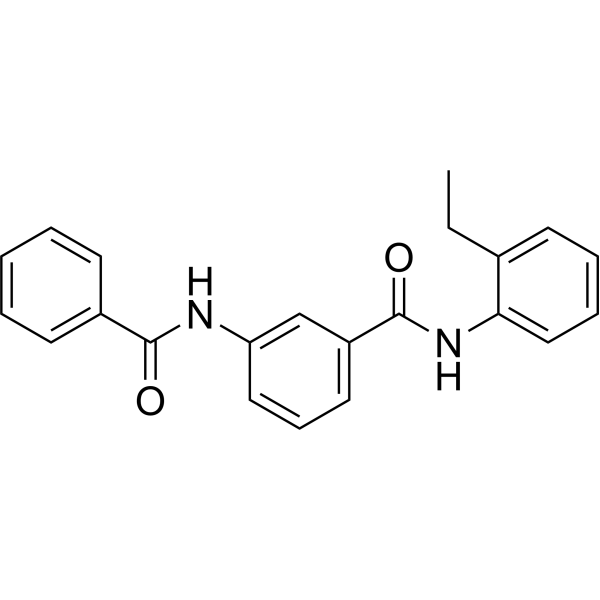
TASK-1-IN-1 is a potent and selective TASK-1 (Potassium Channel) inhibitor with an IC50 of 148 nM. TASK-1-IN-1 shows a reduced inhibition of TASK-3 channels (IC50 of 1750 nM) and not a significant effect on other K+ channels. TASK-1-IN-1 has anticancer effects.
loading...
    loading...
1
1 Cited Publications
Cat. No.: HY-B0551
CAS No.: 309-29-5
Target:  

Potassium Channel

Research Areas:  

Neurological Disease

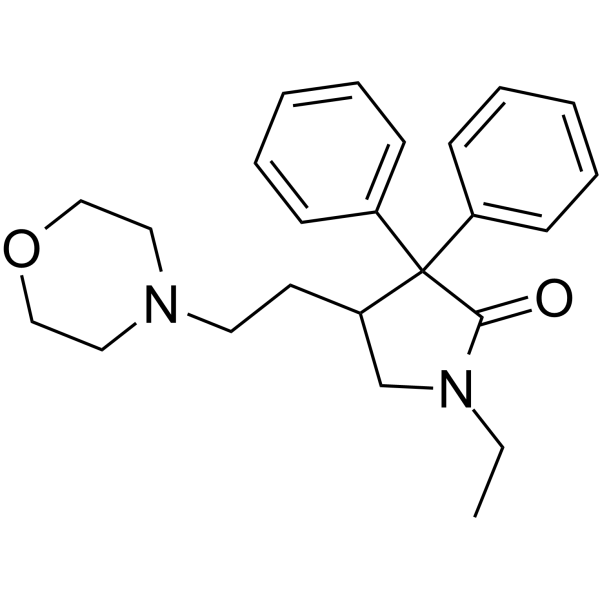
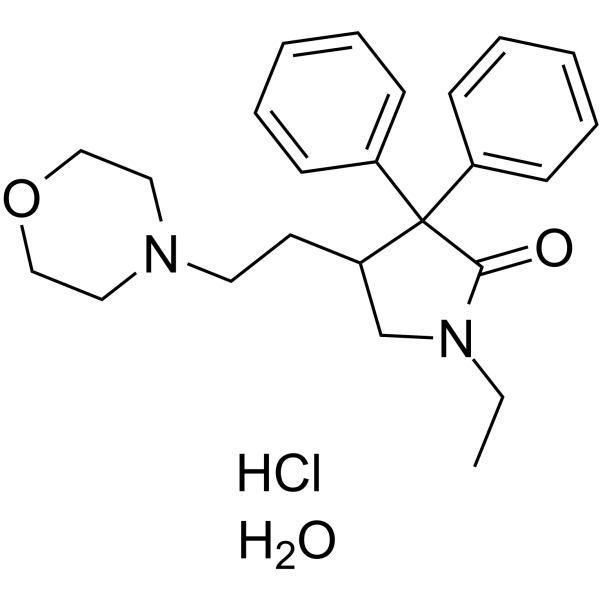
Doxapram is a respiratory stimulant. Doxapram increases breathing rate and depth by acting on the brain's respiratory centers and peripheral chemoreceptors. Doxapram inhibits TASK-1, TASK-3, TASK-1/TASK-3 heterodimeric channel function with EC50s of 410 nM, 37 μM, 9 μM, respectively. Doxapram inhibits the Ca²⁺-activated potassium current (IC50 ≈ 13 μM) and Ca²⁺-independent potassium current (IC50 ≈ 20 μM) in type I cells of the carotid body. Doxapram significantly prolongs the effective refractory period of the atrium and has an anti-arrhythmic effect. Doxapram can be used for the study of respiratory depression such as post-anesthesia respiratory depression, chronic obstructive pulmonary disease and apnea of prematurity [1] .
loading...
    loading...
1
1 Cited Publications
Cat. No.: HY-B0551A
CAS No.: 7081-53-0
Target:  

Potassium Channel

Research Areas:  

Neurological Disease

Doxapram hydrochloride hydrate is a respiratory stimulant. Doxapram hydrochloride hydrate increases breathing rate and depth by acting on the brain's respiratory centers and peripheral chemoreceptors. Doxapram hydrochloride hydrate inhibits TASK-1, TASK-3, TASK-1/TASK-3 heterodimeric channel function with EC50s of 410 nM, 37 μM, 9 μM, respectively. Doxapram hydrochloride hydrate inhibits the Ca²⁺-activated potassium current (IC50 ≈ 13 μM) and Ca²⁺-independent potassium current (IC50 ≈ 20 μM) in type I cells of the carotid body. Doxapram hydrochloride hydrate significantly prolongs the effective refractory period of the atrium and has an anti-arrhythmic effect. Doxapram hydrochloride hydrate can be used for the study of respiratory depression such as post-anesthesia respiratory depression, chronic obstructive pulmonary disease and apnea of prematurity [1] .
loading...
    loading...
1
1 Cited Publications
Cat. No.: HY-129146
CAS No.: 113-07-5
Target:  

Potassium Channel

Research Areas:  

Others

Doxapram (hydrochloride) is a ventilatory stimulant. Doxapram (hydrochloride) inhibits TASK Tandem Pore (K2P) potassium channel function. Doxapram (hydrochloride) inhibits TASK-1 and TASK-3 with an EC50 values of 410 and 37 nM, respectively. Doxapram (hydrochloride) inhibits TASK-1/TASK-3 heterodimeric channel function with an EC50 value of 9 μM. Doxapram (hydrochloride) can be studied in research on apnea in preterm infants [1] .
loading...
    loading...
Cat. No.: HY-137563
CAS No.: 88349-90-0
Purity:  98.50%
Target:  

Potassium Channel

Research Areas:  

Neurological Disease

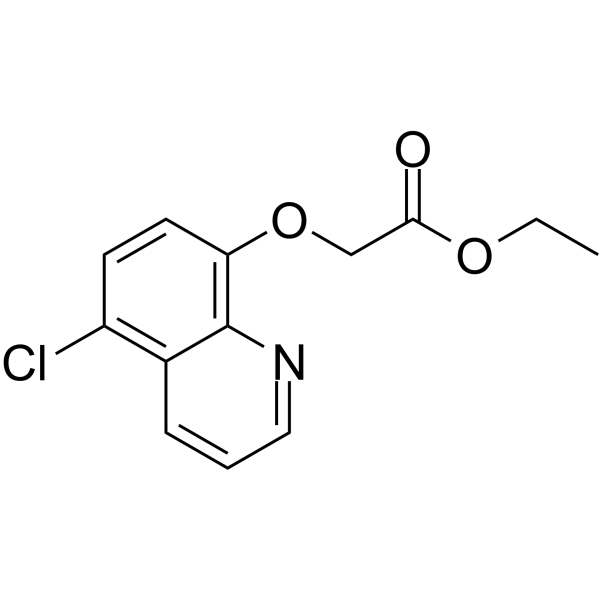
A2793 is an efficient dual TWIK-related acid-sensitive K + channel (TASK)-1/TRESK inhibitor, with an IC50 of 6.8 μM for mTRESK. A2764 is more selective for TRESK, and it only moderately influences TREK-1 and TALK-1 [1].
loading...
    loading...
Cat. No.: HY-110184
CAS No.: 1332454-07-5
Purity:  ≥99.0%
Target:  

Potassium Channel

Research Areas:  

Neurological Disease

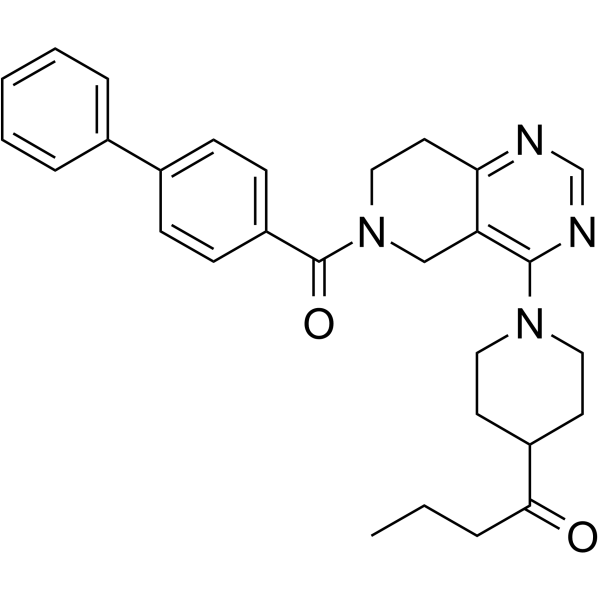
PK-THPP is a potent and brain-penetrant TWIK-related acid-sensitive K + ion channel (K2P9.1 or TASK-3) blocker with IC50s of 35 nM and 300 nM for TASK-3 and TASK-1, respectively. PK-THPP shows no or less activity against other K + channels. PK-THPP is an effective breathing stimulant and can be used for the study of breathing disorders [1] .
loading...
    loading...
Cat. No.: HY-126486
CAS No.: 767334-89-4
Purity:  98.61%
Synonyms: A293
Target:  

Potassium Channel

Research Areas:  

Cardiovascular Disease

AVE1231 (A293) is a dual-pore potassium channel TASK-1 inhibitor. AVE1231 blocks carbamoylcholine chloride (HY-B1208)-activated IKACh (IC50=8.4 μM). AVE1231 can be used in the study of arrhythmias and atrial fibrillation [1] .
loading...
    loading...
Cat. No.: HY-172182
CAS No.: 2230296-66-7
Synonyms: VU6011887
Target:  

Potassium Channel

Research Areas:  

Neurological Disease

ONO-2920632 is an orally active and central nervous system (CNS)-penetrant TREK activator, with EC50 values of 0.3 µM and 2.8 μM for TREK-1 and TREK-2, respectively. ONO-2920632 exhibits selectivity for other K2P channels (>91-fold selective versus TASK1, TASK2, TASK3, TRAAK, and TWIK2; 31-fold selective versus TRESK). ONO-2920632 possesses analgesic effects and can be used in research on pain, migraine, and neurological disorders.
loading...
    loading...
Cat. No.: HY-103067
CAS No.: 498577-46-1
Purity:  99.72%
Synonyms: S20951
A1899 is a potent and highly selective blocker of the K2P channel TASK-1. A1899 has IC50 values of 35.1 nM and 7 nM for TASK-1 channels expressed in oocytes and CHO cells, respectively. A1899 is also an IKur blocker that can be used for the research of cardiovascular diseases [1] .
loading...
    loading...
Cat. No.: HY-118628A
CAS No.: 99196-74-4
Synonyms: (E)-N-(p-Amylcinnamoyl) anthranilic acid
Target:  

Potassium Channel

Research Areas:  

Cardiovascular Disease

BML264 ((E)-N-(p-amylcinnamoyl) anthranilic acid) is an agonist for TREK-1. BML264 can be used to study diseases associated with TASK1 dysfunction [1].
loading...
    loading...
Cat. No.: HY-P703159
Synonyms: KCNK3; Two Pore K(+) Channel KT3.1; Potassium Two Pore Domain Channel Subfamily K Member 3; Potassium Inwardly-Rectifying Channel, Subfamily K, Member 3; TASK1; Acid-Sensitive Potassium Channel Protein TASK; TASK; Potassium Channel, Subfamily K, Member 3
Species:  
Human
Source:  
Sf9 insect cells
loading...
    loading...
Cat. No.: HY-129146S
Purity:  ≥99.0%
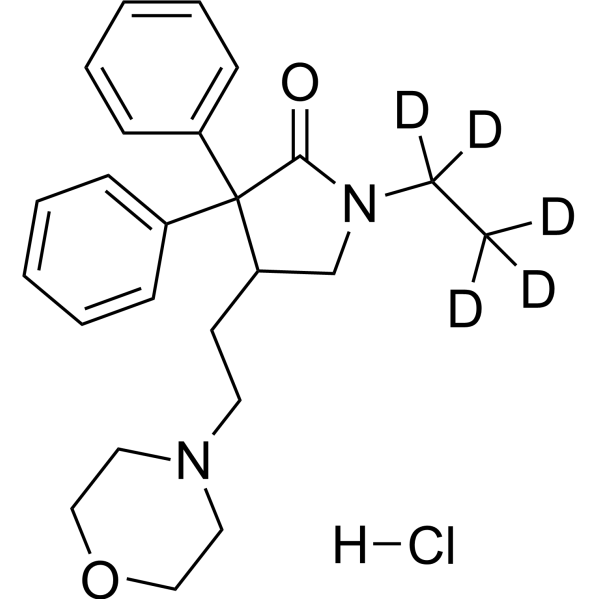
Doxapram-d5 hydrochloride is deuterium labeled Doxapram hydrochloride. Doxapram hydrochloride is a respiratory stimulant. Doxapram hydrochloride increases breathing rate and depth by acting on the brain's respiratory centers and peripheral chemoreceptors. Doxapram hydrochloride inhibits TASK-1, TASK-3, TASK-1/TASK-3 heterodimeric channel function with EC50s of 410 nM, 37 μM, 9 μM, respectively. Doxapram hydrochloride inhibits the Ca²⁺-activated potassium current (IC50 ≈ 13 μM) and Ca²⁺-independent potassium current (IC50 ≈ 20 μM) in type I cells of the carotid body. Doxapram hydrochloride significantly prolongs the effective refractory period of the atrium and has an anti-arrhythmic effect. Doxapram hydrochloride can be used for the study of respiratory depression such as post-anesthesia respiratory depression, chronic obstructive pulmonary disease and apnea of prematurity.
loading...
    loading...
Cat. No.: HY-B0551S
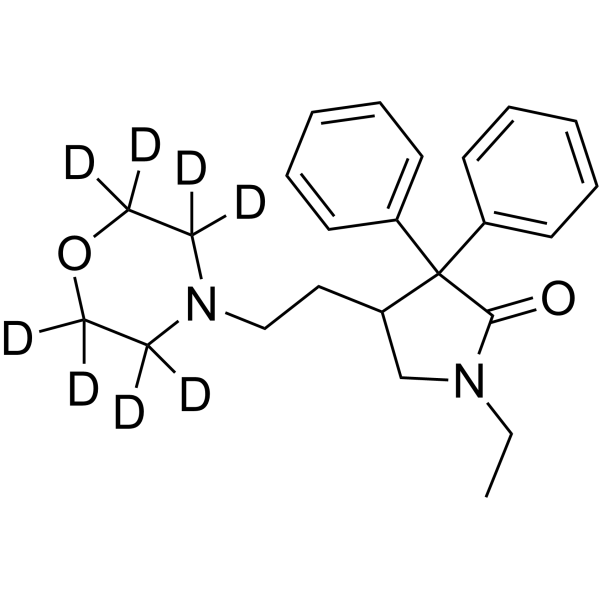
Doxapram-d8 is deuterated labeled Doxapram (HY-B0551). Doxapram is a respiratory stimulant. Doxapram increases breathing rate and depth by acting on the brain's respiratory centers and peripheral chemoreceptors. Doxapram inhibits TASK-1, TASK-3, TASK-1/TASK-3 heterodimeric channel function with EC50s of 410 nM, 37 μM, 9 μM, respectively. Doxapram inhibits the Ca²⁺-activated potassium current (IC50 ≈ 13 μM) and Ca²⁺-independent potassium current (IC50 ≈ 20 μM) in type I cells of the carotid body. Doxapram significantly prolongs the effective refractory period of the atrium and has an anti-arrhythmic effect. Doxapram can be used for the study of respiratory depression such as post-anesthesia respiratory depression, chronic obstructive pulmonary disease and apnea of prematurity.
loading...
    loading...
Cat. No.: HY-B0551AR
CAS No.: 7081-53-0
Doxapram hydrochloride hydrate (Standard) is the analytical standard of Doxapram hydrochloride hydrate (HY-B0551A). This product is intended for research and analytical applications. Doxapram hydrochloride hydrate is a respiratory stimulant. Doxapram hydrochloride hydrate increases breathing rate and depth by acting on the brain's respiratory centers and peripheral chemoreceptors. Doxapram hydrochloride hydrate inhibits TASK-1, TASK-3, TASK-1/TASK-3 heterodimeric channel function with EC50s of 410 nM, 37 μM, 9 μM, respectively. Doxapram hydrochloride hydrate inhibits the Ca²⁺-activated potassium current (IC50 ≈ 13 μM) and Ca²⁺-independent potassium current (IC50 ≈ 20 μM) in type I cells of the carotid body. Doxapram hydrochloride hydrate significantly prolongs the effective refractory period of the atrium and has an anti-arrhythmic effect. Doxapram hydrochloride hydrate can be used for the study of respiratory depression such as post-anesthesia respiratory depression, chronic obstructive pulmonary disease and apnea of prematurity.
loading...
    loading...
Cat. No.: HY-RS07159
Research Areas:  

Others

KCNK3 Human Pre-designed siRNA Set A contains three designed siRNAs for KCNK3 gene (Human), as well as a negative control, a positive control, and a FAM-labeled negative control.

loading...
    loading...
Cat. No.: HY-RS25944
Research Areas:  

Others

Kcnk3 Rat Pre-designed siRNA Set A contains three designed siRNAs for Kcnk3 gene (Rat), as well as a negative control, a positive control, and a FAM-labeled negative control.

loading...
    loading...
Cat. No.: HY-RS19452
Research Areas:  

Others

Kcnk3 Mouse Pre-designed siRNA Set A contains three designed siRNAs for Kcnk3 gene (Mouse), as well as a negative control, a positive control, and a FAM-labeled negative control.

loading...
    loading...
Cat. No.: HY-168166
CAS No.: 2489231-47-0
Target:  

Endogenous Metabolite

Research Areas:  

Neurological Disease

CHET3 is a sex-selective activator with potent analgesic activity. CHET3 was discovered to be a highly selective omnidirectional modulator of TASK-3-containing K2P channels, including TASK-3 homologues and TASK-3/TASK-1 heterologues. CHET3 exhibited significant analgesic effects in multiple acute and chronic pain models in mice, which could be abolished by pharmacological means or genetic knockout of TASK-3. CHET3 is able to functionally modulate the membrane excitability of specific small sensory neurons, which supports its analgesic effects on thermal hypersensitivity and mechanical hyperalgesia in chronic pain [1].
loading...
    loading...

