
18 Results for "

TGFβR inhibitor

" in MedChemExpress (MCE) Product Catalog:
Products (18)

18 Results for "TGFβR inhibitor" in MCE Product Catalog:

24
24 Publications Verification
Cat. No.: HY-13462
CAS No.: 396129-53-6
Purity:  99.14%
Synonyms: HTS466284
Target:  

TGF-β Receptor

Research Areas:  

Cancer

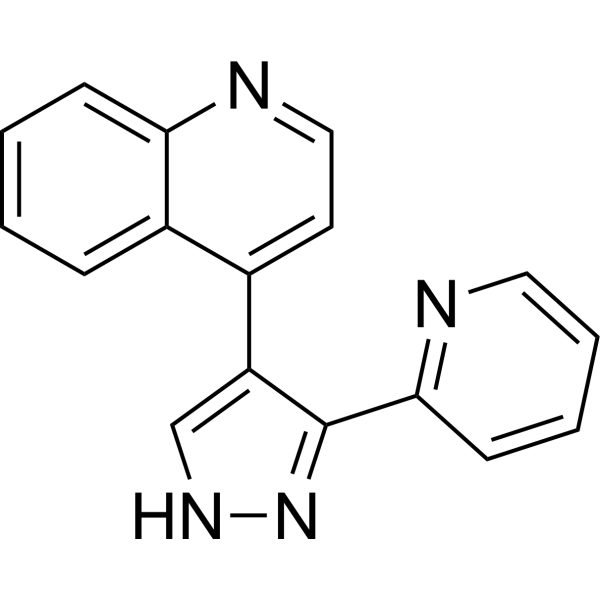
LY-364947 (HTS466284) is a potent ATP-competitive inhibitor of TGFβR-I with IC50 of 59 nM, and exhibits 7-fold selectivity over TGFβR-II .
loading...
    loading...
1
1 Cited Publications
Cat. No.: HY-18766
CAS No.: 1352609-28-9
Research Areas:  

Cancer

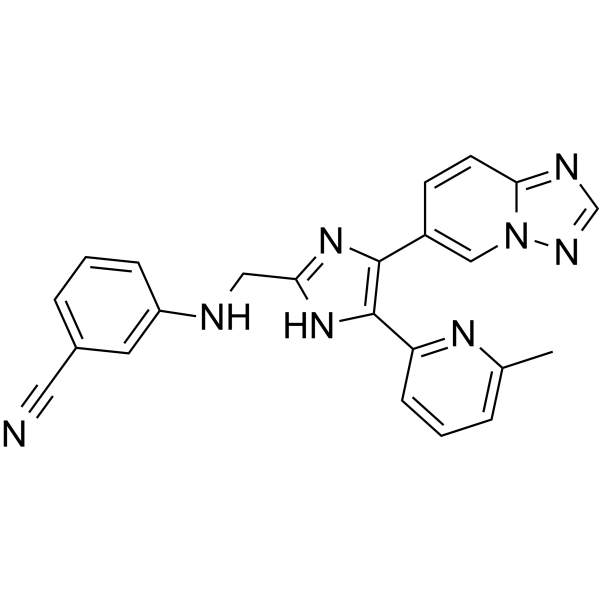
EW-7195 is a potent and selective ALK5 (TGFβR1) inhibitor with an IC50 of 4.83 nM. EW-7195 has >300-fold selectivity for ALK5 over p38α. EW-7195 efficiently inhibits TGF-β1-induced Smad signaling, epithelial-to-mesenchymal transition (EMT) and breast tumour metastasis to the lung .
loading...
    loading...
1
1 Cited Publications
Cat. No.: HY-N7694
CAS No.: 97871-44-8
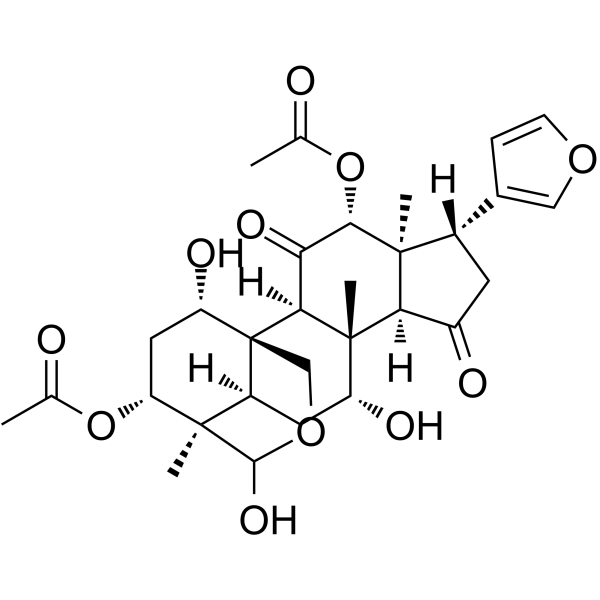
Isotoosendanin is an orally active TGFβR1 inhibitor and abrogating its kinase activity (IC50 = 6732 nM). Isotoosendanin inhibits the JAK/STAT3 signaling pathway by directly targeting SHP-2, enhancing its stability, and reducing its ubiquitination. Isotoosendanin inhibits TGF-β-induced reduces the migration, invasion, and metastasis in triple-negative breast cancer (TNBC) cells. Isotoosendanin exhibits anti-tumor efficacy in TNBC xenograft models and A549 xenograft tumors. Isotoosendanin exhibits significant anti-inflammatory effects in acetic acid-induced vascular permeability and λ-carrageenan-induced hind paw edema tests. Isotoosendanin can be used for the study of non-small cell lung cancer (NSCLC), TNBC and inflammation .
loading...
    loading...
1
1 Cited Publications
Cat. No.: HY-163121
CAS No.: 1096144-06-7
PST3.1a is an orally active and brain-penetrant N-acetylglucosamine glycosyltransferase (MGAT5) inhibitor with a human IC50 of 2 µM. PST3.1a inhibits TGFβR and FAK signaling pathway activity. PST3.1a alters β1,6-GlcNAc N-glycans and microtubule/microfilament integrity, increases OLIG2 expression, and inhibits proliferation, migration, invasiveness, and clonogenic capacities of glioblastoma initiating cells. PST3.1a reduces invasive and proliferative capacity of glioblastoma initiating cells in orthotopic graft models, increases overall survival of orthotopic graft model mice. PST3.1a blunts MGAT5 overexpression, decreases renal fibrosis via collagen 1, collagen 4, and galectin 3 downregulation in a rat chronic kidney disease model. PST3.1a can be used for the research of glioblastoma multiforme and chronic kidney disease .
loading...
    loading...
Cat. No.: HY-168990
CAS No.: 2647949-48-0
Synonyms: AGMB-129
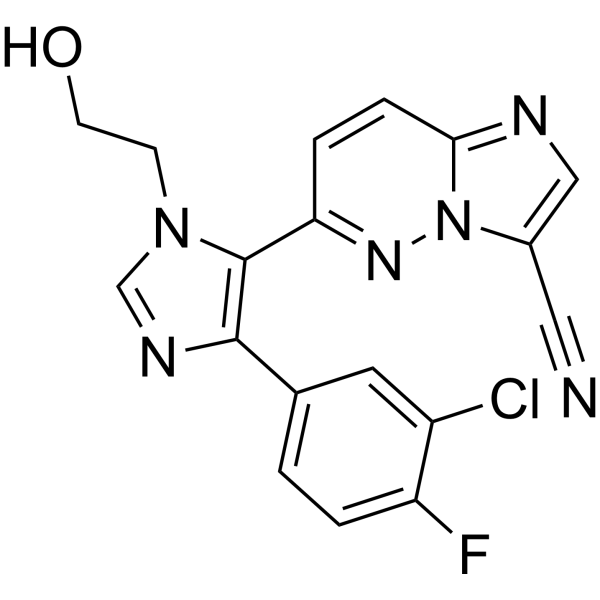
Ontunisertib (AGMB-129) is an orally active and selective gastrointestinal-restricted ALK5 (TGFβR1) inhibitor. Ontunisertib blocks signalling of the pro-fibrotic TGFβ pathway. Ontunisertib can be used for the research of fibrostenotic Crohn’s disease .
loading...
    loading...
Cat. No.: HY-W107024
CAS No.: 2001559-19-7
Target:  

TGF-β Receptor

Research Areas:  

Inflammation/Immunology Cancer

BMS-986260, an immuno-oncology agent, is a potent, selective, and orally active TGFβR1 inhibitor (IC50=1.6 nM). BMS-986260 displays exquisite selectivity for TGFβR1 over its isozyme TGFβR2, as well as in a panel of more than 200 kinases examined. BMS-986260 inhibits TGFβ mediated nuclear translocation of pSMAD2/3 in MINK and NHLF cells lines with an IC50 of 350 nM and 190 nM, respectively .
loading...
    loading...
Cat. No.: HY-117887
CAS No.: 2141955-96-4
Synonyms: BLU-782; IPN-60130; ALK2-IN-1
Target:  

TGF-β Receptor

Research Areas:  

Cancer

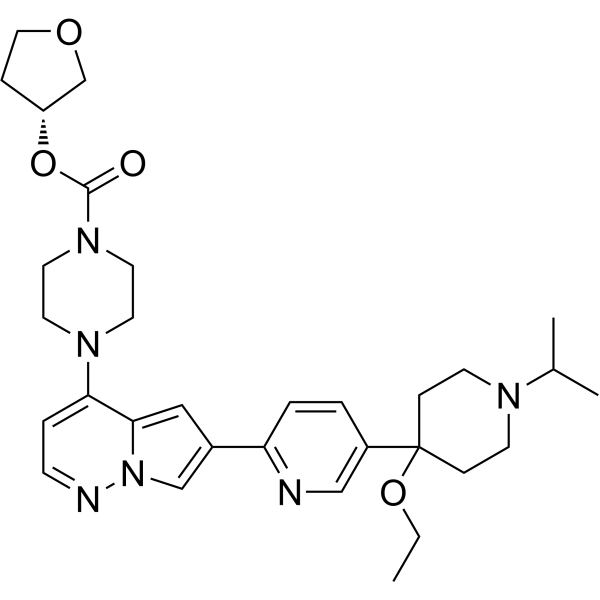
Fidrisertib (BLU-782) is the orally active inhibitor for activin receptor-like kinase 2 (ALK2) that inhibits ALK2 R206H, ALK2, ALK1, ALK6, ALK3, ALK4, TGFβR2 and ALK5 with IC50s of 0.2, 0.6, 3, 24, 45, 65, 67 and 155 nM, respectively .
loading...
    loading...
Cat. No.: HY-160215
CAS No.: 2169299-67-4
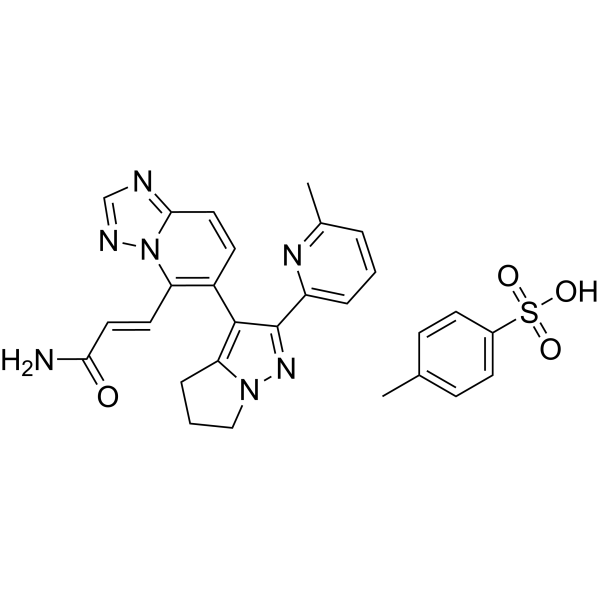
GFH018 is an orally active, selective and ATP-competitive TGF-βR1 inhibitor with an IC50 of 40 nM. GFH018 reactivates the immune system by blocking the immunosuppression mediated by regulatory T cells and M2 macrophages. GFH018 inhibits tumor angiogenesis. GFH018 suppresses tumor growth in mouse tumor models. GFH018 can be used for the research of solid tumors, hepatocellular carcinoma, colorectal cancer, breast cancer, and relapsed/metastatic nasopharyngeal carcinoma .
loading...
    loading...
Cat. No.: HY-P990009
CAS No.: 2649854-92-0
Synonyms: NIS-793

Research Areas:  

Cancer

Nisevokitug (NIS-793) is a humanized IgG2λ monoclonal antibody and an inhibitor of the TGF-β signaling pathway. Nisevokitug blocks the binding of TGF-β to the membrane-bound TGF-βR1/TGF-βR2 receptors, inhibits both Smad-dependent and Smad-independent downstream cascade signaling, downregulates fibrosis-related genes, and reverses the TGF-β-mediated immunosuppressive microenvironment. Nisevokitug can be used in the research of diseases such as pancreatic ductal adenocarcinoma, colorectal cancer, myelofibrosis, and myelodysplastic syndrome .
loading...
    loading...
Cat. No.: HY-146693
CAS No.: 1807631-83-9
Purity:  99.36%
Target:  

TGF-β Receptor

Research Areas:  

Cancer

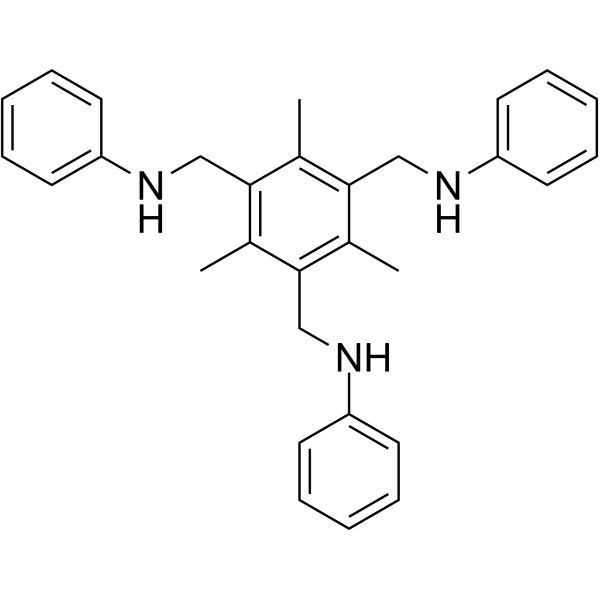
CJJ300 is a transforming growth factor-β (TGF-β) inhibitor with an IC50 of 5.3 µM. CJJ300 inhibits TGF-β signaling by disrupting the formation of the TGF-β-TβR-I-TβR-II signaling complex .
loading...
    loading...
Cat. No.: HY-132290
CAS No.: 2763602-67-9
Purity:  98.21%
Target:  

TGF-β Receptor

Research Areas:  

Inflammation/Immunology Cancer

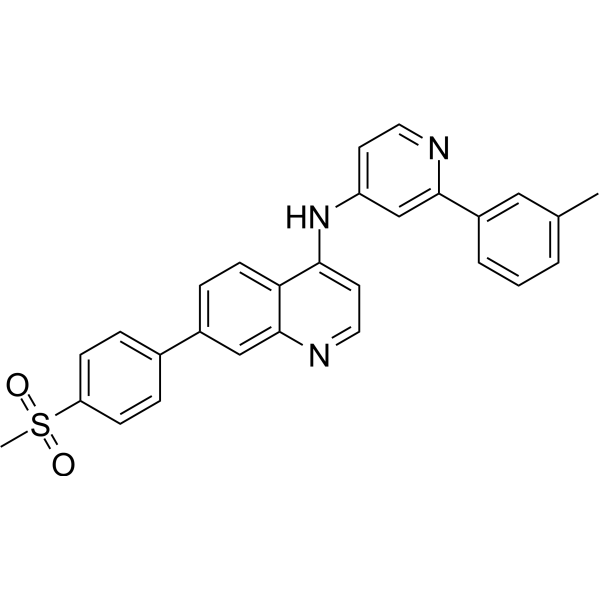
TGFβRI-IN-3 inhibits TGFβR1 at an IC50 of 0.79 nM with 2000-fold selectivity against MAP4K4. TGFβRI-IN-3 represents a highly selective TGFβR1 inhibitor that has potential applications in immuno-oncology .
loading...
    loading...
Cat. No.: HY-P10414A
Synonyms: KP1 (human) hydrochloride
Target:  

TGF-β Receptor

Research Areas:  

Infection Endocrinology

Klotho-derived peptide 1 hydrochloride (KP1 (human) hydrochloride) is a polypeptide with multiple activities including senescence inhibition and renal protection. Klotho-derived peptide 1 hydrochloride binds to TβR2 and ATAD3A, with a Kd value of 1.41 μM for binding to human TβR2 and a Kd value of 0.319 μM for binding to ATAD3A. By binding to TβR2, Klotho-derived peptide 1 hydrochloride blocks the TGF-β/Smad3 and downstream TGF-β signaling pathways, inhibits the expression of miR-223-3p, induces the expression of lncRNA-TUG1, restores endogenous Klotho at the post-transcriptional level, inhibits cellular senescence markers, fibroblast activation and renal tubular epithelial cell apoptosis, blocks cytochrome c release and caspase activation, maintains the integrity of mitochondrial ultrastructure, and restores mitochondrial protein levels. Klotho-derived peptide 1 hydrochloride enters renal tubular epithelial cells via endocytosis, protects against nephrotoxic and hypoxic injuries, and recapitulates the renal protective and anti-fibrotic effects of full-length Klotho. Klotho-derived peptide 1 hydrochloride can be used in research related to kidney diseases such as chronic kidney disease and SARS-CoV-2-associated acute kidney injury .
loading...
    loading...
Cat. No.: HY-P10414
Synonyms: KP1 (human)
Target:  

TGF-β Receptor

Research Areas:  

Infection Endocrinology

Klotho-derived peptide 1 (KP1 (human)) is a polypeptide with multiple activities including senescence inhibition and renal protection. Klotho-derived peptide 1 binds to TβR2 and ATAD3A, with a Kd value of 1.41 μM for binding to human TβR2 and a Kd value of 0.319 μM for binding to ATAD3A. By binding to TβR2, Klotho-derived peptide 1 blocks the TGF-β/Smad3 and downstream TGF-β signaling pathways, inhibits the expression of miR-223-3p, induces the expression of lncRNA-TUG1, restores endogenous Klotho at the post-transcriptional level, inhibits cellular senescence markers, fibroblast activation and renal tubular epithelial cell apoptosis, blocks cytochrome c release and caspase activation, maintains the integrity of mitochondrial ultrastructure, and restores mitochondrial protein levels. Klotho-derived peptide 1 enters renal tubular epithelial cells via endocytosis, protects against nephrotoxic and hypoxic injuries, and recapitulates the renal protective and anti-fibrotic effects of full-length Klotho. Klotho-derived peptide 1 can be used in research related to kidney diseases such as chronic kidney disease and SARS-CoV-2-associated acute kidney injury .
loading...
    loading...
Cat. No.: HY-160215A
CAS No.: 2345717-52-2
GFH018 is an orally active, selective and ATP-competitive TGF-βR1 inhibitor with an IC50 of 40 nM. GFH018 reactivates the immune system by blocking the immunosuppression mediated by regulatory T cells and M2 macrophages. GFH018 inhibits tumor angiogenesis. GFH018 suppresses tumor growth in mouse tumor models. GFH018 can be used for the research of solid tumors, hepatocellular carcinoma, colorectal cancer, breast cancer, and relapsed/metastatic nasopharyngeal carcinoma .
loading...
    loading...
Cat. No.: HY-139858
CAS No.: 2857845-36-2
Target:  

TGF-β Receptor

Research Areas:  

Cancer

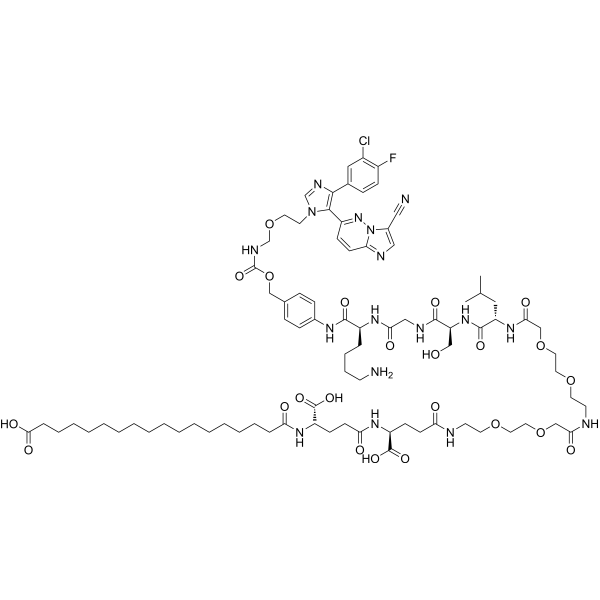
TGFβR-IN-1 is a long-acting tumor-activated proagent of a TGFβR inhibitor.
loading...
    loading...
Cat. No.: HY-151279
CAS No.: 2785430-86-4
Research Areas:  

Cancer

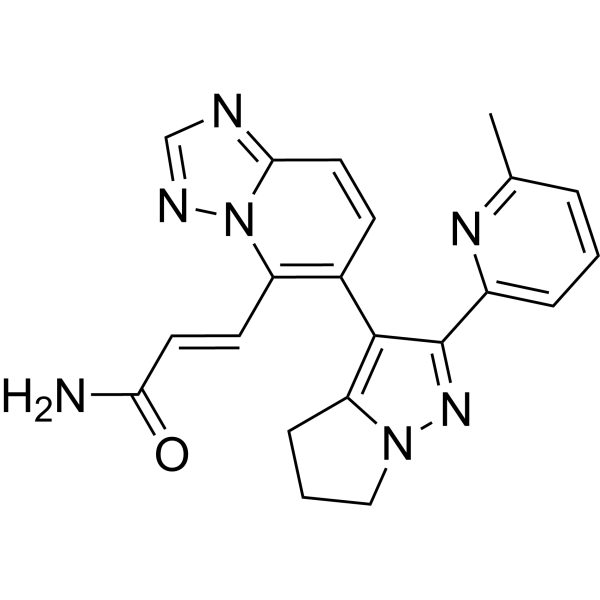
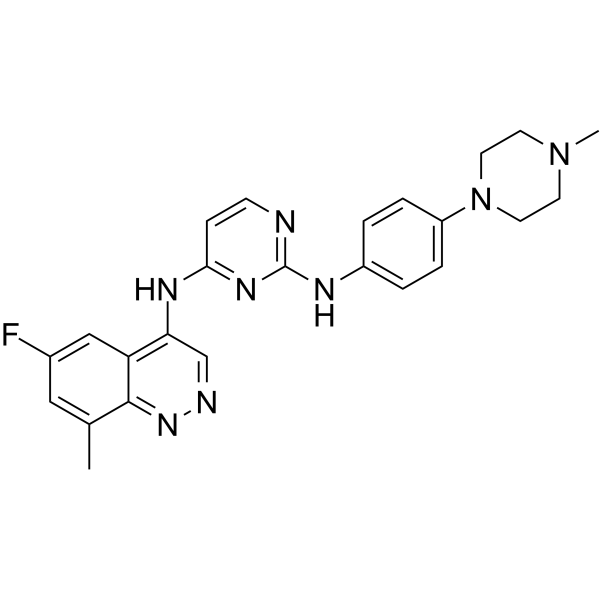
ALK5-IN-30 (EX-07) is a potent ALK inhibitor, inhibits ALK5 and TGFβ-R1 with both IC50s <10 nM .
loading...
    loading...
Cat. No.: HY-187187
Target:  

TGF-β Receptor VEGFR

Research Areas:  

Cancer

TGF-βR1/VEGFR2-IN-1 is a dual inhibitor targeting TGF-βR1/VEGFR2, with an IC50 of 232.5 nM against human TGF-βR1 and an IC50 of 371.4 nM against human VEGFR2. TGF-βR1/VEGFR2-IN-1 mediates antiproliferative effects by inhibiting the TGF-βR1 and VEGFR2 signaling pathways. TGF-βR1/VEGFR2-IN-1 can be used in research related to colorectal cancer, non-small cell lung cancer, cervical cancer, and hepatocellular carcinoma .
loading...
    loading...
Cat. No.: HY-149196
CAS No.: 2857845-34-0
Target:  

TGF-β Receptor

Research Areas:  

Cancer

TGFβ-IN-3 (Compound 8) is a long-acting tumor-activating prodrug of TGFβR1 inhibitor. TGFβ-IN-3 can achieve selective drug release in tumors, and the tumor/blood ratio is increased by 2.2 times. TGFβ-IN-3 can be used for the study of colon cancer .
loading...
    loading...
  • 1

