Search Result
Results for "
TRPV1 agonist
" in MedChemExpress (MCE) Product Catalog:
4
Isotope-Labeled Compounds
| Cat. No. |
Product Name |
Target |
Research Areas |
Chemical Structure |
-
- HY-10448
-
-
-
- HY-N2333
-
|
(+)-Resiniferatoxin
|
TRP Channel
|
Cardiovascular Disease
Cancer
|
|
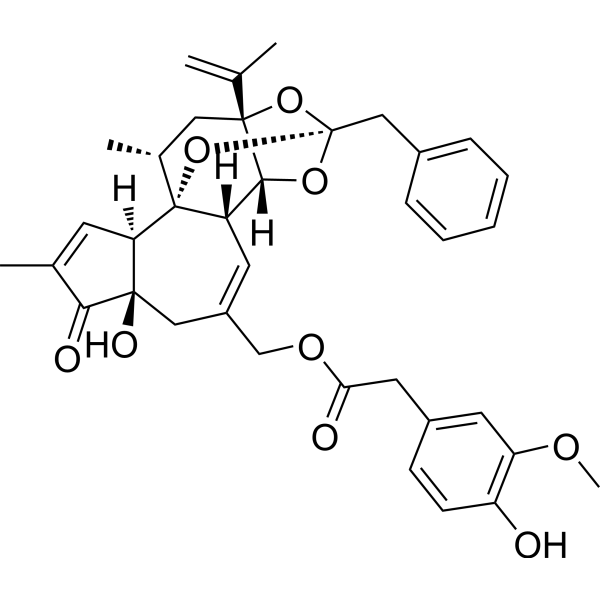
Resiniferatoxin ((+)-Resiniferatoxin), is a selective agonist of transient receptor potential vanilloid 1 (TRPV1) receptor agonist. Resiniferatoxin can be isolated from the Euphorbia resinifera plant. Resiniferatoxin eliminates TRPV1+ primary sensory afferents and blunt cardiac sympathetic afferent reflex for a relatively long period .
|
-
-
- HY-N0285
-
-
-
- HY-N6825
-
-
-
- HY-10448A
-
-
-
- HY-17568
-
-
-
- HY-10448R
-
|
(E)-Capsaicin (Standard)
|
Reference Standards
TRP Channel
Autophagy
Apoptosis
Endogenous Metabolite
|
Cancer
|
|
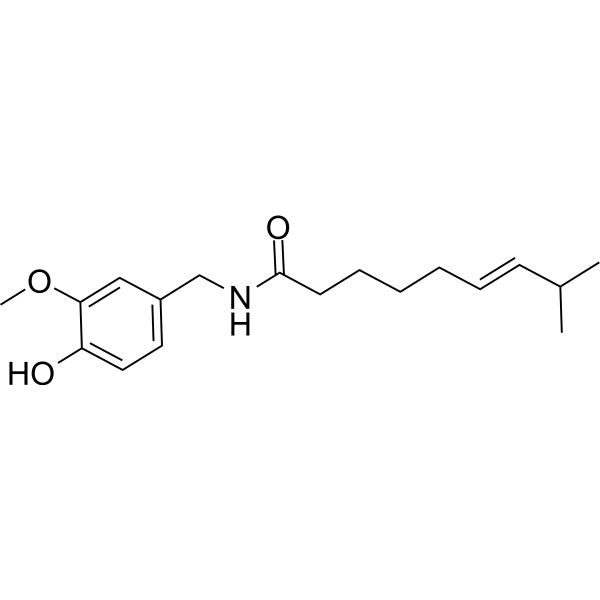
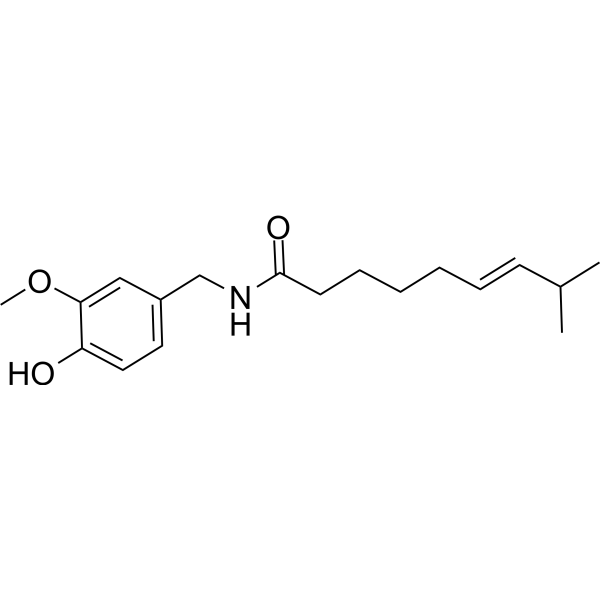
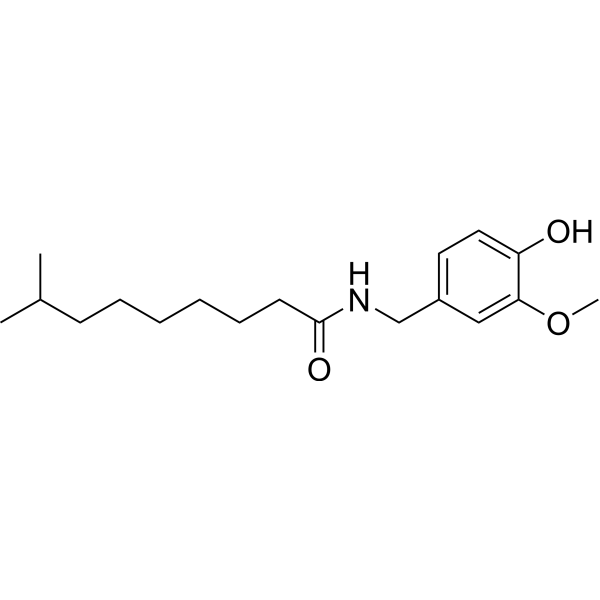
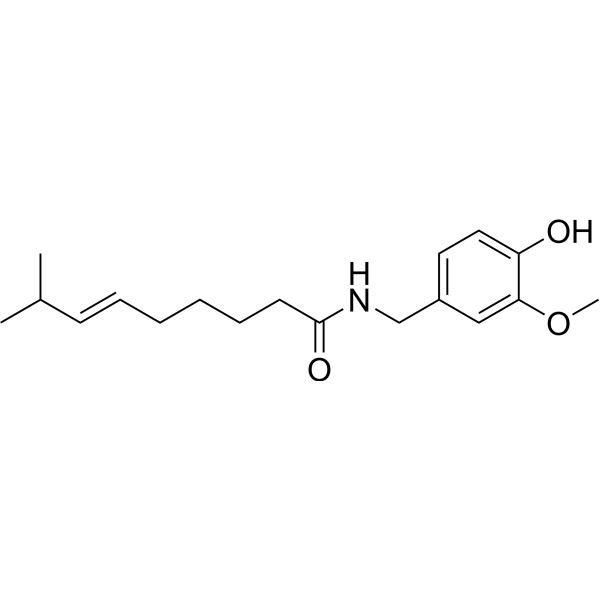
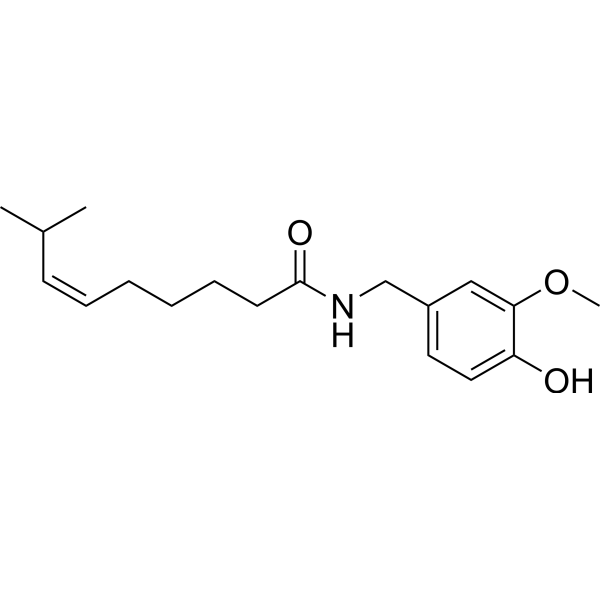
Capsaicin (Standard) is the analytical standard of Capsaicin. This product is intended for research and analytical applications. Capsaicin ((E)-Capsaicin), an active component of chili peppers, is a TRPV1 agonist. Capsaicin induces a nociceptive response by binding to its receptors. Capsaicin has analgesic effects on neurological disorders. Capsaicin has antioxidant, anti-inflammatory, anti-cancer effects .
|
-
-
- HY-N0361
-
-
-
- HY-P3467
-
-
-
- HY-B1583
-
|
Zucapsaicin; Civamide; cis-Capsaicin
|
TRP Channel
HSV
|
Neurological Disease
|
|
(Z)-Capsaicin is the cis isomer of capsaicin, acts as an orally active TRPV1 agonist, and is used in the research of neuropathic pain.
|
-
-
- HY-N8264
-
|
|
TRP Channel
|
Neurological Disease
Inflammation/Immunology
Cancer
|
|
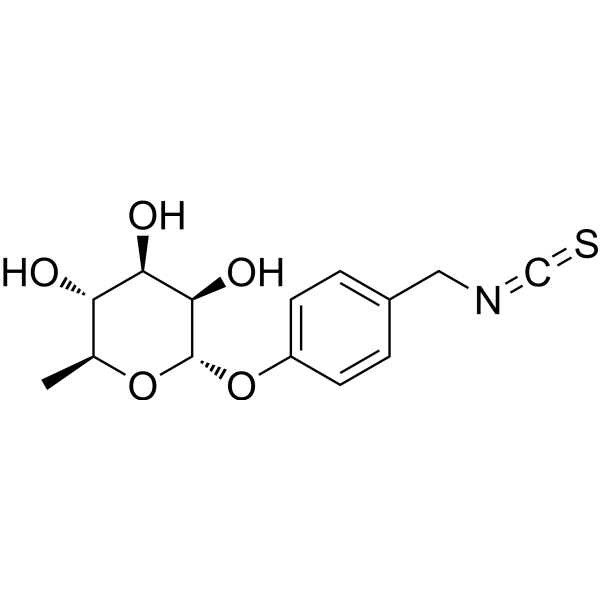
Moringin is a potent and selective TRPA1 ion channel natural agonist with an EC50 of 3.14 μM. Moringin does not activate or activates very weakly the vanilloids somatosensory channels TRPV1, TRPV2, TRPV3 and TRPV4, and the melastatin cooling receptor TRPM8. Moringin has hypoglycemic, antimicrobial, anti-inflammatory, anticancer and neuroprotection activities .
|
-
-
- HY-B1177
-
|
|
Environmental Pollutants
TRP Channel
Parasite
|
Infection
|
|
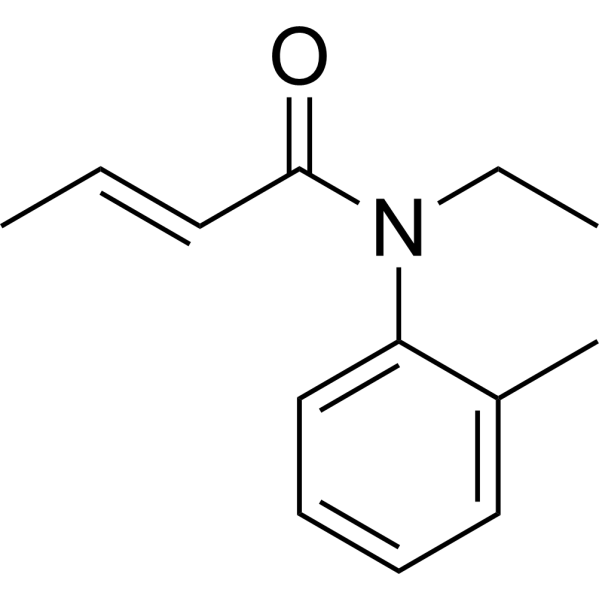
Crotamiton is a TRPV4 inhibitor. Crotamiton inhibits TRPV4 currents. Crotamiton inhibits TRPV4 selective agonist-induced pruritus-related behaviors in mice. Crotamiton inhibits Histamine- and Chloroquine-induced calcium influx via the H1R/TRPV1, MRGPRA3/TRPA1 pathways, and also suppresses calcium influx in primary mouse dorsal root ganglion neurons. Crotamiton is applicable to research related to pruritus, scabies, and non-scabietic pruritus .
|
-
-
- HY-103325
-
|
|
Cannabinoid Receptor
TRP Channel
Interleukin Related
ANGPTL
VEGFR
|
Metabolic Disease
Inflammation/Immunology
|
|
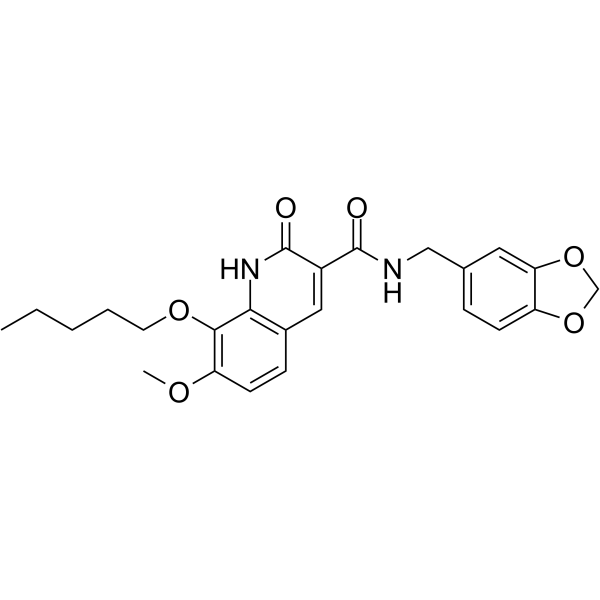
JTE-907 is a selective and orally active cannabinoid CB2 receptor inverse agonist and exerts anti-inflammatory effects. JTE-907 upregulates IL-6, MCP-1, IL-1β, VEGF, ANGPTL4, and TRPV1 in mature adipocytes. JTE-907 downregulates CB1, MCP-1, and IL-1β in preadipocytes. JTE-907 inhibits ear swelling in mice. JTE-907 reverses the protective effects of CB2 agonists and Anandamide (HY-10863) against cytokine-evoked colonic mucosal damage. JTE-907 can be used for the research of allergic dermatitis, obesity, and colitis .
|
-
-
- HY-101323
-
|
NE-19550; N-Vanillyloleamide
|
TRP Channel
|
Neurological Disease
|
|
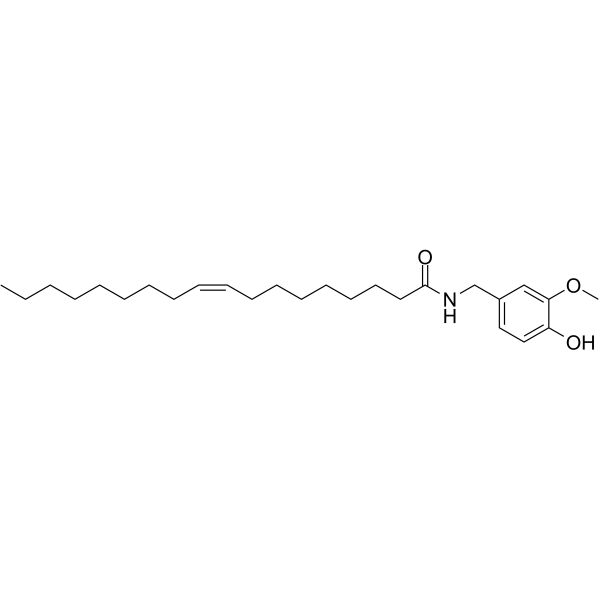
Olvanil (NE-19550) is an analgesic and an agonist of transient receptor potential vanilloid type 1 (TRPV1) channels with an EC50 of 0.7 nM .
|
-
-
- HY-N8377
-
|
|
TRP Channel
|
Inflammation/Immunology
|
|
Capsiate, as a capsaicin analogue extracted from a non-pungent cultivar of CH-19 sweet red pepper, is an orally active agonist of TRPV1 .
|
-
-
- HY-W020468
-
|
DuP 996
|
Potassium Channel
TRP Channel
|
Neurological Disease
|
|
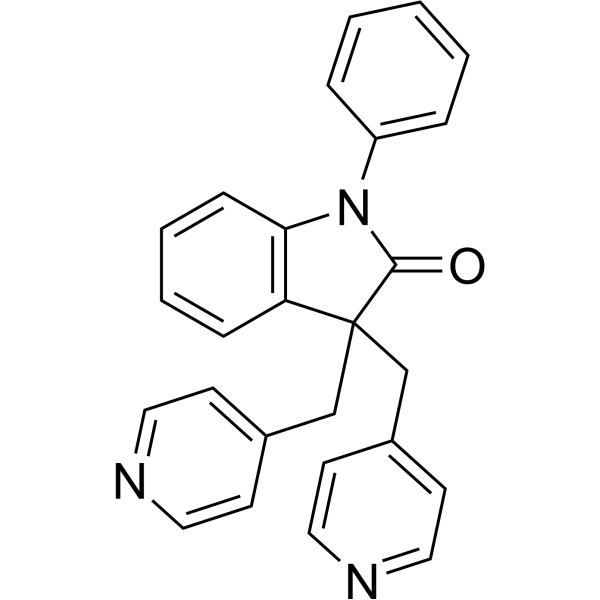
Linopirdine (DuP 996) is an orally active, selective M-type K + current (IM; Kv7; KCNQ Channels) inhibitor with an IC50 of 2.4 μM. Linopirdine is a TRPV1 agonist. Linopirdine, a putative cognition enhancing agent, increases acetylcholine release in rat brain tissue .
|
-
-
- HY-136363
-
|
|
TRP Channel
|
Neurological Disease
|
|
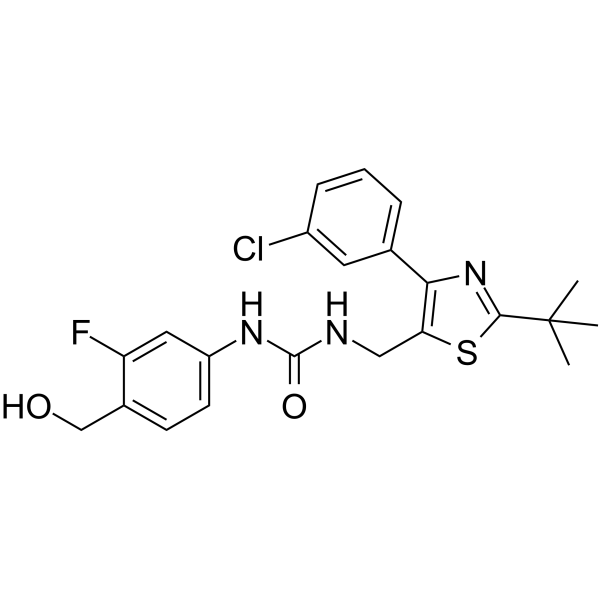
MDR-652 is a highly specific and efficacious transient receptor potential vanilloid 1 (TRPV1) ligand with agonist activity. The Kis are 11.4 and 23.8 nM for hTRPV1 and rTRPV1, respectively. The EC50s are 5.05 and 93 nM for hTRPV1 and rTRPV1, respectively. Potent topical analgesic activity .
|
-
-
- HY-B1173
-
|
D-(+)-Camphor; (1R)-(+)-Camphor
|
Environmental Pollutants
Bacterial
|
Neurological Disease
Inflammation/Immunology
Cancer
|
|
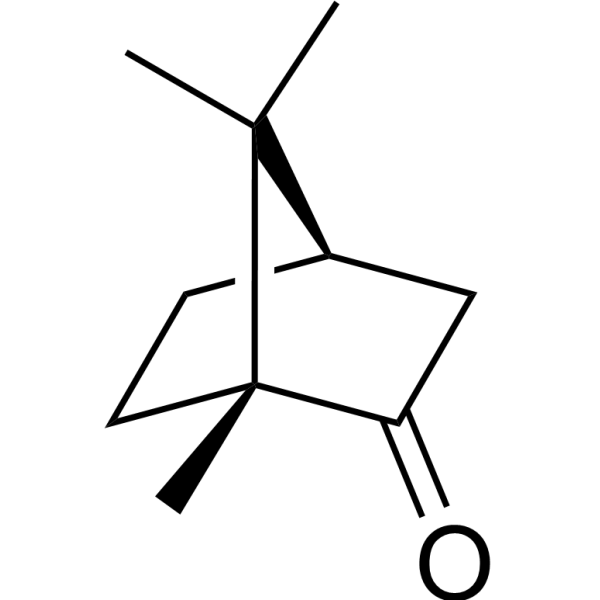
(+)-Camphor (D-(+)-Camphor; (1R)-(+)-Camphor) is an isomer of Camphor. Camphor is an agonist of monoterpenoid transient receptor potential (TRP) channels (such as TRPV1, TRPV3, TRPM8) and an inhibitor of TRPA1 channels. Camphor's derivatives have multiple biological activities, including antibacterial, antiviral, antioxidant, analgesic and anticancer. Camphor can selectively activate cold-sensitive TRP channels and inhibit TRPA1-mediated nociceptive signals. Camphor stimulates the cold-sensing nerve endings in the skin and regulates the activity of ion channels to exert analgesic, anti-inflammatory and anti-itching effects. It also has anti-proliferative and anti-mutagenic activities on tumor cells, which may be related to inhibiting ribosome function or inducing cell apoptosis. Camphor can be absorbed through the skin and (+)-Camphor can be used in the study of muscle and joint pain and inflammation .
|
-
-
- HY-110018
-
-
-
- HY-174344
-
|
|
TRP Channel
|
Others
|
|
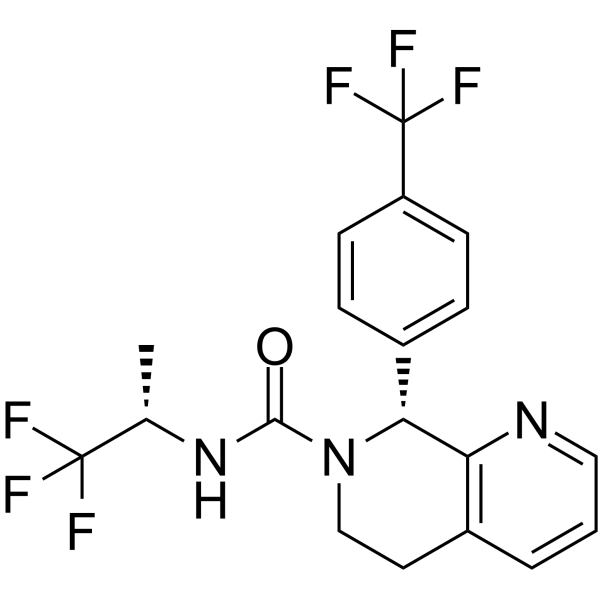
TRPV1 agonist-1 (Compound 13) is an orally active non-irritating TRPV1 agonist with EC50 values of 4.5 and 0.57 nM for human and rat. TRPV1 agonist-1 can improve swallowing function in rats. TRPV1 agonist-1 can be used in the research of dysphagia .
|
-
-
- HY-103333
-
|
N-Vanillylarachidonamide
|
TRP Channel
Cannabinoid Receptor
CD74
Akt
Orexin Receptor (OX Receptor)
|
Neurological Disease
Inflammation/Immunology
|
|
Arvanil (N-Vanillylarachidonamide) is a mixed agonist of CB1 and TRPV1 receptors. Arvanil downregulates CD25, HLA-DR, CD134/OX40, blocks G1/S phase transition, and induces phosphorylation of Akt. Arvanil does not induce apoptosis in cells. Arvanil inhibits lymphocyte activation and ameliorates autoimmune encephalomyelitis. Arvanil can be used in research related to Huntington's disease, vomiting, and multiple sclerosis .
|
-
-
- HY-124073
-
|
|
TRP Channel
|
Metabolic Disease
|
|
Dihydrocapsiate, as a compound of capsinoid family, is an orally active TRPV1 agonist. Dihydrocapsiate can be used for the research of metabolism disease .
|
-
-
- HY-101389
-
-
-
- HY-16413
-
|
Caytine hydrochloride; JB-251 hydrochloride
|
TRP Channel
Adrenergic Receptor
|
Others
|
|
Protokylol hydrochloride (Caytine hydrochloride; JB-251 hydrochloride) is the hydrochloride salt form of Protokylol (HY-114630). Protokylol hydrochloride is an agonist for β2-adrenergic receptor and TRPV1. Protokylol hydrochloride exhibits activity as a bronchodilator .
|
-
-
- HY-N0285R
-
|
Ammidin (Standard)
|
Reference Standards
Cholinesterase (ChE)
TRP Channel
|
Neurological Disease
|
|
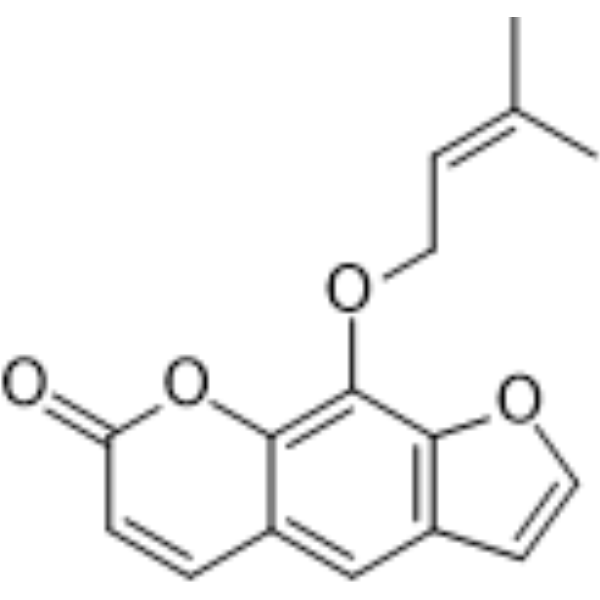
Imperatorin (Standard) is the analytical standard of Imperatorin. This product is intended for research and analytical applications. Imperatorin is an effective of NO synthesis inhibitor (IC50=9.2 μmol), which also is a BChE inhibitor (IC50=31.4 μmol). Imperatorin is a weak agonist of TRPV1 with EC50 of 12.6±3.2 μM.
|
-
-
- HY-105285
-
|
Neu-P11
|
Melatonin Receptor
5-HT Receptor
P2X Receptor
TRP Channel
Sodium Channel
|
Neurological Disease
|
|
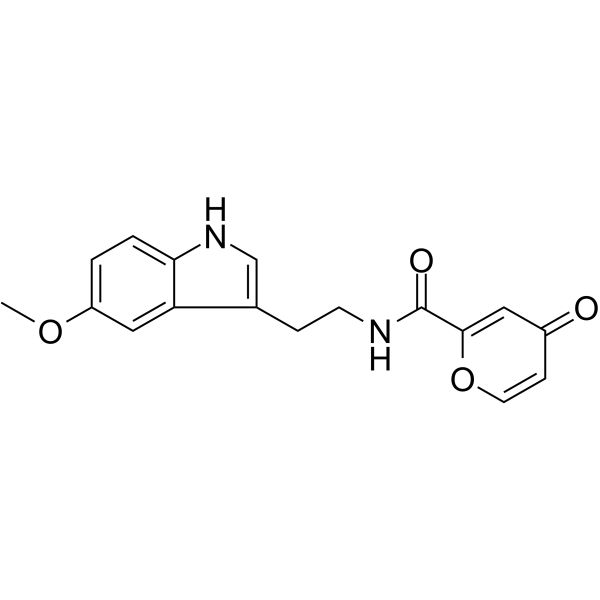
Piromelatine (Neu-P11) is a melatonin MT1/MT2 receptor agonist, serotonin 5-HT1A/5-HT1D agonist, and serotonin 5-HT2B antagonist. Piromelatine (Neu-P11) possesses sleep promoting, analgesic, anti-neurodegenerative, anxiolytic and antidepressant potentials. Piromelatine (Neu-P11) also possesses pain-related P2X3, TRPV1, and Nav1.7 channel-inhibition capacities .
|
-
-
- HY-118785
-
-
-
- HY-N7536
-
|
|
TRP Channel
|
Others
|
|
Voacangine is an antagonist for TRPV1 and TRPM8 but as an agonist for TRPA1 (EC50=8 μM). Voacangine competitively blockes capsaicin binding to TRPV1 (IC50=50 μM). Voacangine competitively inhibits the binding of menthol to TRPM8 (IC50=9 μM) and it shows noncompetitive inhibition against icilin (IC50=7 μM). Voacangine selectively abrogates chemical agonist-induced TRPM8 activation and did not affect cold-induced activation. Voacangine is an alkaloid isolated from the root bark of Voacanga africana .
|
-
-
- HY-W747573
-
|
18:3 NAE; α-Linolenoyl ethanolamide
|
TRP Channel
|
Neurological Disease
|
|
N-Linolenoylethanolamine (18:3 NAE) is an endocannabinoid. N-Linolenoylethanolamine is a vanillin receptor (TRPV1) agonist .
|
-
-
- HY-N6825R
-
|
|
Reference Standards
TRP Channel
Endogenous Metabolite
|
Neurological Disease
|
|
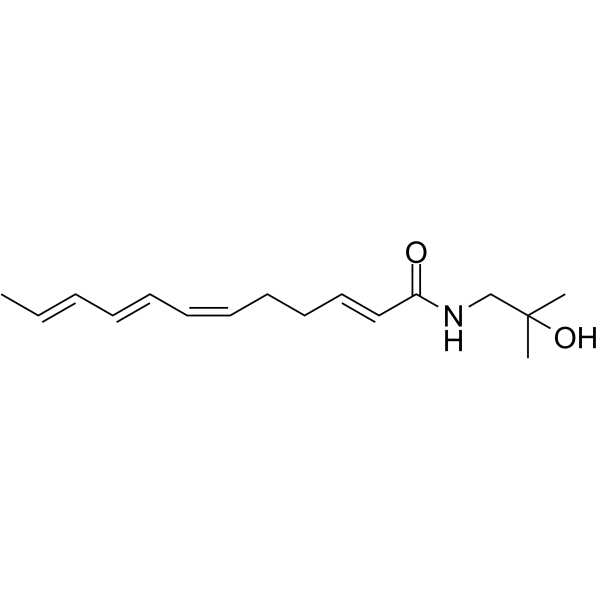
Hydroxy-α-sanshool (Standard) is the analytical standard of Hydroxy-α-sanshool. This product is intended for research and analytical applications. Hydroxy-α-sanshool is a transient receptor potential ankyrin 1 (TRPA1) and TRP vanilloid 1 (TRPV1) agonist with EC50s of 69 and 1.1 μM, respectively. Hydroxy-α-sanshool can be used for pain research .
|
-
-
- HY-137459
-
|
CA-008
|
TRP Channel
|
Neurological Disease
|
|
Vocacapsaicin (CA-008), a proagent of Capsaicin, is a first-in-class non-opioid TRPV1 agonist. Vocacapsaicin can provide meaningful and long-lasting pain relief .
|
-
-
- HY-162908
-
-
-
- HY-176063
-
|
|
TRP Channel
Opioid Receptor
|
Neurological Disease
|
|
TRPV1 antagonist 11 (compound 2ac) is a potent TRPV1 antagonist with an IC50 of 29.3 nM. TRPV1 antagonist 11 is a potent μ-opioid receptor (MOR) agonist with a Ki of 60.3 nM. TRPV1 antagonist 11, a pyrimidine piperazine, exhibits pain relieving effects by antagonizing TRPV1 and stimulating MOR. TRPV1 antagonist 11 shows a potent, dose-dependent anti-nociceptive effect in a Formalin-induced pain model in mice .
|
-
-
- HY-114630
-
-
-
- HY-117922
-
-
-
- HY-10448S1
-
|
(E)-Capsaicin-d3
|
Isotope-Labeled Compounds
TRP Channel
Autophagy
Apoptosis
Endogenous Metabolite
|
Cancer
|
|
Capsaicin-d3 is the deuterium labeled Capsaicin. Capsaicin ((E)-Capsaicin), an active component of chili peppers, is a TRPV1 agonist. Capsaicin induces a nociceptive response by binding to its receptors. Capsaicin has analgesic effects on neurological disorders. Capsaicin has antioxidant, anti-inflammatory, anti-cancer effects .
|
-
-
- HY-10448S4
-
|
(E)-Capsaicin-d7
|
TRP Channel
Autophagy
Endogenous Metabolite
Apoptosis
Isotope-Labeled Compounds
|
Cancer
|
|
Capsaicin-d7 is deuterated labeled Capsaicin (HY-10448). Capsaicin ((E)-Capsaicin), an active component of chili peppers, is a TRPV1 agonist. Capsaicin induces a nociceptive response by binding to its receptors. Capsaicin has analgesic effects on neurological disorders. Capsaicin has antioxidant, anti-inflammatory, anti-cancer effects .
|
-
-
- HY-178236
-
|
|
TRP Channel
|
Metabolic Disease
|
|
TRPM5 agonist-1 is an orally active TRPM5 agonist with a pEC50 of 8.1. TRPM5 agonist-1 shows excellent selectivity (> 100-fold) versus related cation channels (TRPM8, TRPV1, TRPV4, TRPA1, TRPM4). TRPM5 agonist-1 exhibits locally acting stimulatory effect on gastrointestinal transit in mice. TRPM5 agonist-1 can be used for research on promoting gastric motility .
|
-
-
- HY-N0361R
-
-
-
- HY-W790266
-
|
|
TRP Channel
|
Cancer
|
|
Polygodial pyridazine (compound 7) is a polygodial analogue and a TRPV1 agonist with a GI50 of 72 μM against MCF-7. Polygodial pyridazine can be utilized in cancer research .
|
-
-
- HY-128479
-
-
-
- HY-150030
-
|
|
Cannabinoid Receptor
|
Neurological Disease
|
|
CB1/2 agonist 4 is a full CB1 agonist and CB2 partial agonist with EC50 values of 15.09 nM and 1.16 nM, respectively. CB1/2 agonist 4 also has hCB1 and hCB2 receptor affinities with Ki values of 1.1 nM and 4.2 nM, respectively. CB1/2 agonist 4 has a significant antinociceptive activity, and also can activate cannabinoid and TRPV1 receptor with values of IC50 and EC50 is 0.8 μM and 0.12 μM, respectively .
|
-
-
- HY-B1173R
-
|
D-(+)-Camphor (Standard); (1R)-(+)-Camphor (Standard)
|
Reference Standards
Bacterial
|
Neurological Disease
Inflammation/Immunology
Cancer
|
|
(+)-Camphor (Standard) is the analytical standard of (+)-Camphor. This product is intended for research and analytical applications. (+)-Camphor (D-(+)-Camphor; (1R)-(+)-Camphor) is an isomer of Camphor. Camphor is an agonist of monoterpenoid transient receptor potential (TRP) channels (such as TRPV1, TRPV3, TRPM8) and an inhibitor of TRPA1 channels. Camphor's derivatives have multiple biological activities, including antibacterial, antiviral, antioxidant, analgesic and anticancer. Camphor can selectively activate cold-sensitive TRP channels and inhibit TRPA1-mediated nociceptive signals. Camphor stimulates the cold-sensing nerve endings in the skin and regulates the activity of ion channels to exert analgesic, anti-inflammatory and anti-itching effects. It also has anti-proliferative and anti-mutagenic activities on tumor cells, which may be related to inhibiting ribosome function or inducing cell apoptosis. Camphor can be absorbed through the skin and (+)-Camphor can be used in the study of muscle and joint pain and inflammation .
|
-
-
- HY-110209
-
|
|
TRP Channel
|
Others
|
|
AC4 is a trans antagonist upon voltageactivation of TRPV1 and as cis antagonist of TRPV1 currents upon stimulation with Capsaicin (HY-10448). AC4 demonstrates that a photoswitchable antagonist and an agonist can be used in concert .
|
-
-
- HY-111038
-
|
Coniferyl (E)-8-methyl-6-nonenoate
|
TRP Channel
|
Neurological Disease
Inflammation/Immunology
|
|
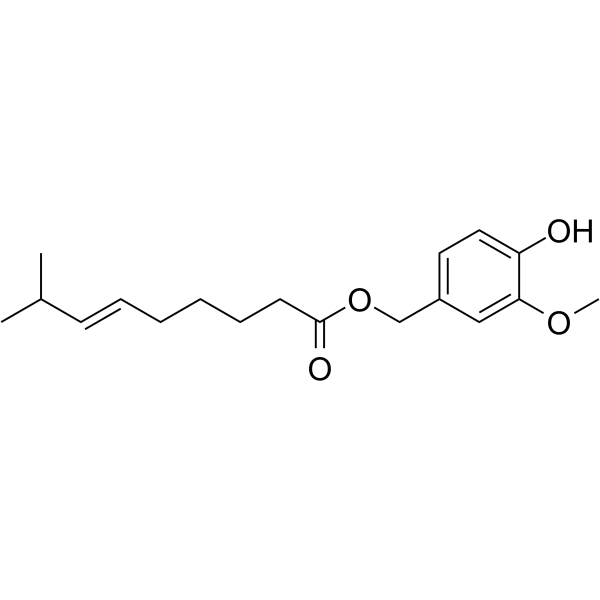
Capsiconiate (Coniferyl (E)-8-methyl-6-nonenoate) is a TRPV1 agonist (EC50= 3.2 μM). Capsiconiate can be used to study TRPV1-mediated diseases such as pain, inflammation, and epilepsy(EC50= 3.2 μM) .
|
-
-
- HY-123428
-
-
-
- HY-106427
-
-
-
- HY-108576
-
|
DuP 996 dihydrochloride
|
TRP Channel
|
Neurological Disease
|
|
Linopirdine dihydrochloride is a agonist of capsaicin receptor TRPV1. Linopirdine increases the intracellular calcium concentration in HEK293 cells. Linopirdine dihydrochloride exerts an excitatory action on mammalian nociceptors .
|
-
-
- HY-137459A
-
|
CA-008 hydrochloride
|
TRP Channel
|
Neurological Disease
|
|
Vocacapsaicin (CA-008) hydrochloride, a proagent of Capsaicin, is a first-in-class non-opioid TRPV1 agonist. Vocacapsaicin hydrochloride can provide meaningful and long-lasting pain relief .
|
-
-
- HY-124073R
-
|
|
Reference Standards
TRP Channel
|
Metabolic Disease
|
|
Dihydrocapsiate (Standard) is the analytical standard of Dihydrocapsiate. This product is intended for research and analytical applications. Dihydrocapsiate, as a compound of capsinoid family, is an orally active TRPV1 agonist. Dihydrocapsiate can be used for the research of metabolism disease .
|
-
- HY-B1583R
-
|
Zucapsaicin (Standard); Civamide (Standard); cis-Capsaicin (Standard)
|
Reference Standards
TRP Channel
HSV
|
Neurological Disease
|
|
(Z)-Capsaicin (Standard) is the analytical standard of (Z)-Capsaicin. This product is intended for research and analytical applications. (Z)-Capsaicin is the cis isomer of capsaicin, acts as an orally active TRPV1 agonist, and is used in the research of neuropathic pain.
|
-
- HY-101323R
-
|
NE-19550 (Standard); N-Vanillyloleamide (Standard)
|
Reference Standards
TRP Channel
|
Neurological Disease
|
|
Olvanil (Standard) is the analytical standard of Olvanil. This product is intended for research and analytical applications. Olvanil (NE-19550) is an analgesic and an agonist of transient receptor potential vanilloid type 1 (TRPV1) channels with an EC50 of 0.7 nM .
|
-
- HY-17568R
-
|
Pelargonic acid vanillylamide (Standard); Nonanoic acid vanillylamide (Standard); Pseudocapsaicin (Standard)
|
Reference Standards
TRP Channel
|
Neurological Disease
|
|
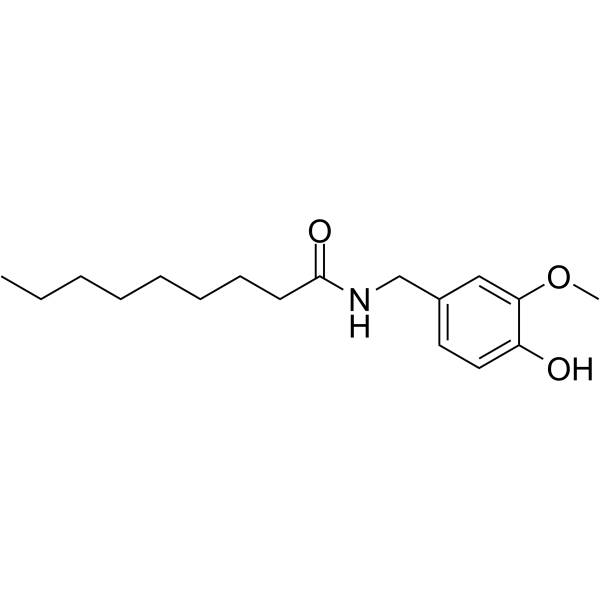
Nonivamide (Standard) is the analytical standard of Nonivamide. This product is intended for research and analytical applications. Nonivamide is a TRPV1 agonist, which exhibits 4d-EC50 value of 5.1 mg/L in static toxicity tests.
|
-
- HY-W654381
-
-
- HY-10448AR
-
-
- HY-W020468R
-
|
DuP 996 (Standard)
|
Reference Standards
Potassium Channel
TRP Channel
|
Neurological Disease
|
|
Linopirdine (DuP 996) is an orally active, selective M-type K+ current (IM; Kv7; KCNQ Channels) inhibitor with an IC50 of 2.4 μM. Linopirdine is a TRPV1 agonist. Linopirdine, a putative cognition enhancing agent, increases acetylcholine release in rat brain tissue .
|
-
- HY-147707
-
|
|
Cannabinoid Receptor
|
Others
|
|
Hexyl resorcinol derivative 29 has been proved to be a CB2 selective competitive antagonist / reverse agonist with good potency. Olivanol and 5- (2-methyloctane-2-yl) resorcinol derivatives 23 and 24 showed significant antinociceptive activity. Compound 24 was shown to activate cannabinoid and TRPV1 receptors.
|
-
- HY-135882
-
-
- HY-135881
-
|
|
TRP Channel
Endogenous Metabolite
|
Neurological Disease
|
|
OMDM-5 is a selective inhibitor of anandamide cellular uptake (ACU), with a Ki of 4.8 μM. OMDM-5 is also a potent vanilloid receptor type 1 (VR1, TRPV1) agonist, with an EC50 of 75 nM, and shows weakly active as cannabinoid receptor type 1 (CB1) ligand (Ki=4.9 μM) .
|
-
- HY-N0361S
-
|
|
Isotope-Labeled Compounds
Apoptosis
Bcl-2 Family
Reactive Oxygen Species (ROS)
TRP Channel
Caspase
PI3K
Akt
|
Others
|
|
Dihydrocapsaicin-d3 is the deuterium labeled Dihydrocapsaicin (HY-N0361) . Dihydrocapsaicin, a capsaicin, is a potent and selective TRPV1 (transient receptor potential vanilloid channel 1) agonist. Dihydrocapsaicin reduces AIF, Bax, and Caspase-3 expressions, and increased Bcl-2, Bcl-xL and p-Akt levels. Dihydrocapsaicin enhances the hypothermia-induced neuroprotection following ischemic stroke via PI3K/Akt regulation in rat .
|
-
- HY-B1177R
-
|
|
Reference Standards
Parasite
TRP Channel
|
Infection
|
|
Crotamiton (Standard) is the analytical standard of Crotamiton. This product is intended for research and analytical applications. Crotamiton is a TRPV4 inhibitor. Crotamiton inhibits TRPV4 currents. Crotamiton inhibits TRPV4 selective agonist-induced pruritus-related behaviors in mice. Crotamiton inhibits Histamine- and Chloroquine-induced calcium influx via the H1R/TRPV1, MRGPRA3/TRPA1 pathways, and also suppresses calcium influx in primary mouse dorsal root ganglion neurons. Crotamiton is applicable to research related to pruritus, scabies, and non-scabietic pruritus .
|
-
- HY-105285R
-
|
Neu-P11 (Standard)
|
Reference Standards
Melatonin Receptor
5-HT Receptor
P2X Receptor
TRP Channel
Sodium Channel
|
Neurological Disease
|
|
Piromelatine (Standard) is the analytical standard of Piromelatine. This product is intended for research and analytical applications. Piromelatine (Neu-P11) is a melatonin MT1/MT2 receptor agonist, serotonin 5-HT1A/5-HT1D agonist, and serotonin 5-HT2B antagonist. Piromelatine (Neu-P11) possesses sleep promoting, analgesic, anti-neurodegenerative, anxiolytic and antidepressant potentials. Piromelatine (Neu-P11) also possesses pain-related P2X3, TRPV1, and Nav1.7 channel-inhibition capacities .
|
-
- HY-108448R
-
|
OLDA (Standard)
|
Reference Standards
TRP Channel
Lipoxygenase
|
Cardiovascular Disease
Neurological Disease
Metabolic Disease
|
|
N-Oleoyldopamine (Standard) is the analytical standard of N-Oleoyldopamine (HY-108448). This product is intended for research and analytical applications. N-Oleoyldopamine (OLDA) is a product of condensation of oleic acid and dopamine (DA) and an endogenous TRPV1 selective agonist. N-Oleoyldopamine (OLDA) can crosses the blood-brain barrier. N-oleoyl-dopamine protects the heart against ischemia-reperfusion injury via activation of TRPV1 .
|
-
- HY-165459
-
|
MK-056
|
TRP Channel
|
Infection
Inflammation/Immunology
|
|
KJM429 (MK-056) is a high-affinity ligand for the rat vanilloid receptor rTRPV1 (Ki=30-63 nM) with a unique dual regulatory function. KJM429 acts as a competitive antagonist to inhibit TRPV1 receptor activation induced by Capsaicin (HY-10448), resiniferatoxin, thermal stimulation and weak acid (pH 6.0), and switches to a TRPV1 agonist under strong acid conditions (pH<5.5). KJM429 effectively blocks calcium influx induced by Capsaicin and partial thermal stimulation, and triggers calcium uptake under low pH conditions, with minimal effects on non-TRPV1-mediated calcium signaling. KJM429 can be used for research on the mechanisms of pain-related diseases such as postherpetic neuralgia, diabetic neuropathy, cluster headache, osteoarthritis and pruritus .
|
-
- HY-120174
-
|
|
Endogenous Metabolite
|
Others
|
|
SU200 is a TRPV1 agonist with the activity of regulating intracellular calcium ion concentration. SU200 can induce different calcium ion response modes, showing significant reaction potential and maximum reaction effect. There is obvious response delay and variability in the effects of SU200 in different cells. The use of SU200 may provide pharmacological development opportunities .
|
-
- HY-120938
-
|
|
TRP Channel
|
Neurological Disease
|
|
JYL-273 analog-1 (Compound 28, Example 45) is a potent transient receptor potential ion channel (TRP channel) (TRPV1) agonist (Ki = 10.8 nM). JYL-273 analog-1 has analgesic activity (PBQ-induced writhing test: ED50 = 1.0 mg/kg). JYL-273 analog-1 can be used for analgesia studies .
|
-
| Cat. No. |
Product Name |
Target |
Research Area |
| Cat. No. |
Product Name |
Category |
Target |
Chemical Structure |
-
- HY-10448
-
-
-
- HY-N2333
-
-
-
- HY-N0285
-
-
-
- HY-N6825
-
-
-
- HY-10448A
-
-
-
- HY-17568
-
-
-
- HY-10448R
-
-
-
- HY-N0361
-
-
-
- HY-N8264
-
-
-
- HY-N8377
-
-
-
- HY-B1173
-
|
D-(+)-Camphor; (1R)-(+)-Camphor
|
Structural Classification
Other Monoterpenes
Classification of Application Fields
Terpenoids
Other Diseases
Plants
Lauraceae
Cinnamomum camphora
Disease Research Fields
Source Classification
|
Environmental Pollutants
Bacterial
|
|
(+)-Camphor (D-(+)-Camphor; (1R)-(+)-Camphor) is an isomer of Camphor. Camphor is an agonist of monoterpenoid transient receptor potential (TRP) channels (such as TRPV1, TRPV3, TRPM8) and an inhibitor of TRPA1 channels. Camphor's derivatives have multiple biological activities, including antibacterial, antiviral, antioxidant, analgesic and anticancer. Camphor can selectively activate cold-sensitive TRP channels and inhibit TRPA1-mediated nociceptive signals. Camphor stimulates the cold-sensing nerve endings in the skin and regulates the activity of ion channels to exert analgesic, anti-inflammatory and anti-itching effects. It also has anti-proliferative and anti-mutagenic activities on tumor cells, which may be related to inhibiting ribosome function or inducing cell apoptosis. Camphor can be absorbed through the skin and (+)-Camphor can be used in the study of muscle and joint pain and inflammation .
|
-
-
- HY-124073
-
-
-
- HY-N0285R
-
-
-
- HY-N7536
-
-
-
- HY-N6825R
-
-
-
- HY-N0361R
-
-
-
- HY-B1173R
-
|
D-(+)-Camphor (Standard); (1R)-(+)-Camphor (Standard)
|
Structural Classification
Other Monoterpenes
Terpenoids
Plants
Lauraceae
Cinnamomum camphora
Source Classification
|
Reference Standards
Bacterial
|
|
(+)-Camphor (Standard) is the analytical standard of (+)-Camphor. This product is intended for research and analytical applications. (+)-Camphor (D-(+)-Camphor; (1R)-(+)-Camphor) is an isomer of Camphor. Camphor is an agonist of monoterpenoid transient receptor potential (TRP) channels (such as TRPV1, TRPV3, TRPM8) and an inhibitor of TRPA1 channels. Camphor's derivatives have multiple biological activities, including antibacterial, antiviral, antioxidant, analgesic and anticancer. Camphor can selectively activate cold-sensitive TRP channels and inhibit TRPA1-mediated nociceptive signals. Camphor stimulates the cold-sensing nerve endings in the skin and regulates the activity of ion channels to exert analgesic, anti-inflammatory and anti-itching effects. It also has anti-proliferative and anti-mutagenic activities on tumor cells, which may be related to inhibiting ribosome function or inducing cell apoptosis. Camphor can be absorbed through the skin and (+)-Camphor can be used in the study of muscle and joint pain and inflammation .
|
-
-
- HY-111038
-
-
-
- HY-124073R
-
-
-
- HY-17568R
-
-
-
- HY-10448AR
-
-
-
- HY-135882
-
-
-
- HY-135881
-
-
| Cat. No. |
Product Name |
Chemical Structure |
-
- HY-10448S1
-
|
|
|
Capsaicin-d3 is the deuterium labeled Capsaicin. Capsaicin ((E)-Capsaicin), an active component of chili peppers, is a TRPV1 agonist. Capsaicin induces a nociceptive response by binding to its receptors. Capsaicin has analgesic effects on neurological disorders. Capsaicin has antioxidant, anti-inflammatory, anti-cancer effects .
|
-
-
- HY-10448S4
-
|
|
|
Capsaicin-d7 is deuterated labeled Capsaicin (HY-10448). Capsaicin ((E)-Capsaicin), an active component of chili peppers, is a TRPV1 agonist. Capsaicin induces a nociceptive response by binding to its receptors. Capsaicin has analgesic effects on neurological disorders. Capsaicin has antioxidant, anti-inflammatory, anti-cancer effects .
|
-
-
- HY-W654381
-
|
|
|
N-Vanillylnonanamide-d3 is the deuterium labeled Nonivamide (HY-17568). Nonivamide is a TRPV1 agonist, which exhibits 4d-EC50 value of 5.1 mg/L in static toxicity tests.
|
-
-
- HY-N0361S
-
|
|
|
Dihydrocapsaicin-d3 is the deuterium labeled Dihydrocapsaicin (HY-N0361) . Dihydrocapsaicin, a capsaicin, is a potent and selective TRPV1 (transient receptor potential vanilloid channel 1) agonist. Dihydrocapsaicin reduces AIF, Bax, and Caspase-3 expressions, and increased Bcl-2, Bcl-xL and p-Akt levels. Dihydrocapsaicin enhances the hypothermia-induced neuroprotection following ischemic stroke via PI3K/Akt regulation in rat .
|
-
Your information is safe with us. * Required Fields.
Inquiry Information
- Product Name:
- Cat. No.:
- Quantity:
- MCE Japan Authorized Agent:

