1. Search Result
Search Result
Results for "

Ubiquitin-proteasome system (UPS)

" in MedChemExpress (MCE) Product Catalog:

21

Inhibitors & Agonists

1

Screening Libraries

1

Natural
Products

Targets Recommended:
Cat. No. Product Name Target Research Areas Chemical Structure
  • HY-152154

    PROTACs NAMPT Cancer
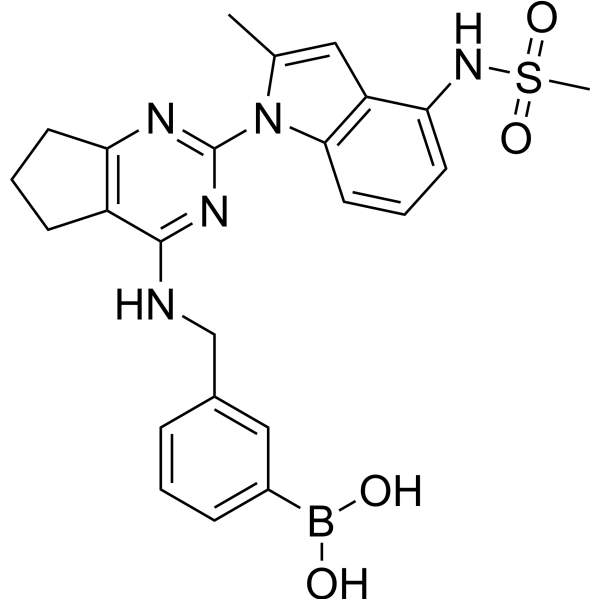
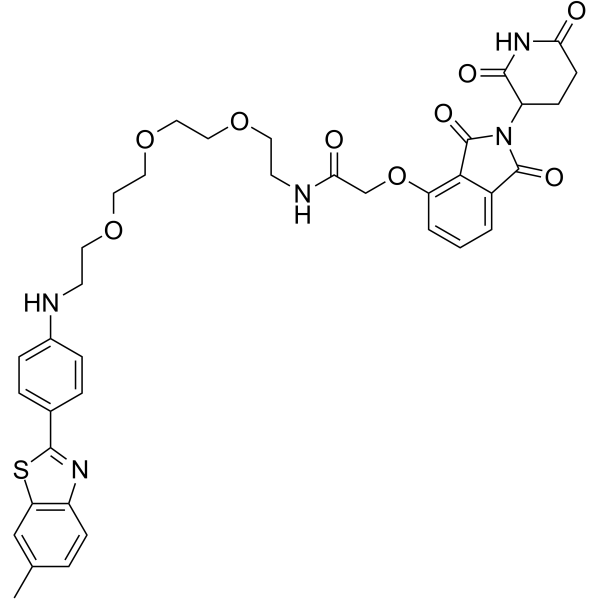
    Nampt degrader-2 is a fluorescent PROTAC, which efficiently degrades NAMPT with an IC50 of 41.9 nM. Nampt degrader-2 binds to NAMPT and VHL to form a ternary complex and subsequently induced NAMPT degradation via ubiquitin-proteasome system (UPS). Nampt degrader-2 leads to significant reduction of NAD + and exerts potent antitumor activities .
    Nampt degrader-2
  • HY-157839

    PROTACs α-synuclein Tau Protein Neurological Disease
    PROTAC α-Synuclein/Tau degrader 1 is a blood-brain barrier-penetrant dual PROTAC degrader of α-synuclein (α-Syn) and tau, with DC50 of 1.57 μM and 4.09 μM, respectively. PROTAC α-Synuclein/Tau degrader 1 binds to α-Syn and tau PFF, with KDs of 0.47 and 2.78 μM, respectively. PROTAC α-Synuclein/Tau degrader 1 exhibits degradation effect mediated by the ubiquitin-proteasome system (UPS). PROTAC α-Synuclein/Tau degrader 6 can be used for the study of Parkinson’s disease (PD) (Pink: α-Synuclein/Tau ligand (HY-151035); Blue: CRBN ligase ligand (HY-14658); Black: Linker (HY-128803)) .
    PROTAC α-Synuclein/Tau degrader 1
  • HY-137487

    PROTACs Raf Cancer
    PROTAC BRAF-V600E degrader-1 (compound 23) is a potent PROTAC BRAF-V600E degrader whlie no degradation activity against BRAF-WT. PROTAC BRAF-V600E degrader-1 exhibits Kd values of 2.4 nM and 2 nM for BRAF and BRAF-V600E, respectively. PROTAC BRAF-V600E degrader-1 degrades BRAF-V600E via the ubiquitin-proteasome system (UPS) and inhibits the growth of melanoma cells . (In the molecular structure, target protein ligand: BI-882370 (HY-107779), red part; E3 ubiquitin enzyme ligand: Pomalidomide (HY-10984), blue part; PROTAC linker: G007-LK (HY-12438), black part.
    PROTAC BRAF-V600E degrader-1
  • HY-139606

    p97 Cancer
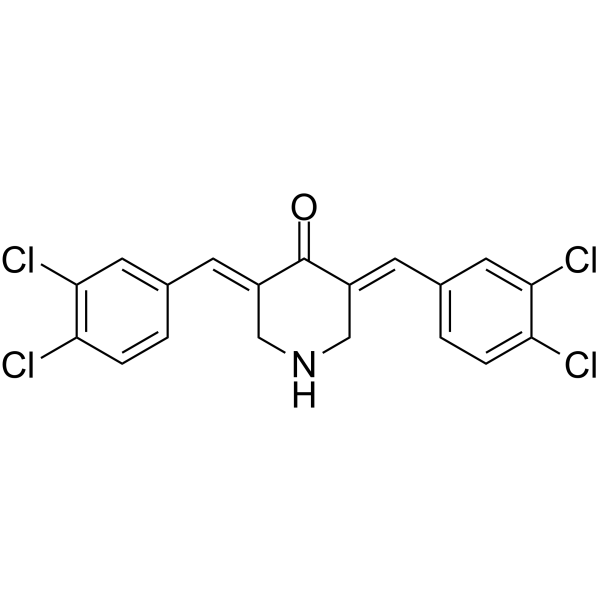
    VCP/p97 inhibitor-1 is a potent inhibitor of VCP/p97 (also called Cdc48, CDC-. 48, or Ter94) with an IC50 of 54.7 nM. VCP/p97 inhibitor-1 causes the dysregulation of protein homeostasis and disturbs the degradation of misfolded polypeptides by the ubiquitin-proteasome system (UPS) .
    VCP/p97 inhibitor-1
  • HY-147942

    PROTACs EGFR Cancer
    MS9449 is a potent PROTAC EGFR degrader with Kds of 17 nM and 10 nM for EGFR WT and EGFR L858R, respectively. MS9449 effectively induces degradation of mutant EGFRs through both the ubiquitin/proteasome system (UPS) and autophagy/lysosome pathways. MS9449 potently inhibits the proliferation of NSCLC cells. MS9449 can be used for researching anticancer .
    MS9449
  • HY-147941

    PROTACs EGFR Inflammation/Immunology Cancer
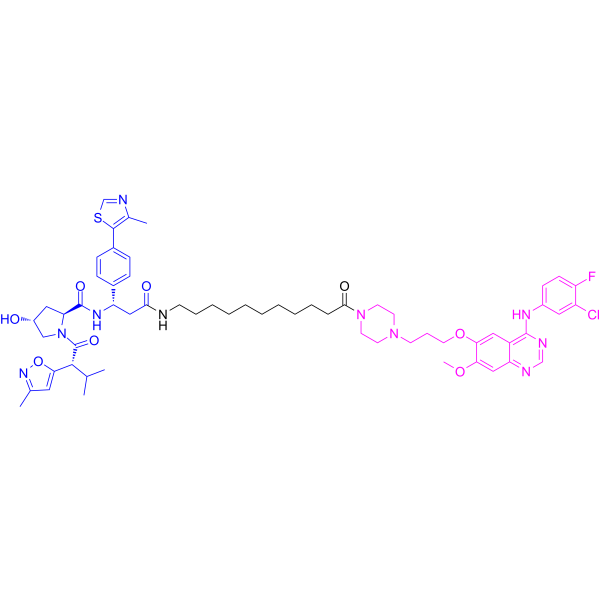
    MS9427 is a potent PROTAC EGFR degrader with Kds of 7.1 nM and 4.3 nM for EGFR WT and EGFR L858R, respectively. MS9427 selectively degrades the mutant but not the WT EGFR through both the ubiquitin/proteasome system (UPS) and autophagy/lysosome pathways. MS9427 potently inhibits the proliferation of NSCLC cells. MS9427 can be used for researching anticancer .
    MS9427
  • HY-158985A

    Autophagy AUTACs Cancer
    Amino-PEG3-2G degrader-1 hydrochloride is the hydrochloride salt form of Amino-PEG3-2G degrader-1 (HY-158985). Amino-PEG3-2G degrader-1 hydrochloride is a conjugate of a PEG Linker and a pyrazole-linked FBnG tag for ubiquitin-proteasome system (UPS) induction. Amino-PEG3-2G degrader-1 hydrochloride can be used to synthesize autophagy-targeting chimeras (AUTACs) .
    Amino-PEG3-2G degrader-1 hydrochloride
  • HY-170574

    Molecular Glues Apoptosis RIO Kinase Cancer
    CQ627 is a molecular glue targeting the degradation of RIOK2. It effectively induces the degradation of RIOK2 in the MOLT4 leukemia cell line via the ubiquitin-proteasome system (UPS) by recruiting the E3 ubiquitin ligase RNF126, with a DC50 value of 410 nM. CQ627 dose-dependently induces apoptosis in MOLT4 leukemia cells, blocks their cell cycle in the G2/M phase, and exhibits antiproliferative activities in various cancer cell lines. CQ627 also demonstrates in vivo anticancer activity in a MOLT4 xenograft mouse model .
    CQ627
  • HY-179243

    PROTACs STAT MDM-2/p53 Cancer
    S3D5 is a highly efficient and selective PROTAC degrader targeting STAT3 (KD = 4.35 μM). S3D5 induces degradation of STAT3 in HepG2 cells without significant effects on other STAT proteins. S3D5 exhibits good anti-hepatocellular carcinoma cell proliferation activity, which can be explained by activating the p53 pathway. S3D5 degradation of the STAT3 protein is mediated by the ubiquitin–proteasome system (UPS). S3D5 can be used for the study of hepatocellular carcinoma .
    S3D5
  • HY-W054146
    RAMB4
    1 Publications Verification

    Proteasome Cancer
    RAMB4 is a ubiquitin-proteasome system (UPS)-stressor. RAMB4 inhibits ubiquitin-mediated protein degradation upstream of the 20S proteasomal catalytic activites. RAMB4 triggers a ubiquitin-proteasome-system (UPS)-stress response without affecting 20S proteasome catalytic activities. Anticancer activity .
    RAMB4
  • HY-179433

    PROTACs Androgen Receptor Estrogen Receptor/ERR Src Cancer
    PROTAC AR Degrader-12 is a highly efficient PROTAC targeting AR coactivator binding site (AR-CBS). PROTAC AR Degrader-12 induces AR degradation in a ubiquitin proteasome system (UPS) pathway-dependent manner. PROTAC AR Degrader-12 inhibits tumor cell growth by affecting DNA replication and cell division PROTAC AR Degrader-12 could not only effectively degrade AR, but also potently inhibit the proliferation of MCF-7 and multiple mutant or resistant BC cells. PROTAC AR Degrader-12 effectively blocked estrogen receptor α (ERα) signaling through a dual mechanism involving ERα protein downregulation and suppression of its transcriptional activity. PROTAC AR Degrader-12 significantly inhibits the mRNA expression of FOXA1, GREB1, SRC, and PELP1. PROTAC AR Degrader-12 can be used for the study of breast cancer .
    PROTAC AR Degrader-12
  • HY-147941A

    PROTACs EGFR Infection Inflammation/Immunology Cancer
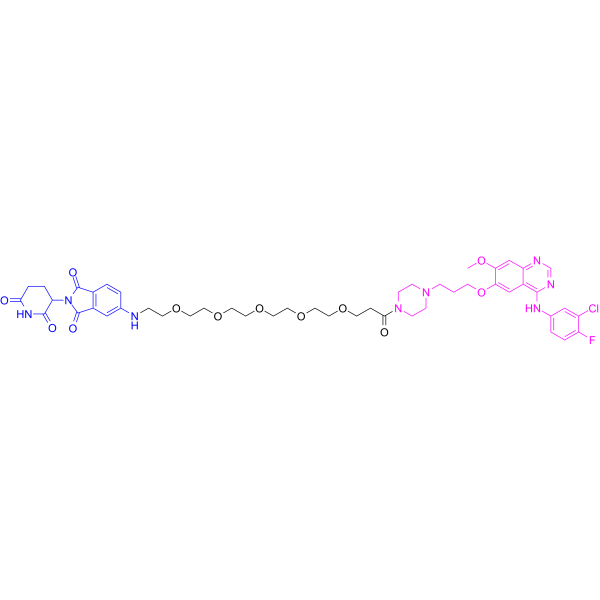
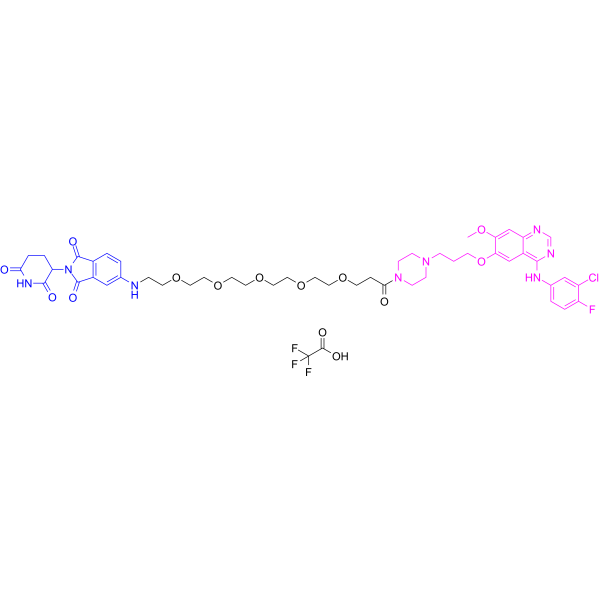
    MS9427 TFA is a potent PROTAC EGFR degrader with Kds of 7.1 nM and 4.3 nM for EGFR WT and EGFR L858R, respectively. MS9427 TFA selectively degrades the mutant but not the WT EGFR through both the ubiquitin/proteasome system (UPS) and autophagy/lysosome pathways. MS9427 TFA potently inhibits the proliferation of NSCLC cells. MS9427 TFA can be used for researching anticancer .
    MS9427 TFA
  • HY-175525

    PROTACs Aurora Kinase Cancer
    MS44 is a potent aurora kinase B (AURKB PROTAC) degrader (DC50 = 103 nM). MS44 effectively degrades AURKB in a time- and ubiquitin-proteasome system (UPS)-dependent manner and is selective for AURKB over AURKA and AURKC. MS44 effectively inhibits the proliferation in multiple cancer cell lines and potently induces G2/M arrest. MS44 can be used for the study of AURKB-dependent tumors (Pink: Target protein ligand (HY-175526); Blue: E3 ligand (HY-112078); Black: Linker; E3 ligand + Linker (HY-132938)) .
    MS44
  • HY-178176

    PROTACs Cannabinoid Receptor Akt ERK Bcl-2 Family Apoptosis Cancer
    PROTAC CB1R Degrader-1 is a potent and selective CB1R PROTAC degrader that exploits the ubiquitin-proteasome system (UPS) achieving a DC50 of 3.37 μM in MCF-7 cells and showing no impact on CB2R. PROTAC CB1R Degrader-1 reduces CB1R-associated downstream signaling (p-AKT, p-ERK, BCL2, and MCM5), thereby inhibiting breast cancer cell proliferation and inducing apoptosis. PROTAC CB1R Degrader-1 can be used for breast cancer research. (Blue: CRBN ligand (HY-41547); Black: linker (HY-178198); Pink: CB1R ligand (HY-134497)) .
    PROTAC CB1R Degrader-1
  • HY-176261

    PROTACs Cancer
    DDD2 is a selective and potent VHL-mediated PROTAC NUDT5 degrader. DDD2 induces robust NUDT5 degradation. DDD2 can be used in cancer research, such as lymphocytic leukemia and osteosarcoma . (Structure Note: Pink: NUDT5 inhibitor (HY-176262); Blue: E3 (HY-125845); Black: linker (HY-W001958))
    DDD2
  • HY-158985

    AUTACs Autophagy Cancer
    Amino-PEG3-2G degrader-1 (compound ) is a conjugate of a PEG Linker and a pyrazole-linked FBnG tag for ubiquitin-proteasome system (UPS) induction. Amino-PEG3-2G degrader-1 can be used to synthesize autophagy-targeting chimeras (AUTACs) .
    Amino-PEG3-2G degrader-1
  • HY-175849

    HyT Anaplastic lymphoma kinase (ALK) Apoptosis STAT Cancer
    ALK degrader 1 is a potent, hydrophobic tag (HyT)-based degrader that induces ubiquitin-proteasome system (UPS)-dependent EML4-ALK degradation (DC50 = 0.13 μM). ALK degrader 1 demonstrates potent ALK degradation and antiproliferative effects in ALK-dependent cell lines, while showing minimal cytotoxicity in ALK fusion-negative cells. ALK degrader 1 triggers cell cycle arrest at the G0/G1 phase and stimulates apoptosis. ALK degrader 1 not only facilitates efficient degradation of the ALK protein but also disrupts key downstream effectors, including the STAT3 signaling axis. ALK degrader 1 mediates robust EML4-ALK degradation in vivo. ALK degrader 1 can be used for ALK-related diseases research .
    ALK degrader 1
  • HY-N10332

    Proteasome Cancer
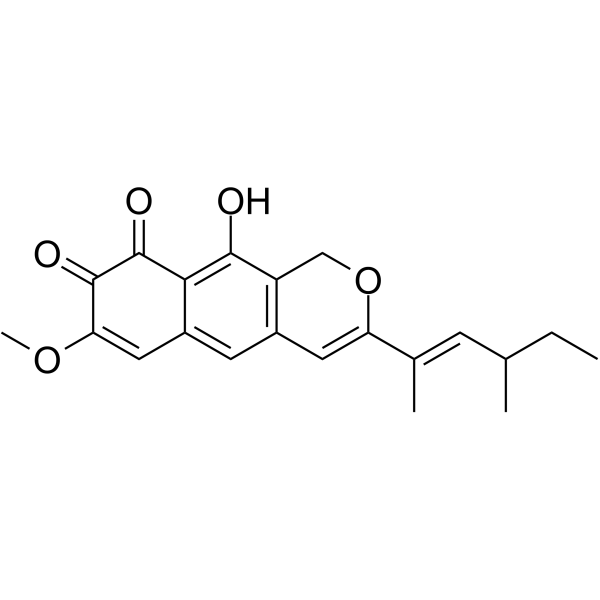
    Leptosphaerodione, isolated from Remotididymella sp. Fungus, is a potent ubiquitin-proteasome system (UPS) inhibitor. Leptosphaerodione exhibits cytotoxicity in HeLa cells with IC50 value of 3.2 μM. Anti-tumor agent .
    Leptosphaerodione
  • HY-183555

    PROTACs Epigenetic Reader Domain Cancer
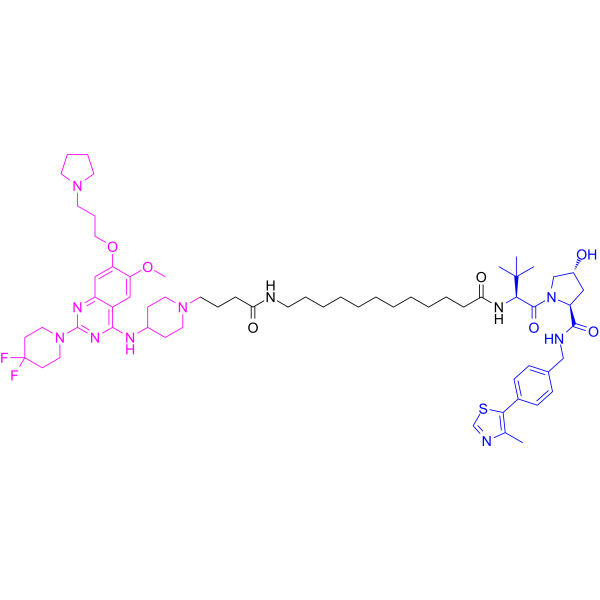
    MS108 is a selective VHL-based eleven-nineteen leukemia protein (ENL) PROTAC degrader with DC50 of 0.6 nM. MS108 recruits VHL E3 ligase to induce ENL degradation in a VHL- and ubiquitin-proteasome system (UPS)-dependent manner. MS108 degrades the ENL paralog AF9, which shares a highly conserved YEATS domain with ENL. MS108 suppresses proliferation of cancer cells .
    MS108
  • HY-181460

    HyT PARP Cancer
    PARP1 degrader-2 (Compound 11e) is a potent, selective PARP1 HYT degrader (DC50: 2.16 μM). PARP1 degrader-2 selectively binds to and degrades PARP1 but not PARP2. PARP1 degrader-2 mediates the degradation of PARP1 via the ubiquitin-proteasome system (UPS). PARP1 degrader-2 exhibits anticancer activity against triple-negative breast cancer and colon cancer (hydrophobic tag: (HY-W022007); PARP1 ligand: (HY-75706); Linker: (HY-W015300)) .
    PARP1 degrader-2
  • HY-180261

    PROTACs mTOR PI3K Apoptosis Cancer
    GP262 is a PI3K/mTOR PROTAC degrader targeting PI3Kγ, PI3Kα and mTOR with DC50 values of 42.23 nM, 227.4 nM and 45.4 nM, respectively in MDA-MB-231 cells. GP262 induces degradation of p110α and p110γ with a DC50 of 227.4 and 42.23 nM. GP262 efficient modulates the PI3K/AKT/mTOR pathway, achieving degradation through the ubiquitin-proteasome system (UPS). GP262 also exhibits robust antiproliferative activity and induces apoptosis in vitro. GP262 exhibits tumor growth suppression capability and biosafety profile. GP262 can be used for leukemia and triple-negative breast cancer (TNBC) .
    GP262

Inquiry Online

Your information is safe with us. * Required Fields.

Salutation


Country or Region *

Applicant Name *


Organization Name *

Department *


Email Address *


Product Name *

Cat. No.


Requested quantity *

Phone Number *


Remarks

Inquiry Online

Inquiry Information

Product Name:
Cat. No.:
Quantity:
MCE Japan Authorized Agent:

