17 Results for "

Vanilla

" in MedChemExpress (MCE) Product Catalog:
Products (17)

17 Results for "Vanilla" in MCE Product Catalog:

7
7 Cited Publications
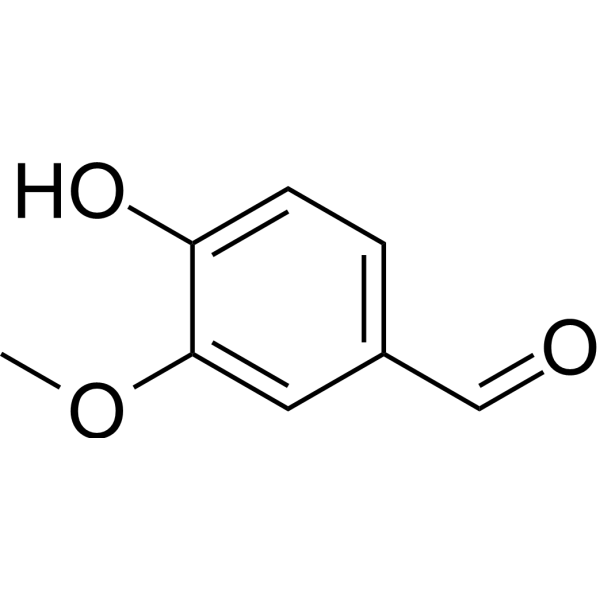
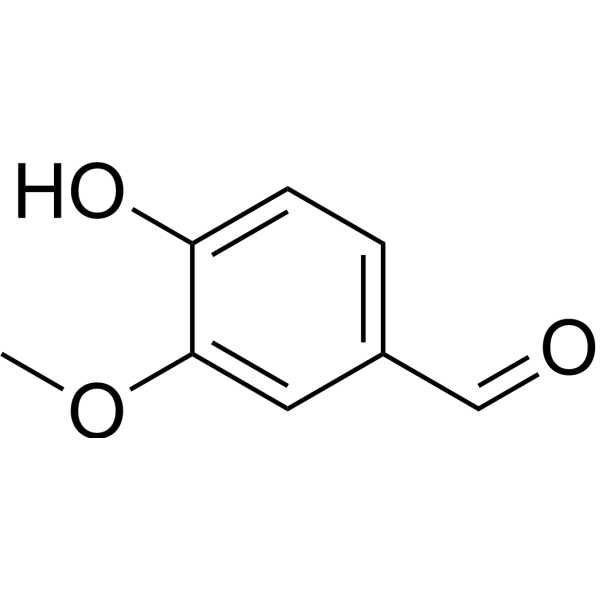
Cat. No.: HY-N0098
CAS No.: 121-33-5
Synonyms: p-Vanillin; m-Methoxy-p-hydroxybenzaldehyde; p-Hydroxy-m-methoxybenzaldehyde
Vanillin (p-Vanillin) is a single molecule extracted from vanilla beans and also a popular odor used widely in perfume, food and medicine.
loading...
    loading...
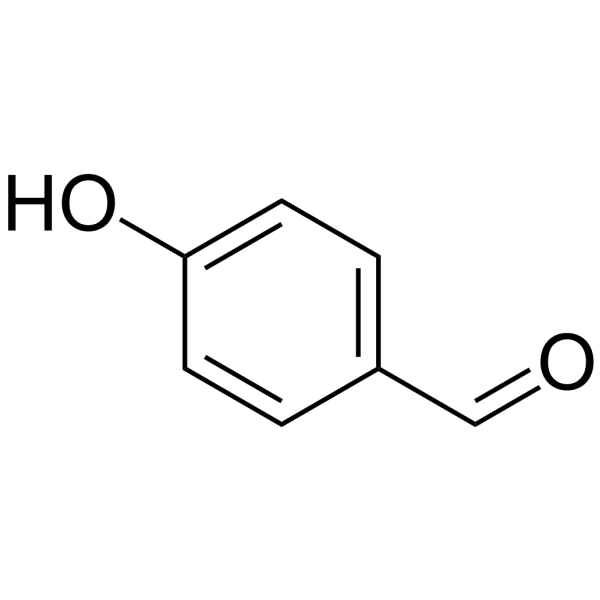
Cat. No.: HY-Y0313
CAS No.: 123-08-0
p-Hydroxybenzaldehyde is a one of the major components in vanilla aroma, with antagonistic effect on GABAA receptor of the α1β2γ2S subtype at high concentrations.
loading...
    loading...
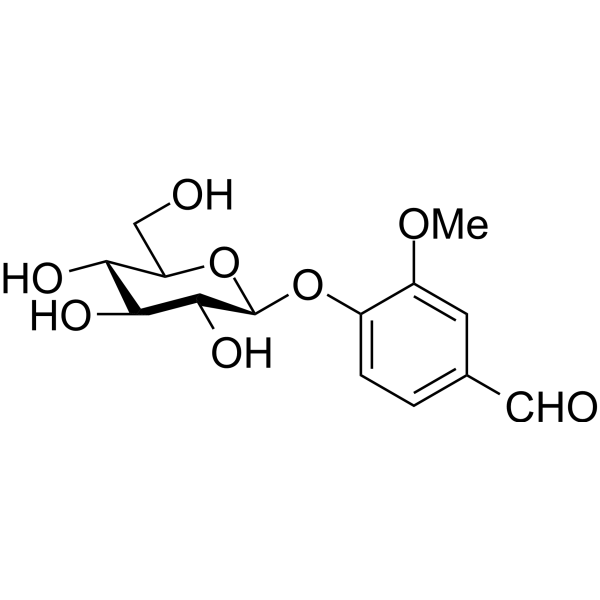
Cat. No.: HY-N6667
CAS No.: 494-08-6
Glucovanillin, found in vanilla, is a potential lipase inhibitor. Glucovanillin can be converted into vanillin through an enzyme-coupled process involving cell wall degradation and glucovanillin hydrolysis .
loading...
    loading...
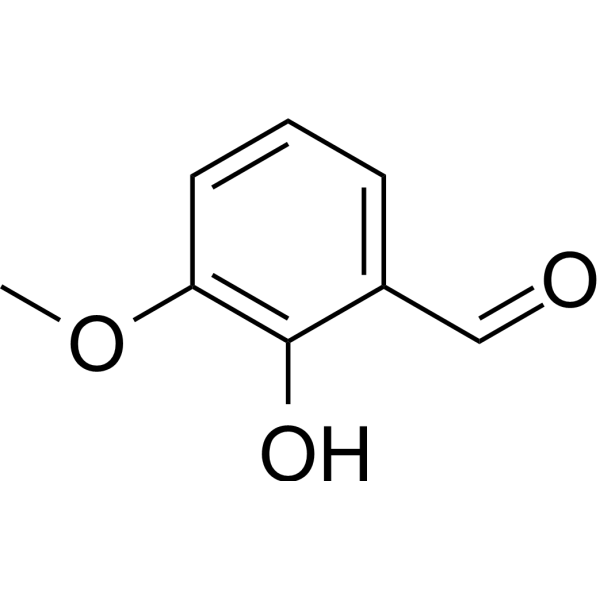
Cat. No.: HY-Y1832
CAS No.: 148-53-8
Synonyms: 3-Methoxysalicylaldehyde
Target:  

Fungal

Research Areas:  

Infection Cancer

o-Vanillin (2-Vanillin) is a nature product, could be extracted from Vanilla planifolia, Pinus koraiensis fruit. o-Vanillin is a potent antifungal agent. o-Vanillin inhibits the growth of mycelia by disrupting the integrity of cell walls and cell membranes. o-Vanillin inhibits Doxorubicin (HY-15142A)- and 4-hydroperoxycyclophosphamide-induced NF-κB activation .
loading...
    loading...
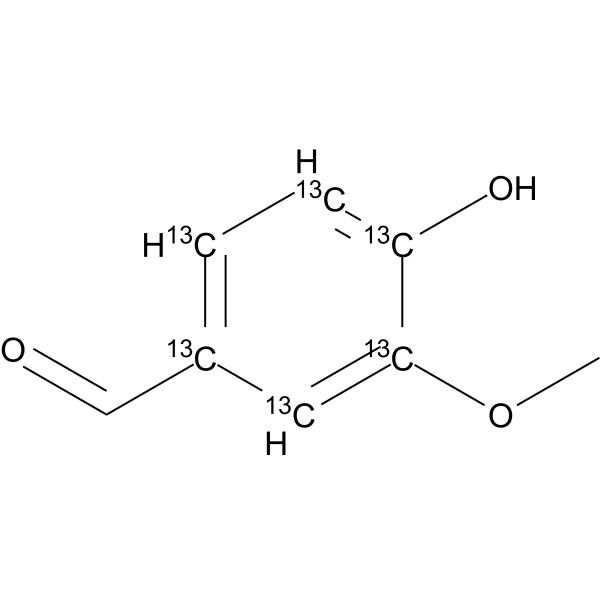
Cat. No.: HY-N0098S2
CAS No.: 201595-58-6
Synonyms: p-Vanillin-13C6; m-Methoxy-p-hydroxybenzaldehyde-13C6; p-Hydroxy-m-methoxybenzaldehyde-13C6
Vanillin- 13C6 is the 13C labeled Vanillin . Vanillin (p-Vanillin) is a single molecule extracted from vanilla beans and also a popular odor used widely in perfume, food and medicine .
loading...
    loading...
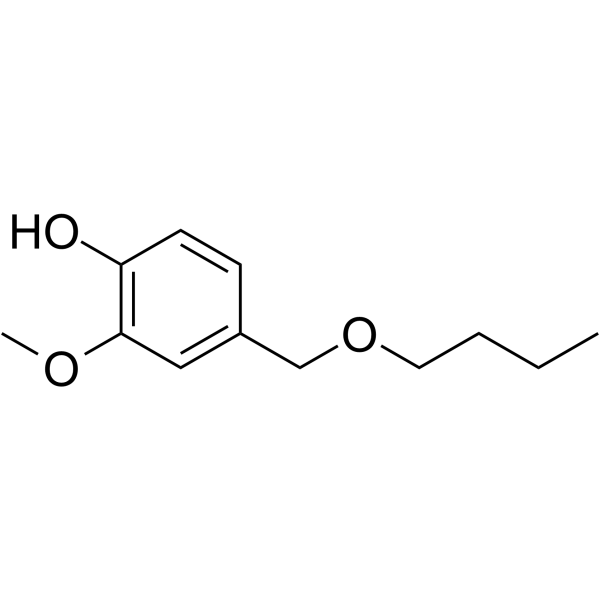
Cat. No.: HY-W014394
CAS No.: 82654-98-6
Vanillyl butyl ether is a major contributor to the characteristic flavor and fragrance of vanilla. Vanillyl butyl ether is one of the eco-friendly and nontoxic substances. Vanillyl butyl ether exhibits mutually inhibitory effects on mammalian TRPV1 and TRPM8 channels. Vanillyl butyl ether shows repellency activity against Tribolium castaneum, T. confusum and L. bostrychophila. Vanillyl butyl ether acts as a mild warming agent, providing a warming sensation and enhancing blood circulation .
loading...
    loading...
Cat. No.: HY-N0098R
CAS No.: 121-33-5
Synonyms: p-Vanillin (Standard); m-Methoxy-p-hydroxybenzaldehyde (Standard); p-Hydroxy-m-methoxybenzaldehyde (Standard)
Vanillin (Standard) is the analytical standard of Vanillin. This product is intended for research and analytical applications. Vanillin (p-Vanillin) is a single molecule extracted from vanilla beans and also a popular odor used widely in perfume, food and medicine.
loading...
    loading...
Cat. No.: HY-Y0313R
CAS No.: 123-08-0
p-Hydroxybenzaldehyde (Standard) is the analytical standard of p-Hydroxybenzaldehyde. This product is intended for research and analytical applications. p-Hydroxybenzaldehyde is a one of the major components in vanilla aroma, with antagonistic effect on GABAA receptor of the α1β2γ2S subtype at high concentrations.
loading...
    loading...
Cat. No.: HY-N6667R
CAS No.: 494-08-6
Glucovanillin, found in vanilla, is a potential lipase inhibitor. Glucovanillin can be converted into vanillin through an enzyme-coupled process involving cell wall degradation and glucovanillin hydrolysis .
loading...
    loading...
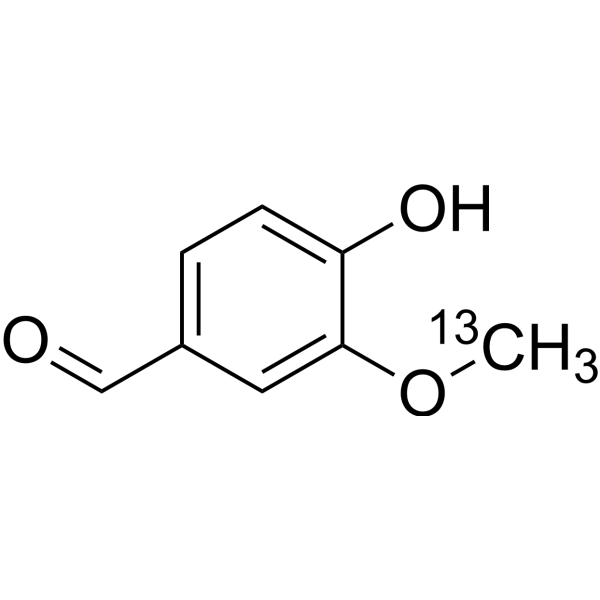
Cat. No.: HY-N0098S3
CAS No.: 86884-84-6
Vanillin- 13C is the 13C labeled Vanillin . Vanillin (p-Vanillin) is a single molecule extracted from vanilla beans and also a popular odor used widely in perfume, food and medicine .
loading...
    loading...
Cat. No.: HY-W747264
CAS No.: 201595-48-4
P-Hydroxybenzaldehyde- 13C6 is the 13C-labeled p-Hydroxybenzaldehyde (HY-Y0313). p-Hydroxybenzaldehyde is a one of the major components in vanilla aroma, with antagonistic effect on GABAA receptor of the α1β2γ2S subtype at high concentrations.
loading...
    loading...
Cat. No.: HY-W014394R
CAS No.: 82654-98-6
Protoporphyrin IX (Standard) is the analytical standard of Protoporphyrin IX. This product is intended for research and analytical applications. Protoporphyrin IX is a final intermediate in the heme biosynthetic pathway, which acts as a radiation sensitizer enhancing ROS generation even in a hypoxic state and inducing DNA damage. Protoporphyrin IX also acts as a photo sensitizer undergoing photobleaching that occurs through direct degradation by light irradiation. Protoporphyrin IX is formed and accumulated following 5-aminolevulinic acid (5-ALA) (HY-W000450) administration in the tumor cells of rats. Protoporphyrin IX causes selective improvement of basal cell carcinoma when activated red fluorescence of a peak wavelength at 405 nm. Protoporphyrin IX is promising for research of sonodynamic and photodynamic agents for a wide range of cancers, such as bladder cancer and nodular basal cell carcinoma .
loading...
    loading...
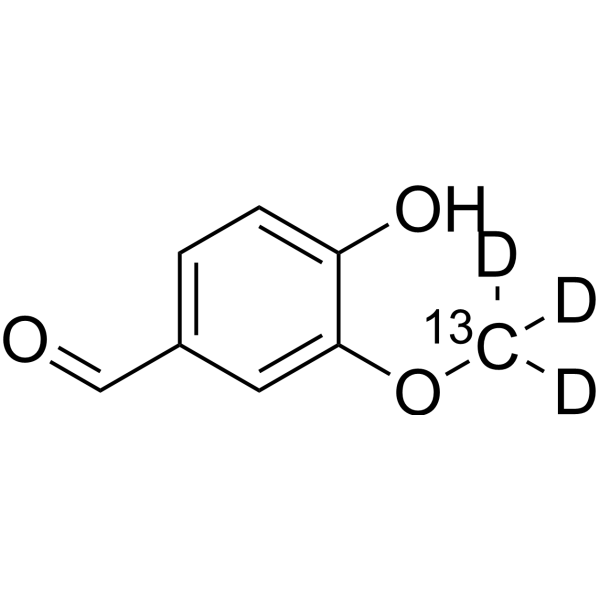
Cat. No.: HY-N0098S
CAS No.: 1794789-90-4
Synonyms: p-Vanillin-13C,d3; m-Methoxy-p-hydroxybenzaldehyde-13C,d3; p-Hydroxy-m-methoxybenzaldehyde-13C,d3
Vanillin- 13C,d3 is the 13C and deuterium labeled Vanillin . Vanillin (p-Vanillin) is a single molecule extracted from vanilla beans and also a popular odor used widely in perfume, food and medicine .
loading...
    loading...
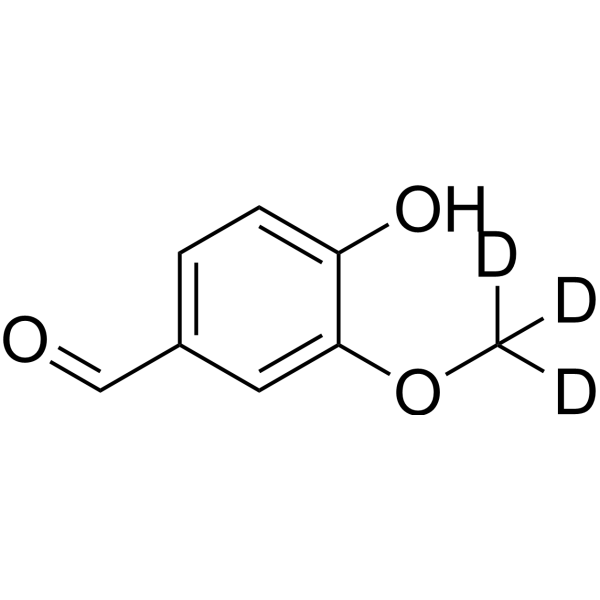
Cat. No.: HY-N0098S1
CAS No.: 74495-74-2
4- Hydroxy-3-methoxy benzaldehyde-d3 is the deuterium labeled Vanillin . Vanillin (p-Vanillin) is a single molecule extracted from vanilla beans and also a popular odor used widely in perfume, food and medicine .
loading...
    loading...
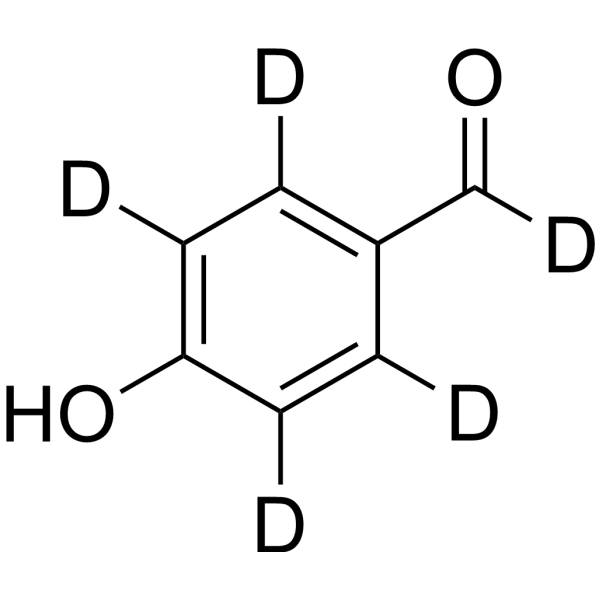
Cat. No.: HY-Y0313S2
CAS No.: 298704-22-0
p-Hydroxybenzaldehyde-d5 is the deuterium labeled p-Hydroxybenzaldehyde . p-Hydroxybenzaldehyde is a one of the major components in vanilla aroma, with antagonistic effect on GABAA receptor of the α1β2γ2S subtype at high concentrations .
loading...
    loading...
Cat. No.: HY-P10465
Target:  

TRP Channel

Research Areas:  

Inflammation/Immunology

TRPV1-Tat is an antagonistic peptide that fuses the TRPV1 (transient receptor potential vanilla subtype 1) of the cell-penetrating peptide Tat. TRPV1-Tat blocks this phosphorylation process by competitively binding to the AKAP79 binding site of TRPV1, thereby inhibiting the sensitization of TRPV1. TRPV1-Tat can be used in the study of inflammatory pain .
loading...
    loading...
Cat. No.: HY-L242
494 compounds

Flavors and fragrances serve as indispensable enhancing elements in modern industries, playing multidimensional roles in the fields of food, cosmetics, and pharmaceutical development. In the food industry, flavors and fragrances are not only used to compensate for flavor loss during processing but also to create novel sensory experiences and enhance product appeal. Natural flavors such as vanilla and citrus oils impart rich, layered aromas to foods, while synthetic flavors can precisely replicate specific tastes, meeting the demands of standardized production and extending the flavor stability of food products. In the cosmetics sector, flavors and fragrances are key to emotional design. They enhance product recognition and elevate the pleasure of use through pleasant scents. In pharmaceutical development, the application of flavors and fragrances focuses on improving compliance. Especially in formulations such as oral liquids and chewable tablets, the addition of mint, fruit, and other flavoring components effectively masks the bitter or irritating taste of medications, increasing patient acceptance. Additionally, some natural flavors may themselves possess auxiliary therapeutic benefits.

MCE contains 494 kinds of flavors and fragrances, which can be used in fields such as food, cosmetics and drug development.

  • 1

