26 Results for "

actin filament

" in MedChemExpress (MCE) Product Catalog:
Products (26)

26 Results for "actin filament" in MCE Product Catalog:

47
47 Publications Verification
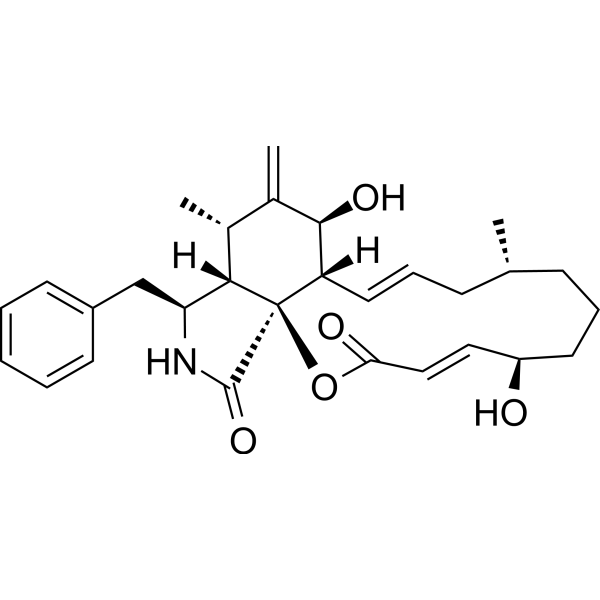
Cat. No.: HY-16928
CAS No.: 14930-96-2
Synonyms: Phomin
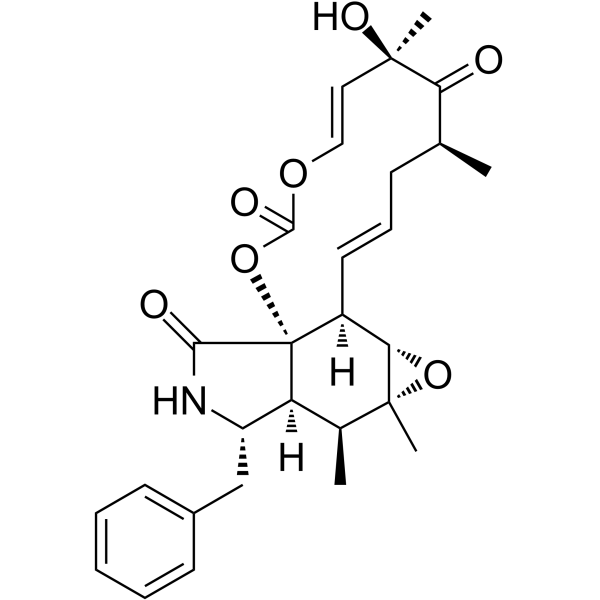
Cytochalasin B is a cell-permeable mycotoxin binding to the barbed end of actin filaments, disrupting the formation of actin polymers, with Kd value of 1.4-2.2 nM for F-actin. Cytochalasin B blocks cell migration.
loading...
    loading...
29
29 Cited Publications
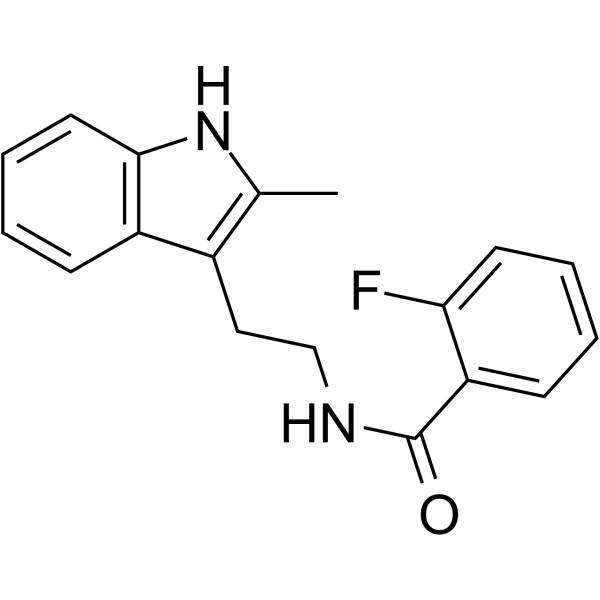
Cat. No.: HY-16926
CAS No.: 442633-00-3
Target:  

Arp2/3 Complex HIV

Research Areas:  

Infection Cancer

CK-666 is a cell-permeable actin-related protein Arp2/3 complex inhibitor (IC50=12 μM). CK-666 binds to Arp2/3 complex, stabilizes the inactive state of the complex, blocking movement of the Arp2 and Arp3 subunits into the activated filament-like (short pitch) conformation .
loading...
    loading...
9
9 Cited Publications
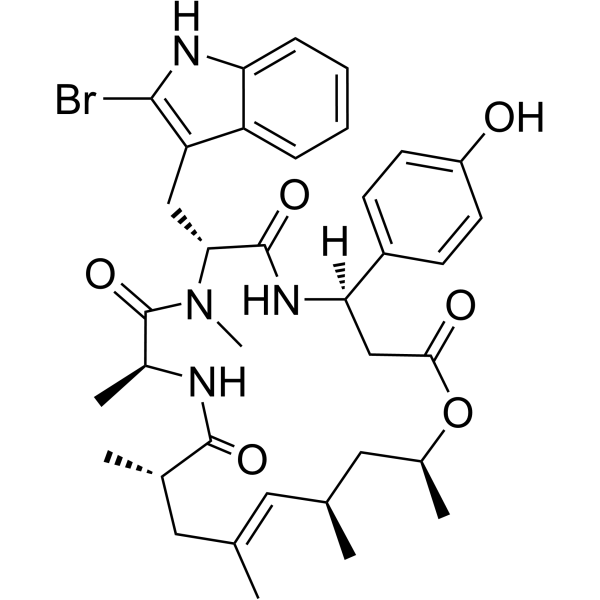
Cat. No.: HY-P0027
CAS No.: 102396-24-7
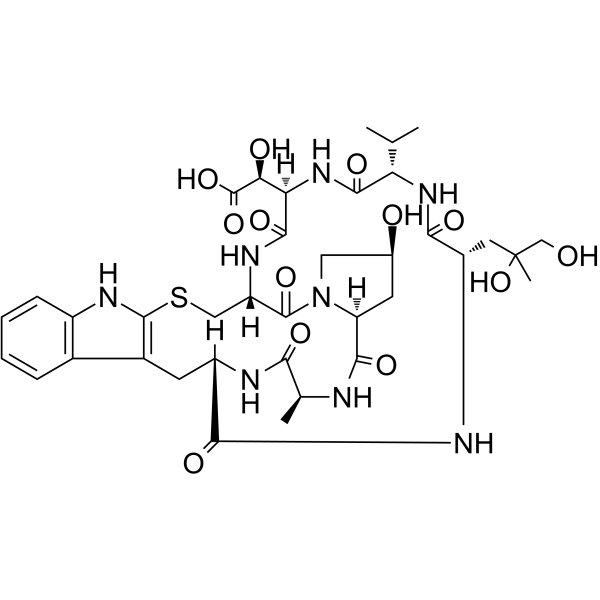
Jasplakinolide is a potent actin polymerization inducer and stabilizes pre-existing actin filaments. Jasplakinolide binds to F-actin competitively with phalloidin with a Kd of 15 nM. Jasplakinolide, a naturally occurring cyclic peptide from the marine sponge, has both fungicidal and anti-cancer activity .
loading...
    loading...
8
8 Cited Publications
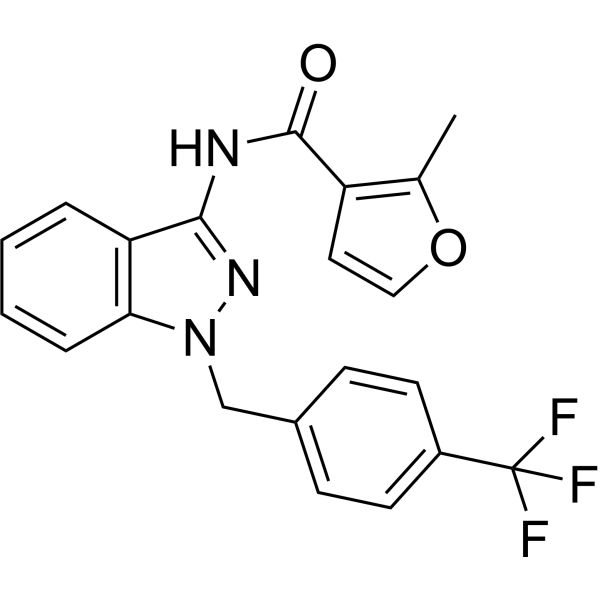
Cat. No.: HY-125506
CAS No.: 1807454-59-6
Purity:  99.76%
Synonyms: NP-G2-044
Target:  

β-catenin

Research Areas:  

Cancer

NP-G2-044 is a potent, orally active fascin inhibitor, with an IC50 of ~2 μM. NP-G2-044 blocks tumor metastasis and increases antitumor immune response .
loading...
    loading...
Cat. No.: HY-P2031
CAS No.: 26645-35-2
Phallacidin is a natural bicyclic heptapeptide derived from the poisonous mushroom Amanita phalloides. Phallacidin binds to filamentous actin specifically with high affinity, with a Kd of 20 nM. After binding to F-actin, Phallacidin strongly inhibits its depolymerization, stabilizes microfilament structures, and prevents their disruption by drugs such as cytochalasins. When conjugated with a fluorophore, Phallacidin serves as a specific fluorescent probe for F-actin, which is used to clearly visualize the distribution of actin in the cytoskeleton (e.g., stress fibers, cortical peripheral bands) under fluorescence microscopy .
loading...
    loading...
Cat. No.: HY-Y1366
CAS No.: 116-09-6
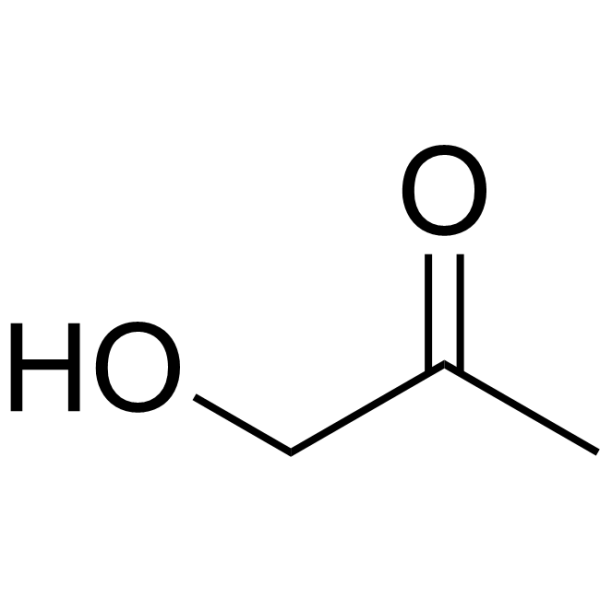
Hydroxyacetone is a toxic compound. Hydroxyacetone can be isolated from e-cigarette aerosols. Hydroxyacetone reduces the activity of cellular Mitochondrial reductase (with an IC50 of 5.53 mg/mL for mitochondrial reductase in BEAS-2B cells) and increases ROS levels. Hydroxyacetone induces mitochondrial stress and oxidative damage. Hydroxyacetone induces destabilization of F-actin. At high concentrations, Hydroxyacetone promotes cell rounding and Apoptotic body formation. Hydroxyacetone exerts toxic effects on cells including airway epithelial cells and possesses respiratory toxicity potential .\n


loading...
    loading...
Cat. No.: HY-111009
CAS No.: 95927-67-6
Purity:  98.30%
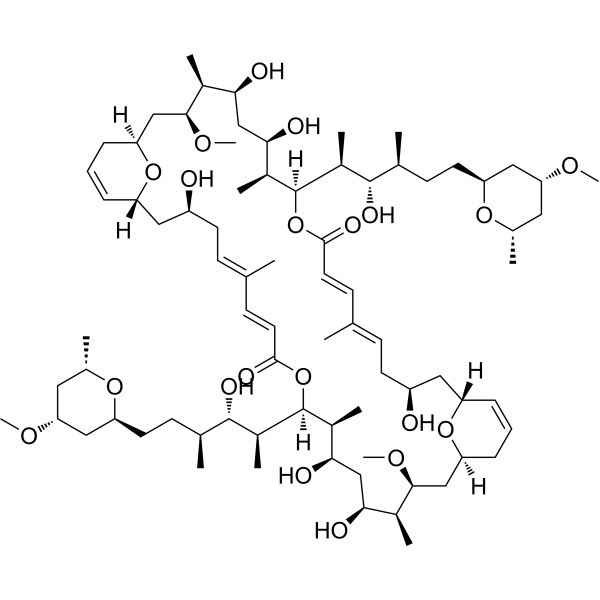
Swinholide A is the actin-binding marine polyketide and dimerizes actin with the Kd of ~ 50 nM . Swinholide A is a microfilament disrupting marine toxin that stabilizes actin dimers and severs actin filaments. Swinholide A disrupts the actin cytoskeleton of cells.Antifungal activity .
loading...
    loading...
Cat. No.: HY-N6744
CAS No.: 50335-03-0
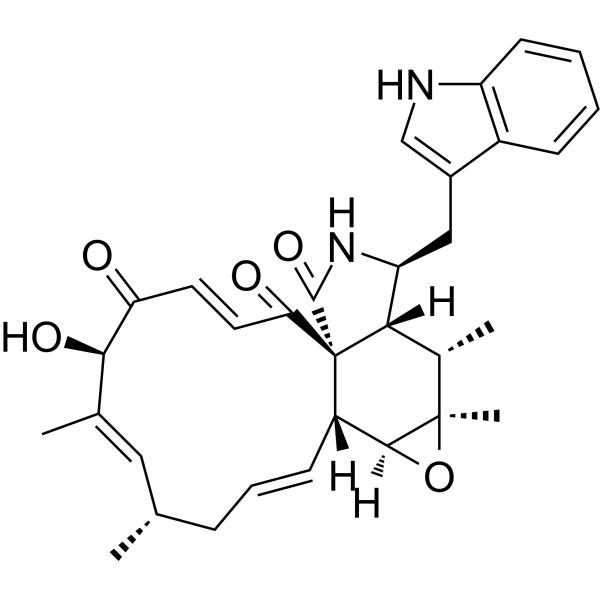
Chaetoglobosin A is a secondary metabolite and nematicide. Chaetoglobosin A is produced by Penicillium aquamarinium. Chaetoglobosin A targets Filamentous actin in cells, thereby inducing cell cycle arrest, and inhibiting membrane ruffle formation and cell migration. Chaetoglobosin A preferentially induces Apoptosis in chronic lymphocytic leukemia cells. Chaetoglobosin A induces dose- and time-dependent death in J2 larvae of the southern root-knot nematode (Meloidogyne incognita). Chaetoglobosin A can be used in studies related to root-knot nematode disease and chronic lymphocytic leukemia .
loading...
    loading...
Cat. No.: HY-N6772
CAS No.: 36011-19-5
Cytochalasin E, an epoxide containing Aspergillus-derived fungal metabolite, inhibits angiogenesis and tumor growth. Cytochalasin E is a potent actin depolymerization agent, and it binds and caps the barbed end of actin filaments to prevent actin elongation .
loading...
    loading...
Cat. No.: HY-124689
CAS No.: 1128165-86-5
Purity:  ≥99.0%
Target:  

Arp2/3 Complex

Research Areas:  

Metabolic Disease Cancer

TR-100 is a small molecule inhibitor of tumor-associated troponin (Tpm). TR-100 affects the interaction of Tpm3.1 with actin filaments by binding to the C-terminal of Tpm3.1, thereby affecting the stability and function of the actin filaments. This mechanism of action allows TR-100 to specifically affect actin filaments in cancer cells without compromising heart muscle function. TR-100 can be used to study the role of Tpm3.1 in cancer cell proliferation and survival and the effects of Tpm3.1 on insulin-stimulated glucose uptake and insulin secretion .
loading...
    loading...
Cat. No.: HY-D1346
CAS No.: 1877282-17-1
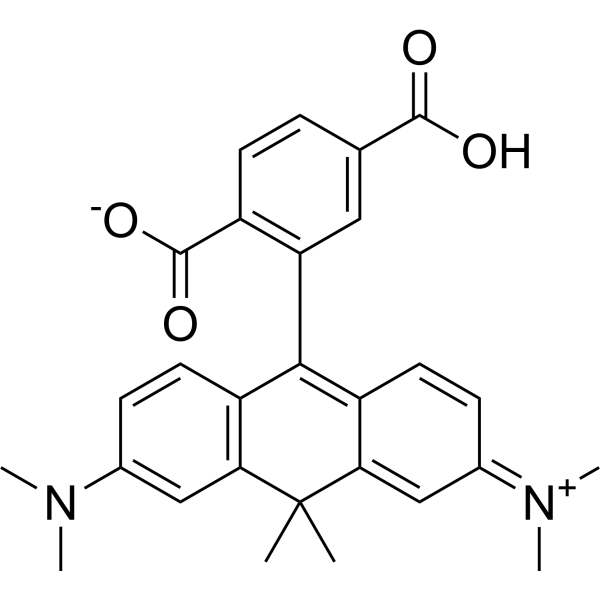
610CP is a new type of actin labeling dye. It dissolves in organic solvents. In DMSO the 610CP excitation/emission wavelength is between 609 and 634 nm. 610CP is a fluorescent dye that penetrates living cells. Upon cell entry, 610CP binds to Bromo-des-methyl-Jasplakinolide Therefore, 610CP dye can be used to stain actin fluorescence images with low background and high resolution.
loading...
    loading...
Cat. No.: HY-175261
Research Areas:  

Cancer

DHI1 is an anti-leukemia agent with high selectivity for Jurkat (IC50 = 21.83 μM) and HL-60 (IC50 = 19.14 μM) leukemia cells and has low toxicity to non-cancerous cells. DHI1 can induce G2/M phase cell arrest in Jurkat and HL-60 leukemia cells, as well as S phase arrest in HL-60 cells, and has significant effects on cell cycle signaling molecules Wee1, cyclin B1, cdc2 on Tyr15, and Chk1. DHI1 inhibits the migration and invasion of Jurkat and HL-60 cells by disrupting cytoskeletal actin filaments. DHI1 can be used to study hematological malignancies .
loading...
    loading...
Cat. No.: HY-182487
CAS No.: 51053-39-5
Target:  

Arp2/3 Complex

Research Areas:  

Inflammation/Immunology

Deoxaphomin is a cytochalasin. Deoxaphomin inhibits Actin filament elongation and reduces the viscosity of polymerized actin filaments. Deoxaphomin induces rounding of fibroblasts, contraction of actin cables, formation of actin-containing hairy structures, and formation of actin-containing cytoplasmic rodlets in fibroblasts. Deoxaphomin inhibits membrane ruffling in fibroblasts and capping in lymphocytes .
loading...
    loading...
Cat. No.: HY-E70841
Target:  

LIM Kinase (LIMK)

Research Areas:  

Cancer

LIM kinase 2 (LIMK2) is a serine/threonine and tyrosine kinases. LIMK2 plays a crucial role in the regulation of cytoskeleton dynamics by controlling actin filaments and microtubule turnover, especially through the phosphorylation of cofilin, an actin depolymerising factor. LIMK2 Recombinant Human Active Protein Kinase is a recombinant LIMK2 protein that can be used to study LIMK2-related functions .
loading...
    loading...
Cat. No.: HY-187686
CAS No.: 2606843-12-1
Target:  

Potassium Channel

Research Areas:  

Others

UA49 is a plasma membrane voltage-dependent potassium channel inhibitor. UA49 inhibits the phosphorylation of plasma membrane H +-ATPase, reduces potassium ion levels in guard cells, increases calcium ion concentrations in the cytoplasm and endoplasmic reticulum, induces actin filament bundling, and triggers SLAC1-dependent stomatal closure through a pathway distinct from that of ABA. UA49 can be used in studies related to plant drought stress .
loading...
    loading...
Cat. No.: HY-182478
CAS No.: 124711-23-5
Target:  

Microtubule/Tubulin

Research Areas:  

Cancer

MDL-27048, a tubulin inhibitor, binds competitively, reversibly to the Colchicine (HY-16569)-binding site on tubulin heterodimers. MDL-27048 inhibits microtubule assembly, induces slow depolymerization of preassembled microtubules, disrupts microtubule polymerization-depolymerization dynamics, and disrupts cytoplasmic microtubule networks. MDL-27048 exerts growth inhibitory effects on human cancer cells, induces mitotic arrest, and does not disrupt actin filaments at microtubule-depolymerizing concentrations. MDL-27048 can be used for the research of malignant tumors .
loading...
    loading...
Cat. No.: HY-126756
CAS No.: 4207-90-3
Amorphin is a phosphorylase b with glycogen metabolism activity. Amorphin binds directly to alpha-actinin, with alpha-actinin mediating its binding to actin filaments. Amorphin can be used for the research of McArdle’s disease and breast cancer .
loading...
    loading...
Cat. No.: HY-P810428
Synonyms: actin capping protein GCAP39, actin regulatory protein CAP G, actin regulatory protein CAP-G, AFCP, Capg, CAPG_HUMAN, Capping actin protein gelsolin like, Capping protein (actin filament) gelsolin like, Capping protein gelsolin like, Epididymis secretory protein Li 66

Host:  

Rabbit

Application:  

WB, ICC/IF, IHC-P

Reactivity:  

Human, Mouse, Rat

loading...
    loading...
Cat. No.: HY-P75601
Purity:  ≥ 95%, as determined by reducing SDS-PAGE.
Synonyms: CAPG; actin Regulatory Protein CAP-G; Prev. AFCP; actin-Regulatory Protein CAP-G; MCP; Gelsolin-Like Capping Protein; Macrophage-Capping Protein; Macrophage Capping Protein; Capping Protein (actin filament), Gelsolin-Like; HEL-S-66; Capping actin Protein,
Species:  
Human
Source:  
E. coli
loading...
    loading...
Cat. No.: HY-E70632
Research Areas:  

Neurological Disease

PIP5K1B participates in the biosynthesis of PI(4,5)P2. PIP5K1B is at the crossroad of different signaling pathways, mediating RAC1-dependent reorganization of actin filaments and contributing to the activation of phospholipase D2. PIP5K1B Recombinant Human Active Lipid Kinase can be used for the study of Friedreich’s ataxia (FRDA) .
loading...
    loading...

