Search Result
Results for "
adenosine A1/A2A receptors
" in MedChemExpress (MCE) Product Catalog:
19
Isotope-Labeled Compounds
| Cat. No. |
Product Name |
Target |
Research Areas |
Chemical Structure |
-
- HY-B0228
-
-
-
- HY-N0092
-
-
-
- HY-19533
-
|
|
Adenosine Receptor
|
Cancer
|
|
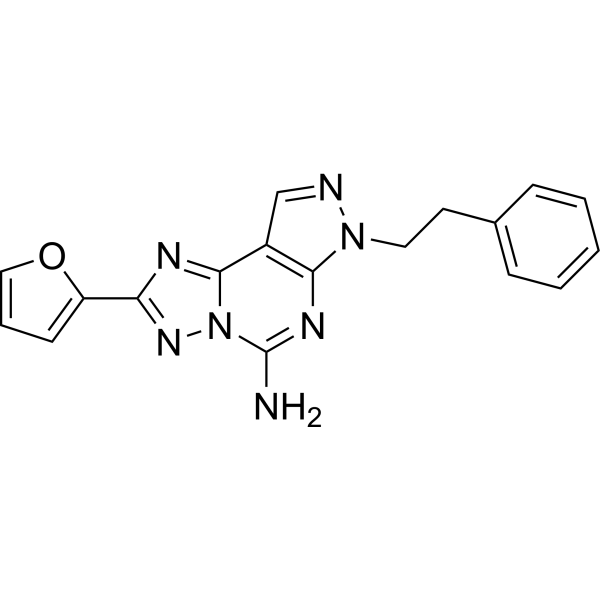
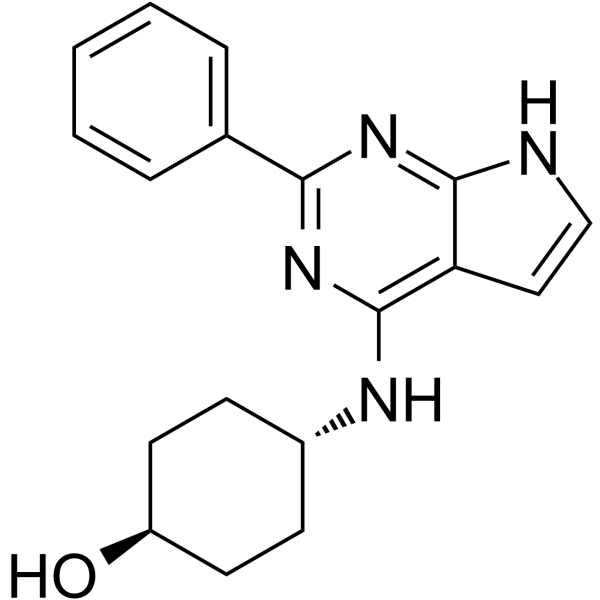
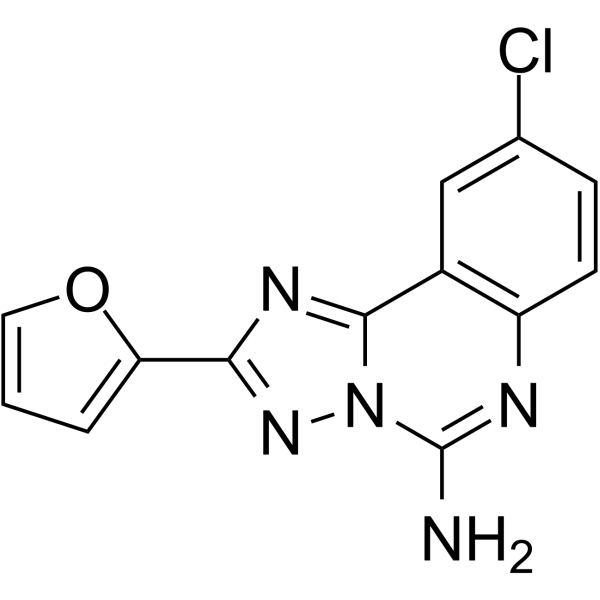
SCH 58261 is a potent, selective and competitive antagonist of adenosine A2A receptor with an IC50 of 15 nM, and displays 323-, 53- and 100-fold more selective for A2A receptor than A1, A2B, and A3 receptors, respectively .
|
-
-
- HY-12365
-
|
CF-102; 2-Cl-IB-MECA
|
Adenosine Receptor
|
Cancer
|
|
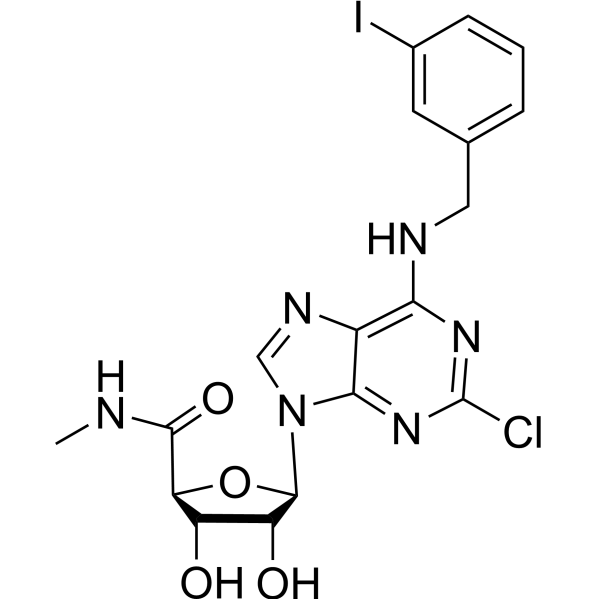
Namodenoson (CF-102) is a selective A3 adenosine receptor (A3AR) agonist (Ki=0.33 nM). Namodenoson displays 2500- and 1400-fold selectivity over A1 and A2A receptors respectively .
|
-
-
- HY-103171
-
|
|
Adenosine Receptor
|
Cardiovascular Disease
Inflammation/Immunology
|
|
BAY 60-6583 is a potent and high-affinity agonist of adenosine A2B receptor (EC50=3 nM) over A1, A2A, and A3 receptors. BAY 60-6583 binds to mouse, rabbit, and dog A2BAR with Ki values of 750 nM, 340 nM and 330 nM, respectively. BAY 60-6583 has a cardioprotective effect in a myocardial ischemia model .
|
-
-
- HY-100678
-
|
|
Adenosine Receptor
PI3K
|
Inflammation/Immunology
Cancer
|
|
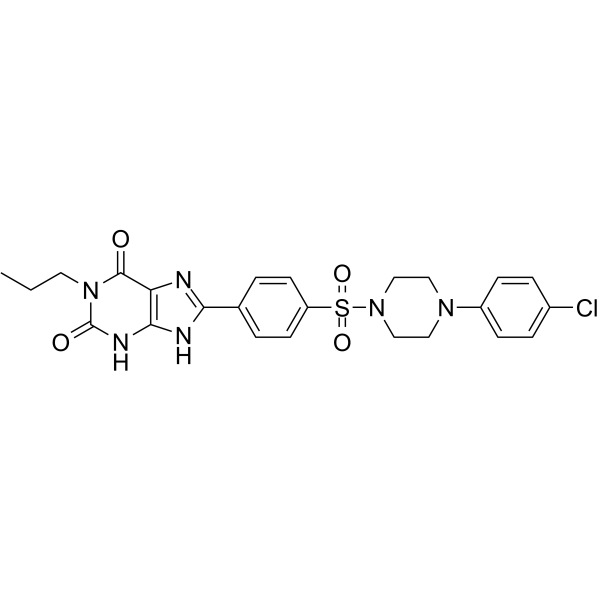
CGS 15943 is an orally bioavailable non-xanthine Adenosine Receptor antagonist. Its Ki for human A1, A2A, A2B, and A3 Adenosine Receptors are 3.5, 4.2, 16, and 50 nM in transfected CHO cells, respectively. .
|
-
-
- HY-103166
-
PSB-603
3 Publications Verification
|
Adenosine Receptor
|
Inflammation/Immunology
|
|
PSB-603 is a potent and highly selective A2B adenosine receptor antagonist exhibiting a Ki value of 0.553 nM and virtually no affinity for the human and rat A1 and A2A and the human A3 receptors up to a concentration of 10 μM .
|
-
-
- HY-121119
-
|
|
Adenosine Receptor
Calcium Channel
|
Cardiovascular Disease
Neurological Disease
Inflammation/Immunology
|
|
MRS 1523 is a potent and selective adenosine A3 receptor antagonist with Ki values of 18.9 nM and 113 nM for human and rat A3 receptors, respectively. In rat this corresponds to selectivities of 140- and 18-fold vs A1 and A2A receptors, respectively. MRS 1523 can exert antihyperalgesic effect through N-type Ca channel block and action potential inhibition in isolated rat dorsal root ganglion (DRG) neurons .
|
-
-
- HY-103181
-
|
CPA; UK-80882
|
Adenosine Receptor
Apoptosis
|
Cardiovascular Disease
Neurological Disease
Cancer
|
|
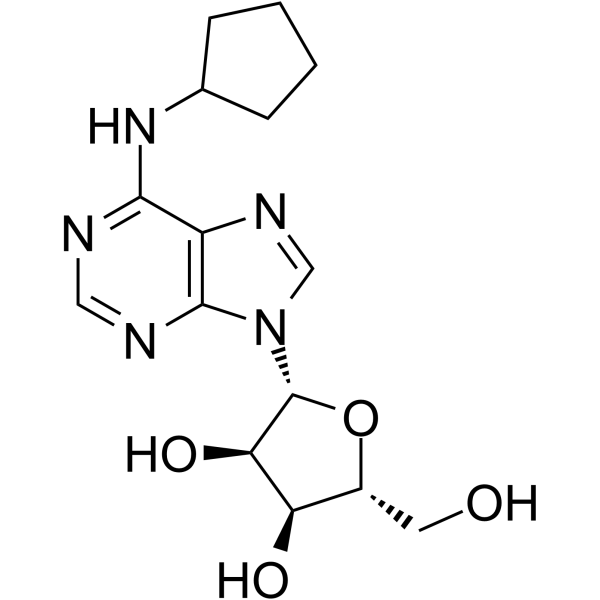
N6-Cyclopentyladenosine (CPA) is a selective Adenosine A1 receptor agonist, with Ki values of 2.3 nM, 790 nM and 43 nM for human A1, A2A and A3 receptors, respectively. N6-cyclopentyladenosine increases Apoptosis. N6-Cyclopentyladenosine has antitumor activity against leukemia. N6-cyclopentyladenosine improves 5-fluorouracil (HY-90006)-induced hematopoietic damage, regulates sleep, and delays Aminophylline-induced clonic epileptic seizures .
|
-
-
- HY-N0092S2
-
-
-
- HY-B0228S1
-
|
Adenine riboside-13C5; D-adenosine-13C5
|
Apoptosis
Nucleoside Antimetabolite/Analog
Autophagy
Endogenous Metabolite
|
Cancer
|
|
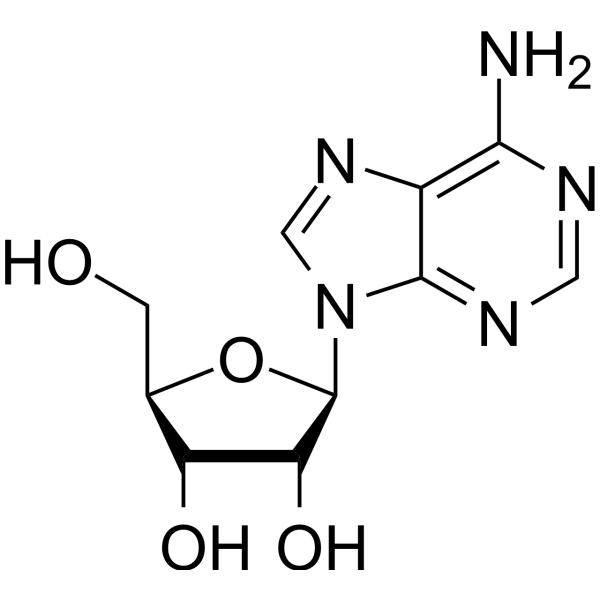
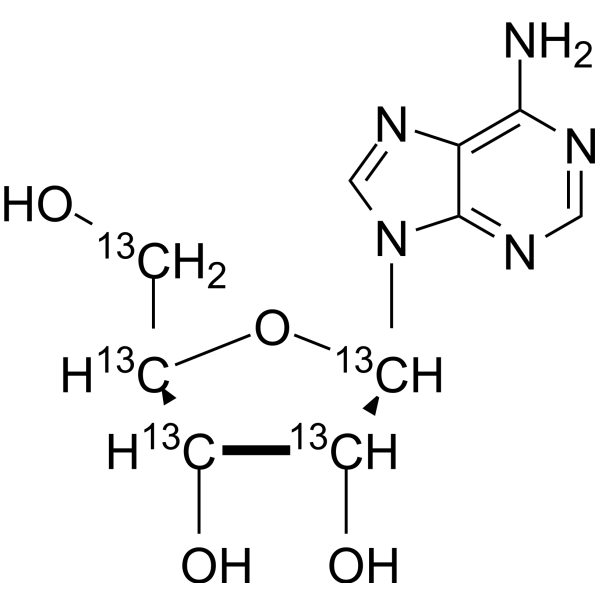
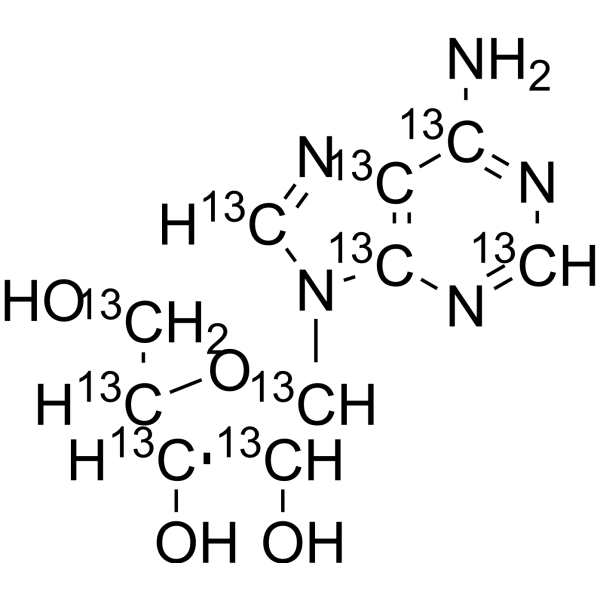
Adenosine- 13C5 is the 13C labeled Adenosine . Adenosine (Adenine riboside), a ubiquitous endogenous autacoid, acts through the enrollment of four G protein-coupled receptors: A1, A2A, A2B, and A3. Adenosine affects almost all aspects of cellular physiology, including neuronal activity, vascular function, platelet aggregation, and blood cell regulation .
|
-
-
- HY-B0228S11
-
|
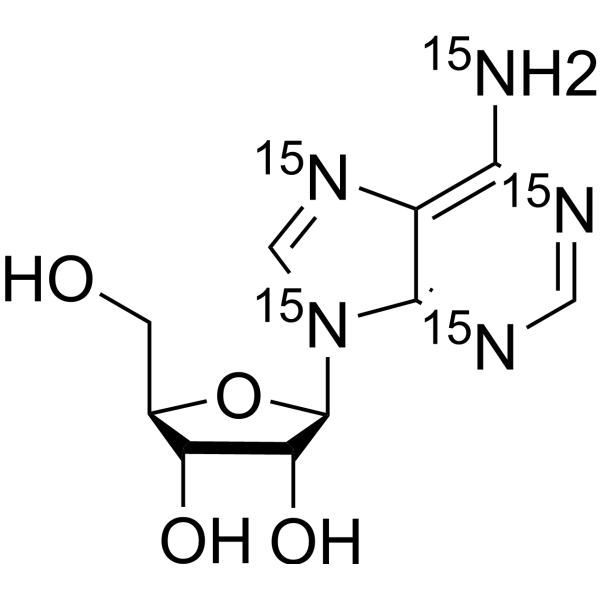
Adenine riboside-15N5; D-adenosine-15N5
|
Isotope-Labeled Compounds
|
Cancer
|
|
Adenosine- 15N5 (Adenine riboside- 15N5; D-Adenosine- 15N5) is the 15N labled Adenosine (HY-B0228). Adenosine (Adenine riboside), a ubiquitous endogenous autacoid, acts through the enrollment of four G protein-coupled receptors: A1, A2A, A2B, and A3. Adenosine affects almost all aspects of cellular physiology, including neuronal activity, vascular function, platelet aggregation, and blood cell regulation .
|
-
-
- HY-10857
-
-
-
- HY-14858
-
|
SLV 320
|
Adenosine Receptor
|
Cardiovascular Disease
|
|
Derenofylline (SLV 320) is a potent, selective and orally active adenosine A1 receptor antagonist, with Ki values of 1 nM, 200 nM and 398 nM for human A1, A3 and A2A receptors respectively. Derenofylline suppresses cardiac fibrosis and attenuates albuminuria without affecting blood pressure in rats .
|
-
-
- HY-B0228R
-
|
Adenine riboside (Standard); D-adenosine (Standard)
|
Reference Standards
Nucleoside Antimetabolite/Analog
Autophagy
Apoptosis
Endogenous Metabolite
|
Metabolic Disease
Cancer
|
|
Adenosine (Standard) is the analytical standard of Adenosine. This product is intended for research and analytical applications. Adenosine (Adenine riboside), a ubiquitous endogenous autacoid, acts through the enrollment of four G protein-coupled receptors: A1, A2A, A2B, and A3. Adenosine affects almost all aspects of cellular physiology, including neuronal activity, vascular function, platelet aggregation, and blood cell regulation .
|
-
-
- HY-B0228S13
-
-
-
- HY-B0228S9
-
|
|
Isotope-Labeled Compounds
Apoptosis
Nucleoside Antimetabolite/Analog
Autophagy
Endogenous Metabolite
|
Metabolic Disease
Cancer
|
|
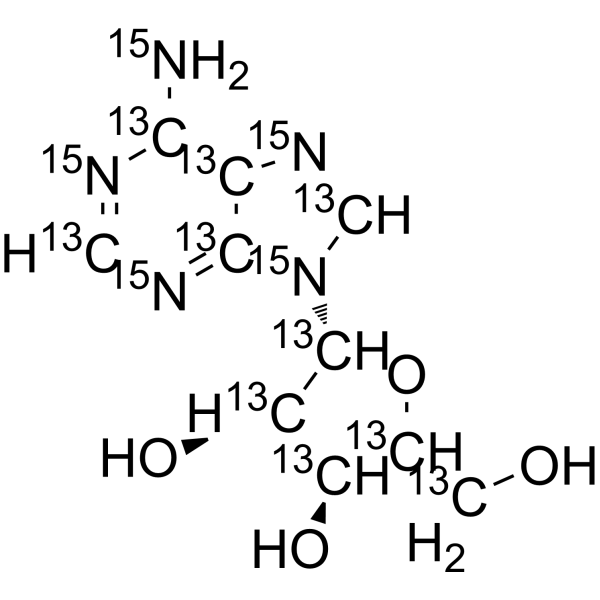
Adenosine- 13C10, 15N5 is the 13C and 15N labeled Adenosine (HY-B0228) . Adenosine (Adenine riboside), a ubiquitous endogenous autacoid, acts through the enrollment of four G protein-coupled receptors: A1, A2A, A2B, and A3. Adenosine affects almost all aspects of cellular physiology, including neuronal activity, vascular function, platelet aggregation, and blood cell regulation .
|
-
-
- HY-102024
-
-
-
- HY-B0228S6
-
-
-
- HY-103186
-
|
|
Adenosine Receptor
|
Inflammation/Immunology
|
|
MRS-1706 is a potent and selective adenosine A2B receptor inverse agonist. MRS-1706 has Ki values of 1.39, 112, 157, and 230 nM for human A2B, A2A, A1 and A3 receptors respectively. MRS-1706 blocks adenosine-mediated cAMP induction .
|
-
-
- HY-119413
-
|
|
Adenosine Receptor
|
Neurological Disease
|
|
9-Ethyladenine is a precursor of competitive antagonists of adenosine receptors (A1, A2, A3), with no significant inhibitory effect on adenine phosphoribosyltransferase (APRT). 9-Ethyladenine derivatives have high affinity and selectivity for A1 (Ki=27 nM), A2A (Ki=46 nM), and A3 (Ki=86 nM) receptors. 9-Ethyladenine does not inhibit brain APRT activity, can be used in the study of adenosine receptor-related diseases (such as nervous system diseases) models .
|
-
-
- HY-B0228S4
-
-
-
- HY-148088
-
M1069
1 Publications Verification
|
Adenosine Receptor
|
Cancer
|
|
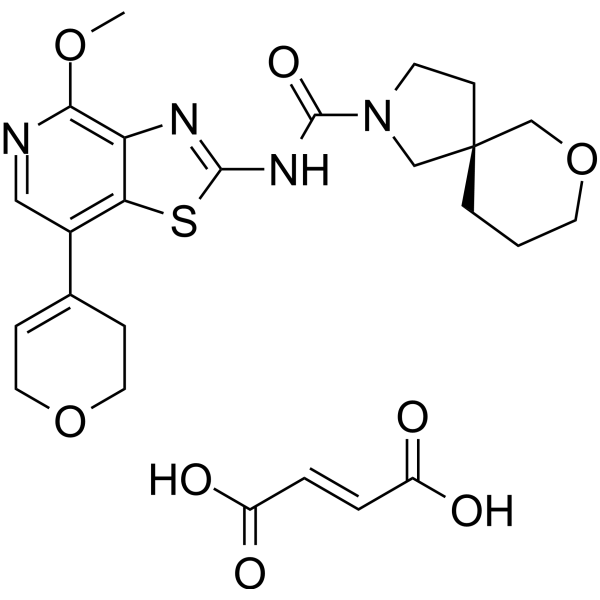
M1069 is a selective and orall active, dual A2A/A2B adenosine receptor antagonist with a selectivity of >100 fold against the A1 and A3 receptors. M1069 counteracts immune-suppressive mechanisms of adenosine, and exhibits anti-tumor activity .
|
-
-
- HY-B0228S
-
-
-
- HY-N0092R
-
|
|
Reference Standards
Adenosine Receptor
Endogenous Metabolite
|
Neurological Disease
Inflammation/Immunology
|
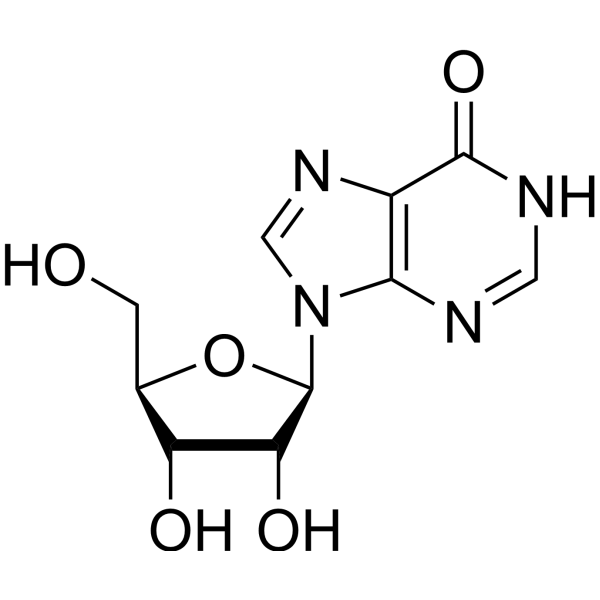
Inosine (Standard) is the analytical standard of Inosine. This product is intended for research and analytical applications. Inosine is an endogenous purine nucleoside produced by catabolism of adenosine. Inosine has anti-inflammatory, antinociceptive, immunomodulatory and neuroprotective effects. Inosine is an agonist for adenosine A1 (A1R) and A2A (A2AR) receptors . In Vitro:Inosine dose-dependently stimulates cAMP production mediated through the A2AR . Inosine dose-dependently induces hA2AR-mediated ERK1/2 phosphorylation . Inosine (100 μM; 24 hours) reduces oxidative stress in MES 23.5 cells cultured with astrocytes . In Vivo:Inosine (10-100 mg/kg; i.p.) exhibits antinociceptive effect in mice .
|
-
-
- HY-W004425
-
|
3,7-Dimethyl-1-propargylxanthine
|
Adenosine Receptor
|
Neurological Disease
|
|
DMPX (3,7-Dimethyl-1-propargylxanthine) is a selective A2A adenosine receptor (A2A AR) antagonist that crosses the blood-brain barrier, with a Ki of 11 μM for rat A2 adenosine receptor and a Ki of 45 μM for rat A1 adenosine receptor. By blocking A2A receptors in specific brain regions, DMPX protects dopaminergic and GABAergic neurons from mitochondrial dysfunction. DMPX is applicable to research related to depression, Parkinson's disease and Huntington's disease .
|
-
-
- HY-B0228S5
-
-
-
- HY-103170
-
|
|
Adenosine Receptor
|
Others
|
|
LUF5834 is a selective A2B adenosine receptor (A2BR) partial agonist (EC50 = 12 nM). LUF5834 is also a partial A1/A2A adenosine receptor agonist (lacking selectivity) with Ki values of 2.6 and 28 nM, respectively .
|
-
-
- HY-111767
-
|
|
Adenosine Receptor
|
Inflammation/Immunology
|
|
BAY-545 is a potent and selective A2B adenosine receptor antagonist, with an IC50 of 59 nM. BAY-545 also exhibits IC50s of 66, 400, 280 nM for human, mouse, rat A2B adenosine receptor in cells, respectively, and a Ki of 97 nM for human A2B adenosine receptor, with more selectivity over A1, A2A, and A3 adenosine receptor .
|
-
-
- HY-136233A
-
|
|
Adenosine Receptor
|
Inflammation/Immunology
|
|
PSB 0777 ammonium hydrate is a potent and selective adenosine A2A receptor full agonist with Ki values of 44.4 nM, 360 nM for rat and human A2A receptors, respectively. PSB 0777 ammonium hydrate has Ki values of ≥10000 nM, 541 nM for rat and human A1 receptors, respectively. PSB 0777 ammonium hydrate shows poor brain penetrant and perorally non-absorbable effect. PSB 0777 ammonium hydrate has the potential for inflammatory bowel disease (IBS) research research .
|
-
-
- HY-N0092S
-
-
-
- HY-147908
-
|
|
Xanthine Oxidase
Adenosine Receptor
|
Inflammation/Immunology
|
|
Adenosine receptor inhibitor 2 (compound 14b) is a potent AR (adenosine receptor) inhibitor. Adenosine receptor inhibitor 2 shows dual affinity toward A1/A2A ARs with higher affinity for the A1- than the A2AAR. Adenosine receptor inhibitor 2 has Ki values of 52.2 nM for the A1AR and 167 nM for the A2AAR .
|
-
-
- HY-B0228S12
-
-
-
- HY-148076
-
|
|
Adenosine Receptor
|
Cancer
|
|
A2A receptor antagonist 3 (Example 92) is an adenosine A2a receptor antagonist with a Ki of 0.4 nM. A2A receptor antagonist 3 also binds to A2b, A1 and A3 receptor with Kis of 37, 107 and 1467 nM, respectively .
|
-
-
- HY-14873
-
|
BG 9928
|
Adenosine Receptor
|
Cardiovascular Disease
Metabolic Disease
|
|
Tonapofylline (BG 9928) is an orally active and selective adenosine A1 receptor antagonist with a Ki of 7.4 nM for human adenosine A1 receptor (hA1), which displays 915-fold selectivity versus human adenosine A2A receptor and 12-fold selectivity versus human adenosine A2B receptor and is used in development for the treatment of heart failure .
|
-
-
- HY-W088152
-
|
|
Drug Intermediate
|
Others
|
|
8-Bromotheophylline can be used for the synthesis of the Oxazolo[2,3-f]purinediones, which are evaluated for their affinity at adenosine A1 and A2A receptors .
|
-
-
- HY-B0228S8
-
-
-
- HY-120652
-
|
|
Adenosine Receptor
|
Inflammation/Immunology
|
|
A3AR antagonist 3 (compound 21) is a selective A3 adenosine receptor (A3AR) antagonist with a Ki of 37 nM. A3AR antagonist 3 shows >60-fold selectivity in comparison to A1 and A2A adenosine receptors .
|
-
-
- HY-B0228S14
-
|
Adenine riboside-d9; D-adenosine-d9
|
Isotope-Labeled Compounds
|
Others
|
|
Adenosine-d9 is the deuterium labeled Adenosine. Adenosine (Adenine riboside), a ubiquitous endogenous autacoid, acts through the enrollment of four G protein-coupled receptors: A1, A2A, A2B, and A3. Adenosine affects almost all aspects of cellular physio .
|
-
-
- HY-B0228S2
-
-
-
- HY-N0092S1
-
-
-
- HY-136233
-
|
|
Adenosine Receptor
|
Inflammation/Immunology
|
|
PSB 0777 ammonium is a potent and selective adenosine A2A receptor full agonist with Ki values of 44.4 nM, 360 nM for rat and human A2A receptors, respectively. PSB 0777 ammonium has Ki values of ≥10000 nM, 541 nM for rat and human A1 receptors, respectively. PSB 0777 ammonium shows poor brain penetrant and perorally non-absorbable effect. PSB 0777 ammonium has the potential for inflammatory bowel disease (IBS) research research .
|
-
-
- HY-103187
-
|
|
Adenosine Receptor
|
Inflammation/Immunology
Cancer
|
|
HEMADO is a potent and selective adenosine A3 receptor agonist with a Ki of 1.1 nM at the human A3 subtype . HEMADO is a click chemistry reagent, it contains an Alkyne group and can undergo copper-catalyzed azide-alkyne cycloaddition (CuAAc) with molecules containing Azide groups.
|
-
-
- HY-179248
-
|
|
Adenosine Receptor
ERK
JNK
MMP
|
Cancer
|
|
Adenosine receptor antagonist 7 is an orally active triple A1/A2A/A2B adenosine receptor antagonist with Ki values of 1.5, 0.6 and 21 nM. Adenosine receptor antagonist 7 shows potent inhibitory activity (IC50 = 0.8 nM) of cAMP production in A2AR-HEK293 cells. Adenosine receptor antagonist 7 can enhance infiltration of effector T cells and increase the CD8+/Treg ratio companied with Avelumab (HY-108730). Adenosine receptor antagonist 7can be used for the research of cancer, such as colon cancer .
|
-
-
- HY-112840
-
-
-
- HY-U00341
-
|
|
Adenosine Receptor
|
Neurological Disease
|
|
ST4206 is a potent and orally active adenosine A2A receptor antagonist, with Kis of 12 nM and 197 nM for adenosine A2A receptor and adenosine A1 receptor, respectively. ST4206 has the potential for Parkinson׳s disease research .
|
-
-
- HY-A0168S
-
|
CVT-3146-d3
|
Isotope-Labeled Compounds
Adenosine Receptor
|
Cardiovascular Disease
Cancer
|
|
Regadenoson-d3 is the deuterium labeled Regadenoson. Regadenoson (CVT-3146) is a potent and selective A2A adenosine receptor agonist, with Kis of 290 and 1120 nM for rat and pig adenosine A2A receptor, respectively. Regadenoson is selective for the adenosine A2A receptor over adenosine A1 and A2B receptors, and shows 13-fold selectivity over the human adenosine A1 receptor. Regadenoson is a vasodilator stress agent has shifted the landscape of vasodilator myocardial perfusion imaging. Regadenoson increases blood-brain barrier (BBB) permeability in rodents .
|
-
-
- HY-19310
-
|
|
Adenosine Receptor
|
Cardiovascular Disease
Metabolic Disease
|
|
AMP-579 is an adenosine receptor agonist that primarily targets adenosine A1 and A2A receptors (with Ki values of 1.7 and 4.5 nM for the A1 receptor in rat brain and adipocytes, and a Ki value of 56 nM for the A2A receptor in rat brain). AMP-579 inhibits lipolysis, restores insulin-dependent glucose transport, and reduces heart rate through the activation of A1 receptors, while it induces vasodilation, particularly in coronary arteries, through the activation of A2A receptors (with an IC50 of 0.3 μM in porcine coronary arterial rings). AMP 579 shows potential for application in cardioprotection and the treatment of acute myocardial infarction .
|
-
-
- HY-B0228S7
-
-
-
- HY-B0228S3
-
-
- HY-10857R
-
|
BIIB-014 (Standard); CEB-4520 (Standard)
|
Adenosine Receptor
Reference Standards
|
Neurological Disease
|
|
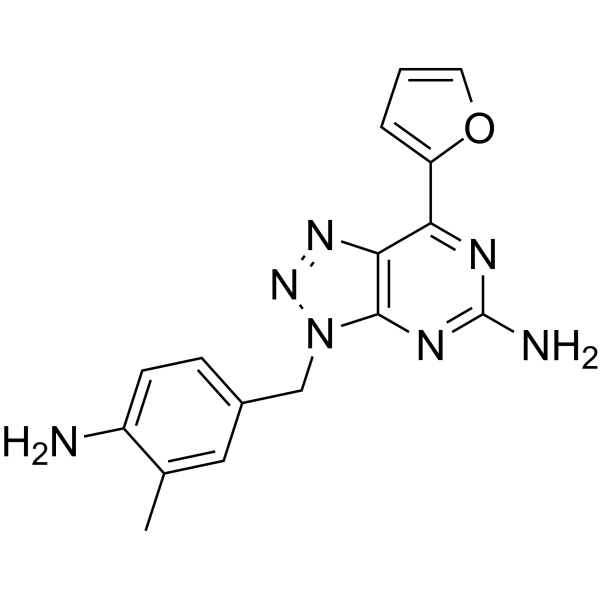
Vipadenant (Standard) is the analytical standard of Vipadenant. This product is intended for research and analytical applications. Vipadenant (BIIB-014; CEB-4520) is an adenosine receptor antagonist, with Kis of 1.3 nM and 68 nM for A2A and A1, respectively.
|
-
- HY-W777125
-
-
- HY-19533R
-
|
|
Adenosine Receptor
|
Cancer
|
|
SCH 58261 (Standard) is the analytical standard of SCH 58261. This product is intended for research and analytical applications. SCH 58261 is a potent, selective and competitive antagonist of adenosine A2A receptor with an IC50 of 15 nM, and displays 323-, 53- and 100-fold more selective for A2A receptor than A1, A2B, and A3 receptors, respectively .
|
-
- HY-14858R
-
|
SLV 320 (Standard)
|
Adenosine Receptor
Reference Standards
|
Cardiovascular Disease
|
|
Derenofylline (Standard) is the analytical standard of Derenofylline. This product is intended for research and analytical applications. Derenofylline (SLV 320) is a potent, selective and orally active adenosine A1 receptor antagonist, with Ki values of 1 nM, 200 nM and 398 nM for human A1, A3 and A2A receptors respectively. Derenofylline suppresses cardiac fibrosis and attenuates albuminuria without affecting blood pressure in rats .
|
-
- HY-148088A
-
|
|
Adenosine Receptor
|
Cancer
|
|
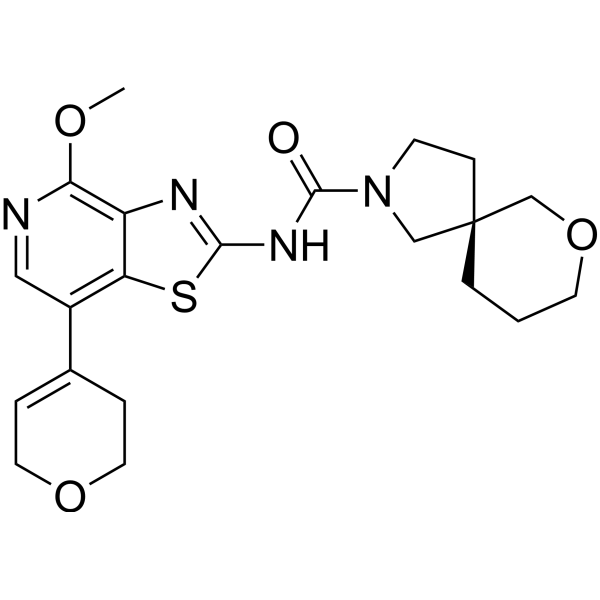
M1069 (free base) is a selective and orall active, dual A2A/A2B adenosine receptor antagonist with a selectivity of >100 fold against the A1 and A3 receptors. M1069 (free base) counteracts immune-suppressive mechanisms of adenosine, and exhibits anti-tumor activity .
|
-
- HY-100678R
-
|
|
Reference Standards
Adenosine Receptor
PI3K
|
Inflammation/Immunology
Cancer
|
|
CGS 15943 (Standard) is the analytical standard of CGS 15943. This product is intended for research and analytical applications. CGS 15943 is an orally bioavailable non-xanthine Adenosine Receptor antagonist. Its Ki for human A1, A2A, A2B, and A3 Adenosine Receptors are 3.5, 4.2, 16, and 50 nM in transfected CHO cells, respectively. .
|
-
- HY-W088152R
-
|
|
Adenosine Receptor
Reference Standards
|
Others
|
|
8-Bromotheophylline (Standard) is the analytical standard of 8-Bromotheophylline. This product is intended for research and analytical applications. 8-Bromotheophylline can be used for the synthesis of the Oxazolo[2,3-f]purinediones, which are evaluated for their affinity at adenosine A1 and A2A receptors .
|
-
- HY-123038
-
|
|
Adenosine Receptor
|
Inflammation/Immunology
|
|
CVT-5440 is a xanthine based, selective, high affinity A2B adenosine receptors (AdoR) antagonist with a Ki of 50 nM (selectivity A1> 200; A2A>200; A3>167). CVT-5440 has the potential for asthma research .
|
-
- HY-12365R
-
|
CF-102 (Standard); 2-Cl-IB-MECA (Standard)
|
Reference Standards
Adenosine Receptor
|
Cancer
|
|
Namodenoson (Standard) is the analytical standard of Namodenoson. This product is intended for research and analytical applications. Namodenoson (CF-102) is a selective A3 adenosine receptor (A3AR) agonist (Ki=0.33 nM). Namodenoson displays 2500- and 1400-fold selectivity over A1 and A2A receptors respectively .
|
-
- HY-W779021
-
-
- HY-119191
-
|
|
Adenosine Receptor
|
Neurological Disease
|
|
KF26777 (free base) is a potent and selective adenosine A3 receptor antagonist with an Ki value of 0.2 nM and possesses 9000-, 2350- and 3100-fold selectivity against adenosine A1, A2A and A2B receptors, respectively. KF26777 (free base) potently inhibits the [125I]AB-MECA binding to adenosine A3 receptors. KF26777 (free base) is promising for research of brain ischemia and inflammatory disease including asthma .
|
-
- HY-103186R
-
|
|
Reference Standards
Adenosine Receptor
|
Inflammation/Immunology
|
|
MRS-1706 (Standard) is the analytical standard of MRS-1706. This product is intended for research and analytical applications. MRS-1706 is a potent and selective adenosine A2B receptor inverse agonist. MRS-1706 has Ki values of 1.39, 112, 157, and 230 nM for human A2B, A2A, A1 and A3 receptors respectively. MRS-1706 blocks adenosine-mediated cAMP induction .
|
-
- HY-103164A
-
|
CSC
|
Endogenous Metabolite
|
Neurological Disease
|
|
8-(3-Chlorostyryl)caffeine (CSC) is an adenosine antagonist with selective activity at the A2a adenosine receptor. 8-(3-Chlorostyryl)caffeine showed 520-fold selectivity in radioligand binding experiments in rat brain. Antagonism of adenylylase by 8-(3-Chlorostyryl)caffeine shows 22-fold selectivity in rat chromaffin cells When 8-(3-Chlorostyryl)caffeine is co-administered with the A1-selective antagonist CPX, It can also further increase exercise activity. 8-(3-Chlorostyryl)caffeine exhibits good MAO-B inhibitory activity in primate mitochondria. 8-(3-Chlorostyryl)caffeine also has excellent A2A receptor affinity .
|
-
- HY-103171R
-
|
|
Reference Standards
Adenosine Receptor
|
Cardiovascular Disease
Inflammation/Immunology
|
|
BAY 60-6583 (Standard) is the analytical standard of BAY 60-6583. This product is intended for research and analytical applications. BAY 60-6583 is a potent and high-affinity agonist of adenosine A2B receptor (EC50?= 3 nM) over A1, A2A, and A3 receptors. BAY 60-6583 binds to mouse, rabbit, and dog A2BAR with Ki values of 750 nM, 340 nM and 330 nM, respectively. BAY 60-6583 has a cardioprotective effect in a myocardial ischemia model .
|
-
- HY-121119R
-
|
|
Adenosine Receptor
Calcium Channel
|
Cardiovascular Disease
Neurological Disease
Inflammation/Immunology
|
|
MRS 1523 (Standard) is the analytical standard of MRS 1523. This product is intended for research and analytical applications. MRS 1523 is a potent and selective adenosine A3 receptor antagonist with Ki values of 18.9 nM and 113 nM for human and rat A3 receptors, respectively. In rat this corresponds to selectivities of 140- and 18-fold vs A1 and A2A receptors, respectively. MRS 1523 can exert antihyperalgesic effect through N-type Ca channel block and action potential inhibition in isolated rat dorsal root ganglion (DRG) neurons .
|
-
- HY-180423
-
|
|
Adenosine Receptor
|
Neurological Disease
|
|
IRFI-165 is a potent and selective A1 adenosine receptor antagonist with a Ki of 7.9 nM for rat A1 AR. IRFI-165 exhibies high selectivity versus A2A and A3 receptors. IRFI-165 induces antidepressant activity in vivo. IRFI-165 can be used for the research of psychiatric and neurological disorders .
|
-
- HY-W069173
-
|
|
Adenosine Receptor
|
Others
|
|
2-Thioadenosine is a selective A1 adenosine receptor (A1AR) ligand with a Ki of 80.3 nM. 2-Thioadenosine shows very low affinity for the A2A, A2B and A3 adenosine receptor subtypes. 2-Thioadenosine acts as a precursor for the synthesis of fluorescent A3 adenosine receptor-selective agonists .
|
-
- HY-145706
-
|
|
Adenosine Receptor
|
Neurological Disease
|
|
A2A/A1 AR antagonist-1 (compound 1a) is dual potent A2A/A1 AR antagonist with Kis of 5.58 and 24.2 nM, respectively. A2A/A1 AR antagonist-1 has the potential for the research of ischemic stroke .
|
-
- HY-108942
-
|
|
Adenosine Receptor
|
Cardiovascular Disease
Neurological Disease
|
|
ASP5854 is an orally active, blood-brain barrier permeable adenosine A1/A2a dual receptor antagonist. ASP5854 blocks receptor activity and agonist-induced intracellular calcium elevation, and exhibits the characteristic of slow dissociation from striatal A2a receptors in primates. ASP5854 reverses catalepsy, enhances cognitive ability, improves motor function and exerts neuroprotective effects, while also alleviating dyskinesia and increasing contralateral turning behavior. ASP5854 is mainly used in studies related to ischemic stroke and Parkinson's disease .
|
-
- HY-103166R
-
|
|
Reference Standards
Adenosine Receptor
|
Inflammation/Immunology
|
|
PSB-603 (Standard) is the analytical standard of PSB-603 (HY-103166). This product is intended for research and analytical applications. PSB-603 is a potent and highly selective A2B adenosine receptor antagonist exhibiting a Ki value of 0.553 nM and virtually no affinity for the human and rat A1 and A2A and the human A3 receptors up to a concentration of 10 μM .
|
-
- HY-183239
-
|
|
Adenosine Receptor
|
Inflammation/Immunology
Cancer
|
|
A2AR/A2BR antagonist 2 is a dual A2A/A2B adenosine receptor antagonist with selectivity for the A1 receptor. A2AR/A2BR antagonist 2 reverses adenosine-mediated T-cell immunosuppression in the tumor microenvironment. A2AR/A2BR antagonist 2 can be used in cancer-related research .
|
-
- HY-103181R
-
|
CPA (Standard); UK-80882 (Standard)
|
Reference Standards
Adenosine Receptor
Apoptosis
|
Cardiovascular Disease
Neurological Disease
Cancer
|
|
N6-Cyclopentyladenosine (Standard) is the analytical standard of N6-Cyclopentyladenosine (HY-103181). This product is intended for research and analytical applications. N6-Cyclopentyladenosine (CPA) is a selective Adenosine A1 receptor agonist, with Ki values of 2.3 nM, 790 nM and 43 nM for human A1, A2A and A3 receptors, respectively. N6-cyclopentyladenosine increases Apoptosis. N6-Cyclopentyladenosine has antitumor activity against leukemia. N6-cyclopentyladenosine improves 5-fluorouracil (HY-90006)-induced hematopoietic damage, regulates sleep, and delays Aminophylline-induced clonic epileptic seizures .
|
-
| Cat. No. |
Product Name |
Category |
Target |
Chemical Structure |
| Cat. No. |
Product Name |
Chemical Structure |
-
- HY-N0092S2
-
2 Publications Verification
|
|
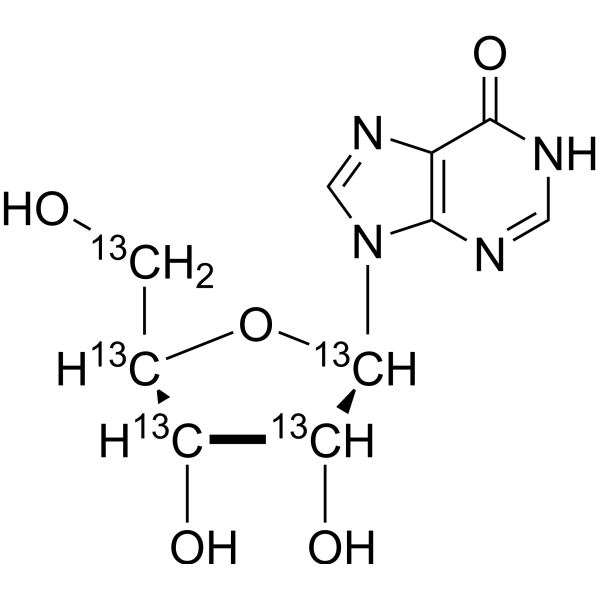
Inosine- 13C5 is the 13C5 labeled Inosine (HY-N0092). Inosine is an endogenous purine nucleoside produced by catabolism of adenosine. Inosine has anti-inflammatory, antinociceptive, immunomodulatory and neuroprotective effects. Inosine is an agonist for adenosine A1 (A1R) and A2A (A2AR) receptors .
|
-
-
- HY-B0228S1
-
|
|
|
Adenosine- 13C5 is the 13C labeled Adenosine . Adenosine (Adenine riboside), a ubiquitous endogenous autacoid, acts through the enrollment of four G protein-coupled receptors: A1, A2A, A2B, and A3. Adenosine affects almost all aspects of cellular physiology, including neuronal activity, vascular function, platelet aggregation, and blood cell regulation .
|
-
-
- HY-B0228S11
-
|
|
|
Adenosine- 15N5 (Adenine riboside- 15N5; D-Adenosine- 15N5) is the 15N labled Adenosine (HY-B0228). Adenosine (Adenine riboside), a ubiquitous endogenous autacoid, acts through the enrollment of four G protein-coupled receptors: A1, A2A, A2B, and A3. Adenosine affects almost all aspects of cellular physiology, including neuronal activity, vascular function, platelet aggregation, and blood cell regulation .
|
-
-
- HY-B0228S13
-
|
|
|
Adenosine- 13C10 (Adenine riboside- 13C10; D-Adenosine- 13C10) is 13C-labeled Adenosine (HY-B0228). Adenosine (Adenine riboside), a ubiquitous endogenous autacoid, acts through the enrollment of four G protein-coupled receptors: A1, A2A, A2B, and A3. Adenosine affects almost all aspects of cellular physiology, including neuronal activity, vascular function, platelet aggregation, and blood cell regulation.
|
-
-
- HY-B0228S9
-
|
|
|
Adenosine- 13C10, 15N5 is the 13C and 15N labeled Adenosine (HY-B0228) . Adenosine (Adenine riboside), a ubiquitous endogenous autacoid, acts through the enrollment of four G protein-coupled receptors: A1, A2A, A2B, and A3. Adenosine affects almost all aspects of cellular physiology, including neuronal activity, vascular function, platelet aggregation, and blood cell regulation .
|
-
-
- HY-B0228S6
-
|
|
|
Adenosine-d2 is the deuterium labeled Adenosine. Adenosine (Adenine riboside), a ubiquitous endogenous autacoid, acts through the enrollment of four G protein-coupled receptors: A1, A2A, A2B, and A3. Adenosine affects almost all aspects of cellular physio
|
-
-
- HY-B0228S4
-
|
|
|
Adenosine-1′- 13C is the 13C labeled Adenosine. Adenosine (Adenine riboside), a ubiquitous endogenous autacoid, acts through the enrollment of four G protein-coupled receptors: A1, A2A, A2B, and A3. Adenosine affects almost all aspects of cellular physiolo
|
-
-
- HY-B0228S
-
|
|
|
Adenosine-d is the deuterium labeled Adenosine. Adenosine (Adenine riboside), a ubiquitous endogenous autacoid, acts through the enrollment of four G protein-coupled receptors: A1, A2A, A2B, and A3. Adenosine affects almost all aspects of cellular physiology, including neuronal activity, vascular function, platelet aggregation, and blood cell regulation .
|
-
-
- HY-B0228S5
-
|
|
|
Adenosine- 13C is the 13C labeled Adenosine. Adenosine (Adenine riboside), a ubiquitous endogenous autacoid, acts through the enrollment of four G protein-coupled receptors: A1, A2A, A2B, and A3. Adenosine affects almost all aspects of cellular physiology,
|
-
-
- HY-N0092S
-
|
|
|
Inosine-2,8-d2 is the deuterium labeled Inosine. Inosine is an endogenous purine nucleoside produced by catabolism of adenosine. Inosine has anti-inflammatory, antinociceptive, immunomodulatory and neuroprotective effects. Inosine is an agonist for adenosine A1 (A1R) and A2A (A2AR) receptors .
|
-
-
- HY-B0228S12
-
|
|
|
Adenosine-d13 (Adenine riboside-d13; D-Adenosine-d13) is deuterium labeled Adenosine (HY-B0228). Adenosine (Adenine riboside), a ubiquitous endogenous autacoid, acts through the enrollment of four G protein-coupled receptors: A1, A2A, A2B, and A3. Adenosine affects almost all aspects of cellular physiology, including neuronal activity, vascular function, platelet aggregation, and blood cell regulation.
|
-
-
- HY-B0228S8
-
|
|
|
Adenosine-d-2 is the deuterium labeled Adenosine. Adenosine (Adenine riboside), a ubiquitous endogenous autacoid, acts through the enrollment of four G protein-coupled receptors: A1, A2A, A2B, and A3. Adenosine affects almost all aspects of cellular phys
|
-
-
- HY-B0228S14
-
|
|
|
Adenosine-d9 is the deuterium labeled Adenosine. Adenosine (Adenine riboside), a ubiquitous endogenous autacoid, acts through the enrollment of four G protein-coupled receptors: A1, A2A, A2B, and A3. Adenosine affects almost all aspects of cellular physio .
|
-
-
- HY-B0228S2
-
|
|
|
Adenosine-2′- 13C is the 13C labeled Adenosine. Adenosine (Adenine riboside), a ubiquitous endogenous autacoid, acts through the enrollment of four G protein-coupled receptors: A1, A2A, A2B, and A3. Adenosine affects almost all aspects of cellular physiolo
|
-
-
- HY-N0092S1
-
|
|
|
Inosine- 13C is the 13C labeled Inosine. Inosine is an endogenous purine nucleoside produced by catabolism of adenosine. Inosine has anti-inflammatory, antinociceptive, immunomodulatory and neuroprotective effects. Inosine is an agonist for adenosine A1 (A1R) and A2A (A2AR) receptors .
|
-
-
- HY-A0168S
-
|
|
|
Regadenoson-d3 is the deuterium labeled Regadenoson. Regadenoson (CVT-3146) is a potent and selective A2A adenosine receptor agonist, with Kis of 290 and 1120 nM for rat and pig adenosine A2A receptor, respectively. Regadenoson is selective for the adenosine A2A receptor over adenosine A1 and A2B receptors, and shows 13-fold selectivity over the human adenosine A1 receptor. Regadenoson is a vasodilator stress agent has shifted the landscape of vasodilator myocardial perfusion imaging. Regadenoson increases blood-brain barrier (BBB) permeability in rodents .
|
-
-
- HY-B0228S7
-
|
|
|
Adenosine-d-1 is the deuterium labeled Adenosine. Adenosine (Adenine riboside), a ubiquitous endogenous autacoid, acts through the enrollment of four G protein-coupled receptors: A1, A2A, A2B, and A3. Adenosine affects almost all aspects of cellular phys
|
-
-
- HY-B0228S3
-
|
|
|
Adenosine-3′- 13C is the 13C labeled Adenosine. Adenosine (Adenine riboside), a ubiquitous endogenous autacoid, acts through the enrollment of four G protein-coupled receptors: A1, A2A, A2B, and A3. Adenosine affects almost all aspects of cellular physiolo
|
-
-
- HY-W779021
-
|
|
|
Adenosine- 15N (Adenine riboside- 15N) is 15N labeled Adenosine. Adenosine (Adenine riboside), a ubiquitous endogenous autacoid, acts through the enrollment of four G protein-coupled receptors: A1, A2A, A2B, and A3. Adenosine affects almost all aspects of cellular physiology, including neuronal activity, vascular function, platelet aggregation, and blood cell regulation .
|
-
Your information is safe with us. * Required Fields.
Inquiry Information
- Product Name:
- Cat. No.:
- Quantity:
- MCE Japan Authorized Agent:

