Search Result
Results for "
analytical reference standard
" in MedChemExpress (MCE) Product Catalog:
6
Biochemical Assay Reagents
| Cat. No. |
Product Name |
Target |
Research Areas |
Chemical Structure |
-
- HY-B2167R
-
|
DHA (standard); Cervonic acid (standard)
|
Reference Standards
Endogenous Metabolite
|
Neurological Disease
Cancer
|
|
Docosahexaenoic acid (Standard) is the analytical standard of Docosahexaenoic acid. This product is intended for research and analytical applications. Docosahexaenoic Acid (DHA) is an omega-3 fatty acid abundantly present brain and retina. It can be obtained directly from fish oil and maternal milk.
In Vitro: Docosahexaenoic acid (DHA) is essential for the growth and functional development of the brain in infants. DHA is also required for maintenance of normal brain function in adults. The inclusion of plentiful DHA in the diet improves learning ability and memory . DHA is an essential requirement in every step of brain development like neural cell proliferation, migration, differentiation, synaptogenesis. The multiple double bonds and unique structure allow DHA to impart special membrane characteristics for effective cell signaling. Many development disorders like dyslexia, autism spectrum disorder, attention deficit hyperactivity disorder, schizophrenia etc. are causally related to decreased level of DHA . DHA is a potent RXR ligand inducing robust RXR activation already at low micro molar concentrations. The EC50 for RXRα activation by DHA is about 5-10 μM fatty acid .
In Vivo: Docosahexaenoic acid administration over 10 weeks significantly reduces the number of reference memory errors, without affecting the number of working memory errors, and significantly increases the docosahexaenoic acid content and the docosahexaenoic acid/arachidonic acid ratio in both the hippocampus and the cerebral cortex . DHA treatment exerts neuroprotective actions on an experimental mouse model of PD. There is a decrease tendency in brain lipid oxidation of MPTP mice but it does not significantly .
|
-
-
- HY-W073080
-
|
|
MOFs
|
Others
|
|
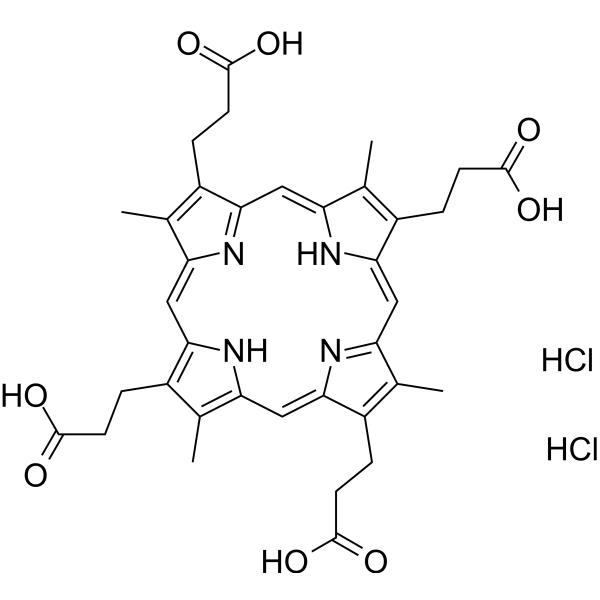
Coproporphyrin I dihydrochlorideIt is an organic compound belonging to the class of porphyrins. It is a derivative of heme, an iron-containing molecule found in hemoglobin and other proteins. Coproporphyrin I dihydrochlorideOften used as a biomarker in the assessment of certain liver and metabolic diseases, especially those related to bile synthesis and transport. It can also be used as a reference standard for analytical chemistry and pharmacological research.
|
-
-
- HY-W098756
-
-
-
- HY-W030562
-
|
|
Others
|
Inflammation/Immunology
|
|
Bemethyl is a synthetic adaptogen that exhibits actoprotector and antihypoxant activities. Bemethyl has the ability to increase the body's resistance to stress and improve physical endurance. Bemethyl regulatory mechanisms include vasodilation and lowering blood sugar and lactate levels. Bemethyl is an analytical reference standard for adaptogen .
|
-
-
- HY-W127680
-
|
Tetra-n-butylammonium perchlorate
|
Biochemical Assay Reagents
|
Others
|
|
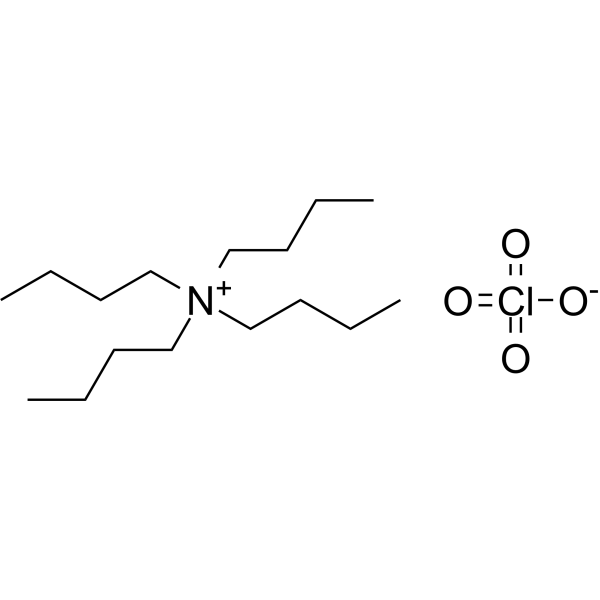
Tetrabutylammonium perchlorate is an organic compound containing ammonium ions and perchlorate ions. It is commonly used as an electrolyte in electrochemistry and as a source of perchlorate anion in analytical chemistry. Tetrabutylammonium perchlorate has a variety of applications in the production of batteries, fuel cells and electronic components due to its high ionic conductivity and stability under extreme conditions. In addition, it can be used as a reference standard in analytical methods such as ion chromatography.
|
-
-
- HY-W088875
-
-
-
- HY-W127676
-
|
N,N,N-Triethylethanaminium perchlorate
|
Biochemical Assay Reagents
|
Others
|
|
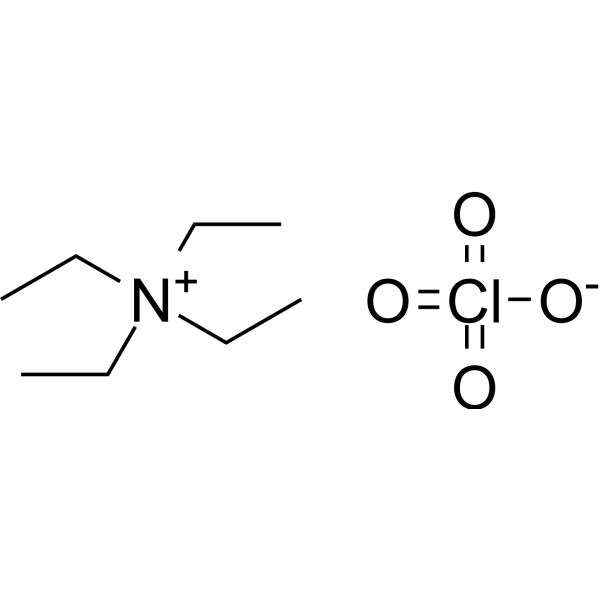
Tetraethylammonium perchlorate is an organic compound containing ammonium ions and perchlorate ions. It is commonly used as an electrolyte in electrochemistry and as a source of perchlorate anion in analytical chemistry. Due to its high ionic conductivity and stability under extreme conditions, tetraethylammonium perchlorate has a variety of applications in the production of batteries, fuel cells and electronic components. In addition, it can be used as a reference standard in analytical methods such as ion chromatography.
|
-
-
- HY-W008813
-
-
-
- HY-W015495R
-
|
|
Reference Standards
Endogenous Metabolite
Dihydroorotate Dehydrogenase
|
Others
|
|
L-Dihydroorotic acid (Standard) is an analytical reference standard for L-Dihydroorotic acid. This product is used for research and analytical applications. L-Dihydroorotic acid is an important intermediate in the metabolism of orotic acid and a substrate of dihydroorotate dehydrogenase (DHODH). L-Dihydroorotic acid can reversibly hydrolyze to yield the acyclic L-ureidosuccinic acid by dihydrowhey enzyme .
|
-
-
- HY-B0594R
-
|
|
Reference Standards
Autophagy
Mitophagy
|
Cancer
|
|
Iohexol (Standard) is the analytical standard of Iohexol. This product is intended for research and analytical applications. Iohexol is a non-ionic, water-soluble contrast agent used as a reference marker for the determination of glomerular filtration rate (GFR) at the level of renal function. Iohexol can be used for contrast in myelography, computerized tomography (cisternography, ventriculography) and MicroCT imaging .
|
-
-
- HY-160849
-
|
|
GABA Receptor
|
Others
Metabolic Disease
|
|
N-desmethyl Rilmazolam, a triazolobenzodiazepine, serves as an analytical reference standard. N-desmethyl Rilmazolam is an active metabolite derived from rilmazafone (HY-106547). N-desmethyl Rilmazolam is designed for use in research and forensic settings .
|
-
-
- HY-169443
-
-
-
- HY-169442
-
|
|
Biochemical Assay Reagents
|
Neurological Disease
|
|
Methylmethaqualone is a quinazolinone psychoactive substance that can be used as an analytical reference standard for quinazolinone compounds. Methylmethaqualone has acute neurotoxicity and can cause psychomotor stimulation .
|
-
-
- HY-172637
-
|
|
Opioid Receptor
|
Neurological Disease
|
|
Phenethyl 4-ANPP is a MOR (μ-opioid receptor) agonist. Phenethyl 4-ANPP is an analytical reference standard that is structurally similar to known opioids .
|
-
-
- HY-124265R
-
|
|
Reference Standards
Endogenous Metabolite
|
Metabolic Disease
|
|
4β-hydroxy Cholesterol (Standard) is the analytical reference standard of 4β-hydroxy Cholesterol (HY-124265). This product is used for research and analytical applications. 4β-Hydroxycholesterol is a major Cholesterol (HY-N0322) metabolite and a precursor in the synthesis of bile acids that is found in human circulation .
|
-
-
- HY-170477
-
|
Δ8-Tetrahydrocannabiphorol; n-Heptyl ∆8-THC
|
Cannabinoid Receptor
|
Others
|
|
Δ8-THCP (Δ8-Tetrahydrocannabiphorol; n-Heptyl Δ8-THC) (Compound 1a) is a semisynthetic cannabinoid that serves as an analytical reference standard and exhibits affinity for the CB1 receptor .
|
-
-
- HY-W003607R
-
|
|
Reference Standards
Tyrosinase
|
Inflammation/Immunology
|
|
3-O-Ethyl-L-ascorbic acid (Standard) is the analytical reference standard for 3-O-Ethyl-L-ascorbic acid. 3-O-Ethyl-L-ascorbic acid is a stable derivative of vitamin C and a cosmetic tyrosinase inhibitor. 3-O-Ethyl-L-ascorbic acid has antioxidant, anti-aging, and skin-whitening activities. 3-O-Ethyl-L-ascorbic acid is often used in the study of cosmetic .
|
-
-
- HY-169785
-
|
7-TMT
|
5-HT Receptor
|
Neurological Disease
|
|
7-Methyl DMT (7-TMT) is a 5-HT2 receptor agonist. Structurally, 7-Methyl DMT is a tryptamine derivative. It can be used as an analytical reference standard for the psychoactive substance DOM. 7-Methyl DMT is also used in research in the field of neurological diseases .
|
-
-
- HY-W027553R
-
|
NIK-247 free base (standard); Amiridine free base (standard)
|
Reference Standards
Cholinesterase (ChE)
Potassium Channel
Sodium Channel
|
Neurological Disease
Metabolic Disease
|
|
Ipidacrine (Standard) is the analytical reference standard of Ipidacrine. This product is used for research and analytical applications. Ipidacrine is orally active and blood-brain-barrier-penetrant AChE and BuChE inhibitors with IC50 values of 1 μM and 1.9 μM, respectively, which is also a partial agonist of M2-cholinergic receptors and a reversible cholinesterase inhibitor. Ipidacrine has a stimulating effect on neuromuscular transmission and excitation along the nerve fibres with a moderately anti-pain effect. Ipidacrine is an aminopyridines and is structurally similar to Tacrine (HY-111338). Ipidacrine is effective in various amnesia models, improves erectile function and inhibits K + and Na +-channels in the neuronal membrane in diabetic rats. Ipidacrine is promising for research of Alzheimer’s disease, ischaemic stroke, idiopathic neuropathy of the facial nerve, diabetes mellitus-induced erectile dysfunction and other deficits in central or peripheral cholinergic deseases .
|
-
-
- HY-172857
-
|
|
Reference Standards
|
Others
|
|
MMB-5Br-INACA is an analytical reference standard categorized as a precursor for the synthesis of synthetic cannabinoids.
|
-
-
- HY-172547
-
|
3b-FBT hydrochloride; Fluorotropacocaine hydrochloride
|
Biochemical Assay Reagents
|
Neurological Disease
|
|
3-p-FBT (hydrochloride) (3b-FBT (hydrochloride); Fluorotropacocaine (hydrochloride)) is an analytical reference standard that is structurally categorized as a tropane alkaloid .
|
-
-
- HY-118896R
-
|
AKD-2023 (standard); DPX-3792 (standard)
|
Parasite
Reference Standards
|
Infection
|
|
Acequinocyl (Standard) is the analytical standard of Acequinocyl. This product is intended for research and analytical applications. Acequinocyl (CRM) is a certified reference material categorized as a naphthoquinone acaricide.1 Acequinocyl has been found in Cannabis. Formulations containing acequinocyl have been used to control mite populations in agriculture. This product is intended for research and forensic applications.
|
-
-
- HY-13231R
-
|
|
CDK
HIV
|
Infection
|
|
CDK9-IN-1 (Standard) is the analytical standard of CDK9-IN-1. This product is intended for research and analytical applications. CDK9-IN-1 is a novel, selective CDK9 inhibitor for the treatment of HIV infection, with an IC50 of 39 nM for CDK9/CycT1, extracted from reference, compound 87.
|
-
-
- HY-W004292R
-
|
Undecyl alcohol (standard)
|
Drug Derivative
Reference Standards
Insecticide
|
Infection
|
|
1-Undecanol (Standard) (Undecyl alcohol (Standard)) is an analytical reference standard for 1-Undecanol (HY-W004292). This product is used for research and analytical applications. 1-Undecanol (Undecyl alcohol) is the main product generated from the degradation of 2-tridecanone by Pseudomonas bacteria isolated from the soil. 1-Undecanol can enhance the attraction of Grapholita molesta to sex pheromone traps .
|
-
-
- HY-W004078R
-
|
|
Reference Standards
Endogenous Metabolite
|
Metabolic Disease
|
|
4-Hydroxybenzylamine (Standard) is the analytical reference standard of 4-Hydroxybenzylamine (HY-W004078). This product is used for research and analytical applications. 4-Hydroxybenzylamine is a natural biogenic amine. 4-Hydroxybenzylamine can be produced through the breakdown metabolism of glucosinolates, with glutamine serving as the non-classical ammonia donor. 4-Hydroxybenzylamine can be used for studying the biosynthesis of plant amines.
|
-
-
- HY-W087988R
-
-
-
- HY-W716866
-
|
10α-Hydroxy-Δ9'11-hexahydrocannabinol
|
Cannabinoid Receptor
Drug Metabolite
|
Neurological Disease
|
|
10α-hydroxy-exo-THC is a cannabinoid compound, a metabolite of Δ9-THC, and can be found in cannabis. 10α-hydroxy-exo-THC can serve as an analytical reference standard for cannabinoid compounds .
|
-
-
- HY-N8045R
-
|
Ricinolic acid methyl ester (standard)
|
Biochemical Assay Reagents
Reference Standards
|
Others
|
|
Methyl ricinoleate (Standard) is the analytical standard of Methyl ricinoleate. This product is intended for research and analytical applications. Methyl ricinoleate is a compound belonging to the group of fatty acid methyl esters. It is derived from ricinoleic acid, a monounsaturated omega-9 fatty acid found in castor oil. Methyl ricinoleate is often used as a reference compound for the analysis of fatty acid methyl esters by gas chromatography. It has also been investigated for its potential use as a biofuel and as an ingredient in the production of biodegradable plastics and surfactants.
|
-
-
- HY-W010410R
-
|
|
Reference Standards
Others
|
Neurological Disease
Metabolic Disease
|
|
Methyl ricinoleate (Standard) is the analytical standard of Methyl ricinoleate. This product is intended for research and analytical applications. Methyl ricinoleate is a compound belonging to the group of fatty acid methyl esters. It is derived from ricinoleic acid, a monounsaturated omega-9 fatty acid found in castor oil. Methyl ricinoleate is often used as a reference compound for the analysis of fatty acid methyl esters by gas chromatography. It has also been investigated for its potential use as a biofuel and as an ingredient in the production of biodegradable plastics and surfactants.
|
-
-
- HY-117660R
-
|
U-10149 (standard)
|
Reference Standards
DNA/RNA Synthesis
Antibiotic
Bacterial
|
Infection
Metabolic Disease
|
|
Lincomycin (U-10149) (Standard) is the analytical reference standard of Lincomycin (HY-117660). This product is used for research and analytical applications. Lincomycin is an orally active lincosamide antibiotic. Lincomycin binds to the ribosomes of Gram-positive bacteria to inhibit protein synthesis. Lincomycin can inhibit chloroplast translation, disrupt chloroplast integrity, and activate chloroplast-to-nucleus retrograde signaling in Arabidopsis thaliana seedlings. Lincomycin induces alterations in lipid profiles and liver injury, disrupts blood glucose and insulin levels, and increases growth rate in mice.
|
-
-
- HY-B0428BR
-
|
OKY-046 hydrochloride (standard)
|
Reference Standards
Prostaglandin Receptor
|
Cardiovascular Disease
Neurological Disease
Inflammation/Immunology
|
|
Ozagrel hydrochloride (Standard) is the analytical reference standard of Ozagrel hydrochloride (HY-B0428B). Ozagrel hydrochloride (OKY-046 hydrochloride) is a high selective and orally active thromboxane A2 (TXA2) synthase inhibitor with an IC50 of 11 nM. Ozagrel hydrochloride exerts anti-platelet aggregation, vasodilation and anti-inflammatory effects by inhibiting the production of TXA2 and increasing the production of prostacyclin (PGI2). Ozagrel hydrochloride can be used for the study of ischemic stroke, asthma and thromboembolic diseases .
|
-
-
- HY-176101
-
-
-
- HY-176095
-
|
|
Reference Standards
|
Others
|
|
2,6-Dibromomescaline (hydrochloride) is an analytical reference standard categorized as a phenethylamine. 2,6-Dibromomescaline (hydrochloride) can be used in research or forensic applications.
|
-
-
- HY-W127641R
-
|
|
Biochemical Assay Reagents
Reference Standards
|
Others
|
|
β-Methylcholine (chloride) (Standard) is the analytical standard of β-Methylcholine (chloride). This product is intended for research and analytical applications. β-Methylcholine chloride is an organic compound containing choline and chloride ions. It is commonly used as a pharmacological research tool, especially in the study of acetylcholine receptors and signaling pathways. β-Methylcholine chloride has various applications in the pharmaceutical industry, especially as a standard reference material for the calibration of analytical instruments. In addition, it can be used in the production of other choline derivatives and as a precursor of neurotransmitters.
|
-
-
- HY-102048R
-
|
|
Reference Standards
STAT
Apoptosis
|
Cancer
|
|
STAT5-IN-2 (Standard) is the analytical standard of STAT5-IN-2 (HY-102048). This product is intended for research and analytical applications. STAT5-IN-2 is a STAT5 inhibitor, extracted from reference 1, example 17f. STAT5-IN-2 has potent antileukemic effect .
|
-
-
- HY-N7861R
-
|
Methyl trans-9-Octadecenoate (standard); (E)-Methyl octadec-9-enoate (standard)
|
Biochemical Assay Reagents
Reference Standards
|
Others
|
|
Methyl elaidate (Standard) is the analytical standard of Methyl elaidate. This product is intended for research and analytical applications. Methyl elaidate is a compound belonging to the class of fatty acid esters. It is derived from elaidic acid, a monounsaturated omega-9 fatty acid found in certain vegetable oils and animal fats. Methyl elaidate is commonly used as a reference compound for the analysis of fatty acids and their derivatives by gas chromatography.
|
-
-
- HY-A0236AR
-
|
|
Reference Standards
Sodium Channel
Potassium Channel
Calcium Channel
Calmodulin
|
Cardiovascular Disease
|
|
Aprindine hydrochloride (Standard) is the analytical reference standard of Aprindine hydrochloride (HY-A0236A). This product is used for research and analytical applications. Aprindine hydrochloride is an Ib-class anti-arrhythmic agent. Aprindine hydrochloride mainly exerts its effect by blocking sodium channels (INa), thereby reducing the excitability and conduction velocity of cardiac muscle cells. Aprindine hydrochloride significantly inhibits delayed potassium currents, which helps to prolong the atrial effective refractory period (AERP) and inhibit the occurrence of atrial fibrillation. Aprindine hydrochloride can also regulate intracellular calcium ion concentration by inhibiting Na +/Ca 2+ exchange current (INCX), thereby further stabilizing cardiac electrical activity. Aprindine hydrochloride can be used for the study of atrial fibrillation (AF) and ventricular arrhythmias.
|
-
| Cat. No. |
Product Name |
Type |
-
- HY-W073080
-
|
|
Biochemical Assay Reagents
|
|
Coproporphyrin I dihydrochlorideIt is an organic compound belonging to the class of porphyrins. It is a derivative of heme, an iron-containing molecule found in hemoglobin and other proteins. Coproporphyrin I dihydrochlorideOften used as a biomarker in the assessment of certain liver and metabolic diseases, especially those related to bile synthesis and transport. It can also be used as a reference standard for analytical chemistry and pharmacological research.
|
-
- HY-W127680
-
|
Tetra-n-butylammonium perchlorate
|
Biochemical Assay Reagents
|
|
Tetrabutylammonium perchlorate is an organic compound containing ammonium ions and perchlorate ions. It is commonly used as an electrolyte in electrochemistry and as a source of perchlorate anion in analytical chemistry. Tetrabutylammonium perchlorate has a variety of applications in the production of batteries, fuel cells and electronic components due to its high ionic conductivity and stability under extreme conditions. In addition, it can be used as a reference standard in analytical methods such as ion chromatography.
|
-
- HY-W127676
-
|
N,N,N-Triethylethanaminium perchlorate
|
Biochemical Assay Reagents
|
|
Tetraethylammonium perchlorate is an organic compound containing ammonium ions and perchlorate ions. It is commonly used as an electrolyte in electrochemistry and as a source of perchlorate anion in analytical chemistry. Due to its high ionic conductivity and stability under extreme conditions, tetraethylammonium perchlorate has a variety of applications in the production of batteries, fuel cells and electronic components. In addition, it can be used as a reference standard in analytical methods such as ion chromatography.
|
-
- HY-N8045R
-
|
Ricinolic acid methyl ester (standard)
|
Biochemical Assay Reagents
|
|
Methyl ricinoleate (Standard) is the analytical standard of Methyl ricinoleate. This product is intended for research and analytical applications. Methyl ricinoleate is a compound belonging to the group of fatty acid methyl esters. It is derived from ricinoleic acid, a monounsaturated omega-9 fatty acid found in castor oil. Methyl ricinoleate is often used as a reference compound for the analysis of fatty acid methyl esters by gas chromatography. It has also been investigated for its potential use as a biofuel and as an ingredient in the production of biodegradable plastics and surfactants.
|
-
- HY-W127641R
-
|
|
Biochemical Assay Reagents
|
|
β-Methylcholine (chloride) (Standard) is the analytical standard of β-Methylcholine (chloride). This product is intended for research and analytical applications. β-Methylcholine chloride is an organic compound containing choline and chloride ions. It is commonly used as a pharmacological research tool, especially in the study of acetylcholine receptors and signaling pathways. β-Methylcholine chloride has various applications in the pharmaceutical industry, especially as a standard reference material for the calibration of analytical instruments. In addition, it can be used in the production of other choline derivatives and as a precursor of neurotransmitters.
|
-
- HY-N7861R
-
|
Methyl trans-9-Octadecenoate (standard); (E)-Methyl octadec-9-enoate (standard)
|
Biochemical Assay Reagents
|
|
Methyl elaidate (Standard) is the analytical standard of Methyl elaidate. This product is intended for research and analytical applications. Methyl elaidate is a compound belonging to the class of fatty acid esters. It is derived from elaidic acid, a monounsaturated omega-9 fatty acid found in certain vegetable oils and animal fats. Methyl elaidate is commonly used as a reference compound for the analysis of fatty acids and their derivatives by gas chromatography.
|
| Cat. No. |
Product Name |
Category |
Target |
Chemical Structure |
-
- HY-B2167R
-
|
DHA (standard); Cervonic acid (standard)
|
Structural Classification
Human Gut Microbiota Metabolites
Microorganisms
Ketones, Aldehydes, Acids
Disease markers
Endogenous metabolite
Cardiovascular System Disorder
Source Classification
|
Reference Standards
Endogenous Metabolite
|
|
Docosahexaenoic acid (Standard) is the analytical standard of Docosahexaenoic acid. This product is intended for research and analytical applications. Docosahexaenoic Acid (DHA) is an omega-3 fatty acid abundantly present brain and retina. It can be obtained directly from fish oil and maternal milk.
In Vitro: Docosahexaenoic acid (DHA) is essential for the growth and functional development of the brain in infants. DHA is also required for maintenance of normal brain function in adults. The inclusion of plentiful DHA in the diet improves learning ability and memory . DHA is an essential requirement in every step of brain development like neural cell proliferation, migration, differentiation, synaptogenesis. The multiple double bonds and unique structure allow DHA to impart special membrane characteristics for effective cell signaling. Many development disorders like dyslexia, autism spectrum disorder, attention deficit hyperactivity disorder, schizophrenia etc. are causally related to decreased level of DHA . DHA is a potent RXR ligand inducing robust RXR activation already at low micro molar concentrations. The EC50 for RXRα activation by DHA is about 5-10 μM fatty acid .
In Vivo: Docosahexaenoic acid administration over 10 weeks significantly reduces the number of reference memory errors, without affecting the number of working memory errors, and significantly increases the docosahexaenoic acid content and the docosahexaenoic acid/arachidonic acid ratio in both the hippocampus and the cerebral cortex . DHA treatment exerts neuroprotective actions on an experimental mouse model of PD. There is a decrease tendency in brain lipid oxidation of MPTP mice but it does not significantly .
|
-
-
- HY-W015495R
-
-
-
- HY-124265R
-
-
-
- HY-W004292R
-
-
-
- HY-W004078R
-
-
-
- HY-W087988R
-
-
-
- HY-W010410R
-
|
|
Microorganisms
Plants
Source Classification
|
Reference Standards
Others
|
|
Methyl ricinoleate (Standard) is the analytical standard of Methyl ricinoleate. This product is intended for research and analytical applications. Methyl ricinoleate is a compound belonging to the group of fatty acid methyl esters. It is derived from ricinoleic acid, a monounsaturated omega-9 fatty acid found in castor oil. Methyl ricinoleate is often used as a reference compound for the analysis of fatty acid methyl esters by gas chromatography. It has also been investigated for its potential use as a biofuel and as an ingredient in the production of biodegradable plastics and surfactants.
|
-
-
- HY-117660R
-
|
U-10149 (standard)
|
Alkaloids
Structural Classification
Microorganisms
Pyrrole Alkaloids
Source Classification
|
Reference Standards
DNA/RNA Synthesis
Antibiotic
Bacterial
|
|
Lincomycin (U-10149) (Standard) is the analytical reference standard of Lincomycin (HY-117660). This product is used for research and analytical applications. Lincomycin is an orally active lincosamide antibiotic. Lincomycin binds to the ribosomes of Gram-positive bacteria to inhibit protein synthesis. Lincomycin can inhibit chloroplast translation, disrupt chloroplast integrity, and activate chloroplast-to-nucleus retrograde signaling in Arabidopsis thaliana seedlings. Lincomycin induces alterations in lipid profiles and liver injury, disrupts blood glucose and insulin levels, and increases growth rate in mice.
|
-
Your information is safe with us. * Required Fields.
Inquiry Information
- Product Name:
- Cat. No.:
- Quantity:
- MCE Japan Authorized Agent:

