
1. Search Result
Search Result
Results for "

apoptotic neutrophils

" in MedChemExpress (MCE) Product Catalog:

8

Inhibitors & Agonists

1

Peptides

1

Inhibitory Antibodies

1

Natural
Products

1

Isotope-Labeled Compounds

Cat. No. Product Name Target Research Areas Chemical Structure
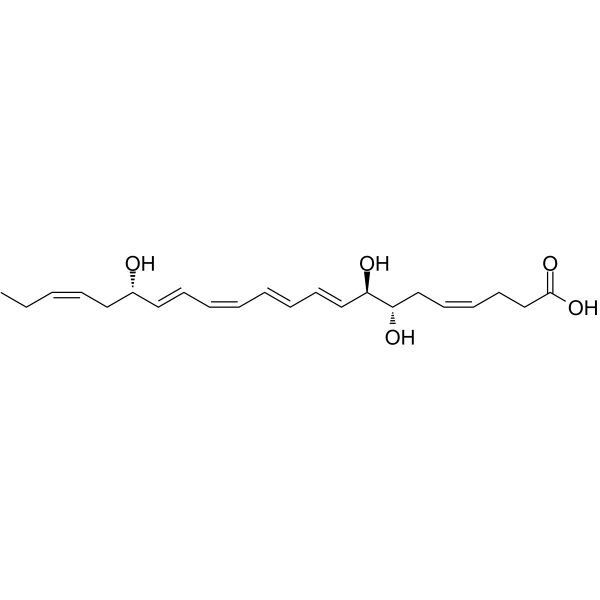
  • HY-125527
    Resolvin D1
    1 Publications Verification

    RvD1

    Endogenous Metabolite Inflammation/Immunology
    Resolvin D1 (RvD1), an endogenous pro-resolving mediator of inflammation, is derived from omega-3 docosahexaenoic acid during the resolution phase of acute inflammation. Resolvin D1 blocks proinflammatory neutrophil migration by regulating actin polymerization, reduces TNF-α–mediated inflammation in macrophages, and enhances phagocytosis of apoptotic cells by macrophages .
    Resolvin D1
  • HY-126213

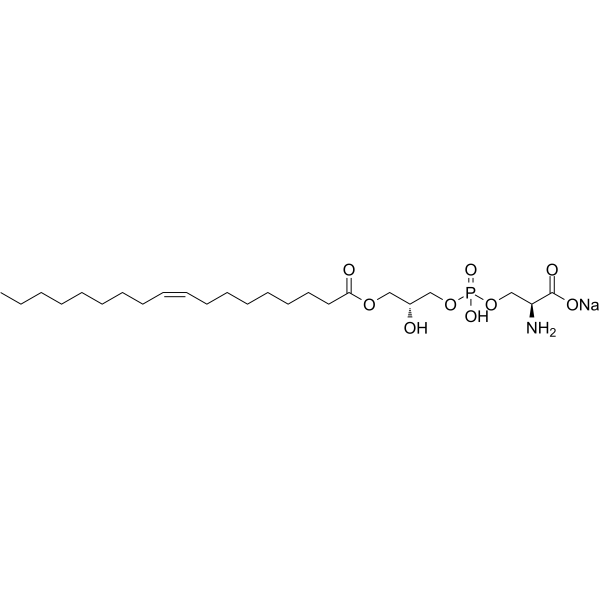
    18:1 Lyso-PS

    NADPH Oxidase Interleukin Related Apoptosis Inflammation/Immunology
    Oleoyl-2-hydroxy-sn-glycero-3-phospho-L-serine sodium (18:1 Lyso-PS) is a modified PS product generated following NADPH oxidase activation and Lyso-PS signal transduction. 1-Oleoyl-2-hydroxy-sn-glycero-3-phospho-L-serine sodium signals through macrophage G2A to enhance the phagocytic uptake of PS-dependent apoptotic (apoptosis) neutrophils and PS-exposed activated neutrophils. 1-Oleoyl-2-hydroxy-sn-glycero-3-phospho-L-serine sodium enhances macrophage phagocytic uptake of apoptotic cells, carboxylate-modified microspheres, and PS-exposed non-apoptotic activated neutrophils. 1-Oleoyl-2-hydroxy-sn-glycero-3-phospho-L-serine sodium serves as an acyl acceptor substrate for the lysophosphatidyltransferase At1g78690p to generate diacylphosphatidylserine. 1-Oleoyl-2-hydroxy-sn-glycero-3-phospho-L-serine sodium reduces the secretion of IL-8 and decreases the proportion of viable colon cancer cells. 1-Oleoyl-2-hydroxy-sn-glycero-3-phospho-L-serine sodium is applicable to studies on peritonitis and inflammatory bowel disease .
    1-Oleoyl-2-hydroxy-sn-glycero-3-phospho-L-serine sodium
  • HY-P99244

    ILV 094

    Interleukin Related JAK STAT Caspase Bcl-2 Family Inflammation/Immunology
    Fezakinumab (ILV 094) is an anti-IL-22 monoclonal antibody. Fezakinumab inhibits IL-22 signal transduction, and regulates the JAK1/STAT3 pathway as well as apoptotic proteins. Fezakinumab alleviates airway remodeling, alveolar enlargement and inflammatory cell infiltration in lung tissues. Fezakinumab reduces the levels of neutrophils, lymphocytes, eosinophils and macrophages in lung tissues. Fezakinumab can be used in the research of chronic obstructive pulmonary disease and skin diseases .
    Fezakinumab
  • HY-173591

    Formyl Peptide Receptor (FPR) Apoptosis Cardiovascular Disease Neurological Disease Inflammation/Immunology
    T0080 is a central nervous system-penetrant FPR1 inhibitor. By functionally blocking the FPR1 signaling pathway, T0080 effectively reduces neutrophil infiltration into ischemic brain tissue and maintains the integrity of the blood-brain barrier. T0080 alleviates tPA-associated hemorrhagic transformation, inhibits demyelination responses and the expression of NOX2. T0080 also possesses anti-apoptotic (apoptosis) and anti-inflammatory properties, thereby protecting myelin and reducing neurological deficits. T0080 is widely used in studies related to ischemic stroke complicated by hemorrhagic transformation after tPA thrombolysis, as well as multiple sclerosis .
    T0080
  • HY-P10943

    Fluorescent Dye Inflammation/Immunology Cancer
    APO-15 is a phosphatidylserine-binding fluorescent probe and apoptosis imaging reagent. APO-15 exhibits high chemical stability under proteolytic and oxidative conditions, enables quantification and imaging of drug-induced apoptosis in preclinical mouse models, and is applicable to fixed tissue samples and multiple in vivo administration routes (Ex = 488 nm; Em = 525 nm). APO-15 can be used in studies related to acute lung injury and breast cancer .
    APO-15
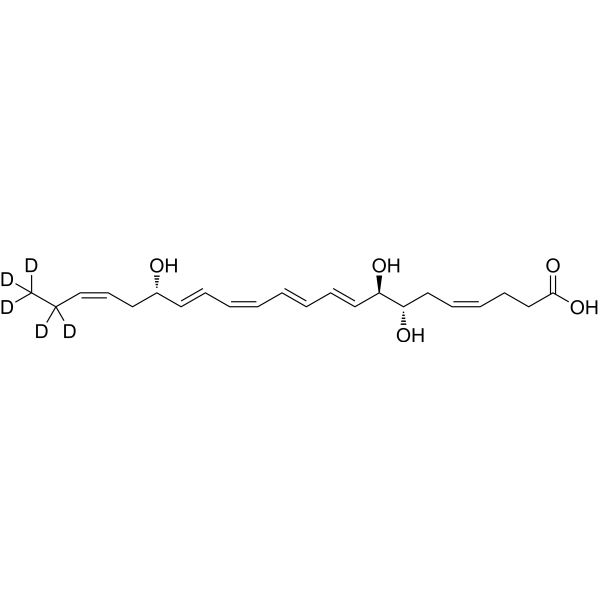
  • HY-125527S

    RvD1-d5

    Isotope-Labeled Compounds Endogenous Metabolite Inflammation/Immunology
    Resolvin D1-d5 is the deuterium labeled Resolvin D1. Resolvin D1 (RvD1), an endogenous pro-resolving mediator of inflammation, is derived from omega-3 docosahexaenoic acid during the resolution phase of acute inflammation. Resolvin D1 blocks proinflammatory neutrophil migration by regulating actin polymerization, reduces TNF-α-mediated inflammation in macrophages, and enhances phagocytosis of apoptotic cells by macrophages .
    Resolvin D1-d5
  • HY-131993

    RvE4

    Endogenous Metabolite Inflammation/Immunology
    Resolvin E4 (RvE4) is an endogenous metabolite that stimulates efferocytosis of apoptotic neutrophils and senescent erythrocytes. Resolvin E4 enhances resolution of hemorrhagic exudates and inflammation in vivo .
    Resolvin E4
  • HY-172632

    Endogenous Metabolite Interleukin Related Inflammation/Immunology
    Resolvin D3 methyl ester is a methyl ester version of Resolvin D3 that may act as a lipophilic prodrug form which can alter its distribution and pharmacokinetic properties. Resolvin D3 is a potent immunoresolvent. Resolvin D3 can reduce neutrophil infiltration in vivo. Resolvin D3 can be produced in murine inflammatory exudates and human macrophages. Resolvin D3 can activate the human RvD1 and RvD5. Resolvin D3 is a potent enhancer of the uptake of apoptotic neutrophils by macrophages as well as a stimulator of IL-10 .
    Resolvin D3 methyl ester

Inquiry Online

Your information is safe with us. * Required Fields.

Salutation


Country or Region *

Applicant Name *


Organization Name *

Department *


Email Address *


Product Name *

Cat. No.


Requested quantity *

Phone Number *


Remarks

Inquiry Online

Inquiry Information

Product Name:
Cat. No.:
Quantity:
MCE Japan Authorized Agent:

