6 Results for "

apoptotic program

" in MedChemExpress (MCE) Product Catalog:
Products (6)

6 Results for "apoptotic program" in MCE Product Catalog:

Art. -Nr.: HY-115406A
CAS. Nr.: 2321332-57-2
Target:  

Apoptosis

Forschungsgebiete:  

Cancer

CPTH6 hydrobromide is a thiazole derivative which activates apoptotic program and increases autophagic features in human acute myeloid leukemia cell lines. CPTH6 can be used for cancer research .
loading...
    loading...
Art. -Nr.: HY-144037
CAS. Nr.: 2722645-10-3
Target:  

DNA-PK

Forschungsgebiete:  

Cancer

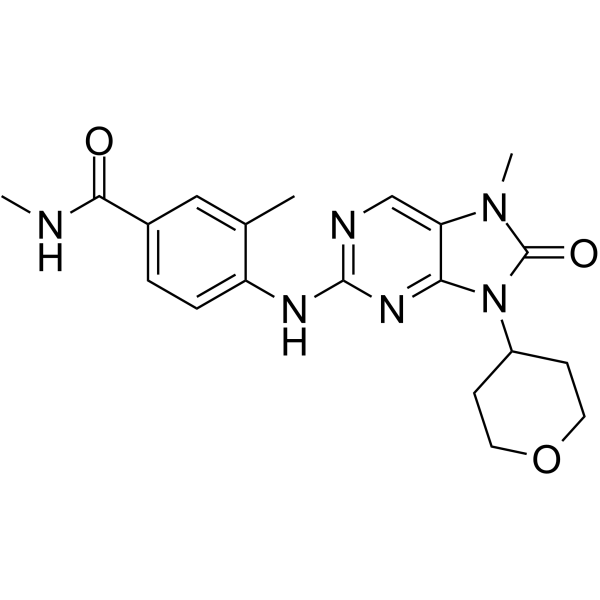
DNA-PK-IN-4 is a potent inhibitor of DNA-PK. DNA-PK-IN-4 is a imidazolinone derivative compound. DNA-PK-IN-4 inhibits DNA-PKcs activity, thus greatly reducing tumor DNA repair and inducing cells to enter the apoptotic program. DNA-PK-IN-4 has the potential for the research of cancer disease (extracted from patent WO2021209055A1, compound 27) .
loading...
    loading...
Art. -Nr.: HY-144038
CAS. Nr.: 2719736-43-1
Target:  

DNA-PK

Forschungsgebiete:  

Cancer

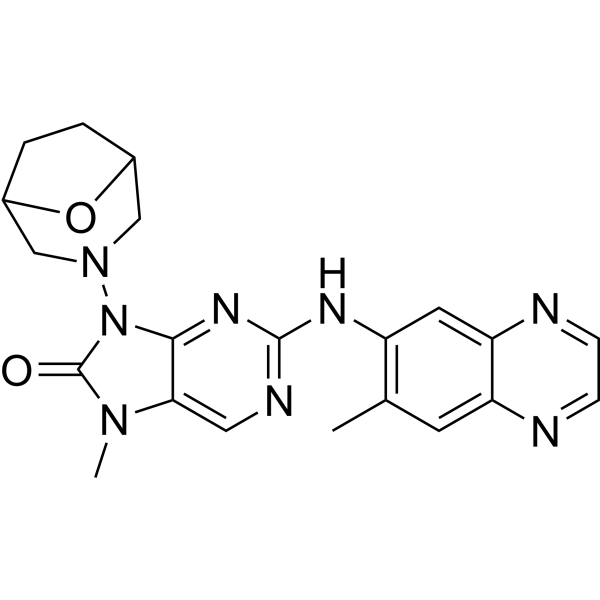
DNA-PK-IN-5 is a potent inhibitor of DNA-PK. DNA-PK-IN-5 inhibits DNA-PKcs activity, thus greatly reducing tumor DNA repair and inducing cells to enter the apoptotic program. DNA-PK-IN-5 enhances the sensitivity of tumor tissues to radiotherapy, overcomes the problem of agent resistance, and enhances the inhibitory effect on a variety of solid tumors and hematological tumors (extracted from patent WO2021204111A1, compound 2) .
loading...
    loading...
Art. -Nr.: HY-144039
CAS. Nr.: 2711810-41-0
Target:  

DNA-PK

Forschungsgebiete:  

Cancer

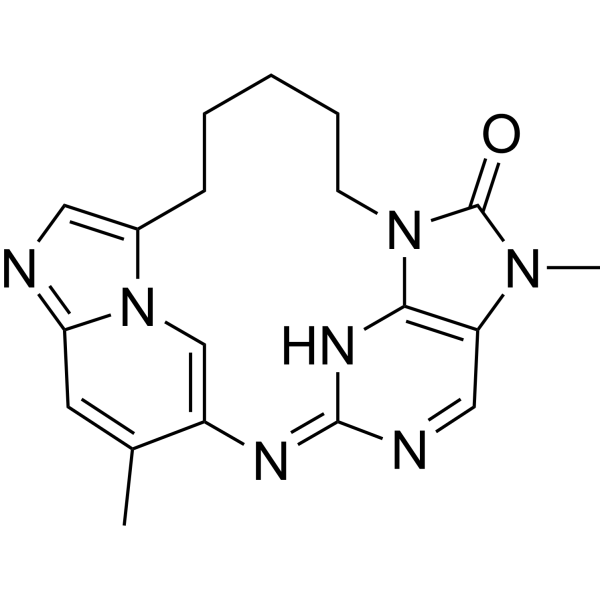
DNA-PK-IN-6 is a potent inhibitor of DNA-PK. DNA-PK-IN-6 inhibits DNA-PKcs activity, thus greatly reducing tumor DNA repair and inducing cells to enter the apoptotic program. DNA-PK-IN-6 enhances the sensitivity of tumor tissues to radiotherapy, overcomes the problem of agent resistance, and enhances the inhibitory effect on a variety of solid tumors and hematological tumors (extracted from patent WO2021197159A1, compound 6) .
loading...
    loading...
Art. -Nr.: HY-L168
690 compounds

Extracellular vesicles (EVs) are small membrane binding structures that are released from cells into the surrounding environment and play a crucial role in mediating and regulating intercellular communication related to physiological and pathological processes. EVs are lipid membrane vesicles composed of proteins, lipids, and nucleic acids. EVs can be divided into several types based on their source, such as extracellular vesicles, microcapsules, and apoptotic vesicles. The size range of exosomes is 30-150nm, which are endocrine in multi vesicular endosomes (MVEs); microvesicles (50-1000nm) are secreted directly through extracellular interactions, thereby releasing plasma membrane vesicles. In contrast, apoptotic bodies are usually larger, ranging in size from 1 to 5 μ m. This is generated during programmed cell death. EV plays a crucial role in transmitting information between cells and influencing the behavior and function of receptor cells.

MCE designs a unique collection of 690 small molecules related to extracellular vesicles (EVs). It is a good tool to be used for research on metabolize, cancer and other diseases.

Art. -Nr.: HY-182760
MN33-63 is a Bcl-2 inhibitor, caspase-3 activator and DNA crosslinker with broad-spectrum anticancer activity. MN33-63 improves the water solubility of SN-38 (HY-13704), inhibits tumor growth and proliferation in a dose-dependent manner, and causes no obvious toxicity. MN33-63 relieves the inhibition of the mitochondrial apoptotic pathway, initiates the apoptosis program, inhibits Topo I activity, and promotes its degradation via the ubiquitin-proteasome and autophagy-lysosome pathways. MN33-63 induces DNA crosslinking, G2/M cell cycle arrest, inhibition of cancer cell migration, and cancer cell apoptosis through the mitochondrial pathway. MN33-63 can be used in the research of colorectal cancer, cervical cancer, hepatocellular carcinoma, lung adenocarcinoma and gastric cancer .
loading...
    loading...

