144 Results for "

apps

" in MedChemExpress (MCE) Product Catalog:
Products (144)

144 Results for "apps" in MCE Product Catalog:

157
157 Publications Verification
Art. -Nr.: HY-10254
CAS. Nr.: 391210-10-9
Reinheit:  99.95%
Synonyms: PD0325901; PD325901
Target:  

MEK Autophagy Apoptosis

Forschungsgebiete:  

Cancer

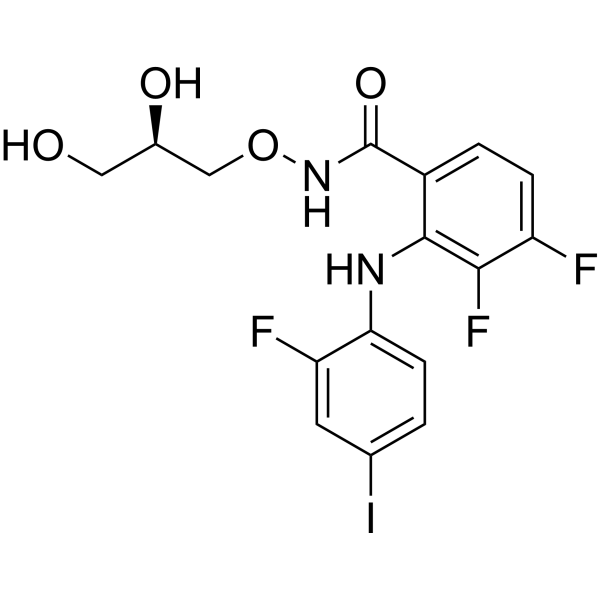
Mirdametinib (PD0325901) is an orally active, selective and non-ATP-competitive MEK inhibitor with an IC50 of 0.33 nM. Mirdametinib exhibits a Ki app of 1 nM against activated MEK1 and MEK2. Mirdametinib suppresses the expression of p-ERK1/2 and induces apoptosis. Mirdametinib has anti-cancer activity for a broad spectrum of human tumor xenografts .
30
30 Cited Publications
Art. -Nr.: HY-103490
CAS. Nr.: 1111556-37-6
Reinheit:  99.41%
Synonyms: EDHS-206
Target:  

MAP3K Apoptosis

Forschungsgebiete:  

Infection Inflammation/Immunology Cancer

Takinib (EDHS-206) is an orally active and selective TAK1 inhibitor (IC50=9.5 nM), more than 1.5 log more potent than the second and third ranked targets, IRAK4 (120 nM) and IRAK1 (390 nM), respectively. Takinib is an inhibitor of autophosphorylated TAK1 that non-competitively binds within the ATP binding pocket. Takinib induces apoptosis following TNFα stimulation in cell models of rheumatoid arthritis and metastatic breast cancer. Takinib is also a P. falciparum protein kinase 9 (PfPK9) inhibitor (KD(app) of 0.46 μM) .
9
9 Cited Publications
Art. -Nr.: HY-139214
CAS. Nr.: 1185329-96-7
Reinheit:  98.83%
Target:  

IRE1

Forschungsgebiete:  

Neurological Disease

IXA4 is a highly selective, non-toxic IRE1/XBP1s activator. IXA4 activates IRE1/XBP1s signaling without globally activating the unfolded protein response (UPR) or other stress-responsive signaling pathways (e.g., the heat shock response or oxidative stress response). IXA4 reduces secretion of APP through IRE1 activation .
8
8 Cited Publications
Art. -Nr.: HY-12856
CAS. Nr.: 1346572-63-1
Reinheit:  99.80%
Forschungsgebiete:  

Cancer

GSK503 is a potent and specific inhibitor of EZH2 methyltransferase with Ki app values of 3 to 27 nM.
7
7 Cited Publications
Art. -Nr.: HY-50759
CAS. Nr.: 336113-53-2
Synonyms: SB-715992; CK-0238273
Target:  

Kinesin Apoptosis

Forschungsgebiete:  

Cancer

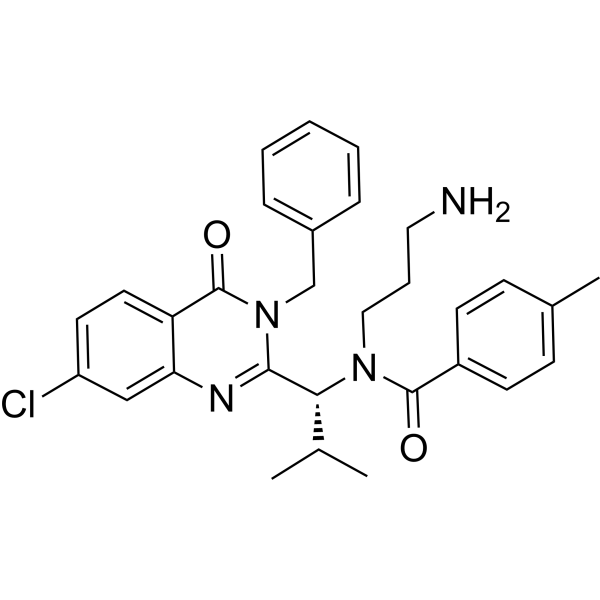
Ispinesib is a specific inhibitor of kinesin spindle protein (KSP), with a Ki app of 1.7 nM.
6
6 Cited Publications
Art. -Nr.: HY-19369
CAS. Nr.: 292632-98-5
Synonyms: L-685,458
Target:  

γ-secretase Apoptosis

Forschungsgebiete:  

Neurological Disease Cancer

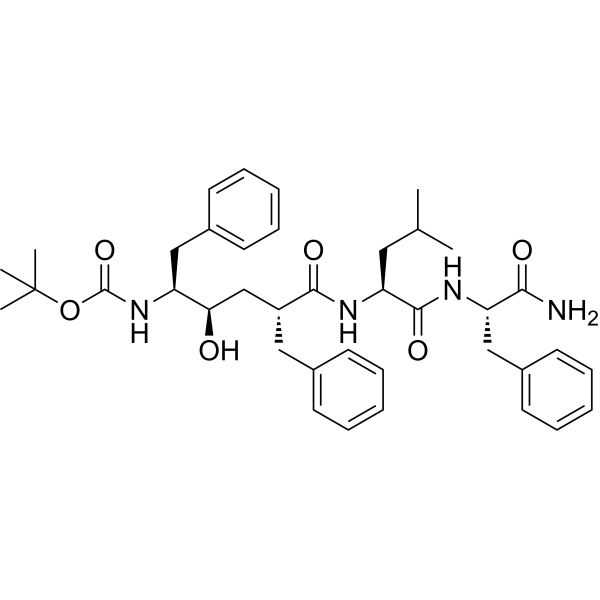
L-685458 is a potent transition state analog (TSA) γ-secretase inhibitor (GSI). L-685458 inhibits amyloid β-protein precursor γ-secretase activity with IC50 of 17 nM, shows greater than 50-100-fold selectivity over other aspartyl proteases tested. L685458 inhibits γ-secretase-mediated cleavage of APP-C99 and Notch-100 with IC50s of 301.3 nM and 351.3 nM, respectively. L-685458 can be used for the research of alzheimer’s disease (AD) and cancers .
5
5 Cited Publications
Art. -Nr.: HY-N1472
CAS. Nr.: 88182-33-6
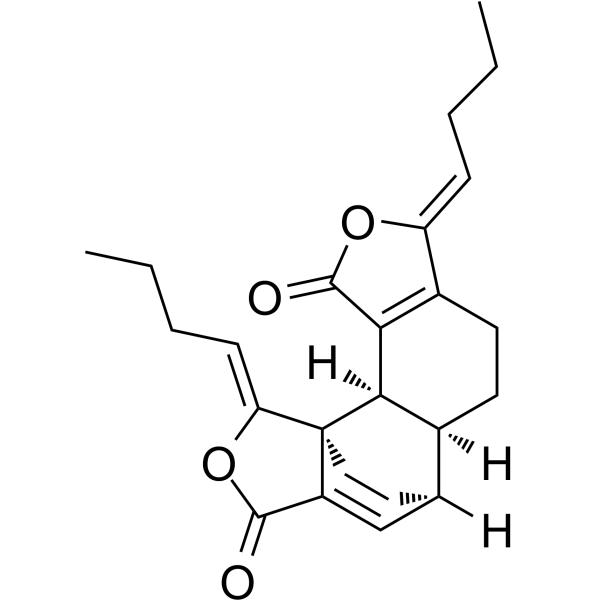
Levistolide A is an apoptosis inducer and a PEDV virus inhibitor. Levistolide A can induce apoptosis in colon cancer cells and suppress the replication of porcine epidemic diarrhea virus (PEDV) by promoting ROS generation. Levistolide A activates peroxisome proliferator-activated receptor γ (PPARγ) in N2a/APP695swe cells and reduces excessive phosphorylation of tau through the GSK3α/β pathway, improving symptoms in Alzheimer’s mice. Levistolide A improves kidney damage in 5/6 nephrectomy (Nx) mice by inhibiting the RAS,TGF-β1/Smad, and MAPK pathways .
4
4 Cited Publications
Art. -Nr.: HY-N0192
CAS. Nr.: 497-76-7
Synonyms: β-Arbutin
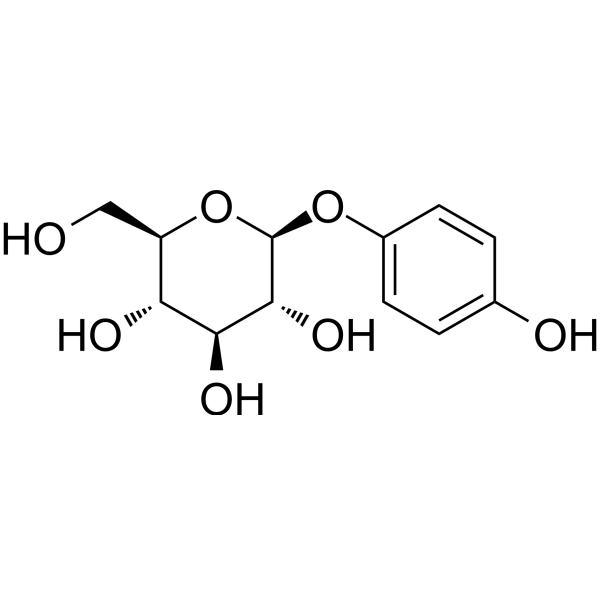
Arbutin (β-Arbutin) is a competitive inhibitor of tyrosinase, with Ki app values of 1.42 mM for monophenolase; 0.9 mM for diphenolase. Arbutin is also used as depigmenting agents . Arbutin is a natural polyphenol isolated from the bearberry plant Arctostaphylos uvaursi, possesses with anti-oxidant, anti-inflammatory and anti-tumor properties .
3
3 Cited Publications
Art. -Nr.: HY-106005
CAS. Nr.: 1314883-11-8
Reinheit:  99.17%
Target:  

Parasite PI4K

Forschungsgebiete:  

Infection

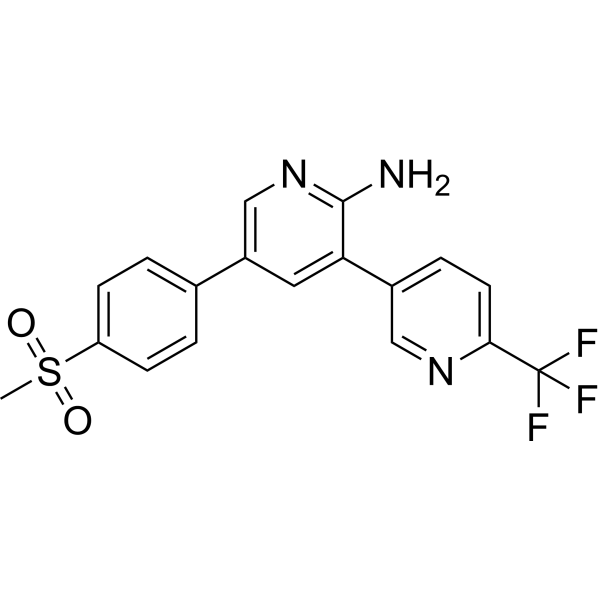
MMV390048 is a representative of a new chemical class of Plasmodium PI4K inhibitor (Kd app=0.3 µM). MMV390048 binds to the ATP binding site of Plasmodium PI4K and does not bind to other P. falciparum and human kinases apart from human PIP4K2C, thus alleviating potential kinase-mediated safety concerns. MMV390048 is an antimalarial agent .
3
3 Cited Publications
Art. -Nr.: HY-114174
CAS. Nr.: 220701-06-4
Reinheit:  99.13%
Target:  

Amyloid-β

Forschungsgebiete:  

Neurological Disease

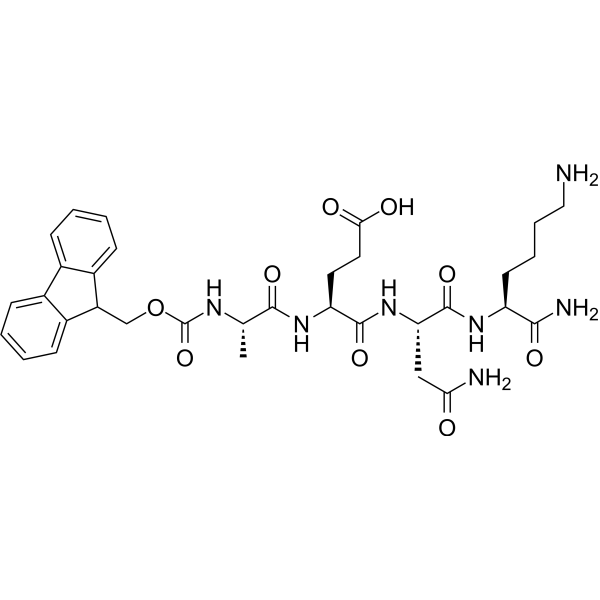
Fmoc-Ala-Glu-Asn-Lys-NH2 is a selective asparagine endopeptidase (AEP) inhibitor peptide and suppresses amyloid precursor protein (APP) cleavage. AEP, a pH-controlled cysteine proteinase, is activated during ageing and mediates APP proteolytic processing .
3
3 Cited Publications
Art. -Nr.: HY-18010
CAS. Nr.: 330786-25-9
Target:  

Btk BCRP

Forschungsgebiete:  

Inflammation/Immunology

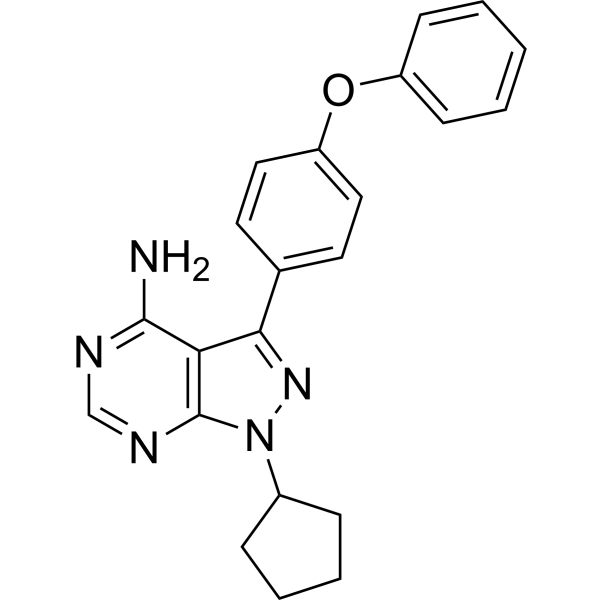
PCI 29732 is a potent, orally active, reversible BTK inhibitor with Ki app values of 8.2, 4.6, and 2.5 nM for BTK, Lck and Lyn, respectively. PCI 29732 shows only modest inhibitory activity against Itk, another Tec family kinase. PCI 29732 inhibits the function of ABCG2 by competitively binding to the ATP-binding site of ABCG2 .
3
3 Cited Publications
Art. -Nr.: HY-123960
CAS. Nr.: 2022961-17-5
Reinheit:  99.75%
Target:  

Phosphatase

Forschungsgebiete:  

Neurological Disease

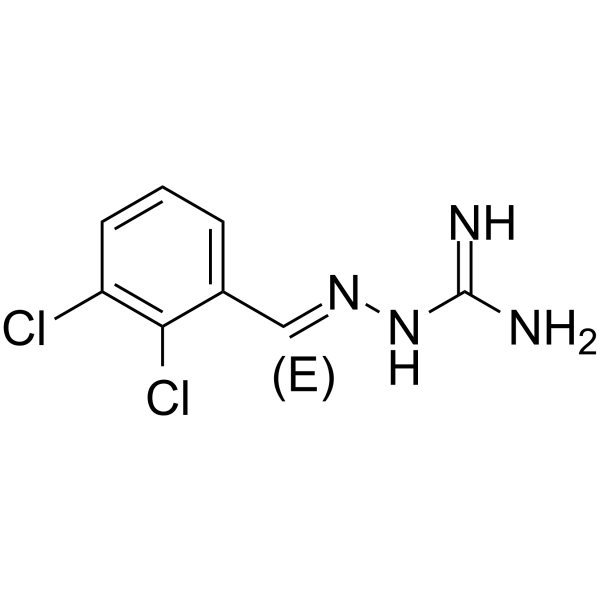
Raphin1 is an orally bioavailable, selective inhibitor of the regulatory phosphatase PPP1R15B (R15B). Raphin1 binds strongly to the R15B-PP1c holophosphatase (Kd=33 nM), and shows ~30-fold selective in binding R15B-PP1c over R15A-PP1c. Raphin1 crosses the blood-brain barrier, and reduces organismal and molecular deficits in a mouse model of a protein misfolding disease .
3
3 Cited Publications
Art. -Nr.: HY-123960A
CAS. Nr.: 2242616-04-0
Reinheit:  99.93%
Target:  

Phosphatase

Forschungsgebiete:  

Neurological Disease

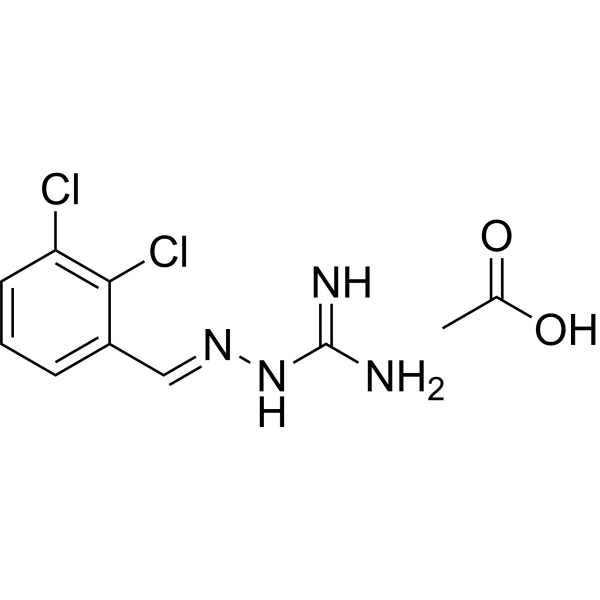
Raphin1 acetate is an orally bioavailable, selective inhibitor of the regulatory phosphatase PPP1R15B (R15B). Raphin1 acetate binds strongly to the R15B-PP1c holophosphatase (Kd=33 nM), and shows ~30-fold selective in binding R15B-PP1c over R15A-PP1c. Raphin1 acetate crosses the blood-brain barrier, and reduces organismal and molecular deficits in a mouse model of a protein misfolding disease .
2
2 Cited Publications
Art. -Nr.: HY-13769A
CAS. Nr.: 2076-91-7
Reinheit:  ≥98.0%
Synonyms: NSC55712; TPU-260 Dihydrochloride
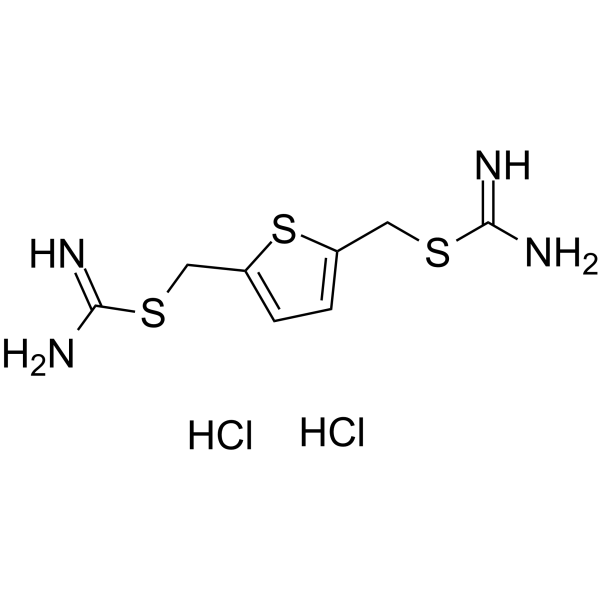
TPT-260 Dihydrochloride (NSC55712), a thiophene thiourea derivative, is a retromer complex stabilizer against thermal denaturation (Kd = ~5 µM). TPT-260 Dihydrochloride increases the levels of retromer proteins, shifts amyloid-precursor protein (APP) away from the endosome, and decreases the pathogenic processing of APP. TPT-260 Dihydrochloride inhibits TLR4 upregulation, IKKβ phosphorylation, NF-κB p65 nuclear translocation, and NLRP3 inflammasome formation. TPT-260 Dihydrochloride improves retromer-mediated cargo trafficking, reduces brain infarct area, and decreases amyloid plaque deposition. TPT-260 Dihydrochloride exhibits minimal cytotoxicity to primary microglia at tested concentrations. TPT-260 Dihydrochloride can be used for the research of inflammatory bowel disease, ischemic stroke and Alzheimer's disease .
2
2 Cited Publications
Art. -Nr.: HY-129096
CAS. Nr.: 1141-41-9
Reinheit:  99.76%
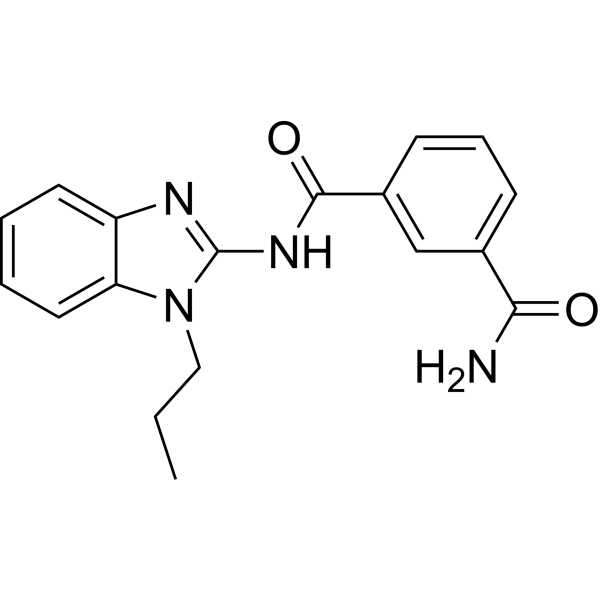
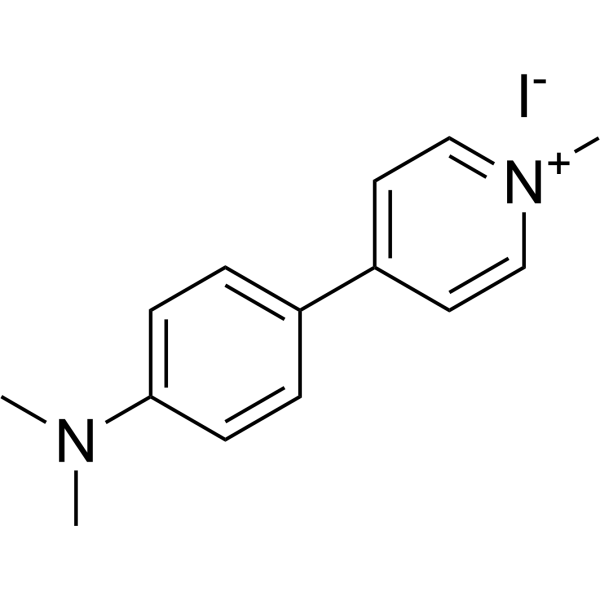
IDT307, an analog of the organic cation MPP+, is a specific fluorescent substrate for DAT (fluorescent substrate APP+) .
2
2 Cited Publications
Art. -Nr.: HY-P7993A
Reinheit:  ≥ 95%, as determined by reducing SDS-PAGE.
Synonyms: apps, Cathepsin B1
Species:  
Source:  
2
2 Cited Publications
Art. -Nr.: HY-N1414A
CAS. Nr.: 76656-80-9
3′,6-Disinapoylsucrose is a type of oligosaccharide that's effective when taken orally, and it has antidepressant, anti-anxiety, and antioxidant properties. 3′,6-Disinapoylsucrose inhibits neuronal apoptosis by lowering the ratio of Bax to Bcl-2 in hippocampal neurons, and it enhances cognitive function in APP/PS1 transgenic mice by activating the CREB/BDNF signaling pathway .
2
2 Cited Publications
Art. -Nr.: HY-13438
CAS. Nr.: 1227163-84-9
Reinheit:  99.91%
Target:  

Beta-secretase

Forschungsgebiete:  

Neurological Disease

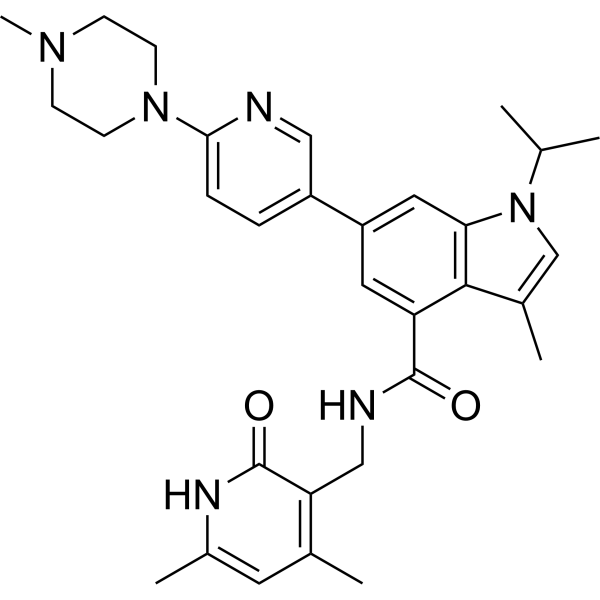
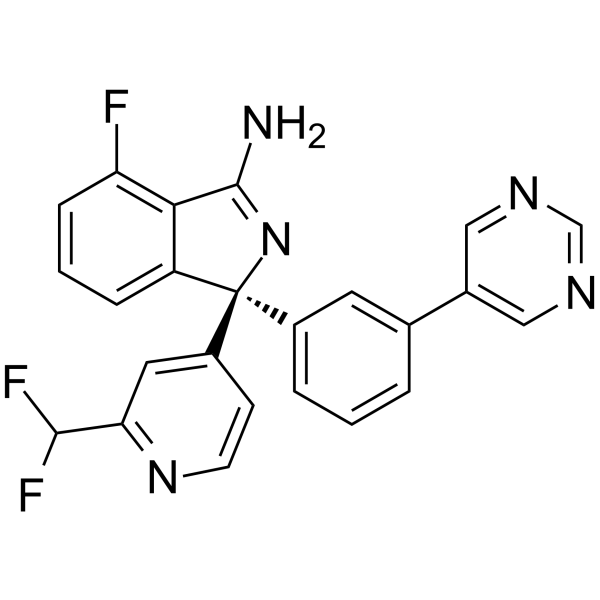
AZD3839 is an orally available, selective, reversible inhibitor of the β-site amyloid precursor protein cleaving enzyme BACE1 that can cross the blood-brain barrier. AZD3839 inhibits recombinant human BACE1 with a Ki=26.1 nM. AZD3839 inhibits A40 production in SH-SY5Y cells with an IC50 of 4.8 nM. AZD3839 binds to BACE1 and reduces the Aβ amyloid produced by the cleavage of amyloid precursor protein (APP) by BACE1 and γ-secretase. AZD3839 can be used in the field of Alzheimer's disease research .
2
2 Cited Publications
Art. -Nr.: HY-135699
CAS. Nr.: 1798328-24-1
Reinheit:  ≥95.0%
Target:  

Apoptosis Phosphatase Akt

Forschungsgebiete:  

Cancer

TD52, an Erlotinib (HY-50896) derivative, is an orally active, potent cancerous inhibitor of protein phosphatase 2A (CIP2A) inhibitor. TD52 mediates the apoptotic effect in triple-negative breast cancer (TNBC) cells via regulating the CIP2A/PP2A/p-Akt signalling pathway. TD52 indirectly reduced CIP2A by disturbing Elk1 binding to the CIP2A promoter. TD52 has less p-EGFR inhibition and has potent anti-cancer activity . TD52 is a click chemistry reagent, it contains an Alkyne group and can undergo copper-catalyzed azide-alkyne cycloaddition (CuAAc) with molecules containing Azide groups.
2
2 Cited Publications
Art. -Nr.: HY-135699A
CAS. Nr.: 2918778-70-6
Reinheit:  99.90%
Target:  

Akt Phosphatase Apoptosis

Forschungsgebiete:  

Cancer

TD52 dihydrochloride, an Erlotinib (HY-50896) derivative, is an orally active, potent cancerous inhibitor of protein phosphatase 2A (CIP2A) inhibitor. TD52 dihydrochloride mediates the apoptotic effect in triple-negative breast cancer (TNBC) cells via regulating the CIP2A/PP2A/p-Akt signalling pathway. TD52 dihydrochloride indirectly reduced CIP2A by disturbing Elk1 binding to the CIP2A promoter. TD52 dihydrochloride has less p-EGFR inhibition and has potent anti-cancer activity . TD52 (dihydrochloride) is a click chemistry reagent, it contains an Alkyne group and can undergo copper-catalyzed azide-alkyne cycloaddition (CuAAc) with molecules containing Azide groups.

