



497-76-7
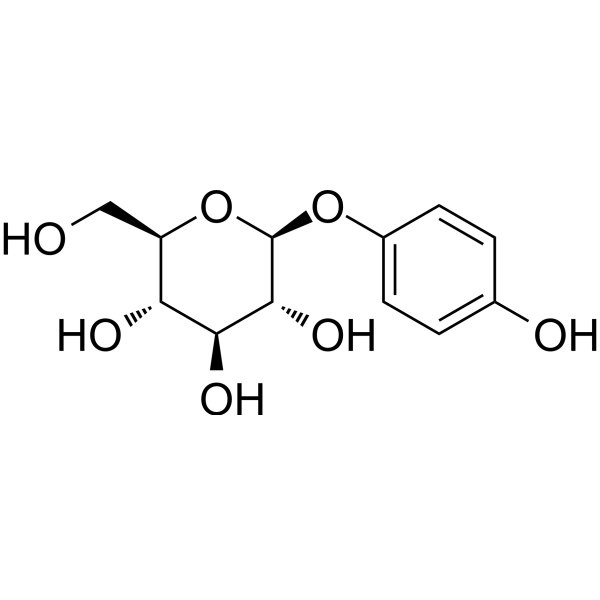
Chemical Structure
Arbutin
Synonym(s): β-Arbutin
- CAS No.: 497-76-7
- Formula:C12H16O7
- Molecular Weight:272.25
IUPAC Name: (2R,3S,4S,5R,6S)-2-(hydroxymethyl)-6-(4-hydroxyphenoxy)tetrahydro-2H-pyran-3,4,5-triol
InChIKey: BJRNKVDFDLYUGJ-RMPHRYRLSA-N
SMILES: O[C@H]([C@H]([C@@H]([C@@H](CO)O1)O)O)[C@@H]1OC2=CC=C(O)C=C2
Biological Activity: Arbutin (β-Arbutin) is a competitive inhibitor of tyrosinase, with Kiapp values of 1.42 mM for monophenolase; 0.9 mM for diphenolase. Arbutin is also used as depigmenting agents[1]. Arbutin is a natural polyphenol isolated from the bearberry plant Arctostaphylos uvaursi, possesses with anti-oxidant, anti-inflammatory and anti-tumor properties[2][3].
| Cat. No. | Product Name | Purity | Description | Pricing | |||||||||||||||||||
|---|---|---|---|---|---|---|---|---|---|---|---|---|---|---|---|---|---|---|---|---|---|---|---|
|
|
Arbutin | 99.76% | Arbutin (β-Arbutin) is a competitive inhibitor of tyrosinase, with Kiapp values of 1.42 mM for monophenolase; 0.9 mM for diphenolase. Arbutin is also used as depigmenting agents. Arbutin is a natural polyphenol isolated from the bearberry plant Arctostaphylos uvaursi, possesses with anti-oxidant, anti-inflammatory and anti-tumor properties. | ||||||||||||||||||||
|
loading...
/
|
|||||||||||||||||||||||
|
|
Arbutin (Standard) | 99.95% | Arbutin (Standard) is the analytical standard of Arbutin. This product is intended for research and analytical applications. Arbutin (β-Arbutin) is a competitive inhibitor of tyrosinase, with Kiapp values of 1.42 mM for monophenolase; 0.9 mM for diphenolase. Arbutin is also used as depigmenting agents. Arbutin is a natural polyphenol isolated from the bearberry plant Arctostaphylos uvaursi, possesses with anti-oxidant, anti-inflammatory and anti-tumor properties. | ||||||||||||||||||||
|
loading...
/
|
|||||||||||||||||||||||
|
|
Arbutin-d4 | Arbutin-d4 is deuterium labeled Arbutin. Arbutin (β-Arbutin) is a competitive inhibitor of tyrosinase in melanocytes, with Kiapp values of 1.42 mM for monophenolase; 0.9 mM for diphenolase. Arbutin is also used as depigmenting agents. Arbutin is a natural polyphenol isolated from the bearberry plant Arctostaphylos uvaursi, possesses with anti-oxidant, anti-inflammatory and anti-tumor properties. | |||||||||||||||||||||
|
loading...
/
|
|||||||||||||||||||||||
-
Similarity Score 1.00
 HY-N3002Rα-Arbutin (Standard)
-
Similarity Score 0.89
 HY-W0116544-Aminophenyl-β-D-galactopyranoside, 98%
-
Similarity Score 0.89
 HY-W0473244-Aminophenyl-α-D-mannopyranoside, 98%
-
Similarity Score 0.89
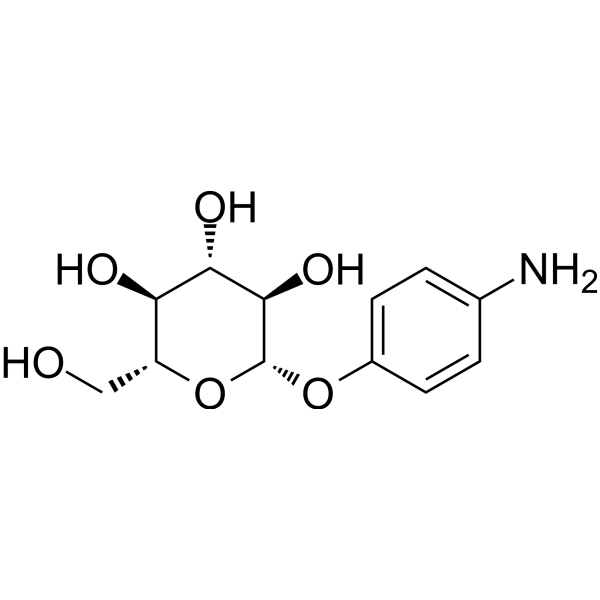 HY-W1454904-Aminophenyl β-D-glucopyranoside
-
Similarity Score 0.89
 HY-W154367p-Aminophenyl α-D-glucopyranoside
-
Similarity Score 0.89
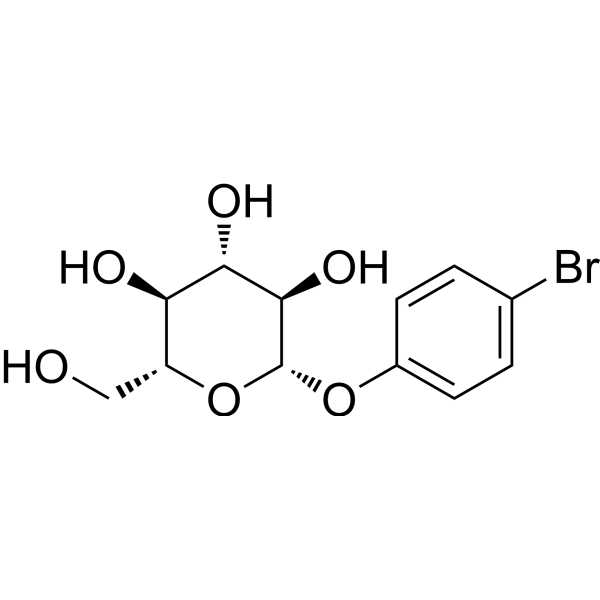 HY-124020ß-pBrPh-Glc
-
Similarity Score 0.88
 HY-W009304Methylarbutin
-
Similarity Score 0.88
 HY-W0482314-Methoxyphenyl α-D-mannopyranoside
-
Similarity Score 0.87
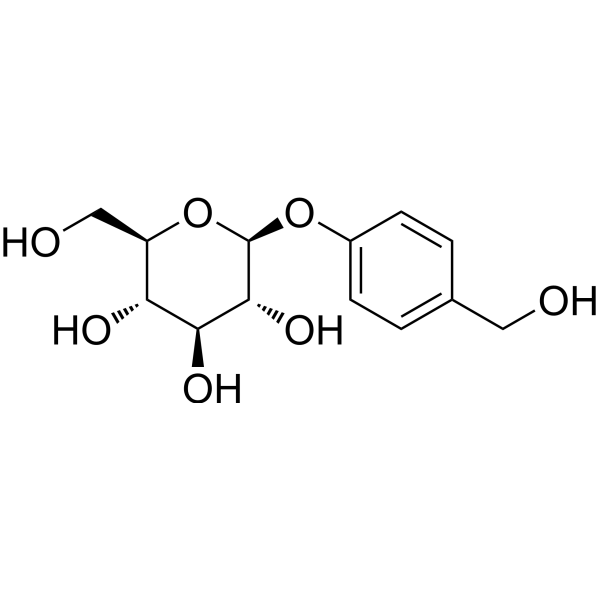 HY-N0115Gastrodin
-

Explore the MedChemAI to find more analogs


References
- [1]. Garcia-Jimenez A, et al. Action of tyrosinase on alpha and beta-arbutin: A kinetic study. PLoS One. 2017 May 11;12(5):e0177330. [Content Brief]
- [2]. Jiang L, et al. Investigation of the pro-apoptotic effects of arbutin and its acetylated derivative on murinemelanoma cells. Int J Mol Med. 2018 Feb;41(2):1048-1054. [Content Brief]
- [3]. Nalban N, et al. Arbutin Attenuates Isoproterenol-Induced Cardiac Hypertrophy by Inhibiting TLR-4/NF-κB Pathway in Mice. Cardiovasc Toxicol. 2019 Sep 4. [Content Brief]



