1. Search Result
Search Result
Results for "

aromatic ring

" in MedChemExpress (MCE) Product Catalog:

18

Inhibitors & Agonists

4

Screening Libraries

3

Fluorescent Dye

1

Biochemical Assay Reagents

1

Peptides

4

Natural
Products

Cat. No. Product Name Target Research Areas Chemical Structure
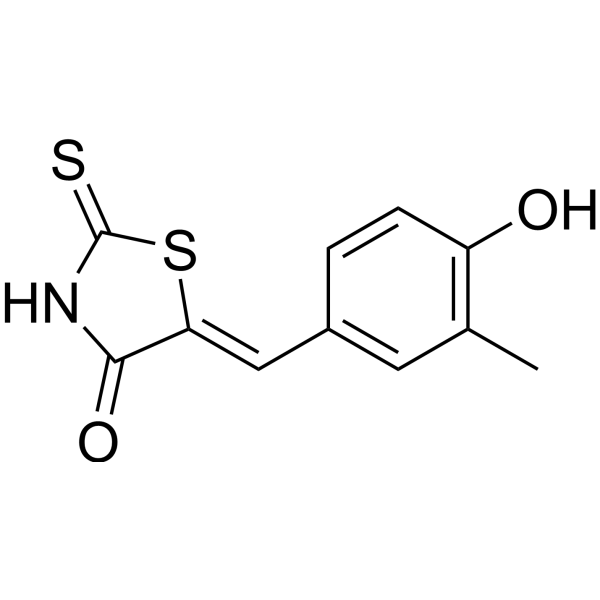
  • HY-D1416
    HMBR
    1 Publications Verification

    Fluorescent Dye Others
    HMBR is an analogue with an additional methyl group on the aromatic ring and is non-fluorescent. HMBR conjugated with Y-FAST emits yellow fluorescence under blue light excitation (Ex= 419 nm; Em= 525–539 nm). HMBR is non-toxic to zebrafish embryos. HMBR has high cell permeability .
    HMBR
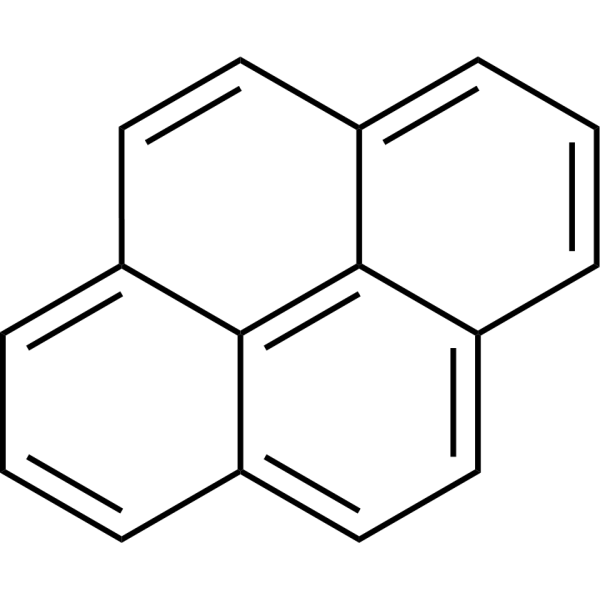
  • HY-103609
    Pyrene
    1 Publications Verification

    Benzo[def]phenanthrene

    Environmental Pollutants Biochemical Assay Reagents Others
    Pyrene is a polycyclic aromatic hydrocarbon (PAH) composed of four fused benzene rings. It has a distinct aromatic odor, produced by incomplete combustion of organic matter. Pyrene exhibits strong fluorescence, emitting in the blue region of the spectrum, making it useful as a probe for studying molecular interactions in solution and on surfaces. Pyrene is also used as a model compound for the study of PAHs in various environments and biological systems because of its ubiquity in these environments. However, long-term exposure to pyrene has been associated with potential health risks, including carcinogenicity and mutagenicity.
    Pyrene
  • HY-P2915
    Protocatechuate 3,4-dioxygenase
    1 Publications Verification

    Biochemical Assay Reagents Bacterial Infection
    Protocatechuate 3,4-dioxygenase is a dioxygenase. Protocatechuate 3,4-dioxygenase belongs to the non-heme iron dioxygenase class. Protocatechuate 3,4-dioxygenase catalyzes the cleavage of the aromatic ring of 3,4-dihydroxybenzoate, attaching two atoms of molecular oxygen to the compound to generate β-carboxy-cis,cis-muconate. Protocatechuate 3,4-dioxygenase is a key enzyme in the β-ketoadipic acid pathway. It is found in marine bacteria associated with Roseobacter. Protocatechuate 3,4-dioxygenase can be isolated from Pseudomonas aeruginosa .
    Protocatechuate 3,4-dioxygenase
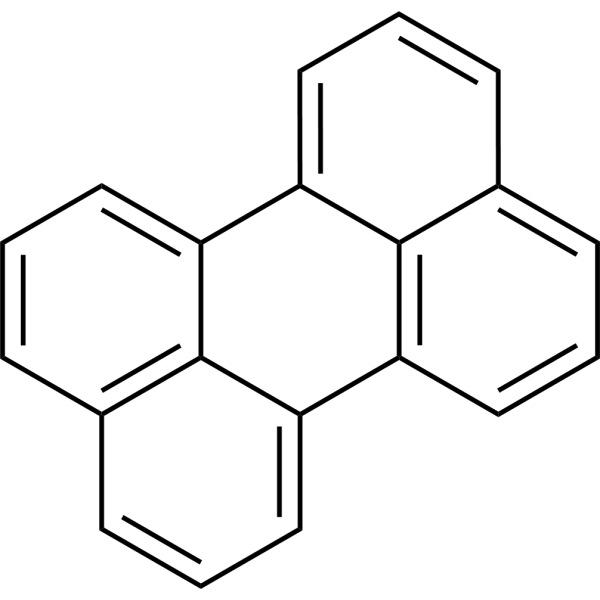
  • HY-W090294

    Peri-dinaphthalene (purified by sublimation)

    Environmental Pollutants Biochemical Assay Reagents Others
    Perylene, which is a polycyclic aromatic hydrocarbon composed of four linearly fused benzene rings, is commonly used as a pigment and dye in a variety of applications, including printing inks, plastics, and textiles. In addition, Perylene has potential uses in solar cells as photosensitizers and as fluorescent probes in biochemistry and materials science. Perylene's rigid planar structure endows it with unique electronic and optical properties, making it a versatile and important compound in many fields of chemistry and materials science.
    Perylene
  • HY-W053507

    3-Methylbenzeneacetic acid

    Drug Metabolite Drug Intermediate Others
    m-Tolylacetic acid (3-Methylbenzeneacetic acid) is a hydroaromatic dicarboxylic acids excreted in the urine as metabolite of tolueneacetic acid. m-Tolylacetic acid can be used for drug intermediate for synthesising more complex molecules .
    m-Tolylacetic acid
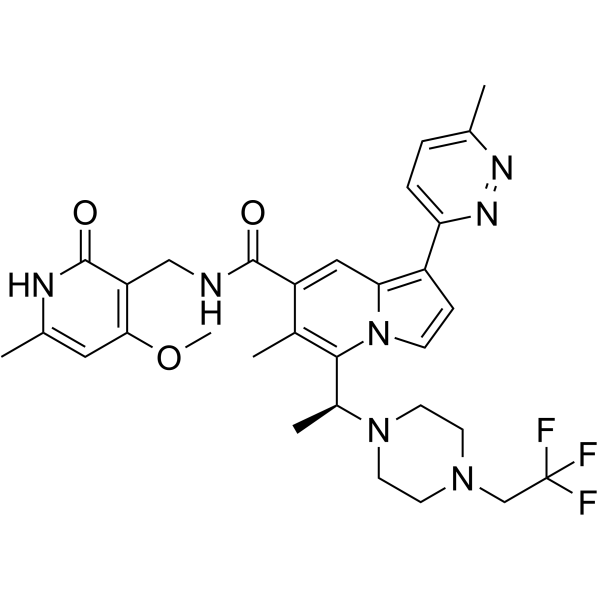
  • HY-144881

    Histone Methyltransferase Inflammation/Immunology Cancer
    (S)-HH2853 (compound 200), a PYRIDINO five membered aromatic ring compound, is a potent EZH1/2 dual inhibitor with an IC50 of <100 nM for EZH2_Y641F. (S)-HH2853 has the potential to be used in the research of anti-tumor or autoimmune diseases .
    (S)-HH2853
  • HY-129756

    N-Phenylthioacetamide

    Biochemical Assay Reagents Metabolic Disease
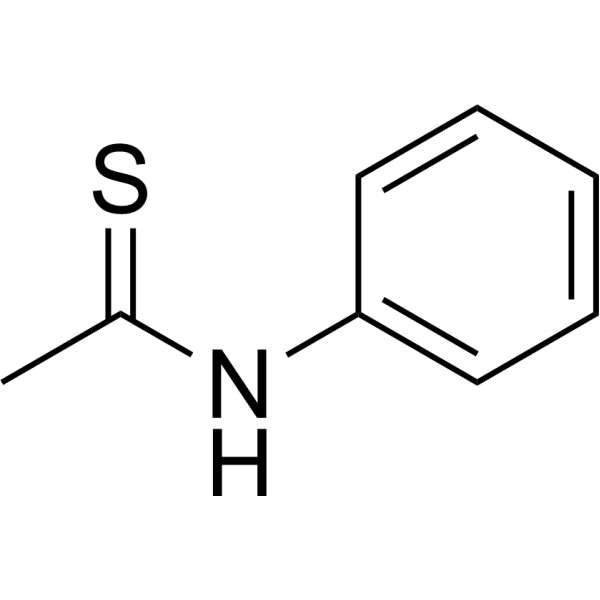
    Thioacetanilide (N-Phenylthioacetamide) is a sulfur-containing thioamide derivative of acetanilide. Thioacetanilide displays a solvent‑dependent Z/E isomeric distribution, preferring the E conformation in polar hydrogen‑bonding solvents and the Z conformation in halogenated solvents. Thioacetanilide serves as a substrate for metabolic desulfurization and aromatic hydroxylation. Thioacetanilide is mainly metabolized via desulfurization and 4‑hydroxylation of the aromatic ring in Rattus norvegicus, and the released sulfur integrates into the total body sulfur pool. Thioacetanilide is well absorbed in rats, and more than 90% of the dose is excreted in urine as conjugated metabolites after oral administration .
    Thioacetanilide
  • HY-W587874

    Fluorescent Dye Others
    Disperse Orange 3 is a monoazo dye characterized by a dye content of 90% along with dispersing agents and surfactants; it features two aromatic rings, one of which possesses an amino group while the other is modified with a nitro group, exhibiting a prominent absorption peak at 415 nm.
    Disperse orange 3
  • HY-121968

    Biochemical Assay Reagents Metabolic Disease
    (Z)-α-Methylcinnamaldehyde is an organic compound that is characterized by its distinct aldehyde and aromatic ring structures. (Z)-α-Methylcinnamaldehyde is an impurity that can be found in a pharmaceutical drug used for diabetic neuropathy–Epalrestat.
    (Z)-α-Methylcinnamaldehyde
  • HY-116679

    17-Trifluoromethylphenyl trinor PGF2α

    Prostaglandin Receptor Endocrinology
    A number of 17-phenyl trinor prostaglandin F2α (17-phenyl trinor PGF2α) derivatives have been approved for glaucoma. Of these, the unsubstituted or meta-substituted aromatic derivatives are the most potent FP receptor agonists.4 17-trifluoromethylphenyl trinor PGF2α bears an aromatic ring which is reminiscent of the trifluoromethyl-phenoxy ring of travoprost ((+)-fluprostenol isopropyl ester). As an ocular hypotensive agent, it would be expected that 17-trifluoromethylphenyl trinor PGF2α would act very much like the free acid of travoprost. 17-phenyl trinor PGF2α is a potent luteolytic, with a potency equal to or greater than fluprostenol and cloprostenol.
    17-trifluoromethylphenyl trinor Prostaglandin F2α
  • HY-103609R

    Benzo[def]phenanthrene (Standard)

    Biochemical Assay Reagents Reference Standards Others
    Pyrene (Standard) is the analytical standard of Pyrene. This product is intended for research and analytical applications. Pyrene is a polycyclic aromatic hydrocarbon (PAH) composed of four fused benzene rings. It has a distinct aromatic odor, produced by incomplete combustion of organic matter. Pyrene exhibits strong fluorescence, emitting in the blue region of the spectrum, making it useful as a probe for studying molecular interactions in solution and on surfaces. Pyrene is also used as a model compound for the study of PAHs in various environments and biological systems because of its ubiquity in these environments. However, long-term exposure to pyrene has been associated with potential health risks, including carcinogenicity and mutagenicity.
    Pyrene (Standard)
  • HY-155817

    Histone Methyltransferase Others
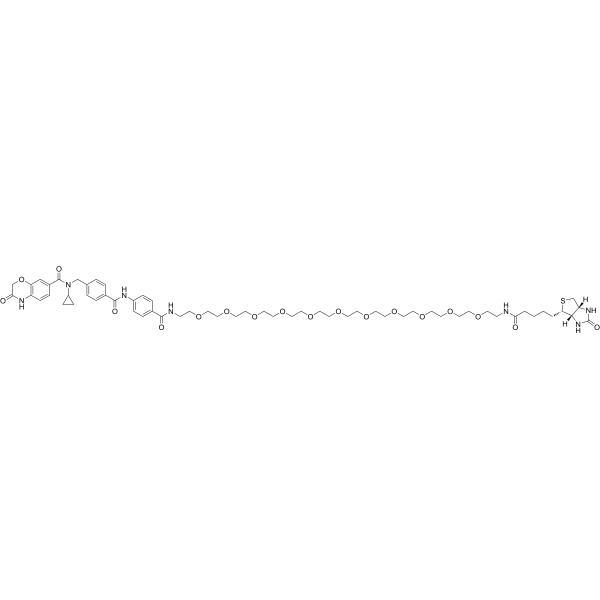
    UNC7096 (compound 53) is a biotinylated affinity reagent. The phenyl ring of UNC7096 replaces the pyrimidine ring in UNC6934 (HY-145103) and introduces biotin at the para position of the phenyl ring, which has a high binding affinity to the NSD2-PWWP1 domain (Kd=46 nM). UNC7096 blocks the interaction between NSD2-PWWP1 and nucleosomal H3K36me2 by occupying the methyl-lysine binding pocket of NSD2-PWWP1. This binding is achieved by covalent binding through the formation of hydrogen bonds and a specific aromatic cage structure. UNC7096 can be used to capture proteins that interact with the NSD2-PWWP1 domain to further analyze the biological significance of these interactions .
    UNC7096
  • HY-163770

    Proteasome Cancer
    Anticancer agent 233 (compound 5g) is a 3,5-bis(arylmethylene)-4-piperidinone derivative with anticancer activity, with GI50 of 0.25 and 0.23 μM for cervical cancer (HeLa) and colon cancer (HCT116) cell lines, respectively. The chlorine atom on the aromatic ring of Anticancer agent 233 interacts well with the catalytic site of 20S proteasome, inhibiting the activity of 20S proteasome to exert its anticancer effect .
    Anticancer agent 233
  • HY-W114420

    PKC Drug Derivative Cancer
    3-Methyl-L-tyrosine is a derivative of L-Tyrosine (HY-N0473). Structurally, 3-Methyl-L-tyrosine features a methyl modification at the third position of the aromatic ring of L-Tyrosine. As a substrate for the protein tyrosine kinase Csk, 3-Methyl-L-tyrosine's relative catalytic efficiency (kcat/Km) is 38% of L-Tyrosine, indicating that the methyl modification impacts the processing efficiency of Gsk significantly. 3-Methyl-L-tyrosine helps to deepen the understanding of Gsk's molecular recognition mechanisms of its substrates, which is crucial for developing specific inhibitors targeting Gsk .
    3-Methyl-L-tyrosine
  • HY-N19662

    Bacterial Infection
    12-Methoxy-cis-carnosic acid (Compound 5) is a methoxylated aromatic abietane diterpene with a cis A/B ring junction, found in the aerial parts of Rosmarinus officinalis. 12-Methoxy-cis-carnosic acid can be used for research on Methicillin (HY-121544)-resistant Staphylococcus aureus .
    12-Methoxy-cis-carnosic acid
  • HY-N19254

    Reactive Oxygen Species (ROS) Inflammation/Immunology
    Shepherdine, a harmala-type indole and tetrahydro-β-carboline alkaloid, is an antioxidant. Shepherdine scavenges free radicals via single electron transfer from its indole ring, forming an indolyl cation or neutral radical, and may convert to aromatic β-carbolines during this process. Shepherdine can be used for research on antioxidant activity .
    Shepherdine
  • HY-N19426

    Others Others
    Tetrapterol A is an isoflavanone compound. Tetrapterol A can be isolated from the roots of Sophora tetraptera .
    Tetrapterol A
  • HY-P2915A

    Biochemical Assay Reagents Bacterial Infection
    Protocatechuate 3,4-Dioxygenase, Bacteria is a dioxygenase. Protocatechuate 3,4-Dioxygenase, Bacteria belongs to the non-heme iron dioxygenase class. Protocatechuate 3,4-Dioxygenase, Bacteria catalyzes the cleavage of the aromatic ring of 3,4-dihydroxybenzoate, attaching two atoms of molecular oxygen to the compound to generate β-carboxy-cis,cis-muconate. Protocatechuate 3,4-Dioxygenase, Bacteria is a key enzyme in the β-ketoadipic acid pathway. Protocatechuate 3,4-Dioxygenase, Bacteria is found in marine bacteria associated with Roseobacter. Protocatechuate 3,4-Dioxygenase, Bacteria can be isolated from Pseudomonas aeruginosa .
    Protocatechuate 3,4-Dioxygenase, Bacteria

Inquiry Online

Your information is safe with us. * Required Fields.

Salutation


Country or Region *

Applicant Name *


Organization Name *

Department *


Email Address *


Product Name *

Cat. No.


Requested quantity *

Phone Number *


Remarks

Inquiry Online

Inquiry Information

Product Name:
Cat. No.:
Quantity:
MCE Japan Authorized Agent:

