
20 Results for "

arthropod

" in MedChemExpress (MCE) Product Catalog:
Products (20)

20 Results for "arthropod" in MCE Product Catalog:

14
14 Publications Verification
Cat. No.: HY-N6979
CAS No.: 5289-74-7
Synonyms: 20-Hydroxyecdysone
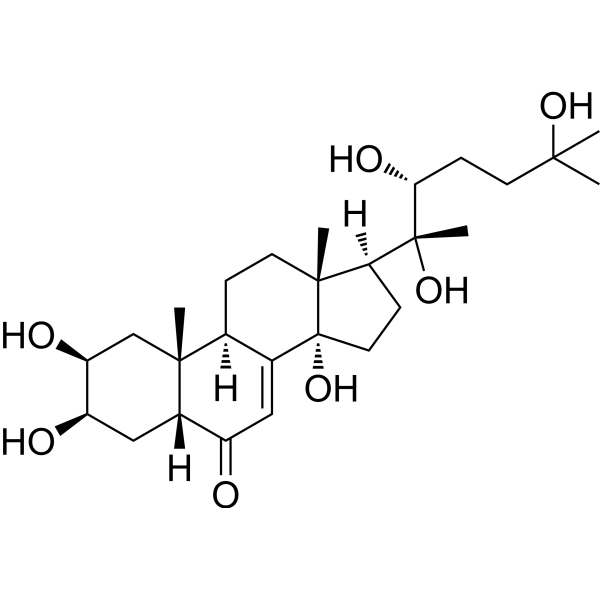
Crustecdysone (20-Hydroxyecdysone) is a naturally occurring ecdysteroid hormone isolated from Serratula coronata which controls the ecdysis (moulting) and metamorphosis of arthropods, it inhibits caspase activity and induces autophagy via the 20E nuclear receptor complex, EcR-USP . Crustecdysone exhibits regulatory or protective roles in the cardiovascular system . Crustecdysone is an active metabolite of Ecdysone (HY-N0179) .
loading...
    loading...
3
3 Cited Publications
Cat. No.: HY-116144
CAS No.: 119515-38-7
Purity:  98.00%
Synonyms: Lcaridin
Research Areas:  

Infection

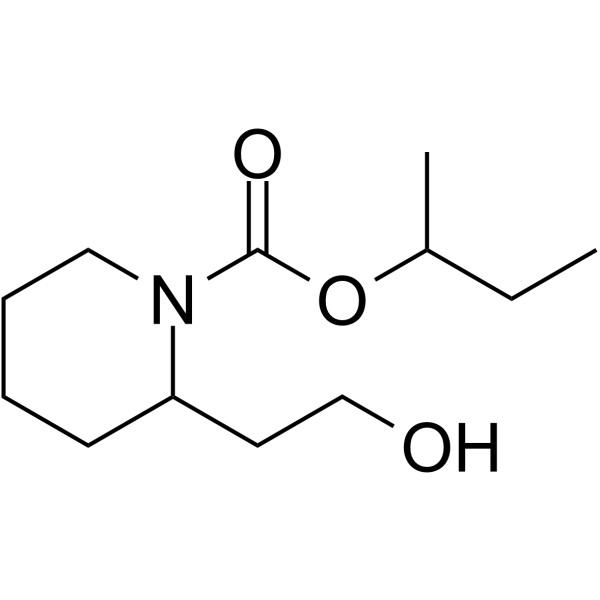
Picaridin (Lcaridin) is a broad spectrum arthropod repellent. Picaridin interacts with mosquito and tick olfactory receptor proteins. Picaridin repels Aedes aegypti. Picaridin exhibits considerable antibacterial, anticandidal and antifungal properties .
loading...
    loading...
2
2 Cited Publications
Cat. No.: HY-145296
CAS No.: 1263133-33-0
Purity:  ≥95.0%
Research Areas:  

Infection

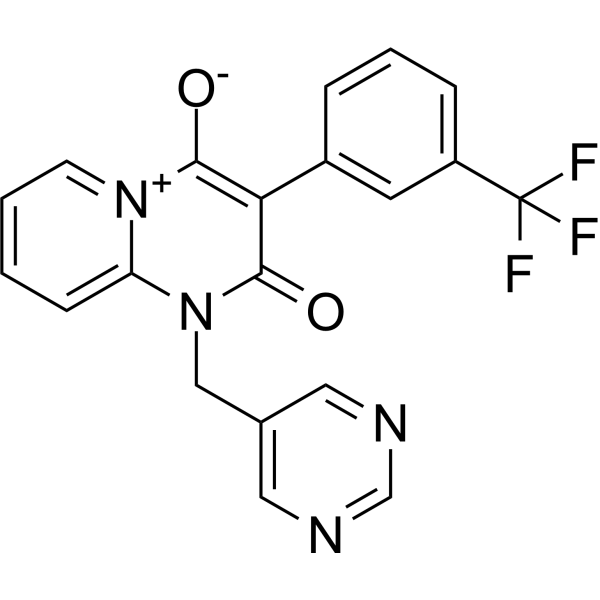
Triflumezopyrim, a mesoionic insecticide, has high efficiency at a low dosage, and is mainly used to control hopper species. Triflumezopyrim mainly acts on the nicotinic acetylcholine receptor (nAChR) inhibition, which is very highly efficient, rapidly effective, and nearly nontoxic to nontarget arthropods .
loading...
    loading...
1
1 Cited Publications
Cat. No.: HY-16974
CAS No.: 1093861-60-9
Research Areas:  

Infection

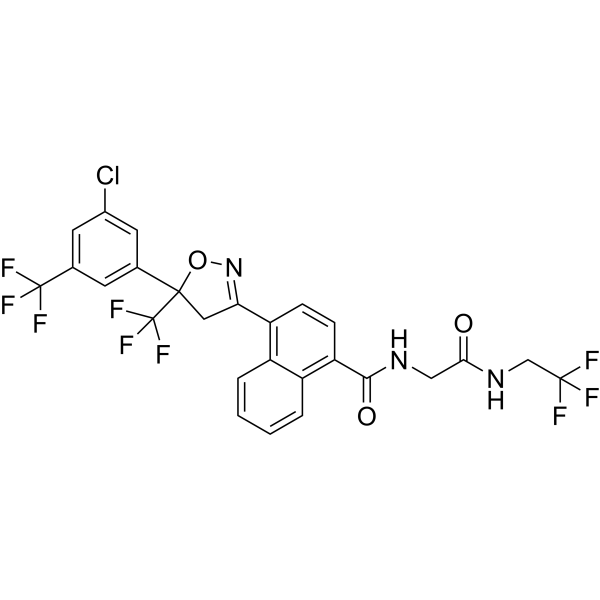
Afoxolaner is an orally active isoxazoline insecticide/acaricide against Ixodes scapularis in dogs. Afoxolaner acts on the insect γ-aminobutyric acid receptor (GABA) and glutamate receptors, inhibiting GABA & glutamate-regulated uptake of chloride ions, resulting in excess neuronal stimulation and death of the arthropod .
loading...
    loading...
1
1 Cited Publications
Cat. No.: HY-115584
CAS No.: 103055-07-8
Purity:  99.57%
Research Areas:  

Infection

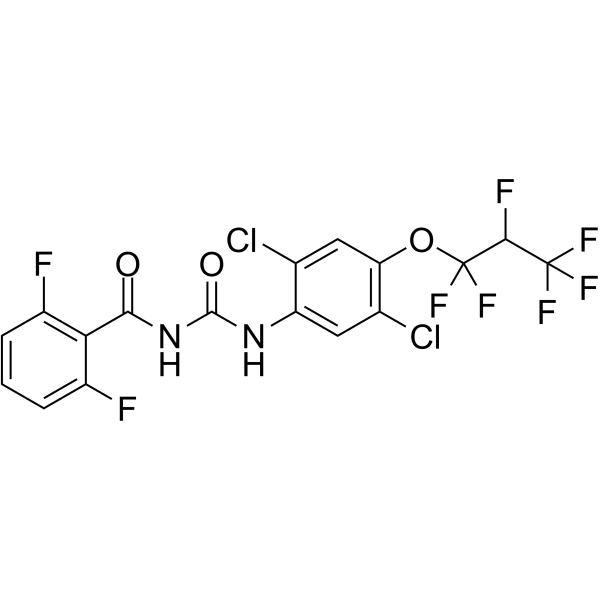
Lufenuron is an orally active lipophilic benzoylurea insecticide and a chitin synthesis inhibitor that can used for flea and fish lice control. Lufenuron inhibits moulting of arthropods. Lufenuron induces reproductive toxicity, genotoxic effects and oxidative stresses in pregnant albino rats and their fetuses .
loading...
    loading...
Cat. No.: HY-P2853
CAS No.: 9013-72-3
Hemocyanin is an extracellular giant copper-containing glycoprotein. Hemocyanin can be found in the hemolymph of both mollusk and arthropod. Hemocyanin is responsible for oxygen transport. Hemocyanin is also involved in several physiological processes, such as energy storage, osmoregulation, molt cycle and exoskeleton formation. Hemocyanin in shrimp can enhance its immune response by modulating the p38 MAPK pathway. Hemocyanin from Penaeus monodon could act as an antiviral agent against a variety of viruses including DNA and RNA viruses. Hemocyanin from horseshoe crab Carcinoscorpius rotundicauda could possess a strong antimicrobial defense by the production of ROS activated with microbial proteases. Hemocyanin from L. vannamei would be effective against cervical cancer cell growth .
loading...
    loading...
Cat. No.: HY-B2013
CAS No.: 71283-80-2
Research Areas:  

Others

Fenoxaprop-P-ethyl is an acetyl-CoA carboxylase (ACC) inhibitor and post-emergence herbicide. Fenoxaprop-P-ethyl inhibits the conversion of acetyl-CoA to malonyl-CoA, reduces malonyl-CoA synthesis and disrupts fatty acid synthesis. Fenoxaprop-P-ethyl disrupts lipid homeostasis through cascaded inhibition of lipid metabolism, decreases total lipid content, downregulates fatty acid elongase genes and inhibits their activity. Fenoxaprop-P-ethyl disrupts fatty acid synthesis in rice seedlings and controls annual monocotyledonous weeds in wheat, durum wheat, rye, triticale and barley fields .
loading...
    loading...
Cat. No.: HY-W014780
CAS No.: 122-40-7
Synonyms: 2-Benzylideneheptanal; α-Pentylcinnamaldehyde
Research Areas:  

Others

α-Amylcinnamaldehyde is a ligand for the Niemann-Pick type C2 (NPC2) protein of arthropod moths and may play a key role in the identification of moth volatiles. NPC2 is a key enzyme for cholesterol transport in the body .
loading...
    loading...
Cat. No.: HY-116144R
CAS No.: 119515-38-7
Synonyms: Lcaridin (Standard)
Research Areas:  

Infection

Picaridin (Standard) is the analytical standard of Picaridin. This product is intended for research and analytical applications. Picaridin (Lcaridin) is a broad spectrum arthropod repellent. The repellent and deterrent activities of Picaridin involve olfactory sensing in mosquitoes, and ticks, via their interactions with odorant receptor proteins .
loading...
    loading...
Cat. No.: HY-P0303
CAS No.: 309247-84-5
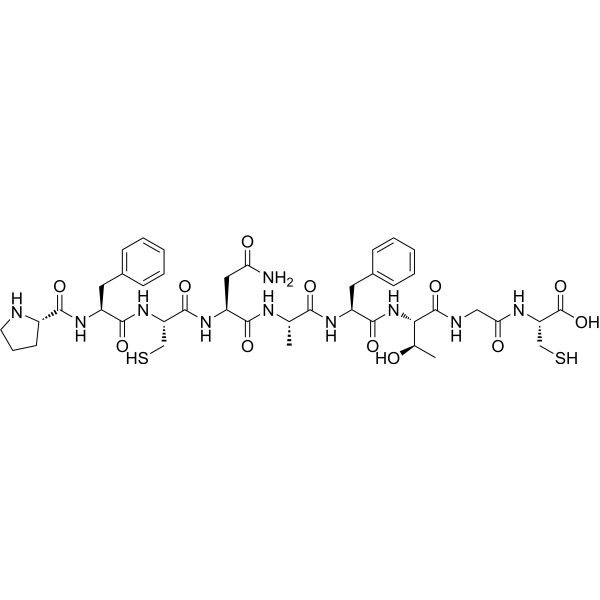
Crustacean cardioactive peptide, free acid is a highly conserved, amidated cyclic nonapeptide, first isolated from the pericardial organs of the shore crab Carcinus maenas, where it has a role in regulating heartbeat; Crustacean cardioactive peptide, free acid also modulates the neuronal activity in other arthropods.
loading...
    loading...
Cat. No.: HY-115584R
CAS No.: 103055-07-8
Research Areas:  

Infection

Lufenuron (Standard) is the analytical standard of Lufenuron. This product is intended for research and analytical applications. Lufenuron is a lipophilic benzoylurea insecticide and a chitin synthesis inhibitor that can used for flea and fish lice control. Lufenuron inhibits moulting of arthropods .
loading...
    loading...
Cat. No.: HY-16974R
CAS No.: 1093861-60-9
Afoxolaner (Standard) is the analytical standard of Afoxolaner. This product is intended for research and analytical applications. Afoxolaner is an orally active isoxazoline insecticide/acaricide against Ixodes scapularis in dogs. Afoxolaner acts on the insect γ-aminobutyric acid receptor (GABA) and glutamate receptors, inhibiting GABA & glutamate-regulated uptake of chloride ions, resulting in excess neuronal stimulation and death of the arthropod .
loading...
    loading...
Cat. No.: HY-119779
CAS No.: 179101-81-6
Purity:  95.14%
Synonyms: S 1812
Research Areas:  

Others

Pyridalyl (S 1812) is an insecticides against Lepidoptera and Thrips. Pyridalyl is less toxic to some beneficial arthropods, and non-target organisms, such as mammals and fish, and thus be utilized in integrated pest management and resistance management .
loading...
    loading...
Cat. No.: HY-115584S
CAS No.: 2749747-70-2
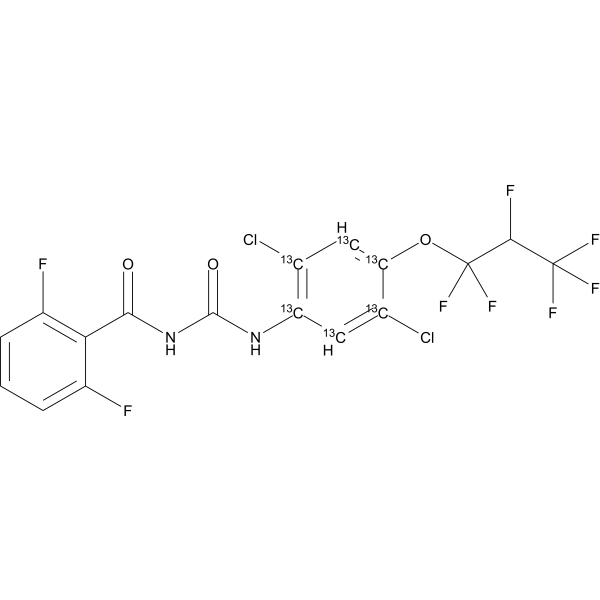
Lufenuron- 13C6 is a 13C-labeled Lufenuron. Lufenuron is a lipophilic benzoylurea insecticide and a chitin synthesis inhibitor that can used for flea and fish lice control. Lufenuron inhibits moulting of arthropods .
loading...
    loading...
Cat. No.: HY-N6979R
CAS No.: 5289-74-7
Synonyms: 20-Hydroxyecdysone (Standard)
Crustecdysone (Standard) is the analytical standard of Crustecdysone. This product is intended for research and analytical applications. Crustecdysone (20-Hydroxyecdysone) is a naturally occurring ecdysteroid hormone isolated from Serratula coronata which controls the ecdysis (moulting) and metamorphosis of arthropods, it inhibits caspase activity and induces autophagy via the 20E nuclear receptor complex, EcR-USP . Crustecdysone exhibits regulatory or protective roles in the cardiovascular system . Crustecdysone is an active metabolite of Ecdysone (HY-N0179) .
loading...
    loading...
Cat. No.: HY-115584B
CAS No.: 130841-26-8
Target:  

Parasite

Research Areas:  

Infection

Lufenuron, (-)- is an active isomer form of Lufenuron. Lufenuron is a lipophilic benzoyl urea insecticide and chitin synthesis inhibitor that can be used for flea and fish lice control. Lufenuron inhibits the molting of arthropods .
loading...
    loading...
Cat. No.: HY-119779R
CAS No.: 179101-81-6
Synonyms: S 1812 (Standard)
Research Areas:  

Others

Pyridalyl (Standard) is the analytical standard of Pyridalyl. This product is intended for research and analytical applications. Pyridalyl (S 1812) is an insecticides against Lepidoptera and Thrips. Pyridalyl is less toxic to some beneficial arthropods, and non-target organisms, such as mammals and fish, and thus be utilized in integrated pest management and resistance management .
loading...
    loading...
Cat. No.: HY-W783593
CAS No.: 65195-51-9
Category:  

Microorganisms Antibiotics

Target:  

Parasite

Avermectin A1a is a potent and broad-spectrum antiparasitic agent. Avermectin A1a targets nematodes and arthropods by binding to their glutamate-gated chloride channels to block nerve signal transmission and induce paralysis. Avermectin A1a can be used for the study of parasitic infection .
loading...
    loading...
Cat. No.: HY-16974S
Afoxolaner-d6 is the deuterium labeled Afoxolaner (HY-16974). Afoxolaner is an orally active isoxazoline insecticide/acaricide against Ixodes scapularis in dogs. Afoxolaner acts on the insect γ-aminobutyric acid receptor (GABA) and glutamate receptors, inhibiting GABA & glutamate-regulated uptake of chloride ions, resulting in excess neuronal stimulation and death of the arthropod .
loading...
    loading...
Cat. No.: HY-L082
659 compounds

A parasite is an organism that lives on or in a host organism and gets its food from or at the expense of its host. Parasites of humans include protozoans, helminths, and ecto-parasites (organisms that live on the external surface of a host). They are responsible for many diseases and are transmitted to their hosts most often through the ingestion of contaminated food, water or through the bite of an arthropod (e.g., a fly or tick), which can act as an intermediate host and as a vector. Parasitic diseases of humans are a major global health problem causing significant morbidity and mortality, especially in developing countries. Each year there are hundreds of millions of people infected with disease-causing parasites, particularly in tropical and subtropical regions of the world, resulting in an estimated one million deaths. Therefore, there is a dire need of novel anti-parasitic drugs.

MCE has a unique collection of 659 compounds with validated anti-parasitic activity which offer researchers an opportunity to screen novel anti-parasitic targets.

  • 1

