1. Search Result
Search Result
Results for "

assembly

" in MedChemExpress (MCE) Product Catalog:

336

Inhibitors & Agonists

4

Screening Libraries

7

Fluorescent Dye

43

Biochemical Assay Reagents

29

Peptides

4

MCE Kits

3

Inhibitory Antibodies

27

Natural
Products

10

Recombinant Proteins

6

Isotope-Labeled Compounds

14

Antibodies

3

Click Chemistry

38

Oligonucleotides

Cat. No. Product Name Target Research Areas Chemical Structure
  • HY-B1464
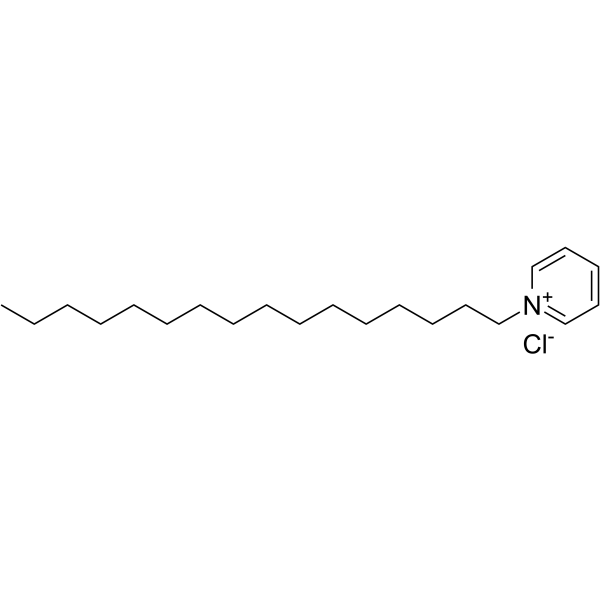
    Cetylpyridinium chloride
    5+ Cited Publications

    Environmental Pollutants Bacterial HBV Infection Inflammation/Immunology
    Cetylpyridinium chloride, a cationic quaternary ammonium compound, is an anti-bacterial agent with broad-spectrum activity. Cetylpyridinium chloride is an effective anti-HBV capsid assembly inhibitor with an IC50 of 2.5 μM. Cetylpyridinium chloride is used in pesticides and various types of mouthwashes, and other personal care products .
    Cetylpyridinium chloride
  • HY-B0200
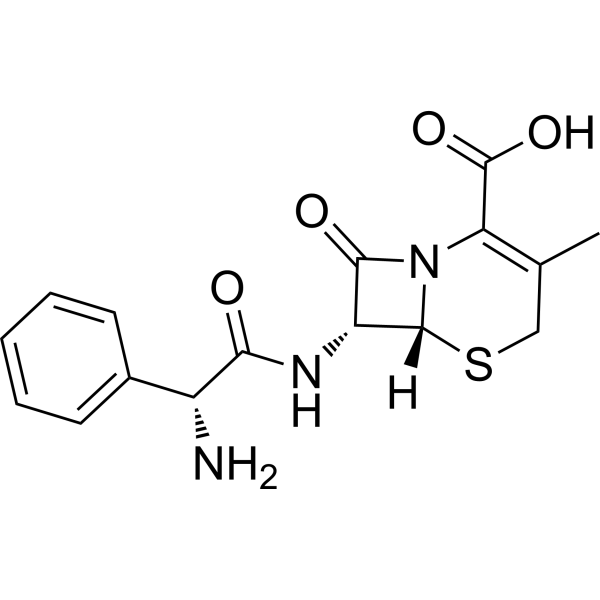
    Cephalexin
    5+ Cited Publications

    Cefalexin; Cephacillin

    Penicillin-binding protein (PBP) Antibiotic Bacterial Infection Cancer
    Cephalexin (Cefalexin) is a potent, orally active semisynthetic cephalosporin antibiotic with a broad antibacterial spectrum. Cephalexin has antibacterial activity against a wide variety of gram-positive and gram-negative bacteria. Cephalexin targets penicillin-binding proteins (PBPs) to inhibit bacterial cell wall assembly. Cephalexin is used for the research of pneumonia, strep throat, and bacterial endocarditis, et al .
    Cephalexin
  • HY-133821
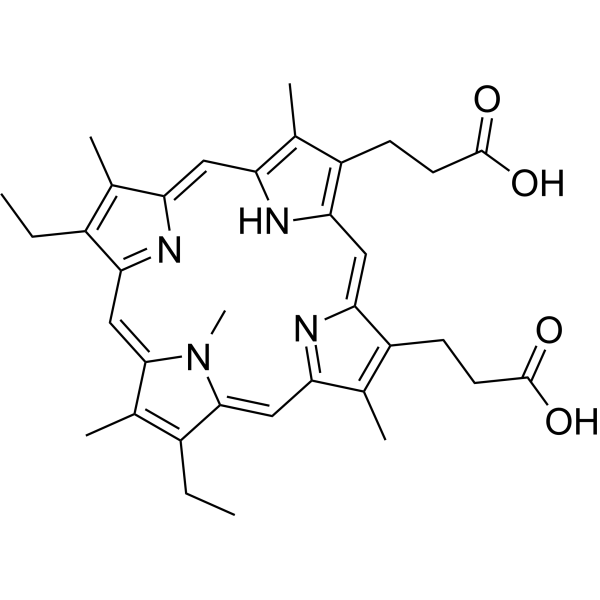
    N-Methylmesoporphyrin IX
    5 Publications Verification

    G-quadruplex Neurological Disease
    N-Methylmesoporphyrin IX (NMM), a widely used G-quadruplex DNA specific fluorescent binder, is an efficient probe for monitoring Aβ fibrillation. N-Methylmesoporphyrin IX is an in situ inhibitor and an ex situ monitor for Aβ amyloidogenesis both in vitro and in cells. N-Methylmesoporphyrin IX is sensitive to G-quadruplexes DNA but has no response to duplexes, triplexes and single-stranded forms DNA. N-Methylmesoporphyrin IX is nonfluorescent alone or in monomeric Aβ environments, but emits strong fluorescence through stacking with the Aβ assemblies .
    N-Methylmesoporphyrin IX
  • HY-106443A
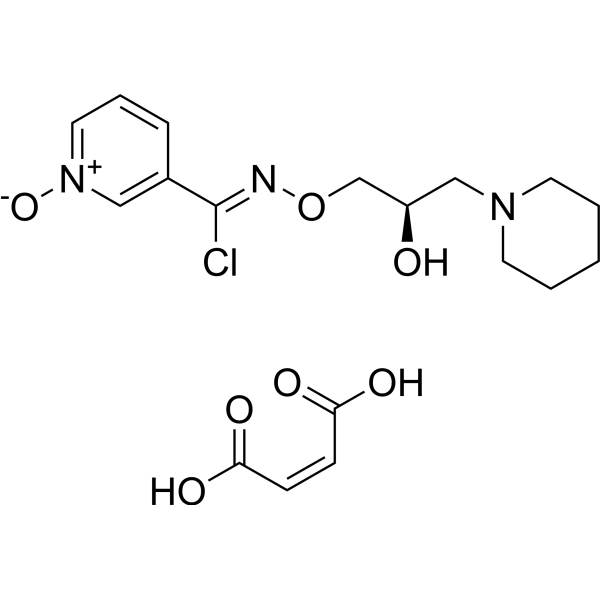
    Arimoclomol maleate
    5 Publications Verification

    BRX-220

    HSP Neurological Disease Metabolic Disease Inflammation/Immunology
    Arimoclomol maleate (BRX-220) is an orally active co-inducer of heat shock proteins (HSP) . Arimoclomol protects motor neurons by enhancing Hsp expression, thus directly affecting protein aggregation and clearance of misfolded assemblies via the proteasome-ubiquitin system .Arimoclomol maleate can be used for the study of Niemann–Pick disease type C.
    Arimoclomol maleate
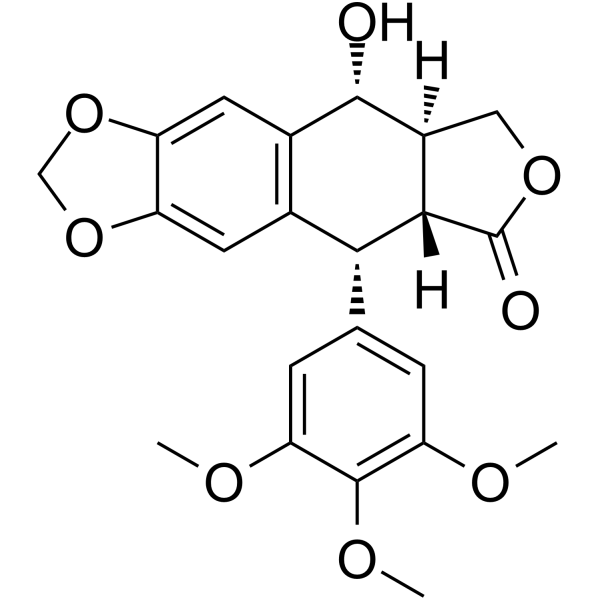
  • HY-15552
    Podofilox
    Maximum Cited Publications
    6 Publications Verification

    Podophyllotoxin

    Microtubule/Tubulin Cancer
    Podofilox (Podophyllotoxin) is a potent inhibitor of microtubule assembly and DNA topoisomerase II.
    Podofilox
  • HY-B0200B
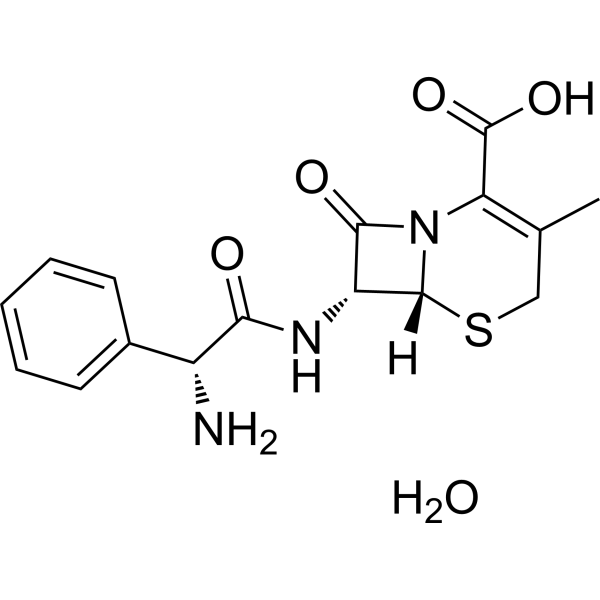
    Cephalexin monohydrate
    5+ Cited Publications

    Cefalexin hydrate; Cephacillin hydrate

    Penicillin-binding protein (PBP) Antibiotic Bacterial Infection Cancer
    Cephalexin (Cefalexin) monohydrate is a potent, orally active new semisynthetic cephalosporin antibiotic with a broad antibacterial spectrum. Cephalexin (Cefalexin) monohydrate has antibacterial activity against a wide variety of gram-positive and gram-negative bacteria. Cephalexin (Cefalexin) monohydrate targets penicillin-binding proteins (PBPs) to inhibit bacterial cell wall assembly. Cephalexin (Cefalexin) monohydrate is used for the research of pneumonia, strep throat, and bacterial endocarditis, et al .
    Cephalexin monohydrate
  • HY-113061
    Pseudouridine
    1 Publications Verification

    Endogenous Metabolite Nucleoside Antimetabolite/Analog DNA/RNA Synthesis Cancer
    Pseudouridine is an isomer of uridine and the most abundant modified nucleoside in non-coding RNA. It fine-tunes and stabilizes regional structures in rRNA and tRNA, maintaining their functions in mRNA decoding, ribosome assembly, processing, and translation. Pseudouridine-modified tRNA fragments can inhibit aberrant protein synthesis and hold promise for research on myelodysplastic syndrome (MDS)-related leukemia. .
    Pseudouridine
  • HY-122882
    HOIPIN-8
    4 Publications Verification

    E1/E2/E3 Enzyme Inflammation/Immunology
    HOIPIN-8 is a potent inhibitor of linear ubiquitin chain assembly complex (LUBAC) with an IC50 of 11 nM. HOIPIN-8 is a HOIPIN-1 derivative with enhanced the potency by 255-fold in the petit-LUBAC inhibition, and 10-fold and 4-fold in the LUBAC- and TNF-α-mediated NF-κB activation, respectively than HOIPIN-1. HOIPIN-1 is a promising tool to explore the cellular functions of LUBAC .
    HOIPIN-8
  • HY-106443
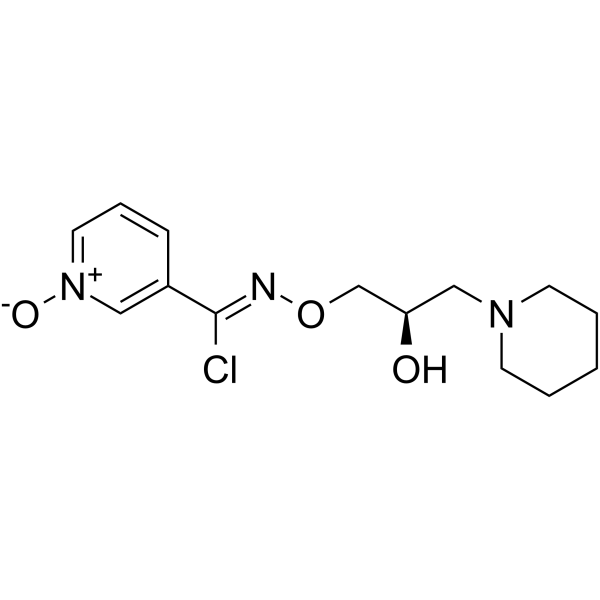
    Arimoclomol
    5 Publications Verification

    BRX-220 free base

    HSP Neurological Disease Metabolic Disease Inflammation/Immunology
    Arimoclomol (BRX-220 free base) is an orally active co-inducer of heat shock proteins (HSP). Arimoclomol protects motor neurons by enhancing Hsp expression, thus directly affecting protein aggregation and clearance of misfolded assemblies via the proteasome-ubiquitin system.Arimoclomol can be used for the study of Niemann–Pick disease type C. Arimoclomol can cross the blood-brain barrier and can be used in research on Niemann-Pick disease type C .
    Arimoclomol
  • HY-P1449

    ADC Linker Cancer
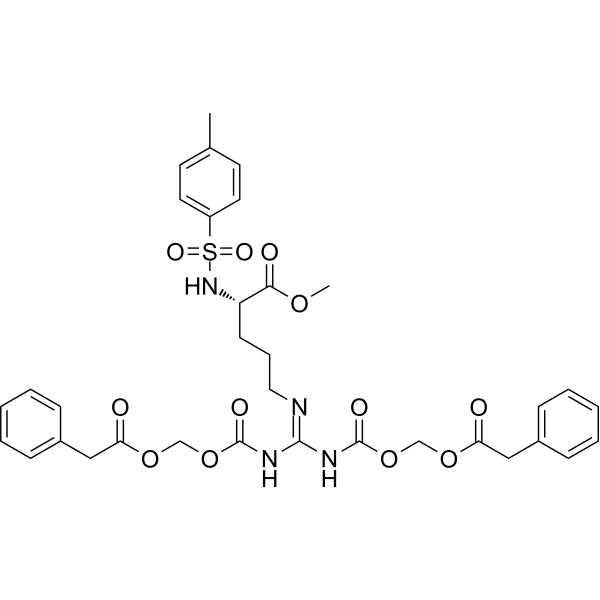
    Boc-Gly-Gly-Phe-Gly-OH, a self-assembly of N- and C-protected tetrapeptide, is a protease cleavable linker used for the antibody-drug conjugate (ADC).
    Boc-Gly-Gly-Phe-Gly-OH
  • HY-P4192

    ADC Linker Cancer
    Fomc-Gly-Gly-Phe-Gly-OH (compound D5) can be used as an intermediate in the synthesis of ADC dual-drug-linker. Fomc-Gly-Gly-Phe-Gly-OH synthetic intermediate GGFGE further forms an important ADC dual-drug link assembly unit .
    Fomc-Gly-Gly-Phe-Gly-OH
  • HY-120722
    TCH-165
    2 Publications Verification

    Proteasome Cancer
    TCH-165 is a small molecule modulator of proteasome assembly, which increases 20S levels and facilitates 20S-mediated protein degradation .
    TCH-165
  • HY-115364
    Parbendazole
    5+ Cited Publications

    SKF 29044

    Microtubule/Tubulin Parasite Infection
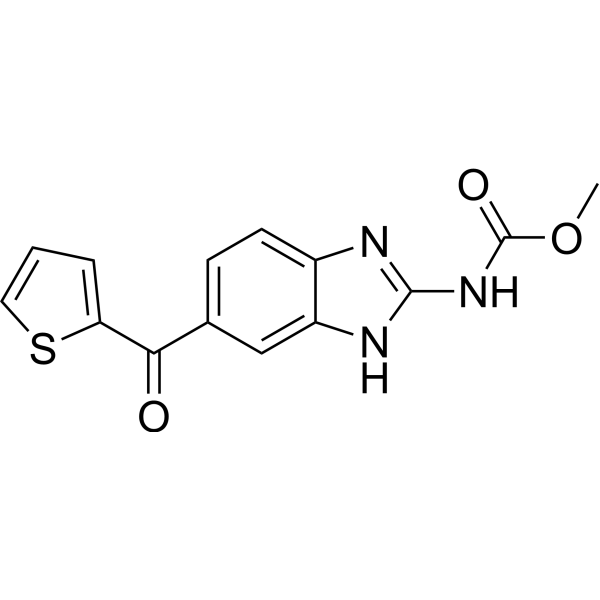
    Parbendazole is a potent inhibitor of microtubule assembly, destabilizes tubulin, with an EC50 of 530 nM, and exhibits a broad-spectrum anthelmintic activity.
    Parbendazole
  • HY-W698249

    Ferroptosis Bacterial Cardiovascular Disease Infection
    Ferrous gluconate is a highly water-soluble iron-containing agent with high bioavailability and bactericidal activity. As a non-heme iron, Ferrous gluconate is used for meat product fortification and improvement of iron deficiency anemia. Ferrous gluconate induces ferroptosis in E. coli through Fe 2+ infiltration, reactive oxygen species burst, lipid peroxidation and direct interaction with DNA. Ferrous gluconate also downregulates the SOS responsive transcriptional repressor LexA. In addition, Ferrous gluconate regulates multiple key pathways in E. coli such as fatty acid metabolism, iron-sulfur cluster assembly and pyruvate metabolism, and is applied in studies related to *E. coli* infection and iron deficiency anemia .
    Ferrous gluconate
  • HY-B0200A
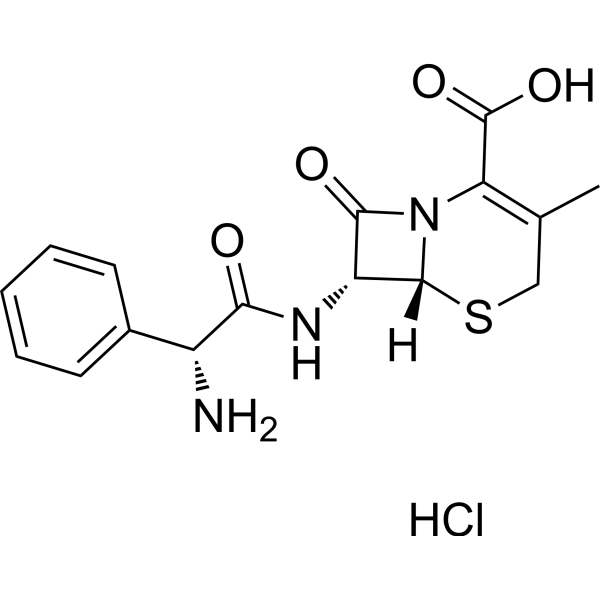
    Cephalexin hydrochloride
    5+ Cited Publications

    Cefalexin hydrochloride; Cephacillin hydrochloride

    Penicillin-binding protein (PBP) Bacterial Antibiotic Infection Cancer
    Cephalexin (Cefalexin) hydrochloride is a potent, orally active new semisynthetic cephalosporin antibiotic with a broad antibacterial spectrum. Cephalexin (Cefalexin) hydrochloride has antibacterial activity against a wide variety of gram-positive and gram-negative bacteria. Cephalexin (Cefalexin) hydrochloride targets penicillin-binding proteins (PBPs) to inhibit bacterial cell wall assembly. Cephalexin (Cefalexin) hydrochloride is used for the research of pneumonia, strep throat, and bacterial endocarditis, et al .
    Cephalexin hydrochloride
  • HY-106443B
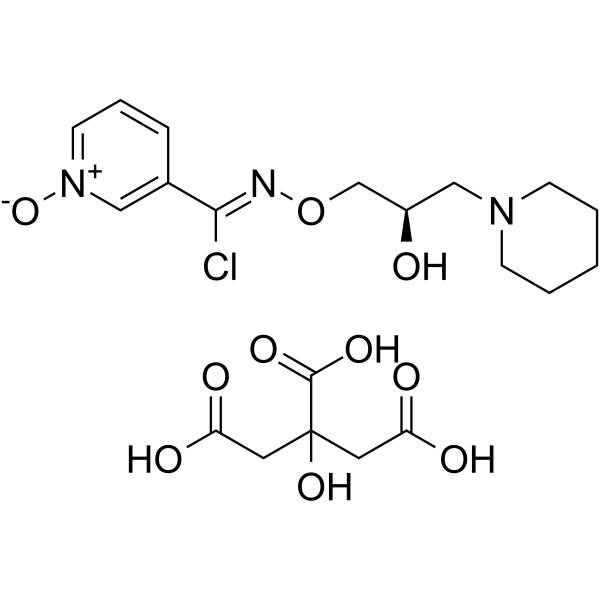
    Arimoclomol citrate
    5 Publications Verification

    BRX-220 citrate

    HSP Neurological Disease Metabolic Disease Inflammation/Immunology
    Arimoclomol citrate (BRX-220 citrate) is an orally active co-inducer of heat shock proteins (HSP) . Arimoclomol citrate protects motor neurons by enhancing Hsp expression, thus directly affecting protein aggregation and clearance of misfolded assemblies via the proteasome-ubiquitin system . Arimoclomol citrate can be used for the study of Niemann–Pick disease type C.
    Arimoclomol citrate
  • HY-E70529

    DNA/RNA Synthesis Bacterial Infection
    Ribonucleoside vanadyl complexes are a class of potent RNase and Taq polymerase inhibitors. Ribonucleoside vanadyl complexes protect RNA during RNA isolation by inhibiting ribonucleases, and also reduce the viability of bacteria and eukaryotic cells by interfering with ribosomal subunit assembly. Ribonucleoside vanadyl complexes block PCR and reverse transcription reactions templated by viral nucleic acids and enhance the effects of antibiotics against Staphylococcus aureus, but do not directly inhibit protein synthesis. Ribonucleoside vanadyl complexes can be effectively removed by phenol-chloroform extraction, thus enabling subsequent PCR analysis. Ribonucleoside vanadyl complexes can be applied in research related to chronic hepatitis C (HCV) and Staphylococcus aureus infection .
    Ribonucleoside vanadyl complexes
  • HY-P4808

    Amyloid-β Autophagy Neurological Disease
    PHF6 (VQIVYK) is a self-assembly sequence capable of initiating the full-length tau protein aggregation and is mapped to the third microtubule-binding repeat region of the tau protein .
    PHF6
  • HY-124600
    NVR 3-778
    3 Publications Verification

    HBV Infection
    NVR 3-778 is a first-in-Class and oral bioavailable HBV CAM (capsid assembly modulator) belonging to the SBA (sulfamoylbenzamide) class, with anti-HBV activity .
    NVR 3-778
  • HY-17435
    4'-Demethylepipodophyllotoxin
    2 Publications Verification

    4'-O-demethylepipodophyllotoxin; 4'-DMEP

    Microtubule/Tubulin Cancer
    4'-Demethylepipodophyllotoxin (4'-DMEP) is an intermediate compound that inhibits microtubule assembly.
    4'-Demethylepipodophyllotoxin
  • HY-112564
    JNJ-632
    2 Publications Verification

    HBV Infection
    JNJ-632 is a hepatitis B virus (HBV) capsid assembly modulator (CAM).
    JNJ-632
  • HY-116423

    NEKs Cancer
    JH295 is a potent, irreversible and selective NIMA-related kinase 2 (Nek2) inhibitor with an IC50 of 770 nM. JH295 inhibits cellular Nek2 via alkylation of Cys22. JH295 is inactive against the mitotic kinases, Cdk1, Aurora B or Plk1, and does not perturb bipolar spindle assembly or the spindle assembly checkpoint . JH295 is a click chemistry reagent, it contains an Alkyne group and can undergo copper-catalyzed azide-alkyne cycloaddition (CuAAc) with molecules containing Azide groups.
    JH295
  • HY-106008

    BAL27862

    Microtubule/Tubulin Cancer
    Avanbulin (BAL27862) is a potent, Colchicine site-binding, tubulin assembly inhibitor. Avanbulin inhibits tubulin assembly at 37 °C with an IC50 of 1.4 μM. Avanbulin binds to tubulin with an apparent Kd value of 244 nM. Avanbulin can be used for the research of cancer and cell division .
    Avanbulin
  • HY-W073524

    Fluorescent Dye Others
    DFAME is a red fluorophore (Ex = 508 nm, Em = 641 nm). DFAME binds to Beetroot and Corn (dimeric fluorescent RNA aptamers) to form Beetroot-DFAME (Kd = 460 nM) and Corn-DFAME (Kd = 3600 nM). Beetroot-DFAME and Corn-DFAME can be used to form RNA assemblies in living cells. Creating RNA assemblies can be used for the study of RNA Nanostructures. DNA/RNA Nanostructures would be useful in cell and gene therapy (CGT) research .
    DFAME
  • HY-P10238

    Apoptosis Cancer
    MYBMIM is an inhibitor for assembly of the molecular MYB:CBP/P300 complex. MYBMIM inhibits growth of leukemia cells .
    MYBMIM
  • HY-W127459

    D-DPPC, 95%

    Liposome Others
    2,3-Dipalmitoyl-sn-glycero-1-phosphocholine, 95% (D-DPPC, 95%) is a chiral phospholipid that serves as a membrane-forming lipid component for bicelle assembly. 2,3-Dipalmitoyl-sn-glycero-1-phosphocholine, 95% can form bicelle assemblies with DHPC, which induce an induced circular dichroism (ICD) signal in the chiral probe DPH, with a polarity opposite to that induced by chiral L-DPPC/DHPC bicelles .
    2,3-Dipalmitoyl-sn-glycero-1-phosphocholine, 95%
  • HY-P9932

    ETI 204

    Bacterial Infection Cardiovascular Disease
    Obiltoxaximab (ETI 204) is the second and potent anti-protective antigen (PA) monoclonal antibody with immunogenicity. Obiltoxaximab plays a central role in anthrax toxin assembly and target cell intoxication, promoting survival, and inhibiting bacterial spread to the periphery in animal models. Obiltoxaximab can be used in the research of inhalational anthrax, bacteremia and toxemia .
    Obiltoxaximab
  • HY-112763

    Liposome Inflammation/Immunology
    CLinDMA, a cationic lipid, can cause inflammatory response. CLinDMA can be used for the synthesis LNP201. LNP201 is a liposome assembly for systemic delivery of siRNA .
    CLinDMA
  • HY-113061R

    Reference Standards Endogenous Metabolite Nucleoside Antimetabolite/Analog DNA/RNA Synthesis Others
    Pseudouridine (Standard) is the analytical standard of Pseudouridine. This product is intended for research and analytical applications. Pseudouridine is an isomer of the nucleoside uridine, and the most abundant modified nucleoside in non-coding RNAs. Pseudouridine in rRNA and tRNA can fine-tune and stabilize the regional structure and help maintain their functions in mRNA decoding, ribosome assembly, processing and translation [4].
    Pseudouridine (Standard)
  • HY-150187

    GPR55 ERK ROCK Calcium Channel Neurological Disease
    20:4 Lyso PI acts as an activator of GPR55 and RhoA. 20:4 Lyso PI activates the GPR55-RhoA-ROCK pathway, thereby inducing morphological changes, cytoskeleton assembly, cell rounding and stress fiber formation. 20:4 Lyso PI can be used in research related to diseases such as those of the nervous system .
    20:4 Lyso PI
  • HY-DY1075

    G-quadruplex Neurological Disease
    N-Methylmesoporphyrin IX (NMM) (solution) , a widely used G-quadruplex DNA specific fluorescent binder, is an efficient probe for monitoring Aβ fibrillation. N-Methylmesoporphyrin IX is an in situ inhibitor and an ex situ monitor for Aβ amyloidogenesis both in vitro and in cells. N-Methylmesoporphyrin IX is sensitive to G-quadruplexes DNA but has no response to duplexes, triplexes and single-stranded forms DNA. N-Methylmesoporphyrin IX is nonfluorescent alone or in monomeric Aβ environments, but emits strong fluorescence through stacking with the Aβ assemblies .
    Solvent and concentration: DMSO: 2 mM
    N-Methylmesoporphyrin IX (solution)
  • HY-P3244

    Amyloid-β Neurological Disease
    D-KLVFFA is the inhibitor of Amyloid-β assembly, with the IC50 of 2.6 μM, that can be used in Alzheimer's disease study .
    D-KLVFFA
  • HY-P4637

    H-Ile-Phe-OH

    Amyloid-β Others
    Ile-Phe is a dipeptide that self-associates in aqueous solution to form a transparent thermoreversible gel formed by a network of fibrillar nanostructures. It may be involved in triggering self-assembly processes such as amyloid formation.
    Ile-Phe
  • HY-115533

    DNA/RNA Synthesis Others
    LBL1 is a ligand for lamins (especially lamin A, LA) in the nucleus, that stabilizes the oligomeric state of LA, and affects the assembly state of LA. LBL1 can be used to study the assembly state and dynamic changes of LA .
    LBL1
  • HY-N7654

    Apoptosis Cancer
    (-)-Epipodophyllotoxin (2) is an antiproliferative agent against cancer cells isolated from American mayapple Podophyllum peltatum, with GI50s of 0.36 and 0.24 μM in HeLa cells and MCF-7 cells, respectively. (-)-Epipodophyllotoxin can inhibit mitotic spindle assembly in vitro .
    (-)-Epipodophyllotoxin
  • HY-W835525

    Biochemical Assay Reagents Others
    N-(Biotinoyl)-N''-(iodoacetyl)ethylenediamine is a biotinylated biochemical assay reagent that forms a layer of biotin derivative on the surface of ORMOCER, and triggers the assembly of peptide nanostructured fibers. N-(Biotinoyl)-N''-(iodoacetyl)ethylenediamine can be used for 3D assembly of peptides in molecular electronics, biosensors, and tissue engineering .
    N-(Biotinoyl)-N''-(iodoacetyl)ethylenediamine
  • HY-P10679

    MMP Cancer
    GPLGLAGGWGERDGS is a peptide with MMP enzyme responsiveness and tumor targeting function, which can be used to monitor enzyme-guided nanoparticle assembly in tumors .
    GPLGLAGGWGERDGS
  • HY-W099571
    Lithium stearate
    20+ Cited Publications

    Stearic acid lithium; Lithium octadecanoate

    Environmental Pollutants Biochemical Assay Reagents Others
    Lithium stearate (Stearic acid (lithium)) is a compound that forms vesicles in reaction with silver nitrate, thereby changing the reaction kinetics of the nucleation and self-assembly process of silver stearate. It has the activity that even in the presence of excess silver nitrate, only about 80% can be converted into silver stearate and the residual lithium stearate will inhibit the growth process of silver stearate crystals, thereby producing silver stearate crystals that are much smaller than those obtained from sodium stearate, providing an opportunity to further control the self-assembly and crystal growth of silver stearate.
    Lithium stearate
  • HY-124712

    Bacterial Infection
    Divin, a potent chelator of iron, is a potent inhibitor of bacterial cell division with bacteriostatic effect in Gram-negative and Gram-positive bacteria. Divin disrupts the assembly of late division proteins, reduces peptidoglycan remodeling at the division site, and blocks compartmentalization of the cytoplasm .
    Divin
  • HY-B0200C

    Cefalexin hydrochloride monohydrate; Cephacillin hydrochloride monohydrate

    Penicillin-binding protein (PBP) Antibiotic Bacterial Infection Cancer
    Cephalexin (Cefalexin) hydrochloride monohydrate is a potent, orally active new semisynthetic cephalosporin antibiotic with a broad antibacterial spectrum. Cephalexin (Cefalexin) hydrochloride monohydrate has antibacterial activity against a wide variety of gram-positive and gram-negative bacteria. Cephalexin (Cefalexin) hydrochloride monohydrate targets penicillin-binding proteins (PBPs) to inhibit bacterial cell wall assembly. Cephalexin (Cefalexin) hydrochloride monohydrate is used for the research of pneumonia, strep throat, and bacterial endocarditis, et al .
    Cephalexin hydrochloride monohydrate
  • HY-B0200D

    Cefalexin (lysine); Cephacillin (lysine)

    Penicillin-binding protein (PBP) Bacterial Antibiotic Infection Cancer
    Cephalexin (Cefalexin) lysine is a potent, orally active new semisynthetic cephalosporin antibiotic with a broad antibacterial spectrum. Cephalexin lysine has antibacterial activity against a wide variety of gram-positive and gram-negative bacteria. Cephalexin lysine targets penicillin-binding proteins (PBPs) to inhibit bacterial cell wall assembly. Cephalexin lysine is used for the research of pneumonia, strep throat, and bacterial endocarditis, et al .
    Cephalexin (lysine)
  • HY-132884

    Mps1 Cancer
    TTK inhibitor 3 is a potent and selective TTK (an essential spindle assembly checkpoint enzyme) inhibitor with an IC50 value of 3.0 nM.
    TTK inhibitor 3
  • HY-151879

    Microtubule/Tubulin Ferroptosis Cancer
    Tubulin inhibitor 30 (Compound 15) is a tubulin assembly inhibitor with an IC50 of 0.52 μM. Tubulin inhibitor 30 can induce ferroptosis .
    Tubulin inhibitor 30
  • HY-P1449A

    ADC Linker Cancer
    Boc-Gly-Gly-Phe-Gly-OH TFA, a self-assembly of N- and C-protected tetrapeptide, is a protease cleavable linker used for the antibody-drug conjugate (ADC).
    Boc-Gly-Gly-Phe-Gly-OH TFA
  • HY-113761

    Filovirus Infection
    ASN03576800 could be a potent inhibitor for Ebola virus matrix protein VP40 in process of viral assembly and budding process. ASN03576800 occupies the RNA binding region of VP40 .
    ASN03576800
  • HY-14934

    STA 5312

    Microtubule/Tubulin Cancer
    Rosabulin (STA 5312) is a potent and orally active microtubule inhibitor that inhibits microtubule assembly. Rosabulin has broad-spectrum anti-tumor activity .
    Rosabulin
  • HY-136111

    HBV Infection
    KR-26556 is a sulfonamide type hepatitis B virus (HBV) capsid assembly regulator. KR-26556 exhibits anti-HBV activity with an EC50 of 0.04 μM. KR-26556 has favorable safety characteristics. KR-26556 can be used for research on chronic hepatitis B .
    KR-26556
  • HY-120921

    RH-7281

    Fungal Microtubule/Tubulin Infection
    Zoxamide (RH-7281) is an oomycete Fungicide and covalent β-tubulin inhibitor. RH-7281 inhibits the assembly of tubulin into microtubules in vitro. Zoxamide binds covalently to β-tubulin, disrupting microtubule assembly and the cytoskeleton. Zoxamide blocks nuclear division in germinated hyphae of Phytophthora capsici and inhibits hyphal growth of Phytophthora capsici .
    Zoxamide
  • HY-110347

    Mps1 Cancer
    Mps1-IN-1 dihydrochloride is a potent and ATP-competitive Mps1 kinase inhibitor with an IC50 of 367 nM. Mps1-IN-1 dihydrochloride inhibit Mps1 mitotic kinase activity and abrogates spindle assembly checkpoint (SAC) function. Mps1-IN-1 dihydrochloride decreases the viability of both cancer and ‘normal’ cells .
    Mps1-IN-1 dihydrochloride
  • HY-176433

    Flavivirus Infection
    NSC-323241 is a potent STT3A-mediated mega protein complex assembly inhibitor. NSC-323241 disrupts he endoplasmic reticulum (ER) mega complex nucleated by STT3A during dengue virus (DENV) and Zika virus (ZIKV) infection. NSC-323241 targets the binding of STT3A subcomplex with viral nonstructural proteins (e.g., NS2B, NS3) and host translocon proteins, disrupting the formation of viral replication microenvironment. NSC-323241 is promising for research of flavivirus infection, such as dengue fever and Zika virus .
    NSC-323241

Inquiry Online

Your information is safe with us. * Required Fields.

Salutation


Country or Region *

Applicant Name *


Organization Name *

Department *


Email Address *


Product Name *

Cat. No.


Requested quantity *

Phone Number *


Remarks

Inquiry Online

Inquiry Information

Product Name:
Cat. No.:
Quantity:
MCE Japan Authorized Agent:

