58 Results for "

bioconjugation reactions

" in MedChemExpress (MCE) Product Catalog:
Products (58)

58 Results for "bioconjugation reactions" in MCE Product Catalog:

8
8 Publications Verification
Cat. No.: HY-15908
CAS No.: 979-88-4
Purity:  99.52%
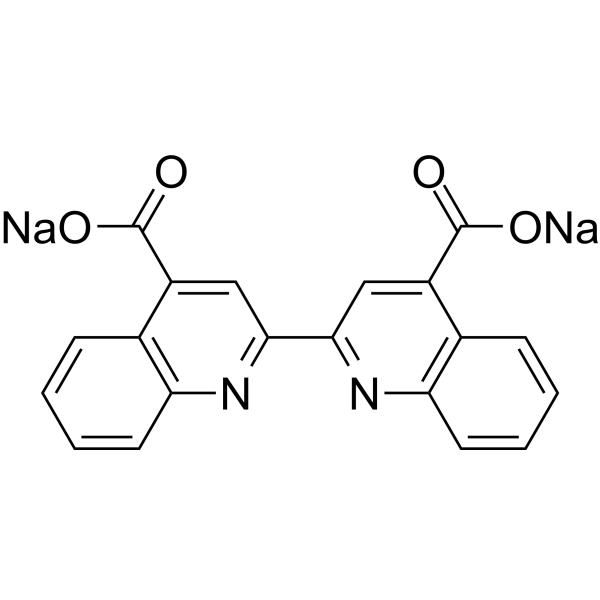
Synonyms: Disodium bicinchoninate
Research Areas:  

Others

BCA is a chelating agent targeting Cu I. BCA forms a water-soluble complex with Cu I at a 2:1 stoichiometric ratio, which not only inhibits its oxidation and disproportionation reactions, but also mediates the Cu I-catalyzed azide-alkyne cycloaddition click chemistry reaction to achieve bioconjugation of fluorophores or biotin with functionalized proteins. BCA chelates Cu + from proteins that reduce Cu 2+, forming a purple compound detectable by colorimetry, and thus is used to determine the total protein concentration in solution. BCA is a potential small-molecule candidate for AHAS inhibitors .
loading...
    loading...
8
8 Publications Verification
Cat. No.: HY-W004599
CAS No.: 1245-13-2
Research Areas:  

Others

Bicinchoninic acid is a chelating agent targeting Cu I. Bicinchoninic acid forms a water-soluble complex with Cu I at a 2:1 stoichiometric ratio, which not only inhibits its oxidation and disproportionation reactions, but also mediates the Cu I-catalyzed azide-alkyne cycloaddition click chemistry reaction to achieve bioconjugation of fluorophores or biotin with functionalized proteins. Bicinchoninic acid chelates Cu + from proteins that reduce Cu 2+, forming a purple compound detectable by colorimetry, and thus is used to determine the total protein concentration in solution. Bicinchoninic acid is a potential small-molecule candidate for AHAS inhibitors .
loading...
    loading...
8
8 Publications Verification
Cat. No.: HY-15908A
CAS No.: 63451-34-3
Research Areas:  

Others

Dipotassium [2,2'-biquinoline]-4,4'-dicarboxylate is a chelating agent targeting Cu I. Dipotassium [2,2'-biquinoline]-4,4'-dicarboxylate forms a water-soluble complex with Cu I at a 2:1 stoichiometric ratio, which not only inhibits its oxidation and disproportionation reactions, but also mediates the Cu I-catalyzed azide-alkyne cycloaddition click chemistry reaction to achieve bioconjugation of fluorophores or biotin with functionalized proteins. Dipotassium [2,2'-biquinoline]-4,4'-dicarboxylate chelates Cu + from proteins that reduce Cu 2+, forming a purple compound detectable by colorimetry, and thus is used to determine the total protein concentration in solution. Dipotassium [2,2'-biquinoline]-4,4'-dicarboxylate is a potential small-molecule candidate for AHAS inhibitors .
loading...
    loading...
Cat. No.: HY-155881
CAS No.: 80506-64-5
Purity:  ≥98.0%
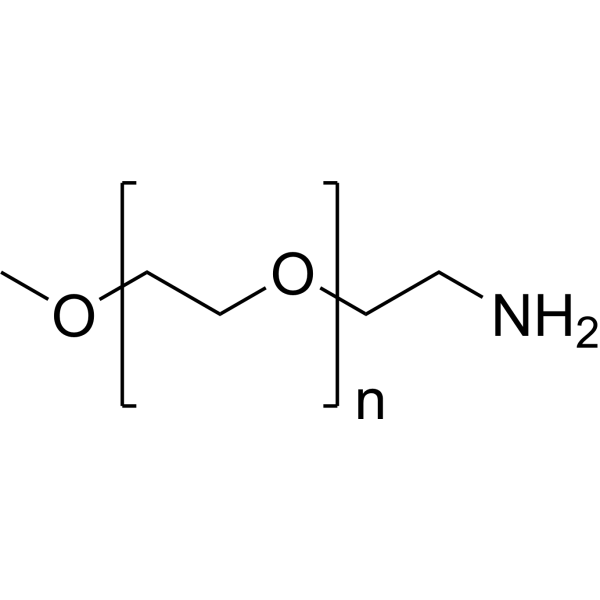
Synonyms: mPEG550-NH2
mPEG550-amine (mPEG550-NH2) is a class of functionalized polymers composed of a methoxy-terminated polyethylene glycol backbone and a terminal primary amine group. mPEG550-amine serves as an important intermediate for constructing functionalized nanocarriers, modifying proteins or polypeptides, and developing novel drug delivery systems.
loading...
    loading...
Cat. No.: HY-W588704
CAS No.: 54447-68-6
Research Areas:  

Others

4-Azidobutyric acid is a click chemistry reagent featuring azide and carboxylic acid moieties. The carboxylic acid group can conjugate with alcohols or amides, while the azide group serves as a click chemistry handle to react with terminal alkynes or strained cyclooctynes. 4-Azidobutyric acid also acts as a PROTAC linker for the synthesis of PROTACs .
loading...
    loading...
Cat. No.: HY-151655
CAS No.: 118162-45-1
Purity:  99.35%
Target:  

ADC Linkers

Research Areas:  

Others

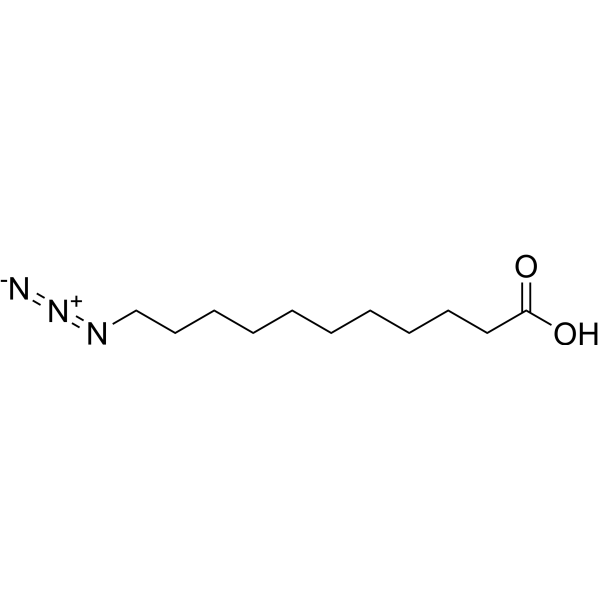
11-Azidoundecanoic acid is a click chemistry reagent containing an azide group. 11-Azidoundecanoic acid acts as a hydrophobic bioconjugation linker that can be further modified at the azido-position using Staudinger ligation or Click-chemistry. 11-Azidoundecanoic acid is substrate of lipoic acid ligase (LpIA) for labeling . 11-Azidoundecanoic acid is a click chemistry reagent, it contains an Azide group and can undergo copper-catalyzed azide-alkyne cycloaddition reaction (CuAAc) with molecules containing Alkyne groups. It can also undergo strain-promoted alkyne-azide cycloaddition (SPAAC) reactions with molecules containing DBCO or BCN groups.
loading...
    loading...
Cat. No.: HY-W190824
CAS No.: 2363756-34-5
Research Areas:  

Others

Biotin-PEG8-azide is a bioconjugation reagent. Biotin-PEG8-azide consists of biotin, PEG8 linker and azide group and serves as a modifying linker in click reactions. Biotin-PEG8-azide can be used for research related to click chemistry .
loading...
    loading...
Cat. No.: HY-W879048
CAS No.: 2924872-84-2
Research Areas:  

Others

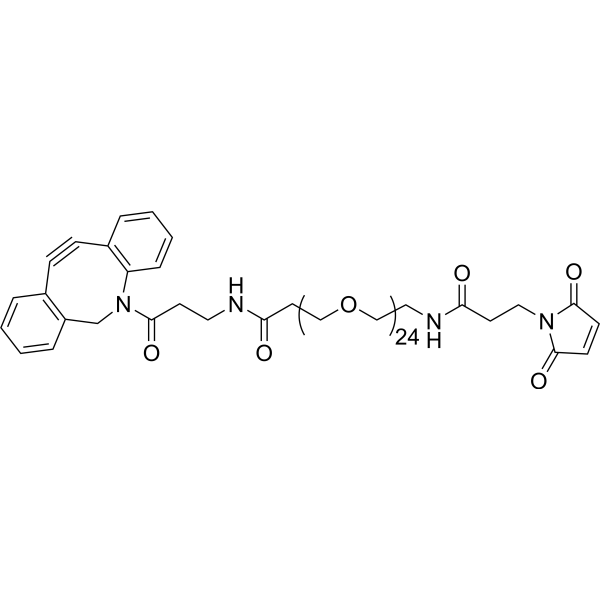
DBCO-PEG24-Maleimide is a bioconjugation reagent. DBCO-PEG24-Maleimide contains a DBCO group, a maleimide group, and a PEG segment with 24 repeating units. DBCO-PEG24-Maleimide mediates strain-promoted azide-alkyne cycloaddition and maleimide-thiol conjugation reactions, thereby conjugating SpCas9 variants to DN1S and IPP2 protein domains .
loading...
    loading...
Cat. No.: HY-151761
CAS No.: 2084913-49-3
Purity:  99.69%
Research Areas:  

Others

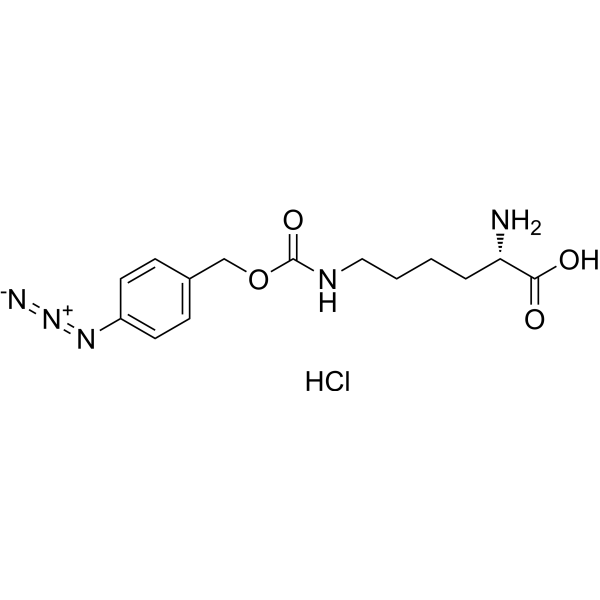
H-L-Lys (4-N3-Z)-OH hydrochloride is an unnatural lysine analog and a substrate of the PABKRS mutant PylRS. H-L-Lys (4-N3-Z)-OH hydrochloride enables site-specific genetic integration into proteins via amber stop codon suppression; it undergoes Staudinger reduction with phosphine compounds, followed by a self-elimination reaction to release native lysine. H-L-Lys (4-N3-Z)-OH hydrochloride serves as a genetically encoded element for the temporal chemical control of protein SUMOylation and nuclear translocation in living mammalian cells, and also acts as a bioorthogonal reaction handle for bioconjugation reactions .
loading...
    loading...
Cat. No.: HY-160841
CAS No.: 2567941-52-8
Research Areas:  

Others

Biotin-16-dCTP is a biotinylated deoxycytidine triphosphate that serves as an important DNA labeling substrate. Biotin-16-dCTP can be enzymatically incorporated into the 3' end of DNA probes via terminal deoxynucleotidyl transferase, forming a 1-3 nucleotide-long tail to achieve biotinylation of the probes. Biotin-16-dCTP enhances chemiluminescent detection of low-abundance targets such as specific tRNA isoacceptors through Northern blotting. Biotin-16-dCTP can also replace conventional dCTP to be integrated into single-stranded DNA generated by asymmetric polymerase chain reaction, which is applicable for bioconjugation or pull-down assays. Repeated freeze-thaw cycles of Biotin-16-dCTP should be avoided to prevent degradation of its function for probe biotinylation .
loading...
    loading...
Cat. No.: HY-W190755
CAS No.: 87135-00-0
Mal-PEG4-Mal is a PEG derivative with maleimide groups at both ends. Maleimide is a functional group that can undergo Michael addition reactions with sulfhydryl groups (–SH) and can be used for bioconjugation .
loading...
    loading...
Cat. No.: HY-118112
CAS No.: 64191-06-6
Research Areas:  

Others

4-N-Maleimidobenzoicacid-NHS is a PEG linker that finds utility in bioconjugation endeavors and protein labeling ventures. Specifically designed for selective reaction with thiol groups, the maleimide group establishes covalent linkages, thereby facilitating the coupling of proteins, peptides, or diverse molecules to thiol-bearing biomolecules. The NHS ester is able to react specifically and efficiently with primary amines (e.g. the side chain of lysine residues or aminosilane-coated surfaces) at neutral or slightly basic conditions to form a covalent bond.
loading...
    loading...
Cat. No.: HY-154835
CAS No.: 1513855-74-7
Research Areas:  

Others

N6-[[(4-Azidophenyl)methoxy]carbonyl]-L-lysine is an unnatural lysine analog and a substrate of the PABKRS mutant PylRS. N6-[[(4-Azidophenyl)methoxy]carbonyl]-L-lysine enables site-specific genetic integration into proteins via amber stop codon suppression; it undergoes Staudinger reduction with phosphine compounds, followed by a self-elimination reaction to release native lysine. N6-[[(4-Azidophenyl)methoxy]carbonyl]-L-lysine serves as a genetically encoded element for the temporal chemical control of protein SUMOylation and nuclear translocation in living mammalian cells, and also acts as a bioorthogonal reaction handle for bioconjugation reactions .
loading...
    loading...
Cat. No.: HY-W190746
CAS No.: 123687-40-1
Mal-PEG1-Mal is a PEG derivative with maleimide groups at both ends. Maleimide is a functional group that can undergo Michael addition reactions with sulfhydryl groups (–SH) and can be used for bioconjugation .
loading...
    loading...
Cat. No.: HY-W440904
Research Areas:  

Others

DSPE-PEG1000-Vinylsulfone is a viniyl sulfone PEG lipid which can be used for bioconjugation with cysteine or other thiol molecule through thiol-ene reaction. The polymer is a self-assembling reagetn which forms lipid bilayer in water and can be used as drug carrier to delivery therapeutic agents, such as mRNA or DNA vaccine.
loading...
    loading...
Cat. No.: HY-W440905
Research Areas:  

Others

DSPE-PEG2000-Vinylsulfone is a viniyl sulfone PEG lipid which can be used for bioconjugation with cysteine or other thiol molecule through thiol-ene reaction. The polymer is a self-assembling reagetn which forms lipid bilayer in water and can be used as drug carrier to delivery therapeutic agents, such as mRNA or DNA vaccine.
loading...
    loading...
Cat. No.: HY-W440907
Research Areas:  

Others

DSPE-PEG5000-Vinylsulfone is a viniyl sulfone PEG lipid which can be used for bioconjugation with cysteine or other thiol molecule through thiol-ene reaction. The polymer is a self-assembling reagetn which forms lipid bilayer in water and can be used as drug carrier to delivery therapeutic agents, such as mRNA or DNA vaccine.
loading...
    loading...
Cat. No.: HY-D3501
Research Areas:  

Others

5-FAM BCN is a reactive fluorophore-labeled strained alkyne probe and bicyclononyne. 5-FAM BCN undergoes inverse-electron-demand Diels-Alder cycloaddition with five-membered cyclic dienes. 5-FAM BCN facilitates bioorthogonal bioconjugation reactions .
loading...
    loading...
Cat. No.: HY-D3345
AMCA azide is a derivative of AMCA containing an azide group, used in click chemistry reactions (CuAAC). AMCA azide is suitable for click chemistry-based bioconjugation (Ex/Em = 347/444 nm).
loading...
    loading...
Cat. No.: HY-174941
Mal-PEG18-acid is a PEG derivative modified with maleimide groups. Maleimide is a functional group that can undergo Michael addition reaction with sulfhydryl (–SH) groups and can be used for bioconjugation.
loading...
    loading...