

50 Results for "

biomedical applications

" in MedChemExpress (MCE) Product Catalog:
Products (50)

50 Results for "biomedical applications" in MCE Product Catalog:

31
31 Cited Publications
Cat. No.: HY-W018746
CAS No.: 139-33-3
Synonyms: Ethylenediaminetetraacetic acid disodium
EDTA disodium salt, also known as ethylenediaminetetraacetic acid disodium, belongs to the chelating agent category, which is formed by chelating a central metal ion with four carboxylate groups and two amine groups. This compound, with its ability to bind and chelate metal ions such as calcium, magnesium and iron, is commonly used in a variety of applications, including industrial, medical and research settings. It is used as a preservative in food and beverage, as a stabilizer in medicine, as a chelating agent in water treatment, and as a reagent in biochemical and biomedical research. In addition, EDTA disodium salt has been studied for potential research effects such as improving heavy metal poisoning and cardiovascular disease.
loading...
    loading...
1
1 Cited Publications
Cat. No.: HY-P2738
CAS No.: 9007-34-5
Collagen, Type I, from bovine achilles tendon are extracellular matrix proteins and show many applications in food, cosmetic, pharmaceutical and biomedical industries. This product is enzymatically hydrolyzed collagen peptide .
loading...
    loading...
Cat. No.: HY-19204
CAS No.: 14320-04-8
Synonyms: ZnPc
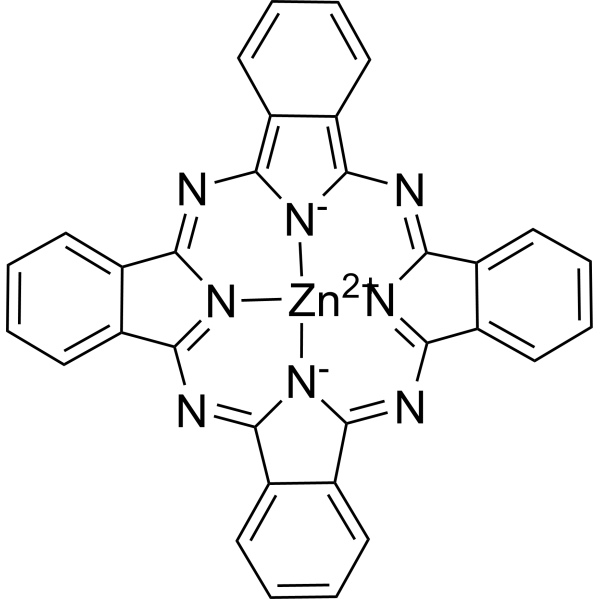
Zinc phthalocyanine (ZnPc) is commonly applied in industry (catalysts, photoconductors) and biomedical (photodynamic therapy, PDT). Zinc phthalocyanine can be used to photooxidise cyclohexane and is promising for research of solar-cell applications .
loading...
    loading...
Cat. No.: HY-W243303M
CAS No.: 9003-01-4
Poly(acrylic acid) (MW 100000) (35% in water) is a polyacrylic acid with a molecular weight of 100000 (an anionic polymer), which can be used as a corrosion inhibitor and surface stabilizer. Poly(acrylic acid) (MW 100000) can be used for biomedical applications, such as drug delivery .
loading...
    loading...
Cat. No.: HY-B2221C
CAS No.: 9000-11-7
Synonyms: Carboxymethyl cellulose CM-32; CM-32
CM Cellulose CM-32 (Carboxymethyl cellulose) is a cellulose derivative. CM Cellulose CM-32 has a wide range of applications in the biomedical field, including tissue engineering, wound dressing, absorbent nonwovens, fabrication of 3D-scaffolds for biocompatible implants, artificial organs or mimics of extracellular polymeric matrix and diagnosis of various diseases. CM Cellulose CM-32 can decrease osteoclasts formation. CM Cellulose CM-32 can be used as a biological material or organic compound for life science related research .
loading...
    loading...
Cat. No.: HY-W011696
CAS No.: 112-90-3
Synonyms: cis-1-Amino-9-octadecene, 80-90%
Oleylamine, 80-90% (cis-1-Amino-9-octadecene, 80-90%) is a multifunctional reagent used for metal ion coordination and nanoparticle surface modification, and acts as a solvent, surfactant and reducing agent in the synthesis of metal oxide nanoparticles. Oleylamine, 80-90% regulates nanoparticle morphology, magnetization intensity and water proton relaxation rate via thiol-ene "click" reaction, and enhances the colloidal stability of nanoparticles in organic reagents. Oleylamine, 80-90% is mainly used in research and applications in fields such as nanomaterial synthesis, biomedical imaging (MRI contrast agents, fluorescent probes), cancer cell targeting and drug delivery .
loading...
    loading...
Cat. No.: HY-112531B
CAS No.: 25249-16-5
Research Areas:  

Others

Poly(2-hydroxyethyl methacrylate) (Mv 300000) is a biocompatible, optically transparent, hydrophilic, and non-degradable polymer with excellent cytocompatibility, eliciting a minimal immunological response from host tissue. Poly(2-hydroxyethyl methacrylate) (Mv 300000) can be used for different biomedical applications, such as bone tissue regeneration, wound dressings and drug delivery .
loading...
    loading...
Cat. No.: HY-W115727B
CAS No.: 9003-05-8
Synonyms: PAM,Anion,Mw 18 million
Polyacrylamide,Anion,Mw 18 million (PAM,Anion,Mw 18 million) is a multifunctional high molecular weight anionic polyacrylamide copolymer. The anionic properties of Polyacrylamide,Anion,Mw 18 million enable it to be used as a flocculant to achieve charge neutralization and aggregation, while its high molecular weight properties provide viscoelastic properties for fluid applications. Polyacrylamide series materials can maintain enzyme activity in enzyme immobilization, act as drug carriers to achieve controlled release, serve as smart materials responding to temperature/pH stimuli, and be used for in vitro toxin adsorption and soft tissue filling through mechanisms such as physical entrapment, covalent binding or chemical crosslinking. Polyacrylamide finds applications in biomedical engineering, environmental management and industrial applications .
loading...
    loading...
Cat. No.: HY-W115727E
CAS No.: 9003-05-8
Synonyms: PAM,average Mn 150000
Polyacrylamide, average Mn 150000 (PAM, average Mn 150000) is a versatile, high-molecular-weight polyacrylamide copolymer. Polyacrylamide series materials can maintain enzyme activity in enzyme immobilization, act as drug carriers to achieve controlled release, serve as smart materials responding to temperature/pH stimuli, and be used for in vitro toxin adsorption and soft tissue filling through mechanisms such as physical entrapment, covalent binding or chemical crosslinking. Polyacrylamide finds applications in biomedical engineering, environmental management and industrial applications .
loading...
    loading...
Cat. No.: HY-104035H
CAS No.: 63148-62-9
Synonyms: Poly(dimethylsiloxane) (PDMS), viscosity 10 cSt (25 °C); Dimethylsilcone fluid, viscosity 10 cSt (25 °C)
Dimethyl silicone oil, viscosity 10 cSt (25 °C) (Poly(dimethylsiloxane) (PDMS), viscosity 10 cSt (25 °C); Dimethylsilcone fluid, viscosity 10 cSt (25 °C)) is a low-viscosity polydimethylsiloxane fluid with high thermal stability. Dimethyl silicone oil, viscosity 10 cSt (25 °C) can be used as a laboratory bath solution, calibration solution, defoamer, and also has applications in the biomedical field, such as as an intraocular solution.
loading...
    loading...
Cat. No.: HY-W115727A
CAS No.: 9003-05-8
Synonyms: PAM,Anion,Mw 14-16 million
Polyacrylamide, Anion, Mw 14-16 million is a multifunctional high molecular weight anionic polyacrylamide copolymer. The anionic properties of Polyacrylamide, Anion, Mw 14-16 million enable it to be used as a flocculant to achieve charge neutralization and aggregation, while its high molecular weight properties provide viscoelastic properties for fluid applications. Polyacrylamide series materials can maintain enzyme activity in enzyme immobilization, achieve controlled release as a drug carrier, respond to temperature/pH stimulation as a smart material, and can also be used for in vitro toxin adsorption and soft tissue filling through mechanisms such as physical embedding, covalent bonding or chemical cross-linking. Polyacrylamide can be used in biomedical engineering, environmental management and industrial applications .
loading...
    loading...
Cat. No.: HY-W115727D
CAS No.: 9003-05-8
Synonyms: PAM,average Mn 40000
Polyacrylamide (PAM), average Mn 40000 is a versatile, high-molecular-weight polyacrylamide copolymer. Polyacrylamide series materials can maintain enzyme activity in enzyme immobilization, act as drug carriers to achieve controlled release, serve as smart materials responding to temperature/pH stimuli, and be used for in vitro toxin adsorption and soft tissue filling through mechanisms such as physical entrapment, covalent binding or chemical crosslinking. Polyacrylamide finds applications in biomedical engineering, environmental management and industrial applications .
loading...
    loading...
Cat. No.: HY-W115727C
CAS No.: 9003-05-8
Synonyms: Acrylamide polymer,Nonionic,Mw 5-6 million
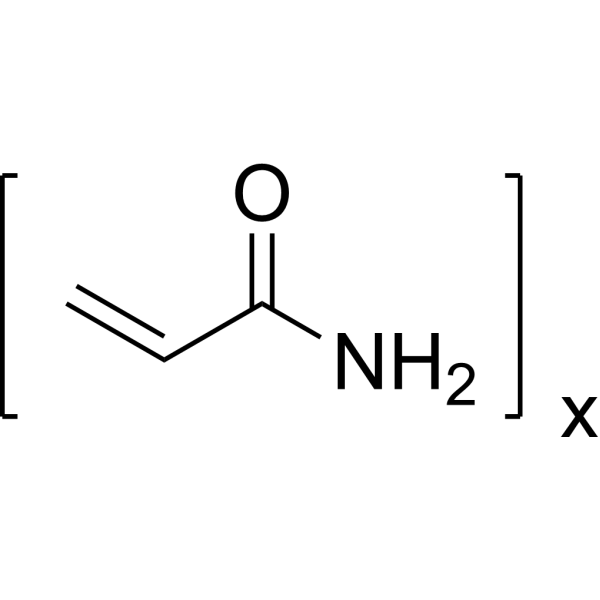
Polyacrylamide (Acrylamide polymer),Nonionic,Mw 5-6 million is a multifunctional, high-molecular-weight nonionic polyacrylamide copolymer. Polyacrylamide-based materials can maintain enzyme activity in enzyme immobilization, act as drug carriers for controlled release, function as smart materials responsive to temperature/pH stimuli, and be applied in in vitro toxin adsorption and soft tissue filling, through action mechanisms such as physical entrapment, covalent binding or chemical crosslinking. Polyacrylamide finds applications in biomedical engineering, environmental management and industrial applications .
loading...
    loading...
Cat. No.: HY-W010695
CAS No.: 35602-69-8
Research Areas:  

Others

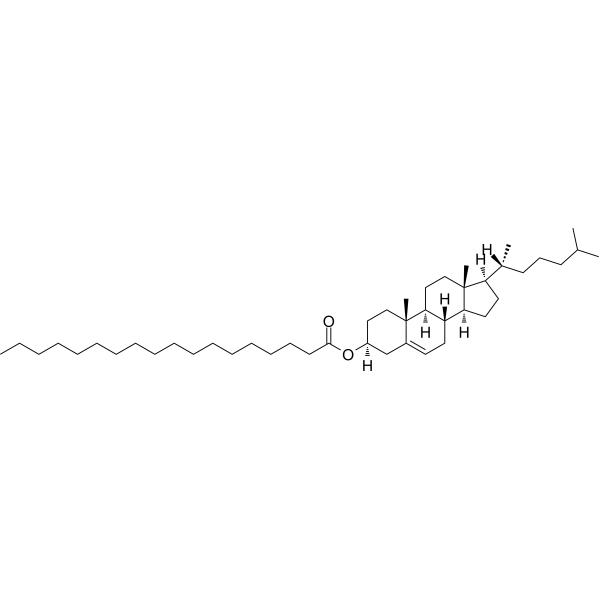
Cholesteryl stearate is a compound belonging to the class of esters. It is a cholesterol ester commonly found in animal and plant sources. Cholesteryl stearate consists of two naturally occurring substances, cholesteryl alcohol and stearic acid. The combination of the two creates a stable compound that is commonly used in a variety of industrial and biomedical applications. Cholesteryl stearate is commonly used as a lubricant, thickener and emollient in cosmetic formulations such as lotions and creams. It is also used to produce certain types of polymers and plastics.
loading...
    loading...
Cat. No.: HY-W017232
CAS No.: 5263-87-6
Synonyms: p-Quinanisole
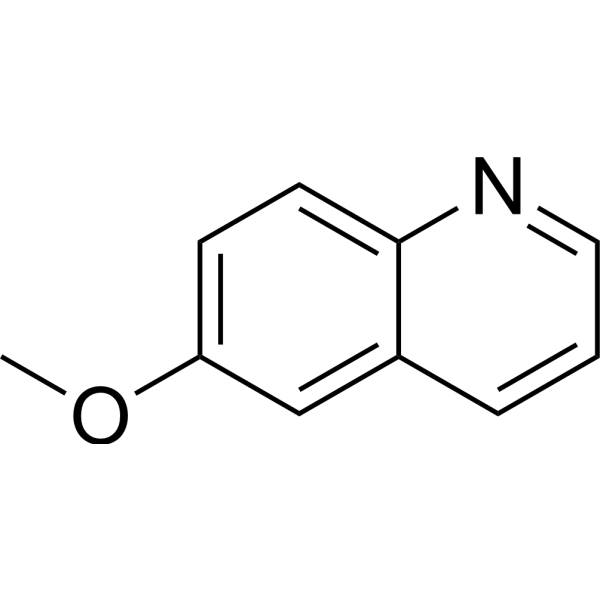
6-Methoxyquinoline consists of a quinoline ring system with a methoxy group attached to the sixth carbon atom. This compound occurs naturally in certain plants, such as tobacco and tea, and has been shown to have biological activities, including antioxidant, anti-inflammatory and antitumor properties. Furthermore, 6-Methoxyquinoline can be used as a building block for the synthesis of other organic compounds, especially those with potential pharmaceutical applications. Due to its ability to bind nucleic acids and proteins, it can also be used as a fluorescent probe in biochemical and biomedical research.
loading...
    loading...
Cat. No.: HY-W391506
CAS No.: 9011-14-7
Synonyms: Poly(methyl methacrylate), beads; PMMA
Research Areas:  

Others

Poly (methyl methacrylate) (Poly(methyl methacrylate), beads; PMMA) is an amorphous glassy acrylic thermoplastic polymer belonging to the acrylate family, synthesized from methyl methacrylate monomers. Poly (methyl methacrylate) drives biochemical processes including free volume expansion induced by inelastic deformation, yield stress and strain softening regulated by physical aging, acid hydrolysis to polymethacrylic acid, multi-stage combustion, oxygen-dependent thermal decomposition, primary amine-mediated polypentanimide formation, and grafting/crosslinking-based copolymer and composite formation. Poly (methyl methacrylate) exhibits histocompatibility, low toxicity, low inflammatory potential, and fracture resistance; it can form functional blends and composites for biomedical and dental applications; it also allows performance-enhancing chemical and mechanical modifications. Poly (methyl methacrylate) is applicable to studies related to cranial repair .
loading...
    loading...
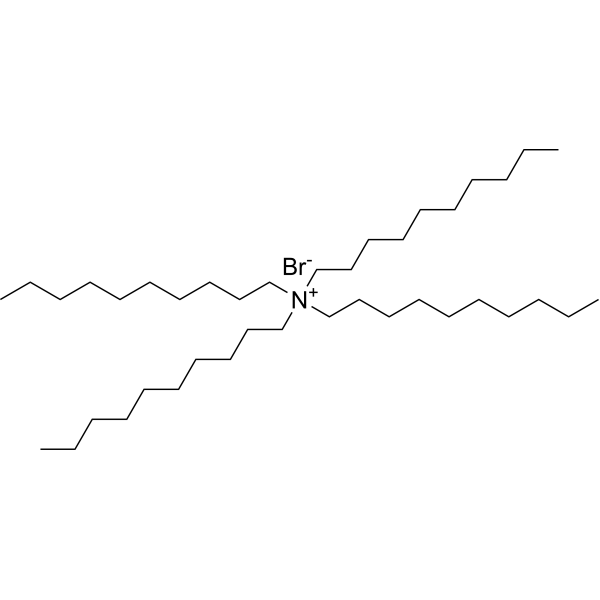
Cat. No.: HY-W013076
CAS No.: 14937-42-9
Synonyms: tetra(decyl)ammonium bromide
Tetrakis(decyl)ammonium bromide is a compound belonging to the class of quaternary ammonium compounds. It is a salt with cationic properties and is used in various industrial and biomedical applications. Tetrakis(decyl)ammonium bromide is commonly used as an emulsifier, solubilizer and antimicrobial agent in personal care products, cleansers and pharmaceutical formulations. It is also used as a phase transfer catalyst in organic synthesis reactions, facilitating the movement of reactants between immiscible phases.
loading...
    loading...
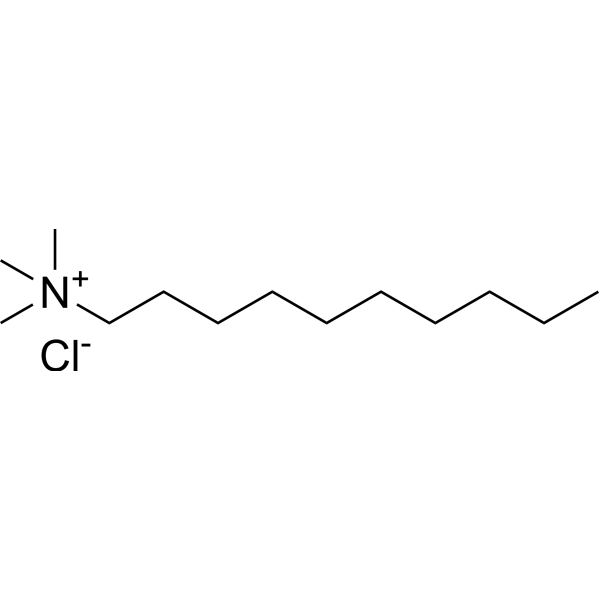
Cat. No.: HY-W012167
CAS No.: 10108-87-9
N,N,N-Trimethyldecan-1-aminium chloride is a compound belonging to the class of quaternary ammonium compounds. It is a salt with cationic properties and thus useful in various industrial and biomedical applications. Decyltrimethylammonium chloride is commonly used as a surfactant, emulsifier and disinfectant in personal care products, detergents, textiles and pharmaceutical formulations. It is also used as a phase transfer catalyst in organic synthesis reactions, which involves facilitating the movement of reactants between immiscible phases.
loading...
    loading...
Cat. No.: HY-W018746R
CAS No.: 139-33-3
Synonyms: Ethylenediaminetetraacetic acid disodium (Standard)
EDTA (disodium) (Standard) is the analytical standard of EDTA (disodium). This product is intended for research and analytical applications. EDTA disodium salt, also known as ethylenediaminetetraacetic acid disodium, belongs to the chelating agent category, which is formed by chelating a central metal ion with four carboxylate groups and two amine groups. This compound, with its ability to bind and chelate metal ions such as calcium, magnesium and iron, is commonly used in a variety of applications, including industrial, medical and research settings. It is used as a preservative in food and beverage, as a stabilizer in medicine, as a chelating agent in water treatment, and as a reagent in biochemical and biomedical research. In addition, EDTA disodium salt has been studied for potential research effects such as improving heavy metal poisoning and cardiovascular disease.
loading...
    loading...
Cat. No.: HY-116282H
CAS No.: 9011-18-1
Synonyms: DSS (MW 9000-20000); DXS (MW 9000-20000)
Dextran sulfate sodium salt (DSS) (MW 9000-20000) is a polymer of dehydrated glucose with a molecular weight of approximately 9000-20000. Dextran sulfate sodium salt with different molecular weights exhibits different biological activities. Dextran sulfate sodium salt (MW 9000-20000) is a biocompatible and biodegradable biochemical reagent and can be used for pharmaceutical and biomedical applications .
loading...
    loading...

