

19 Results for "

cAMP hydrolysis

" in MedChemExpress (MCE) Product Catalog:
Products (19)

19 Results for "cAMP hydrolysis" in MCE Product Catalog:

7
7 Publications Verification
Cat. No.: HY-100530D
CAS No.: 142439-94-9
Purity:  99.69%
Target:  

PKA

Research Areas:  

Neurological Disease

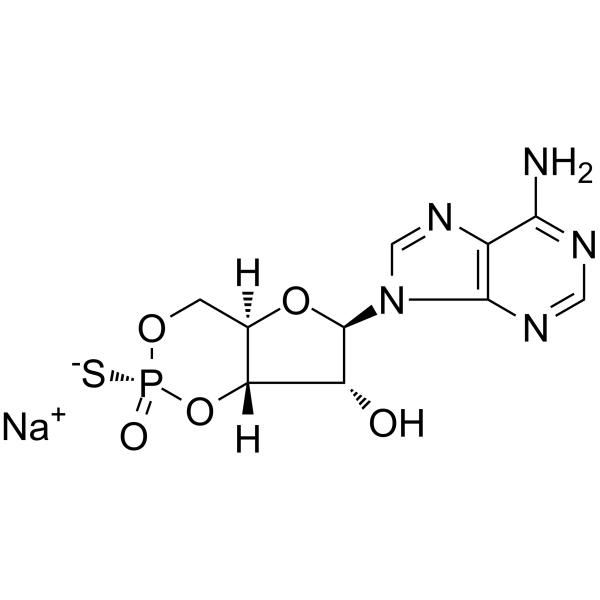
Rp-cAMPS sodium salt, a cAMP analog, is a potent, competitive cAMP-induced activation of cAMP-dependent PKA I and II (Kis of 12.5 µM and 4.5 µM, respectively) antagonist. Rp-cAMPS sodium salt is resistant to hydrolysis by phosphodiesterases .
loading...
    loading...
7
7 Publications Verification
Cat. No.: HY-100530
CAS No.: 151837-09-1
Purity:  99.53%
Target:  

PKA

Research Areas:  

Neurological Disease

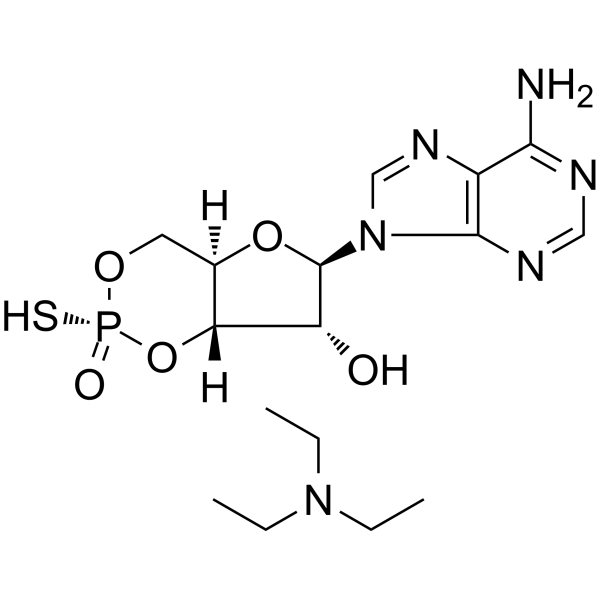
Rp-cAMPS triethylammonium salt, a cAMP analog, is a potent, competitive cAMP-induced activation of cAMP-dependent PKA I and II (Kis of 12.5 µM and 4.5 µM, respectively) antagonist. Rp-cAMPS triethylammonium salt is resistant to hydrolysis by phosphodiesterases .
loading...
    loading...
1
1 Cited Publications
Cat. No.: HY-P2878
CAS No.: 9025-82-5
Synonyms: PDE
Research Areas:  

Neurological Disease Cancer

Phosphodiesterase I (PDE) is an enzyme that can catalyze the hydrolysis of the 3' ring phosphate bond of cyclic nucleotides, and is often used in biochemical research. Phosphodiesterase I acts as an important regulator of signal transduction mediated by the second messenger molecules cAMP and cGMP. According to their specificity to cyclic nucleotides, they can also be divided into different types, such as PDE1-PDE11, which also have certain potential in various diseases .
loading...
    loading...
Cat. No.: HY-P5275
CAS No.: 1093241-16-7
Synonyms: CG-Lipoxyn
Research Areas:  

Metabolic Disease

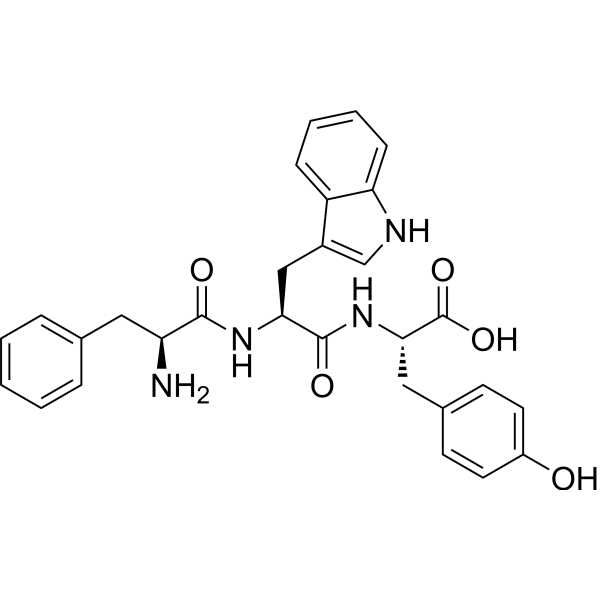
Tripeptide-41 (CG-Lipoxyn) is a signal peptide. Tripeptide-41 activates the NF-kB signaling pathway, inhibits the expression of C/EBP and increases cAMP. Tripeptide-41 is an important intracellular signaling factor that causes lipolysis by promoting the hydrolysis of lipids into triglycerides. Tripeptide-41 can be used in cosmetics that targets fat accumulation .
loading...
    loading...
Cat. No.: HY-100530A
CAS No.: 73208-40-9
Target:  

PKA

Research Areas:  

Neurological Disease

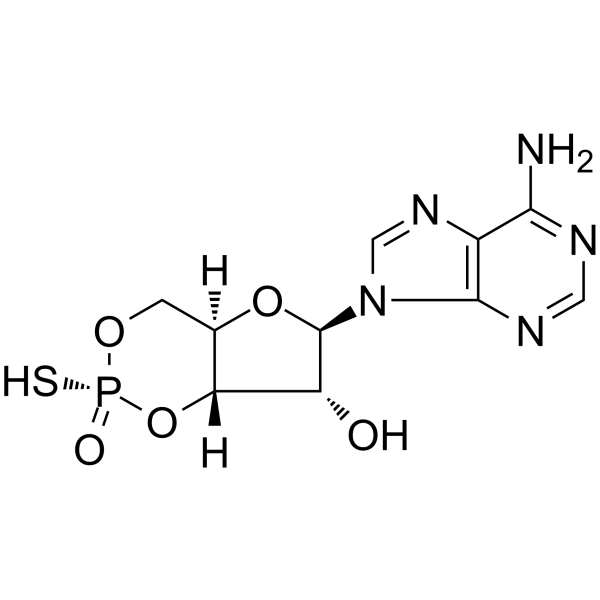
Rp-cAMPS, a cAMP analog, is a potent, competitive cAMP-induced activation of cAMP-dependent PKA I and II (Kis of 12.5 µM and 4.5 µM, respectively) antagonist. Rp-cAMPS is resistant to hydrolysis by phosphodiesterases .
loading...
    loading...
Cat. No.: HY-P2867
CAS No.: 9068-54-6
Synonyms: 3′-Exonuclease
Research Areas:  

Neurological Disease

Phosphodiesterase II (EC 3.1.16.1), namely phosphodiesterase 2, is mainly involved in the hydrolysis of the important second messengers cyclic adenosine monophosphate (cAMP) and cyclic guanosine monophosphate (cGMP), and is often used in biochemical research. Phosphodiesterase II is expressed in a variety of tissues, such as the adrenal medulla, brain, heart, platelets, macrophages and endothelial cells, and is involved in the regulation of many different intracellular processes .
loading...
    loading...
Cat. No.: HY-12813
CAS No.: 1516896-09-5
Purity:  99.44%
Research Areas:  

Neurological Disease Cancer

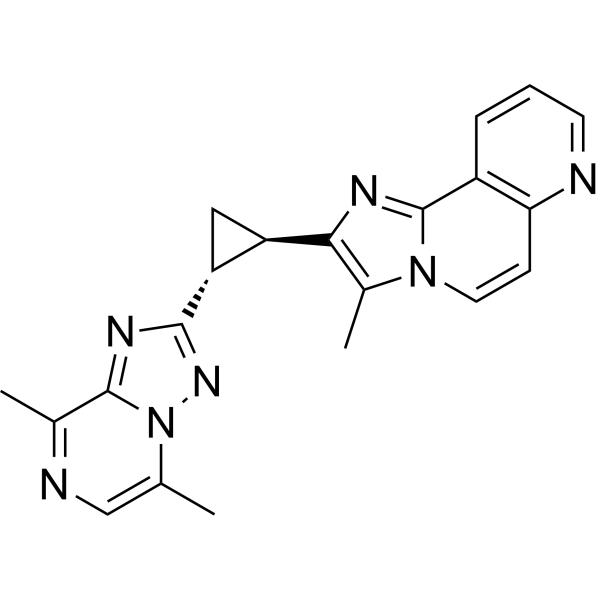
PDE10-IN-1 is a highly potent and selective phosphodiesterase 10A (PDE10A) inhibitor. PDE10-IN-1 regulates neuronal signaling by inhibiting PDE10A-mediated hydrolysis of cAMP/cGMP in the striatum. PDE10-IN-1 can be used in the research of central nervous system diseases, metabolic diseases, neurological disorders, psychosis, schizophrenia, obesity and diabetes .
loading...
    loading...
Cat. No.: HY-W700638A
CAS No.: 76166-55-7
Synonyms: AH 21-132
Research Areas:  

Inflammation/Immunology

Benafentrine maleate is a phosphodiesterase 3 (PDE3) and phosphodiesterase 4 (PDE4) inhibitor with bronchodilator activity. Benafentrine maleate has IC50 values of 1.74 μM and 1.76 μM for guinea pig platelet PDE3 and neutrophil PDE4, respectively. Benafentrine maleate can be used in research related to obstructive airway diseases .
loading...
    loading...
Cat. No.: HY-156434
CAS No.: 3027607-92-4
Research Areas:  

Neurological Disease

PDE11A4-IN-1 is a selective, cell-permeable inhibitor of phosphodiesterase 11A4 (PDE11A4) with an IC50 of 12 nM. PDE11A4-IN-1 inhibits PDE11A4-mediated hydrolysis of cyclic adenosine monophosphate (cAMP) and cyclic guanosine monophosphate (cGMP) to the same extent. PDE11A4-IN-1 can be used in the research of age-related cognitive decline .
loading...
    loading...
Cat. No.: HY-134283
CAS No.: 50655-17-9
Target:  

PKA Apoptosis

Research Areas:  

Others

8-Benzylthio-cAMP is a derivative of cyclic adenosine monophosphate (cAMP). 8-Bn-cAMP is a site-selective activator of cAMP-dependent protein kinases. Compared with cyclic adenosine monophosphate, it is more stable to phosphodiesterase (PDE) hydrolysis and has higher membrane permeability. 8-Bn-cAMP can be used to study the role of cAMP in regulating cell proliferation, differentiation and apoptosis .
loading...
    loading...
Cat. No.: HY-120684
CAS No.: 1207549-69-6
Research Areas:  

Others

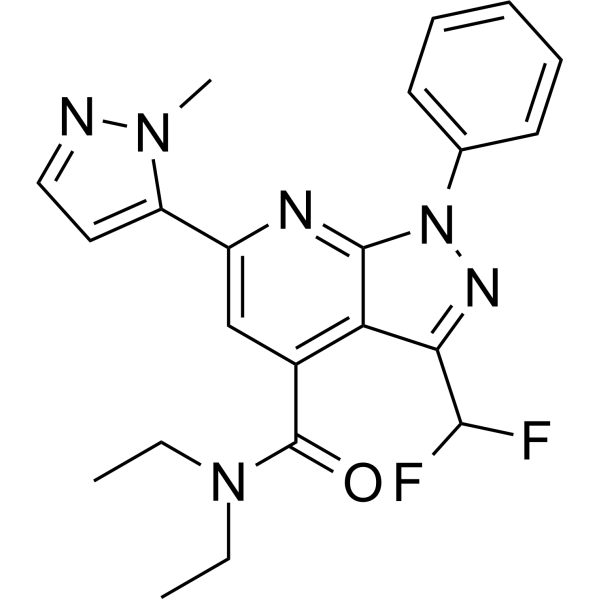
PDE10-IN-6 is a phosphodiesterase-10 inhibitor that inhibits the breakdown of cAMP and cGMP, thereby slowing or halting their hydrolysis.
loading...
    loading...
Cat. No.: HY-131764
CAS No.: 58329-72-9
Synonyms: 2′-O-Monobutyryl-cGMP sodium
Research Areas:  

Others

2'-O-MB-cGMP (2′-O-Monobutyryl-cGMP) sodium is a cyclic GMP-specific phosphodiesterase inhibitor with an I50 value of 35 µM. 2'-O-MB-cGMP (2′-O-Monobutyryl-cGMP) sodium inhibits Ca 2+ dependent phosphodiesterase hydrolysis using cAMP or cGMP as substrate .
loading...
    loading...
Cat. No.: HY-170431
CAS No.: 521298-46-4
Research Areas:  

Infection

SAL-0010042 is the inhibitor for Plasmodium phosphodiesterase β (PDEβ), that inhibits the hydrolysis of cAMP and cGMP (IC50=48.9 nM) in gametocytes, activates PKG, and inhibits the growth and development of Plasmodium (IC50 for 3D7 and Dd2 is 142 nM and 218 nM). SAL-0010042 inhibits hPDE5 and hPDE6 with IC50 of 632 nM and 73 nM .
loading...
    loading...
Cat. No.: HY-23133
CAS No.: 961-45-5
Target:  

Adenosine Receptor

Research Areas:  

Neurological Disease

8-Phenyltheophylline is an adenosine receptor (adenosine receptor) antagonist. 8-Phenyltheophylline blocks adenosine-stimulated cAMP accumulation, inhibits tissue-selective cAMP hydrolysis, and antagonizes the inhibitory effects of adenosine. 8-Phenyltheophylline enhances apomorphine-induced rotational behavior in lesioned rats, reverses the analgesic effect of morphine in the rat hot plate test, and slightly enhances contractile responses of the atrium and ileum. 8-Phenyltheophylline can be used in studies related to unilateral nigrostriatal pathway injury .
loading...
    loading...
Cat. No.: HY-187734
CAS No.: 7755-28-4
Research Areas:  

Others

AY 17605 is a nucleoside-3':5'-monophosphate phosphodiesterase (Phosphodiesterase) inhibitor that blocks cAMP hydrolysis through non-competitive inhibition, thereby elevating intracellular cAMP levels. AY 17605 can be used in studies related to cardiotonic activity .
loading...
    loading...
Cat. No.: HY-187591
CAS No.: 1158221-32-9
D-159404 is an orally active, blood-brain barrier-permeable, selective allosteric PDE4D inhibitor. It partially inhibits cAMP hydrolysis by binding to the UCR2 regulatory domain, elevates intracellular cAMP levels, and triggers calcium influx, thereby improving working memory and episodic memory consolidation. D-159404 is used in research on asthma, chronic obstructive pulmonary disease, and cognitive impairment .
loading...
    loading...
Cat. No.: HY-183455
CAS No.: 86798-59-6
CI-930 is a selective, orally active phosphodiesterase 3 (PDE3) inhibitor with an IC50 value of 0.0.84 μM. CI-930 exerts positive inotropic and vasodilatory effects by inhibiting cAMP hydrolysis. CI-930 also regulates hemodynamics, inhibits the proliferation of coronary artery smooth muscle cells, and suppresses the proliferation of mouse splenocytes. CI-930 can be used in research related to heart failure, atherosclerosis, and asthma .
loading...
    loading...
Cat. No.: HY-182638
CAS No.: 1829530-11-1
Synonyms: CPL500036
Alofropodect is an orally active, blood-brain barrier permeable phosphodiesterase 10A (PDE10A) inhibitor with IC50 values of 1 nM (Reference 1) and 35 nM (Reference 2). Alofropodect acts as a negative allosteric modulator of the M2 muscarinic receptor with an IC50 of 9.2 μM. Alofropodect alters cyclic nucleotide levels in basal ganglia circuits, inhibits the hydrolysis of cAMP and cGMP, and suppresses hERG potassium channel tail currents. Alofropodect induces catalepsy in rats and reverses injury-induced contralateral forelimb use impairment. Alofropodect can be used in research related to schizophrenia, Parkinson's disease, and levodopa-induced dyskinesia .
loading...
    loading...
Cat. No.: HY-W700638
CAS No.: 35135-01-4
Research Areas:  

Inflammation/Immunology

Benafentrine is a phosphodiesterase 3 (PDE3) and phosphodiesterase 4 (PDE4) inhibitor with bronchodilator activity. Benafentrine has IC50 values of 1.74 μM and 1.76 μM for guinea pig platelet PDE3 and neutrophil PDE4, respectively. Benafentrine can be used in research related to obstructive airway diseases .
loading...
    loading...
  • 1

