6 Results for "

central nervous system-related diseases

" in MedChemExpress (MCE) Product Catalog:
Products (6)

6 Results for "central nervous system-related diseases" in MCE Product Catalog:

2
2 Cited Publications
Cat. No.: HY-19667A
CAS No.: 2922280-85-9
Synonyms: DPC 333 formate
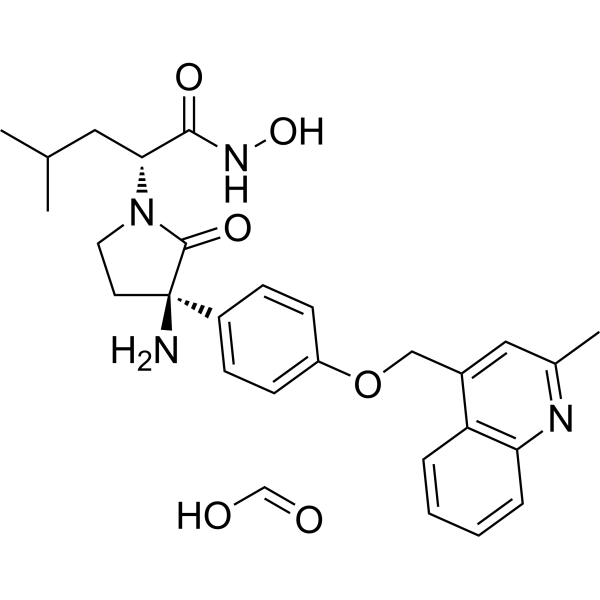
BMS-561392 formate (DPC 333 formate) is a selective ADAM17(TACE) inhibitor. BMS-561392 formate inhibits TNF-α secretion by regulating signaling pathways such as p44 MAPK and NF-κB. BMS-561392 formate also affects the survival of central nervous system-related cells including oligodendrocytes and microglia. BMS-561392 formate promotes microglial apoptosis, enlarges the injury area and exacerbates astrogliosis in a mouse spinal cord injury model. BMS-561392 formate can be used in research related to spinal cord injury and inflammatory diseases .
loading...
    loading...
Cat. No.: HY-19667
CAS No.: 611227-74-8
Synonyms: DPC 333
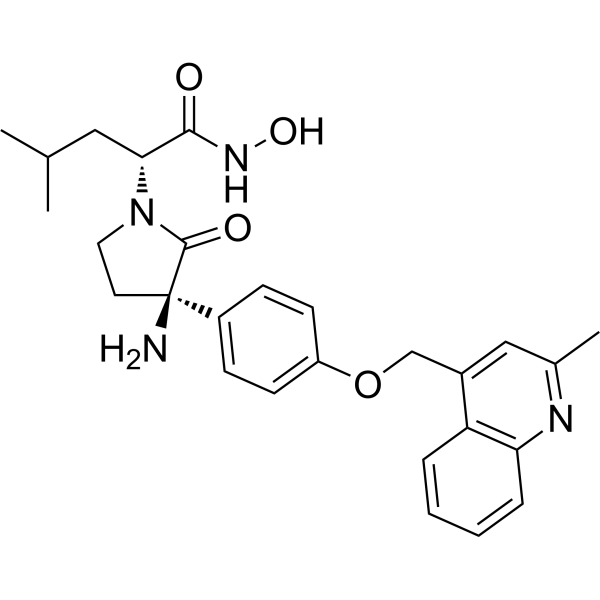
BMS-561392 (BMS-561392) is a selective ADAM17(TACE) inhibitor. BMS-561392 inhibits TNF-α secretion by regulating signaling pathways such as p44 MAPK and NF-κB. BMS-561392 also affects the survival of central nervous system-related cells including oligodendrocytes and microglia. BMS-561392 promotes microglial apoptosis, enlarges the injury area and exacerbates astrogliosis in a mouse spinal cord injury model. BMS-561392 can be used in research related to spinal cord injury and inflammatory diseases .
loading...
    loading...
Cat. No.: HY-174335
Target:  

Cannabinoid Receptor

Research Areas:  

Neurological Disease

UVI3502 is a cannabinoid receptor 1 (CB1) antagonist with an IC50 value of 4641 nM for CB1 and approximately 16200 nM for CB2. UVI3502 blocks Gi/o protein coupling induced by the agonist CP55,940. UVI3502 is promising for research of endocannabinoid system-related diseases in the central nervous system (such as cognitive impairment and neurodegenerative diseases) .
loading...
    loading...
Cat. No.: HY-103560
CAS No.: 334887-48-8
Target:  

mGluR

Research Areas:  

Neurological Disease

(S)-HexylHIBO is the S-enantiomer of HexylHIBO. HexylHIBO is a group I mGluR antagonist. HexylHIBO elevates the hypothalamus-pituitary-adrenal axis response to restraint in rats. HexylHIBO is promising for research of central nervous system-related diseases .
loading...
    loading...
Cat. No.: HY-159492
Target:  

5-HT Receptor

Research Areas:  

Neurological Disease

5-HT7 receptor ligand 2 (compound 32) is an arylpiperazinehydrazine ligand for 5-HT7R (Ki=178 nM). 5-HT7 receptor ligand 2 has good membrane permeability, low hepatotoxicity and cardiotoxicity, and high plasma protein binding. 5-HT7 receptor ligand 2 shows neuroprotective effects in SH-SY5Y cells and can be used for the study of central nervous system related diseases .
loading...
    loading...
Cat. No.: HY-L072
58 compounds

Exosomes are small membrane vesicles of endocytic origin that are secreted by most cells in culture. Exosomes contain nucleic acids, proteins, lipids, amino acids, and metabolites, etc. Their diverse constituents can reflect their cell of origin. Exosomes are associated with immune responses, viral pathogenicity, pregnancy, cardiovascular diseases, central nervous system-related diseases, and cancer progression. Proteins, metabolites, and nucleic acids delivered by exosomes into recipient cells effectively alter their biological response. Such exosome-mediated responses can be disease promoting or restraining.

The biology of exosomes in disease is still emerging, and the number of studies addressing their utility in the diagnosis and treatment of various pathologies has increased substantially. MCE supplies a unique collection of 58 compounds with the activity of inhibiting or stimulating exsomes secretion/biosynthesis. MCE Exosomes Compound Library is a useful tool for exsomes research.

