1. Search Result
Search Result
Results for "

copper-free click chemistry

" in MedChemExpress (MCE) Product Catalog:

70

Inhibitors & Agonists

1

Screening Libraries

15

Fluorescent Dyes

16

Biochemical Assay Reagents

4

Natural
Products

48

Click Chemistry

3

Oligonucleotides

Cat. No. Product Name Target Research Areas Chemical Structure
  • HY-130809
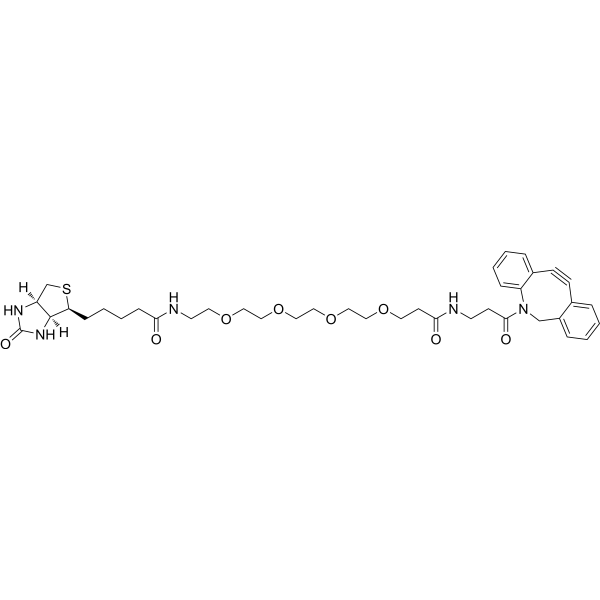
    DBCO-PEG4-Biotin
    4 Publications Verification

    Biochemical Assay Reagents Cancer
    DBCO-PEG4-Biotin is an azadibenzocyclooctyne-biotin derivative containing a biotin group and 4 PEGs. DBCO-PEG4-Biotin is a versatile biotinylation reagent used for the introduction of a biotin moiety to azide-labeled biomolecules via copper-free strain-promoted alkyne-azide click chemistry (SPAAC) reaction . DBCO-PEG4-Biotin is a click chemistry reagent, it contains a DBCO group that can undergo strain-promoted alkyne-azide cycloaddition (SPAAC) with molecules containing Azide groups.
    DBCO-PEG4-Biotin
  • HY-151835

    ADC Linker Others
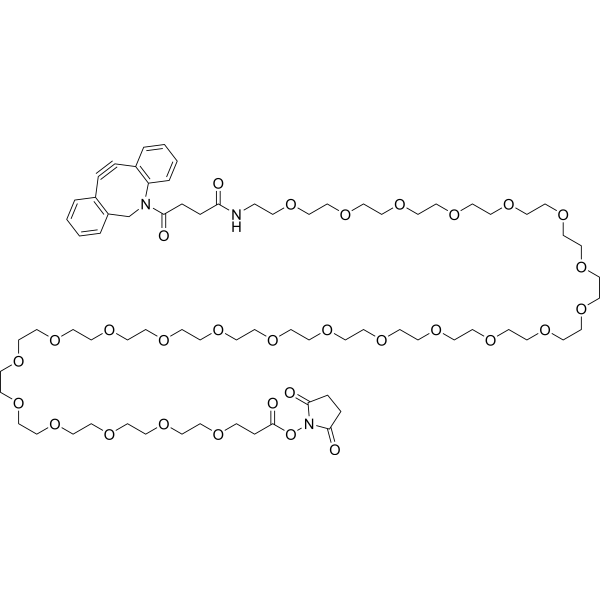
    DBCO-PEG24-NHS ester is a click chemistry reagent. DBCO-PEG24-NHS ester is a click chemistry PEG reagent containing NHS ester that is able to react specifically and efficiently with primary amines (e.g. the side chain of lysine residues or aminosilane-coated surfaces) at neutral or slightly basic condition to form a covalent bond. The hydrophilic PEG spacer arm improves water solubility and provides a long and flexible connection that minimizes steric hindrance involved with ligation. DBCO is commonly used for copper-free Click Chemistry reactions. Reagent grade, for research use only .
    DBCO-PEG24-NHS ester
  • HY-115524

    ADC Linker Cancer
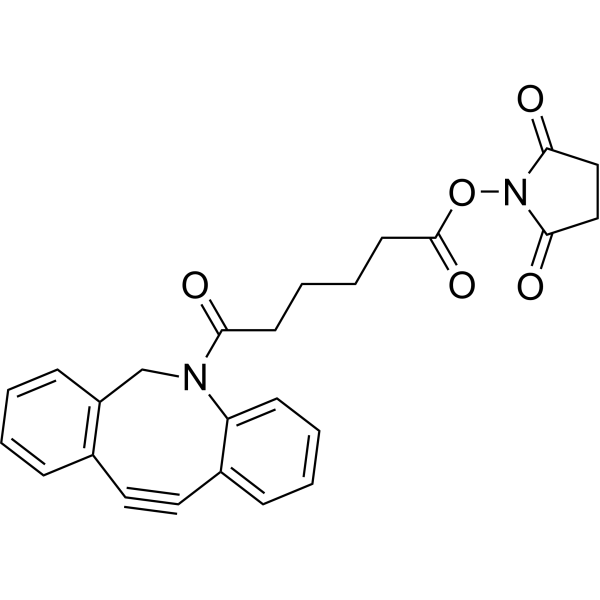
    DBCO-NHS ester 2 is a cleavable linker that is used for making antibody-drug conjugate (ADC). DBCO-NHS ester 2 is a derivative of Dibenzylcyclooctyne (DBCO) used in copper-free click chemistry[1]. DBCO-NHS ester 2 is a click chemistry reagent, it contains a DBCO group that can undergo strain-promoted alkyne-azide cycloaddition (SPAAC) with molecules containing Azide groups.
    DBCO-NHS ester 2
  • HY-151834

    ADC Linker Others
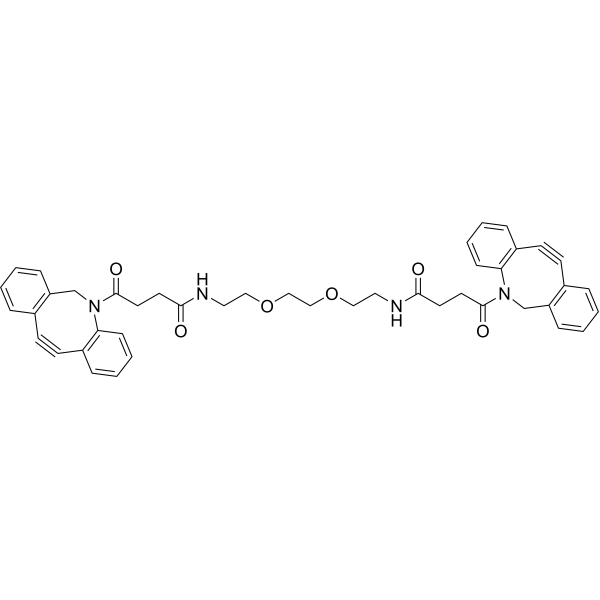
    DBCO-PEG2-DBCO is a click chemistry reagent containing a DBCO group. DBCO-PEG2-DBCO is a PEG linker containing two terminal DBCO groups. The DBCO groups is commonly used for copper-free Click Chemistry reactions due to its strain promoted high energy. T Reagent grade, for research use only .
    DBCO-PEG2-DBCO
  • HY-130086

    ADC Linker Cancer
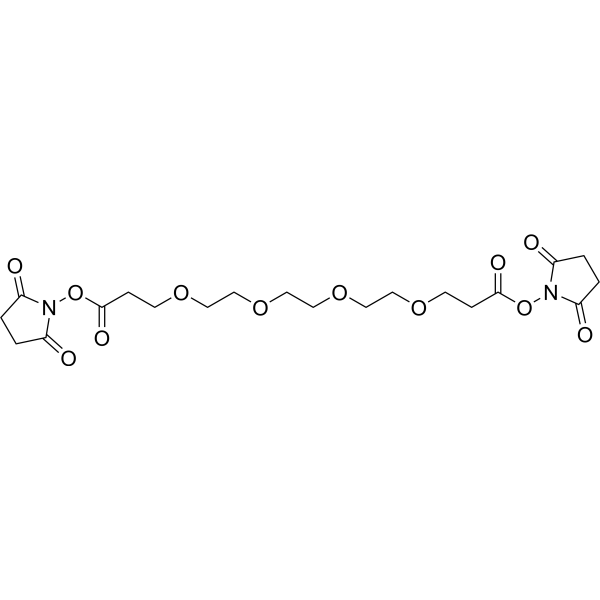
    Bis-PEG4-NHS ester is a crosslinking reagent and amine-reactive modulator .Bis-PEG4-NHS ester reacts with primary amine groups on liposome surfaces via amide bond formation to covalently attach dibenzylcyclooctyne groups, with a hydrophilic PEG4 spacer reducing steric hindrance for subsequent click chemistry .Bis-PEG4-NHS ester enables site-specific antibody coupling to liposome surfaces via copper-free strain-promoted alkyne-azide cycloaddition click chemistry without disrupting liposome structure in minimal organic solvent volumes .Bis-PEG4-NHS ester undergoes hydrolysis during annealing to form -COOH groups that interact with PbI and FAI to enhance perovskite structural integrity, passivate defects, and modulate nucleation kinetics to regulate crystal growth .Bis-PEG4-NHS ester enhances device efficiency and long-term stability when used as an antisolvent additive for p-i-n perovskite solar cells .
    Bis-​PEG4-​NHS ester
  • HY-151827

    ADC Linker Others
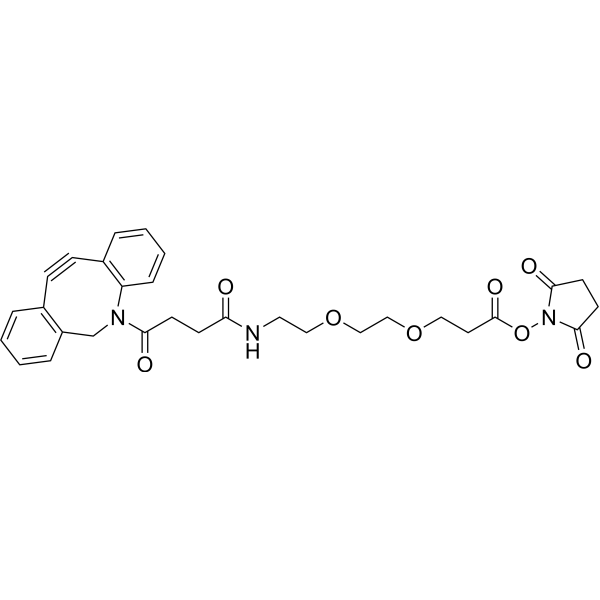
    DBCO-PEG2-NHS ester is a click chemistry reagent containing an azide group. DBCO-PEG2-NHS ester is a click chemistry PEG reagent containing NHS ester that is able to react specifically and efficiently with primary amines (e.g. the side chain of lysine residues or aminosilane-coated surfaces) at neutral or slightly basic condition to form a covalent bond. The hydrophilic PEG spacer arm improves water solubility and provides a long and flexible connection that minimizes steric hindrance involved with ligation. DBCO is commonly used for copper-free Click Chemistry reactions. Reagent grade, for research use only .
    DBCO-PEG2-NHS ester
  • HY-155788

    Biochemical Assay Reagents Others
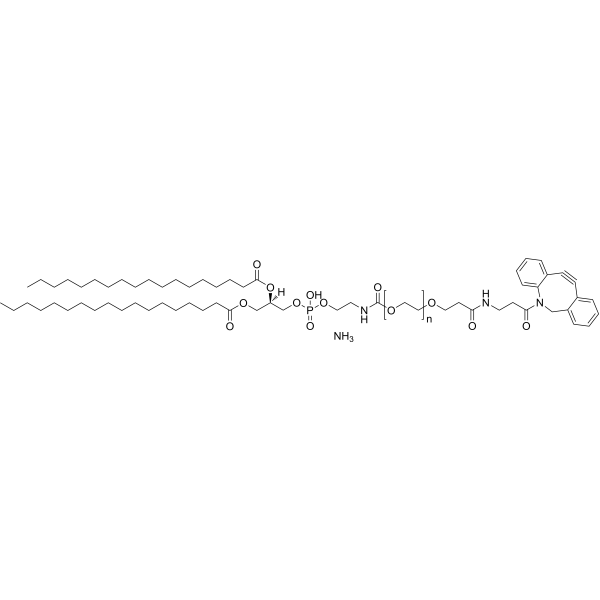
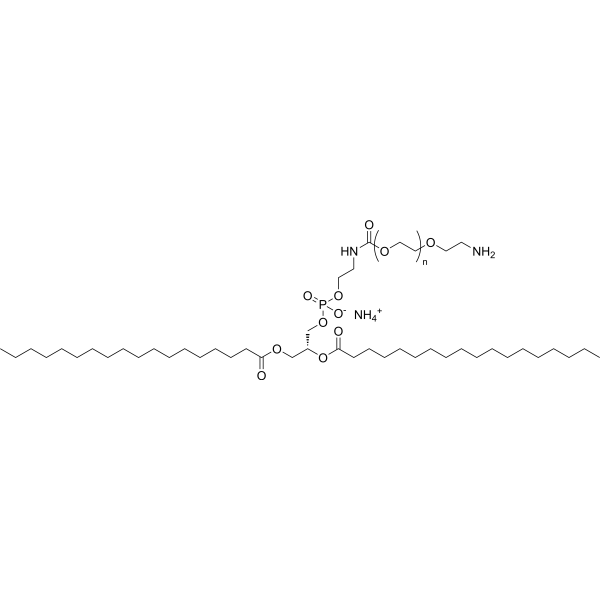
    DSPE-PEG-DBCO ammonium is the ammonium salt form of DSPE-PEG-DBCO. DSPE-PEG-DBCO ammonium is utilized in copper-free click chemistry through SPAAC conjugation with an azido-functionalized peptide ligand. DSPE-PEG-DBCO ammonium is applied in drug-delivery and nanoparticle research .
    DSPE-PEG-DBCO ammonium
  • HY-156905

    Biochemical Assay Reagents Others
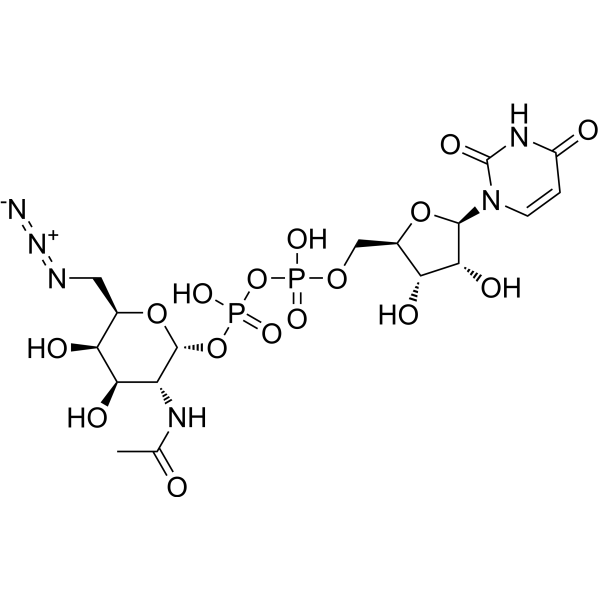
    6-Azido-N-acetylgalactosamine-UDP (Compound 5) is a 6-azido-modified nucleotide sugar. It acts as an active sugar donor in lactose glycosylation catalyzed by beta-1,3-N-Acetylhexaminyltransferase (LgtA). Azido-modified nucleotide sugars are strategically used in copper-free click chemistry to modify the N-glycan core structure of IgG .
    6-Azido-N-acetylgalactosamine-UDP
  • HY-W800809

    Fluorescent Dye Others
    FAM DBCO, 6-isomer represents a variant of a time-honored fluorescent dye and featuring a terminal DBCO group. The DBCO groups is commonly used for copper-free Click Chemistry reactions due to its strain promoted high energy.
    FAM DBCO, 6-isomer
  • HY-151727

    ADC Linker Others
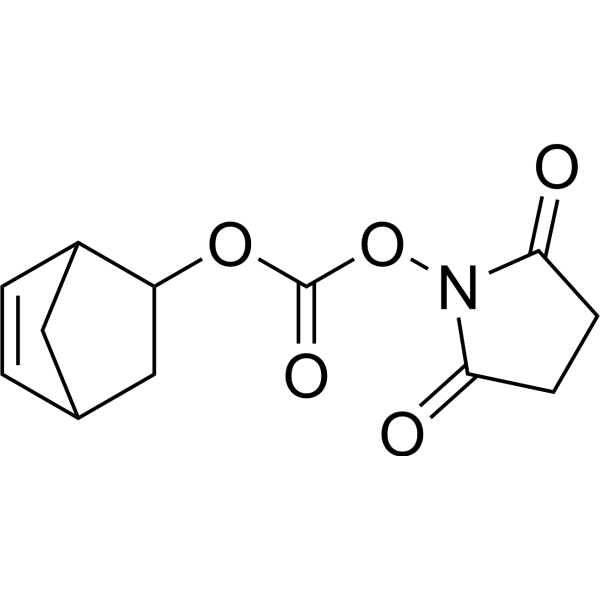
    Norbornene-NHS is a norbornene-functionalized antibody-drug conjugate linker (ADC Linker) bearing an NHS ester, which is applicable for highly efficient and specific antibody conjugation reactions in ADC research and development. Norbornene-NHS also acts as an azide-group-containing click chemistry reagent, serving as a dienophile for copper-free click reaction conjugation .
    Norbornene-NHS
  • HY-151720
    Cy5.5 DBCO
    1 Publications Verification

    ADC Linker Others
    Cy5.5 DBCO is a click chemistry reagent containing an cycloalkynes group. Cy5.5 DBCO is a linker of Cyanine5.5 fluorophore. DBCO group enables copper free biocompatible click chemistry with fast reaction kinetics and good stability .
    Cy5.5 DBCO
  • HY-151781

    ADC Linker Others
    Fmoc-L-Dap(Poc)-OH is a click chemistry reagent containing an azide group. Amino acid building block suitable for side chain Click conjugation with standard protocols and together with tetrazine linkers in copper-free Click conjugation (Diels-Alder) .
    Fmoc-L-Dap(Poc)-OH
  • HY-155887

    DSPE-PEG-NH2, MW 3400 ammonium

    Liposome Cancer
    DSPE-PEG-Amine (DSPE-PEG-NH2), MW 3400 ammonium is an amino-functionalized PEGylated phospholipid. It serves not only as a key component for preparing σ receptor-targeted liposomes (such as anisamide-modified lipids) but also as a starting material for synthesizing click chemistry- and tumor-targeted lipids including DSPE-PEG-DBCO (HY-155788) and DSPE-PEG2000-TCO (HY-170704). DSPE-PEG-Amine, MW 3400 ammonium effectively modulates the ζ potential of nanoparticles, enables complexation with nucleic acids or proteins to protect DNA from nuclease degradation, and supports ligand conjugation on the nanoparticle surface. It is used in studies related to DU-145 tumors, breast cancer, and other relevant research .
    DSPE-PEG-Amine, MW 3400 ammonium
  • HY-D2179

    Fluorescent Dye Others
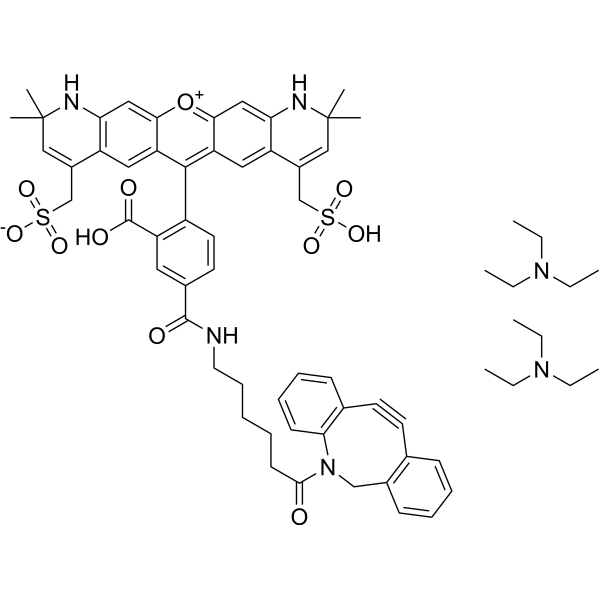
    AF 568 DBCO is a fluorescent dye that reacts with azide-labeled molecules or biomolecules via copper-free click chemistry. AF 568 exhibits maximum absorption wavelength of 579 nm and the maximum emission wavelength of 603 nm .
    AF 568 DBCO
  • HY-151742

    ADC Linker Others
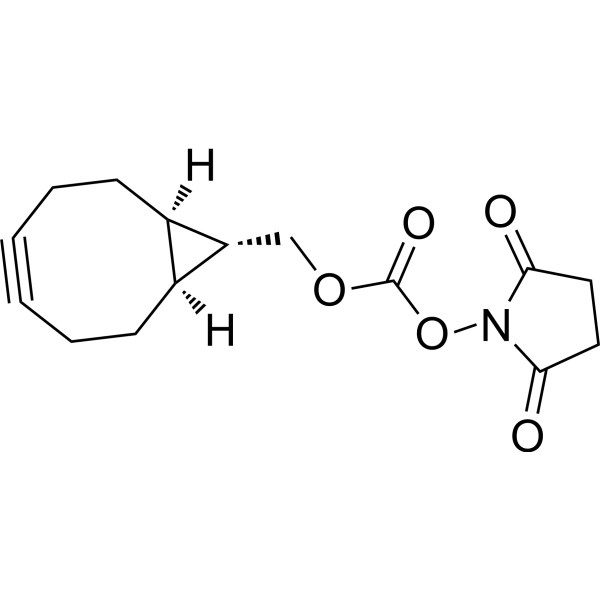
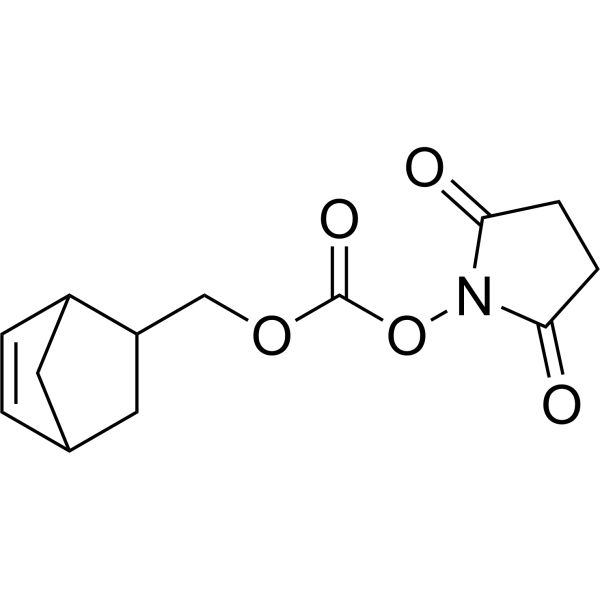
    Norbornene-methyl-NHS is a norbornene-based antibody-drug conjugate linker (ADC Linker) bearing methyl and NHS ester functional groups, which can be used for specific antibody conjugation. Norbornene-methyl-NHS is also a click chemistry reagent containing a TCO group, acting as a dienophile for conjugation via the Diels-Alder reaction, namely the copper-free click reaction with tetrazine .
    Norbornene-methyl-NHS
  • HY-174929A

    DBCO-PEG5000-NH2

    Biochemical Assay Reagents Others
    DBCO-PEG5000-Amine (DBCO-PEG5000-NH2) is a polyethylene glycol derivative containing dibenzocyclooctyne. DBCO-PEG-Amine is a universal, modular "bridge molecule": it forms stable covalent linkage with target materials (e.g., MSN or polymers) via the amino group at one end, while the DBCO group at the other end enables efficient, specific, and biocompatible click chemical conjugation with any azide-bearing biological entities (e.g., bacteria, cells) in subsequent steps .
    DBCO-PEG5000-Amine
  • HY-W879040

    Biochemical Assay Reagents Others
    Sulfo-DBCO-NHS ester is a click chemistry reagent containing an azide group. The DBCO group is commonly used for copper-free Click Chemistry reactions due to its strain promoted high energy. NHS ester can bind to amino acids or other molecules containing amino groups .
    Sulfo-DBCO-NHS ester
  • HY-D1625

    Fluorescent Dye Others
    Cy5 DBCO chloride is an azide reaction probe and the addition of DBCO molecules allows the imaging of azide-labelled biomolecules by a copper-free "Click Chemistry" reaction . Cy5 DBCO (chloride) is a click chemistry reagent, it contains a DBCO group that can undergo strain-promoted alkyne-azide cycloaddition (SPAAC) with molecules containing Azide groups.
    Cy5 DBCO chloride
  • HY-151730

    ADC Linker Others
    (Me)Tz-butanoic acid is a click chemistry reagent containing an azide. (Me)Tz-butanoic acid is tetrazine linker for conjugation via Diels-Alder-reaction, i.e. copper-free Click reaction with dienophiles . (Me)Tz-butanoic acid is a click chemistry reagent, it contains a Tetrazine group that can undergo an inverse electron demand Diels-Alder reaction (iEDDA) with molecules containing TCO groups.
    (Me)Tz-butanoic acid
  • HY-151822

    ADC Linker Others
    Hydroxy-PEG3-DBCO is a click chemistry reagent containing an azide group. Hydroxy-PEG3-DBCO is a PEG linker containing a DBCO moiety and a terminal primary hydroxyl group. The hydroxyl can react with a variety of functional groups and the hydrophilic PEG spacer arm can provide better solubility to labeled molecules. DBCO is commonly used for copper-free Click Chemistry reactions. Reagent grade, for research use only .
    Hydroxy-PEG3-DBCO
  • HY-D2891

    Fluorescent Dye Others
    5-TAMRA-DBCO is a fluorescent dye that combines 5-TAMRA (HY-15942) with a dibenzocyclooctyne (DBCO) moiety. 5-TAMRA-DBCO is able to copper-free click chemistry reactions with azide-functionalized molecules. 5-TAMRA-DBCO can be used for labeling proteins, peptides, nucleic acids (Ex/Em = 541/567 nm) .
    5-TAMRA-DBCO
  • HY-151821

    ADC Linker Others
    Sulfo DBCO-PEG3-acid is a click chemistry reagent containing an azide group. Sulfo DBCO-PEG3-acid is an analog of DBCO-Acid with PEG linker and a DBCO group. The DBCO groups is commonly used for copper-free Click Chemistry reactions due to its strain promoted high energy. The hydrophilic PEG chain and sulfo group increase water solubility. The terminal carboxylic acid can react with primary amine groups in the presence of activators (e.g. EDC, or HATU) to form a stable amide bond. Reagent grade, for research use only .
    Sulfo DBCO-PEG3-acid
  • HY-151780

    ADC Linker Others
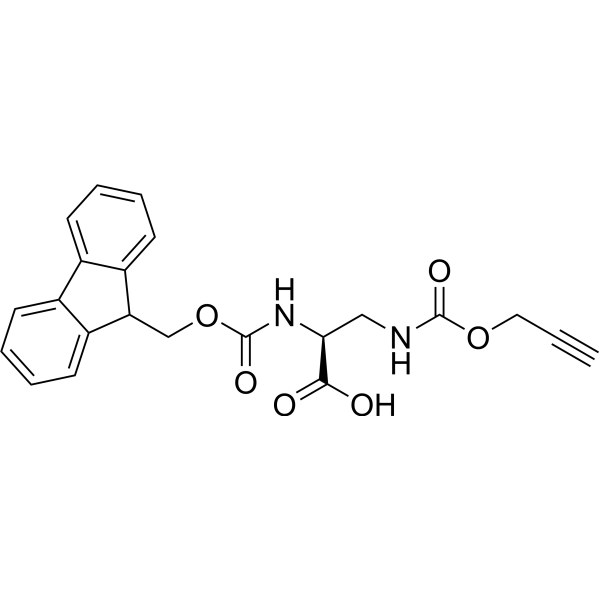
    Fmoc-L-Dap(Pentynoyl)-OH is a click chemistry reagent containing an azide group. Fmoc-L-Dap(Pentynoyl)-OH serves as an amino acid building block for introducing alkyne functions into peptide sequences by standard Fmoc/tBu protocols. The alkyne residue can be engaged for copper catalyzed click reaction with organic azides or with tetrazines for copper-free conjugations . Fmoc-L-Dap(Pentynoyl)-OH is a click chemistry reagent, it contains an Alkyne group and can undergo copper-catalyzed azide-alkyne cycloaddition (CuAAc) with molecules containing Azide groups.
    Fmoc-L-Dap(Pentynoyl)-OH
  • HY-151824

    ADC Linker Others
    Boc-L-Phe(4-NH-Poc)-OH is a click chemistry reagent containing an azide group. Used as an orthogonally protected building block in peptide synthesis. Propargyloxycarbonyl, commonly abbreviated as Poc or Pryoc, can either be used as alkyne component for standard Click conjugation or in combination with tetrazine linkers in copper-free Diels-Alder type Click reactions. It also has applications as unusual protecting group for amines, hydroxy functions and as esters. All 3 are stable to neat TFA, but can be cleaved at ambient temperature with Co2(CO)8 in TFA:DCM. Deprotection with other transition metals like palladium have also been reported . Boc-L-Phe(4-NH-Poc)-OH is a click chemistry reagent, it contains an Alkyne group and can undergo copper-catalyzed azide-alkyne cycloaddition (CuAAc) with molecules containing Azide groups.
    Boc-L-Phe(4-NH-Poc)-OH
  • HY-130809A

    Biochemical Assay Reagents Others
    DBCO-PEG1000-Biotin is a click chemistry biotinylation that can enable copper-free click chemistry with azide molecules to form a stable triazole linkage .
    DBCO-PEG1000-Biotin
  • HY-W879228

    Fluorescent Dye Others
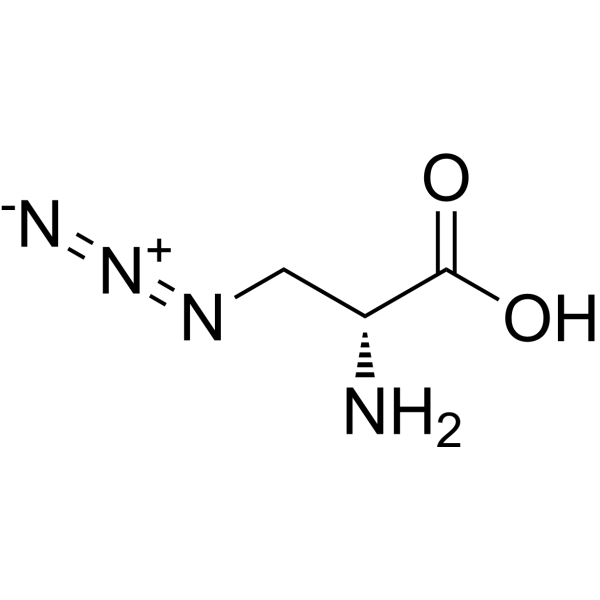
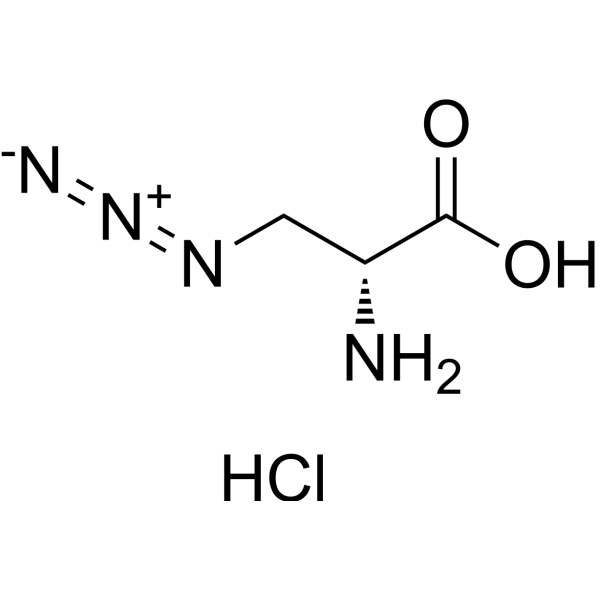
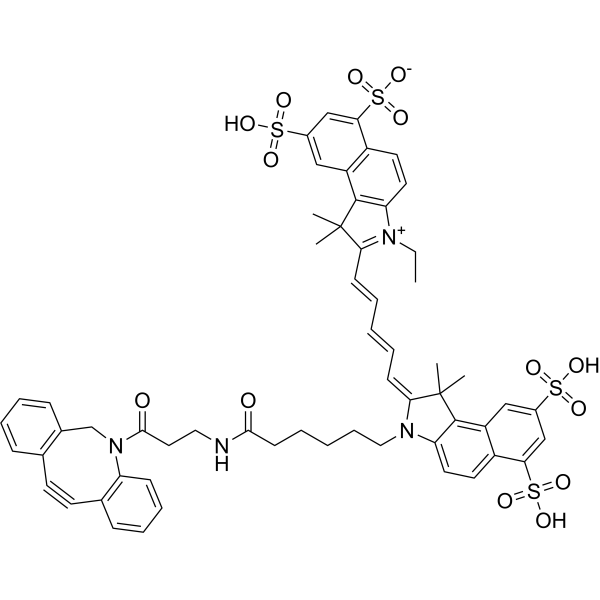
    Disulfo-ICG-DBCO disodium is a double sulfonic acid-modified indocyanine green. Disulfo-ICG-DBCO disodium can react with d-AzAla modified bacteria to detect the bacteria by copper-free click chemistry-mediated photothermal lysis and measurement of ATP bioluminescence .
    Disulfo-ICG-DBCO disodium
  • HY-W714234

    Biochemical Assay Reagents Others
    Endo-BCN CE-phosphoramidite is a stable and one of the most reactive cyclooctynes for copper-free click chemistry. Unlike dibenzocyclooctyne (DBCO), BCN is reactive both to azides (strain-promoted azyde-alkyne cycloaddition, SPAAC) and tetrazines (inverse electron demand Diels-Alder reaction, IEDDA).
    Endo-BCN CE-phosphoramidite
  • HY-181228

    Biochemical Assay Reagents Others
    DBCO-PEG10-Biotin is an azadibenzocyclooctyne-biotin derivative containing a biotin group and 10 PEGs. DBCO-PEG10-Biotin is a versatile biotinylation reagent used for the introduction of a biotin moiety to azide-labeled biomolecules via copper-free strain-promoted alkyne-azide click chemistry (SPAAC) reaction. DBCO-PEG10-Biotin is a click chemistry reagent, it contains a DBCO group that can undergo strain-promoted alkyne-azide cycloaddition (SPAAC) with molecules containing Azide groups .
    DBCO-PEG10-Biotin
  • HY-151820

    ADC Linker Others
    DBCO-PEG24-acid is a click chemistry reagent. DBCO-PEG24-acid is an analog of DBCO-Acid with PEG linker and a DBCO group. The DBCO groups is commonly used for copper-free Click Chemistry reactions due to its strain promoted high energy. The hydrophilic PEG chain allows for increased water solubility. The terminal carboxylic acid can react with primary amine groups in the presence of activators (e.g. EDC, or HATU) to form a stable amide bond. Reagent grade, for research use only .
    DBCO-PEG24-acid
  • HY-148840

    Biochemical Assay Reagents Others
    Sulfo DBCO-PEG3-NHS ester is a click chemistry reagent containing an azide group. Sulfo DBCO-PEG3-NHS ester is an analog of DBCO-Acid with PEG linker and a DBCO group. The DBCO group is commonly used for copper-free Click Chemistry reactions due to its strain promoted high energy. The hydrophilic PEG chain and sulfo group increase water solubility. The terminal carboxylic acid can react with primary amine groups in the presence of activators (e.g. EDC, or HATU) to form a stable amide bond. Reagent grade, for research use only .
    Sulfo DBCO-PEG3-NHS ester
  • HY-W800680

    Fluorescent Dye Others
    BP Fluor 488 DBCO is a popular labeling dye used in copper-free Click Chemistry reactions. It will react with the azide group in antibody, proteins, peptides, amino-modified oligos, and other target molecules. The dye has an excitation peak at 499 nm and an emission peak at 520 nm. The conjugates are widely used in microscopy, flow cytometry, and other applications. BP Fluor 488 is a pure 5-sulfonated rhodamine molecule and it eliminates the lot-to-lot variation caused by two isomers ratio differences.
    BP Fluor 488 DBCO
  • HY-151796

    ADC Linker Others
    DACN(Ms,Ns) is a click chemistry reagent containing a cyclic alkyne group .
    DACN(Ms,Ns)
  • HY-N16302

    Fluorescent Dye Others
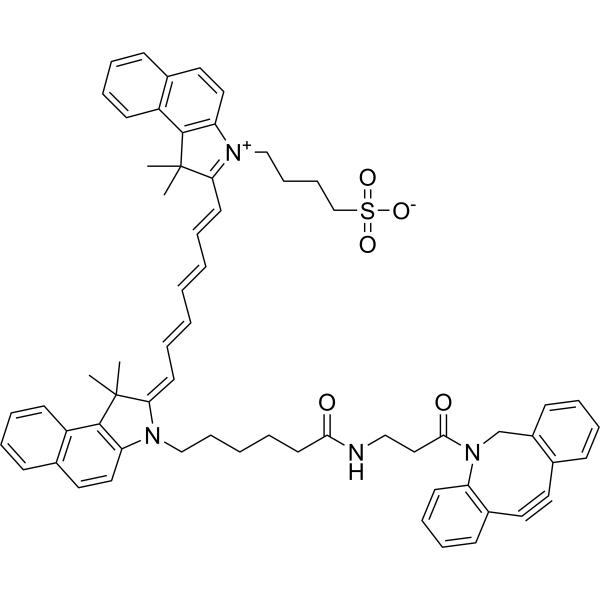
    Cyanine 5.5 DBCO chloride is a click chemistry reagent containing an cycloalkynes group. Cyanine 5.5 DBCO chloride is a linker of Cyanine5.5 fluorophore. DBCO group enables copper free biocompatible click chemistry with fast reaction kinetics and good stability (Ex/Em = 680/715 nm) .
    Cyanine 5.5 DBCO chloride
  • HY-151837

    ADC Linker Others
    H-L-Phe(4-NH-Poc)-OH (hydrochloride) is a click chemistry reagent containing an azide group. Used as a modified Phe or Tyr analogue in protein and peptide biosynthesis. Propargyloxycarbonyl, commonly abbreviated as Poc or Pryoc, can either be used as alkyne component for standard Click conjugation or in combination with tetrazine linkers in copper-free Diels-Alder type Click reactions. It also has applications as unusual protecting group for amines, hydroxy functions and as esters. All 3 are stable to neat TFA, but can be cleaved at ambient temperature with Co2(CO)8 in TFA:DCM. Deprotection with other transition metals like palladium have also been reported . H-L-Phe(4-NH-Poc)-OH (hydrochloride) is a click chemistry reagent, it contains an Alkyne group and can undergo copper-catalyzed azide-alkyne cycloaddition (CuAAc) with molecules containing Azide groups.
    H-L-Phe(4-NH-Poc)-OH hydrochloride
  • HY-W440926

    Liposome Others
    Stearic acid-PEG1000-NHS is a cyclooctyne containing phospholipid PEG polymer. The polymer can self-assemble spontaneously in water to form micelles/lipid bilayer. It can be used to prepare nanoparticles or liposomes as drug carrier in targeted drug delivery system. The DBCO can react with azide molecule via copper free click chemistry to form a stable triazole bond.
    Stearic acid-PEG1000-NHS
  • HY-130809C

    Biochemical Assay Reagents Others
    DBCO-PEG3400-Biotin is a click chemistry biotinylation that can enable copper-free click chemistry with azide molecules to form a stable triazole linkage .
    DBCO-PEG3400-Biotin
  • HY-130809H

    Biochemical Assay Reagents Others
    DBCO-PEG40000-Biotin is a click chemistry biotinylation that can enable copper-free click chemistry with azide molecules to form a stable triazole linkage .
    DBCO-PEG40000-Biotin
  • HY-130809I

    Biochemical Assay Reagents Others
    DBCO-PEG20000-Biotin is a click chemistry biotinylation that can enable copper-free click chemistry with azide molecules to form a stable triazole linkage .
    DBCO-PEG20000-Biotin
  • HY-130809D

    Biochemical Assay Reagents Others
    DBCO-PEG5000-Biotin is a click chemistry biotinylation that can enable copper-free click chemistry with azide molecules to form a stable triazole linkage .
    DBCO-PEG5000-Biotin
  • HY-130809B

    Biochemical Assay Reagents Others
    DBCO-PEG2000-Biotin is a click chemistry biotinylation that can enable copper-free click chemistry with azide molecules to form a stable triazole linkage .
    DBCO-PEG2000-Biotin
  • HY-W020546
    DBCO-amine TFA
    1 Publications Verification

    Biochemical Assay Reagents Others
    DBCO-amine TFA is a simple building block containing a DBCO moiety and an amine group. Amine is very reactive with NHS ester. DBCO is commonly used for copper-free Click Chemistry reactions.
    DBCO-amine TFA
  • HY-W800676

    Biochemical Assay Reagents Others
    DBCO-N-bis(PEG4-acid) is a branched click chemistry reagent. The DBCO group enables copper-free Click Chemistry reactions. carboxylic acid groups allows for reactions with primary amine groups using activators such as EDC or HATU to form a stable amide bond.
    DBCO-N-bis(PEG4-acid)
  • HY-W800658

    Biochemical Assay Reagents Others
    DBCO-PEG6-NH-Boc is a click chemistry reagent with a DBCO group and a Boc-protected amine. The DBCO can undergo copper-free Click Chemistry reactions with azides. The Boc protecting group can be removed under acidic conditions. The hydrophilic PEG linker increases the water solubility of the compound.
    DBCO-PEG6-NH-Boc
  • HY-W800724

    Biochemical Assay Reagents Others
    Methyltetrazine-PEG4-DBCO is a PEG linker with a terminal TCO reactive reagent and a DBCO group. DBCO is commonly used for copper-free Click Chemistry reactions. Methyltetrazine can be used to convert azido-containing peptides or proteins into tetrazine-modified peptides or protein without catalyst or axillary reagents.
    Methyltetrazine-PEG4-DBCO
  • HY-172513

    Biochemical Assay Reagents Others
    Methyltetrazine-PEG11-DBCO is a TCO reactive reagent with a DBCO group and water-soluble PEG spacer. This reagent can be used to convert azido-containing peptides or proteins into tetrazine-modified peptides or protein without catalyst or axillary reagents. DBCO is commonly used for copper-free Click Chemistry reactions.
    Methyltetrazine-PEG11-DBCO
  • HY-W800723

    Biochemical Assay Reagents Others
    Methyltetrazine-PEG2-DBCO is a TCO reactive reagent with a DBCO group and water-soluble PEG spacer. This reagent can be used to convert azido-containing peptides or proteins into tetrazine-modified peptides or protein without catalyst or axillary reagents. DBCO is commonly used for copper-free Click Chemistry reactions.
    Methyltetrazine-PEG2-DBCO
  • HY-D2740

    Fluorescent Dye Others
    ROX azide, 6-isomer is an alkyne-reactive derivative of ROX (Rhodamine X, Rhodamine 101) dye. ROX is a red-emitting fluorophore possessing high brightness and fluorescence quantum yield. This reagent is a pure 6-isomer. It is used for labeling alkyne and cycloalkyne-containing biomolecules via copper-catalyzed and copper-free click chemistry reactions.
    ROX azide, 6-isomer
  • HY-D2759

    Fluorescent Dye Others
    Cyanine3B azide for click chemistry conjugation with terminal alkynes via a copper-catalyzed click reaction or strained cyclooctynes via a copper-free click reaction. Cyanine3B is a yellow-emitting cyanine dye that is an improved version of the Cyanine3 fluorophore with significantly higher fluorescence quantum yield and photostability. Due to the fixed conformation, Cyanine3B has the highest emission quantum yield compared to other dyes of this wavelength. This is a non-sulfonated dye that requires an organic co-solvent (DMF, DMSO, or other) for efficient labeling in water.
    Cyanine3B azide
  • HY-148840A

    Biochemical Assay Reagents Others
    Sulfo DBCO-PEG3-NHS ester TEA is a click chemistry reagent containing an azide group. Sulfo DBCO-PEG3-NHS ester (TEA) is an analog of DBCO-Acid with PEG linker and a DBCO group. The DBCO group is commonly used for copper-free Click Chemistry reactions due to its strain promoted high energy. The hydrophilic PEG chain and sulfo group increase water solubility. The terminal carboxylic acid can react with primary amine groups in the presence of activators (e.g. EDC, or HATU) to form a stable amide bond. Reagent grade, for research use only .
    Sulfo DBCO-PEG3-NHS ester TEA
  • HY-D2200

    Fluorescent Dye Others
    Cy5.5(Me)-C3-DBCO is a click chemistry reagent containing an cycloalkynes group. DBCO group enables copper free biocompatible click chemistry with fast reaction kinetics and good stability .
    Cy5.5(Me)-C3-DBCO

Inquiry Online

Your information is safe with us. * Required Fields.

Salutation


Country or Region *

Applicant Name *


Organization Name *

Department *


Email Address *


Product Name *

Cat. No.


Requested quantity *

Phone Number *


Remarks

Inquiry Online

Inquiry Information

Product Name:
Cat. No.:
Quantity:
MCE Japan Authorized Agent:

