

1. Search Result
Search Result
Pathways Recommended: Cell Cycle/DNA Damage
Results for "

damaging

" in MedChemExpress (MCE) Product Catalog:

1940

Inhibitors & Agonists

29

Screening Libraries

33

Fluorescent Dye

72

Biochemical Assay Reagents

101

Peptides

3

MCE Kits

19

Inhibitory Antibodies

457

Natural
Products

130

Isotope-Labeled Compounds

15

Click Chemistry

28

Oligonucleotides

4

GMP Molecules

Cat. No. Product Name Target Research Areas Chemical Structure
  • HY-17394
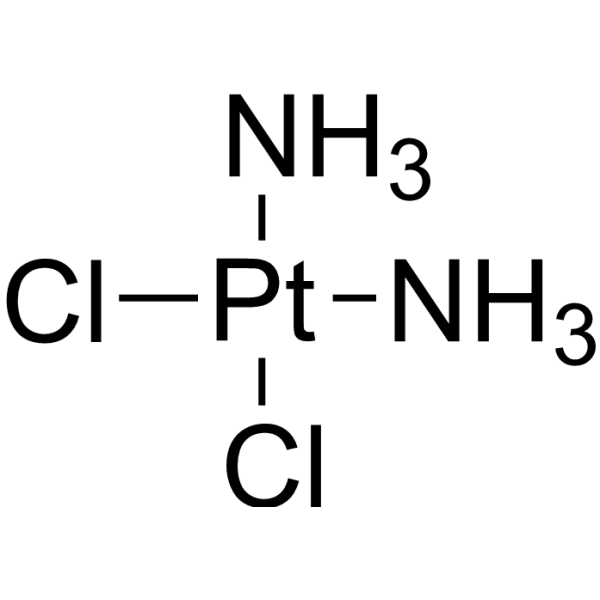
    Cisplatin
    765+ Cited Publications

    cis-Platinum; CDDP; cis-Diaminodichloroplatinum

    DNA Alkylator/Crosslinker Ferroptosis Autophagy Pyroptosis Lipoxygenase Cancer
    Cisplatin (CDDP) is an antineoplastic chemotherapy agent by cross-linking with DNA and causing DNA damage in cancer cells. Cisplatin activates ferroptosis and induces autophagy .
    Cisplatin
  • HY-33354
    Nitrochin
    3 Publications Verification

    4-NQO

    DNA/RNA Synthesis Apoptosis Inflammation/Immunology Cancer
    Nitrochin (4-NQO) is a chemical carcinogen. Nitrochin induces oncostatin-M (OSM) in esophageal cells. Nitrochin induces DNA damage, and induces apoptosis via a p53-dependent mitochondrial signaling pathway .
    Nitrochin
  • HY-B0356
    Ciprofloxacin
    50+ Cited Publications

    Bay-09867

    Topoisomerase Apoptosis Antibiotic Bacterial Mitochondrial Metabolism Reactive Oxygen Species (ROS) Infection Cancer
    Ciprofloxacin (Bay-09867) is a potent, orally active topoisomerase IV inhibitor. Ciprofloxacin induces mitochondrial DNA and nuclear DNA damage and lead to mitochondrial dysfunction, ROS production. Ciprofloxacin has anti-proliferative activity and induces apoptosis. Ciprofloxacin is a fluoroquinolone antibiotic, exhibiting potent antibacterial activity .
    Ciprofloxacin
  • HY-111475
    Mitochondrial fusion promoter M1
    2 Publications Verification

    Mitochondrial Metabolism Cardiovascular Disease
    Mitochondrial fusion promoter M1 is a mitochondrial dynamic modulator. Mitochondrial fusion promoter M1 preserves the mitochondrial function and promotes cellular respiration. Mitochondrial fusion promoter M1 alleviates cardiac and brain damage in rats with cardiac ischemia/reperfusion injury .
    Mitochondrial fusion promoter M1
  • HY-B1614
    Clenbuterol hydrochloride
    5+ Cited Publications

    NAB-365 hydrochloride

    Adrenergic Receptor Metabolic Disease Inflammation/Immunology Endocrinology
    Clenbuterol (NAB-365) hydrochloride, a selective β2-adrenergic agonist, enhances skeletal muscle strength and hypertrophy. Clenbuterol hydrochloride induces growth factor mRNA, activates astrocytes, and protects rat brain tissue against ischemic damage .
    Clenbuterol hydrochloride
  • HY-B0356B

    Bay-09867 hydrochloride monohydrate

    Topoisomerase Apoptosis Antibiotic Bacterial Mitochondrial Metabolism Reactive Oxygen Species (ROS) Infection Cancer
    Ciprofloxacin (Bay-09867) hydrochloride monohydrate is a potent, orally active topoisomerase IV inhibitor. Ciprofloxacin hydrochloride monohydrate induces mitochondrial DNA and nuclear DNA damage and lead to mitochondrial dysfunction, ROS production. Ciprofloxacin hydrochloride monohydrate has anti-proliferative activity and induces apoptosis. Ciprofloxacin hydrochloride monohydrate is a fluoroquinolone antibiotic, exhibiting potent antibacterial activity .
    Ciprofloxacin hydrochloride monohydrate
  • HY-15583

    ADC Payload Microtubule/Tubulin Cancer
    Auristatin F is a potent cytotoxin in antibo-conjugated agents and an analogue of MMAF. Auristatin F is a potent microtubule inhibitor and vascular damaging agent (VDA). Auristatin F inhibits cell division by preventing tubulin aggregation.Auristatin F can be used in antibody-drug conjugates (ADC) .
    Auristatin F
  • HY-147054

    Debio 0123; WEE1-IN-5

    Wee1 CDK Cancer
    Zedoresertib (Debio 0123) is a potent WEE1 inhibitor with an IC50 value of 0.8 nM. Zedoresertib inhibits phospho-CDC2. Zedoresertib abrogates the G2 check point, increasing sensitivity to DNA damaging agents in cancer cells. Zedoresertib can be used for researching anticancer .
    Zedoresertib
  • HY-137316A

    DNA Alkylator/Crosslinker Drug Metabolite Cancer
    Phosphoramide mustard cyclohexanamine is a biologically active metabolite of Cyclophosphamide (HY-17420), with anticancer activitiy. Phosphoramide mustard cyclohexanamine induces DNA damage .
    Phosphoramide mustard cyclohexanamine
  • HY-113262

    Endogenous Metabolite Interleukin Related Neurological Disease Metabolic Disease Inflammation/Immunology
    8-Hydroxyguanosine, an oxidized nucleoside, is a marker of RNA oxidative damage and oxidative stress. 8-Hydroxyguanosine stimulates proliferation and differentiation of murine B cells with immunostimulatory activity. 8-Hydroxyguanosine is promising for research of Alzheimer’s disease and Down’s syndrome .
    8-Hydroxyguanosine
  • HY-126490
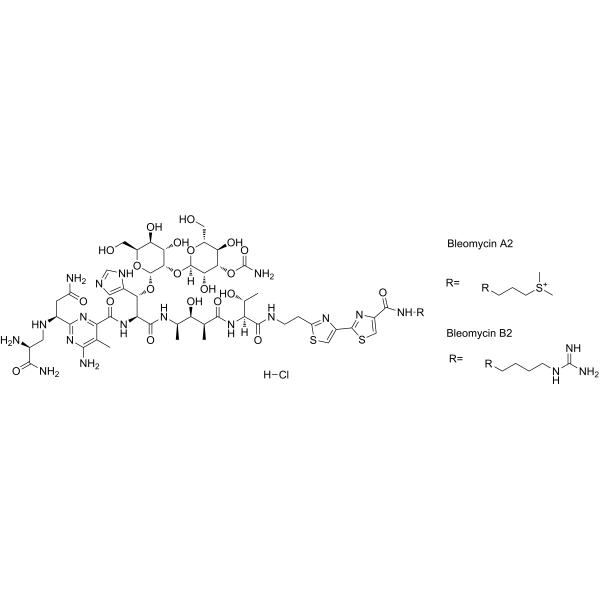
    Phleomycin
    2 Publications Verification

    Bacterial Antibiotic DNA/RNA Synthesis Infection Cancer
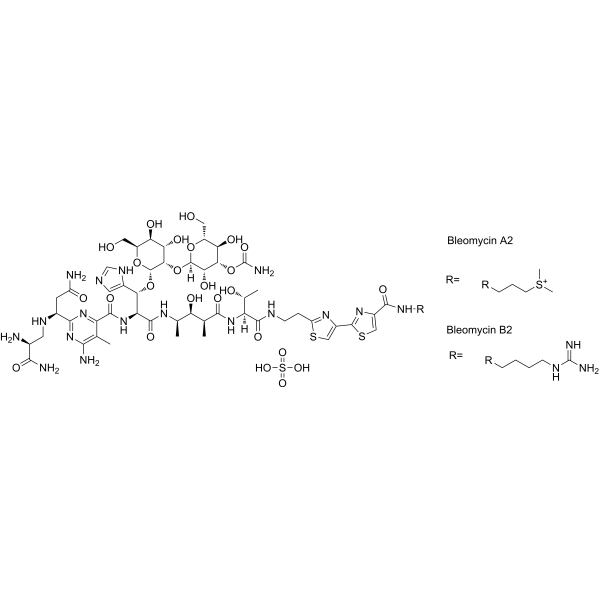
    Phleomycin is a copper-dependent DNA damaging agent and antibiotic with antitumor activity. Phleomycin binds to DNA and produces ROS in the presence of reducing agents (such as dithiothreitol and glutathione), inducing single-strand and double-strand breaks in DNA. Phleomycin can induce cell apoptosis or mutation and is widely used in cancer inhibition, microbial genetic transformation (as a screening marker to improve fungal transformation efficiency) and DNA repair mechanism research .
    Phleomycin
  • HY-148962

    Checkpoint Kinase (Chk) Cancer
    LY2880070 is an orally active CHK1 inhibitor, IC50 < 1 nM. LY2880070 can be used as an anticancer agent for combination with DNA damaging agents .
    LY2880070
  • HY-19791

    N-Acetyl-Calicheamicin γ; N-Acetyl-γ-calicheamicin

    ADC Payload DNA/RNA Synthesis Antibiotic Bacterial Infection Cancer
    N-Acetyl-Calicheamicin (N-Acetyl-Calicheamicin γ), an enediyne anti-tumor antibiotic, is an ADC cytotoxin. N-Acetyl-Calicheamicin can induce DNA damage, and can be used in the synthesis of ADC .
    N-Acetyl-Calicheamicin
  • HY-100957
    Dilazep dihydrochloride
    2 Publications Verification

    Nucleoside Transporters Cardiovascular Disease
    Dilazep dihydrochloride is an inhibitor of adenosine uptake. Dilazep dihydrochloride has cerebral and coronary vasodilating action through enhancement of effect of adenosine. Dilazep dihydrochloride also inhibits the ischemic damage, platelet aggregation, and membrane transport of nucleosides .
    Dilazep dihydrochloride
  • HY-W010520

    Environmental Pollutants MMP Bacterial Fungal Apoptosis Infection Inflammation/Immunology
    Methylothiazolinone is a bacterial and fungal inhibitor and preservative, as well as a sensitizer. Methylisothiazolinone can activate matrix metalloproteinases (MMPs) in human bronchial epithelial cells to induce apoptosis and inflammatory response. Methylisothiazolinone can promote the development of atopic dermatitis in mice by disrupting Th2/Th17 related immune responses. Methylisothiazolinone can cause mitochondrial damage in the endothelium of rat cerebral blood vessels .
    Methylisothiazolinone
  • HY-N7981
    Pratensein
    1 Publications Verification

    NF-κB Neurological Disease
    Pratensein, a flavonoid, ameliorates β-amyloid-induced cognitive impairment in rats via reducing oxidative damage and restoring synapse and BDNF levels .
    Pratensein
  • HY-123604
    TH1834
    3 Publications Verification

    Histone Acetyltransferase Apoptosis Cancer
    TH1834 is a specific Tip60 (KAT5) histone acetyltransferase (HAT) inhibitor. TH1834 induces apoptosis and increases DNA damage in breast cancer. TH1834 does not affect the activity of related histone acetyltransferase MOF. Anticancer activity .
    TH1834
  • HY-153215

    Ligands for E3 Ligase Cancer
    MEL24 is an Mdm2 E3 ligase inhibitor that reduces cell survival and increases sensitivity to DNA damaging agents in a p53-dependent manner for in vitro antitumor studies .
    MEL24
  • HY-131113
    N-Nitrosodibutylamine
    1 Publications Verification

    N-Nitroso-di-n-butylamine

    Caspase Apoptosis Cancer
    N-Nitrosodibutylamine (N-Nitroso-di-n-butylamine) is a nitrosamine enriched in the drinking water. N-Nitrosodibutylamine regulates caspase pathway. N-Nitrosodibutylamine induces Apoptosis. N-Nitrosodibutylamine induces hepatocarcinoma and oxidative DNA damage .
    N-Nitrosodibutylamine
  • HY-126020
    Bractoppin
    3 Publications Verification

    DNA/RNA Synthesis RAD51 Cancer
    Bractoppin is a potent and selective agent-like inhibitor of phosphopeptide recognition by the human BRCA1 tandem(t) BRCT domain (binding IC50: 74 nM). Bractoppin diminishes BRCA1 recruitment to DNA breaks, in turn suppressing damage-induced G2 arrest and assembly of the recombinase, RAD51. Bractoppin preferentially inhibits BRCA1 tBRCT-dependent steps in the DNA damage response .
    Bractoppin
  • HY-108708

    PARP Cancer
    GeA-69 is a selective, allosteric inhibitor of poly-adenosine-diphosphate-ribose polymerase 14 (PARP14) targeting macrodomain 2 (MD2), with a Kd value of 2.1 μM. GeA-69 involves in DNA damage repair mechanisms and prevents recruitment of PARP14 MD2 to sites of laser-induced DNA damage .
    GeA-69
  • HY-Z0056S

    pentadeuterobromobenzene

    Cytochrome P450 Endocrinology
    Bromobenzene-d5 is the deuterium labeled Bromobenzene. Bromobenzene is a well-known environmental toxin which causes liver and kidney damage through CYP450-mediated bio-activation to generate reactive metabolites and, consequently, oxidative stress .
    Bromobenzene-d5
  • HY-120084
    BTX161
    1 Publications Verification

    Casein Kinase Cancer
    BTX161, a thalidomide analog, is an effective CKIα degrader. BTX161 mediates human AML cell CKIα degradation more effectively than lenalidomide and activates the DNA damage response (DDR) and p53, while stabilizing p53 antagonist MDM2.
    BTX161
  • HY-137316

    DNA Alkylator/Crosslinker Drug Metabolite Cancer
    Phosphoramide mustard is a biologically active metabolite of Cyclophosphamide (HY-17420), with anticancer activitiy. Phosphoramide mustard induces DNA damage .
    Phosphoramide mustard
  • HY-W010243

    Bacterial MMP Apoptosis Fungal Infection Inflammation/Immunology
    Methylisothiazolinone hydrochloride is a bacterial and fungal inhibitor and preservative, as well as a sensitizer. Methylisothiazolinone hydrochloride can activate matrix metalloproteinases (MMPs) in human bronchial epithelial cells to induce apoptosis and inflammatory response. Methylisothiazolinone hydrochloride can promote the development of atopic dermatitis in mice by disrupting Th2/Th17 related immune responses. Methylisothiazolinone hydrochloride can cause mitochondrial damage in the endothelium of rat cerebral blood vessels .
    Methylisothiazolinone hydrochloride
  • HY-105019A
    Melflufen hydrochloride
    1 Publications Verification

    Melphalan flufenamide hydrochloride

    DNA Alkylator/Crosslinker Apoptosis Cancer
    Melflufen (Melphalan flufenamide) hydrochloride, a dipeptide proagent of Melphalan, is an alkylating agent. Melflufen hydrochloride shows antitumor activity against multiple myeloma (MM) cells and inhibits angiogenesis. Melflufen hydrochloride induces irreversible DNA damage and cytotoxicity in MM cells .
    Melflufen hydrochloride
  • HY-123604A
    TH1834 dihydrochloride
    3 Publications Verification

    Histone Acetyltransferase Apoptosis Cancer
    TH1834 dihydrochloride is a specific Tip60 (KAT5) histone acetyltransferase inhibitor. TH1834 dihydrochloride induces apoptosis and increases DNA damage in breast cancer. TH1834 dihydrochloride does not affect the activity of related histone acetyltransferase MOF. Anticancer activity .
    TH1834 dihydrochloride
  • HY-69014

    DNA/RNA Synthesis Endogenous Metabolite Cancer
    2-O-Methylcytosine, an O-alkylated analogue a DNA adduct, is the damaged nucleobase .
    2-O-Methylcytosine
  • HY-N9487

    (-)-α-Phellandrene

    Environmental Pollutants Bacterial Infection Inflammation/Immunology
    (R)-(-)-α-Phellandrene ((-)-α-Phellandrene) is an the (R)-(-)-stereoisomer of α-phellandrene. α-phellandrene is an orally active cyclic monoterpene that attenuates inflammatory response, and induces DNA damage .
    (R)-(-)-α-Phellandrene
  • HY-118157

    MMP Inflammation/Immunology
    3,5,7-Trimethoxyflavone, a flavonoid compound, can inhibit the TNF-α-induced high expression and secretion of MMP-1 by cells. 3,5,7-Trimethoxyflavone can be used to ameliorate skin damage .
    3,5,7-Trimethoxyflavone
  • HY-E70008

    Sirtuin Inflammation/Immunology
    Lumbokinase attenuates myocardial ischemia-reperfusion (I-R) injury through the activation of Sirt1 signaling, and thus enhances autophagic flux and reduces I-R-induced oxidative damage, inflammation and apoptosis .
    Lumbokinase
  • HY-105019
    Melflufen
    1 Publications Verification

    Melphalan flufenamide

    DNA Alkylator/Crosslinker Apoptosis Cancer
    Melflufen (Melphalan flufenamide), a dipeptide proagent of Melphalan, is an alkylating agent. Melflufen shows antitumor activity against multiple myeloma (MM) cells and inhibits angiogenesis. Melflufen induces irreversible DNA damage and cytotoxicity in MM cells .
    Melflufen
  • HY-W011425

    Nitrilotris(methylenephosphonic acid)

    Environmental Pollutants DNA Alkylator/Crosslinker MOFs Cancer
    NTPO (Nitrilotris methylenephosphonic acid) is a DNA damage inducer, causing genomic DNA damage and fragmentation, activating ATR-mediated cell cycle checkpoints. The DNA damaging effects of NTPO are abrogated by base excision repair (BER) but not nucleotide excision repair (NER) .
    NTPO
  • HY-W265757

    DNA/RNA Synthesis Cancer
    4-Ethylcatechol is a ring-dihydroxylated metabolite of 4-Ethylphenol that leads to oxidative DNA damage .
    4-Ethylcatechol
  • HY-152246

    DNA/RNA Synthesis Cancer
    ZIM, a norbornene derived from 4-Aminoantipyrine, is a potent inducer of DNA damage, causing genomic and chromosomal damage as well as inducing cell death and activating phagocytosis. ZIM has chemotherapeutic potential for use in cancer research .
    ZIM
  • HY-126164

    Biochemical Assay Reagents Others
    LK 614 is a membrane permeable iron chelator that can be used to study the protective effects against L-Histidine (HY-N0832)-induced cell damage .
    LK 614
  • HY-108649A

    P2Y Receptor Cardiovascular Disease
    MRS2768 tetrasodium salt is a moderately potent and selective P2Y2 receptor agonist. MRS2768 tetrasodium salt has a protective effect on cardiomyocytes from ischemic damage in vivo and in vitro .
    MRS2768 tetrasodium salt
  • HY-B0019C

    SENS-401

    Phosphatase Cancer
    (R)-Azasetron besylate (SENS-401) is an orally active calcineurin inhibitor. (R)-Azasetron besylate reduces Cisplatin (HY-17394)-induced hearing loss and cochlear damage .
    (R)-Azasetron besylate
  • HY-W341499

    Endogenous Metabolite Others
    5-Formyl-2'-deoxyuridine is a product formed when the 5-methyl group of thymine in DNA undergoes oxidation due to exposure to gamma radiation or certain chemical agents. Serving as a biomarker of oxidative DNA damage, 5-formyl-2'-deoxyuridine is employed in investigations of DNA damage and repair mechanisms. Additionally, 5-Formyl-2'-deoxyuridine can be used in studies involving chemically crosslinking with peptides derived from the RecA protein .
    5-Formyl-2'-deoxyuridine
  • HY-129137

    Cy 3-soph

    Tyrosinase Others
    Cyanidin 3-sophoroside chloride is a potent non-competitive reversible polyphenol oxidase (PPO)/Tyrosinase inhibitor. Also, Cyanidin 3-sophoroside chloride can be used as an anti-browning agent to inhibit the degree of PPO browning, enhance the antioxidant damage capacity of fruits and prolong the storage period .
    Cyanidin 3-sophoroside chloride
  • HY-19118

    FFC14A

    Apoptosis Cancer
    KP1019 (FFC14A) is a Ru(III)-based anti-metastatic and cytotoxic anti-cancer agent. KP1019 induces DNA damage and apoptosis in cancer cells .
    KP1019
  • HY-162276

    Reactive Oxygen Species (ROS) DNA/RNA Synthesis Cancer
    Anticancer agent 188 (compound D43) inhibits DNA synthesis in TNBC cells, leading to cell cycle arrest at the G2/M phase. Anticancer agent 188 has anti-cancer viability by inducing ROS-mediated apoptosis and DNA damage .
    Anticancer agent 188
  • HY-116496

    N7-Methyladenine

    DNA Alkylator/Crosslinker Cancer
    7-Methyladenine (N7-Methyladenine), a methylated analog of Adenine (HY-B0152), is a biomarker of DNA damage from exposure to methylating agents .
    7-Methyladenine
  • HY-W718423

    IDPP

    DNA/RNA Synthesis MDM-2/p53 Cancer
    Isodecyl diphenyl phosphate (IDPP) is a flame retardant. Isodecyl diphenyl phosphate induces cytotoxicity, DNA damage, mitochondrial dysfunction and oxidative stress in cancer cells, and mediates DNA damage and cell cycle arrest via a p53-dependent pathway .
    Isodecyl diphenyl phosphate
  • HY-118622

    Others Others
    Isogentisin is a cell protector. Isogentisin can shield human umbilical vein endothelial cells (HUVEC) from cell death caused by H202 and UV exposure. Isogentisin can also prevent endothelial damage triggered by smoking by activating cell repair functions to promote cell survival .
    Isogentisin
  • HY-137843

    DNA/RNA Synthesis Cancer
    NSC 80467, a DNA damaging agent, selectively inhibits survivin. NSC 80467 preferentially inhibits DNA synthesis and results in induction of γH2AX and pKAP1, two markers of DNA damage .
    NSC 80467
  • HY-N7229

    DNA/RNA Synthesis Cancer
    Rabdosin B is an ent-kaurene diterpenoid with anticancer effects. Rabdosin B induces DNA damage in cells, and inhibits lettuce root hair development of seedlings .
    Rabdosin B
  • HY-155126

    Reactive Oxygen Species (ROS) Neurological Disease
    LZWL02003 is an anti-neuroinflammatory agent. LZWL02003 has protective effect on MPP +-induced neuronal damage, and reduces the expression of ROS. LZWL02003 improves cognition, memory, learning, and athletic ability in a Rotenone (HY-B1756)-induced PD rat model. LZWL02003 can be used for research of neurodegenerative disease .
    LZWL02003
  • HY-100957R

    Nucleoside Transporters Reference Standards Cardiovascular Disease
    Dilazep (dihydrochloride) (Standard) is the analytical standard of Dilazep (dihydrochloride). This product is intended for research and analytical applications. Dilazep dihydrochloride is an inhibitor of adenosine uptake. Dilazep dihydrochloride has cerebral and coronary vasodilating action through enhancement of effect of adenosine. Dilazep dihydrochloride also inhibits the ischemic damage, platelet aggregation, and membrane transport of nucleosides .
    Dilazep dihydrochloride (Standard)
  • HY-116582

    NO Synthase Infection Inflammation/Immunology Cancer
    8-Nitroguanine, a product of nitrative DNA damage caused by reactive nitrogen species, is a potential biomarker for progression of malignant fibrous histiocytoma .
    8-Nitroguanine

Inquiry Online

Your information is safe with us. * Required Fields.

Salutation


Country or Region *

Applicant Name *


Organization Name *

Department *


Email Address *


Product Name *

Cat. No.


Requested quantity *

Phone Number *


Remarks

Inquiry Online

Inquiry Information

Product Name:
Cat. No.:
Quantity:
MCE Japan Authorized Agent:

