9 Results for "

depigmentation

" in MedChemExpress (MCE) Product Catalog:
Products (9)

9 Results for "depigmentation" in MCE Product Catalog:

2
2 Cited Publications
Cat. No.: HY-30272
CAS No.: 103-16-2
Target:  

Hapten

Research Areas:  

Cancer

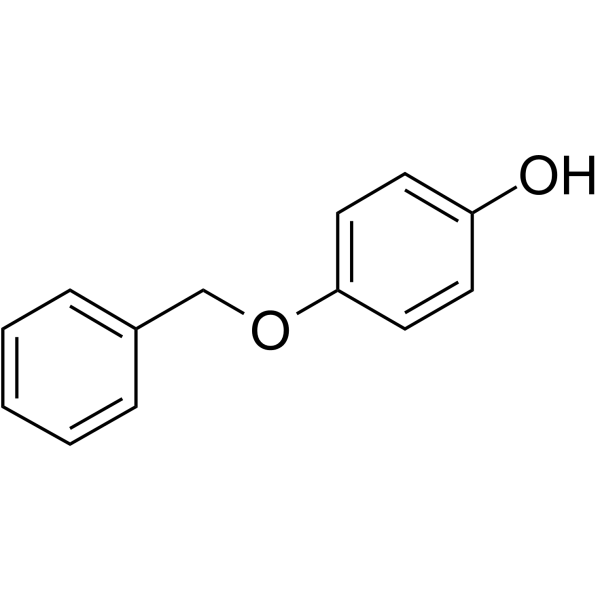
Monobenzone is a potent skin depigmenting agent. Monobenzone induces depigmentation and exhibits good potential for vitiligo research. Monobenzone is a potent inhibitor of RNR (Ribonucleotide reductase) enzyme activity by targeting RRM2 (a regulatory small subunit M2 of RNR) protein, and thus has significant anti-leukemia efficacy in vitro and in vivo. Monobenzone inhibits acute myeloid leukemia (AML) cells proliferation and DNA synthesis, induces cell cycle arrest, and Apoptosis .
loading...
    loading...
2
2 Cited Publications
Cat. No.: HY-N2443
CAS No.: 22153-44-2
Tribuloside is a flavonoid and PDE4 inhibitor (IC50: 6 μM). Tribuloside exhibits antibacterial and antioxidant activities, capable of scavenging DPPH free radicals. Tribuloside also promotes melanogenesis. Tribuloside can be used in the research of hypopigmentary diseases, sun protection, and inflammatory diseases such as acute lung injury .
loading...
    loading...
Cat. No.: HY-30270
CAS No.: 150-76-5
Synonyms: p-Hydroxyanisole
Mequinol (4-Methoxyphenol)yes MercurialisOne of the bioactive ingredients, mainly used for skin discoloration . MequinolIs an antioxidant that has additive/synergistic effects on carcinogenesis when combined with other phenolic antioxidants. Mequinolalso promote hERαDependent chaperone production with potential estrogenic activity .
loading...
    loading...
Cat. No.: HY-30272R
CAS No.: 103-16-2
Monobenzone (Standard) is the analytical standard of Monobenzone. This product is intended for research and analytical applications. Monobenzone is a potent skin depigmenting agent. Monobenzone induces depigmentation and active human vitiligo and exhibits good potential for vitiligo research .
loading...
    loading...
Cat. No.: HY-N4265
CAS No.: 156009-80-2
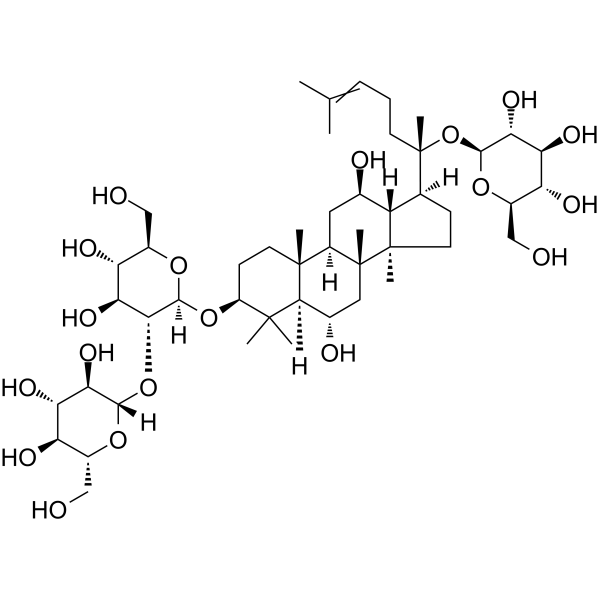
Vinaginsenoside R4, isolated from the leaves of hydroponic Panax ginseng. It has an inhibitory effect on melanin biosynthesis without any cytotoxic effects on the melan-a cells, and enhances the depigmentation on the zebrafish .
loading...
    loading...
Cat. No.: HY-116640
CAS No.: 4208-09-7
Amorphigenin is a trothotenone compound. Amorphigenin inhibits osteoclast differentiation by suppressing the expression of c-Fos and NFATc1 in activated T cells. Amorphigenin degrades melanosome proteins by activating the AMPK-dependent autophagy pathway, but not in dependence of the mTOR pathway. Amorphigenin significantly protects bone mass and reduces bone erosion in a mouse model of inflammatory bone loss. Amorphigenin can be used to study inflammatory bone diseases, postmenopausal osteoporosis, and skin pigmentation disorders .
loading...
    loading...
Cat. No.: HY-30270S
CAS No.: 126840-02-6
Synonyms: 4-Methoxyphenol-d4
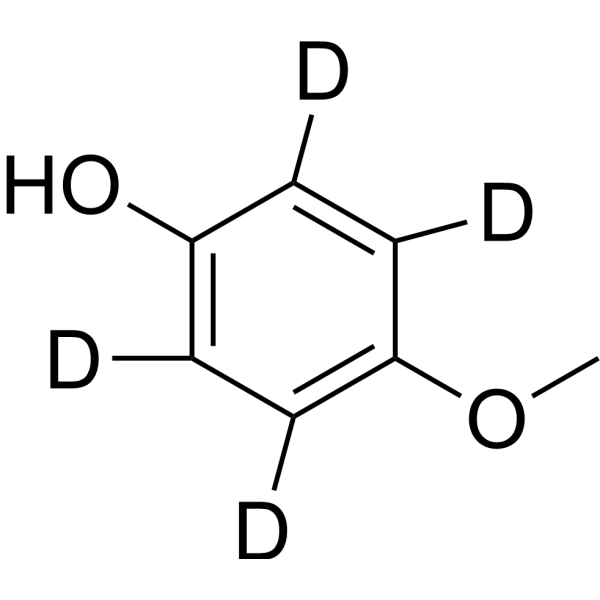
Mequinol-d4 is the deuterium labeled Mequinol[1]. Mequinol (4-Methoxyphenol) is one of bioactive components in Mercurialis. Mequinol is used for skin depigmentation[2].
loading...
    loading...
Cat. No.: HY-30270R
CAS No.: 150-76-5
Synonyms: p-Hydroxyanisole (Standard)
Mequinol (Standard) is the analytical standard of Mequinol. This product is intended for research and analytical applications. Mequinol (4-Methoxyphenol)yes MercurialisOne of the bioactive ingredients, mainly used for skin discoloration . MequinolIs an antioxidant that has additive/synergistic effects on carcinogenesis when combined with other phenolic antioxidants. Mequinolalso promote hERαDependent chaperone production with potential estrogenic activity .
loading...
    loading...
Cat. No.: HY-W129441
CAS No.: 91281-32-2
Synonyms: N-Ac-4-S-CAP
Research Areas:  

Others

N-Acetyl-4-S-mercaptoaminophenol (N-Ac-4-S-CAP) is a compound that is selectively cytotoxic to melanocytes of black mouse hair follicles. It can cause 98% depigmentation of black mouse hair follicles. N-Ac-4-S-CAP can produce visible changes in hair follicle melanocytes 4 hours after intraperitoneal injection, including aggregation of melanin granules and nuclear condensation. Electron microscopy observations showed that it caused progressive destruction of melanocytes, including swelling of membranous organelles, nuclear condensation, and cytoplasmic vacuolation, ultimately leading to complete cell necrosis. N-Ac-4-S-CAP has a specific cytotoxic effect on melanocytes that actively produce eumelanin, but may not affect precursor or dormant melanocytes. These properties suggest that N-Ac-4-S-CAP may have potential application value in the treatment of melanoma or skin whitening.
loading...
    loading...

