1. Search Result
Search Result
Results for "

diseases of digestive system

" in MedChemExpress (MCE) Product Catalog:

12

Inhibitors & Agonists

1

Screening Libraries

1

Biochemical Assay Reagents

2

Inhibitory Antibodies

2

Natural
Products

Targets Recommended:
Cat. No. Product Name Target Research Areas Chemical Structure
  • HY-B0633D

    CD44 Endogenous Metabolite Bacterial Akt PI3K Neurological Disease Metabolic Disease Inflammation/Immunology Cancer
    Hyaluronic acid sodium (MW 200-1560) is a biopolymer composed of repeating disaccharide units, with a molecular weight of 200-1560. Hyaluronic acid sodium is a major component of the extracellular matrix (ECM). It is synthesized on the plasma membrane. Hyaluronic acid sodium exerts its effects by binding to receptors CD44 and RHAMM. Hyaluronic acid sodium activates PI3K-Akt signaling. Hyaluronic acid sodium also enhances cell invasion and angiogenesis by promoting or stimulating the binding of proteolytic MMP-9 to the cell surface. Elevated hyaluronic acid levels are associated with tumor cell growth, adhesion, migration, invasion, and angiogenesis in digestive system cancers. Hyaluronic acid sodium is involved in tissue remodeling and rapid cell proliferation in several physiological processes, including embryonic morphogenesis and wound healing. Hyaluronic acid sodium can be used as a regulator of cancer-associated lymphangiogenesis. Hyaluronic acid sodium can be used as a drug delivery carrier for sodium butyrate, enhancing its anti-proliferative activity against breast cancer cell lines. Hyaluronic acid sodium can lubricate the corneal endothelium. Hyaluronic acid sodium can improve tissue hydration and enhance the resistance of cells to mechanical damage. Hyaluronic acid sodium has been conjugated with antibodies to ensure that the active compound continues to exert its effects at the site of inflammation. Hyaluronic acid sodium can be used in research in the fields of osteoarthritis, ophthalmology, cosmetic dermatology, oncology, and liver diseases .
    Hyaluronic acid sodium (MW 200-1560)
  • HY-B0633E

    Hyaluronan, low endotoxin; Hyaluronate, low endotoxin

    Endogenous Metabolite CD44 Bacterial Akt PI3K Neurological Disease Metabolic Disease Inflammation/Immunology Cancer
    Hyaluronic acid, low endotoxin (Hyaluronan, low endotoxin) is a biopolymer composed of repeating disaccharide units containing low levels of endotoxin. Hyaluronic acid is a major component of the extracellular matrix (ECM). It is synthesized on the plasma membrane. Hyaluronic acid exerts its effects by binding to receptors CD44 and RHAMM. Hyaluronic acid activates PI3K-Akt signaling. Hyaluronic acid also enhances cell invasion and angiogenesis by promoting or stimulating the binding of proteolytic MMP-9 to the cell surface. Elevated hyaluronic acid levels are associated with tumor cell growth, adhesion, migration, invasion, and angiogenesis in digestive system cancers. Hyaluronic acid is involved in tissue remodeling and rapid cell proliferation in several physiological processes, including embryonic morphogenesis and wound healing. Hyaluronic acid can be used as a regulator of cancer-associated lymphangiogenesis. Hyaluronic acid can be used as a drug delivery carrier for sodium butyrate, enhancing its anti-proliferative activity against breast cancer cell lines. Hyaluronic acid can lubricate the corneal endothelium. Hyaluronic acid can improve tissue hydration and enhance the resistance of cells to mechanical damage. Hyaluronic acid has been conjugated with antibodies to ensure that the active compound continues to exert its effects at the site of inflammation. Hyaluronic acid can be used in research in the fields of osteoarthritis, ophthalmology, cosmetic dermatology, oncology, and liver diseases .
    Hyaluronic acid, low endotoxin
  • HY-B1164
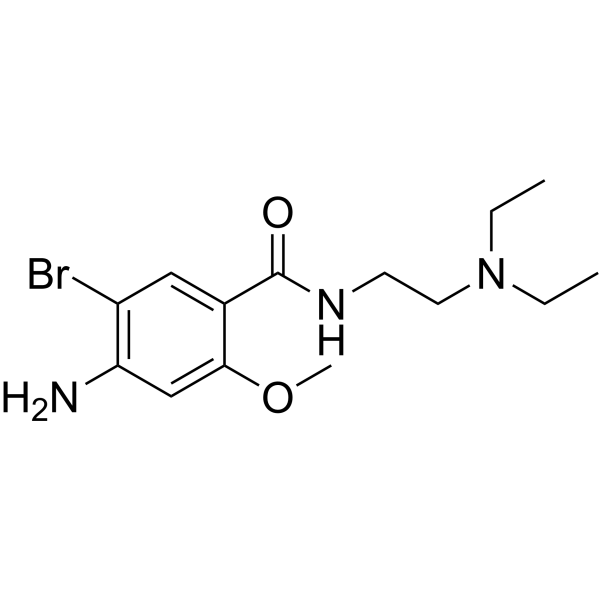
    Bromopride
    2 Publications Verification

    Dopamine Receptor Neurological Disease
    Bromopride is a selective, irreversible, competitive, and orally effective dopamine D2 receptor antagonist. Bromopride can pass through the blood-brain barrier, inhibit the vomiting center, and enhance gastrointestinal motility, exerting antiemetic and gastrointestinal motility effects. Bromopride antagonizes dopamine-mediated vomiting reflexes and promotes gastrointestinal smooth muscle contraction, and has no adverse effects on abdominal wall healing in rats with postoperative abdominal infection. Bromopride can be used for the study of digestive system diseases (such as gastric hypomotility, nausea and vomiting) .
    Bromopride
  • HY-177850

    ACSL Family Metabolic Disease Endocrinology Cancer
    ACSL5-IN-3 (page 115 line 11) is an ACSL5 inhibitor. ACSL5-IN-3 can be used for research of tumours, digestive system diseases, and endocrine and metabolic diseases .
    ACSL5-IN-3
  • HY-P991277

    HS-20137

    Interleukin Related Inflammation/Immunology
    QX-004N (HS-20137) is a monoclonal antibody inhibitor targeting the p19 subunit of interleukin-23 (IL-23). QX-004N is promising for research of immune system diseases and diseases of digestive system .
    QX-004N
  • HY-Z2667

    (R)-Omeprazole; (+)-Omeprazole

    Cytochrome P450 Metabolic Disease Inflammation/Immunology
    (R)-Esomeprazole ((R)-Omeprazole; (+)-Omeprazole) is an orally active cytochrome P450 2C19, CYP3A4, and CYP2C9-related metabolic modulator. (R)-Esomeprazole can be used in studies of digestive system diseases and compound metabolic interactions .
    (R)-Esomeprazole
  • HY-B1164A

    Dopamine Receptor Neurological Disease
    Bromopride hydrochloride is a selective, irreversible, competitive, and orally active dopamine D2 receptor antagonist. Bromopride hydrochloride can pass through the blood-brain barrier, inhibit the vomiting center, and enhance gastrointestinal motility, exerting antiemetic and gastrointestinal motility effects. Bromopride hydrochloride antagonizes dopamine-mediated vomiting reflexes and promotes gastrointestinal smooth muscle contraction, and has no adverse effects on abdominal wall healing in rats with postoperative abdominal infection. Bromopride hydrochloride can be used for the study of digestive system diseases (such as gastric hypomotility, nausea and vomiting) .
    Bromopride hydrochloride
  • HY-P991276

    Interleukin Related Inflammation/Immunology
    FM-303 is a monoclonal antibody inhibitor targeting interleukin-23 (IL-23). FM-303 is promising for research of immune system diseases and diseases of digestive system .
    FM-303
  • HY-105671

    Drug Derivative Inflammation/Immunology
    Balazipone is a phenylmethylene-2,4-pentanedione compound with anti-inflammation activity. Balazipone can be used for digestive system diseases research, such as Crohn's disease .
    Balazipone
  • HY-19179

    Histamine Receptor Metabolic Disease
    TRM-115 is a histamine H2 receptor antagonist. TRM-115 is promising for research of digestive system disease .
    TRM-115
  • HY-N16736

    Others Inflammation/Immunology
    Alpinenone is a sesquiterpene compound isolated from nootropic fruits. Alpinenone exerts anti-inflammatory activity by inhibiting overproduction of nitric oxide (NO) and has traditionally had antidiarrheal, diuretic properties. Alpinenone can be used to study inflammation-related diseases and digestive and urinary system diseases .
    Alpinenone
  • HY-N15354

    Others Others
    Jujubasaponin IV is a triterpenoid saponin compound found in Zizyphi Fructus. Animal studies have shown that Jujubasaponin IV possesses certain anti-ulcer activity, possibly through mechanisms such as enhancing the gastric mucosal barrier or inhibiting gastric acid secretion. Jujubasaponin IV can be used in research on digestive system diseases, particularly in the study of gastric ulcer mechanisms .
    Jujubasaponin IV

Inquiry Online

Your information is safe with us. * Required Fields.

Salutation


Country or Region *

Applicant Name *


Organization Name *

Department *


Email Address *


Product Name *

Cat. No.


Requested quantity *

Phone Number *


Remarks

Inquiry Online

Inquiry Information

Product Name:
Cat. No.:
Quantity:
MCE Japan Authorized Agent:

