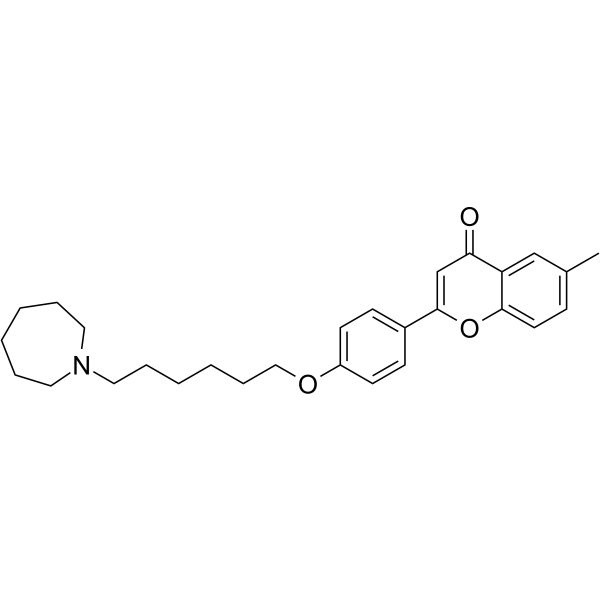
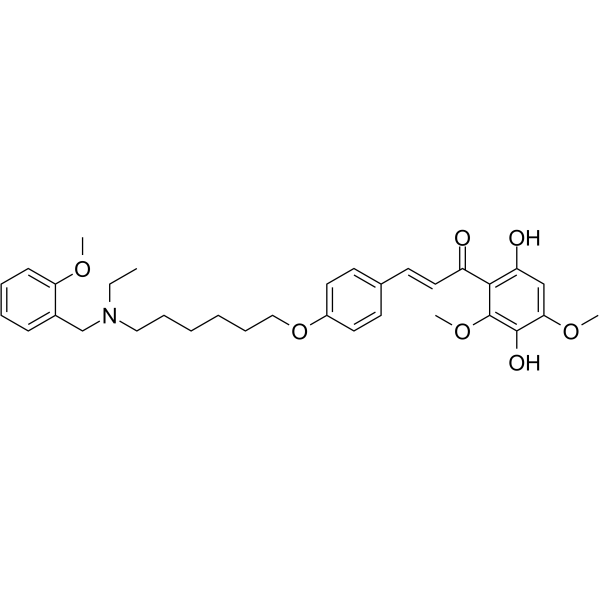
1. Search Result
Search Result
Isoforms Recommended: AChE
Results for "

electric eel AChE

" in MedChemExpress (MCE) Product Catalog:

21

Inhibitors & Agonists

4

Natural
Products

1

Isotope-Labeled Compounds

Targets Recommended:
Cat. No. Product Name Target Research Areas Chemical Structure
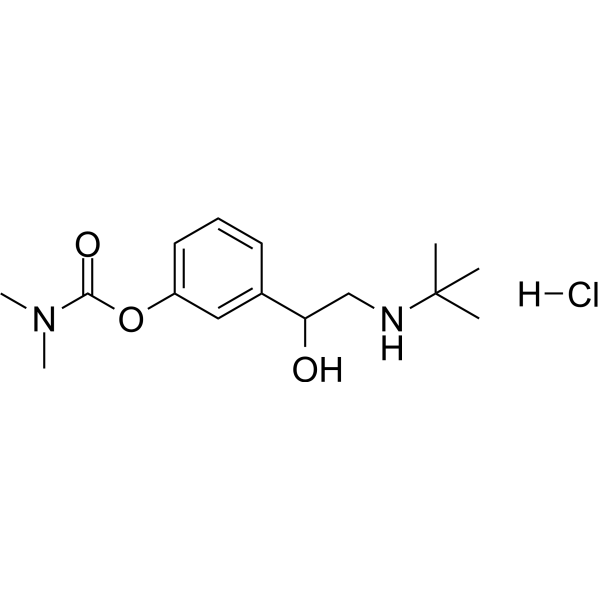
  • HY-122203
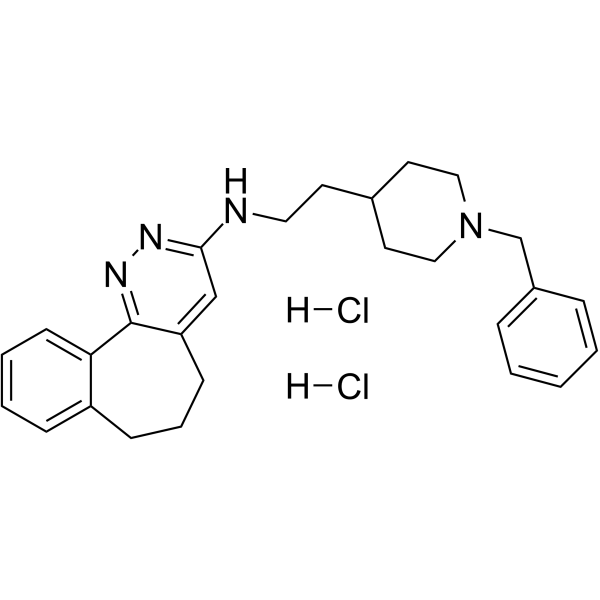
    PCS1055 dihydrochloride
    2 Publications Verification

    mAChR Cholinesterase (ChE) Neurological Disease
    PCS1055 dihydrochloride is a potent, selective and competitive muscarinic M4 receptor antagonist with an IC50 of 18.1 nM and a Kd of 5.72 nM. PCS1055 dihydrochloride inhibits radioligand [ 3H]-NMS binding to the M4 receptor with a Ki of 6.5 nM. PCS1055 dihydrochloride exhibits >100-fold selectivity over M1-, M3-, and M5-receptors and 30-fold selectivity at the M2 receptor. PCS1055 dihydrochloride is also a potent AChE inhibitor with IC50 s of 22 nM and 120 nM for electric eel and human AChE, respectively .
    PCS1055 dihydrochloride
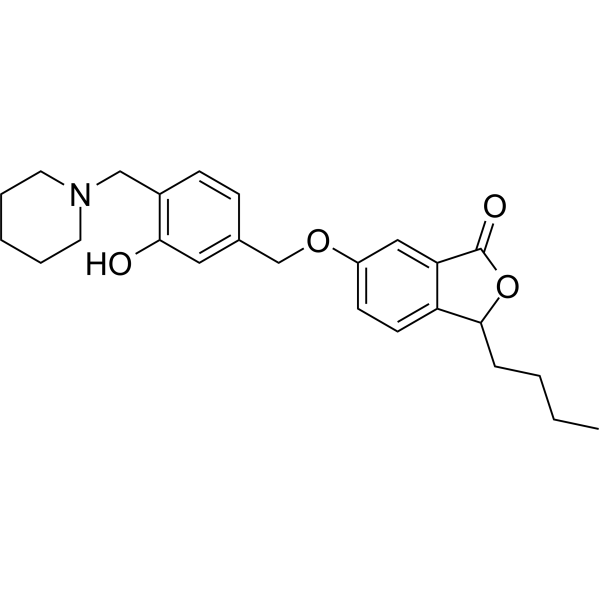
  • HY-110389

    Cholinesterase (ChE) Neurological Disease
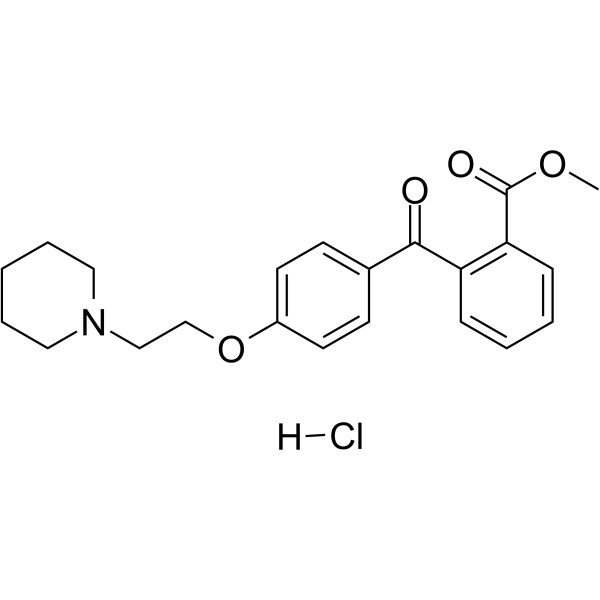
    Pitofenone hydrochloride, a spasmolytic compound, inhibits the acetylcholinesterase (AChE) activity from bovine erythrocytes and from electric eel with Kis of 36 and 45 μM, respectively .
    Pitofenone hydrochloride
  • HY-122203A
    PCS1055
    2 Publications Verification

    mAChR Cholinesterase (ChE) Neurological Disease
    PCS1055 is a selective and competitive antagonist for muscarinic M4 receptor with an IC50 of 18.1 nM and a Kd of 5.72 nM. PCS1055 inhibits radioligand [ 3H]-NMS binding to the M4 receptor with a Ki of 6.5 nM. PCS1055 is also an inhibitor for AChE with IC50 of 22 nM and 120 nM for electric eel and human AChE, respectively .
    PCS1055
  • HY-N10917

    Drug Derivative Infection Cancer
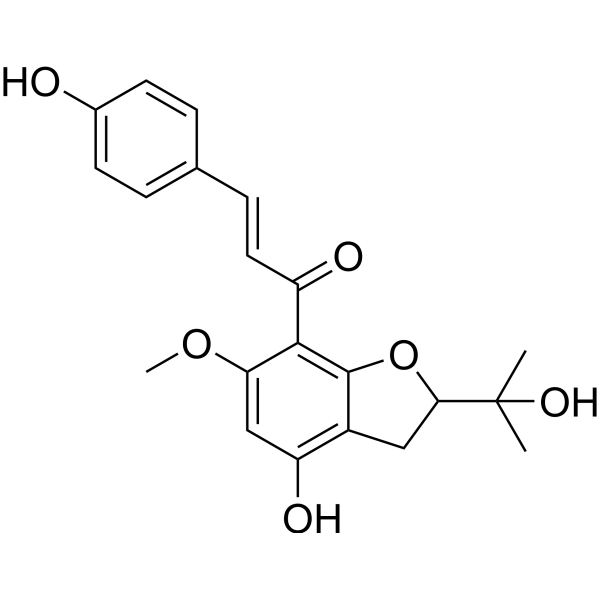
    Xanthohumol I is a derivative of Chalcone (HY-121054) that can be isolated from Humulus lupulus L. (hops). Xanthohumol I exhibits free radical scavenging activity .
    Xanthohumol I
  • HY-105853

    Cholinesterase (ChE) Neurological Disease
    Pitofenone, a spasmolytic compound, inhibits the acetylcholinesterase (AChE) activity from bovine erythrocytes and from electric eel with Kis of 36 and 45 μM, respectively .
    Pitofenone
  • HY-146663

    Cholinesterase (ChE) Neurological Disease
    AChE/BChE-IN-3 (BMC-1) is a dual AChE and BChE inhibitor with IC50 values of 6.08 μM and 0.383 μM against electric eel AChE (elAChE) and equine serum BChE (eqBChE), respectively .
    AChE/BChE-IN-3
  • HY-146663A

    Cholinesterase (ChE) Neurological Disease
    AChE/BChE-IN-3 (BMC-1) hydrochloride is a dual AChE and BChE inhibitor with IC50 values of 6.08 μM and 0.383 μM against electric eel AChE (elAChE) and equine serum BChE (eqBChE), respectively .
    AChE/BChE-IN-3 hydrochloride
  • HY-146762

    Monoamine Oxidase Cholinesterase (ChE) Reactive Oxygen Species (ROS) Neurological Disease Inflammation/Immunology
    MAO-B-IN-7 is a potent and blood-brain barrier permeable MAO-B and AChE inhibitor with IC50s of 41 nM, 87 nM and 0.3 μM for human AChE, electric eel AChE and MAO-B, respectively. MAO-B-IN-7 can effectively alleviate oxidative stress and neuroinflammatory damage .
    MAO-B-IN-7
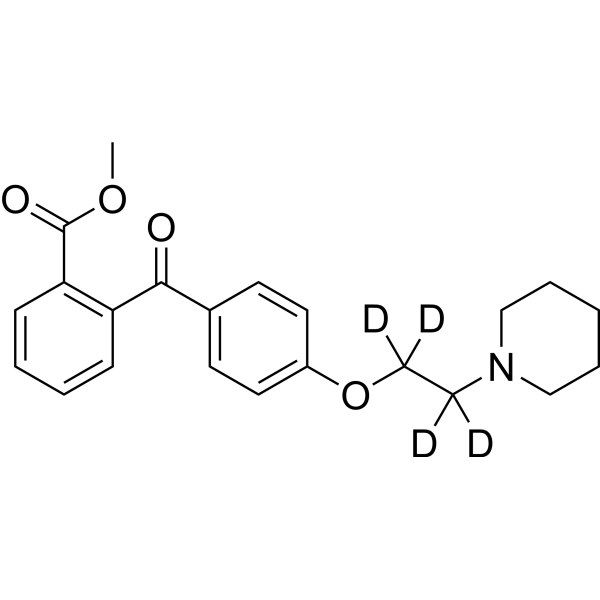
  • HY-105853S

    Isotope-Labeled Compounds Neurological Disease
    Pitofenone-d4 is deuterium labeled Pitofenone (HY-105853). Pitofenone, a spasmolytic compound, inhibits the acetylcholinesterase (AChE) activity from bovine erythrocytes and from electric eel with Kis of 36 and 45 μM, respectively .
    Pitofenone-d4
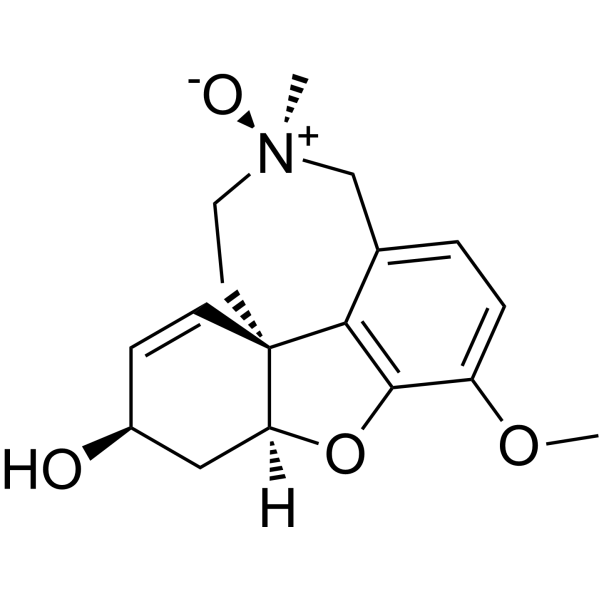
  • HY-N7263

    Cholinesterase (ChE) Neurological Disease
    Galanthamine N-Oxide is an alkaloid obtained from the bulbs of Zephyranthes concolor. Galanthamine N-Oxide inhibits electric eel acetylcholinesterase (AChE) with an EC50 of 26.2 μM. Galanthamine N-Oxide is a prominent inhibitor of substrate accommodation in the active site of the Torpedo californica AChE (TcAChE), hAChE and hBChE enzymes .
    Galanthamine N-Oxide
  • HY-146035

    Cholinesterase (ChE) Histamine Receptor Neurological Disease
    AChE-IN-14 (compound 5) is a potent cholinesterase inhibitor with IC50s of 0.46 , 0.48, and 0.44 μM for electric eel acetylcholinesterase (eeAChE), human recombinant acetylcholinesterase (hAChE), and equine serum butyrylcholinesterase (eqBuChE), respectively. AChE-IN-14 exhibits high affinity toward human H3 receptor (H3R; Ki= 159.8 nM). AChE-IN-14 can be used for the research of Alzheimer’s disease .
    AChE-IN-14
  • HY-144790

    Amyloid-β Cholinesterase (ChE) Monoamine Oxidase Neurological Disease
    AChE-IN-12 is a potent and blood-brain barrier (BBB) penetrant acetylcholinesterase (AChE) with IC50s of 0.41 μM and 1.88 μM for rat AChE and electric eel AChE. AChE-IN-12 is also a good antioxidant (ORAC = 3.3 eq), selective metal chelator and huMAO-B inhibitor (IC50 = 8.8 μM). AChE-IN-12 has remarkable inhibition of self- and Cu 2+-induced Aβ1-42 aggregation, as well as exhibits a good neuroprotective effect. AChE-IN-12 can be used for researching Alzheimer’s disease .
    AChE-IN-12
  • HY-183303

    Cholinesterase (ChE) Reactive Oxygen Species (ROS) Neurological Disease
    AChE-IN-116 is a selective acetylcholinesterase (AChE) inhibitor with an electric eel AChE IC50 of 1.60 μM and Ki of 1.72 μM. AChE-IN-116 exhibits weak ability to scavenge DPPH radical. AChE-IN-116 can be used for the research of Alzheimer's disease .
    AChE-IN-116
  • HY-182254

    Cholinesterase (ChE) Neurological Disease
    AChE/BChE-IN-35, Tacrine (HY-111338) derivative, is a brain-penetrant dual AChE/BChE inhibitor with an Electric Eel AChE IC50 of 123.66 nM, human AChE IC50 of 122.34 nM, and equine BChE IC50 of 488.00 nM. AChE/BChE-IN-35 undergoes LAT1-mediated active transport across cell membranes. AChE/BChE-IN-35 exhibits enhanced brain exposure with slower brain tissue elimination. AChE/BChE-IN-35 can be used for the research of alzheimer's disease .
    AChE/BChE-IN-35
  • HY-N19855

    Geranicardic acid

    Cholinesterase (ChE) Neurological Disease
    Merulinic acid (Geranicardic acid) is an acetylcholinesterase (AChE) inhibitor with an IC50 >94 μM against electric eel-derived AChE. Merulinic acid can be used for the research of alzheimer’s disease .
    Merulinic acid
  • HY-185346

    Cholinesterase (ChE) Neurological Disease
    AChE-IN-113 is a selective acetylcholinesterase inhibitor with a Ki value of 8.3 μM against electric eel acetylcholinesterase. AChE-IN-113 can be used for the research of Alzheimer's disease .
    AChE-IN-113
  • HY-181161

    Cholinesterase (ChE) Neurological Disease
    AChE-IN-107 is a selective acetylcholinesterase (AChE) inhibitor with an IC50 of 0.22 μM and a Ki of 0.207 μM. AChE-IN-107 shows no inhibitory effect on equine serum BChE at 10 μM. AChE-IN-107 exhibits mixed-type inhibition of electric eel acetylcholinesterase, binding to both free enzyme and enzyme-substrate complex. AChE-IN-107 acts as a cytotoxin, reduces cell viability in hepatocellular carcinoma HepG2 cells.AChE-IN-107 can be used for the research of alzheimer's disease .
    AChE-IN-107
  • HY-181861

    Cholinesterase (ChE) Monoamine Oxidase Amyloid-β Tau Protein Neurological Disease
    AChE/MAO-B-IN-9 (Compound E12) is an orally active, selective, reversible, non-competitive AChE and MAO-B inhibitor, with an IC50 of 0.156 μM against electric eel AChE. AChE/MAO-B-IN-9 inhibits Aβ40/42 fibril formation, promotes Aβ fibril depolymerization, and inhibits Tau protein fibril formation. AChE/MAO-B-IN-9 exerts antioxidant and neuroprotective effects, and improves scopolamine (HY-N0296)-induced memory impairment in mice. AChE/MAO-B-IN-9 can be used for the research of Alzheimer's disease .
    AChE/MAO-B-IN-9
  • HY-N16715

    Cholinesterase (ChE) Neurological Disease
    Monardic acid A is a selective inhibitor of AChE, with an IC50 of 53.1 μM against AChE from electric eel. Monardic acid A shows weak inhibitory activity against human erythrocyte AChE (IC50 >100 μM) and has no significant inhibitory effect on BChE. Monardic acid A reduces acetylcholine breakdown by inhibiting AChE activity, and also exhibits inhibitory activity against histamine release and hyaluronidase, thus exerting anti-inflammatory and neurotransmitter regulatory effects. Monardic acid A can be isolated from lungwort (Pulmonaria officinalis) and thyme (Thymus gobicus), and is mainly used in the development of anti-inflammatory drugs and drugs related to neurodegenerative diseases .
    Monardic acid A
  • HY-183760

    Cholinesterase (ChE) HSP GSK-3 Amyloid-β Neurological Disease Inflammation/Immunology
    AChE/BChE-IN-37 is a blood-brain barrier-permeable AChE/BChE inhibitor, with an IC50 of 73.65 μM against electric eel-derived AChE and an IC50 of 82.93 μM against horse-derived BChE. AChE/BChE-IN-37 exhibits chelating activity towards Cu 2+, Ca 2+, Mg 2+, Fe 2+ and Zn 2+. AChE/BChE-IN-37 interacts with HSP90AA1 and GSK-3β. AChE/BChE-IN-37 inhibits the self-induced aggregation of 1-42. AChE/BChE-IN-37 suppresses LPS-induced NO production in cells. AChE/BChE-IN-37 can be used in research related to Alzheimer's disease and inflammatory diseases .
    AChE/BChE-IN-37
  • HY-181851

    Cholinesterase (ChE) Neurological Disease
    AChE-IN-109 is a potent mixed-type cholinesterase inhibitor with significantly stronger inhibitory activity against AChE than BChE. AChE-IN-109 has IC50 values of 0.55 μM and 12.45 μM against AChE and BChE, respectively. AChE-IN-109 inhibits cholinesterases through a mixed-type mechanism, binds to both the catalytic active site (CAS) and peripheral anionic site (PAS) of AChE. AChE-IN-109 can be used for the study of Alzheimer’s disease (AD) .
    AChE-IN-109

Inquiry Online

Your information is safe with us. * Required Fields.

Salutation


Country or Region *

Applicant Name *


Organization Name *

Department *


Email Address *


Product Name *

Cat. No.


Requested quantity *

Phone Number *


Remarks

Inquiry Online

Inquiry Information

Product Name:
Cat. No.:
Quantity:
MCE Japan Authorized Agent:

