6 Results for "

endocrine function disorders

" in MedChemExpress (MCE) Product Catalog:
Products (6)

6 Results for "endocrine function disorders" in MCE Product Catalog:

2
2 Cited Publications
Cat. No.: HY-P1723
CAS No.: 1370290-58-6
Synonyms: Neuropeptide Q
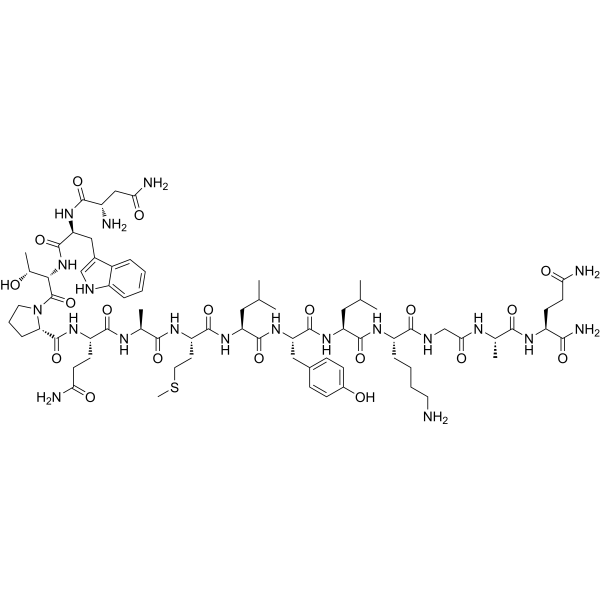
Spexin (Neuropeptide Q) is a selective agonist of galanin receptors GAL2 and GAL3, and is a conserved peptide that functions as a neurotransmitter/neuromodulator and endocrine factor. Spexin can function through both central and peripheral actions. Spexin upregulates Beclin 1 to inhibit ferroptosis induced by excessive autophagy, reduces the uptake of long-chain fatty acids by adipocytes, and regulates energy metabolism by increasing lipid oxidation (e.g., reducing the respiratory exchange ratio in rodents). Spexin improves cardiac function in the Doxorubicin hydrochloride (HY-15142)-induced cardiotoxicity model, protects mitochondrial membrane potential, and reduces iron accumulation and lipid peroxidation. Spexin can be used to study obesity and its related metabolic disorders, cardiovascular diseases (e.g., cardioprotection), and side effects of tumor chemotherapy .
loading...
    loading...
Cat. No.: HY-165595
CAS No.: 8058-79-5
Target:  

5 alpha Reductase

Research Areas:  

Endocrinology

The glutamic acid-alanine-glycine mixture is an orally active activator of testosterone 5α-reductase (5α-reductase). It promotes prostate function by enhancing the activity of 5α-reductase and increasing the levels of free amino acids. However, when combined with testosterone and estradiol (HY-B0141R), the glutamic acid-alanine-glycine mixture inhibits 5α-reductase activity and decreases the levels of free amino acids. The glutamic acid-alanine-glycine mixture can be used in research related to prostate function and endocrine disorders .
loading...
    loading...
Cat. No.: HY-160548
CAS No.: 2170358-67-3
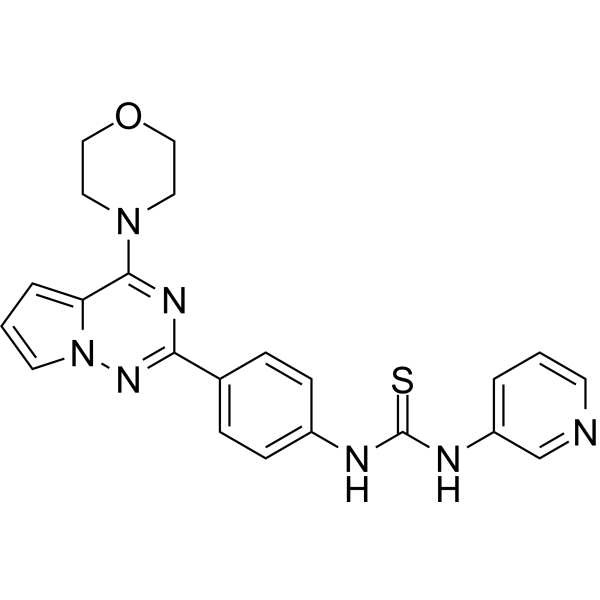
mTOR inhibitor-18 (Example 106) is a mTOR inhibitor. mTOR inhibitor-18 can be used for mTOR related research, such as cancer, immune disorders, cardiovascular disease, viral infection, inflammation, metabolism/endocrine function disorders and neurological disorders .
loading...
    loading...
Cat. No.: HY-P1723A
Synonyms: Neuropeptide Q TFA
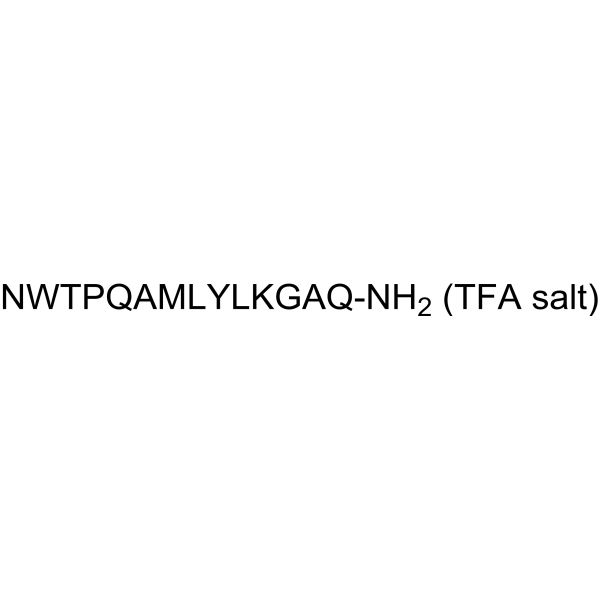
Spexin (Neuropeptide Q) TFA is a selective agonist of galanin receptors GAL2 and GAL3, and is a conserved peptide that functions as a neurotransmitter/neuromodulator and endocrine factor. Spexin TFA can function through both central and peripheral actions. Spexin TFA upregulates Beclin 1 to inhibit ferroptosis induced by excessive autophagy, reduces the uptake of long-chain fatty acids by adipocytes, and regulates energy metabolism by increasing lipid oxidation (e.g., reducing the respiratory exchange ratio in rodents). Spexin TFA improves cardiac function in the Doxorubicin hydrochloride (HY-15142)-induced cardiotoxicity model, protects mitochondrial membrane potential, and reduces iron accumulation and lipid peroxidation. Spexin TFA can be used to study obesity and its related metabolic disorders, cardiovascular diseases (e.g., cardioprotection), and side effects of tumor chemotherapy .
loading...
    loading...
Cat. No.: HY-142932
Target:  

Btk

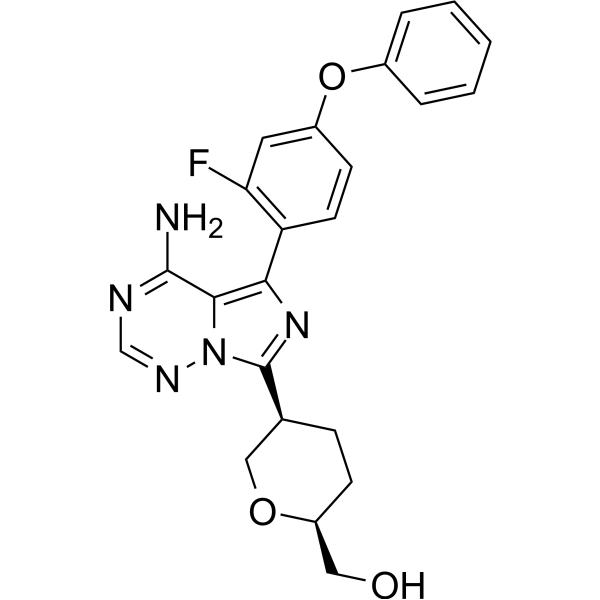
BTK-IN-6 is a potent inhibitor of Bruton's Tyrosine Kinase (BTK). BTK is a member of the Tec family of tyrosine kinases and plays an important role in the regulation of early B-cell development and mature B-cell activation and survival. BTK-IN-6 has the potential for the research of immune disorders, cancer, cardiovascular diseases, viral infections, inflammation, metabolism/endocrine function disorders, and neurological disorders (extracted from patent WO2021136219A1, compound 8) .
loading...
    loading...
Cat. No.: HY-13736
CAS No.: 87056-78-8
Synonyms: CV205-502
Target:  

Dopamine Receptor

Research Areas:  

Neurological Disease

Quinagolide (CV205-502) is a non-ergot dopamine D(2) receptor agonist that promotes dopamine activity. Quinagolide has shown effectiveness in modulating endocrine function, particularly in inhibiting disorders associated with dopamine deficiency. Quinagolide is used to suppress hyperprolactinemia and corresponding clinical symptoms, showing good efficacy. Quinagolide's biological activity enables its use as an important research compound in drug isolation and analysis .
loading...
    loading...

