1. Search Result
Search Result
Results for "

evolution

" in MedChemExpress (MCE) Product Catalog:

499

Inhibitors & Agonists

1

Screening Libraries

485

Biochemical Assay Reagents

2

Peptides

1

Natural
Products

2

Isotope-Labeled Compounds

7

Click Chemistry

Cat. No. Product Name Target Research Areas Chemical Structure
  • HY-W015816

    2,6-DMBQ

    Photosystem II Others
    2,6-Dimethylbenzoquinone (2,6-DMBQ) is a benzoquinone derivative. 2,6-Dimethylbenzoquinone promotes Photosystem II-mediated photoelectrochemical water oxidation via electron transfer between spinach chloroplast Photosystem II membranes and carbon paste electrodes, and accepts electrons from Photosystem II during oxygen evolution assays. 2,6-Dimethylbenzoquinone undergoes direct photolysis in aqueous solution under 365 nm conditions, producing 2,6-dimethylhydroquinone and 3-hydroxy-2,6-dimethylbenzoquinone .
    2,6-Dimethylbenzoquinone
  • HY-W127776

    Ethylenediaminetetraacetic acid zinc disodium tetrahydrate

    Biochemical Assay Reagents Others
    Zn(II)-EDTA (Ethylenediaminetetraacetic acid zinc) disodium tetrahydrate is a coordinating agent. Zn(II)-EDTA disodium tetrahydrate coordinates with Zn 2+ to modify its solvated structure, provides pre-synthesized EDTA-Zn complexes that release Zn 2+ to repair zinc anode defects under interfacial electric field, adsorbs onto zinc anode surface to block oxygen and water molecules, inhibits corrosion and hydrogen evolution reactions, promotes uniform Zn 2+ deposition, suppresses zinc dendrite formation, and modulates the hydrogen bonding network within the electrolyte. Zn(II)-EDTA disodium tetrahydrate acts as an electrolyte additive to enhance reversibility and stability of zinc anodes in aqueous zinc-ion batteries .
    Zn(Ⅱ)-EDTA disodium tetrahydrate
  • HY-W698390

    Biochemical Assay Reagents Others
    3′-Sialyl-N-acetyllactosamine is a class of biochemical reagents used in glycobiology research. Glycobiology studies the structure, synthesis, biology, and evolution of sugars. It involves carbohydrate chemistry, enzymology of glycan formation and degradation, protein-glycan recognition, and the role of glycans in biological systems. This field is closely related to basic research, biomedicine, and biotechnology .
    3′-Sialyl-N-acetyllactosamine
  • HY-W097009

    Biochemical Assay Reagents Others
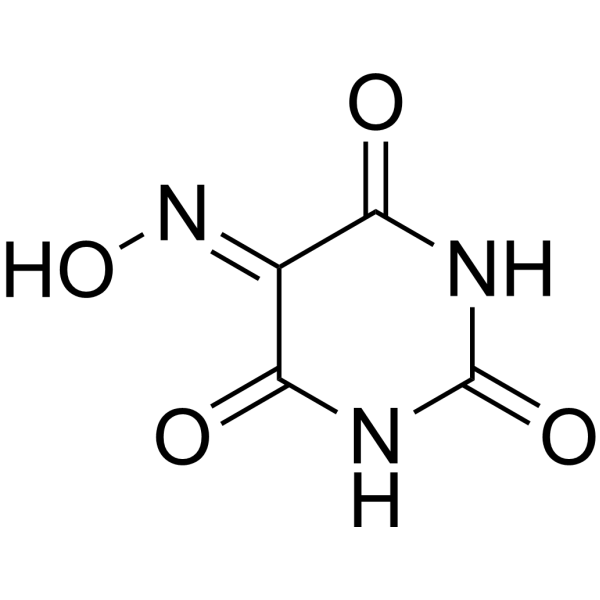
    Violuric acid is a redox mediator used in the laccase system. The violuric acid assay is a method to ascertain that the high-redox potential of laccase is not lost during directed evolution .
    Violuric acid
  • HY-121721

    Fungal Infection
    Inz-5 is a fungal-selective mitochondrial cytochrome bc1 inhibitor. Inz-5 impairs fungal virulence and prevents the evolution of agent resistance .
    Inz-5
  • HY-W718145

    Biochemical Assay Reagents Others
    D-Mannose,6-(dihydrogen phosphate) (sodium) is a class of biochemical reagents used in glycobiology research. Glycobiology studies the structure, synthesis, biology, and evolution of sugars. It involves carbohydrate chemistry, enzymology of glycan formation and degradation, protein-glycan recognition, and the role of glycans in biological systems. This field is closely related to basic research, biomedicine, and biotechnology .
    D-Mannose,6-dihydrogen phosphate sodium
  • HY-W014989

    Biochemical Assay Reagents Others
    Thioglucose is a class of biochemical reagents used in glycobiology research. Glycobiology studies the structure, synthesis, biology, and evolution of sugars. It involves carbohydrate chemistry, enzymology of glycan formation and degradation, protein-glycan recognition, and the role of glycans in biological systems. This field is closely related to basic research, biomedicine, and biotechnology .
    Thioglucose
  • HY-W441330

    Biochemical Assay Reagents Others
    L-Erythrulose is a class of biochemical reagents used in glycobiology research. Glycobiology studies the structure, synthesis, biology, and evolution of sugars. It involves carbohydrate chemistry, enzymology of glycan formation and degradation, protein-glycan recognition, and the role of glycans in biological systems. This field is closely related to basic research, biomedicine, and biotechnology .
    L-Erythrulose
  • HY-W540687

    Biochemical Assay Reagents
    Disialyloctasaccharide is a class of biochemical reagents used in glycobiology studies. Glycobiology studies the structure, synthesis, biology, and evolution of sugars. It deals with carbohydrate chemistry, glycan formation and degradation enzymology, protein-glycan recognition, and the role of glycans in biological systems. The field is closely related to basic research, biomedicine and biotechnology .
    Disialyloctasaccharide
  • HY-W854445
    Lewis-b tetrasaccharide
    1 Publications Verification

    Biochemical Assay Reagents Others
    Lewis-b tetrasaccharide is a class of biochemical reagents used in glycobiology research. Glycobiology studies the structure, synthesis, biology, and evolution of sugars. It involves carbohydrate chemistry, enzymology of glycan formation and degradation, protein-glycan recognition, and the role of glycans in biological systems. This field is closely related to basic research, biomedicine, and biotechnology .
    Lewis-b tetrasaccharide
  • HY-W795464

    Biochemical Assay Reagents
    3-Phosphono pyruvic acid is a class of biochemical reagents used in glycobiology research. Glycobiology studies the structure, synthesis, biology, and evolution of sugars. It deals with carbohydrate chemistry, glycan formation and degradation enzymology, protein-glycan recognition, and the role of glycans in biological systems. The field is closely related to basic research, biomedicine and biotechnology .
    3-Phosphono pyruvic acid
  • HY-W556338

    Biochemical Assay Reagents
    α-D-Glucose 1-phosphate (dipotassium) is a biochemical reagent used in the study of glycobiology. Glycobiology studies the structure, synthesis, biology, and evolution of sugars. It deals with carbohydrate chemistry, glycan formation and degradation enzymology, protein-glycan recognition, and the role of glycans in biological systems. The field is closely related to basic research, biomedicine and biotechnology .
    α-D-Glucose 1-phosphate dipotassium
  • HY-W892781

    Biochemical Assay Reagents Others
    DMTr-TNA A(Bz)-amidite is a nucleoside building block that has been used in the synthesis of oligonucleotides for the study of prebiotic RNA evolution .
    DMTr-TNA A(Bz)-amidite
  • HY-166976

    Biochemical Assay Reagents Others
    Trifucosyllacto-N-hexaose is a class of biochemical reagents used in glycobiology research. Glycobiology studies the structure, synthesis, biology, and evolution of sugars. It involves carbohydrate chemistry, enzymology of glycan formation and degradation, protein-glycan recognition, and the role of glycans in biological systems. This field is closely related to basic research, biomedicine, and biotechnology .
    Trifucosyllacto-N-hexaose
  • HY-167291

    Biochemical Assay Reagents Others
    D-Arabinose 5-phosphate (sodium) is a class of biochemical reagents used in glycobiology research. Glycobiology studies the structure, synthesis, biology, and evolution of sugars. It involves carbohydrate chemistry, enzymology of glycan formation and degradation, protein-glycan recognition, and the role of glycans in biological systems. This field is closely related to basic research, biomedicine, and biotechnology .
    D-Arabinose 5-phosphate sodium
  • HY-W088238

    Biochemical Assay Reagents Others
    Methyl α-D-galactopyranoside is a class of biochemical reagents used in glycobiology research. Glycobiology studies the structure, synthesis, biology, and evolution of sugars. It involves carbohydrate chemistry, enzymology of glycan formation and degradation, protein-glycan recognition, and the role of glycans in biological systems. This field is closely related to basic research, biomedicine, and biotechnology .
    Methyl α-D-galactopyranoside
  • HY-P11362

    Melanocortin Receptor Endocrinology
    δ-MSH is a melanocortin peptide. δ-MSH is a weak melanocortin receptor (MCRs) ligand .
    δ-MSH
  • HY-145501A

    Biochemical Assay Reagents Others
    Sucrose hexasulfate (potassium) is a class of biochemical reagents used in glycobiology research. Glycobiology studies the structure, synthesis, biology, and evolution of sugars. It involves carbohydrate chemistry, enzymology of glycan formation and degradation, protein-glycan recognition, and the role of glycans in biological systems. This field is closely related to basic research, biomedicine, and biotechnology .
    Sucrose hexasulfate potassium
  • HY-W242887

    Biochemical Assay Reagents Others
    D-Gulose (50% in water) is a class of biochemical reagents used in glycobiology research. Glycobiology studies the structure, synthesis, biology, and evolution of sugars. It involves carbohydrate chemistry, enzymology of glycan formation and degradation, protein-glycan recognition, and the role of glycans in biological systems. This field is closely related to basic research, biomedicine, and biotechnology .
    D-Gulose (50% in water)
  • HY-W699750

    Biochemical Assay Reagents Others
    6-α-D-Glucopyranosyl maltotriose is a class of biochemical reagents used in glycobiology research. Glycobiology studies the structure, synthesis, biology, and evolution of sugars. It involves carbohydrate chemistry, enzymology of glycan formation and degradation, protein-glycan recognition, and the role of glycans in biological systems. This field is closely related to basic research, biomedicine, and biotechnology .
    6-α-D-Glucopyranosyl maltotriose
  • HY-W048232

    Biochemical Assay Reagents Others
    Allyl α-D-mannopyranoside is a class of biochemical reagents used in glycobiology research. Glycobiology studies the structure, synthesis, biology, and evolution of sugars. It involves carbohydrate chemistry, enzymology of glycan formation and degradation, protein-glycan recognition, and the role of glycans in biological systems. This field is closely related to basic research, biomedicine, and biotechnology .
    Allyl α-D-mannopyranoside
  • HY-118136

    Calcium Channel Others
    CGP 28392 is an activator for calcium channel, and reactivates the oxygen evolution in calcium-deficient photosystem II (PS II) particles .
    CGP 28392
  • HY-P2702

    Adenylate Cyclase Others
    Helodormin is a VIP-secretin-like peptide isolated from the venom of the Mexican monster lizard (Heloderma suspectum). Helodormin affects a variety of cellular functions by modulating intracellular signaling through activation of adenylate cyclase. Helodormin can be used to study the evolution and function of the secretin and VIP peptide families .
    Helodormin
  • HY-W699477

    Biochemical Assay Reagents Others
    Anthrose is a class of biochemical reagents used in glycobiology research. Glycobiology studies the structure, synthesis, biology, and evolution of sugars. It involves carbohydrate chemistry, enzymology of glycan formation and degradation, protein-glycan recognition, and the role of glycans in biological systems. This field is closely related to basic research, biomedicine, and biotechnology .
    Anthrose
  • HY-167261

    Biochemical Assay Reagents Others
    Polygalacturonic acid (potassium) is a class of biochemical reagents used in glycobiology research. Glycobiology studies the structure, synthesis, biology, and evolution of sugars. It involves carbohydrate chemistry, enzymology of glycan formation and degradation, protein-glycan recognition, and the role of glycans in biological systems. This field is closely related to basic research, biomedicine, and biotechnology .
    Polygalacturonic acid potassium
  • HY-166978

    Biochemical Assay Reagents Others
    D-Lyxosylamine is a class of biochemical reagents used in glycobiology research. Glycobiology studies the structure, synthesis, biology, and evolution of sugars. It involves carbohydrate chemistry, enzymology of glycan formation and degradation, protein-glycan recognition, and the role of glycans in biological systems. This field is closely related to basic research, biomedicine, and biotechnology .
    D-Lyxosylamine
  • HY-W708061

    Biochemical Assay Reagents
    Benoxaprofen glucuronide is a class of biochemical reagents used in the study of glycobiology. Glycobiology studies the structure, synthesis, biology, and evolution of sugars. It deals with carbohydrate chemistry, glycan formation and degradation enzymology, protein-glycan recognition, and the role of glycans in biological systems. The field is closely related to basic research, biomedicine and biotechnology .
    Benoxaprofen glucuronide
  • HY-W415791

    Biochemical Assay Reagents Others
    D-Lactal is a class of biochemical reagents used in glycobiology research. Glycobiology studies the structure, synthesis, biology, and evolution of sugars. It involves carbohydrate chemistry, enzymology of glycan formation and degradation, protein-glycan recognition, and the role of glycans in biological systems. This field is closely related to basic research, biomedicine, and biotechnology .
    D-Lactal
  • HY-W701232

    Biochemical Assay Reagents
    epi-Sancycline (hydrochloride) is a class of biochemical reagents used for glycobiology research. Glycobiology studies the structure, synthesis, biology, and evolution of sugars. It deals with carbohydrate chemistry, glycan formation and degradation enzymology, protein-glycan recognition, and the role of glycans in biological systems. The field is closely related to basic research, biomedicine and biotechnology .
    epi-Sancycline hydrochloride
  • HY-W854386

    Biochemical Assay Reagents Others
    B-Pentasaccharide is a class of biochemical reagents used in glycobiology research. Glycobiology studies the structure, synthesis, biology, and evolution of sugars. It involves carbohydrate chemistry, enzymology of glycan formation and degradation, protein-glycan recognition, and the role of glycans in biological systems. This field is closely related to basic research, biomedicine, and biotechnology .
    B-Pentasaccharide
  • HY-W699102

    Biochemical Assay Reagents Others
    Methyl fucopyranoside is a class of biochemical reagents used in glycobiology research. Glycobiology studies the structure, synthesis, biology, and evolution of sugars. It involves carbohydrate chemistry, enzymology of glycan formation and degradation, protein-glycan recognition, and the role of glycans in biological systems. This field is closely related to basic research, biomedicine, and biotechnology .
    Methyl fucopyranoside
  • HY-W698823

    Biochemical Assay Reagents Others
    Laminaribiose octaacetate is a class of biochemical reagents used in glycobiology research. Glycobiology studies the structure, synthesis, biology, and evolution of sugars. It involves carbohydrate chemistry, enzymology of glycan formation and degradation, protein-glycan recognition, and the role of glycans in biological systems. This field is closely related to basic research, biomedicine, and biotechnology .
    Laminaribiose octaacetate
  • HY-W331816

    Biochemical Assay Reagents Others
    myo-Inositol,hexaacetate is a class of biochemical reagents used in glycobiology research. Glycobiology studies the structure, synthesis, biology, and evolution of sugars. It involves carbohydrate chemistry, enzymology of glycan formation and degradation, protein-glycan recognition, and the role of glycans in biological systems. This field is closely related to basic research, biomedicine, and biotechnology .
    myo-Inositol,hexaacetate
  • HY-W701762

    Biochemical Assay Reagents Others
    D-Maltotriose peracetate is a class of biochemical reagents used in glycobiology research. Glycobiology studies the structure, synthesis, biology, and evolution of sugars. It involves carbohydrate chemistry, enzymology of glycan formation and degradation, protein-glycan recognition, and the role of glycans in biological systems. This field is closely related to basic research, biomedicine, and biotechnology .
    D-Maltotriose peracetate
  • HY-167561

    Biochemical Assay Reagents Others
    Linear B trisaccharide is a class of biochemical reagents used in glycobiology research. Glycobiology studies the structure, synthesis, biology, and evolution of sugars. It involves carbohydrate chemistry, enzymology of glycan formation and degradation, protein-glycan recognition, and the role of glycans in biological systems. This field is closely related to basic research, biomedicine, and biotechnology .
    Linear B trisaccharide
  • HY-W698721

    Biochemical Assay Reagents Others
    N-Acetylmuramic acid methyl ester is a class of biochemical reagents used in glycobiology research. Glycobiology studies the structure, synthesis, biology, and evolution of sugars. It involves carbohydrate chemistry, enzymology of glycan formation and degradation, protein-glycan recognition, and the role of glycans in biological systems. This field is closely related to basic research, biomedicine, and biotechnology .
    N-Acetylmuramic acid methyl ester
  • HY-167804

    Biochemical Assay Reagents
    Beclomethasone 21-propionate is a class of biochemical reagents for the study of glycobiology. Glycobiology studies the structure, synthesis, biology, and evolution of sugars. It deals with carbohydrate chemistry, glycan formation and degradation enzymology, protein-glycan recognition, and the role of glycans in biological systems. The field is closely related to basic research, biomedicine and biotechnology .
    Beclomethasone 21-propionate
  • HY-W739406

    Biochemical Assay Reagents Others
    D-Cellopentose heptadecaacetate is a class of biochemical reagents used in glycobiology research. Glycobiology studies the structure, synthesis, biology, and evolution of sugars. It involves carbohydrate chemistry, enzymology of glycan formation and degradation, protein-glycan recognition, and the role of glycans in biological systems. This field is closely related to basic research, biomedicine, and biotechnology .
    D-Cellopentose heptadecaacetate
  • HY-W416188

    Biochemical Assay Reagents Others
    N-Carbobenzyloxy mannosamine is a class of biochemical reagents used in glycobiology research. Glycobiology studies the structure, synthesis, biology, and evolution of sugars. It involves carbohydrate chemistry, enzymology of glycan formation and degradation, protein-glycan recognition, and the role of glycans in biological systems. This field is closely related to basic research, biomedicine, and biotechnology .
    N-Carbobenzyloxy mannosamine
  • HY-W854390

    Biochemical Assay Reagents Others
    β-L-Allopyranose is a class of biochemical reagents used in glycobiology research. Glycobiology studies the structure, synthesis, biology, and evolution of sugars. It involves carbohydrate chemistry, enzymology of glycan formation and degradation, protein-glycan recognition, and the role of glycans in biological systems. This field is closely related to basic research, biomedicine, and biotechnology .
    β-L-Allopyranose
  • HY-W698432

    Biochemical Assay Reagents Others
    D-(+)-Cellohexose eicosaacetate is a class of biochemical reagents used in glycobiology research. Glycobiology studies the structure, synthesis, biology, and evolution of sugars. It involves carbohydrate chemistry, enzymology of glycan formation and degradation, protein-glycan recognition, and the role of glycans in biological systems. This field is closely related to basic research, biomedicine, and biotechnology .
    D-(+)-Cellohexose eicosaacetate
  • HY-27949

    Biochemical Assay Reagents Others
    N-Acetyllactosamine Heptaacetate is a class of biochemical reagents used in glycobiology research. Glycobiology studies the structure, synthesis, biology, and evolution of sugars. It involves carbohydrate chemistry, enzymology of glycan formation and degradation, protein-glycan recognition, and the role of glycans in biological systems. This field is closely related to basic research, biomedicine, and biotechnology .
    N-Acetyllactosamine Heptaacetate
  • HY-W142936

    Biochemical Assay Reagents Others
    Methyl D-galacturonate is a class of biochemical reagent used in glycobiology research. Glycobiology investigates the structure, synthesis, biology and evolution of sugars. It covers carbohydrate chemistry, enzymology of glycan formation and degradation, protein-glycan recognition, as well as the roles of glycans in biological systems. This field is closely related to basic research, biomedicine and biotechnology .
    Methyl D-galacturonate
  • HY-W747581

    Biochemical Assay Reagents Others
    Deoxycorticosterone 21-glucoside is a class of biochemical reagents used in glycobiology research. Glycobiology studies the structure, synthesis, biology, and evolution of sugars. It involves carbohydrate chemistry, enzymology of glycan formation and degradation, protein-glycan recognition, and the role of glycans in biological systems. This field is closely related to basic research, biomedicine, and biotechnology .
    Deoxycorticosterone 21-glucoside
  • HY-W415887

    Biochemical Assay Reagents
    6-Deoxy-L-talose is a class of biochemical reagents used in glycobiology research. Glycobiology studies the structure, synthesis, biology, and evolution of sugars. It deals with carbohydrate chemistry, glycan formation and degradation enzymology, protein-glycan recognition, and the role of glycans in biological systems. The field is closely related to basic research, biomedicine and biotechnology .
    6-Deoxy-L-talose
  • HY-163970

    Biochemical Assay Reagents Others
    Heparin disaccharide I-A (sodium)is a class of biochemical reagents used in glycobiology research. Glycobiology studies the structure, synthesis, biology, and evolution of sugars. It involves carbohydrate chemistry, enzymology of glycan formation and degradation, protein-glycan recognition, and the role of glycans in biological systems. This field is closely related to basic research, biomedicine, and biotechnology .
    Heparin disaccharide I-A sodium
  • HY-W795962

    Biochemical Assay Reagents Others
    6-Phosphogluconic acid (tricyclohexylammonium) is a class of biochemical reagents used in glycobiology research. Glycobiology studies the structure, synthesis, biology, and evolution of sugars. It involves carbohydrate chemistry, enzymology of glycan formation and degradation, protein-glycan recognition, and the role of glycans in biological systems. This field is closely related to basic research, biomedicine, and biotechnology .
    6-Phosphogluconic acid tricyclohexylammonium
  • HY-W700995

    Biochemical Assay Reagents Others
    Methyl α-L-Idopyranosiduronic Acid Sodium Salt is a class of biochemical reagents used in glycobiology research. Glycobiology studies the structure, synthesis, biology, and evolution of sugars. It involves carbohydrate chemistry, enzymology of glycan formation and degradation, protein-glycan recognition, and the role of glycans in biological systems. This field is closely related to basic research, biomedicine, and biotechnology .
    Methyl α-L-Idopyranosiduronic Acid Sodium Salt
  • HY-166954

    Biochemical Assay Reagents Others
    Sialyllacto-N-neohexaose II is a class of biochemical reagents used in glycobiology research. Glycobiology studies the structure, synthesis, biology, and evolution of sugars. It involves carbohydrate chemistry, enzymology of glycan formation and degradation, protein-glycan recognition, and the role of glycans in biological systems. This field is closely related to basic research, biomedicine, and biotechnology .
    Sialyllacto-N-neohexaose II
  • HY-162817

    Biochemical Assay Reagents Others
    N′-Nitrosonornicotine N-glucuronide is a class of biochemical reagents used in glycobiology research. Glycobiology studies the structure, synthesis, biology, and evolution of sugars. It involves carbohydrate chemistry, enzymology of glycan formation and degradation, protein-glycan recognition, and the role of glycans in biological systems. This field is closely related to basic research, biomedicine, and biotechnology .
    N′-Nitrosonornicotine N-glucuronide

Inquiry Online

Your information is safe with us. * Required Fields.

Salutation


Country or Region *

Applicant Name *


Organization Name *

Department *


Email Address *


Product Name *

Cat. No.


Requested quantity *

Phone Number *


Remarks

Inquiry Online

Inquiry Information

Product Name:
Cat. No.:
Quantity:
MCE Japan Authorized Agent:

