24 Results for "

face

" in MedChemExpress (MCE) Product Catalog:
Products (24)

24 Results for "face" in MCE Product Catalog:

30
30 Publications Verification
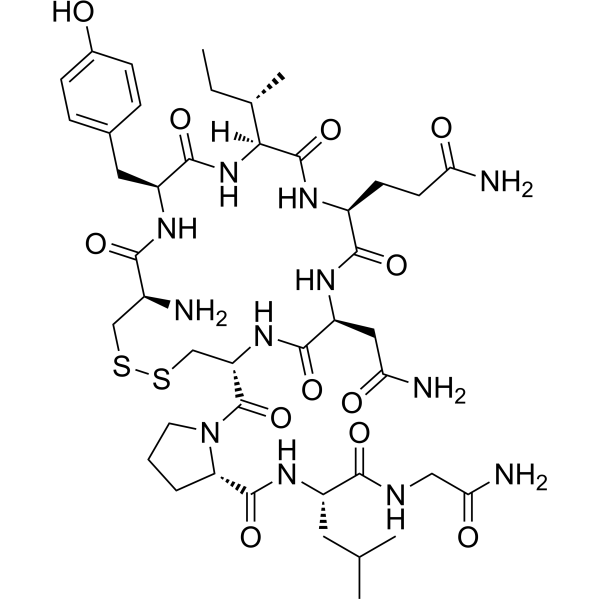
Cat. No.: HY-17571
CAS No.: 50-56-6
Synonyms: α-Hypophamine; Oxytocic hormone
Oxytocin (α-Hypophamine; Oxytocic hormone) is a pleiotropic, hypothalamic peptide known for facilitating parturition, lactation, and prosocial behaviors. Oxytocin can function as a stress-coping molecule with anti-inflammatory, antioxidant, and protective effects especially in the face of adversity or trauma .
loading...
    loading...
30
30 Publications Verification
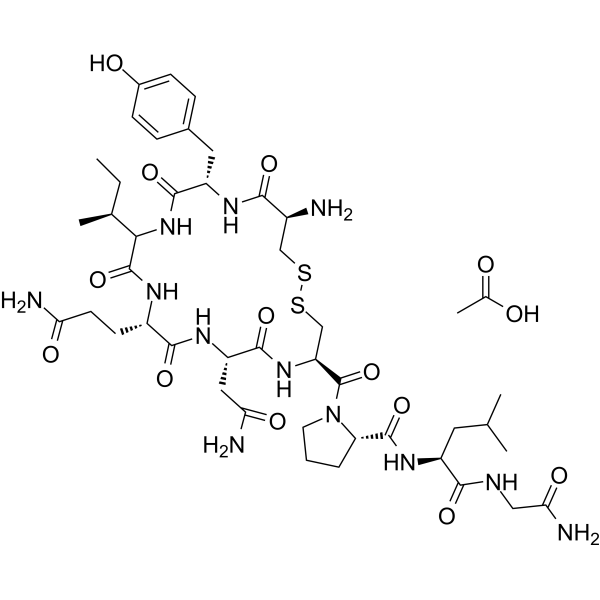
Cat. No.: HY-17571A
CAS No.: 6233-83-6
Synonyms: α-Hypophamine acetate; Oxytocic hormone acetate
Oxytocin (α-Hypophamine) acetate is a pleiotropic, hypothalamic peptide known for facilitating parturition, lactation, and prosocial behaviors. Oxytocin acetate can function as a stress-coping molecule with anti-inflammatory, antioxidant, and protective effects especially in the face of adversity or trauma .
loading...
    loading...
10
10 Cited Publications
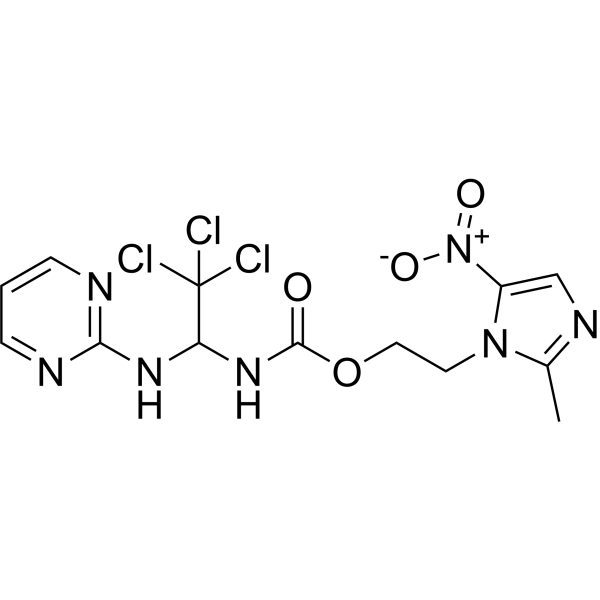
Cat. No.: HY-110287
CAS No.: 300815-04-7
Purity:  99.62%
Target:  

APC Mitosis

Research Areas:  

Cancer

Apcin, a ligand of Cdc20, is a potent and competitive anaphase-promoting complex/cyclosome (APC/C(Cdc20)) E3 ligase activity inhibitor. Apcin competitively inhibits APC/C-dependent ubiquitylation by binding to Cdc20 and preventing substrate recognition. Apcin occupes the D-box-binding pocket on the side face of the WD40-domain and can prolong mitosis .
loading...
    loading...
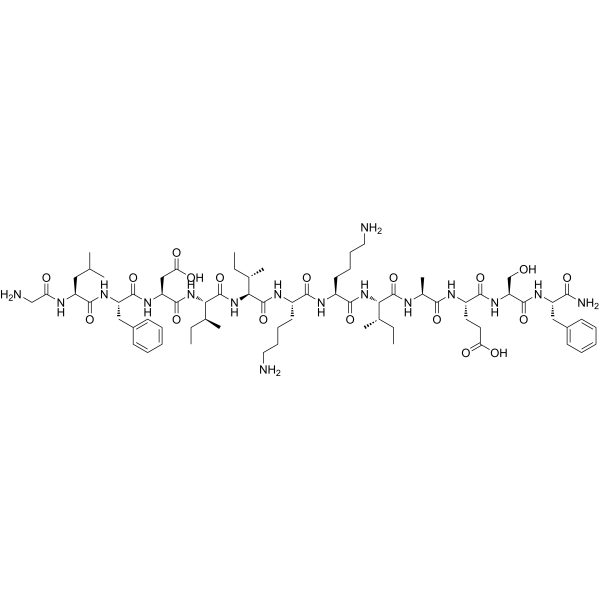
Cat. No.: HY-P5726
CAS No.: 302343-01-7
Target:  

Bacterial Antibiotic

Research Areas:  

Infection Cancer

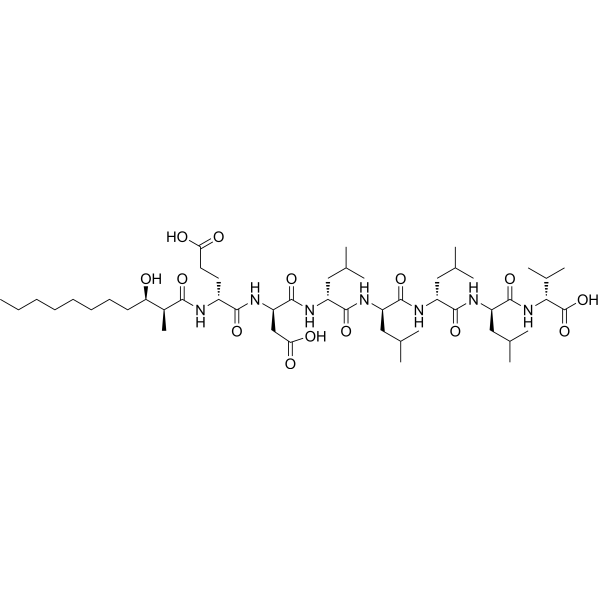
Aurein 1.2 is a C-terminally amidated antimicrobial peptide found in Litoria raniformis. Aurein 1.2 exhibits moderate, broad-spectrum antimicrobial activity against a variety of bacteria, with a MIC of 12-100 μg/mL. Aurein 1.2 forms an amphipathic α-helix with distinct hydrophilic and hydrophobic faces, and may exert antimicrobial and cytotoxic effects on tumor cells by disrupting cell membranes. Aurein 1.2 can be used in studies related to antimicrobial peptides, membrane-active peptides, and tumor cytotoxicity .
loading...
    loading...
Cat. No.: HY-P0065
CAS No.: 868844-74-0
Research Areas:  

Neurological Disease

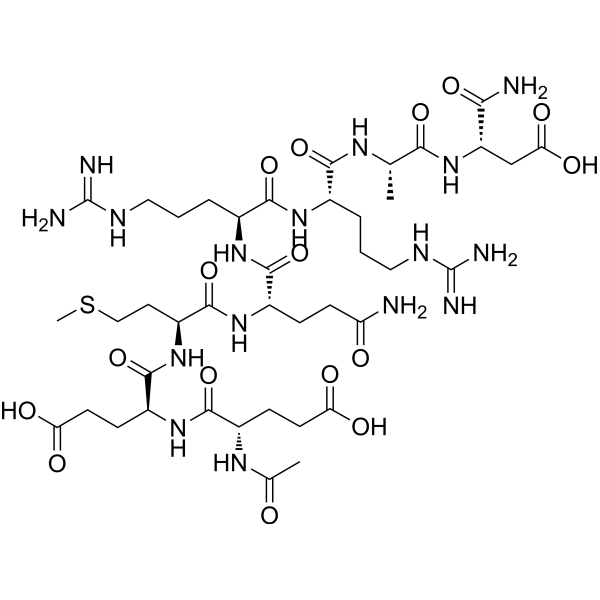
Acetyl octapeptide-1 is a competitive inhibitor of SNAP-25. Acetyl octapeptide-1 affects muscle contraction, thereby making the face (especially the forehead and periocular area) appear smoother and wrinkle-free. Acetyl octapeptide-1 can be used in research on muscle contraction and skincare products .
loading...
    loading...
Cat. No.: HY-W010507
CAS No.: 3976-69-0
Synonyms: Methyl (R)-(-)-3-hydroxybutyrate
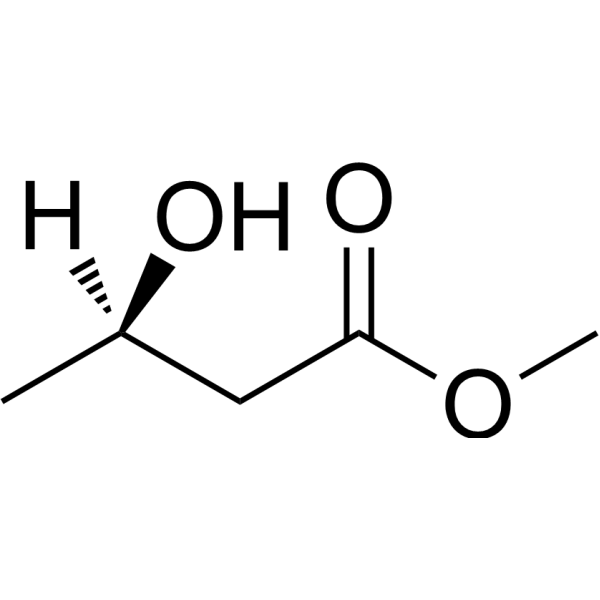
(R)-Methyl 3-hydroxybutanoate, (R)-Methyl 3-hydroxybutanoate is an enantiomer, from the perspective of the methyl (-CH3) group, the hydroxyl (-OH) group on the third carbon atom The group faces to the right, a colorless transparent liquid, soluble in organic solvents such as ethanol and ether, insoluble in water, (R)-Methyl 3-hydroxybutanoate is usually used to synthesize various organic compounds (including drugs, agricultural chemicals and flavoring agents) It can also be used as a chiral auxiliary in asymmetric synthetic reactions involving the formation of chemical bonds in a stereoselective manner.
loading...
    loading...
Cat. No.: HY-W127452
CAS No.: 3398-33-2
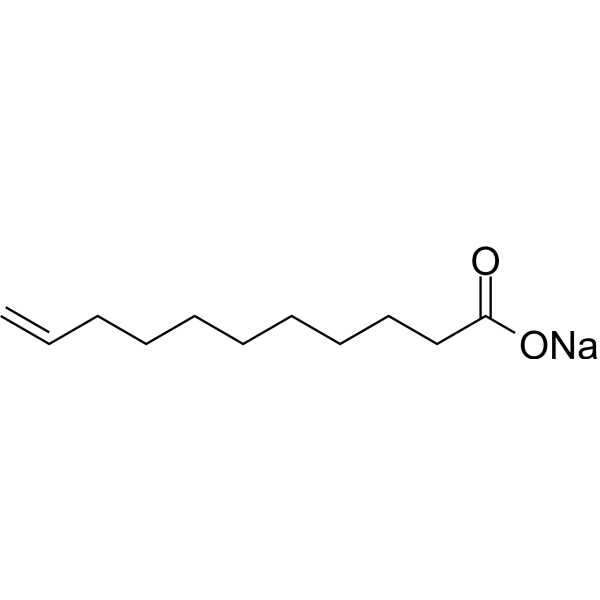
Undecylenate SodiumIt is an organic compound belonging to the class of carboxylates. It is formed by the reaction of undecylenic acid and sodium hydroxide. Undecylenate SodiumIt has a variety of applications in the cosmetic and personal care industries, especially as an antifungal agent in products such as face creams, lotions and shampoos. In addition, it can be used as a preservative in various formulations.
loading...
    loading...
Cat. No.: HY-158104
Target:  

ATF6

Research Areas:  

Others

LPPM-8 is a ligand of Med25 and an inhibitor of Med25 protein-protein interactions (PPIs). LPPM-8 engages Med25 through interaction with the H2 face of its Activator Interaction Domain and stabilizes full-length protein in the cellular proteome. LPPM-8 is an orthosteric inhibitor of H2-binding transcriptional activators (such as ATF6a). LPPM-8 can be used for studying Med25 and Mediator complex biology .
loading...
    loading...
Cat. No.: HY-W739372
CAS No.: 25704-18-1
Research Areas:  

Others

Poly (sodium 4-styrenesulfonate) is an anionic cation-exchange polyelectrolyte and metal ion binding/retention agent. It selectively retains Cr III and Fe II under pH 1 conditions, and its retention effect on all tested metal ions is enhanced under higher pH conditions. Poly (sodium 4-styrenesulfonate) inhibits nanosheet aggregation through edge-face interactions between aromatic rings and the graphite surface, thereby stabilizing the dispersion of reduced graphene oxide nanosheets. When incorporated into the mixed Nafion coating of bismuth film electrodes, Poly (sodium 4-styrenesulfonate) improves the reproducibility, stability, sensitivity, and anti-fouling capability for trace metal detection .
loading...
    loading...
Cat. No.: HY-RS04736
Research Areas:  

Others

FANCE Human Pre-designed siRNA Set A contains three designed siRNAs for FANCE gene (Human), as well as a negative control, a positive control, and a FAM-labeled negative control.

loading...
    loading...
Cat. No.: HY-RS04326
Research Areas:  

Others

ELOVL6 Human Pre-designed siRNA Set A contains three designed siRNAs for ELOVL6 gene (Human), as well as a negative control, a positive control, and a FAM-labeled negative control.

loading...
    loading...
Cat. No.: HY-130004
CAS No.: 2909443-13-4
Target:  

Antibiotic Bacterial

Research Areas:  

Infection

MsbA-IN-6 is a potent inhibitor of MsbA. MsbA-IN-6 is an antibiotic. Gram-negative ATP-binding cassette (ABC) transporter MsbA, an essential inner membrane protein, transports lipopolysaccharide from the inner leaflet to the periplasmic face of the inner membrane. MsbA-IN-6 kills Escherichia coli through inhibition of its ATPase and transport activity, with no loss of activity against clinical multidrug-resistant strains .
loading...
    loading...
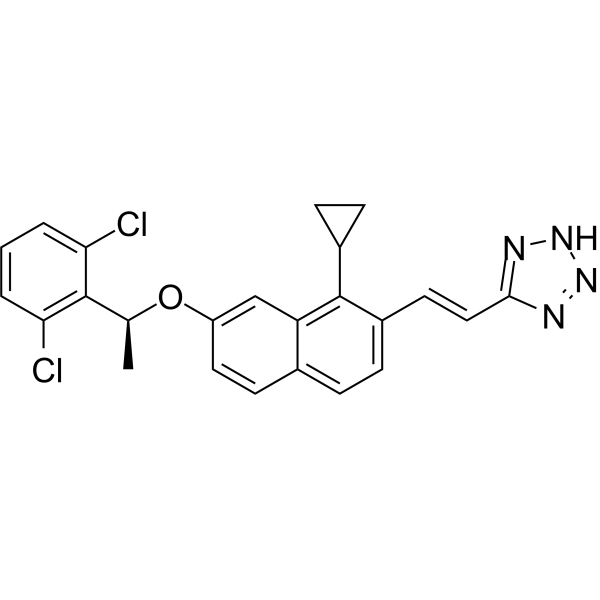
Cat. No.: HY-167690
CAS No.: 1034474-19-5
Target:  

Endogenous Metabolite

Research Areas:  

Infection

MK-6186 is a novel non-nucleoside reverse transcriptase inhibitor with sub-nanomolar activity against wild-type viruses and the two most common NNRTI-resistant RT mutants (K103N and Y181C). MK-6186 exhibits excellent antiviral activity against K103N and Y181C mutant viruses. When MK-6186 targets 12 common NNRTI-associated mutant viruses, only two relatively rare mutants (Y188L and V106I/Y188L) show high resistance, with FC values exceeding 100, while the FC values of the remaining viruses are all below 10. In addition, when MK-6186 faces 96 clinical virus isolates carrying NNRTI-resistant mutations, most (70%) viruses show more than 10-fold resistance to efavirenz (EFV), while only 29% of mutant viruses show more than 10-fold resistance to MK-6186 .
loading...
    loading...
Cat. No.: HY-P810736
Synonyms: FAE; face; ELOVL fatty acid elongase 6; ELOVL FA elongase 6

Host:  

Rabbit

Application:  

WB, IHC-P

Reactivity:  

Human, Mouse

loading...
    loading...
Cat. No.: HY-P810996
Synonyms: face, LCE, ELOVL6, Very long chain fatty acid elongase 6, 3-keto acyl-CoA synthase ELOVL6, ELOVL fatty acid elongase 6, Elongation of very long chain fatty acids protein 6, Fatty acid elongase 2, Fatty acyl-CoA elongase, Long-chain fatty-acyl elongase, Very long chain 3-ketoacyl-CoA synthase 6, Very long chain 3-oxoacyl-CoA synthase 6, ELOVL FA elongase 6, hELO2

Host:  

Rabbit

Application:  

WB, ICC/IF

Reactivity:  

Human, Mouse, Rat

loading...
    loading...
Cat. No.: HY-17571BS
Synonyms: α-Hypophamine-d10 TFA; Oxytocic hormone-d10 TFA
Oxytocin-d10 TFA (α-Hypophamine-d10 TFA) is the deuterium labeled Oxytocin TFA (HY-17571B). Oxytocin (α-Hypophamine; Oxytocic hormone) is a pleiotropic, hypothalamic peptide known for facilitating parturition, lactation, and prosocial behaviors. Oxytocin can function as a stress-coping molecule with anti-inflammatory, antioxidant, and protective effects especially in the face of adversity or trauma.
loading...
    loading...
Cat. No.: HY-17571S
Synonyms: α-Hypophamine-13C6,15N TFA; Oxytocic hormone-13C6,15N TFA
Oxytocin- 13C6, 15N (α-Hypophamine- 13C6, 15N) TFA is the 13C- and 15N-labeled Oxytocin TFA. Oxytocin (α-Hypophamine; Oxytocic hormone) is a pleiotropic, hypothalamic peptide known for facilitating parturition, lactation, and prosocial behaviors. Oxytocin can function as a stress-coping molecule with anti-inflammatory, antioxidant, and protective effects especially in the face of adversity or trauma.
loading...
    loading...
Cat. No.: HY-110287R
CAS No.: 300815-04-7
Research Areas:  

Cancer

Apcin (Standard) is the analytical standard of Apcin (HY-110287). This product is intended for research and analytical applications. Apcin, a ligand of Cdc20, is a potent and competitive anaphase-promoting complex/cyclosome (APC/C(Cdc20)) E3 ligase activity inhibitor. Apcin competitively inhibits APC/C-dependent ubiquitylation by binding to Cdc20 and preventing substrate recognition. Apcin occupes the D-box-binding pocket on the side face of the WD40-domain and can prolong mitosis .
loading...
    loading...
Cat. No.: HY-184616
Nanomaterials with sizes ranging from 1 to 100 nm are generally referred to as nanocrystals. The preparation of platinum nanocrystals with controllable morphology was first reported in 1996. Pt, Ag, Au, Rh, and other nanocrystals have been synthesized using various methods. Platinum has a face-centered cubic (fcc) structure, but unlike Ag, Au, and Pd, it rarely forms twins; most platinum nanocrystals are single-crystal structures. XFJ116 platinum nanoparticles were prepared via a chemical reduction method, exhibiting uniform size and good dispersibility, and can also provide platinum nanoparticles with amino and carboxyl terminator modifications.
loading...
    loading...
Cat. No.: HY-187364
CAS No.: 3050594-88-9
Research Areas:  

Inflammation/Immunology

TRPV4 antagonist-7 is a potent and selective TRPV4 antagonist with an IC50 of 0.2 nM against human targets. TRPV4 antagonist-7 binds to the voltage-sensor-like domain cavity of TRPV4 and inhibits channel activity through the formation of salt bridges, hydrogen bonds, and edge-to-face π-stacking interactions. TRPV4 antagonist-7 induces phospholipid accumulation in HepG2 C3A cells in vitro with an IC50 of 3.8 μM, and exhibits moderate inhibitory effects on CYP2D6 with an IC50 of 5.1 μM. TRPV4 antagonist-7 dose-dependently inhibits GSK1016790A (HY-19608)-induced bronchoconstriction in rats and cough in guinea pigs. TRPV4 antagonist-7 can be used in studies related to respiratory system diseases .
loading...
    loading...

