1. Search Result
Search Result
Results for "

gel protein

" in MedChemExpress (MCE) Product Catalog:

77

Inhibitors & Agonists

1

Screening Libraries

5

Fluorescent Dyes

18

Biochemical Assay Reagents

2

Peptides

38

MCE Kits

2

Recombinant Proteins

2

Isotope-Labeled Compounds

1

Click Chemistry

Cat. No. Product Name Target Research Areas Chemical Structure
  • HY-D0856

    Biochemical Assay Reagents Others
    Bis-Tris is an amine buffer suitable for protein and nucleic acid systems with a pH buffer range of 5.8-7.2. Bis-Tris can also be mixed with HEPES and cacodylic acid buffer to create a pH 8 environment and monitor fluorescence emission intensity at 305 nm. Gels formulated with Bis-Tris also avoid protein degradation in samples prepared at higher pH (pH 8.5) .
    Bis-Tris
  • HY-137383

    Biochemical Assay Reagents Reactive Oxygen Species (ROS) Others
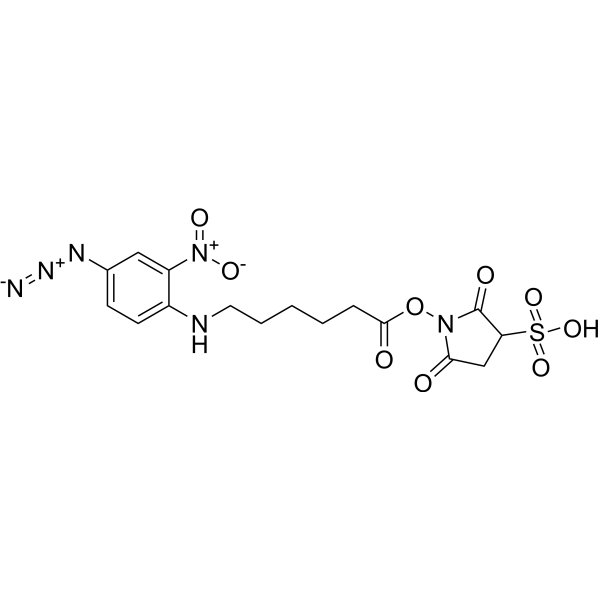
    Sulfo-SANPAH is a primary amine-nitrobenzene azide cross-linker. Sulfo-SANPAH improves the functionalization process of PDMS surfaces, is covalently bound to the PAAm gel surface. Sulfo-SANPAH is widely used to crosslink ECM proteins to various substrates, including acrylic-based hydrogels, such as polyacrylamide hydrogels. Sulfo-SANPAH facilitates covalent binding through its negatively charged sulfonate group on its N-hydroxysuccinimide ester ring and a photoactivated phenyl azide group that is highly reactive with nucleophiles and free radicals .
    Sulfo-SANPAH
  • HY-D0232
    Brilliant Blue R250
    1 Publications Verification

    Brilliant Blue R

    Environmental Pollutants Fluorescent Dye Others
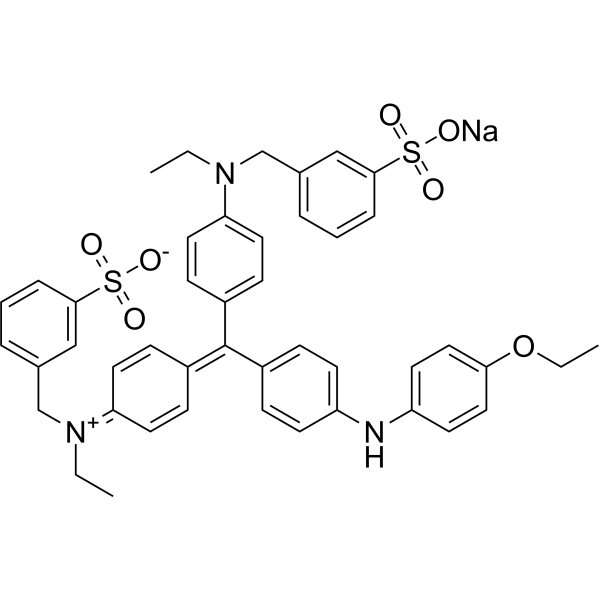
    Brilliant blue R250 (Brilliant Blue R), an anionic dye, is the most popular stain to detect proteins resolved in SDS-PAGE gels .
    Brilliant Blue R250
  • HY-158231

    F127DA

    Integrin FAK Inflammation/Immunology
    Polyether F127 Diacrylate (F127DA) is an acrylated polyethylene glycol-polypropylene glycol-polyethylene glycol triblock copolymer. Polyether F127 Diacrylate rapidly crosslinks and cures into a gel under ultraviolet or visible light with the action of a photoinitiator. Polyether F127 Diacrylate exhibits excellent thermogelation properties and favorable biosafety. Polyether F127 Diacrylate can upregulate the Integrin-FAK pathway, enhance collagen production, increase the protein and gene expression levels of COL-1/SCX, and promote fibroblastic differentiation of periodontal ligament stem cells. Polyether F127 Diacrylate promotes periodontal ligament regeneration and reduces abnormal healing in a rat model of delayed replanted teeth . Polyether F127 Diacrylate promotes functional osteochondral regeneration in a rat model of osteoarthritis. Polyether F127 Diacrylate supports adipose tissue survival, rendering it suitable for breast reconstruction applications. Polyether F127 Diacrylate can be used in studies related to periodontal ligament injury, breast defect and osteoarthritis .
    Polyether F127 Diacrylate
  • HY-D0006

    Fluorescent Dye Others
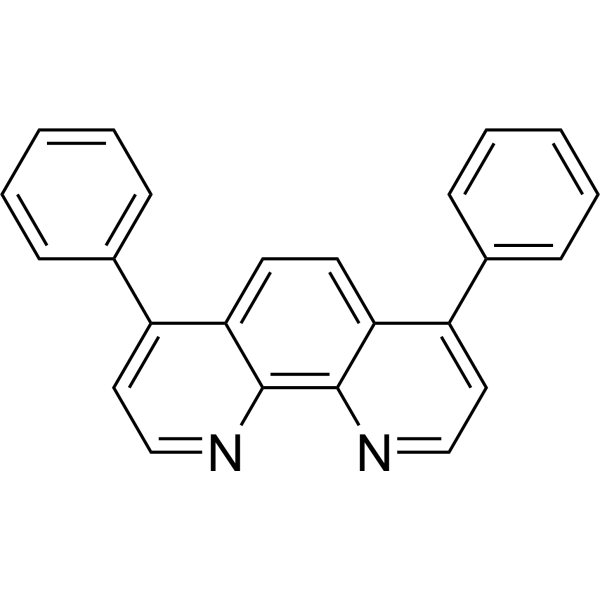
    Bathophenanthroline is a nitrogen-containing organic ligand that can form stable complexes with transition metal ions such as Ru 2+. In proteomics, Bathophenanthroline is often used for in-gel protein staining. The negatively charged sulfonic acid groups of Bathophenanthroline interact electrostatically with the positively charged amino acid residues of proteins, thereby achieving specific binding to proteins and enhancing the fluorescent signal of detection. Bathophenanthroline can be used for protein separation and detection in SDS-PAGE gels in the field of proteomics, as well as other fluorescence studies[1]. Ex/Em=532 nm/610 nm[1].
    Bathophenanthroline
  • HY-148139

    Biochemical Assay Reagents Others
    Cross-linked dextran G 75 is a Gel-filtration media. Cross-linked dextran G 75 also is a dextran-based matrix and used for Gel-filtration chromatography (Particle size range: 40-120 μm; Sphere protein separation range: 3K-80K Da; Polysaccharide separation range: 1K-50K Da) .
    Cross-linked dextran G 75
  • HY-W105681

    Biochemical Assay Reagents Others
    Bis-Tris hydrochloride is an amine buffer suitable for protein and nucleic acid systems with a pH buffer range of 5.8-7.2. Bis-Tris hydrochloride can also be mixed with HEPES and cacodylic acid buffer to create a pH 8 environment and monitor fluorescence emission intensity at 305 nm. Gels formulated with Bis-Tris also avoid protein degradation in samples prepared at higher pH (pH 8.5) .
    Bis-Tris hydrochloride
  • HY-D0947

    DNA Stain Others
    Azure A chloride is a phenothiazine dye. Azure A chloride is an alternative DNA dye used for the separation of DNA and protein fragments in agarose gel electrophoresis and PAGE. Azure A chloride can be chemisorbed on the surface of mild steel according to the Langmuir adsorption isotherm to form a protective film. Azure A chloride binds to double-stranded DNA in a non-cooperative manner via weak intercalation, triggering molecular conformational disturbance, restricted rotational motion, and changes in optical activity .
    Azure A chloride
  • HY-141522

    Biochemical Assay Reagents Others
    Cross-linked dextran G 100 is a gel filtration medium that can be used for protein purification (Sphere protein separation range: 4K-150K Da; Polysaccharide separation range: 1K-100K Da) .
    Cross-linked dextran G 100
  • HY-138560
    Cross-linked dextran G 50
    2 Publications Verification

    Biochemical Assay Reagents Others
    Cross-linked dextran G 50 is a gel filtration medium. Cross-linked dextran G 50 can be used in gel permeation chromatography for fractionation of the glycopeptide mixture (Sphere protein separation range: 1.5K-30K Da; Polysaccharide separation range: 500-10K Da) .
    Cross-linked dextran G 50
  • HY-W460471

    Biochemical Assay Reagents Others
    Tris Buffered Saline is a common buffer reagent in molecular biology, consisting of Tris and NaCl. Tris Buffered Saline can adjust pH and ionic strength and is widely used in DNA/RNA extraction, PCR and protein electrophoresis. Tris Buffered Saline can purify and protect nucleic acid materials and improve reaction efficiency and concentration. In protein electrophoresis, Tris Buffered Saline stabilizes gels and maintains pH. Overall, Tris Buffered Saline offers versatility, good solubility, and low toxicity in molecular biology applications.
    Tris Buffered Saline
  • HY-D1590

    Fluorescent Dye Others
    ODIPY Green 8-P2M is a novel thiol-reactive fluorescence probe based on the BODIPY fluorophore, the fluorescence is strongly quenched by d-PeT and then can be restored after reaction with thiol, resulting in an extremely high signal-to-noise ratio. ODIPY Green 8-P2M can be useful for detecting extremely low concentrations of protein in the gel after SDS-PAGE .
    BODIPY Green 8-P2M
  • HY-W284558

    Biochemical Assay Reagents Others
    Sodium hexadecyl sulfate is a long-chain anionic surfactant. Sodium hexadecyl sulfate can act as an interface-regulating substance to form a soft layer on the surface of carbon nanotubes, guide proteins to adsorb in the correct orientation with active sites facing outward through electrostatic interactions, and significantly enhance the activity of immobilized enzymes. Sodium hexadecyl sulfate can replace or supplement SDS (HY-Y0316) in capillary gel electrophoresis (CGE) .
    Sodium hexadecyl sulfate
  • HY-156045C

    Biochemical Assay Reagents Others
    Cross-linked dextran G 200 is a hydrophilic gel based on molecular size exclusion and targeted macromolecular separation. Cross-linked dextran G 200 works through the gel permeation mechanism, and the cross-linked structure forms a three-dimensional network with a specific pore size, achieving separation based on the molecular hydrodynamic volume. Cross-linked dextran G 200 can be used to adjust the osmotic solute distribution coefficient and the ability to maintain osmotic equilibrium, such as in gel filtration chromatography for purification and analysis of biomacromolecules such as proteins and nucleic acids . Cross-linked dextran G 200 can also be used as a gel filtration filler (particle size range: 40-120 μm; globular protein separation range: 5-600 kDa) .
    Cross-linked dextran G 200
  • HY-W423080

    Biochemical Assay Reagents Fluorescent Dye Others
    TAMRA alkyne, 5-isomer (Compound 3) is an alkyne derivative of TAMRA and can be used for the enrichment, in-gel fluorescence detection, and identification of O-GlcNAc-modified proteins. TAMRA alkyne, 5-isomer contains an Alkyne group and can undergo copper-catalyzed azide-alkyne cycloaddition reaction (CuAAc) with molecules containing Azide groups. It can also undergo strain-promoted alkyne-azide cycloaddition (SPAAC) reactions with molecules containing DBCO or BCN groups .
    TAMRA alkyne,5-isomer
  • HY-156045B

    Biochemical Assay Reagents Others
    Cross-linked dextran G 150 is a hydrophilic gel based on molecular size exclusion and targeted for the separation of macromolecules. Cross-linked dextran G 150 functions through the gel permeation mechanism, where the cross-linked structure forms a three-dimensional network with specific pore diameters, achieving separation based on the molecular volumetric flow. Cross-linked dextran G 150 can be used to regulate the distribution coefficient of permeating solutes and maintain the permeation balance, such as in gel filtration chromatography for the purification and analysis of biological macromolecules like proteins and nucleic acids. Cross-linked dextran G 150 can also be used as a gel filtration filler (particle size range: 40-120 μm; spherical protein separation range: 5-300 kDa) .
    Cross-linked dextran G 150
  • HY-Y0700

    Fluorescent Dye Others
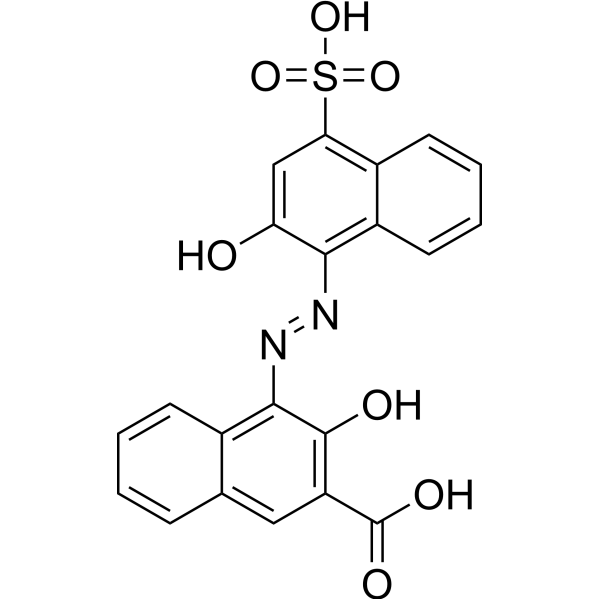
    Calconcarboxylic acid, an azo dye, acts as a silver-ion sensitizer to stain protein in SDS-PAGE gels. Calconcarboxylic acid increases silver binding on protein bands or spots by the formation of a silver-dye complex and also increases the reducing power o
    Calconcarboxylic acid
  • HY-D1544

    Fluorescent Dye Others
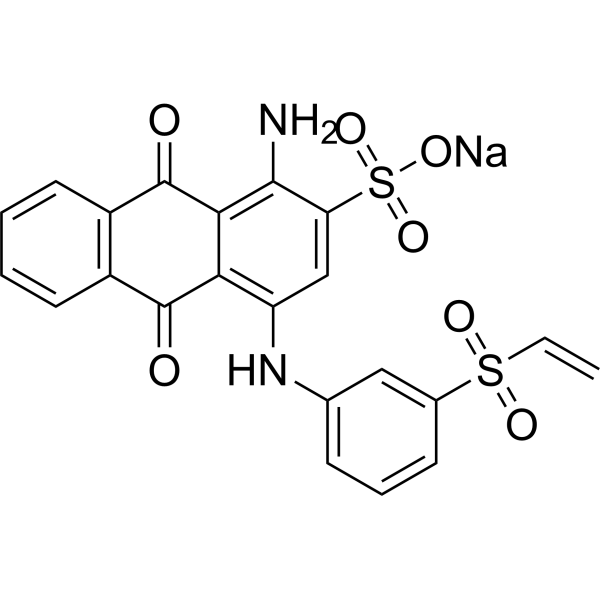
    Uniblue A sodium is a reactive protein stain that can be used in the covalent pre-gel staining of the protein (Ex=594 nM) .
    Uniblue A sodium
  • HY-131933

    Fluorescent Dye Others
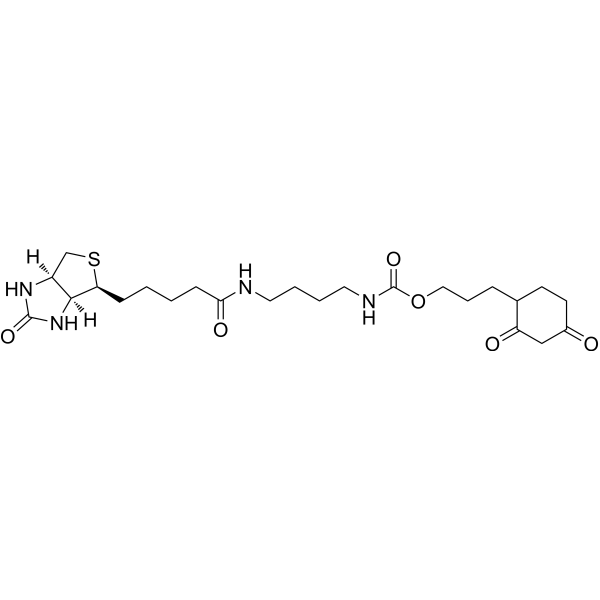
    DCP-Bio3 is a biotinylated probe that can detect labeled proteins in polyacrylamide gels. DCP-Bio3 can be used in research for the identification of oxidized and modified proteins .
    DCP-Bio3
  • HY-149561

    E3 Ligase Ligand-Linker Conjugates Others
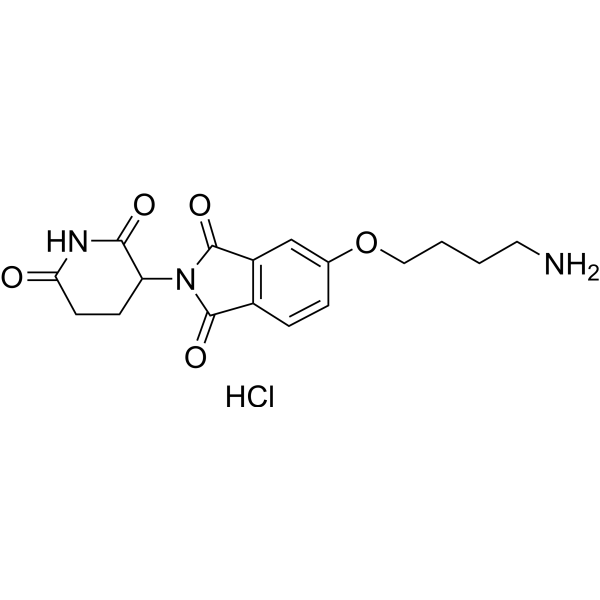
    Thalidomide-5-O-C4-NH2 hydrochloride is a synthetic E3 ligase ligand-linker conjugate, consisting of a cereblon ligand based on Thalidomide (HY-14658) and a linker .
    Thalidomide-5-O-C4-NH2 hydrochloride
  • HY-149559

    E3 Ligase Ligand-Linker Conjugates Autophagy Apoptosis Cancer
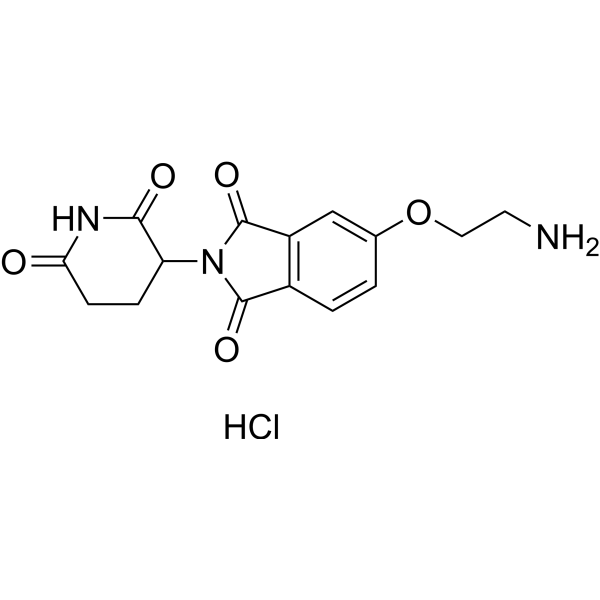
    Thalidomide-5-O-C2-NH2 hydrochloride is the Thalidomide (HY-10984)-based cereblon ligand used in the recruitment of CRBN protein.Thalidomide-5-O-C2-NH2 hydrochloride can be connected to the ligand for protein by a linker to form PROTACs .
    Thalidomide-5-O-C2-NH2 hydrochloride
  • HY-151884

    c-Myc Cancer
    FUBP1-IN-2 (compound 9) is a potent FUBP1 (far upstream binding protein 1) inhibitor. FUBP1-IN-2 inhibits the KH4 FUBP1-FUSE interaction in a gel shift assay. FUBP1-IN-2 binds to FUBP1 in a ChIP assay. FUBP1-IN-2 reduces both c-Myc mRNA and protein expression, increases p21 mRNA and protein expression, and depletes intracellular polyamines .
    FUBP1-IN-2
  • HY-156159

    E3 Ligase Ligand-Linker Conjugates Autophagy Apoptosis Cancer
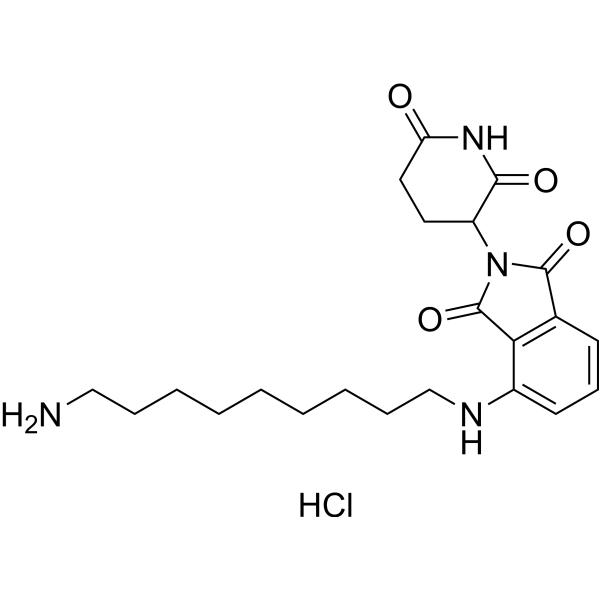
    Thalidomide-NH-C9-NH2 hydrochloride is the Thalidomide (HY-10984)-based cereblon ligand used in the recruitment of CRBN protein.Thalidomide-NH-C9-NH2 hydrochloride can be connected to the ligand for protein by a linker to form PROTACs .
    Thalidomide-NH-C9-NH2 hydrochloride
  • HY-P10494

    Amyloid-β Neurological Disease
    FEFEFKFK is an octapeptide that self-assembles into fibrillar structures. FEFEFKFK is able to form gels at concentrations greater than about 7 mg/mL. The self-assembly and gelation properties of FEFEFKFK help to understand the mechanism of amyloid fibril formation in protein misfolding diseases such as Alzheimer's disease and Parkinson's disease .
    FEFEFKFK
  • HY-138560A

    Biochemical Assay Reagents Others
    Cross-linked dextran G 50, medium is a gel filtration medium. Cross-linked dextran G 50, medium can be used in gel permeation chromatography for fractionation of the glycopeptide mixture (Sphere protein separation range: 1.5K-30K Da; Polysaccharide separation range: 500-10K Da). Cross-linked dextran G 50, medium are microspheres with an average particle size of D50 = 220-250 μm .
    Cross-linked dextran G 50, medium
  • HY-138560B

    Biochemical Assay Reagents Others
    Cross-linked dextran G 50, fine is a gel filtration medium. Cross-linked dextran G 50, fine can be used in gel permeation chromatography for fractionation of the glycopeptide mixture (Sphere protein separation range: 1.5K-30K Da; Polysaccharide separation range: 500-10K Da). Cross-linked dextran G 50, fineThe average particle size is D50=110-130 μmof microspheres .
    Cross-linked dextran G 50, fine
  • HY-149562

    E3 Ligase Ligand-Linker Conjugates Autophagy Apoptosis Cancer
    Thalidomide-5-O-C5-NH2 hydrochloride is the Thalidomide (HY-10984)-based cereblon ligand used in the recruitment of CRBN protein.Thalidomide-5-O-C5-NH2 hydrochloride can be connected to the ligand for protein by a linker to form PROTACs .
    Thalidomide-5-O-C5-NH2 hydrochloride
  • HY-155265

    E3 Ligase Ligand-Linker Conjugates Cancer
    Pomalidomide-5-C9-NH2 hydrochloride is the Pomalidomide-based cereblon (CRBN) ligand used in the recruitment of CRBN protein.Pomalidomide-5-C9-NH2 hydrochloride can be connected to the ligand for protein by a linker to form PROTAC .
    Pomalidomide-5-C9-NH2 hydrochloride
  • HY-149563

    E3 Ligase Ligand-Linker Conjugates Autophagy Apoptosis Cancer
    Thalidomide-5-O-C6-NH2 hydrochloride is the Thalidomide (HY-10984)-based cereblon ligand used in the recruitment of CRBN protein.Thalidomide-5-O-C6-NH2 hydrochloride can be connected to the ligand for protein by a linker to form PROTACs .
    Thalidomide-5-O-C6-NH2 hydrochloride
  • HY-155263

    E3 Ligase Ligand-Linker Conjugates Cancer
    Pomalidomide-5-C7-NH2 hydrochloride is the Pomalidomide-based cereblon (CRBN) ligand used in the recruitment of CRBN protein. Pomalidomide-5-C7-NH2 hydrochloride can be connected to the ligand for protein by a linker to form PROTAC .
    Pomalidomide-5-C7-NH2 hydrochloride
  • HY-155258

    E3 Ligase Ligand-Linker Conjugates Cancer
    Pomalidomide-PEG7-NH2 hydrochloride is the Pomalidomide-based cereblon (CRBN) ligand used in the recruitment of CRBN protein.Pomalidomide-PEG7-NH2 hydrochloride can be connected to the ligand for protein by a linker to form PROTAC .
    Pomalidomide-PEG7-NH2 hydrochloride
  • HY-148662

    E3 Ligase Ligand-Linker Conjugates Cancer
    Pomalidomide-PEG5-C2-NH2 hydrochloride is the Pomalidomide-based cereblon (CRBN) ligand used in the recruitment of CRBN protein.Pomalidomide-PEG5-C2-NH2 hydrochloride can be connected to the ligand for protein by a linker to form PROTAC .
    Pomalidomide-PEG5-C2-NH2 hydrochloride
  • HY-177761

    Molecular Glues Cancer
    GSPT1 degrader-15 (Compound Lib-B-15O) is a potent and highly selective GSPT1 molecular gel degrader, with a DC50 of 154 nM. GSPT1 degrader-15 has almost no effect on the expression of other proteins. GSPT1 degrader-15 exhibits significant anti-proliferative activity against leukemia cells and lymphoma cells. GSPT1 degrader-15 can be used in leukemia and lymphoma research .
    GSPT1 degrader-15
  • HY-159703

    Glutamyl-cysteine; PSSGlu-Cys

    Endogenous Metabolite Others
    Glu-Cys (Glutamyl-cysteine; PSSGlu-Cys) is a dipeptide composed of L-glutamic acid (HY-14608) and L-cysteine (HY-Y0337) joined by a peptide linkage .
    Glu-Cys
  • HY-157883

    Dimethyl-2-hydroxyethylampropanepropanesulfonate

    Bacterial Others
    C7BzO (Dimethyl-2-hydroxyethylampropanepropanesulfonate) is a potent solubilizing detergent that can be used for samples such as bacteria, mammals, and plants. C7BzO can be used for the extraction of proteins and the preparation of two-dimensional gel electrophoresis samples .
    C7BzO
  • HY-156045

    Biochemical Assay Reagents Others
    Cross-linked dextran G 15 is a hydrophilic gel that can be used as a gel filter filler (Sphere protein separation range: >1500 Da; Polysaccharide separation range: >1500 Da) .
    Cross-linked dextran G 15
  • HY-156045A

    Biochemical Assay Reagents Others
    Cross-linked dextran G 10 is a weak cation exchanger and a hydrophilic gel that can be used as a gel filter filler (Sphere protein separation range: >700 Da; Polysaccharide separation range: >700 Da) .
    Cross-linked dextran G 10
  • HY-W127630

    Biochemical Assay Reagents Others
    AMPSO is an alkaline transfer buffer that can be used to transfer strongly basic proteins from gels into nitrocellulose without reducing the transfer efficiency of other proteins. AMPSO can be used for Western Blot analysis, PCR amplification and many other applications .
    AMPSO
  • HY-131772

    Fluorescent Dye Others
    2-AHA-cAMP is an analogue of natural signal molecule cAMP and an activator of cAMP-dependent protein kinase. 2-AHA-cAMP has a free terminal primary amino group, which can be used for coupling to gels or fluorescent dyes .
    2-AHA-cAMP
  • HY-149569

    E3 Ligase Ligand-Linker Conjugates Autophagy Apoptosis Cancer
    Thalidomide-5-O-C12-NH2 hydrochloride is the Thalidomide (HY-10984)-based cereblon ligand used in the recruitment of CRBN protein.Thalidomide-5-O-C12-NH2 hydrochloride can be connected to the ligand for protein by a linker to form PROTACs .
    Thalidomide-5-O-C12-NH2 hydrochloride
  • HY-153337A

    E3 Ligase Ligand-Linker Conjugates Cancer
    Pomalidomide-C11-NH2 hydrochloride is the Pomalidomide-based cereblon (CRBN) ligand used in the recruitment of CRBN protein.Pomalidomide-C11-NH2 hydrochloride can be connected to the ligand for protein by a linker to form PROTAC .
    Pomalidomide-C11-NH2 hydrochloride
  • HY-155256

    E3 Ligase Ligand-Linker Conjugates Autophagy Apoptosis Cancer
    Thalidomide-5-PEG6-NH2 hydrochloride is the Thalidomide (HY-10984)-based cereblon ligand used in the recruitment of CRBN protein.Thalidomide-5-PEG6-NH2 hydrochloride can be connected to the ligand for protein by a linker to form PROTACs .
    Thalidomide-5-PEG6-NH2 hydrochloride
  • HY-149576

    E3 Ligase Ligand-Linker Conjugates Autophagy Apoptosis Cancer
    Thalidomide-4-O-C14-NH2 hydrochloride is the Thalidomide (HY-10984)-based cereblon ligand used in the recruitment of CRBN protein.Thalidomide-4-O-C14-NH2 hydrochloride can be connected to the ligand for protein by a linker to form PROTACs .
    Thalidomide-4-O-C14-NH2 hydrochloride
  • HY-155267

    E3 Ligase Ligand-Linker Conjugates Cancer
    Pomalidomide-5-C11-NH2 hydrochloride is the Pomalidomide-based cereblon (CRBN) ligand used in the recruitment of CRBN protein.Pomalidomide-5-C11-NH2 hydrochloride can be connected to the ligand for protein by a linker to form PROTAC .
    Pomalidomide-5-C11-NH2 hydrochloride
  • HY-155270

    E3 Ligase Ligand-Linker Conjugates Cancer
    Pomalidomide-5-C14-NH2 hydrochloride is the Pomalidomide-based cereblon (CRBN) ligand used in the recruitment of CRBN protein. Pomalidomide-5-C14-NH2 hydrochloride can be connected to the ligand for protein by a linker to form PROTAC .
    Pomalidomide-5-C14-NH2 hydrochloride
  • HY-149566

    E3 Ligase Ligand-Linker Conjugates Autophagy Apoptosis Cancer
    Thalidomide-5-O-C9-NH2 hydrochloride is the Thalidomide (HY-10984)-based cereblon ligand used in the recruitment of CRBN protein.Thalidomide-5-O-C9-NH2 hydrochloride can be connected to the ligand for protein by a linker to form PROTACs .
    Thalidomide-5-O-C9-NH2 hydrochloride
  • HY-155268

    E3 Ligase Ligand-Linker Conjugates Cancer
    Pomalidomide-5-C12-NH2 hydrochloride is the Pomalidomide-based cereblon (CRBN) ligand used in the recruitment of CRBN protein.Pomalidomide-5-C12-NH2 hydrochloride can be connected to the ligand for protein by a linker to form PROTAC .
    Pomalidomide-5-C12-NH2 hydrochloride
  • HY-156161

    E3 Ligase Ligand-Linker Conjugates Autophagy Apoptosis Cancer
    Thalidomide-NH-C13-NH2 hydrochloride is the Thalidomide (HY-10984)-based cereblon ligand used in the recruitment of CRBN protein.Thalidomide-NH-C13-NH2 hydrochloride can be connected to the ligand for protein by a linker to form PROTACs .
    Thalidomide-NH-C13-NH2 hydrochloride
  • HY-149567

    E3 Ligase Ligand-Linker Conjugates Autophagy Apoptosis Cancer
    Thalidomide-5-O-C10-NH2 hydrochloride is the Thalidomide (HY-10984)-based cereblon ligand used in the recruitment of CRBN protein.Thalidomide-5-O-C10-NH2 hydrochloride can be connected to the ligand for protein by a linker to form PROTACs .
    Thalidomide-5-O-C10-NH2 hydrochloride
  • HY-149564

    E3 Ligase Ligand-Linker Conjugates Autophagy Apoptosis Cancer
    Thalidomide-5-O-C7-NH2 hydrochloride is the Thalidomide (HY-10984)-based cereblon ligand used in the recruitment of CRBN protein.Thalidomide-5-O-C7-NH2 hydrochloride can be connected to the ligand for protein by a linker to form PROTACs .
    Thalidomide-5-O-C7-NH2 hydrochloride

Inquiry Online

Your information is safe with us. * Required Fields.

Salutation


Country or Region *

Applicant Name *


Organization Name *

Department *


Email Address *


Product Name *

Cat. No.


Requested quantity *

Phone Number *


Remarks

Inquiry Online

Inquiry Information

Product Name:
Cat. No.:
Quantity:
MCE Japan Authorized Agent:

