10 Results for "

glomeruli

" in MedChemExpress (MCE) Product Catalog:
Products (10)

10 Results for "glomeruli" in MCE Product Catalog:

1
1 Cited Publications
Cat. No.: HY-129380
CAS No.: 21291-40-7
Purity:  ≥97.0%
Synonyms: Fructoselysine
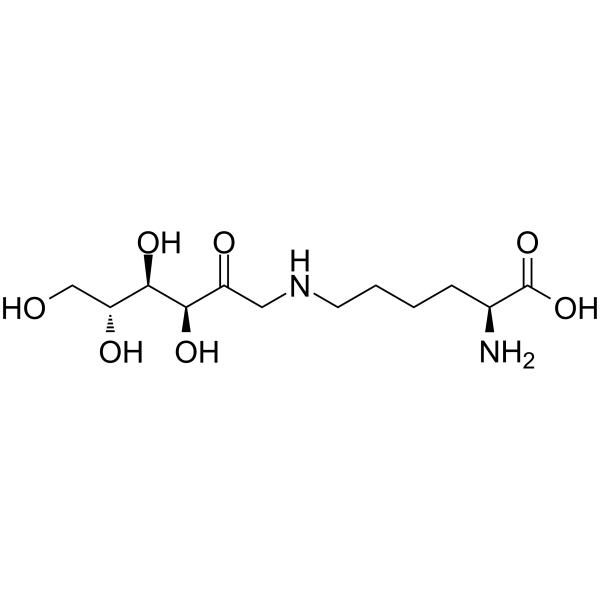
Fructosyl-lysine (Fructoselysine) is an amadori glycation product from the reaction of glucose and lysine by the Maillard reaction. Fructosyl-lysine is the precursor to glucosepane, a lysine–arginine protein cross-link that can be an indicator in diabetes?detection .
loading...
    loading...
1
1 Cited Publications
Cat. No.: HY-129380A
CAS No.: 96192-35-7
Purity:  ≥95.0%
Synonyms: Fructoselysine dihydrochloride
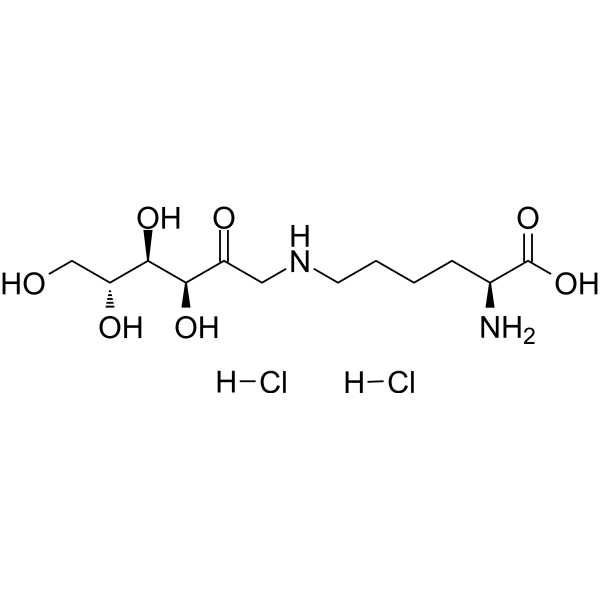
Fructosyl-lysine (Fructoselysine) dihydrochloride is an amadori glycation product from the reaction of glucose and lysine by the Maillard reaction. Fructosyl-lysine dihydrochloride is the precursor to glucosepane, a lysine–arginine protein cross-link that can be an indicator in diabetes detection .
loading...
    loading...
Cat. No.: HY-N13248
Target:  

Glycosidase

Research Areas:  

Metabolic Disease

Mulberry Leaf Extract is a mulberry leaf extract, and its components include: 1-Deoxynojirimycin. Mulberry Leaf Extract can effectively alleviate the adverse effects of high-fat diet on blood lipids and renal function, regulate lipid metabolism abnormalities, and significantly inhibit the accumulation of glycosylated substances in glomeruli. Mulberry Leaf Extract can regulate the key signaling pathways of diabetic nephropathy, but does not directly affect blood glucose levels. .
loading...
    loading...
Cat. No.: HY-129380AR
CAS No.: 96192-35-7
Synonyms: Fructoselysine dihydrochloride (Standard)
Fructosyl-lysine (dihydrochloride) (Standard) is the analytical standard of Fructosyl-lysine (dihydrochloride). This product is intended for research and analytical applications. Fructosyl-lysine (Fructoselysine) dihydrochloride is an amadori glycation product from the reaction of glucose and lysine by the Maillard reaction. Fructosyl-lysine dihydrochloride is the precursor to glucosepane, a lysine-arginine protein cross-link that can be an indicator in diabetes detection .
loading...
    loading...
Cat. No.: HY-129380R
CAS No.: 21291-40-7
Synonyms: Fructoselysine (Standard)
Diethylene glycol (Standard) is the analytical standard of Diethylene glycol. This product is intended for research and analytical applications. 2,2'-Oxybis(ethan-1-ol) (DIETHYLENE GLYCOL) has excellent solubility and reactivity in certain chemical reactions and can help accelerate the activation of certain reactants. In addition, it is widely used in the production process of pigments, resins and other chemicals. Although the compound has no direct medical application, it has wide applications in chemical research and industrial production.
loading...
    loading...
Cat. No.: HY-102093A
CAS No.: 151801-76-2
Target:  

Others

Research Areas:  

Others

ZD 7155 is an AT1R selective antagonist with renal function modulating activity. The effects of ZD 7155 on glomeruli and tubules were measured in 1- (N = 9) and 6-week-old (N = 13) lambs. Pretreatment with ZD 7155 after L-NAME infusion did not alter glomerular function in 1- or 6-week-old lambs. During postnatal development, Ang II modulates the effects of NO on electrolyte handling via AT1R and AT2R. In 6-week-old lambs, selective inhibition of AT1R and AT2R increased the excretion of Na+, K+, and Cl-. In 6-week-old lambs, pretreatment with ZD 7155 and PD 123319 followed by the addition of L-NAME increased urine flow rate by 200%, free water clearance by 50%, and decreased urine osmolality by 40%. The same trends of changes in these variables were also observed when L-NAME was added to ZD 7155 or PD 123319, although to a lesser extent.
loading...
    loading...
Cat. No.: HY-113488
CAS No.: 81246-85-7
Target:  

TRP Channel

Research Areas:  

Endocrinology

8,9-Epoxyeicosatrienoic acid has an unique protective effect on glomeruli. 8,9-Epoxyeicosatrienoic acid blocks the increase in glomerular albumin permeability caused by circulating permeability factor (FSPF). 8,9-Epoxyeicosatrienoic acid can be used for the research of glomerular dysfunction .
loading...
    loading...
Cat. No.: HY-178850
CAS No.: 219964-53-1
Target:  

TGF-β Receptor

Research Areas:  

Inflammation/Immunology

TJN-331 is a potent and orally active TGF-β1 Inhibitor. TJN-331 ameliorates anti-glomerular basement membrane (GBM) nephritis in rats by inhibitng TGF-β1 production, thereby reducing extracapillary proliferation in glomeruli. TJN-331 inhibits mesangial expansion in experimental IgA nephropathy in ddY mice. TJN-331 can be used for the research of nephritis and IgA nephropathy .
loading...
    loading...
Cat. No.: HY-181040
CAS No.: 3049710-19-9
Target:  

Complement System

Research Areas:  

Inflammation/Immunology

Factor B-IN-8 (Compound (3R ,4R )-15) is a potent, selective and orally active factor B inhibitor with an IC50 of 10.2 nM. Factor B-IN-8 can effectively inhibit the binding of factor B to C3b and the subsequent formation of C3 convertase (C3bBb). Factor B-IN-8 can inhibit the deposition of membrane attack complex (MAC) mediated by alternativepathway with an IC50 of 59.3 nM. Factor B-IN-8 can reduce the cleavage of factor B protein and decrease the deposition of complement C3d in the glomeruli and renal tubules. Factor B-IN-8 can be used for researches of arthritis and paroxysmal nocturnal hemoglobinuria (PNH) .
loading...
    loading...
Cat. No.: HY-K0606

MCE Methenamine Silver Stain Kit For Basement Membrane (PASM) is developed based on the classical staining principle. Through an optimized staining system and standardized reagent combination, it enables clear visualization of basement membranes and related reticular structures in tissue sections. This method is particularly widely used in renal pathology research, where it is commonly applied to examine morphological alterations of the glomerular capillary basement membrane, such as thickening, rupture, folding, double-contour (tram-track) appearance, or abnormal proliferation caused by inflammatory injury. In addition, this method can also be applied to the histological investigation and morphological observation of glomerular diseases, diabetic nephropathy, and other basement membrane–associated pathological changes.

loading...
    loading...

