8 Results for "

hepatocarcinogenesis

" in MedChemExpress (MCE) Product Catalog:
Products (8)

8 Results for "hepatocarcinogenesis" in MCE Product Catalog:

Cat. No.: HY-113261
CAS No.: 38677-66-6
Purity:  99.91%
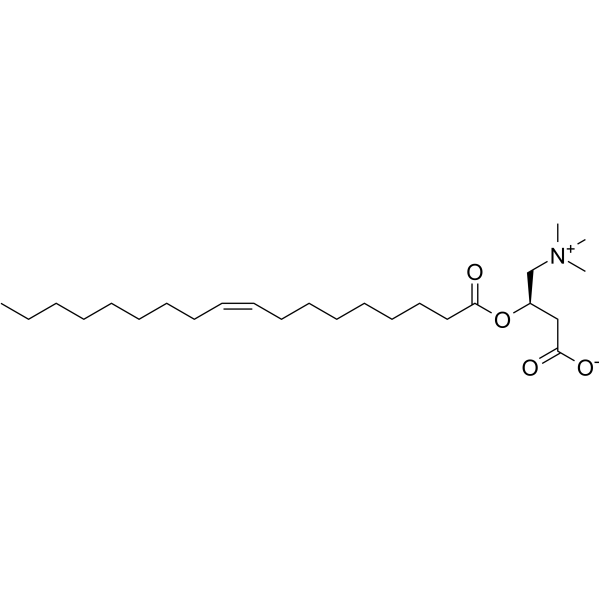
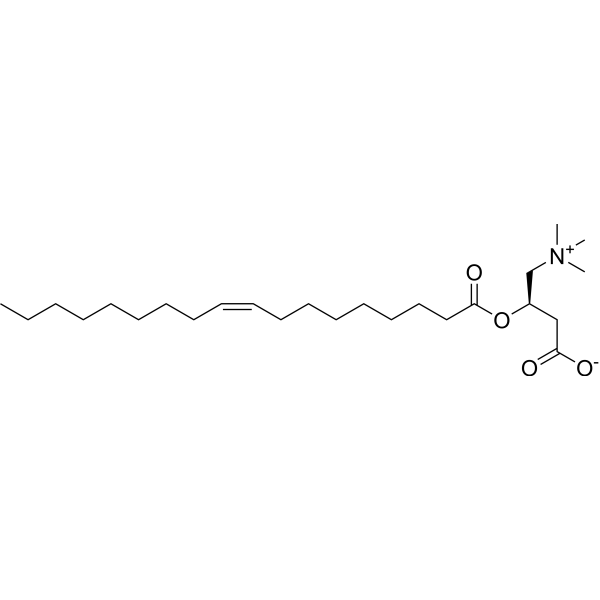
Oleoylcarnitine, the metabolite which accumulates through suppression of fatty acid β-oxidation, can enhance hepatocarcinogenesis via STAT3 activation .
loading...
    loading...
Cat. No.: HY-N7436
CAS No.: 2179-60-4
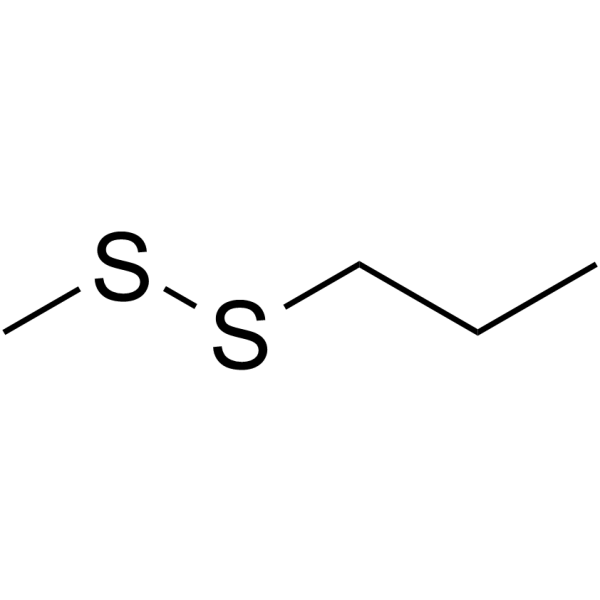
Methyl propyl disulfide is an orally administrable volatile sulfide present in onions. Methyl propyl disulfide reduces the activity of spermine N'1-acetyltransferase (SAT), inhibits cell proliferation, and decreases the induction of placental glutathione S-transferase (GST-P)-positive hepatocyte foci in rat livers. Methyl propyl disulfide can be used in studies related to the mechanism of hepatocarcinogenesis .
loading...
    loading...
Cat. No.: HY-W017200
CAS No.: 13073-35-3
Synonyms: L-ETH
Research Areas:  

Cancer

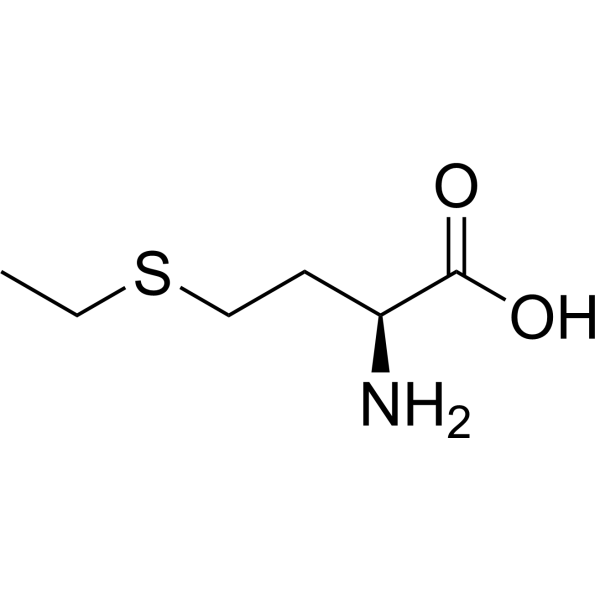
L-Ethionine (L-ETH) is an amino acid derivative. L-Ethionine serves as a substrate for ATP:L-methionine S-adenosyltransferase, which targets its L-stereoisomer. L-Ethionine blocks the synthesis of N 6-dimethyladenosine in rat liver tRNA/4S RNA via its major hepatic metabolite S-adenosylethionine, inducing methyl-deficient rat liver tRNA/4S RNA. L-Ethionine can be used in studies of liver cancer and hepatocarcinogenesis mechanisms .
loading...
    loading...
Cat. No.: HY-164082
CAS No.: 21340-68-1
Synonyms: Clofenapate methyl ester; MCP
Target:  

PPAR

Research Areas:  

Metabolic Disease Cancer

Methyl clofenapate (Clofenapate methyl ester; MCP) is a peroxisome proliferator, which can induce hypolipidemia, peroxisome proliferation, and hepatocarcinogenesis .
loading...
    loading...
Cat. No.: HY-113261S
CAS No.: 2847775-85-1
Oleoylcarnitine-d9 is deuterium labeled Oleoylcarnitine. Oleoylcarnitine, the metabolite which accumulates through suppression of fatty acid β-oxidation, can enhance hepatocarcinogenesis via STAT3 activation .
loading...
    loading...
Cat. No.: HY-113261R
CAS No.: 38677-66-6
Oleoylcarnitine (Standard) is the analytical standard of Oleoylcarnitine. This product is intended for research and analytical applications. Oleoylcarnitine, the metabolite which accumulates through suppression of fatty acid β-oxidation, can enhance hepatocarcinogenesis via STAT3 activation .
loading...
    loading...
Cat. No.: HY-113261S1
Oleoylcarnitine- 13C,d3 is the deuterium and 13C-labeled Oleoylcarnitine (HY-113261). Oleoylcarnitine, the metabolite which accumulates through suppression of fatty acid β-oxidation, can enhance hepatocarcinogenesis via STAT3 activation .
loading...
    loading...
Cat. No.: HY-L101
3,003 compounds

Liver cancer is one of the leading malignancies which occupies the second position in cancer deaths worldwide, becoming serious threat to human health. Hepatocellular carcinoma (HCC), also known as hepatoma is the most common type accounting for approximately 90% of all liver cancers.

Current evidence indicates that during hepatocarcinogenesis, two main pathogenic mechanisms prevail: (1) cirrhosis associated with hepatic regeneration after tissue damage caused by hepatitis infection, toxins or metabolic influences, and (2) mutations occurring in single or multiple oncogenes or tumor suppressor genes. Both mechanisms have been linked with alterations in several important cellular signaling pathways. These include the RAF/MEK/ERK pathway, PI3K/AKT/mTOR pathway, WNT/b-catenin pathway, insulin-like growth factor pathway, c-MET/HGFR pathway , etc.

MCE offers a unique collection of 3,003 compounds with identified and potential anti-liver cancer activity. MCE anti-liver cancer compound library is a useful tool for anti-liver cancer drugs screening and other related research.

