
12 Results for "

human myocardium

" in MedChemExpress (MCE) Product Catalog:
Products (12)

12 Results for "human myocardium" in MCE Product Catalog:

258
258 Publications Verification
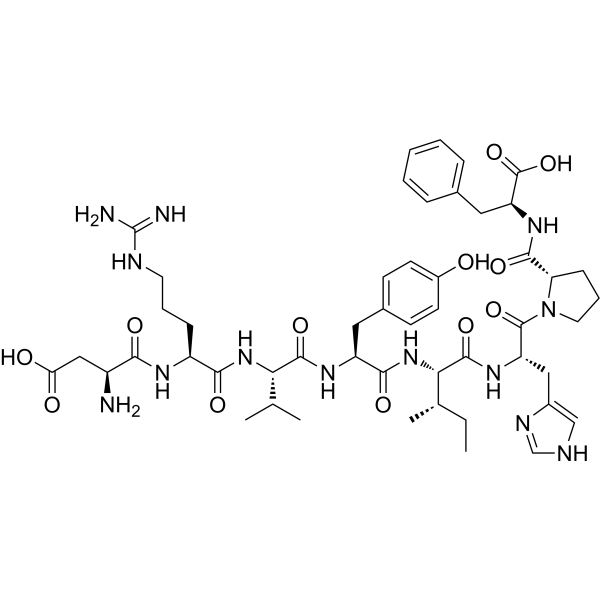
Cat. No.: HY-13948
CAS No.: 4474-91-3
Purity:  99.98%
Synonyms: Angiotensin II; Ang II; DRVYIHPF
Angiotensin II (Angiotensin II) is a vasoconstrictor and a major bioactive peptide of the renin/angiotensin system. Angiotensin II human plays a central role in regulating human blood pressure, which is mainly mediated by interactions between Angiotensin II and the G-protein-coupled receptors (GPCRs) Angiotensin II type 1 receptor (AT1R) and Angiotensin II type 2 receptor (AT2R). Angiotensin II human stimulates sympathetic nervous stimulation, increases aldosterone biosynthesis and renal actions. Angiotensin II human induces growth of vascular smooth muscle cells, increases collagen type I and III synthesis in fibroblasts, leading to thickening of the vascular wall and myocardium, and fibrosis. Angiotensin II human also induces apoptosis. Angiotensin II induces capillary formation from endothelial cells via the LOX-1 dependent redox-sensitive pathway .
loading...
    loading...
258
258 Publications Verification
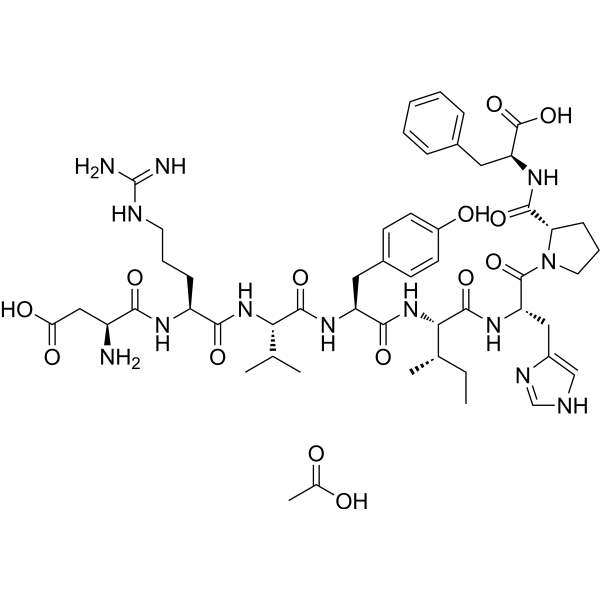
Cat. No.: HY-13948A
CAS No.: 68521-88-0
Purity:  99.62%
Synonyms: Angiotensin II acetate; Ang II acetate; DRVYIHPF acetate
Angiotensin II human (Angiotensin II) acetate is a vasoconstrictor and a major bioactive peptide of the renin/angiotensin system. Angiotensin II human acetate plays a central role in regulating human blood pressure, which is mainly mediated by interactions between Angiotensin II and the G-protein-coupled receptors (GPCRs) Angiotensin II type 1 receptor (AT1R) and Angiotensin II type 2 receptor (AT2R). Angiotensin II human acetate stimulates sympathetic nervous stimulation, increases aldosterone biosynthesis and renal actions. Angiotensin II human acetate induces growth of vascular smooth muscle cells, increases collagen type I and III synthesis in fibroblasts, leading to thickening of the vascular wall and myocardium, and fibrosis. Angiotensin II human acetate also induces apoptosis. Angiotensin II human acetate induces capillary formation from endothelial cells via the LOX-1 dependent redox-sensitive pathway .
loading...
    loading...
258
258 Publications Verification
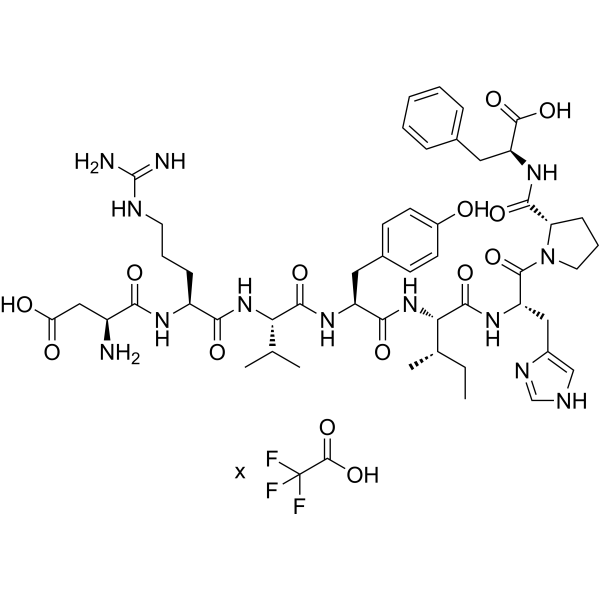
Cat. No.: HY-13948B
CAS No.: 2761969-44-0
Purity:  98.84%
Synonyms: Angiotensin II TFA; Ang II TFA; DRVYIHPF TFA
Angiotensin II human (Angiotensin II) TFA is a vasoconstrictor and a major bioactive peptide of the renin/angiotensin system. Angiotensin II human TFA plays a central role in regulating human blood pressure, which is mainly mediated by interactions between Angiotensin II and the G-protein-coupled receptors (GPCRs) Angiotensin II type 1 receptor (AT1R) and Angiotensin II type 2 receptor (AT2R). Angiotensin II human TFA stimulates sympathetic nervous stimulation, increases aldosterone biosynthesis and renal actions. Angiotensin II human TFA induces growth of vascular smooth muscle cells, increases collagen type I and III synthesis in fibroblasts, leading to thickening of the vascular wall and myocardium, and fibrosis. Angiotensin II human TFA also induces apoptosis. Angiotensin II human TFA induces capillary formation from endothelial cells via the LOX-1 dependent redox-sensitive pathway .
loading...
    loading...
5
5 Cited Publications
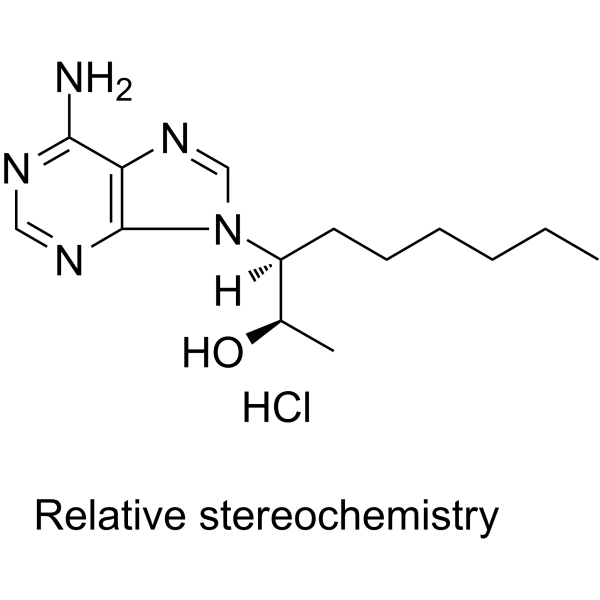
Cat. No.: HY-103160A
CAS No.: 58337-38-5
Purity:  99.67%
EHNA hydrochloride is a potent and selective dual inhibitor of cyclic nucleotide phosphodiesterase 2 (PDE2)(IC50=4 μM) and adenosine deaminase (ADA). EHNA hydrochloride exerts a concentration inhibition of the cGMP-stimulated PDE II (cGs-PDE)(IC50:0.8 μM (human), 2 μM (porcine myocardium)), but has smaller inhibitory effect on the unstimulated PDE2 activity. EHNA hydrochloride play roles in mediating diverse pharmacological responses, including antiviral, antitumour and antiarrhythmic effects .
loading...
    loading...
1
1 Cited Publications
Cat. No.: HY-103346
CAS No.: 220509-74-0
Purity:  99.97%
Target:  

Caspase Apoptosis

Research Areas:  

Cardiovascular Disease

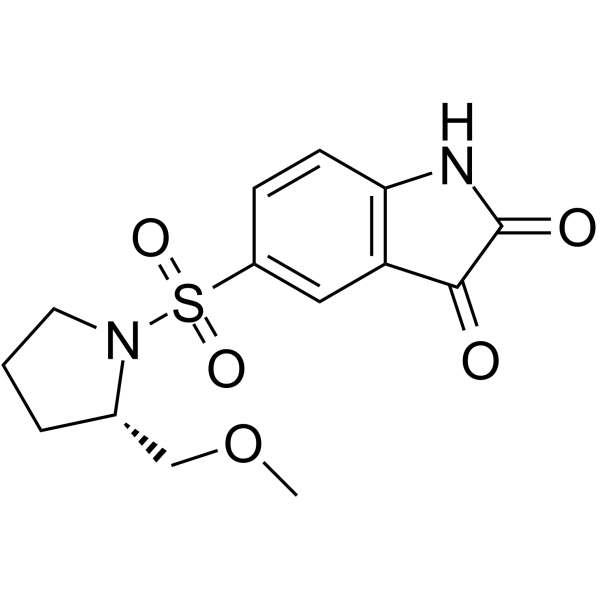
MMPSI is a potent and selective small molecule caspase 3 and caspase 7 inhibitor with an IC50 of 1.7 μM for human caspase-3. MMPSI can significantly reduce ischemia-reperfusion-induced infarct size in the isolated rabbit heart, and reduce apoptosis in both the ischemic myocardium and isolated cardiomyocytes. MMPSI can be used for researching cardioprotection .
loading...
    loading...
Cat. No.: HY-E70005L
CAS No.: 9001-12-1
Target:  

Proteasome

Research Areas:  

Metabolic Disease

Collagenase (Type B, animal free) is an animal-free collagen-degrading digestive enzyme and tissue dissociation reagent. Collagenase (Type B, animal free) can digest mouse aorta, myocardium, human umbilical cord, and human liver tissue to isolate primary leukocytes, adult mouse cardiomyocytes, human mesenchymal stem cells, and individual hepatocytes. Collagenase (Type B, animal free) can be used in studies related to liver cirrhosis .
loading...
    loading...
Cat. No.: HY-P5792
CAS No.: 102686-43-1
Synonyms: ANP (3-28) (human)
Atrial natriuretic peptide (3-28) (human) (ANP (3-28) (human)) is a peptide hormone that is synthesized and secreted by the atrial myocardium. Atrial natriuretic peptide (3-28) (human) is involved in the regulation of blood pressure, fluid balance, and electrolyte homeostasis .
loading...
    loading...
Cat. No.: HY-106844
CAS No.: 120223-04-3
Purity:  99.59%
Research Areas:  

Cardiovascular Disease

EMD 53998 is a cardiotonic agent that increases myocardial contractility as an inhibitor for phosphodiesterase III (PDE III) and a calcium sensitizer. EMD 53998 increases myocardial contractility, reduces energy consumption and the risk of inducing arrhythmias .
loading...
    loading...
Cat. No.: HY-103160B
CAS No.: 51350-19-7
EHNA is a potent and selective dual inhibitor of cyclic nucleotide phosphodiesterase 2 (PDE2)(IC50=4 μM) and adenosine deaminase (ADA). EHNA exerts a concentration inhibition of the cGMP-stimulated PDE II (cGs-PDE)(IC50:0.8 μM (human), 2 μM (porcine myocardium)), but has smaller inhibitory effect on the unstimulated PDE2 activity. EHNA play roles in mediating diverse pharmacological responses, including antiviral, antitumour and antiarrhythmic effects .
loading...
    loading...
Cat. No.: HY-103346R
CAS No.: 220509-74-0
MMPSI (Standard) is the analytical standard of MMPSI (HY-103346). This product is intended for research and analytical applications. MMPSI is a potent and selective small molecule caspase 3 and caspase 7 inhibitor with an IC50 of 1.7 μM for human caspase-3. MMPSI can significantly reduce ischemia-reperfusion-induced infarct size in the isolated rabbit heart, and reduce apoptosis in both the ischemic myocardium and isolated cardiomyocytes. MMPSI can be used for researching cardioprotection .
loading...
    loading...
Cat. No.: HY-103160AR
CAS No.: 58337-38-5
EHNA hydrochloride (Standard) is the analytical standard of EHNA hydrochloride (HY-103160A). This product is intended for research and analytical applications. EHNA hydrochloride is a potent and selective dual inhibitor of cyclic nucleotide phosphodiesterase 2 (PDE2)(IC50=4 μM) and adenosine deaminase (ADA). EHNA hydrochloride exerts a concentration inhibition of the cGMP-stimulated PDE II (cGs-PDE)(IC50:0.8 μM (human), 2 μM (porcine myocardium)), but has smaller inhibitory effect on the unstimulated PDE2 activity. EHNA hydrochloride play roles in mediating diverse pharmacological responses, including antiviral, antitumour and antiarrhythmic effects .
loading...
    loading...
Cat. No.: HY-184103
CAS No.: 378230-75-2
Synonyms: Ethylenedicysteine deoxyglucose
ECDG is a small-molecule compound dependent on α-ketoglutarate/Fe 2+ that participates in the biosynthesis of echinocandins. ECDG is involved in the targeted transport of glucose, and can be used for PET imaging after labeling with radioactive atoms. ECDG increases blood glucose levels in rats, undergoes cellular uptake mediated by D-glucose, localizes in ischemic viable myocardial tissue, and accumulates in the synovial space of rheumatoid arthritis. ECDG can be used in research related to candidiasis, glucose metabolism disorders, fungal infections, myocardial ischemia and rheumatoid arthritis .
loading...
    loading...
  • 1

