
43 Results for "

human umbilical vein endothelial HUVECs

" in MedChemExpress (MCE) Product Catalog:
Products (43)

43 Results for "human umbilical vein endothelial HUVECs" in MCE Product Catalog:

8
8 Publications Verification
Cat. No.: HY-19765
CAS No.: 1419609-94-1
Target:  

TRP Channel

Research Areas:  

Cardiovascular Disease

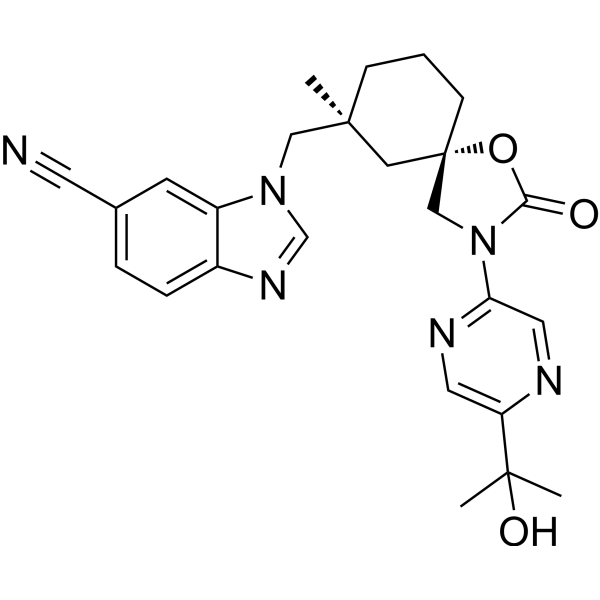
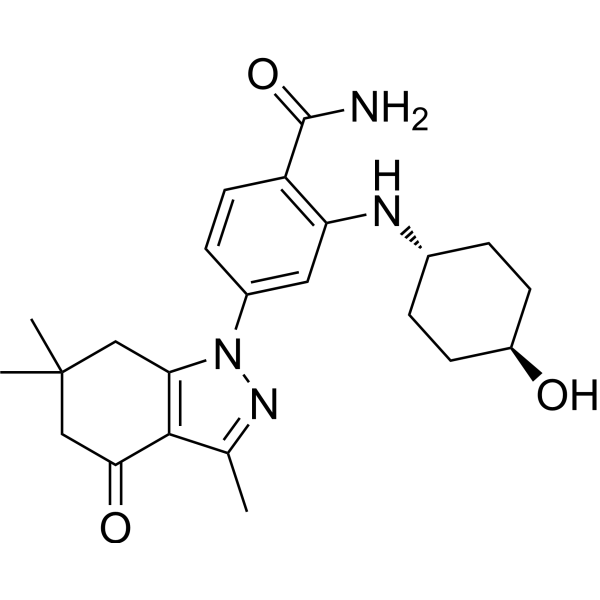
GSK2798745 is a potent, selective, and orally active transient receptor potential vanilloid 4 (TRPV4) ion channel blocker with IC50s of 1.8 and 1.6 nM for hTRPV4 and rTRPV4, respectively. GSK2798745 can be used in cardiac and respiratory diseases research .
loading...
    loading...
3
3 Cited Publications
Cat. No.: HY-B0987
CAS No.: 137-66-6
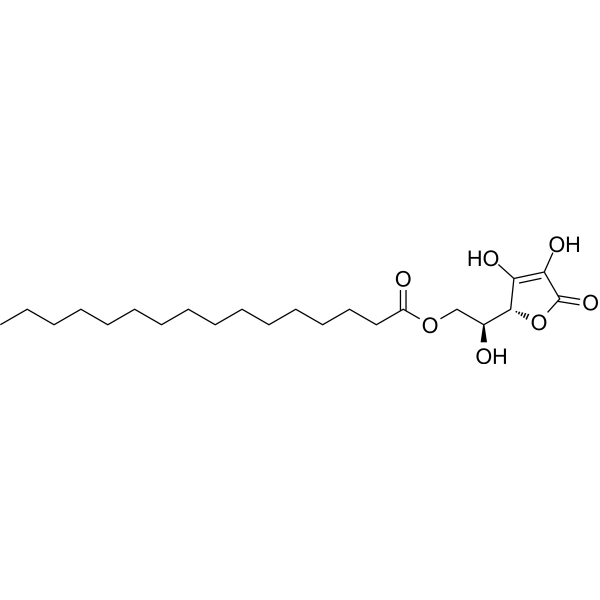
Synonyms: L-Ascorbic acid 6-hexadecanoate; 6-O-Palmitoyl-L-ascorbic acid
Ascorbyl palmitate is an orally active ester formed from ascorbic acid and palmitic acid, used as an antioxidant and food additive. Ascorbyl palmitate in preventing fat and oil oxidation is more efficient than Butylated hydroxyanisole (HY-B1066) and Butylated hydroxytoluene (HY-Y0172). Ascorbyl palmitate mitigates inhibition of collagen synthesis by select calcium and sodium channel blockers. Ascorbyl palmitate induces Apoptosis in human umbilical vein endothelial cells (HUVECs). Ascorbyl palmitate ameliorates inflammatory diseases by inhibition of NLRP3 inflammasome .
loading...
    loading...
2
2 Cited Publications
Cat. No.: HY-N0515
CAS No.: 945619-74-9
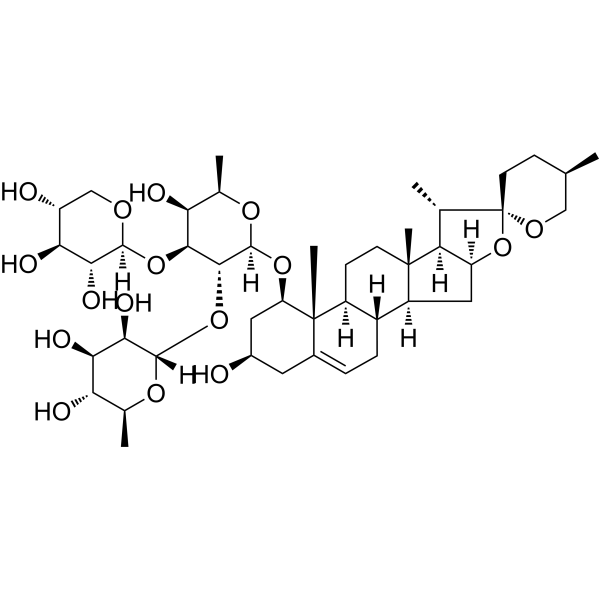
Ophiopogonin D can be isolated from the tubers of Ophiopogon japonicus, is a rare naturally occurring C29 steroidal glycoside. Ophiopogonin D is a CYP2J3 inducer that significantly inhibits Ang II induced NF-κB nuclear translocation, IκBα down-regulation, intracellular Ca 2+ overload and activation of pro-inflammatory cytokines by increasing the expression of CYP2J2/EETs and PPARα in human umbilical vein endothelial cells (HUVECs). Ophiopogonin D can inhibit isteoclastic differentiation in RAW264.7 cells. Ophiopogonin D has protective effect as an antioxidant in H2O2-induced endothelial injury. Ophiopogonin D blocks ERK signaling cascades. Ophiopogonin D alleviates high-fat diet-induced metabolic syndrome and changes the structure of gut microbiota in mice. Ophiopogonin D has been used against inflammatory, metabolic and cardiovascular diseases .
loading...
    loading...
2
2 Cited Publications
Cat. No.: HY-P99333
CAS No.: 558480-40-3
Synonyms: M200; Eos 200-4

Target:  

Integrin

Research Areas:  

Cardiovascular Disease Cancer

Volociximab (M200) is a chimeric human/murine IgG4 antibody IIA1 targeting integrin α5β1 (EC50=0.2 nM). Integrin α5β1 is a major fibronectin receptor involved in angiogenesis. Volociximab has antiangiogenic and antitumor activities and inhibits the proliferation of human umbilical vein vascular endothelial cells (HUVECs) .
loading...
    loading...
1
1 Cited Publications
Cat. No.: HY-170230
Synonyms: ECGS,Bovine
Bovine Endothelial cell growth supplement, suitable for cell culture (ECGS, Bovine) is a culture medium supplement, endothelial cell growth supplement (ECGS), which promotes the proliferation of human saphenous vein endothelial cells (HSVEC) and human umbilical vein endothelial cells (HUVEC) .
loading...
    loading...
Cat. No.: HY-P991202
Anti-TSHR Antibody (M22) is a selective agonist targeting TSHR (thyroid-stimulating hormone receptor), acting through competitive binding to the extracellular domain of TSHR. Anti-TSHR Antibody (M22) can mimic the biological effects of thyroid-stimulating hormone (TSH), activating downstream cAMP-PKA and other signaling pathways. Anti-TSHR Antibody (M22) can stimulate the proliferation of thyroid follicular epithelial cells and human umbilical vein endothelial cells (HUVECs), promote angiogenesis and tube formation, cell migration, and also upregulate the expression of angiogenesis-related proteins such as PROX1. Anti-TSHR Antibody (M22) can be used in research areas such as the mechanisms of goiter formation in Graves' disease (GD), angiogenesis regulation, and TSHR antagonist screening .
loading...
    loading...
Cat. No.: HY-W588250
CAS No.: 24730-31-2
Target:  

Integrin

Research Areas:  

Inflammation/Immunology

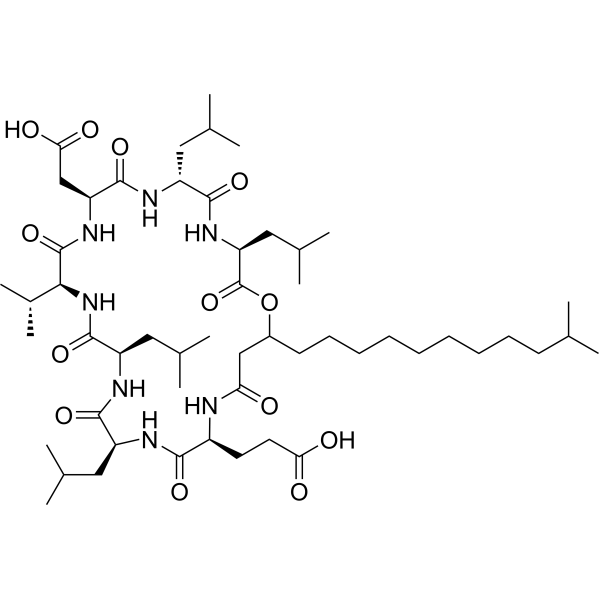
Surfactin C1 is an amphiphilic biosurfactants. Surfactin C1 inhibits leukemic cell (HL-60) adhesion to human umbilical vein endothelial cells (HUVEC). Surfactin C1 inhibits adhesion melecules expression, such as ICAM-1 and VCAM-1 .
loading...
    loading...
Cat. No.: HY-122627
CAS No.: 678158-55-9
Purity:  99.14%
Target:  

Bcl-2 Family Apoptosis

Research Areas:  

Cancer

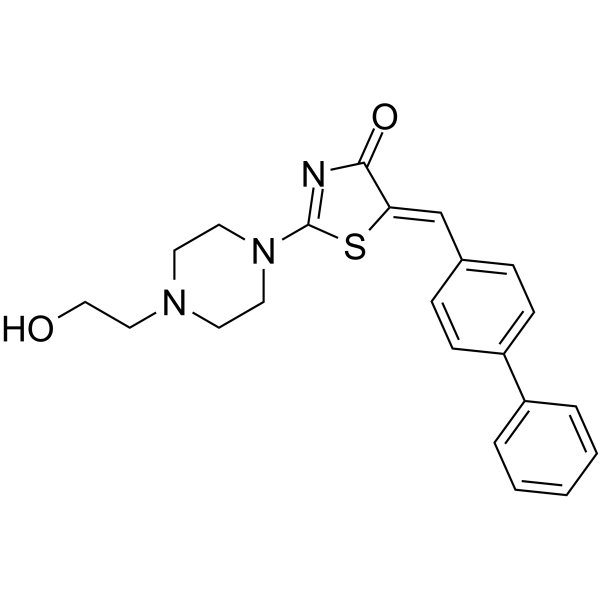
CLZ-8 (Compound 8) is an orally active Mcl-1-PUMA interface inhibitor, with a Ki of 0.3 μM. CLZ-8 exhibits dual activity on reduce PUMA-dependent apoptosis while deactivating Mcl-1-mediated anti-apoptosis in cancer cells .
loading...
    loading...
Cat. No.: HY-N2960
CAS No.: 73731-87-0
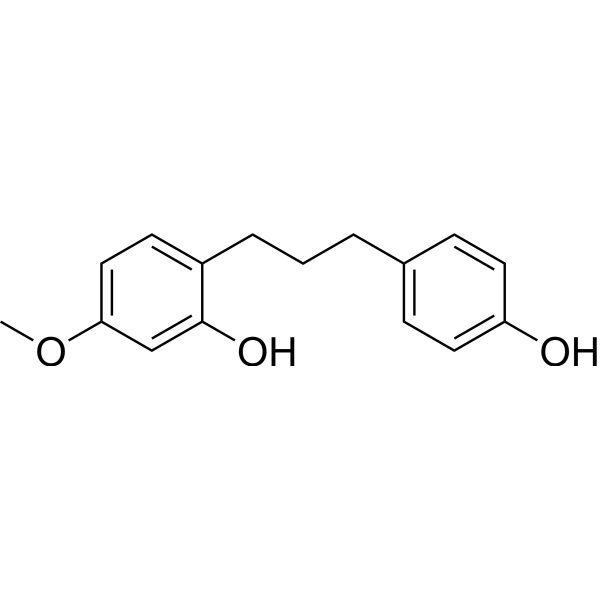
Broussonin A is a potent BChE inhibitor, with an IC50 of 4.16 µM. Broussonin A is a diarylpropane natural product that can be isolated from the bark of Broussonetia papyrifera after solid fermentation .
loading...
    loading...
Cat. No.: HY-148877
CAS No.: 908112-37-8
Purity:  98.86%
AT-533 is a potent Hsp90 and HSV inhibitor. AT-533 suppresses tumor growth and angiogenesis by blocking the HIF-1α/VEGF/VEGFR-2 signaling pathway. AT-533 also inhibits the activation of the downstream pathways, including Akt/mTOR/p70S6K, Erk1/2 and FAK. AT-533 inhibits the tube formation, cell migration, and invasion of human umbilical vein endothelial cells (HUVECs) .
loading...
    loading...
Cat. No.: HY-125919
CAS No.: 521-52-8
Purity:  99.62%
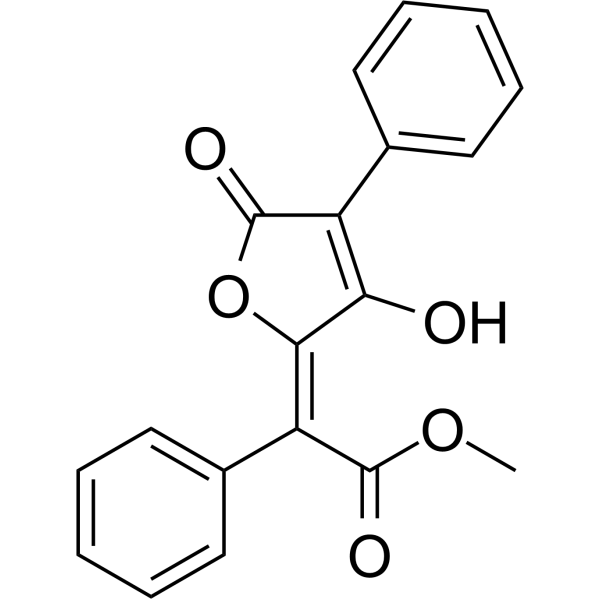
Vulpinic acid, a lichen metabolite, decreases H2O2-induced ROS production, oxidative stress and oxidative stress-related damages in human umbilical vein endothelial cells (HUVEC). Vulpinic acid is active against staphylococci, enterococci, and anaerobic bacteria.Vulpinic acid has the potential for atherosclerosis research .
loading...
    loading...
Cat. No.: HY-P3318
CAS No.: 73572-58-4
Synonyms: L-BOC2
Target:  

Leukotriene Receptor

Research Areas:  

Inflammation/Immunology

Boc-Phe-Leu-Phe-Leu-Phe (Boc-FLFLF) is a N-formyl peptide receptors (FPR) inhibitor. Boc-Phe-Leu-Phe-Leu-Phe abolishes the FMLP-induced release of peptide leukotrienes. Boc-Phe-Leu-Phe-Leu-Phe inhibits the sprouting of human umbilical vein endothelial cell (HUVEC) spheroids mediated by proliferative diabetic retinopathy (PDR) vitreous and vascular endothelial growth factor (VEGF) respectively in a three-dimensional fibrin gel. Boc-Phe-Leu-Phe-Leu-Phe inhibits the anti-inflammatory and antifibrotic effects of Ac2-26 (HY-P1098). Boc-Phe-Leu-Phe-Leu-Phe can be used for the study of immunology .
loading...
    loading...
Cat. No.: HY-Y0131
CAS No.: 19847-12-2
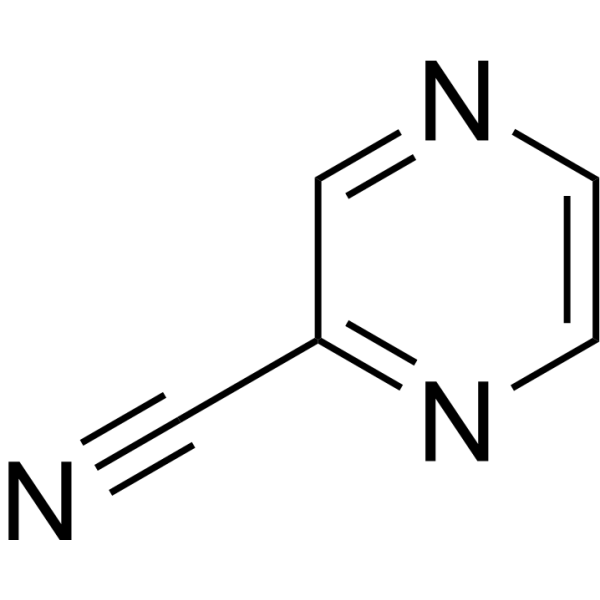
Pyrazine-2-carbonitrile is a biochemical reagent that can be used as a biological material or organic compound for life science related research .
loading...
    loading...
Cat. No.: HY-N6737
CAS No.: 574-95-8
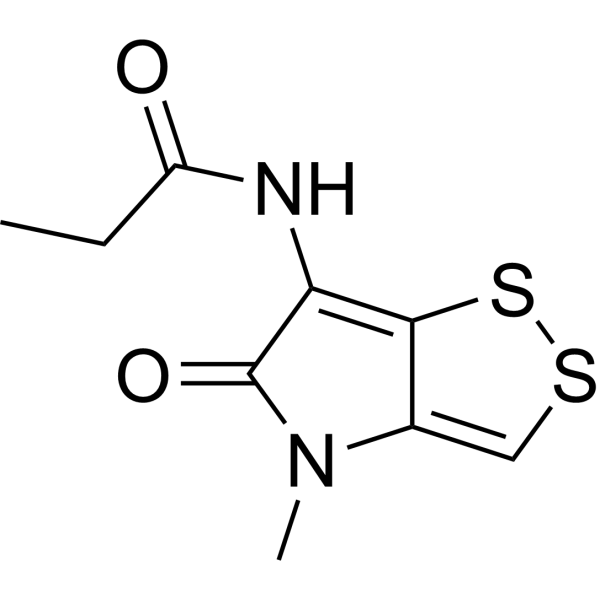
Aureothricin is a dithiolopyrrolone (DTP) antibiotic first isolated from Streptomyces and exhibits relatively broad-spectrum antibiotic activity. Aureothricin can inhibit adhesion of human umbilical vein endothelial cells (HUVECs) to vitronectin .
loading...
    loading...
Cat. No.: HY-118622
CAS No.: 491-64-5
Purity:  ≥95.0%
Isogentisin is a cell protector. Isogentisin can shield human umbilical vein endothelial cells (HUVEC) from cell death caused by H202 and UV exposure. Isogentisin can also prevent endothelial damage triggered by smoking by activating cell repair functions to promote cell survival .
loading...
    loading...
Cat. No.: HY-W013557
CAS No.: 3722-51-8
Synonyms: 3-Hydroxy-xanthen-9-one
Target:  

Integrin

Research Areas:  

Inflammation/Immunology

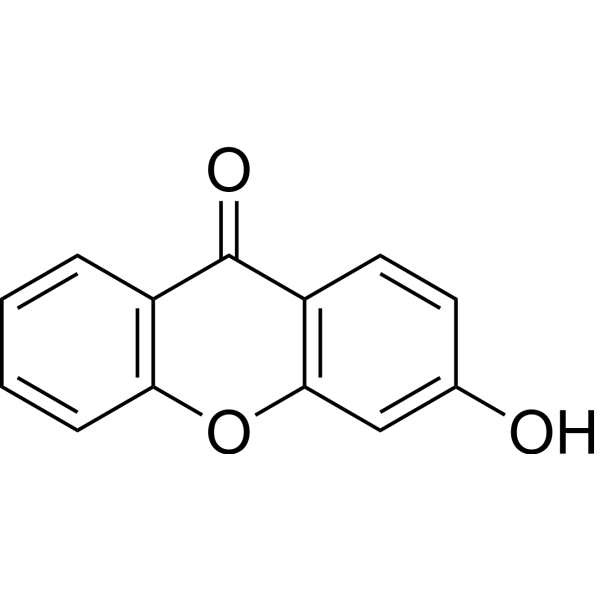
3-Hydroxyxanthone (3-Hydroxy-xanthen-9-one) is a xanthone compound, with . 3-Hydroxyxanthone inhibits NADPH-catalysed lipid peroxidation in human umbilical vein endothelial cells (HUVECs). 3-Hydroxyxanthone also inhibits TNF-alpha induced ICAM-1 expression .
loading...
    loading...
Cat. No.: HY-13645
CAS No.: 1239269-51-2
Target:  

VEGFR c-Kit PDGFR

Research Areas:  

Cancer

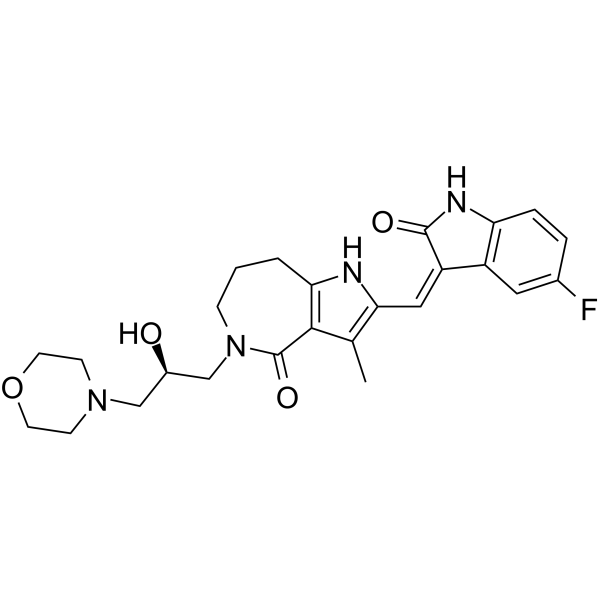
Henatinib is an orally active small-molecule multikinase inhibitor that has demonstrated broad and potent antitumor activities. Henatinib inhibits the activity of VEGFR-2, c-kit, PDGFR with IC50 values of 0.6 nM, 3.3 nM and 41.5 nM, respectively. Henatinib significantly inhibits VEGFR-2 phosphorylation and its downstream signal pathway in human umbilical vein endothelial cells (HUVECs) .
loading...
    loading...
Cat. No.: HY-133924
CAS No.: 1200128-66-0
Synonyms: RQN-18690A
Target:  

SF3B1

Research Areas:  

Cardiovascular Disease Cancer

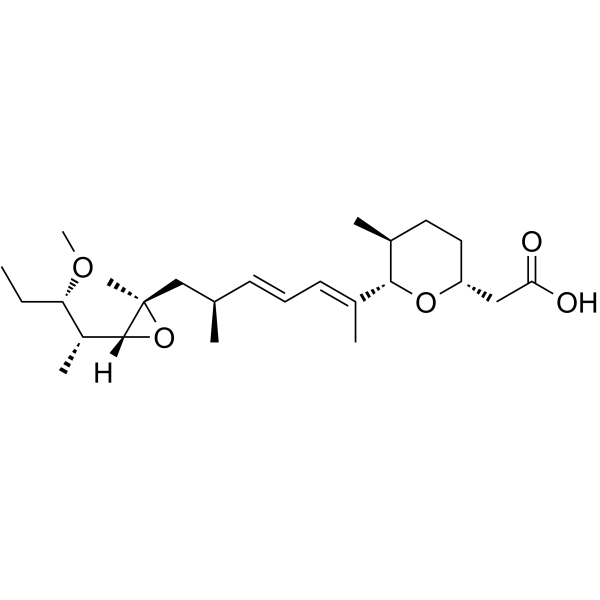
18-Deoxyherboxidiene (RQN-18690A) is a potent angiogenesis inhibitor. 18-Deoxyherboxidiene targets SF3b, a spliceosome component that is a subcomplex of the U2 small nuclear ribonucleoprotein (snRNP) in the spliceosome. 18-Deoxyherboxidiene inhibits the migration and tube formation of human umbilical vein endothelial cells (HUVECs) without significant cell toxicity. 18-Deoxyherboxidiene has the potential for cancer research .
loading...
    loading...
Cat. No.: HY-N0515R
CAS No.: 945619-74-9
Ophiopogonin D (Standard) is the analytical standard of Ophiopogonin D. This product is intended for research and analytical applications. Ophiopogonin D can be isolated from the tubers of Ophiopogon japonicus, is a rare naturally occurring C29 steroidal glycoside. Ophiopogonin D is a CYP2J3 inducer that significantly inhibits Ang II induced NF-κB nuclear translocation, IκBα down-regulation, intracellular Ca2+ overload and activation of pro-inflammatory cytokines by increasing the expression of CYP2J2/EETs and PPARα in human umbilical vein endothelial cells (HUVECs). Ophiopogonin D can inhibit isteoclastic differentiation in RAW264.7 cells. Ophiopogonin D has protective effect as an antioxidant in H2O2-induced endothelial injury. Ophiopogonin D blocks ERK signaling cascades. Ophiopogonin D alleviates high-fat diet-induced metabolic syndrome and changes the structure of gut microbiota in mice. Ophiopogonin D has been used against inflammatory, metabolic and cardiovascular diseases .
loading...
    loading...
Cat. No.: HY-N2927
CAS No.: 3650-43-9
Synonyms: β-Costic acid
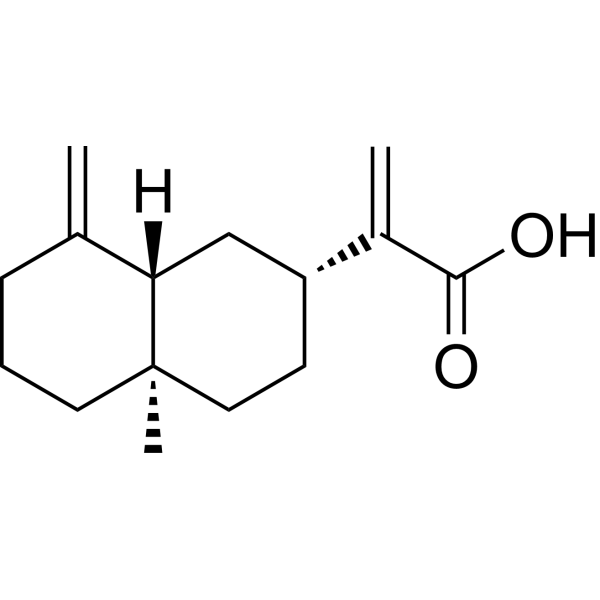
Costic acid (β-Costic acid) is a natural product, that can be isolated from Dittrichia viscosa. Costic acid exhibits potent in vivo acaricidal activity against the parasite. Costic acid is not toxic for human umbilical vein endothelial cells (HUVEC) at concentrations of up to 230 μM. Costic acid can be used for the research of varroosis in honey bee colonies .
loading...
    loading...

