

1. Search Result
Search Result
Results for "

immune diseases

" in MedChemExpress (MCE) Product Catalog:

385

Inhibitors & Agonists

33

Screening Libraries

17

Biochemical Assay Reagents

35

Peptides

42

Inhibitory Antibodies

57

Natural
Products

14

Isotope-Labeled Compounds

1

Click Chemistry

15

Oligonucleotides

Cat. No. Product Name Target Research Areas Chemical Structure
  • HY-125859
    Peroxidase, Horseradish
    1 Publications Verification

    Reactive Oxygen Species (ROS) Inflammation/Immunology Endocrinology
    Peroxidase, Horseradish actively involves in oxidizing reactive oxygen species, innate immunity, hormone biosynthesis and pathogenesis of several diseases .
    Peroxidase, Horseradish
  • HY-156677
    STC-15
    4 Publications Verification

    METTL3 Cancer
    STC-15 is an orally active RNA methyltransferase METTL3 inhibitor with the activity of activating anti-tumor immunity and reshaping the tumor microenvironment. STC-15 inhibits tumor growth by activating anti-cancer immune responses associated with increased interferon signaling and synergizes with T-cell checkpoint blockade. STC-15 can be used in the study of proliferative diseases such as cancer and autoimmune diseases .
    STC-15
  • HY-150298
    Soquelitinib
    3 Publications Verification

    CPI-818

    Itk Inflammation/Immunology Cancer
    Soquelitinib (CPI-818) is an orally active and highly selective covalent interleukin-2-inducible kinase (ITK) inhibitor. Soquelitinib is active in six different models of T cell-mediated inflammatory and immune disease, including acute and chronic asthma, pulmonary fibrosis, systemic sclerosis (scleroderma), psoriasis, and acute graft versus host disease with Th2 cytokine product inhibition. Soquelitinib increases tumor infiltration of normal CD8 + cells that possess enhanced T effector function .
    Soquelitinib
  • HY-131166
    Curdlan
    2 Publications Verification

    Bacterial Toll-like Receptor (TLR) NO Synthase C-type Lectin-like Receptors (CTLRs) Reactive Oxygen Species (ROS) Inflammation/Immunology
    Curdlan is a polysaccharide found in bacteria, consisting of a glucose homopolymer with β-1,3-glycosidic linkages . Curdlan can be recognized by Dectin-1 (a C-type lectin receptor), inducing immune responses in tissue mast cells and enhancing dendritic cell effects in tumor immunity. Curdlan holds potential for research in cancer and immune-inflammatory diseases .
    Curdlan
  • HY-17629
    Dapansutrile
    5 Publications Verification

    NOD-like Receptor (NLR) Inflammation/Immunology Cancer
    Dapansutrile is a potent, orally active and selective NLRP3 inflammasome inhibitor. Dapansutrile has anti-inflammatory activity and decreases immune factor levels. Dapansutrile can be used for research of inflammatory diseases .
    Dapansutrile
  • HY-148068

    STING Inflammation/Immunology Cancer
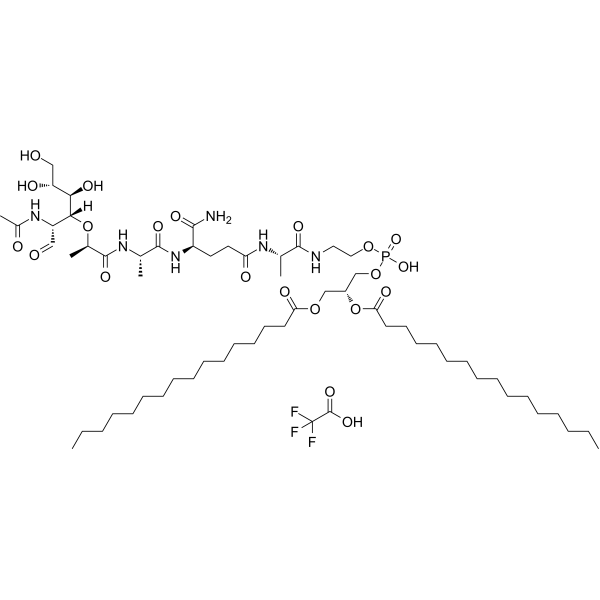
    STING agonist-20 (compound 95) is a potent STING agonist used in the synthesis of XMT-2056. STING agonist-20 can be used as a vaccine adjuvant in the study of cancer and other inflammatory, immune diseases .
    STING agonist-20
  • HY-N1178
    Taraxasterol
    4 Publications Verification

    Interleukin Related LXR Inflammation/Immunology
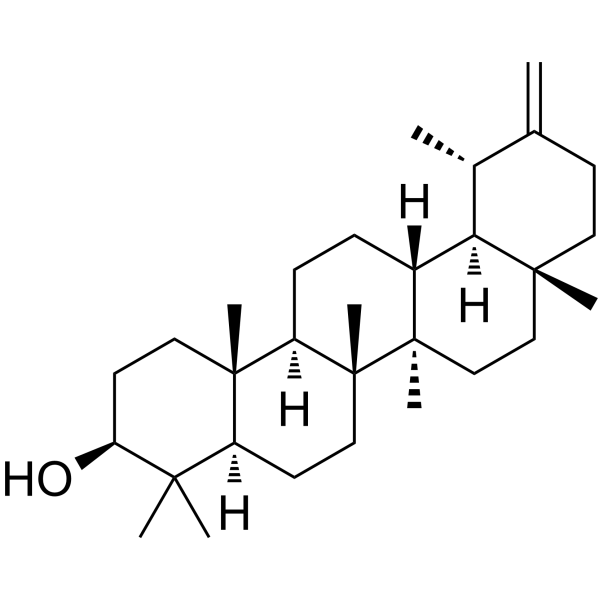
    Taraxasterol is a pentacyclic triterpenoid compound isolated from Taraxacum mongolicum. Taraxasterol is an LXRα activator, with metabolic and anti-inflammatory effects. Taraxasterol may be used in research on immune-inflammatory diseases .
    Taraxasterol
  • HY-P99389

    JNJ-64304500; IPH-2301; NN-8555

    C-type Lectin-like Receptors (CTLRs) Inflammation/Immunology
    Tesnatilimab (JNJ-64304500) is a human IgG4 monoclonal antibody targeting NKG2D, with a KD value of 9.2 pM . Tesnatilimab blocks the binding of ligands to the NKG2D receptor, thereby inhibiting downstream proinflammatory cytokine, cytotoxic mediator signaling pathways and proinflammatory immune responses. Tesnatilimab is applicable to research related to Crohn's disease .
    Tesnatilimab
  • HY-B0328
    Triamcinolone
    2 Publications Verification

    Glucocorticoid Receptor Interleukin Related Cardiovascular Disease Inflammation/Immunology Endocrinology Cancer
    Triamcinolone is a long-acting corticosteroid with anti-inflammatory, anti-oedematous, anti-proliferative, anti-angiogenetic, immunomodulatory and neuroprotective effects through binding to glucocorticoid receptors. Triamcinolone can relieve several dermatitis, immune diseases and ocular diseases .
    Triamcinolone
  • HY-N10634

    C16 Glucosyl(β) Ceramide (d18:1/16:0)

    Endogenous Metabolite Inflammation/Immunology
    D-Glucosyl-β-1,1′-N-palmitoylsphingosine (C16 Glucosyl (β) Ceramide (d18:1/16:0)) is an endogenous Mincle ligand with immunostimulatory activity. D-Glucosyl-β-1,1′-N-palmitoylsphingosine binds to and activates macrophage-inducible C-type lectin (Mincle). D-Glucosyl-β-1,1′-N-palmitoylsphingosine is applicable to the research of immune system diseases .
    D-Glucosyl-β-1,1′-N-palmitoylsphingosine
  • HY-109069
    Petesicatib
    1 Publications Verification

    RO5459072; RG-7625

    Cathepsin Inflammation/Immunology
    Petesicatib (RO5459072; RG-7625) is a cathepsin S inhibitor, used in research of immune diseases .
    Petesicatib
  • HY-138501
    GPR34 receptor antagonist 2
    2 Publications Verification

    ERK Inflammation/Immunology
    GPR34 receptor antagonist 2 (Compound D2) is a GPR34 receptor antagonist. GPR34 receptor antagonist 2 can be used for immune diseases, inflammatory diseases research .
    GPR34 receptor antagonist 2
  • HY-B0944
    Pidotimod
    2 Publications Verification

    Bacterial Inflammation/Immunology
    Pidotimod is an orally active dipeptide immunostimulant with immunomodulatory properties on the adaptive and the innate immune responses. Pidotimod increases macrophage activity and humoral immune functions. Pidotimod can be used for the research of chronic bronchitis, chronic obstructive pulmonary disease (COPD), bronchiectasis, and chronic idiopathic urticaria,et al .
    Pidotimod
  • HY-N0852

    p38 MAPK NF-κB Interleukin Related JNK PERK CXCR Cardiovascular Disease Inflammation/Immunology
    Benzoylpaeoniflorin is an orally active monoterpene glycoside compound. Benzoylpaeoniflorin exerts anti-inflammatory, anti-allergic, psoriasis-improving and sepsis-improving effects by inhibiting signaling pathways such as TNF/NF-κB and MAPK, as well as regulating immune homeostasis. Benzoylpaeoniflorin can be used in research related to immune, allergic and inflammatory diseases .
    Benzoylpaeoniflorin
  • HY-107447

    N-Deshydroxyethyl BMS-354825

    Drug Metabolite Target Protein Ligand-Linker Conjugates Bcr-Abl Inflammation/Immunology Cancer
    N-Deshydroxyethyl Dasatinib (N-Deshydroxyethyl BMS-354825) is a metabolite of Dasatinib, Dasatinib is a multi-kinase inhibitor that potently inhibits Bcr-Abl, Src family and platelet-derived growth factor receptor kinases. N-Deshydroxyethyl Dasatinib can be used in cancer and immune disease research .
    N-Deshydroxyethyl Dasatinib
  • HY-P991266

    Interleukin Related Inflammation/Immunology
    SM-17 is a humanized monoclonal antibody inhibitor targeting interleukin 25 (IL-25) and interleukin-17 receptor B (IL17RB). SM-17 is promising for research of immune system diseases .
    SM-17
  • HY-48814

    Bacterial FXR Infection Inflammation/Immunology
    3-Epideoxycholic acid is a secondary bile acid and a microbial metabolite of Deoxycholic acid (HY-N0593). 3-Epideoxycholic acid targets FXR in dendritic cells, reduces their immunostimulatory properties, promotes the generation of Treg cells, and exerts anti-inflammatory activity. 3-Epideoxycholic acid can promote the growth of the bacterium Bacteroides. 3-Epideoxycholic acid can be used in research related to inflammatory and immune diseases as well as bacterial infections .
    3-Epideoxycholic acid
  • HY-P991480

    Transmembrane Glycoprotein Tau Protein Amyloid-β Neurological Disease Cancer
    ONC-841 is a blood-brain barrier-permeable, humanized monoclonal antibody targeting SIGLEC10. As an immune checkpoint inhibitor, ONC-841 restores the functions of immune effector cells such as T cells and enhances anti-tumor immune responses by blocking inhibitory signals mediated by SIGLEC10. ONC-841 restores the phagocytic and migratory activities of microglia, and promotes the phagocytosis of Amyloid-β and Tau protein aggregates by microglia. ONC-841 is applicable to research related to solid tumors and Alzheimer's disease .
    ONC-841
  • HY-N6073

    Apoptosis HSV Infection Metabolic Disease Inflammation/Immunology Cancer
    Soyasapogenol A is a triterpenoid aglycone of soyasaponins. Soyasapogenol A has activities such as anti-inflammation, anti-cancer, hepatoprotection and anti-HSV-1. Soyasapogenol A can be used in the research of tumors and immune inflammatory diseases .
    Soyasapogenol A
  • HY-P991271

    NNC-114-0005

    Interleukin Related Inflammation/Immunology
    NN-8828 (NNC-114-0005) is a humanized monoclonal antibody inhibitor targeting interleukin-21 (IL-21). NN-8828 is promising for research of immune system diseases .
    NN-8828
  • HY-106216

    Elastase Infection Inflammation/Immunology
    Tiprelestat is a potent human neutrophil elastase inhibitor. Tiprelestat has antimicrobial and anti-inflammatory activities. Tiprelestat can be used in the research of inflammation/immune disease .
    Tiprelestat
  • HY-157746
    CTPS1-IN-1
    1 Publications Verification

    DNA/RNA Synthesis Inflammation/Immunology Cancer
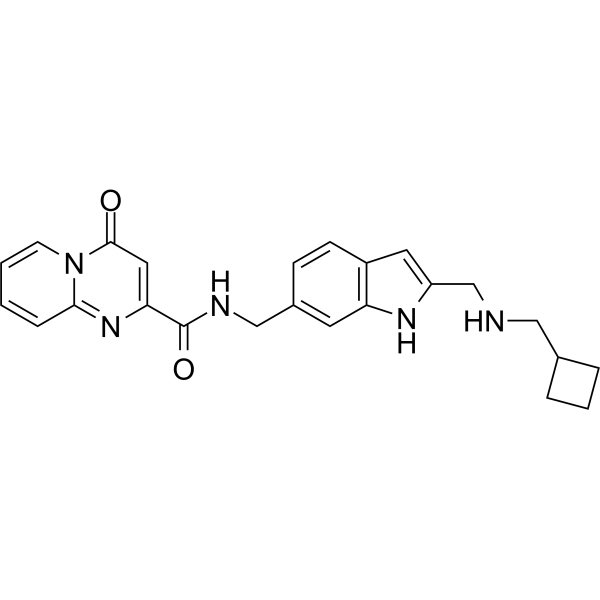
    CTPS1-IN-1 (compound R80) is a CTPS1 inhibitor. CTPS1-IN-1 has the potential to research cancer (such as promoting vascular injury or surgical recovery) and immune system diseases (such as rejection of transplanted cells and tissues, transplant-related diseases or disorders, allergies, and autoimmune diseases) .
    CTPS1-IN-1
  • HY-P3601

    FGF basic (1-24)

    Bacterial HBV Infection Inflammation/Immunology
    Brain Derived Basic Fibroblast Growth Factor (1-24) (FGF basic 1-24) is a synthetic peptide, shows anti-bacterial and anti-HBV activities. Brain Derived Basic Fibroblast Growth Factor (1-24) can be used in infection disease and immune disease research .
    Brain Derived Basic Fibroblast Growth Factor (1-24)
  • HY-156622

    HMC-C-01-A; MBS2320

    Mitochondrial Metabolism Cancer
    Leramistat (HMC-C-01-A; MBS2320) is a mitochondrial complex 1 inhibitor, involving in cell metabolism immune metabolism regulation. Leramistat also inhibits ATP production in Thp1 human monocytes (IC50: 0.63 μM). Leramistat inhibits atopic dermatitis and other skin diseases autoimmune diseases, inflammatory diseases, cancer; and also inhibits osteoclast mediated disease .
    Leramistat
  • HY-P10030

    Proteasome NF-κB Inflammation/Immunology
    DPLG3 is a specific chymotryptic-like β5i subunits inhibitor, with an IC50 of 4.5 nM. DPLG3 inhibits mouse i-20S with IC50 of 9.4 nM. DPLG3 downregulates the protein levels of NF-κB p50 and p65. DPLG3 can be used for immune disease research .
    DPLG3
  • HY-138623

    Epigenetic Reader Domain TNF Receptor Interleukin Related Inflammation/Immunology Cancer
    GSK789 is a selective inhibitor of BET BD1. GSK789 inhibits the growth of leukemia cell lines. GSK789 inhibits LPS-stimulated production of MCP-1, TNFα and IL-6 in human whole blood. GSK789 exhibits antiproliferative, anti-inflammatory and immunomodulatory activities. GSK789 can be used in research related to cancers such as leukemia, as well as inflammatory and immune diseases .
    GSK789
  • HY-13276

    IRAK Inflammation/Immunology
    IRAK inhibitor 2 is an interleukin-1 receptor-associated kinase (IRAK) inhibitor. IRAK inhibitor 2 can be used for the research of inflammatory and immune diseases .
    IRAK inhibitor 2
  • HY-124040

    Integrin Inflammation/Immunology
    BI-1950 is a lymphocyte function-associated antigen 1 (LFA-1) inhibitor. BI-1950 regulates immune system function through interaction with LFA-1. BI-1950 can be used in the research of inflammatory diseases .
    BI-1950
  • HY-145430

    Interleukin Related Neurological Disease Inflammation/Immunology Cancer
    IL-17A modulator-1 is a IL-17A modulator, extracted from patent WO2021239743+A1, example 9. IL-17A modulator-1 inhibits the biological action of IL-17A with a pIC50 of 8.2. IL-17A modulator-1 can be used for the research of diseases or disorders associated with modulation of IL-17A activity including diseases with an immune component or autoimmune pathol, cancer and neurodegenerative disorders .
    IL-17A modulator-1
  • HY-134493

    Butyrate-Cholecalciferol; Butyrate-Colecalciferol

    VD/VDR Metabolic Disease Inflammation/Immunology Cancer
    Butyrate-Vitamin D3 (Butyrate-Cholecalciferol) is a derivative of vitamin D3 in which a hydroxyl group in the vitamin D3 molecule is replaced by a butyric acid group. Butyrate-Vitamin D3 affects gene expression and cell function and has certain anti-inflammatory effects. Butyrate-Vitamin D3 can be used in the study of immune regulation, metabolic diseases and cancer .
    Butyrate-Vitamin D3
  • HY-109143B

    (R)-ABBV-105

    Btk Inflammation/Immunology Cancer
    (R)-Elsubrutinib ((R)-ABBV-105) is a Btk inhibitor. (R)-Elsubrutinib can be used in studies of immune diseases (such as rheumatoid arthritis, psoriasis, ankylosing spondylitis, asthma, systemic lupus erythematosus) and cancer .
    (R)-Elsubrutinib
  • HY-P991114

    FLT3 Inflammation/Immunology
    Adezkibart is a human monoclonal antibody immunosuppressant targeting the human FMS-like tyrosine kinase 3 ligand (FLT3LG). Adezkibart is found in the Chinese hamster ovary cell line CHO-K1, which binds to FLT3LG to block the relevant signaling pathway, inhibits the immune response, and exerts immunosuppressive activity. Adezkibart is promising for research of immune-related diseases .
    Adezkibart
  • HY-145240

    Eukaryotic Initiation Factor (eIF) Infection Cancer
    eIF4E-IN-1 is a potent inhibitor of eIF4E. eIF4E-IN-1 inhibits immunosuppression components such as immune checkpoint proteins PD-1, PD-L1, LAG3, TIM3, and/or IDO, in order to inhibit or release immune suppression in certain diseases, such as cancer and infectious disease (extracted from patent WO2021003194A1, compound Y) .
    eIF4E-IN-1
  • HY-174132

    CRM1 Inflammation/Immunology
    CW8001 is a covalent XPO1 (Exportin-1) inhibitor with an EC50 value of 1 nM for inhibiting T cell activation. CW8001 prevents nuclear localization of NFAT transcription factors, suppressing expression of inflammatory cytokines like IL-2. CW8001 is promising for research of T cell-driven immune diseases such as graft-versus-host disease (GVHD) .
    CW8001
  • HY-129684

    Toll-like Receptor (TLR) Infection Inflammation/Immunology
    IAXO-101 iodide is a TLR4/CD14 blocker. IAXO-101 iodide can inhibit the innate immune pathway of CD14. IAXO-101 iodide is capable of improving the recording performance of intracortical microelectrodes in mice. IAXO-101 iodide can also partially alleviate fetal growth restriction, placental vascular damage, and reduce the level of the inflammatory factor TNF-α in pregnant mice infected with malaria. IAXO-101 iodide can be used in the research of gestational malaria and inflammatory diseases .
    IAXO-101 iodide
  • HY-32340

    KH1060

    VD/VDR Inflammation/Immunology Cancer
    Lexacalcitol (KH1060), a vitamin D analog, is a potent regulator of cell growth and immune responses. Lexacalcitol can be used for the research of graft rejection, psoriasis, cancer and auto-immune diseases .
    Lexacalcitol
  • HY-N11286

    TG-DHA; Meganol D

    Others Neurological Disease Metabolic Disease Inflammation/Immunology
    Tridocosahexaenoylglycerol (TG-DHA) is an orally active dietary supplement that improves autoimmune encephalomyelitis in mice. Tridocosahexaenoylglycerol shows beneficial effects on neurodegenerative diseases and also improves macular function in diabetic retinopathy. Tridocosahexaenoylglycerol can be used for research on neurological diseases, inflammatory immune diseases, and metabolic diseases .
    Tridocosahexaenoylglycerol
  • HY-P3977

    Melanocortin Receptor Cardiovascular Disease Inflammation/Immunology Cancer
    ACTH (3-24) (human, bovine, mouse, ovine, porcine, rabbit, rat) is the 3-24 fragment of adrenocorticotropic hormone (ACTH). ACTH (3-24) (human, bovine, mouse, ovine, porcine, rabbit, rat) can be used for research of a variety of diseases, including cancer, immune diseases, cardiovascular disease .
    ACTH (3-24) (human, bovine, mouse, ovine, porcine, rabbit, rat)
  • HY-126560

    Protein Arginine Deiminase Inflammation/Immunology
    F-Amidine is a Protein arginine deiminase 4 (PAD4) inhibitor. F-Amidine can be used in the study of inflammatory and immune system diseases (such as rheumatoid arthritis) .
    F-Amidine
  • HY-141431

    E1/E2/E3 Enzyme Inflammation/Immunology Cancer
    Cbl-b-IN-2 (Example 8) is an orally bioavailable compound, can inhibit the E3 enzyme Casitas B-lineage lymphoma proto-oncogene-b (Cbl-b) in the ubiquitin proteasome pathway. Cbl-b-IN-2 can be used to modulate the immune system and diseases amenable to immune system modulation. Cbl-b-IN-2 (Example 8) also may be administered to an individual with cancer, either alone or as part of a combination, with one or more of an immune checkpoint inhibitor, an anti-neoplastic agent, and radiation agent .
    Cbl-b-IN-2
  • HY-176265

    CD28 Inflammation/Immunology
    DDS5 is a CD28 inhibitor with a kd of 175.57 µM. DDS5 significantly inhibits CD28-CD80 interaction (IC50: 332 µM). DDS5 can be used for research of immune-mediated diseases, including inflammatory bowel disease and rheumatoid arthritis .
    DDS5
  • HY-119102

    HCN Channel Inflammation/Immunology
    BPU-11 is a hyperpolarization-activated cyclic nucleotide-gated (HCN) C-linker pocket (CLP) HCN4 CLP ligand. BPU-11 can be used for the research of congenital immune disease .
    BPU-11
  • HY-P991277

    HS-20137

    Interleukin Related Inflammation/Immunology
    QX-004N (HS-20137) is a monoclonal antibody inhibitor targeting the p19 subunit of interleukin-23 (IL-23). QX-004N is promising for research of immune system diseases and diseases of digestive system .
    QX-004N
  • HY-P991552

    CD3 Metabolic Disease Inflammation/Immunology
    AFM15 is a humanized monoclonal antibody inhibitor targeting CD3E. AFM15 can be used to study metabolic and immune system diseases, such as type 1 diabetes and inflammatory bowel disease (IBD) .
    AFM15
  • HY-176767

    Mas-related G-protein-coupled Receptor (MRGPR) Inflammation/Immunology
    MrgprX2-IN-1 (Compound 2-10) is a selective Mas-related G-protein coupled receptor X2 (MRGPRX2) antagonist. MrgprX2-IN-1 blocks IgE-independent immune responses by inhibiting MRGPRX2-mediated mast cell degranulation and release of inflammatory mediators. MrgprX2-IN-1 is promising for research of pseudo-allergic reactions, chronic pruritus, and inflammatory diseases .
    MrgprX2-IN-1
  • HY-176768

    Mas-related G-protein-coupled Receptor (MRGPR) Inflammation/Immunology
    MrgprX2-IN-2 (Compound example 12) is a selective Mas-related G-protein coupled receptor X2 (MRGPRX2) antagonist. MrgprX2-IN-2 blocks IgE-independent immune responses by inhibiting MRGPRX2-mediated mast cell degranulation and release of inflammatory mediators. MrgprX2-IN-2 is promising for research of pseudo-allergic reactions, chronic pruritus, and inflammatory diseases .
    MrgprX2-IN-2
  • HY-119420

    Antibiotic Apoptosis Caspase JNK p38 MAPK TNF Receptor ERK NF-κB Mitochondrial Metabolism Inflammation/Immunology Cancer
    Acetoxycycloheximide is an antibiotic with antitumor activity. Acetoxycycloheximide a protein synthesis inhibitor. Acetoxycycloheximide significantly induces activation of procaspase-3 and subsequent apoptosis mediated by the Cytochrome c from mitochondria via activation of JNK pathway. Acetoxycycloheximide triggers the downregulation of cell surface TNF-R1 via the activation of ERK and p38 MAPK, thereby preventing activation of the NF-κB signaling pathway by TNF-α. Acetoxycycloheximide is much more toxic to female rats than to males. Acetoxycycloheximide can be used for inflammatory and immune diseases and cancers research .
    Acetoxycycloheximide
  • HY-N15137

    Endogenous Metabolite Inflammation/Immunology
    Calycopterin is a flavonoid compound that can be found in the leaves of Digitalis thapsi and exhibits immunosuppressive activity. Calycopterin is expected to be useful in the study of immune diseases .
    Calycopterin
  • HY-126560A

    Protein Arginine Deiminase Inflammation/Immunology
    F-Amidine TFA is a Protein arginine deiminase 4 (PAD4) inhibitor. F-Amidine TFA can be used in the study of inflammatory and immune system diseases (such as rheumatoid arthritis) .
    F-Amidine TFA
  • HY-B0944R

    Reference Standards Bacterial Inflammation/Immunology
    Pidotimod (Standard) is the analytical standard of Pidotimod. This product is intended for research and analytical applications. Pidotimod is an orally active dipeptide immunostimulant with immunomodulatory properties on the adaptive and the innate immune responses. Pidotimod increases macrophage activity and humoral immune functions. Pidotimod can be used for the research of chronic bronchitis, chronic obstructive pulmonary disease (COPD), bronchiectasis, and chronic idiopathic urticaria,et al .
    Pidotimod (Standard)

Inquiry Online

Your information is safe with us. * Required Fields.

Salutation


Country or Region *

Applicant Name *


Organization Name *

Department *


Email Address *


Product Name *

Cat. No.


Requested quantity *

Phone Number *


Remarks

Inquiry Online

Inquiry Information

Product Name:
Cat. No.:
Quantity:
MCE Japan Authorized Agent:

