
29 Results for "

intracellular calcium mobilization

" in MedChemExpress (MCE) Product Catalog:
Products (29)

29 Results for "intracellular calcium mobilization" in MCE Product Catalog:

1
1 Cited Publications
Cat. No.: HY-P1852
CAS No.: 277302-47-3
Target:  

Adenylate Cyclase PTHR

Research Areas:  

Neurological Disease

TIP 39, Tuberoinfundibular Neuropeptide is an endogenous PTH2 receptor agonist and antihypertensive agent. TIP 39, Tuberoinfundibular Neuropeptide selectively activates the PTH2 receptor with no activity on the PTH1 receptor, stimulates cAMP production, activates adenylate cyclase, and elevates intracellular calcium levels via mobilization from intracellular stores. TIP 39, Tuberoinfundibular Neuropeptide is highly conserved in humans, mice, and rats. TIP 39, Tuberoinfundibular Neuropeptide is applicable to research related to nociception and inflammation-induced pain .
loading...
    loading...
Cat. No.: HY-128057
CAS No.: 342779-66-2
Purity:  99.94%
Target:  

GPR139

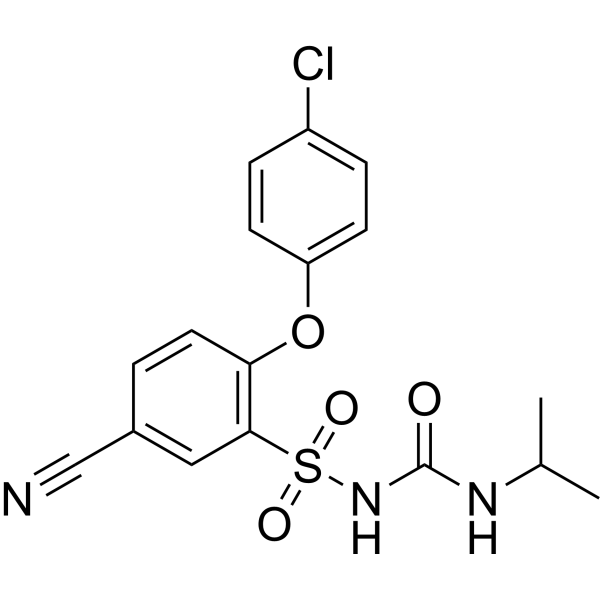
NCRW0005-F05 is a GPR139 antagonist with an IC50 of 147.9 nM against zebrafish GPR139. NCRW0005-F05 blocks agonist-induced GPR139 activity and inhibits intracellular calcium mobilization. NCRW0005-F05 suppresses fear memory consolidation, increases and decreases the peak amplitude of calcium transients, reduces KCl-induced calcium transients, induces thigmotaxis, and decreases locomotor speed after conditioning. NCRW0005-F05 can be used in research related to Parkinson's disease, diabetes, and obesity .
loading...
    loading...
Cat. No.: HY-142117
CAS No.: 149091-92-9
Research Areas:  

Others

Adenophostin A is an IP3 receptor (inositol 1,4,5-trisphosphate receptors) modulator and Ca 2+ releaser, with an IC50 of 1.3 nM, an EC50 of 1.4 nM, and a Ki of 0.18 nM in rats, and an IC50 of 0.95 nM in humans. Adenophostin A activates IP3 receptors, stimulates Ca 2+ release from intracellular stores and microsomes, inhibits the binding of [ 3H]IP3 to plasma membrane receptors, and activates chloride channels. Adenophostin A resists phosphorylation and dephosphorylation by IP3 metabolic enzymes to maintain its activity, and increases cytoplasmic [Ca 2+] levels via calcium mobilization from the endoplasmic reticulum of vascular smooth muscle cells. Adenophostin A is applicable to research related to hemorrhagic shock .
loading...
    loading...
Cat. No.: HY-113420
CAS No.: 67910-12-7
Purity:  ≥98.0%
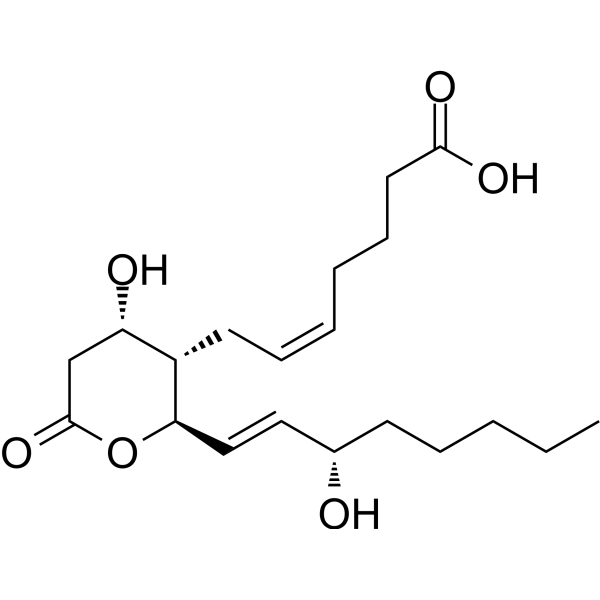
11-Dehydro-thromboxane B2 is a stable terminal metabolite of thromboxane A2 and an agonist of the CRTH2 receptor. 11-Dehydro-TXB2 activates human eosinophils, basophils, and CRTH2-transfected BaF/3 cells through a pertussis toxin-insensitive G protein-PLC pathway, inducing intracellular calcium mobilization, morphological changes, and chemotaxis, but does not affect platelet aggregation. 11-Dehydro-thromboxane B2 is involved in thrombosis and promotes eosinophil recruitment to the lungs in allergic inflammation, and its urinary levels are used to assess the inhibitory effect of Aspirin (HY-14654) on thromboxane production. 11-Dehydro-TXB2 serves as a biomarker for research related to asthma, atopic rhinitis, nephropathy, and coronary artery disease .
loading...
    loading...
Cat. No.: HY-P2355
CAS No.: 66556-73-8
Synonyms: BOC2; Boc-Phe-dLeu-Phe-dLeu-Phe
Research Areas:  

Inflammation/Immunology

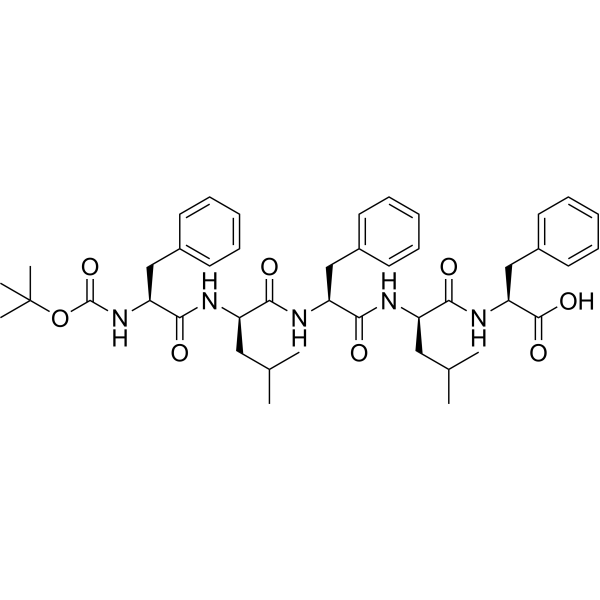
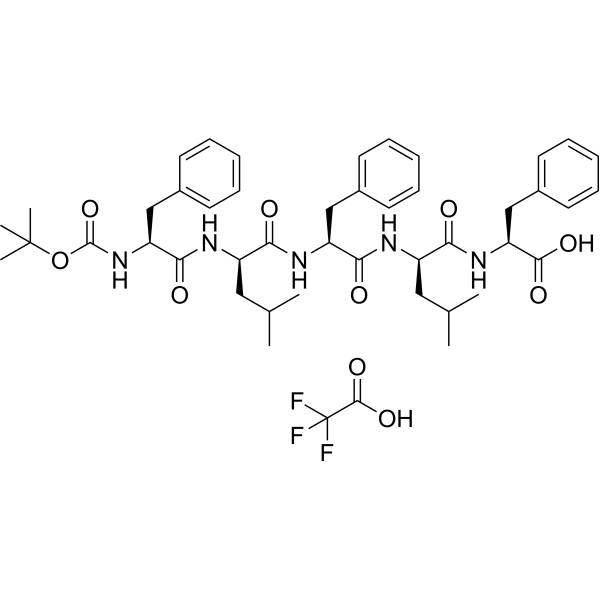
BOC-FlFlF (Boc-Phe-dLeu-Phe-dLeu-Phe) is a selective FPR1 antagonist. Boc-FlFlF has an apparent dissociation constant (KD) of 230 nM as determined by the intracellular calcium mobilization assay. Boc-FlFlF can be used for the study of inflammation .
loading...
    loading...
Cat. No.: HY-134299
CAS No.: 663941-66-0
Synonyms: 8-(4-Chlorophenylthio)-cAMP-AM
Target:  

Ras PKA

8-CPT-cAMP-AM (8-(4-Chlorophenylthio)-cAMP-AM) is an Epac/PKA activator. 8-CPT-cAMP-AM potentiates glucose-dependent first- and second-phase insulin secretion, induces β-cell depolarization, modulates intracellular calcium via influx and ryanodine-sensitive store mobilization, and facilitates calcium-induced calcium release resistant to PKA inhibition. 8-CPT-cAMP-AM can be used for the research of cardiac hypertrophy, diabetic cardiomyopathy, and melanoma .
loading...
    loading...
Cat. No.: HY-137325A
CAS No.: 301334-89-4
Target:  

Calcium Channel

Research Areas:  

Metabolic Disease

2-Chloro-ATP sodium (2-Chloro ATP) is an adenine nucleotide and an analog of ATP. It is an antagonist of the purinergic P2Y1 receptor and inhibits intracellular calcium mobilization induced by ADP (HY-W010918) in Jurkat cells expressing the human receptor (Ki=2.3 μM). 2-Chloro-ATP sodium is an agonist of the purinergic P2X receptor and induces inward currents in HEK293 cells expressing human bladder smooth muscle or rat PC12 forms of the receptor (EC50=0.5 and 2.5 μM). 2-Chloro-ATP sodium induces relaxation of precontracted guinea pig cecal strips in a concentration-dependent manner. 2-Chloro-ATP sodium has been used to study the substrate specificity of cyclic nucleotide-dependent protein kinases such as protein kinase A (PKA) and PKG.
loading...
    loading...
Cat. No.: HY-113465S
CAS No.: 1240398-14-4
Synonyms: LTE4-d5
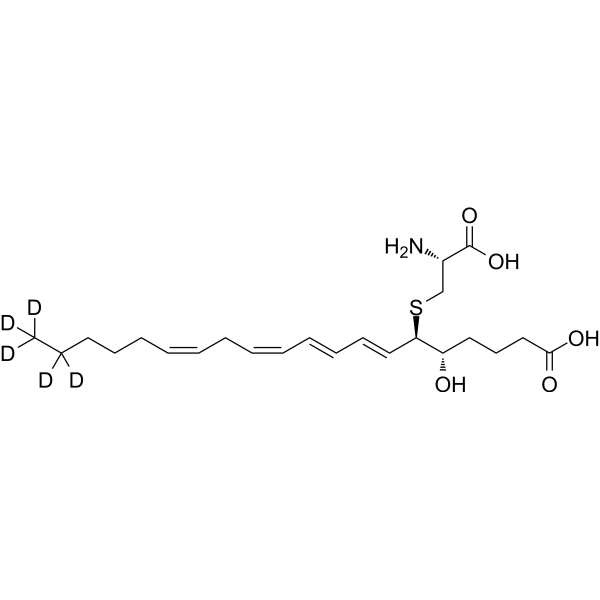
Leukotriene E4-d5 (LTE4-d5) is the d-5-labeled Leukotriene E4 (HY-113465). Leukotriene E4 is a stable final metabolite of cysteinyl leukotrienes, produced by immune cells such as mast cells and eosinophils. Leukotriene E4 serves as a key biomarker for evaluating asthma severity, Aspirin (HY-14654) sensitivity, and mast cell activation disorders. Leukotriene E4 is a full functional agonist of CysLT1R, which induces sustained intracellular calcium mobilization and Erk phosphorylation. Leukotriene E4 mediates inflammation in a P2Y12 receptor-dependent manner. Leukotriene E4 can be used in the research of asthma and non-steroidal anti-inflammatory drug-exacerbated respiratory diseases .
loading...
    loading...
Cat. No.: HY-120985
CAS No.: 123000-02-2
Target:  

Calcium Channel

Research Areas:  

Neurological Disease

Xestospongins and araguspongins are marine natural products first isolated from Pacific basin sponges, and noted to have vasodilatory properties.1 Inositol phosphates (IP) are important signal transduction messengers acting via IP3 receptors to promote the mobilization of Ca2+ from intracellular stores.2 Araguspongin B antagonizes the calcium-releasing action of inositol 1,4,5-trisphosphate at the receptor level in cerebral microsomes, with an IC50 of 0.6 μM. It is nearly as potent as xestospongin C as an antagonist of the IP3 receptor.
loading...
    loading...
Cat. No.: HY-107216A
CAS No.: 925419-53-0
(3aS,4R,9bR)-G-1 is a highly selective G protein-coupled receptor GPR30 (GPER) agonist with a Ki value of approximately 7 nM. (3aS,4R,9bR)-G-1 activates rapid signaling pathways such as intracellular calcium mobilization and PI3K signaling through GPR30, promoting uterine epithelial cell proliferation and exerting antidepressant effects. (3aS,4R,9bR)-G-1 is promising for research of breast cancer and depression .
loading...
    loading...
Cat. No.: HY-101607A
CAS No.: 93392-97-3
Target:  

Calcium Channel

Research Areas:  

Cardiovascular Disease

KT-362 free acid is an intracellular calcium antagonist with antiarrhythmic and vasodilatory effects. KT-362 free acid shows an antagonistic effect against norepinephrine (NE) induced vasoconstriction response, achieved by reducing inositol phospholipid hydrolysis, thereby reducing intracellular calcium mobilization. KT-362 free acid can be used to study the contraction and relaxation mechanisms of vascular smooth muscle, especially in exploring the role of intracellular calcium mobilization and inositol phospholipid hydrolysis in vascular contraction .
loading...
    loading...
Cat. No.: HY-P2355A
Synonyms: BOC2 TFA; Boc-Phe-dLeu-Phe-dLeu-Phe TFA
Research Areas:  

Inflammation/Immunology

BOC-FlFlF (TFA) (Boc-Phe-dLeu-Phe-dLeu-Phe (TFA)) is a selective FPR1 antagonist. BOC-FlFlF has an apparent dissociation constant (KD) of 230 nM as determined by the intracellular calcium mobilization assay. BOC-FlFlF can be used for the study of inflammation .
loading...
    loading...
Cat. No.: HY-160615
CAS No.: 1448452-21-8
TP receptor antagonist-1 (compound 7m) is a thromboxane A2 receptor (TP receptor) antagonist, with IC50 values of 9.46 μM for TPa and 8.49 μM for TPb, respectively. TP receptor antagonist-1 can be used for the research of cardiovascular disease .
loading...
    loading...
Cat. No.: HY-116295
CAS No.: 7077-89-6
MRS2690 is a selective P2Y14 receptor agonist. MRS2690 inhibits adenylyl cyclase activity, thereby reducing intracellular cAMP levels and mediating concentration-dependent vasoconstriction of porcine coronary arteries. MRS2690 induces intracellular calcium mobilization, activates P38 and stimulates [ 35S]GTPγS binding to RBL-2H3 cell membranes. MRS2690 enhances antigen (NP-BSA)-, C3a-induced β-hexosaminidase (β-Hex) release. MRS2690can be used for ischemic heart disease .
loading...
    loading...
Cat. No.: HY-116295A
MRS2690 disodium is a selective P2Y14 receptor agonist. MRS2690 disodium inhibits adenylyl cyclase activity, thereby reducing intracellular cAMP levels and mediating concentration-dependent vasoconstriction of porcine coronary arteries. MRS2690 disodium induces intracellular calcium mobilization, activates P38 and stimulates [ 35S]GTPγS binding to RBL-2H3 cell membranes. MRS2690 enhances antigen (NP-BSA)-, C3a-induced β-hexosaminidase (β-Hex) release. MRS2690 disodium can be used for ischemic heart disease .
loading...
    loading...
Cat. No.: HY-W574030
CAS No.: 126727-03-5
Target:  

Neurotensin Receptor

Research Areas:  

Neurological Disease

Fmoc-DL-Leu-OH acts as a partial agonist of the neurotensin NTS1 receptor (NTS1R) with an EC50 of 215.50 μM. Fmoc-DL-Leu-OH triggers intracellular calcium mobilization, and its activity is blocked by selective NTS1R antagonists. Fmoc-DL-Leu-OH can be used in the research of schizophrenia .
loading...
    loading...
Cat. No.: HY-113420S
CAS No.: 1240398-15-5
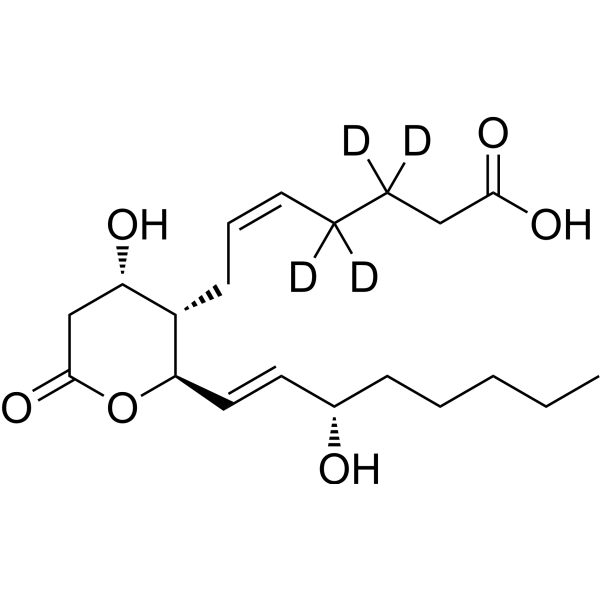
11-Dehydro-thromboxane B2-d4 is the d4-labeled 11-Dehydro-thromboxane B2 (HY-113420). 11-Dehydro-thromboxane B2 is a stable terminal metabolite of thromboxane A2 and an agonist of the CRTH2 receptor. 11-Dehydro-TXB2 activates human eosinophils, basophils, and CRTH2-transfected BaF/3 cells through a pertussis toxin-insensitive G protein-PLC pathway, inducing intracellular calcium mobilization, morphological changes, and chemotaxis, but does not affect platelet aggregation. 11-Dehydro-thromboxane B2 is involved in thrombosis and promotes eosinophil recruitment to the lungs in allergic inflammation, and its urinary levels are used to assess the inhibitory effect of Aspirin (HY-14654) on thromboxane production. 11-Dehydro-TXB2 serves as a biomarker for research related to asthma, atopic rhinitis, nephropathy, and coronary artery disease .
loading...
    loading...
Cat. No.: HY-113420S2
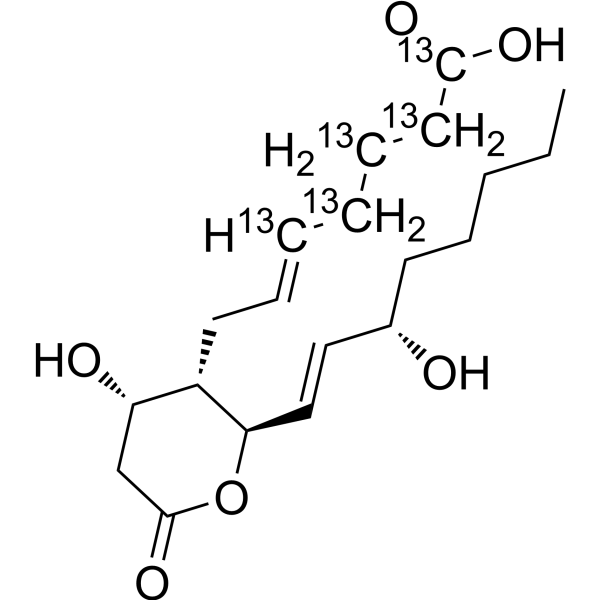
11-Dehydro-thromboxane B2- 13C5 is the 13C-labeled 11-Dehydro-thromboxane B2 (HY-113420). 11-Dehydro-thromboxane B2 is a stable terminal metabolite of thromboxane A2 and an agonist of the CRTH2 receptor. 11-Dehydro-TXB2 activates human eosinophils, basophils, and CRTH2-transfected BaF/3 cells through a pertussis toxin-insensitive G protein-PLC pathway, inducing intracellular calcium mobilization, morphological changes, and chemotaxis, but does not affect platelet aggregation. 11-Dehydro-thromboxane B2 is involved in thrombosis and promotes eosinophil recruitment to the lungs in allergic inflammation, and its urinary levels are used to assess the inhibitory effect of Aspirin (HY-14654) on thromboxane production. 11-Dehydro-TXB2 serves as a biomarker for research related to asthma, atopic rhinitis, nephropathy, and coronary artery disease .
loading...
    loading...
Cat. No.: HY-182724
CAS No.: 2244978-64-9
Research Areas:  

Inflammation/Immunology

PSB-18422 is a GPR17 agonist, with an EC50 of 0.0279 μM for humans, 0.47 μM for rats, 0.753 μM for mice, and a human Ki of 1.46 μM. PSB-18422 triggers intracellular calcium mobilization via cross-species activation of GPR17. PSB-18422 can be used in the research of allergic bronchial inflammation .
loading...
    loading...
Cat. No.: HY-186042
CAS No.: 899789-84-5
Research Areas:  

Cardiovascular Disease

TPα/β antagonist-1 is a TXA2 receptor α (TPα) and TPβ antagonist with IC50s of 1.52 nM and 0.79 nM, respectively. TPα/β antagonist-1 inhibits U-46619 (HY-108566)-induced intracellular calcium mobilization, and imhibits platelet aggregation. TPα/β antagonist-1 can be used for the research of cardiovascular disease .
loading...
    loading...

