1. Search Result
Search Result
Results for "

intracellular protein

" in MedChemExpress (MCE) Product Catalog:

272

Inhibitors & Agonists

8

Screening Libraries

16

Fluorescent Dyes

7

Biochemical Assay Reagents

24

Peptides

2

MCE Kits

1

Inhibitory Antibodies

36

Natural
Products

12

Recombinant Proteins

8

Isotope-Labeled Compounds

15

Antibodies

7

Click Chemistry

8

Oligonucleotides

2

GMP Molecules

Cat. No. 상품명 Target 연구분야 Chemical Structure
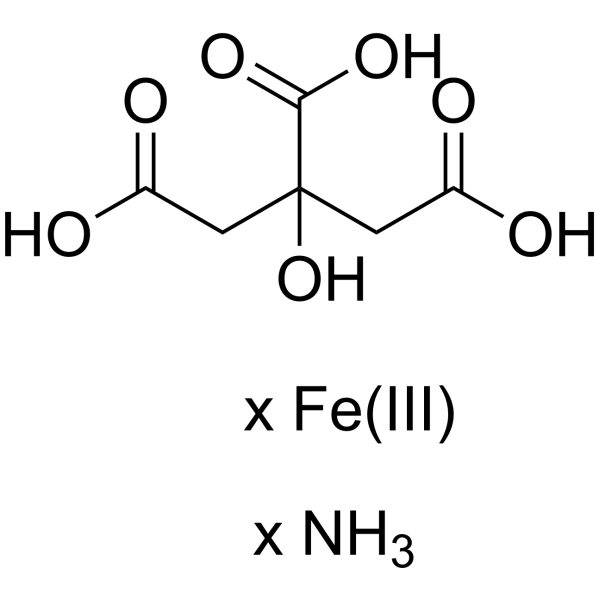
  • HY-B1645
    Ammonium iron(III) citrate
    Maximum Cited Publications
    28 Publications Verification

    Ammonium ferric citrate; FAC

    Environmental Pollutants Ferroptosis Cancer
    Ammonium iron(III) citrate (Ammonium ferric citrate), a physiological form of nonetransferrin-bound iron, induces intracellular iron overload to cause ferroptosis . Ammonium iron(III) citrate can enhance protein production .
    Ammonium iron(III) citrate
  • HY-143589

    JAB-21822; KRAS G12C inhibitor 36

    Ras Cancer
    Glecirasib (Compound 1-2; JAB-21822) is an orally active and potent inhibitor of KRAS G12C. The Ras family of proteins is an important intracellular signaling molecule that plays an important role in growth and development. Glecirasib has the potential for the research of KRAS G12C-mediated cancer .
    Glecirasib
  • HY-D1736

    Fluorescent Dye Others
    BODIPY FL-C16 is a BODIPY-labeled analog of Palmitic acid (HY-N0830), which serves as a fluorescent lipid tracer. BODIPY FL-C16 also acts as a ligand for liver fatty acid-binding protein (L-FABP) and intestinal fatty acid-binding protein (I-FABP) , with Kd values of 270 nM and 330 nM, respectively. BODIPY FL-C16 is rapidly taken up by cells, and after metabolic conversion to phospholipids, it is incorporated into the membrane structures of intracellular organelles and extracellular vesicles .
    BODIPY FL-C16
  • HY-116424

    Anti-dynamin II

    Biochemical Assay Reagents Cancer
    DYn-2 (Anti-dynamin II) is a chemoselective sulfenylated protein probe. DYn-2 binds to sulfenylated proteins with chemoselectivity, enabling the detection of such proteins. DYn-2 can detect differences in intracellular sulfenylation rates. DYn-2 can be used in human cancer research, including studies on breast cancer and lung cancer .
    DYn-2
  • HY-119287
    TSQ
    5 Publications Verification

    Fluorescent Dye Others
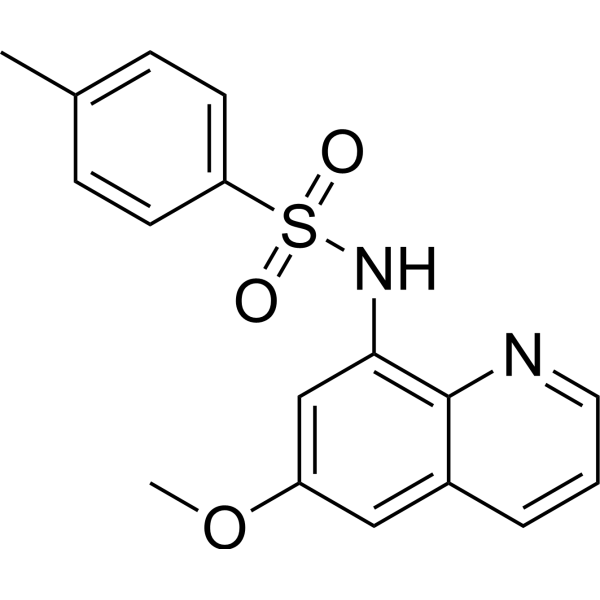
    TSQ is a cytosolic zinc ion fluorescence probe that is membrane permeable and can be used for intracellular imaging of zinc proteinsmax ~470 nm). TSQ can combine with Zn 2+ in the presence of Ca 2+ and Mg 2+ to produce blue fluorescence (Ex/Em = 334/495 nm) .
    TSQ
  • HY-P10152

    Biochemical Assay Reagents Infection
    INF7 is a derivative of the N-terminal domain of the HA2 protein and is sensitive to pH. INF7 disrupts the stability of endosomal membranes through a mechanism independent of membrane fusion. INF7 can be used to enhance the endosome escape of complex or liposome-encapsulated proteins. Co-encapsulation of INF7 and molecular imaging probes in liposomes can enhance intracellular signaling and probe retention .
    INF7
  • HY-126254
    BI-4924
    1 Publications Verification

    Phosphoglycerate Dehydrogenase (PHGDH) Cancer
    BI-4924 is a lipophilic, highly plasma protein bound selective phosphoglycerate dehydrogenase (PHGDH) inhibitor (IC50=3 nM) with excellent microsomal, as well as hepatocytic stability. Intracellular trapping of BI-4924 disrupts serine biosynthesis with an IC50 of 2200 nM at 72 h .
    BI-4924
  • HY-124171
    Zinquin ethyl ester
    1 Publications Verification

    Fluorescent Dye Drug Derivative Others
    Zinquin ethyl ester is a cell-permeable and lipophilic fluorescent derivative of Zinquin (HY-D0982). Zinquin ethyl ester reacts with protein-bound Zn 2+ in cells and forms fluorescent ternary adducts. Zinquin ethyl ester undergoes hydrolysis by intracellular esterases impeding its efflux across the plasma membrane (Ex/Em = 370/470 nm) .
    Zinquin ethyl ester
  • HY-P4373A
    Hepcidin-1 (mouse) TFA
    1 Publications Verification

    Cathepsin MMP Inflammation/Immunology
    Hepcidin-1 (mouse) TFA is an endogenous peptide hormone involved in the regulation of iron homeostasis. Hepcidin-1 (mouse) TFA upregulates mRNA levels of TRAP, cathepsin K, and MMP-9 and increases TRAP-5b protein secretion. Hepcidin-1 (mouse) TFA downregulates the level of FPN1 protein and increases intracellular iron. Hepcidin-1 (mouse) TFA facilitates osteoclast differentiation .
    Hepcidin-1 (mouse) TFA
  • HY-69220

    PROTAC Linkers Cancer
    7-Octynoic acid (compound 42) is a PROTAC linker and can be used in the synthesis of a series of PROTACs. PROTACs contain two different ligands connected by a linker; one is a ligand for an E3 ubiquitin ligase and the other is for the target protein. PROTACs exploit the intracellular ubiquitin-proteasome system to selectively degrade target proteins . 7-Octynoic acid is a click chemistry reagent, it contains an Alkyne group and can undergo copper-catalyzed azide-alkyne cycloaddition (CuAAc) with molecules containing Azide groups.
    7-Octynoic acid
  • HY-128481

    STING Inflammation/Immunology Cancer
    SB24011 is a STING modulator and a TRIM29-STING protein-protein interaction inhibitor. SB24011 blocks TRIM29-induced K48-linked specific ubiquitination by binding to STING, thereby upregulating intracellular STING protein levels. SB24011 enhances inflammatory cytokine expression and STING-mediated immune responses, and exhibits abscopal antitumor activity that promotes tumor regression and activates T cell infiltration. When combined with STING agonists or anti-PD1 antibodies, SB24011 synergistically enhances antitumor responses. SB24011 is suitable for research related to colon cancer and melanoma .
    SB24011
  • HY-111548
    Spastazoline
    4 Publications Verification

    Microtubule/Tubulin Others
    Spastazoline is a selective spastin (a microtubule-severing AAA protein) inhibitor, with an IC50 of 99 nM for Human spastin. Spastazoline can be used for cell division- and intracellular vesicle transport-related research .
    Spastazoline
  • HY-D1044

    Rhodamine 640 chloride

    Fluorescent Dye Cancer
    Rhodamine 101 chloride (Rhodamine 640 chloride) is a fluorescent dye with excitation and emission maxima at 565 nM and 595 nM, respectively. Rhodamine 101 chloride binds to intracellular proteins and emits specific fluorescence. Rhodamine 101 chloride can be used in colon cancer research .
    Rhodamine 101 chloride
  • HY-164159

    Reactive Oxygen Species (ROS) MMP Inflammation/Immunology
    α-Glucosylrutin, a flavonoid, is a potent antioxidant with free radical scavenging activity. α-Glucosylrutin reduces MMP-1 gene expression, protein expression, and enzyme activity, and reduces MMP-2 protein expression and enzyme activity in UVA-irradiated human dermal fibroblasts. α-Glucosylrutin prevents oxidative stress-induced intracellular tyrosine residue phosphorylation and counteracts intracellular thiol level depletion in human skin cells. α-Glucosylrutin is effective in the prevention of dermatologic diseases in which oxidative stress is of pathogenetic relevance, e.g. in polymorphous light eruption (PLE). α-Glucosylrutin can be used for the research of UV-induced skin photodamage/photoaging .
    α-Glucosylrutin
  • HY-147255

    ZM-H1505R

    HBV Infection
    Canocapavir (ZM-H1505R) is an orally active HBV core protein-targeting antiviral agent. Canocapavir binds to the hydrophobic pocket at the dimer-dimer interface of HBV core protein (HBc), stimulating intracellular accumulation of nonfunctional HBV capsids, disrupting viral replication. Canocapavir interferes with the interaction between HBc and HBV large surface protein, resulting in diminished
    production of empty virionsis. Canocapavir can be used for the research of hepatitis B virus (HBV) infection .
    Canocapavir
  • HY-40178

    PROTAC Linkers Cancer
    NH2-C4-NH-Boc (compound 15) is a PROTAC linker, which refers to the Alkyl/ether composition. NH2-C4-NH-Boc can be used in the synthesis of a series of PROTACs. PROTACs contain two different ligands connected by a linker; one is a ligand for an E3 ubiquitin ligase and the other is for the target protein. PROTACs exploit the intracellular ubiquitin-proteasome system to selectively degrade target proteins .
    NH2-C4-NH-Boc
  • HY-D1443

    (trans,trans)-1-Bromo-2,5-bis-(3-hydroxycarbonyl-4-hydroxy)styrylbenzene

    Amyloid-β Others
    BSB is a Congo red-derived fluorescent probe. BSB binds not only to extracellular amyloid β protein, but also many intracellular lesions composed of abnormal tau and synuclein proteins. BSB acts as a prototype imaging agent for Alzheimer's disease .
    BSB
  • HY-131015

    Biochemical Assay Reagents Others
    HaXS8 is a dimerizer that can promote a covalent and irreversible intracellular dimerization of HaloTag and SNAP-tagged proteins of interest. HaXS8 does not interfere with PI3K/mTOR signaling .
    HaXS8
  • HY-118131

    Ser/Thr Protease Infection
    PKR-IN-C51(compound 51) is an ATP-competitive double-stranded RNA-activated protein kinase (PKR) inhibitor with an IC50 of 9 μM. PKR-IN-C51 inhibits intracellular PKR activation in a dose-dependent manner in primary mouse macrophages .
    PKR-IN-C51
  • HY-135474
    KM91104
    2 Publications Verification

    ATP Synthase Toll-like Receptor (TLR) Others
    KM91104 is a cell-permeable V-ATPase a3-b2 inhibitor (IC50 = 2.3 µM). KM91104 reduces the metabolic activity, cell proliferation capacity and V-ATPase subunit protein expression levels of primary human hepatic stellate cells, increases intracellular ATP levels and decreases cytoplasmic pH. KM91104 reduces TLR4 expression on the surface of oligodendrocyte precursor cells, blocks the ENV-TLR4 interaction, and reverses oligodendrocyte myelination defects induced by ENV protein .
    KM91104
  • HY-150785

    Apoptosis Cancer
    TAS1553 is a potent, orally active protein-protein interaction (PPI) inhibitor with an IC50 values of 0.0396 μM. TAS1553 inhibits DNA replication and reduces intracellular dATP pool. TAS1553 induces apoptosis. TAS1553 can be used for cancer research .
    TAS1553
  • HY-P1985

    Notch Cardiovascular Disease Cancer
    Notch 1 (Notch homolog 1, translocation-associated) can encode a member of the NOTCH family of proteins. Members of this Type I transmembrane protein family share structural characteristics including an extracellular domain consisting of multiple epidermal growth factor-like (EGF) repeats, and an intracellular domain consisting of multiple different domain types .
    Notch 1
  • HY-131514

    Ornithine α-ketoglutarate; OKG

    Insulin Receptor GHR Inflammation/Immunology
    L-Ornithine 2-oxoglutarate (Ornithine alpha-ketoglutarate) is a nutritional compound that is a salt of amino acids with antioxidant and anti-inflammatory effects. L-Ornithine 2-oxoglutarate stimulates the production of insulin and growth hormone, and promotes intracellular amino acid transport and protein synthesis .
    L-Ornithine 2-oxoglutarate
  • HY-N1282

    Glutathione S-transferase Cytochrome P450 Cancer
    Seneciphylline is an orally effective hepatotoxic inducer. Seneciphylline is metabolized by CYP450 enzymes into active intermediates, which covalently bind to intracellular biomacromolecules such as proteins and DNA to form adducts, which in turn trigger a series of toxic reactions, such as inducing cell apoptosis and damaging mitochondrial function. Seneciphylline can be used in hepatotoxicity research[1][2].
    Seneciphylline
  • HY-NP180

    Calcium Channel Metabolic Disease
    Progesterone/BSA is a conjugate of Progesterone (HY-N0437) and bovine serum albumin (BSA). Progesterone/BSA cannot penetrate the plasma membrane of human sperm, but still rapidly elevates intracellular free calcium and induces the acrosome reaction. Progesterone/BSA can also act as a probe to specifically bind to progesterone-binding proteins on the membrane of rat brain synaptosomes .
    Progesterone/BSA
  • HY-W039921

    N-Azidoacetylgalactosamine; GalNAz

    Biochemical Assay Reagents Others
    2-[(Azidoacety)amino]-2-deoxy-D-galactose targets O-GlcNAc-modified proteins. By detecting and targeting O-GlcNAc-modified proteins, 2-[(Azidoacety)amino]-2-deoxy-D-galactose can serve as a chemical tag for intracellular sugar chain metabolism .
    2-[(Azidoacety)amino]-2-deoxy-D-galactose
  • HY-P4373

    Cathepsin MMP Metabolic Disease
    Hepcidin-1 (mouse) is an endogenous peptide hormone involved in the regulation of iron homeostasis. Hepcidin-1 (mouse) upregulates mRNA levels of TRAP, cathepsin K, and MMP-9 and increases TRAP-5b protein secretion. Hepcidin-1 (mouse) downregulates the level of FPN1 protein and increases intracellular iron. Hepcidin-1 (mouse) facilitates osteoclast differentiation .
    Hepcidin-1 (mouse)
  • HY-118667
    Dehydroergosterol
    1 Publications Verification

    Liposome Others
    Dehydroergosterolis a naturally occurring fluorescent sterol analog (Ex/Em=325/375 nm), which mimics the properties of cholesterol in cell membranes. DehydroergosterolEasily conjugated by cholesterol-binding proteins for real-time imaging in live cells. DehydroergosterolThe sterol environment and intracellular sterol transport in vivo can be probed/elucidated in real time .
    Dehydroergosterol
  • HY-16304

    Endogenous Metabolite Metabolic Disease
    Mannose 1-phosphate is a phosphorylated mannose that serves as a precursor of GDP-mannose, a constituent unit of glycosylation biosynthetic pathways. Mannose 1-phosphate increases intracellular GDP-mannose concentration, promotes normalization of lipid-linked oligosaccharide structures, and enhances the formation of mature N-glycans on cellular proteins. Mannose 1-phosphate can be used in studies related to glycosylation disorders .
    Mannose 1-phosphate
  • HY-138646

    Poly(dA:dT) sodium

    Cyclic GMP-AMP Synthase STING Inflammation/Immunology
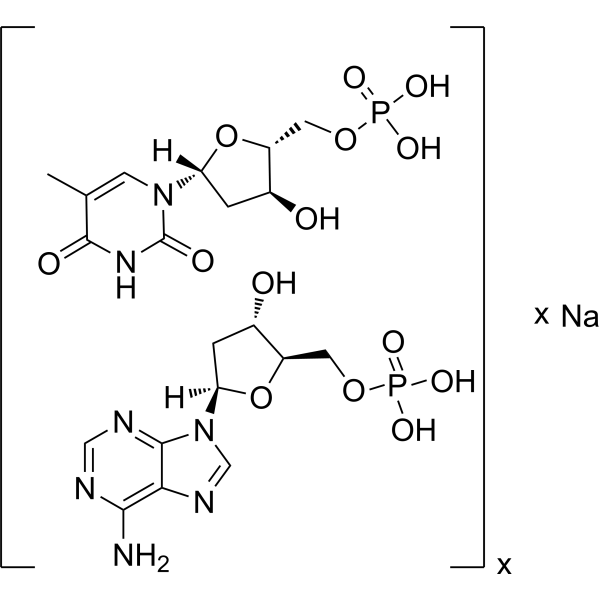
    Poly(deoxyadenylic-thymidylic) acid (Poly(dA:dT)) sodium is a double-stranded DNA stimulant. Poly(deoxyadenylic-thymidylic) acid sodium is recognized by the intracellular DNA sensor DDX41 and activates the innate immune pathway via the adaptor protein STING, inducing the production of cytokines such as type I interferons. Poly(deoxyadenylic-thymidylic) acid sodium also serves as an in vitro transcription template for free RNA polymerase .
    Poly(deoxyadenylic-thymidylic) acid sodium
  • HY-P10471E

    MARCKS-ED control peptide TFA

    MARCKS Others
    MPSD control peptide (MARCKS-ED control peptide) TFA is the control peptide of MPSD (HY-P10471). MPSD (MARCKS-ED) is a 25-amino acid peptide based on the effector domain sequence of the intracellular membrane protein myristoylated alanine-rich C-kinase substrate (MARCKS) .
    MPSD control peptide TFA
  • HY-130715

    PROTAC Linkers Cancer
    tert-Butyl 11-aminoundecanoate (compound 6b) is a PROTAC linker, which refers to the PEG composition. tert-Butyl 11-aminoundecanoate can be used in the synthesis of a series of PROTACs. PROTACs contain two different ligands connected by a linker; one is a ligand for an E3 ubiquitin ligase and the other is for the target protein. PROTACs exploit the intracellular ubiquitin-proteasome system to selectively degrade target proteins .
    tert-Butyl 11-aminoundecanoate
  • HY-151884

    c-Myc Cancer
    FUBP1-IN-2 (compound 9) is a potent FUBP1 (far upstream binding protein 1) inhibitor. FUBP1-IN-2 inhibits the KH4 FUBP1-FUSE interaction in a gel shift assay. FUBP1-IN-2 binds to FUBP1 in a ChIP assay. FUBP1-IN-2 reduces both c-Myc mRNA and protein expression, increases p21 mRNA and protein expression, and depletes intracellular polyamines .
    FUBP1-IN-2
  • HY-13338

    Adrenergic Receptor Cardiovascular Disease
    Mabuterol is a selective and orally active beta-2 adrenergic receptor (ADRB2) agonist. Mabuterol inhibits the proliferation and suppresses the increase of intracellular Ca2+ induced by PDGF-BB. Mabuterol suppresses the protein expressions of Drp-1, cyclinD1 and PCNA and enhanced the expression of Mfn-2 induced by PDGF-BB .
    Mabuterol
  • HY-151883

    Apoptosis MDM-2/p53 Cancer
    APE1-IN-2 (compound AP1) is a Pt(IV) proagent, targeting a critical BER protein, apurinic/apyrimidinic endonuclease 1 (APE1). APE1-IN-2 shows anticancer activity. APE1-IN-2 induces intracellular accumulation of platinum and activates DNA damage response and apoptosis signals .
    APE1-IN-2
  • HY-123056

    p62 Autophagy Apoptosis Cancer
    EAD1 is a Chloroquine (HY-17589A) analog with anticancer activity. EAD1 blocks autophagy, leading to the intracellular accumulation of autophagosome-related proteins LC3-II and p62. EAD1 induces cancer cell apoptosis and inhibits cancer cell proliferation. EAD1 can be used in the research of lung cancer and pancreatic cancer .
    EAD1
  • HY-P1925B

    Mucin Cancer
    L-GO-203 TFA is a potent MUC1-C oncoprotein inhibitor. L-GO-203 TFA is an anti-cancer peptide for targeting intracellular proteins .
    L-GO-203 TFA
  • HY-P1985A

    Notch Cardiovascular Disease Cancer
    Notch 1 TFA (Notch homolog 1, translocation-associated) can encode a member of the NOTCH family of proteins. Members of this Type I transmembrane protein family share structural characteristics including an extracellular domain consisting of multiple epidermal growth factor-like (EGF) repeats, and an intracellular domain consisting of multiple different domain types .
    Notch 1 TFA
  • HY-176130

    ATTECs Tau Protein Autophagy Neurological Disease
    MRL828 combines a Tau pathology-binding ligand and modified guanine moiety based on the ATTEC technology to selectively designate aggregated tau proteins for clearance via the ALP. MRL828 decreases intracellular Tau aggregates and promotes the secretion of Tau .
    MRL828
  • HY-141641

    HSL

    Bacterial Infection
    N-(3-Oxopentanoyl)-L-homoserine lactone is an autoinducer, a kind of chemical signal molecule which passively diffuses across the bacterial envelope and accumulates intracellularly at high bacterial densities. It may bind to a protein related to the LuxR protein of V. fischeri and causes cell density-dependent gene expression. N-(3-Oxopentanoyl)-L-homoserine can be used for research of quorum sensing .
    N-(3-Oxopentanoyl)-L-homoserine lactone
  • HY-DY1055

    Fluorescent Dye Others
    TSQ (solution) is a cytosolic zinc ion fluorescence probe that is membrane permeable and can be used for intracellular imaging of zinc proteinsmax ~470 nm). TSQ can combine with Zn 2+ in the presence of Ca 2+ and Mg 2+ to produce blue fluorescence (Ex/Em = 334/495 nm) .
    Solvent and concentration: DMSO: 10 mM
    TSQ (solution)
  • HY-176502

    FKBP Cancer
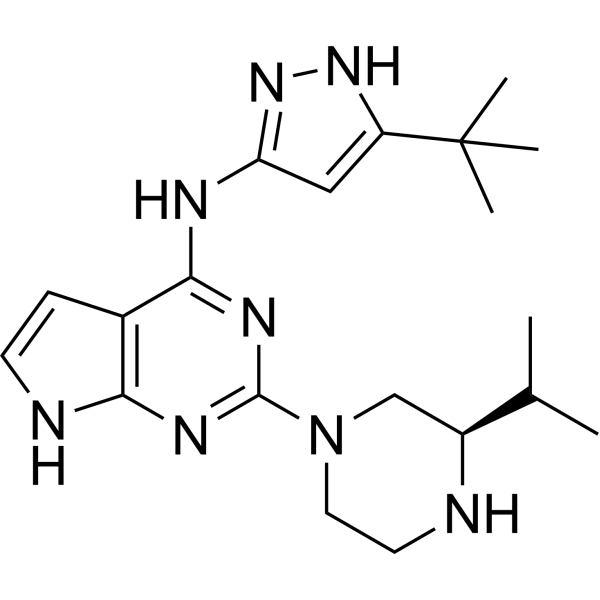
    FKBP12 ligand-3 (compound dj) is a high-affinity ligand targeting FKBP12. FKBP12 ligand-3 can be used to selectively enhance the binding of heterobifunctional molecules to BRD4, enriching the drug intracellularly through the "CellTrap" effect to form a ternary complex of FKBP12-ligand-BRD4. This ternary complex has inhibitory activity against BRD4, thereby inhibiting the expression of BRD4 target genes (such as MYC) and inducing tumor cell death. FKBP12 ligand-3 can be used for selective cancer research based on differences in intracellular presenter protein levels .
    FKBP12 ligand-3
  • HY-143606

    Ras Cancer
    KRAS G12D inhibitor 12 is a potent inhibitor of KRAS G12D. The Ras family of proteins is an important intracellular signaling molecule that plays an important role in growth and development. KRAS G12D inhibitor 12 has the potential for the research of KRAS G12D-mediated cancer (extracted from patent WO2021108683A1, compound 134) .
    KRAS G12D inhibitor 12
  • HY-159808

    Proteasome Cancer
    TCL1 is a selective non-covalent inhibitor targeting the Pru domain of the Rpn-13 subunit in the 19S regulatory particle (19S RP) of the proteasome with an IC50 value of approximately 26 μM. TCL1 interferes with the recognition and transport of ubiquitinated proteins by Rpn-13, inhibits the degradation of proteins by the proteasome, and thus affects the balance of intracellular protein metabolism. TCL1 is promising for research of hematological malignancies .
    TCL1
  • HY-162505

    CCR CXCR Inflammation/Immunology Cancer
    SQA1, a squaramide (SQA) derivative, is a CCR6 antagonist with a Kd of 250 nM. SQA1 is also a CXCR2 inhibitor. The intracellular pocket occupied by SQA1 overlaps with the G protein binding site and stabilizes the closed conformation of the intracellular pocket .
    SQA1
  • HY-D1239

    Fluorescent Dye Others
    BODIPY R6G NHS ester is a borondipyrromethene dye. BODIPY R6G NHS ester can be conjugated with proteins. BODIPY R6G NHS ester can be used for intracellular traces .
    BODIPY R6G NHS ester
  • HY-113646

    FKBP Others
    Shield-2 is an efficient stabilizing ligand binding to the FKBP (F36V) protein with a dissociation constant of 29 nM. Shield-2 binds tightly to the FKBP mutants destabilizing domains and prevents degradation, thus providing small molecule regulation over intracellular protein levels .
    Shield-2
  • HY-161180

    NAMPT Cancer
    Antitumor Agent-136 (Compound 17) is a potent broad-spectrum antitumor agent and a NAMPT inhibitor with an IC50 of 9.5 nM. Antitumor Agent-136 can reduce the levels of intracellular and extracellular NAMPT protein through the ubiquitin proteasome pathway, thus achieving tumor inhibition .
    Antitumor agent-136
  • HY-D2926

    BG-Tz; SNAP-Tetrazine

    Biochemical Assay Reagents Others
    BG-Tetrazine (BG-Tz; SNAP-Tetrazine) is a SNAP tag substrate that contains a methyl tetrazine group. BG-Tetrazine can specifically covalently label the target protein of the intracellular SNAP-tag fusion. The tetrazine group it carries can rapidly and efficiently undergo a bioorthogonal reaction with functional groups such as trans cyclooctene (TCO), thereby enabling multiple labeling, functionalization or enrichment of proteins. BG-Tetrazine can be applied in click chemistry .
    BG-Tetrazine
  • HY-13644

    15-Deoxyspergualin

    Others Others
    Gusperimus is a fully synthetic racemate that has a novel mechanism of action by binding to the intracellular heat shock protein hsp70 and interfering with intracellular signal transduction. This mechanism of action can enhance the effect of immunosuppressive therapy. Gusperimus can inhibit the differentiation of T cells into cytotoxic T cells, reduce the expression of IL-2 receptors on CD4 and CD8 cells, and inhibit IFN-γ-induced B cell maturation. In addition, when used with cyclosporine, tacrolimus or mycophenolate mofetil, Gusperimus can enhance the immunosuppressive effect and prevent allogeneic transplant rejection.
    Gusperimus

온라인 문의

Your information is safe with us. * Required Fields.

호칭


Country or Region *

고객명 *


회사명 *

Department *


메일주소 *


상품명 *

Cat. No.


Requested quantity *

전화번호 *


비고

온라인 문의

Inquiry Information

상품명:
Cat. No.:
수량:
MCE Japan Authorized Agent:

