1. Search Result
Search Result
Results for "

intractable

" in MedChemExpress (MCE) Product Catalog:

14

Inhibitors & Agonists

1

Isotope-Labeled Compounds

Cat. No. Product Name Target Research Areas Chemical Structure
  • HY-76711

    Opioid Receptor Neurological Disease Metabolic Disease Inflammation/Immunology Cancer
    Naltrexone is an orally active, long-acting opioid receptor (opioid receptor) antagonist. Naltrexone blocks the euphoric effects of exogenous opioids and reduces alcohol craving by blocking opioid receptors (μ, κ, and δ) as well as opioid growth factor receptors. Low doses of Naltrexone are used to relieve chronic pain, treat inflammatory diseases and inhibit tumor growth, while high doses or continuous administration exert pro-inflammatory or pro-proliferative effects. Naltrexone relieves intractable pruritus caused by psoriasis, atopic dermatitis and other conditions, and its combination with Bupropion (HY-B0403) inhibits food craving, thereby reducing body weight .
    Naltrexone
  • HY-B1294

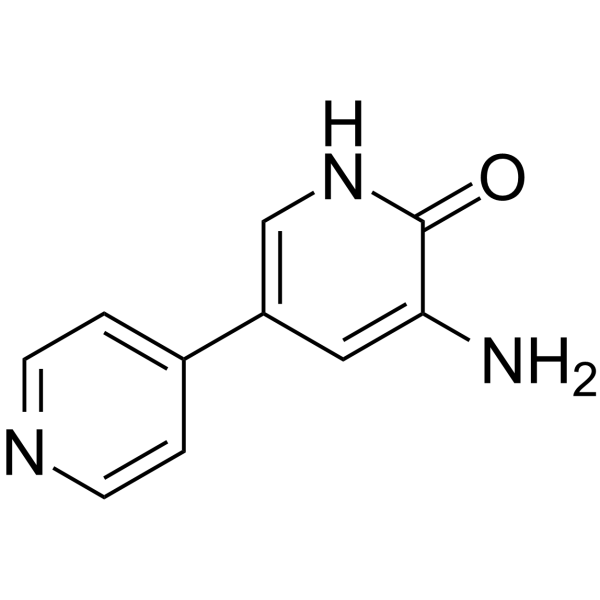
    Inamrinone

    Phosphodiesterase (PDE) Cardiovascular Disease
    Amrinone (Inamrinone) is a positive inotropic-vasodilator agent. Amrinone is a selective phosphodiesterase III inhibitor that increases cyclic adenosine monophosphate by preventing its breakdown. Amrinone is also an orally active, non-glycosidic and non-catecholamine cardiotonic agent .
    Amrinone
  • HY-76711S

    Isotope-Labeled Compounds Opioid Receptor Neurological Disease Metabolic Disease Inflammation/Immunology Cancer
    Naltrexone-d4 is deuterium labeled Naltrexone (HY-76711). Naltrexone is an orally active, long-acting opioid receptor (opioid receptor) antagonist. Naltrexone blocks the euphoric effects of exogenous opioids and reduces alcohol craving by blocking opioid receptors (μ, κ, and δ) as well as opioid growth factor receptors. Low doses of Naltrexone are used to relieve chronic pain, treat inflammatory diseases and inhibit tumor growth, while high doses or continuous administration exert pro-inflammatory or pro-proliferative effects. Naltrexone relieves intractable pruritus caused by psoriasis, atopic dermatitis and other conditions, and its combination with Bupropion (HY-B0403) inhibits food craving, thereby reducing body weight.
    Naltrexone-d4
  • HY-Y0588

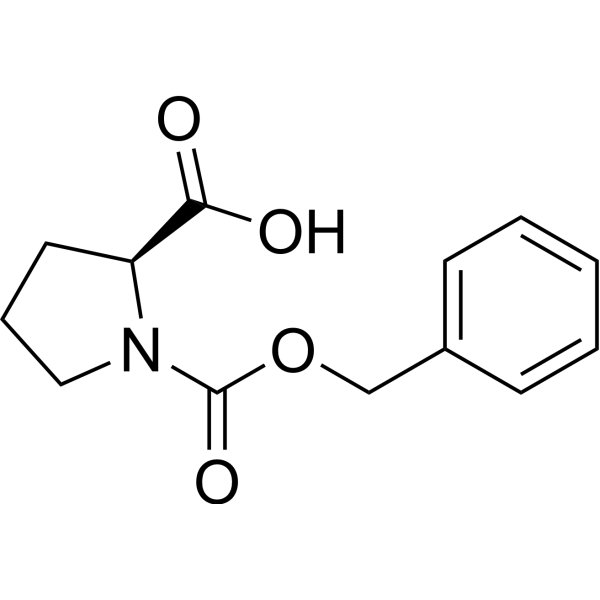
    L-Cbz-Proline

    MMP Others
    Carbobenzoxyproline (L-Cbz-Proline) is an inhibitor of prolidase. Carbobenzoxyproline can be used for prolidase deficiency (PD) research .
    Carbobenzoxyproline
  • HY-76711R

    Reference Standards Opioid Receptor Neurological Disease Metabolic Disease Inflammation/Immunology Cancer
    Naltrexone (Standard) is the analytical standard of Naltrexone (HY-76711). This product is intended for research and analytical applications. Naltrexone is an orally active, long-acting opioid receptor (opioid receptor) antagonist. Naltrexone blocks the euphoric effects of exogenous opioids and reduces alcohol craving by blocking opioid receptors (μ, κ, and δ) as well as opioid growth factor receptors. Low doses of Naltrexone are used to relieve chronic pain, treat inflammatory diseases and inhibit tumor growth, while high doses or continuous administration exert pro-inflammatory or pro-proliferative effects. Naltrexone relieves intractable pruritus caused by psoriasis, atopic dermatitis and other conditions, and its combination with Bupropion (HY-B0403) inhibits food craving, thereby reducing body weight.
    Naltrexone (Standard)
  • HY-B1689A

    Drug Derivative mAChR Metabolic Disease Inflammation/Immunology
    Methantheline bromide is a quaternary Ammonium derivate with anticholinergic activity. Methantheline bromide results in a significant greater reduction of axillary sweat production. Methyl bromide can be used in the research of intractable peptic ulcers .
    Methantheline bromide
  • HY-151452

    Calcium Channel Neurological Disease
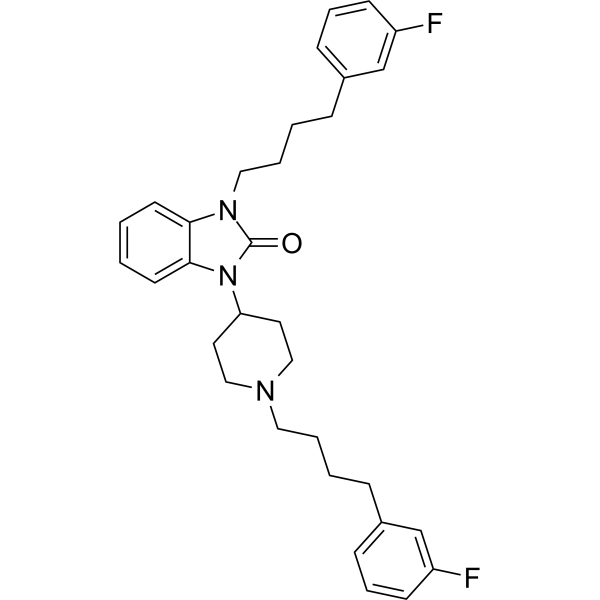
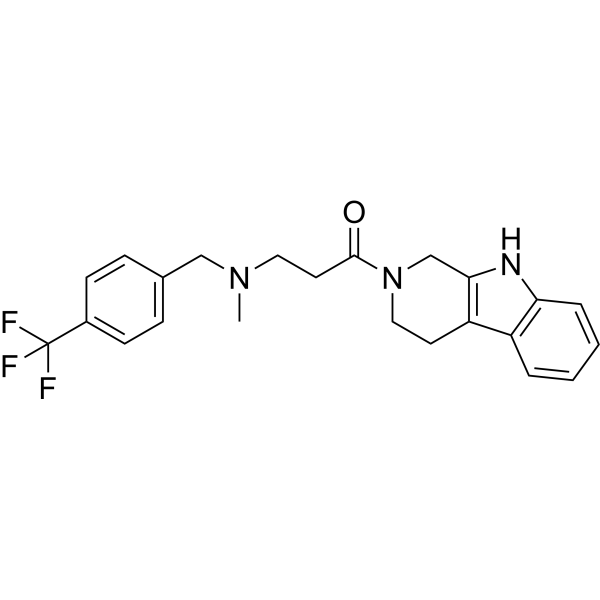
    Cav 3.2 inhibitor 3 (Compound 4) is a potent Cav3.2 T-type Ca 2+ channel inhibitor with an IC50 of 0.1534 μM, and has little binding affinity to D2 receptors .
    Cav 3.2 inhibitor 3
  • HY-151451

    Calcium Channel Neurological Disease
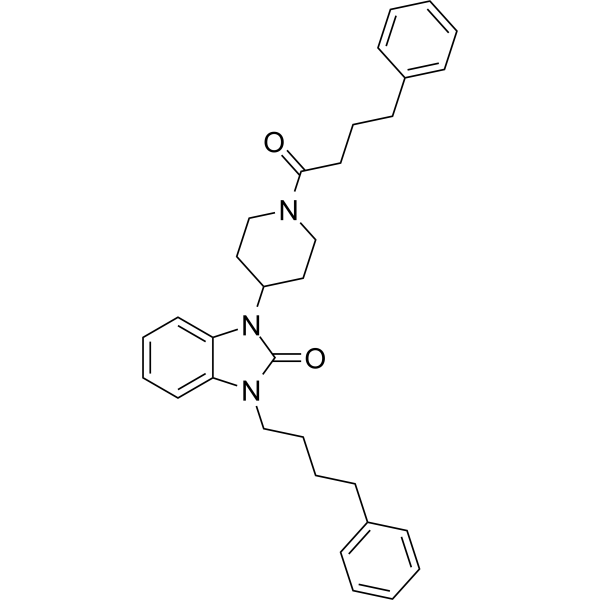
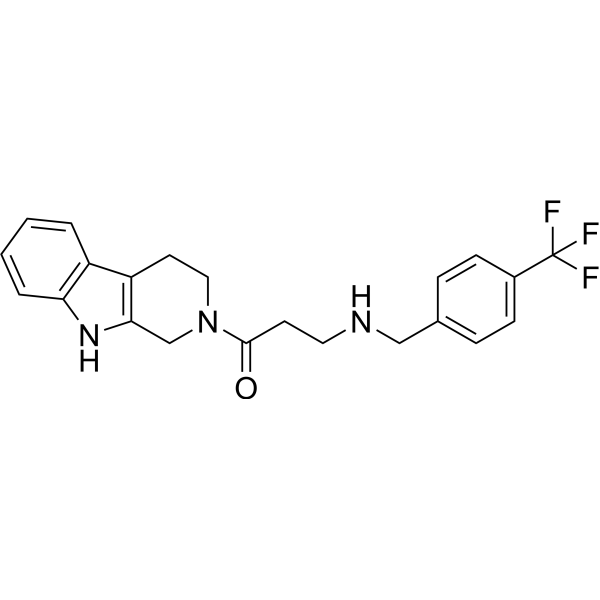
    Cav 3.2 inhibitor 2 is a Cav3.2 T-type Ca 2+ channels inhibitor with an IC50 of 0.09339 μM under -80mV holding potential. Cav 3.2 inhibitor 2 potently suppresses T-channel-dependent somatic and visceral pain in mice. Cav 3.2 inhibitor 2 can be used for the research of intractable pain .
    Cav 3.2 inhibitor 2
  • HY-155661

    Reactive Oxygen Species (ROS) Infection
    ROS inducer 2 (Compound I16) is a ROS inducer. ROS inducer 2 has good activity in vitro, with an EC50 of 3.43 μg/mL. ROS inducer 2 has outstanding bioactivities in vivo against Xanthomonas axonopodis pv. citri. ROS inducer 2, as a bactericidal agent, can be used for the research of intractable plant bacterial diseases .
    ROS inducer 2
  • HY-155662

    Reactive Oxygen Species (ROS) Infection
    ROS inducer 3 (Compound I6) is a ROS inducer. ROS inducer 3 has excellent in vitro bioactivity with an EC50 of 2.86 μg/mL. ROS inducer 3 has significant protective activity for preventing Pseudomonas syringae pv. actinidiae. ROS inducer 2, as a bactericidal agent, can be used for the research of intractable plant bacterial diseases .
    ROS inducer 3
  • HY-B1294R

    Inamrinone (Standard)

    Reference Standards Phosphodiesterase (PDE) Cardiovascular Disease
    Amrinone (Standard) is the analytical standard of Amrinone. This product is intended for research and analytical applications. Amrinone (Inamrinone) is a positive inotropic-vasodilator agent. Amrinone is a selective phosphodiesterase III inhibitor that increases cyclic adenosine monophosphate by preventing its breakdown. Amrinone is also an orally active, non-glycosidic and non-catecholamine cardiotonic agent .
    Amrinone (Standard)
  • HY-16256

    Phosphodiesterase (PDE) Cardiovascular Disease
    Amrinone lactate is a positive inotropic-vasodilator agent. Amrinone lactate is a selective phosphodiesterase III inhibitor that increases cyclic adenosine monophosphate by preventing its breakdown. Amrinone lactate is also an orally active, non-glycosidic and non-catecholamine cardiotonic agent .
    Amrinone lactate
  • HY-143414

    Beta-lactamase Bacterial Infection
    Metallo-β-lactamase-IN-6 is a potent VIM-Type metallo-β-lactamase inhibitor with IC50s of 0.56 μM, 29.50 μM and 5.78 μM for VIM-2, VIM-1 and VIM-5. Metallo-β-lactamase-IN-6 displays potent synergistic antibacterial activity with Meropenem against engineered Escherichia coli strains and intractable clinically isolated Pseudomonas aeruginosa producing VIM-2 MBL .
    Metallo-β-lactamase-IN-6
  • HY-186168

    Drug Intermediate Infection Inflammation/Immunology
    1-Hydroxy-3-oxodecane-1-sulfonate sodium is a small-molecule acylacetaldehyde that can be used for the preparation of anti-inflammatory and bactericidal preparations .
    1-Hydroxy-3-oxodecane-1-sulfonate sodium

Inquiry Online

Your information is safe with us. * Required Fields.

Salutation


Country or Region *

Applicant Name *


Organization Name *

Department *


Email Address *


Product Name *

Cat. No.


Requested quantity *

Phone Number *


Remarks

Inquiry Online

Inquiry Information

Product Name:
Cat. No.:
Quantity:
MCE Japan Authorized Agent:

