1. Search Result
Search Result
Pathways Recommended: Stem Cell/Wnt Cell Cycle/DNA Damage
Results for "

kidney cell cultures

" in MedChemExpress (MCE) Product Catalog:

7

Inhibitors & Agonists

2

Peptides

5

Natural
Products

Cat. No. Product Name Target Research Areas Chemical Structure
  • HY-W009203
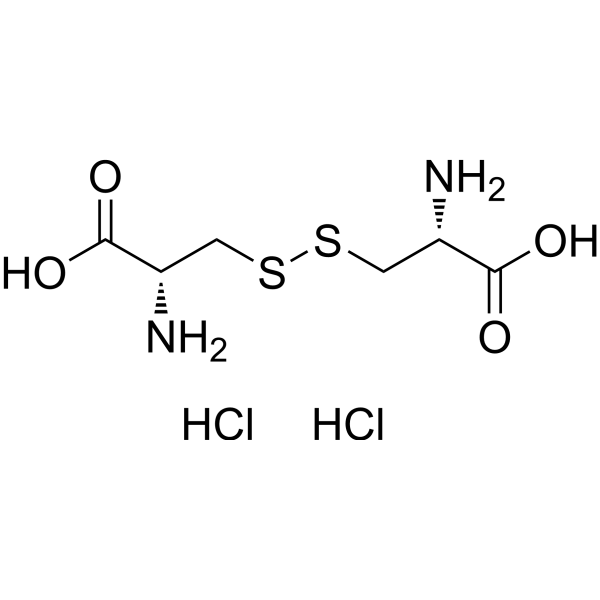
    L-Cystine dihydrochloride
    4 Publications Verification

    Endogenous Metabolite Apoptosis Keap1-Nrf2 Reactive Oxygen Species (ROS) Ferroptosis Metabolic Disease Inflammation/Immunology Cancer
    L-Cystine dihydrochloride is the dihydrochloride salt form of L-Cystine (HY-N0394). L-Cystine dihydrochloride elevates Nrf2 protein expression and activates Nrf2 transcription factor. L-cystine dihydrochloride reduces ROS generation and protects against oxidant- or Doxorubicin (HY-15142A)-induced apoptosis. L-Cystine dihydrochloride combined with L-theanine (HY-15121) enhances the production of antigen-specific IgG by increasing glutathione (GSH) levels and T helper 2 (Th2) mediated responses in mice. L-Cystine dihydrochloride is promising for research of cystinuria and kidney stones
    L-Cystine dihydrochloride
  • HY-W012575

    Reactive Oxygen Species (ROS) Inflammation/Immunology
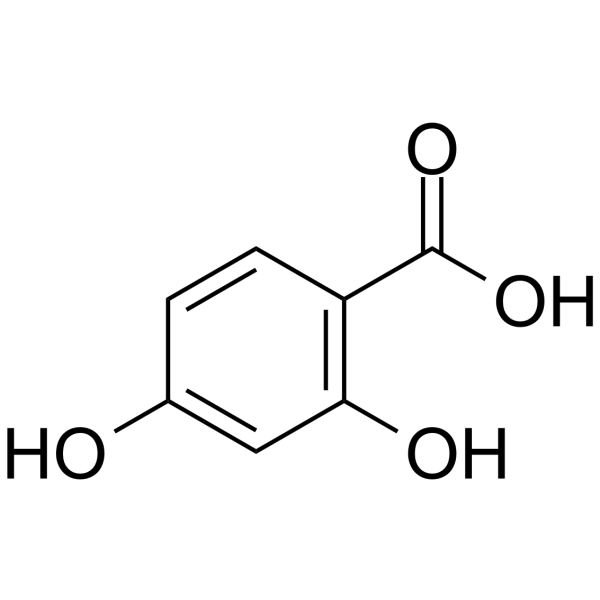
    2,4-Dihydroxybenzoic acid is a degradation product of acid cherry anthocyanins during in vitro cell culture and an analogue of coenzyme Q precursor molecules. 2,4-Dihydroxybenzoic acid can improve the related symptoms of kidney diseases caused by ADCK4/Coq6 deficiency .
    2,4-Dihydroxybenzoic acid
  • HY-116568

    JAU-6476

    Fungal Cytochrome P450 Microtubule/Tubulin Mitochondrial Metabolism DNA/RNA Synthesis Apoptosis Fatty Acid Synthase (FASN) Infection Metabolic Disease Endocrinology
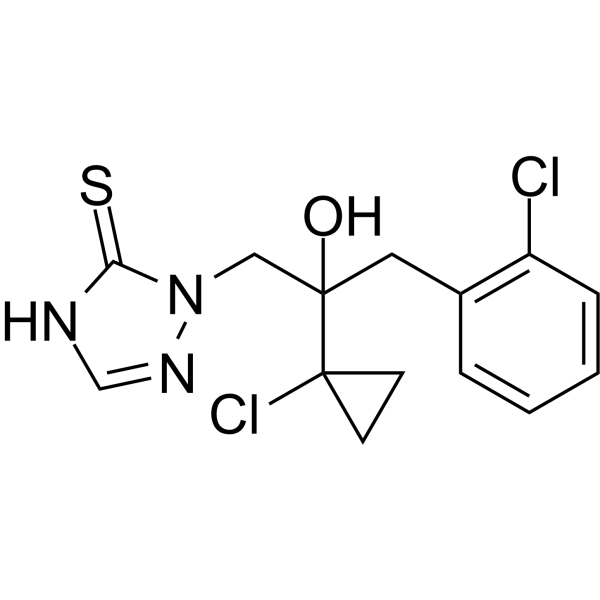
    Prothioconazole is an orally active broad-spectrum fungicide. Prothioconazole weakly inhibits CaCYP51 activity in Candida albicans, with an apparent IC50 of approximately 120 μM. Prothioconazole disrupts Microtubule stability by reducing the acetylation level of α-tubulin. Prothioconazole induces Mitochondrial dysfunction, oxidative stress, DNA damage, and Apoptosis. Prothioconazole accumulates 14-methylated sterols and depletes ergosterol in cells, culture media, plants, and animals. Prothioconazole interferes with pyruvate metabolism and glycolysis/gluconeogenesis processes in mouse liver, downregulates Fasn mRNA expression, and induces hepatotoxicity and renal metabolic disorders. Prothioconazole reduces the fertility of female mice. Prothioconazole inhibits body weight gain and increases liver/kidney indices in mice. Prothioconazole can be used in studies related to candidiasis .
    Prothioconazole
  • HY-117738

    Aminopeptidase Endogenous Metabolite GSK-3 β-catenin Apoptosis Metabolic Disease
    Benarthin is an orally active Pyroglutamyl peptidase inhibitor, THY1 inhibitor (with a Kd value of 5.13e-08 M) and competitive PGP-1 inhibitor (Ki = 1.2 µM). Benarthin is isolated from the culture broth of Streptomyces xanthophaeus MJ244-SF1. Benarthin disrupts the THY1-SFRP1 interaction, inhibits the activation of the GSK3α/β-β-catenin pathway, and reduces the upregulation of FASLG. Benarthin attenuates urothelial anoikis and reduces cell Apoptosis. Benarthin possesses iron-chelating activity. Benarthin maintains urothelial barrier integrity and blocks the pathological cascade of renal interstitial fibroblasts induced by HAP stimulation. Benarthin can be used in studies related to kidney stones .
    Benarthin
  • HY-W012575R

    Reference Standards Reactive Oxygen Species (ROS) Inflammation/Immunology
    2,4-Dihydroxybenzoic acid (Standard) is the analytical standard of 2,4-Dihydroxybenzoic acid (HY-W012575). This product is intended for research and analytical applications. 2,4-Dihydroxybenzoic acid is a degradation product of acid cherry anthocyanins during in vitro cell culture and an analogue of coenzyme Q precursor molecules. 2,4-Dihydroxybenzoic acid can improve the related symptoms of kidney diseases caused by ADCK4/Coq6 deficiency .
    2,4-Dihydroxybenzoic acid (Standard)
  • HY-W009203R

    Endogenous Metabolite Apoptosis Keap1-Nrf2 Reactive Oxygen Species (ROS) Ferroptosis Reference Standards Metabolic Disease Inflammation/Immunology Cancer
    L-Cystine (dihydrochloride) (Standard) is the analytical standard of L-Cystine (dihydrochloride) (HY-W009203). This product is intended for research and analytical applications. L-Cystine dihydrochloride is the dihydrochloride salt form of L-Cystine (HY-N0394). L-Cystine dihydrochloride elevates Nrf2 protein expression and activates Nrf2 transcription factor. L-cystine dihydrochloride reduces ROS generation and protects against oxidant- or Doxorubicin (HY-15142A)-induced apoptosis. L-Cystine dihydrochloride combined with L-theanine (HY-15121) enhances the production of antigen-specific IgG by increasing glutathione (GSH) levels and T helper 2 (Th2) mediated responses in mice. L-Cystine dihydrochloride is promising for research of cystinuria and kidney stones
    L-Cystine dihydrochloride (Standard)
  • HY-N19229

    Endogenous Metabolite Others
    Dihydrocitrinone is a polyketide secondary metabolite and the major urinary metabolite of citrinin, which can be isolated from Aspergillus strains derived from the rhizosphere soil of date palms. Dihydrocitrinone exerts independent toxic effects in renal cell cultures and zebrafish embryo models, enhances the toxic effects of Ochratoxin A through additive or synergistic actions, and increases the level of miR-731 in zebrafish embryos when acting in combination with Ochratoxin A .
    Dihydrocitrinone

Inquiry Online

Your information is safe with us. * Required Fields.

Salutation


Country or Region *

Applicant Name *


Organization Name *

Department *


Email Address *


Product Name *

Cat. No.


Requested quantity *

Phone Number *


Remarks

Inquiry Online

Inquiry Information

Product Name:
Cat. No.:
Quantity:
MCE Japan Authorized Agent:

