



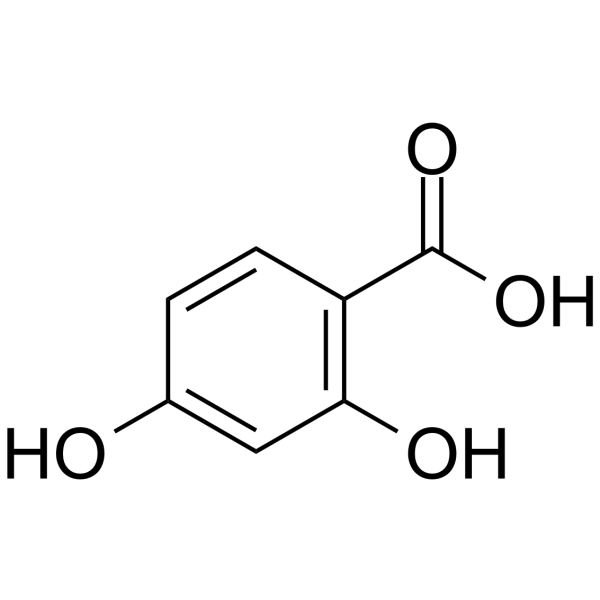
2,4-Dihydroxybenzoic acid

Based on 1 Customer Validation
2,4-Dihydroxybenzoic acid is a degradation product of acid cherry anthocyanins during in vitro cell culture and an analogue of coenzyme Q precursor molecules. 2,4-Dihydroxybenzoic acid can improve the related symptoms of kidney diseases caused by ADCK4/Coq6 deficiency.
For research use only. We do not sell to patients.
- Purity : 99.90%
- CAS No.: 89-86-1
- Formula: C7H6O4
- Molecular Weight:154.12
-
Storage:Powder -20°C, 3 years , 4°C, 2 years ; In solvent -80°C, 6 months , -20°C, 1 month

To place orders, for customer services and technical support, please contact: MedChemExpress USA
Tel: 609-228-6898 E-mail: [email protected] [email protected]


-
 Biological Activity
-
Chemical Information
-
Solvent & Solubility
- Purity & Documentation
- References
-
 Help & FAQs


-
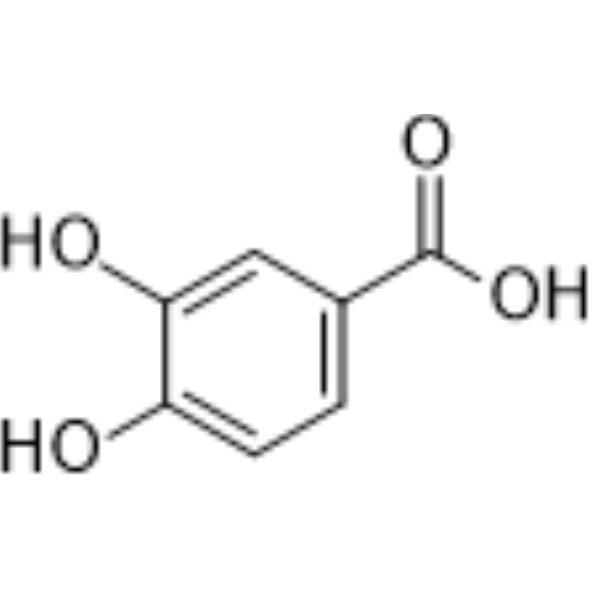
HY-N0294
Protocatechuic acid -
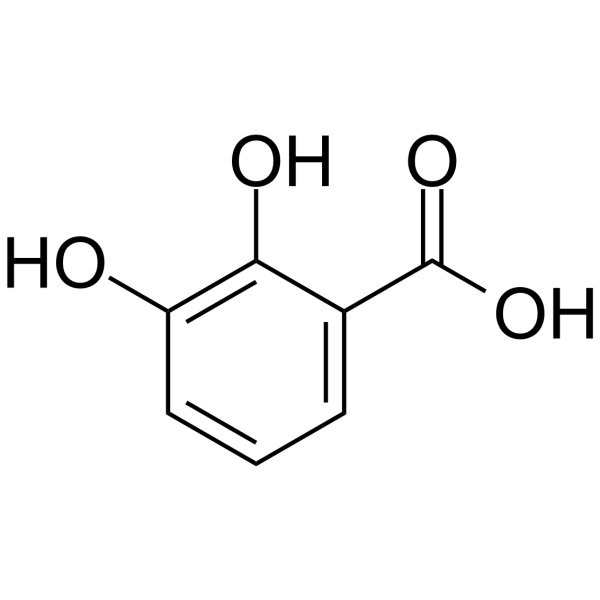
HY-Y0202
Pyrocatechuic acid -
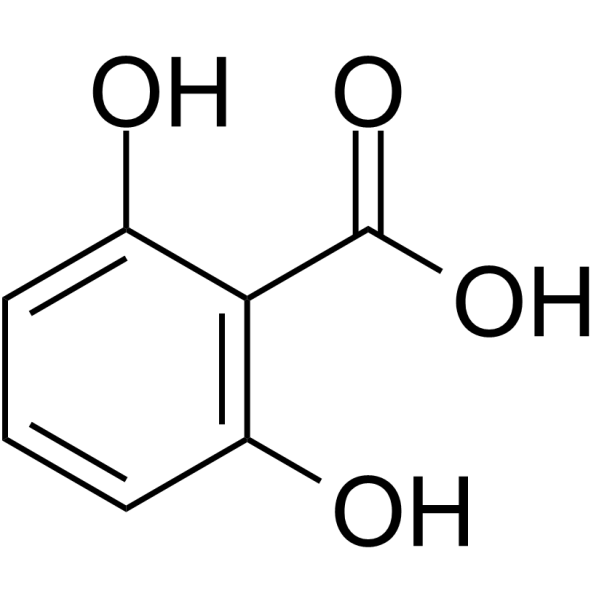
HY-Y0801
2,6-Dihydroxybenzoic acid -
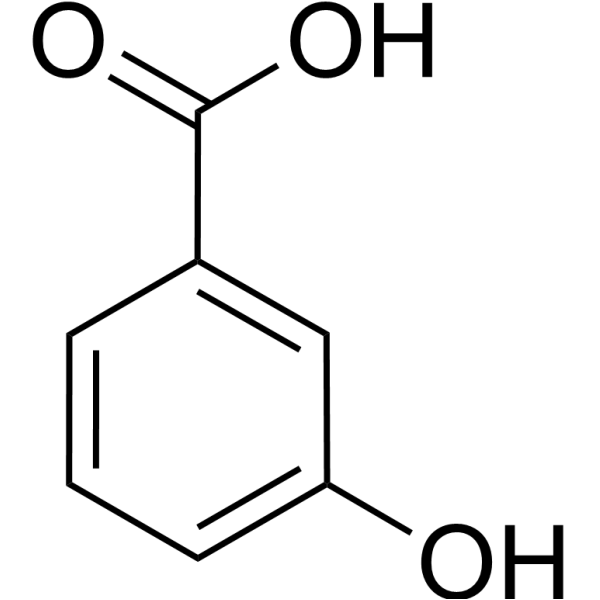
HY-W004049
3-Hydroxybenzoic acid -
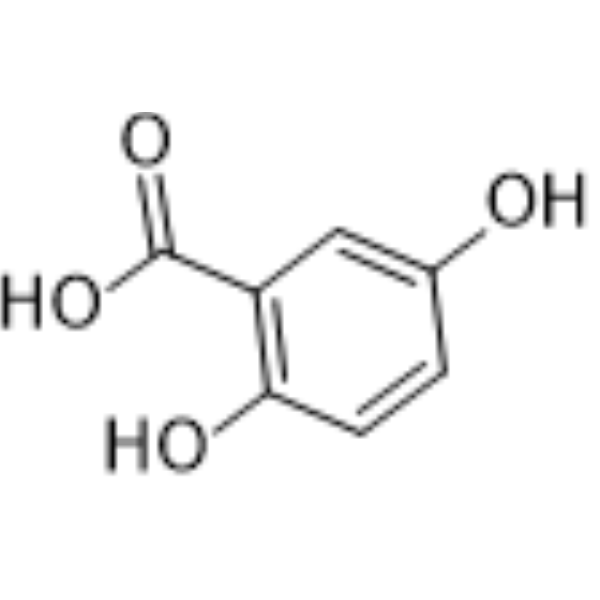
HY-W001179
2,5-Dihydroxybenzoic acid -
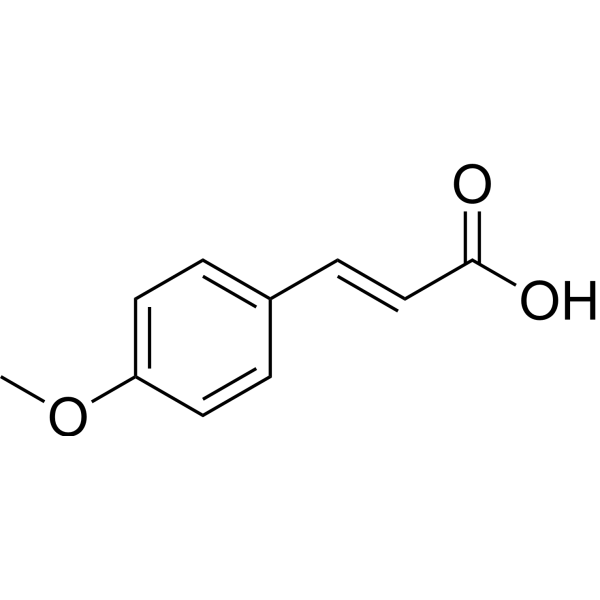
HY-N1387
4-Methoxycinnamic acid -

HY-N0294R
Protocatechuic acid (Standard) -

HY-W012575R
2,4-Dihydroxybenzoic acid (Standard) -

HY-Y0202R
Pyrocatechuic acid (Standard) -
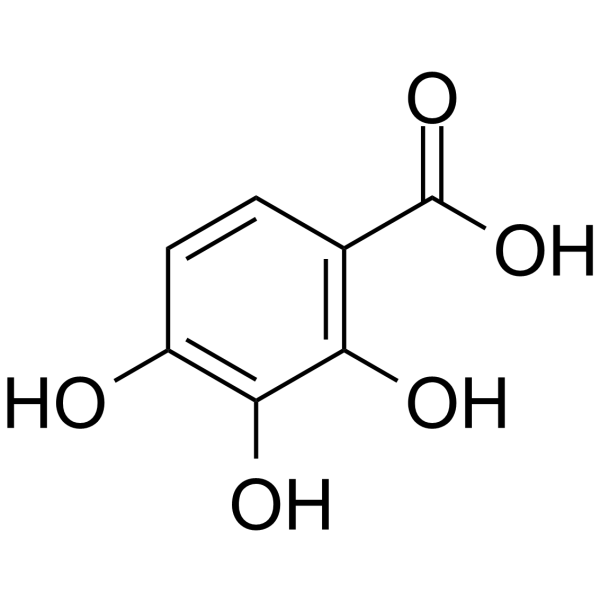
HY-W016993
2,3,4-Trihydroxybenzoic acid -

HY-Y0801R
2,6-Dihydroxybenzoic acid (Standard) -

HY-W016993R
2,3,4-Trihydroxybenzoic acid (Standard)


Biological Activity
Description
In Vitro
2,4-Dihydroxybenzoic acid (500 μM) can partially restore the activity of mitochondrial respiratory chain complex II-III, increase the mitochondrial membrane potential, and reduce the ROS level in ADCK4-knockout human podocytes[2].
2,4-Dihydroxybenzoic acid can reverse the impaired podocyte migration rate in human podocytes with transient knockdown of Coq6[3].
MedChemExpress (MCE) has not independently confirmed the accuracy of these methods. They are for reference only.
In Vivo
MedChemExpress (MCE) has not independently confirmed the accuracy of these methods. They are for reference only.
-
Animal Model:Podocyte-specific Coq6 knockout mouse[3]
-
Dosage:25 mM
-
Administration:Via drinking water; twice a week; from 5 months to 10.5 months of age
-
Result:Significantly increased survival of mice.
Improved kidney function, normal glomerular histology, and mitigation of podocyte foot process effacement.


Chemical Information
-
CAS No. 89-86-1
-
Appearance Solid
-
Molecular Weight 154.12
-
Formula C7H6O4
-
Color White to off-white
-
SMILES
O=C(O)C1=CC=C(O)C=C1O
-
Structure Classification
-
Initial Source
-
Shipping
Room temperature in continental US; may vary elsewhere.
-
Storage
Powder -20°C 3 years 4°C 2 years In solvent -80°C 6 months -20°C 1 month


Solvent & Solubility
In Vitro:
DMSO : 100 mg/mL (648.85 mM; Need ultrasonic; Hygroscopic DMSO has a significant impact on the solubility of product, please use newly opened DMSO)
Please refer to the solubility information to select the appropriate solvent. Once prepared, please aliquot and store the solution to prevent product inactivation from repeated freeze-thaw cycles.
Storage method and period of stock solution: -80°C, 6 months; -20°C, 1 month. When stored at -80°C, please use it within 6 months. When stored at -20°C, please use it within 1 month.
Please refer to the solubility information to select the appropriate solvent. Once prepared, please aliquot and store the solution to prevent product inactivation from repeated freeze-thaw cycles.
Storage method and period of stock solution: -80°C, 6 months; -20°C, 1 month. When stored at -80°C, please use it within 6 months. When stored at -20°C, please use it within 1 month.
Concentration (start) × Volume (start) = Concentration (final) × Volume (final)
In Vivo:
Select the appropriate dissolution method based on your experimental animal and administration route.
- For the following dissolution methods, please ensure to first prepare a clear stock solution using an In Vitro approach and then sequentially add co-solvents:
- To ensure reliable experimental results, the clarified stock solution can be appropriately stored based on storage conditions. As for the working solution for In Vivo experiments, it is recommended to prepare freshly and use it on the same day.
- The percentages shown for the solvents indicate their volumetric ratio in the final prepared solution. If precipitation or phase separation occurs during preparation, heat and/or sonication can be used to aid dissolution.
Add each solvent one by one: 10% DMSO 40% PEG300 5% Tween-80 45% Saline
Solubility: ≥ 2.5 mg/mL (16.22 mM); Clear solution
This protocol yields a clear solution of ≥ 2.5 mg/mL (saturation unknown).
Taking 1 mL working solution as an example, add 100 μL DMSO stock solution (25.0 mg/mL) to 400 μL PEG300, and mix evenly; then add 50 μL Tween-80 and mix evenly; then add 450 μL Saline to adjust the volume to 1 mL.
Preparation of Saline: Dissolve 0.9 g sodium chloride in ddH₂O and dilute to 100 mL to obtain a clear Saline solution.
Add each solvent one by one: 10% DMSO 90% (20% SBE-β-CD in Saline)
Solubility: ≥ 2.5 mg/mL (16.22 mM); Clear solution
This protocol yields a clear solution of ≥ 2.5 mg/mL (saturation unknown).
Taking 1 mL working solution as an example, add 100 μL DMSO stock solution (25.0 mg/mL) to 900 μL 20% SBE-β-CD in Saline, and mix evenly.
Preparation of 20% SBE-β-CD in Saline (4°C, storage for one week): 2 g SBE-β-CD powder is dissolved in 10 mL Saline, completely dissolve until clear.
In Vivo Dissolution Calculator
Please enter the basic information of animal experiments:
-
-
-
-
Recommended: Prepare an additional quantity of animals to account for potential losses during experiments.
Please enter your animal formula composition:
-
%DMSO +
Recommended: Keep the proportion of DMSO in working solution below 2% if your animal is weak.
-
%+
-
+%Tween-80 + +
-
%Saline +
The co-solvents required include: DMSO, . All of co-solvents are available by MedChemExpress (MCE). , Tween 80. All of co-solvents are available by MedChemExpress (MCE).
Working solution concentration: 0.22 mg/mL
Method for preparing stock solution: mg drug dissolved in μL DMSO. Stock solution concentration: mg/mL.
1. Take μL DMSO stock solution;
2. Add μL .
μL , mix evenly;
3. Then add μL Tween 80, mix evenly;
4. Then add μL
Please ensure that the stock solution in the first step is dissolved to a clear state, and add co-solvents in sequence. You can use ultrasonic heating (ultrasonic cleaner, recommended frequency 20-40 kHz), vortexing, etc. to assist dissolution.


Purity & Documentation
-
Data Sheet (283 KB)
-
SDS (393 KB)
- English - EN (393 KB)
- Français - FR (393 KB)
- Deutsch - DE (393 KB)
- Norwegian - NO (393 KB)
- Español - ES (393 KB)
- Swedish - SV (393 KB)
- Italian - IT (393 KB)
- Korean - KR (393 KB)
- Portuguese - PT (393 KB)
-
Handling Instructions (2659 KB)
References
[1]. Widmeier E, et al. ADCK4 Deficiency Destabilizes the Coenzyme Q Complex, Which Is Rescued by 2,4-Dihydroxybenzoic Acid Treatment. J Am Soc Nephrol. 2020 Jun;31(6):1191-1211. [Content Brief]
[2]. Seeram NP, et al. Degradation products of cyanidin glycosides from tart cherries and their bioactivities. J Agric Food Chem. 2001 Oct;49(10):4924-9. [Content Brief]
[3]. Widmeier E, et al. Treatment with 2,4-Dihydroxybenzoic Acid Prevents FSGS Progression and Renal Fibrosis in Podocyte-Specific Coq6 Knockout Mice. J Am Soc Nephrol. 2019 Mar;30(3):393-405. [Content Brief]


Complete Stock Solution Preparation Table
Please refer to the solubility information to select the appropriate solvent. Once prepared, please aliquot and store the solution to prevent product inactivation from repeated freeze-thaw cycles.
Storage method and period of stock solution: -80°C, 6 months; -20°C, 1 month. When stored at -80°C, please use it within 6 months. When stored at -20°C, please use it within 1 month.
| Optional Solvent | Concentration Solvent Mass | 1 mg | 5 mg | 10 mg | 25 mg |
|---|---|---|---|---|---|
| DMSO | 1 mM | 6.4885 mL | 32.4423 mL | 64.8845 mL | 162.2113 mL |
| 5 mM | 1.2977 mL | 6.4885 mL | 12.9769 mL | 32.4423 mL | |
| 10 mM | 0.6488 mL | 3.2442 mL | 6.4885 mL | 16.2211 mL | |
| 15 mM | 0.4326 mL | 2.1628 mL | 4.3256 mL | 10.8141 mL | |
| 20 mM | 0.3244 mL | 1.6221 mL | 3.2442 mL | 8.1106 mL | |
| 25 mM | 0.2595 mL | 1.2977 mL | 2.5954 mL | 6.4885 mL | |
| 30 mM | 0.2163 mL | 1.0814 mL | 2.1628 mL | 5.4070 mL | |
| 40 mM | 0.1622 mL | 0.8111 mL | 1.6221 mL | 4.0553 mL | |
| 50 mM | 0.1298 mL | 0.6488 mL | 1.2977 mL | 3.2442 mL | |
| 60 mM | 0.1081 mL | 0.5407 mL | 1.0814 mL | 2.7035 mL | |
| 80 mM | 0.0811 mL | 0.4055 mL | 0.8111 mL | 2.0276 mL | |
| 100 mM | 0.0649 mL | 0.3244 mL | 0.6488 mL | 1.6221 mL |


2,4-Dihydroxybenzoic acid Related Classifications
HY-W012575 Related Classifications
 Powered by Bioz