9 Results for "

leaflet

" in MedChemExpress (MCE) Product Catalog:
Products (9)

9 Results for "leaflet" in MCE Product Catalog:

1
1 Cited Publications
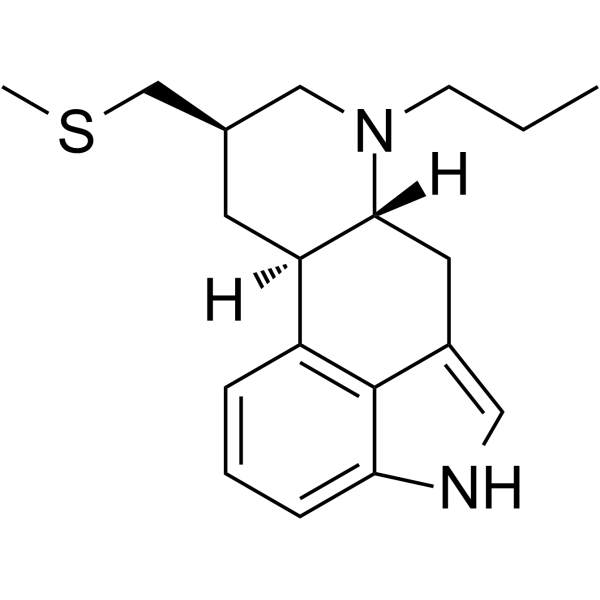
Cat. No.: HY-13720
CAS No.: 66104-22-1
Synonyms: LY127809 free base
Pergolide (LY127809 free base), an Ergoline derivative, is a potent and orally active dopamine D1 and D2 receptor agonist. Pergolide can be used for Parkinson's disease and hyperprolactinaemia research .
loading...
    loading...
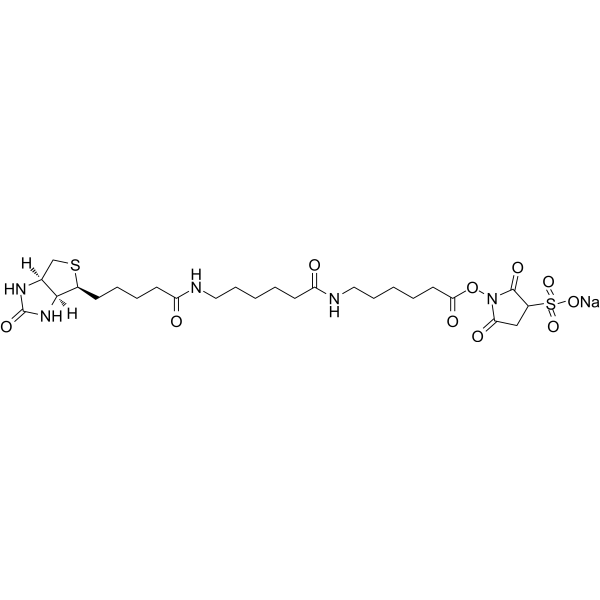
Cat. No.: HY-D1635
CAS No.: 194041-66-2
Synonyms: Biotin-XX-SSE
Research Areas:  

Infection

Sulfo-NHS-LC-LC-Biotin (Biotin-XX-SSE), a biotin reagent, is used to label the proteins exposed to the external leaflet of intact exosomes and contains a larger spacer arm between the biotin and amine reactive linker. The size of this linker helps to overcome steric hindrance and increases labeling efficiency at the crowded exosome surface .
loading...
    loading...
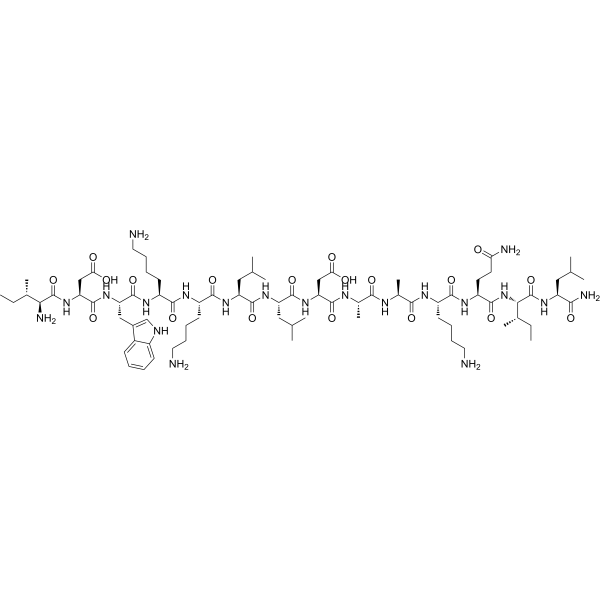
Cat. No.: HY-P4809
CAS No.: 872043-01-1
Target:  

Bacterial Fungal

Research Areas:  

Infection Cancer

Polybia-MP1 is an antimicrobial peptide with antibacterial, antifungal and anticancer activities. Polybia-MP1 selectively targets cancer cells by interacting with PS and PE in the outer leaflet of cell membranes, and induces necrosis via pore formation. Polybia-MP1 exhibits antibacterial activity against Pseudomonas aeruginosa. Polybia-MP1 can be used in research related to bacterial infections, fungal infections and cancers .
loading...
    loading...
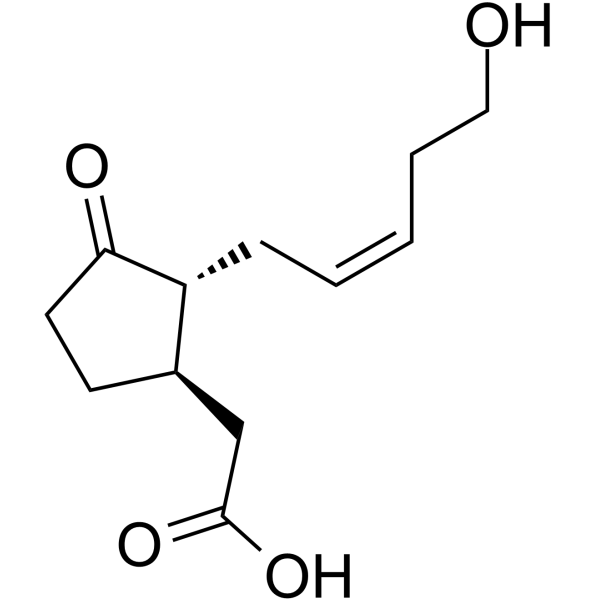
Cat. No.: HY-N1033
CAS No.: 140631-27-2
Research Areas:  

Infection

12-Hydroxyjasmonic acid is a metabolite of Jasmonic acid (HY-122464A) and an inducer of defense responses. 12-Hydroxyjasmonic acid can be isolated from potato leaflets. During the response of sugar beet plants to Cercospora beticola infection, 12-Hydroxyjasmonic acid is released through deglycosylation of its glucoside form and participates in the Jasmonic acid-mediated defense signaling pathway. 12-Hydroxyjasmonic acid mediates changes in source-sink relationships during pathogen infection, prioritizing the activation of defense processes over growth processes. 12-Hydroxyjasmonic acid serves as a substrate for salicylic acid Glycosyltransferases in tobacco and rice. 12-Hydroxyjasmonic acid can induce leaflet closure in Samanea saman. 12-Hydroxyjasmonic acid acts as a potato tuber-inducing substance. 12-Hydroxyjasmonic acid does not induce protoplast shrinkage in extensor motor cells of Samanea saman. 12-Hydroxyjasmonic acid can be used in studies related to brown spot disease .
loading...
    loading...
Cat. No.: HY-114457
CAS No.: 245126-95-8
Synonyms: L-alpha-Phosphatidylinositol-4,5-bisphosphate; (PtdIns)-(4,5)-P2
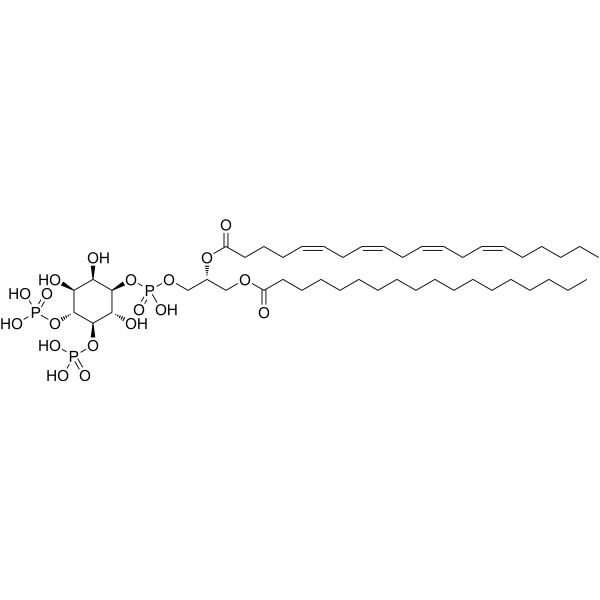
Phosphatidylinositol 4,5-bisphosphate (L-alpha-Phosphatidylinositol-4,5-bisphosphate) is a plasma membrane lipid that is enriched in the cytoplasmic leaflet of the plasma membrane. Phosphatidylinositol 4,5-bisphosphate serves as a substrate for phospholipase C and class I PI3K, generating diacylglycerol, inositol (1,4,5)-trisphosphate, and phosphatidylinositol (3,4,5)-trisphosphate. Phosphatidylinositol 4,5-bisphosphate contributes to lamellipodial protrusion, directional cell migration, focal adhesion lipid generation, and trafficking of the GABAA receptor. Phosphatidylinositol 4,5-bisphosphate can be used in research related to acute lung injury and pulmonary edema .
loading...
    loading...
Cat. No.: HY-130004
CAS No.: 2909443-13-4
Target:  

Antibiotic Bacterial

Research Areas:  

Infection

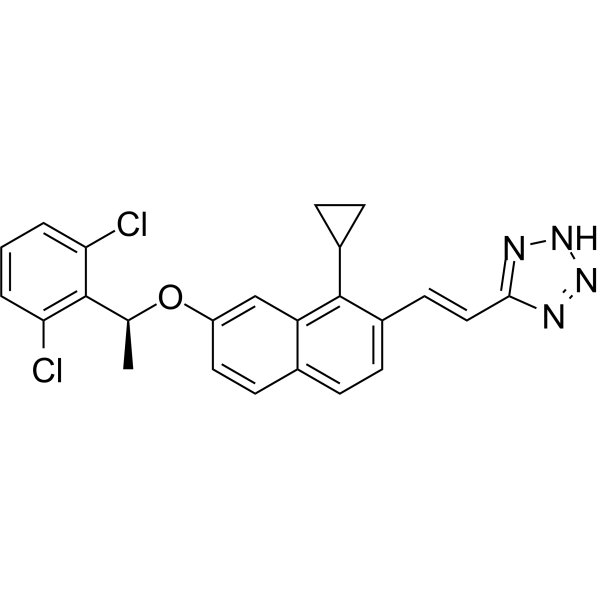
MsbA-IN-6 is a potent inhibitor of MsbA. MsbA-IN-6 is an antibiotic. Gram-negative ATP-binding cassette (ABC) transporter MsbA, an essential inner membrane protein, transports lipopolysaccharide from the inner leaflet to the periplasmic face of the inner membrane. MsbA-IN-6 kills Escherichia coli through inhibition of its ATPase and transport activity, with no loss of activity against clinical multidrug-resistant strains .
loading...
    loading...
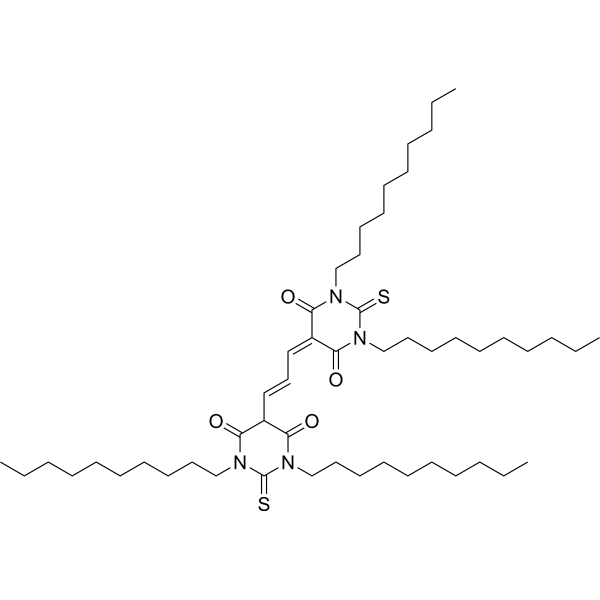
Cat. No.: HY-125452
CAS No.: 169211-45-4
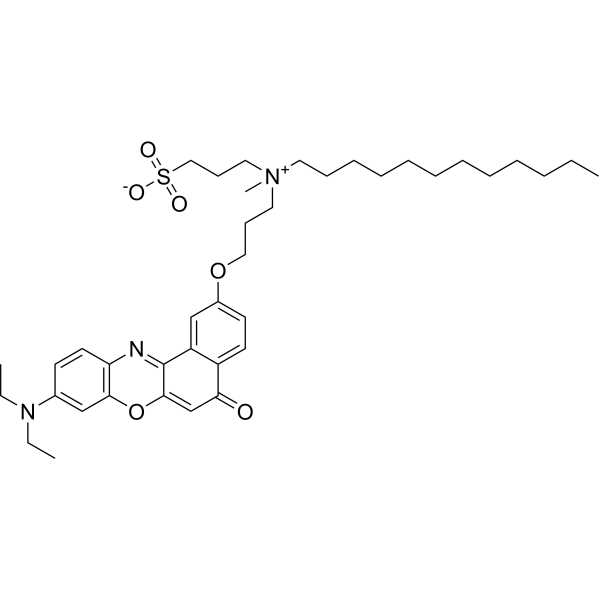
DiSBAC10 is a voltage-sensitive fluorescent probe used to study cell membrane electrical activity in FRET assays. In a resting polarized cell, DiSBAC10 resides on the outer leaflet of the membrane where it accepts photons from excited fluorescein-labeled proteins and re-emits the photons at a higher wavelength. Depolarization of the cell causes rapid translocation of DiSBAC10 to the inner leaflet of the membrane, thereby increasing the distance between fluorophores and reducing the FRET signal.
loading...
    loading...
Cat. No.: HY-N11759
CAS No.: 94388-77-9
2′-Hydroxydihydrodaidzein is an isoflavonoid phytoalexin that can be extacted from the Fungus-inoculated Leaflets of Erythrina Species. 2′-Hydroxydihydrodaidzein has antioxidant acitivity .
loading...
    loading...
Cat. No.: HY-W839203
CAS No.: 37070-48-7
Synonyms: 1,2-Didocosanoyl-sn-glycero-3-phosphocholine; PC(22:0/22:0)
Target:  

Endogenous Metabolite

Research Areas:  

Others

22:0 PC (1,2-Didocosanoyl-sn-glycero-3-phosphocholine), a type of phosphatidylcholine, functions as a lung surfactant and is characterized as an amphipathic molecule predominantly found in the outer leaflets of biological membrane bilayers.
loading...
    loading...

