16 Results for "

leucine metabolism

" in MedChemExpress (MCE) Product Catalog:
Products (16)

16 Results for "leucine metabolism" in MCE Product Catalog:

3
3 Cited Publications
Cat. No.: HY-153040
CAS No.: 1325721-55-8
Purity:  99.67%
Synonyms: Bach1-IN-1
Research Areas:  

Metabolic Disease

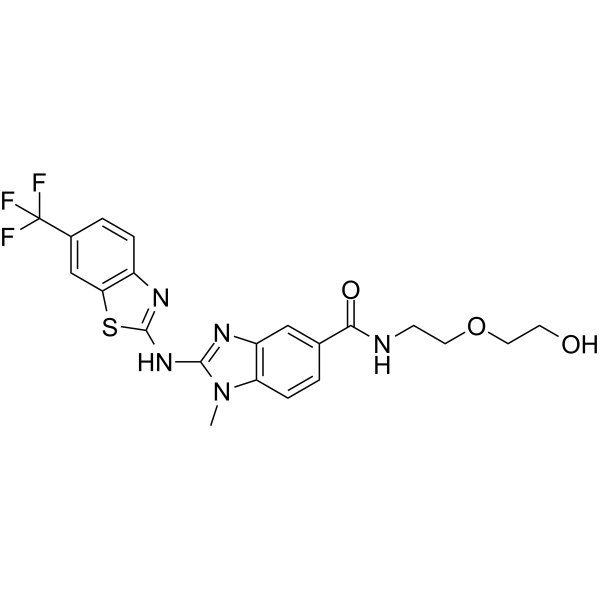
HPPE (compound 236) is an orally active, potential Bach1 inhibitor. Bach1 is a transcription factor of the cap'n'collar type alkaline region leucine zipper factor family (CNC-bZip) that regulates mitochondrial metabolism and reduces glucose utilization. HPPE can be used for research in psoriasis, multiple sclerosis, and COPD .
loading...
    loading...
1
1 Cited Publications
Cat. No.: HY-W012722
CAS No.: 816-66-0
Synonyms: α-Ketoisocaproic acid
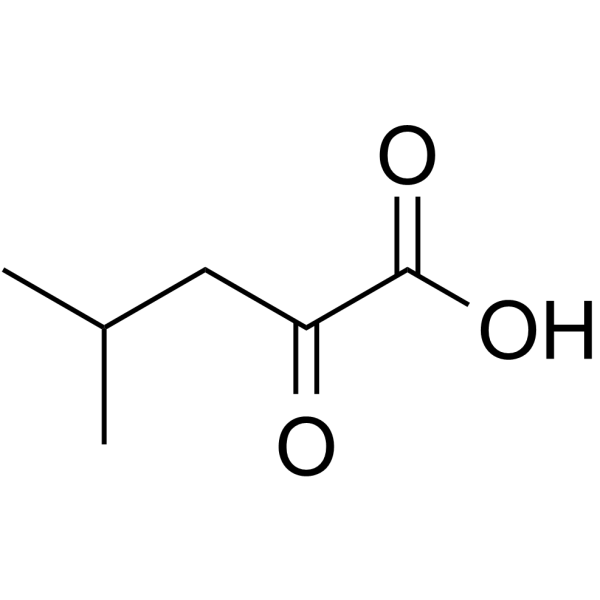
4-Methyl-2-oxopentanoic acid (α-Ketoisocaproic acid) is a metabolite of L-leucine and is involved in energy metabolism. 4-Methyl-2-oxopentanoic acid increases endoplasmic reticulum stress, promotes lipid accumulation in preadipocytes and insulin resistance by impairing mTOR and autophagy signaling pathways. 4-Methyl-2-oxopentanoic acid also causes oxidative damage, leading to cognitive deficits, inhibits α-ketoglutarate dehydrogenase activity, acts as an oxidative phosphorylation uncoupler and metabolic inhibitor. 4-Methyl-2-oxopentanoic acid acts as a nutrient signal and stimulates skeletal muscle protein synthesis. 4-Methyl-2-oxopentanoic acid can be used in the study of maple syrup urine disease .
loading...
    loading...
Cat. No.: HY-30216A
CAS No.: 498-36-2
Synonyms: α-Hydroxyisocaproic acid
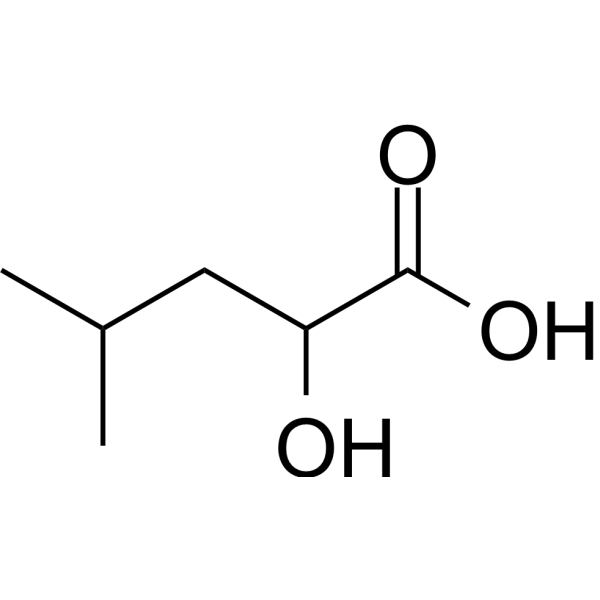
Leucic acid (α-Hydroxyisocaproic acid) is an orally active end-product of the microbial metabolism of leucine. Leucic acid can bind to HCAR2, alters AMPK and ERK1/2 phosphorylation status, suppresses lipid synthesis, promotes catabolism, reduces adiposity, enhances lean mass and exercise capacity. Leucic acid suppresses pro-inflammatory cytokine secretion, inflammation-related gene mRNA expression. Leucic acid decreases basal protein synthesis, attenuates myotube atrophy. Leucic acid can be used for the research of obesity .
loading...
    loading...
Cat. No.: HY-W012708
CAS No.: 5699-54-7
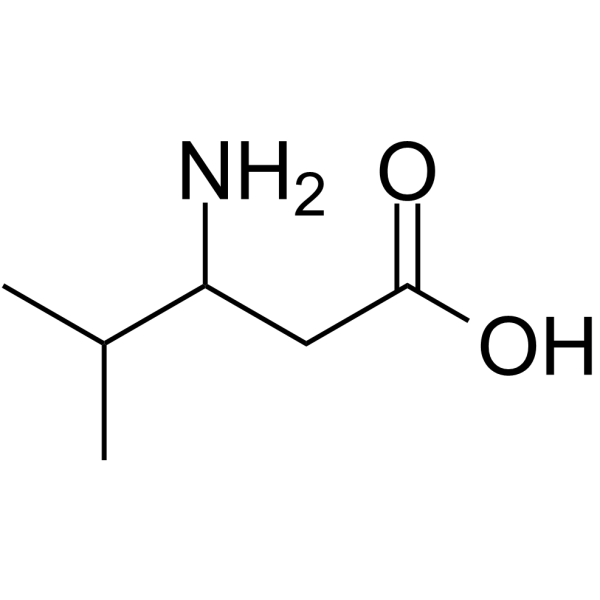
3-Amino-4-methylpentanoic acid is a β amino acid and positional isomer of L-leucine which is naturally produced in humans via the metabolism of L-leucine by the enzyme leucine 2,3-aminomutase. 3-Amino-4-methylpentanoic acid is also a metabolite produced by Torulaspora delbrueckii and can be used in the research of wine fermentation .
loading...
    loading...
Cat. No.: HY-30216
CAS No.: 20312-37-2
Synonyms: D-α-Hydroxyisocaproic acid
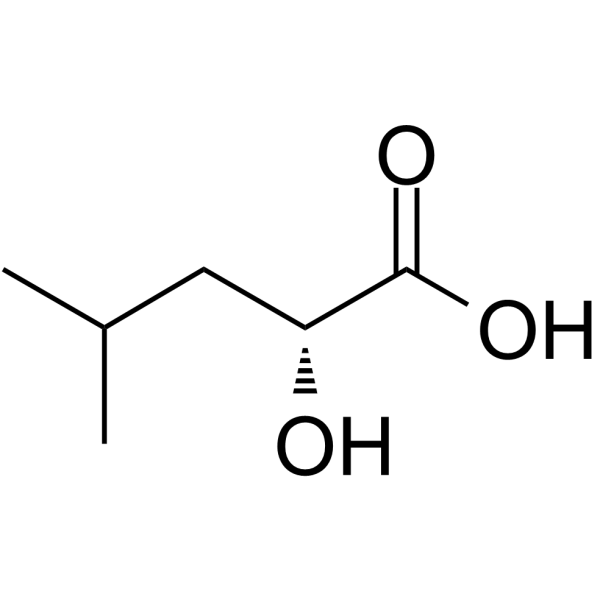
(R)-Leucic acid (D-α-Hydroxyisocaproic acid) is an orally active D-isomer of the α-hydroxy analogue of Leucine (HY-N0486). (R)-Leucic acid is a metabolite of Lactobacillus and can promote intestinal fatty acid absorption by upregulating CD36 expression. (R)-Leucic acid can be used to study microbe-host interactions and the regulation of lipid metabolism by probiotics .
loading...
    loading...
Cat. No.: HY-30215
CAS No.: 13748-90-8
Synonyms: (S)-2-Hydroxy-4-methylpentanoic acid
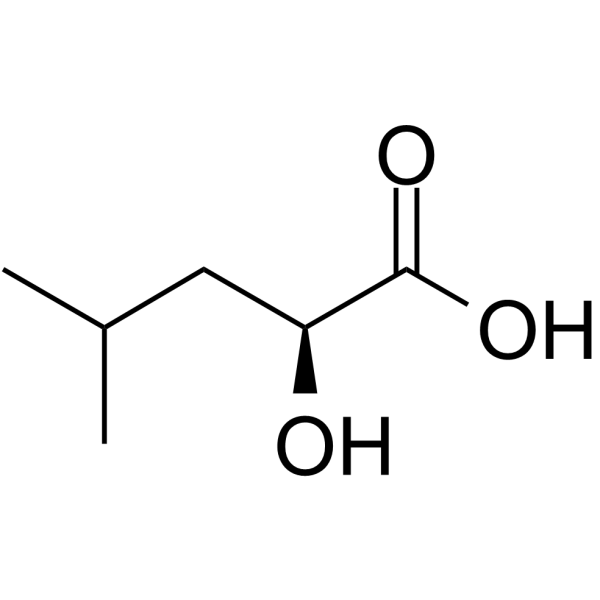
(S)-Leucic acid ((S)-2-Hydroxy-4-methylpentanoic acid) is an α-hydroxy acid found in the fermentation products of Bacillus granulobacter pectinovorum. (S)-Leucic acid is an isomer of Leucic acid (HY-30216A) and a leucine metabolite. (S)-Leucic acid acts as a D-unit subunit precursor in the biosynthesis of cryptophycins in the Nostoc cyanobacterial symbiont. (S)-Leucic acid is used in metabolism-related studies .
loading...
    loading...
Cat. No.: HY-W011730
CAS No.: 87178-63-0
Synonyms: Leu-Pro hydrochloride
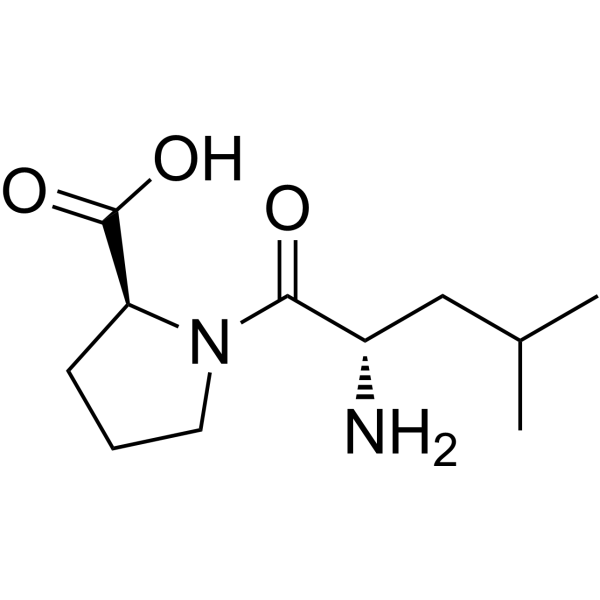
Leucylproline hydrochloride (Leu‑Pro hydrochloride) is a dipeptide composed of L‑leucine and L‑proline, and it is a fecal secondary metabolite associated with the gut microbiota. Leucylproline hydrochloride is taken up by Lactococcus lactis cells via the di‑tripeptide transport system, and mediates transcriptional repression of the prtP/prtM promoter after intracellular accumulation. The content of Leucylproline hydrochloride is significantly decreased in fecal samples related to hepatolenticular degeneration. Leucylproline hydrochloride can be used for the study of metabolism‑related diseases .
loading...
    loading...
Cat. No.: HY-114729
CAS No.: 6403-35-6
Synonyms: Leu-Pro
Leucylproline (Leu‑Pro) is a dipeptide composed of L‑leucine and L‑proline, and it is a fecal secondary metabolite associated with the gut microbiota. Leucylproline is taken up by Lactococcus lactis cells via the di‑tripeptide transport system, and mediates transcriptional repression of the prtP/prtM promoter after intracellular accumulation. The content of leucylproline is significantly decreased in fecal samples related to hepatolenticular degeneration. Leucylproline can be used for the study of metabolism‑related diseases .
loading...
    loading...
Cat. No.: HY-30215R
CAS No.: 13748-90-8
Synonyms: (S)-2-Hydroxy-4-methylpentanoic acid (Standard)
(S)-Leucic acid (Standard) ((S)-2-Hydroxy-4-methylpentanoic acid (Standard)) is the analytical standard of (S)-Leucic acid (HY-30215). This product is intended for research and analytical applications. (S)-Leucic acid ((S)-2-Hydroxy-4-methylpentanoic acid) is an α-hydroxy acid found in the fermentation products of Bacillus granulobacter pectinovorum. (S)-Leucic acid is an isomer of Leucic acid (HY-30216A) and a leucine metabolite. (S)-Leucic acid acts as a D-unit subunit precursor in the biosynthesis of cryptophycins in the Nostoc cyanobacterial symbiont. (S)-Leucic acid is used in metabolism-related studies .
loading...
    loading...
Cat. No.: HY-179875
CAS No.: 22154-46-7
Target:  

Endogenous Metabolite

Research Areas:  

Metabolic Disease

N-Cholyl-L-leucine is a bile acid-amino acid conjugate, mainly produced by intestinal microorganisms. N-Cholyl-L-leucine can be used as a biomarker for premature infants and is also employed in the study of bile acid metabolism .
loading...
    loading...
Cat. No.: HY-W012722BS
CAS No.: 1795020-84-6
Synonyms: α-Ketoisocaproic acid-d7 sodium
4-Methyl-2-oxopentanoic acid-d7 (α-Ketoisocaproic acid-d7) sodium is the deuterium labeled 4-Methyl-2-oxopentanoic acid (HY-W012722).4-Methyl-2-oxopentanoic acid is a metabolite of L-leucine and is involved in energy metabolism. 4-Methyl-2-oxopentanoic acid increases endoplasmic reticulum stress, promotes lipid accumulation in preadipocytes and insulin resistance by impairing mTOR and autophagy signaling pathways .
loading...
    loading...
Cat. No.: HY-134425
CAS No.: 108347-83-7
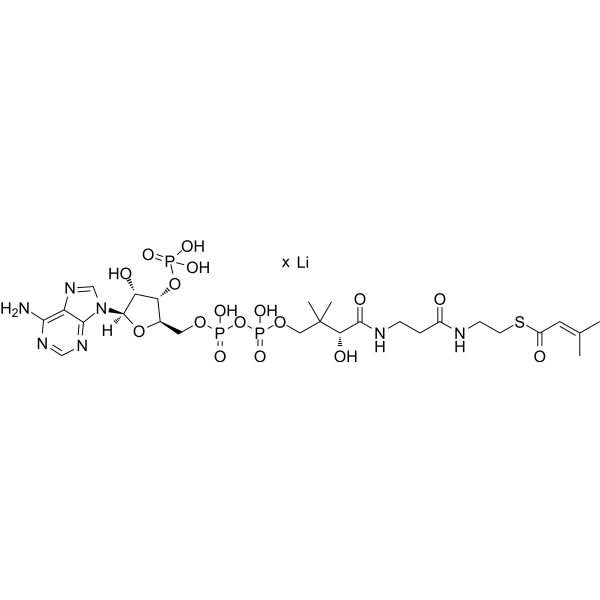
β-Methylcrotonyl coenzyme A lithium is an intermediate in leucine metabolism and can be used as a substrate to study the specificity and kinetics of β-methylcrotonyl coenzyme A carboxylase (MCCase) .
loading...
    loading...
Cat. No.: HY-W012708R
CAS No.: 5699-54-7
3-Amino-4-methylpentanoic acid is a β amino acid and positional isomer of L-leucine which is naturally produced in humans via the metabolism of L-leucine by the enzyme leucine 2,3-aminomutase. 3-Amino-4-methylpentanoic acid is also a metabolite produced by Torulaspora delbrueckii and can be used in the research of wine fermentation .
loading...
    loading...
Cat. No.: HY-30216R
CAS No.: 20312-37-2
Synonyms: D-α-Hydroxyisocaproic acid (Standard)
(R)-Leucic acid (Standard) is the analytical standard of (R)-Leucic acid (HY-30216). This product is intended for research and analytical applications. (R)-Leucic acid (D-α-Hydroxyisocaproic acid) is the D-isomer of the α-hydroxy analogue of Leucine (HY-N0486). (R)-Leucic acid is a metabolite of Lactobacillus and can promote intestinal fatty acid absorption by upregulating CD36 expression. (R)-Leucic acid can be used to study microbe-host interactions and the regulation of lipid metabolism by probiotics.
loading...
    loading...
Cat. No.: HY-W746100
CAS No.: 2508224-28-8
Synonyms: (S)-2-Hydroxy-4-methylpentanoic acid-d3
(S)-Leucic acid-d3 ((S)-2-Hydroxy-4-methylpentanoic acid-d3) is the deuterated-labeled (S)-Leucic acid (HY-30215). (S)-Leucic acid ((S)-2-Hydroxy-4-methylpentanoic acid) is an α-hydroxy acid found in the fermentation products of Bacillus granulobacter pectinovorum. (S)-Leucic acid is an isomer of Leucic acid (HY-30216A) and a leucine metabolite. (S)-Leucic acid acts as a D-unit subunit precursor in the biosynthesis of cryptophycins in the Nostoc cyanobacterial symbiont. (S)-Leucic acid is used in metabolism-related studies .
loading...
    loading...
Cat. No.: HY-N22000
CAS No.: 14379-32-9
N-Stearoyl valine is an N-acyl derivative of valine. N-Stearoyl valine antagonizes intracellular calcium mobilization by binding to the TRPV3 channel as a bioactive endogenous ligand of transient receptor potential (TRP) channels. N-Stearoyl valine participates in physiological processes such as lipid metabolism and cell signal transduction as an endogenous metabolite. N-Stearoyl valine is also a flavor compound. N-Stearoyl valine can be used in research on biomarker detection, animal nutrition and amino acid metabolism, and the development of the food and beverage industry .
loading...
    loading...
  • 1

