
1. Search Result
Search Result
Pathways Recommended: MAPK/ERK Pathway
Results for "

lysosomal degradation pathway

" in MedChemExpress (MCE) Product Catalog:

18

Inhibitors & Agonists

1

Screening Libraries

3

Natural
Products

Cat. No. Product Name Target Research Areas Chemical Structure
  • HY-13817
    IU1
    Maximum Cited Publications
    25 Publications Verification

    Deubiquitinase Autophagy Apoptosis Cardiovascular Disease Neurological Disease Endocrinology Cancer
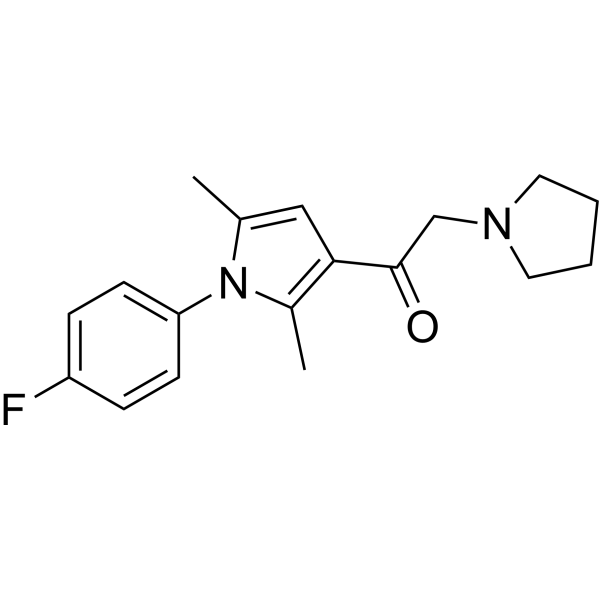
    IU1 is a selective, reversible USP14 inhibitor with an IC50 of 4-5 μM. IU1 binds USP14’s catalytic cleft to block deubiquitinase activity. IU1 induces calpain-dependent Tau cleavage, causes ATP deficits, reduces E1~Ub thioester levels and 26S proteasome assembly. IU1 enhances 26S proteasome chymotrypsin-like activity, modulates LC3B-dependent autophagy flux, reduces cancer cell proliferation and migration, and blocks G0/G1 to S phase cell cycle transition in follicular thyroid cancer cells. IU1 activates autophagy-lysosomal and ubiquitin-proteasome pathways, triggers apoptosis, and reduces cervical cancer cell growth. IU1 enhances degradation of proteasome substrates linked to neurodegenerative disease, accelerates oxidized protein degradation, and increases oxidative stress resistance. IU1 can be used for the research of Alzheimer’s disease, follicular thyroid cancer, ischemic stroke, cervical cancer, and neurodegenerative disease .
    IU1
  • HY-155747
    FDW028
    1 Publications Verification

    Autophagy Akt mTOR Cancer
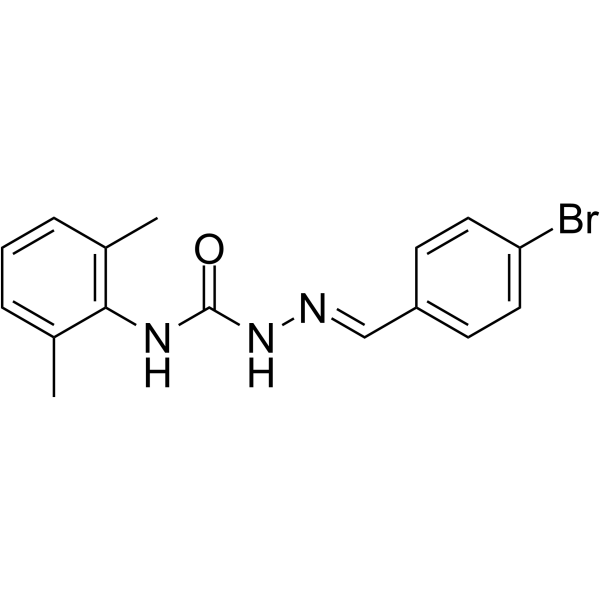
    FDW028 a potent and highly selective FUT8 inhibitor. FUT8 exhibits potent anti-tumor activity by defucosylation and impelling lysosomal degradation of B7-H3 through the chaperone-mediated autophagy (CMA) pathway. FDW028 can be used for metastatic colorectal cancer (mCRC) research .
    FDW028
  • HY-107811
    Harmol
    1 Publications Verification

    Autophagy α-synuclein Apoptosis Monoamine Oxidase Mitosis Neurological Disease Cancer
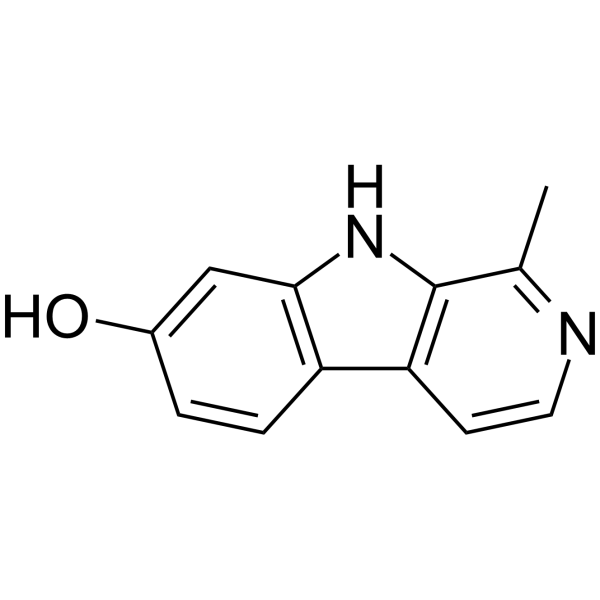
    Harmol is an orally active β-carboline alkaloid. Harmol is a TFEB activator and monoamine oxidase inhibitor. Harmol can induce cell mitosis, Autophagy and Apoptosis. Harmol promotes the degradation of α-synuclein by regulating the autophagy-lysosomal pathway. Harmol has anti-tumor, anti-depressant and anti-aging activities. Harmol improves motor impairment in a mouse Parkinson's disease model .
    Harmol
  • HY-148118A

    LYTACs Cancer
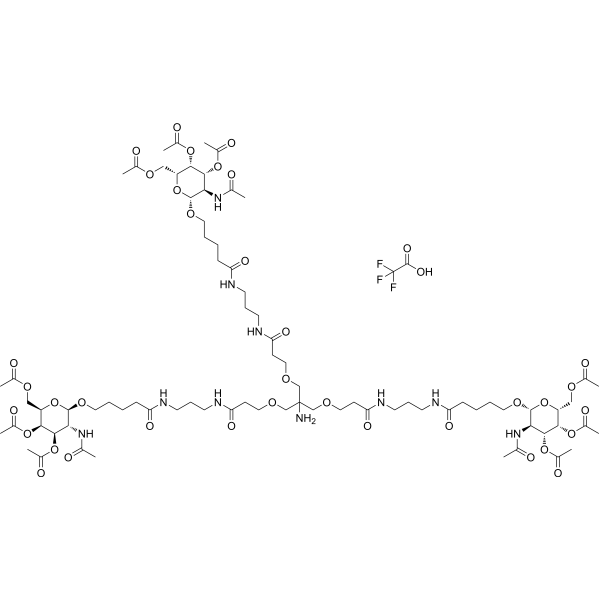
    Tri-GalNAc(OAc)3 TFA is a trivalent N-acetylgalactosamine (GalNAc) derivative that can be used to synthesize GalNAc-LYTAC. Tri-GalNAc is a specific ligand targeting the asialoglycoprotein receptor (ASGPR), mediating the endocytosis and transport of cell surface proteins (such as EGFR, HER2) to lysosomes for degradation by lysosomal targeting chimeras (LYTACs). Tri-GalNAc significantly reduces the level of target proteins and inhibits downstream signaling pathways (such as EGFR-mediated Akt and MAPK signals). Tri-GalNAc(OAc)3 TFA can be used for hepatocyte targeting studies, and can degrade carcinogenic membrane proteins and inhibit tumor cell proliferation in liver cancer cell models .
    Tri-GalNAc(OAc)3 TFA
  • HY-125168
    EGA
    2 Publications Verification

    EGFR Infection Inflammation/Immunology
    EGA is an inhibitor that selectively targets the endosomal trafficking pathways. EGA targets the proteins involved in the endosomal trafficking pathways through which multiple toxins and viruses enter cells. EGA exerts its activity by inhibiting the trafficking from early endosomes to late endosomes, blocking the entry of multiple acid-dependent bacterial toxins and viruses into mammalian cells and delaying the lysosomal targeting and degradation of EGFR .
    EGA
  • HY-153880

    LYTACs Ras Cancer
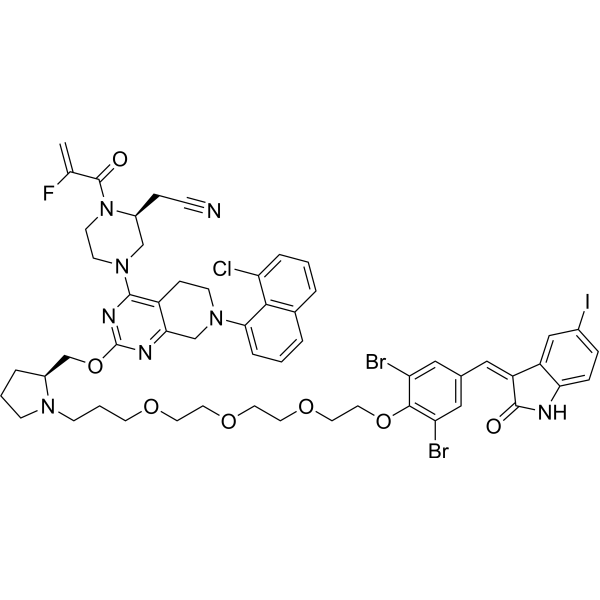
    KRAS degrader-1 is a potent KRAS degrader. KRAS degrader-1 targets specific proteins for degradation via the autophagy-lysosomal degradation pathway. KRAS degrader-1 is suitable for use in cancer research. (Blue: KRAS G12C-IN-72 (HY-128414); Black: Linker (HY-175587); Pink: 5-Iodoindolin-2-one (HY-76986); Blue + Black: KRAS ligand-Linker Conjugate 7 (HY-175586)) .
    KRAS degrader-1
  • HY-150286

    Prion Protein Neurological Disease
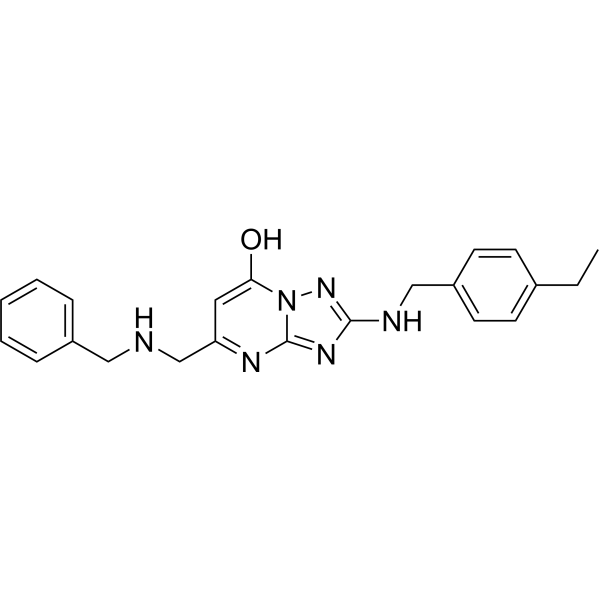
    SM875 is a cellular prion protein (PrP) degrader (IC50: 7.87 μM). SM875 targets PrP folding intermediates and promotes its degradation through the autophagy-lysosomal pathway. SM875 only acts on nascent, immature PrP molecules and has no effect on mature PrP before synthesis. SM875 can inhibit prion replication and has potential in the study of neurodegenerative diseases (i.e., prion diseases) .
    SM875
  • HY-147656

    ATTECs NAMPT Autophagy Cancer
    NAMPT degrader-1 (Compound A3), an autophagosome-tethering compound (ATTEC), is an nicotinamide phosphoribosyltransferase (NAMPT) degrader with an IC50 of 0.023 μM. NAMPT degrader-1 significantly induces the degradation of NAMPT through the autophagy-lysosomal pathway and shows excellent cellular antitumor potency .
    NAMPT degrader-1
  • HY-162972

    PROTACs PD-1/PD-L1 Inflammation/Immunology Cancer
    PROTAC PD-L1 degrader-2 is a PD-L1 PROTAC degrader with an IC50 of 197.4 nM and a Kd of 301 nM. PROTAC PD-L1 degrader-2 induces PD-L1 endocytosis, drives degradation via the proteasomal and lysosomal pathways, and inhibits the PD-1/PD-L1 interaction. As an immune activator, PROTAC PD-L1 degrader-2 increases the levels of CD4 +, CD8 +, granzyme B and perforin. PROTAC PD-L1 degrader-2 can be used in studies related to colon cancer immunology .
    PROTAC PD-L1 degrader-2
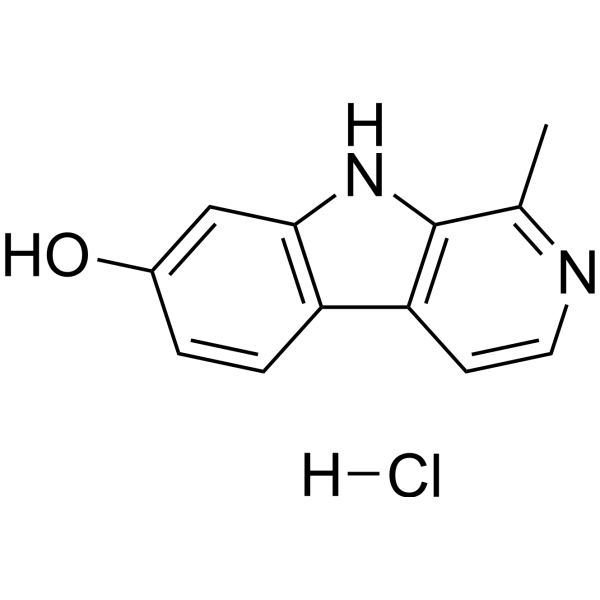
  • HY-107811A

    Autophagy α-synuclein Apoptosis Monoamine Oxidase Mitosis Neurological Disease Cancer
    Harmol hydrochloride is an orally active β-carboline alkaloid. Harmol hydrochloride is a TFEB activator and monoamine oxidase inhibitor. Harmol hydrochloride can induce cell mitosis, Autophagy and Apoptosis. Harmol hydrochloride promotes the degradation of α-synuclein by regulating the autophagy-lysosomal pathway. Harmol hydrochloride has anti-tumor, anti-depressant and anti-aging activities. Harmol hydrochloride improves motor impairment in a mouse Parkinson's disease model .
    Harmol hydrochloride
  • HY-175392

    PROTACs Epoxide Hydrolase Metabolic Disease Inflammation/Immunology
    PROTAC sEH-degrader-3 (Compound 1a) is a targeted sEH PROTAC degrader that can selectively degrade sEH in the cytosol without affecting sEH in peroxisomes. PROTAC sEH-degrader-3 degrades sEH through a CRBN-dependent lysosomal pathway rather than the proteasome, with an IC50 of 0.8 nM against hsEH. PROTAC sEH-degrader-3 can inhibit endoplasmic reticulum stress and can be used in the research of inflammation, metabolic diseases, and other diseases related to endoplasmic reticulum stress. (Pink: sEH inhibitor (HY-114266); Black: Linker (HY-W008352); Blue: E3 Ligase Ligand (HY-14658)) .
    PROTAC sEH-degrader-3
  • HY-173150

    YAP Cancer
    Hapalindole Q (Compound (+)-1) is an autophagy (Autophagy) inhibitor targeting YAP1. Hapalindole Q binds to the Hippo pathway transcription factor YAP1 with a Kd of 9.13 μM and induces its degradation via the chaperone-mediated autophagy (CMA) pathway. This process inhibits Rab7-mediated fusion of autophagosomes and lysosomes, thereby reducing overall autophagy levels without affecting lysosomal function. Hapalindole Q holds promise for research in cancer (e.g., liver cancer, breast cancer, etc.) .
    Hapalindole Q
  • HY-203817

    Autophagy Apoptosis Mitochondrial Metabolism Cancer
    IITZ-02 is a lysosomotropic Autophagy inhibitor. IITZ-02 enhances autophagosome accumulation but inhibits autophagosomal degradation by impairing lysosomal function, finally inducing the inhibition of autophagy. IITZ-02 abolishes mitochondrial membrane potential and induces apoptosis through the mitochondria-mediated pathway. IITZ-02 has a potent antitumor activity in MDA-MB-231 xenograft mouse models. IITZ-02 can be used for cancers research .
    IITZ-02
  • HY-107811R

    Apoptosis Monoamine Oxidase Autophagy α-synuclein Mitosis Reference Standards Neurological Disease Cancer
    Harmol (Standard) is the analytical standard of Harmol (HY-107811). This product is intended for research and analytical applications. Harmol hydrochloride is an orally active β-carboline alkaloid. Harmol hydrochloride is a TFEB activator and monoamine oxidase inhibitor. Harmol can induce cell mitosis, Autophagy and Apoptosis. Harmol promotes the degradation of α-synuclein by regulating the autophagy-lysosomal pathway. Harmol has anti-tumor, anti-depressant and anti-aging activities. Harmol improves motor impairment in a mouse Parkinson's disease model .
    Harmol (Standard)
  • HY-180571

    PROTACs CCR Cancer
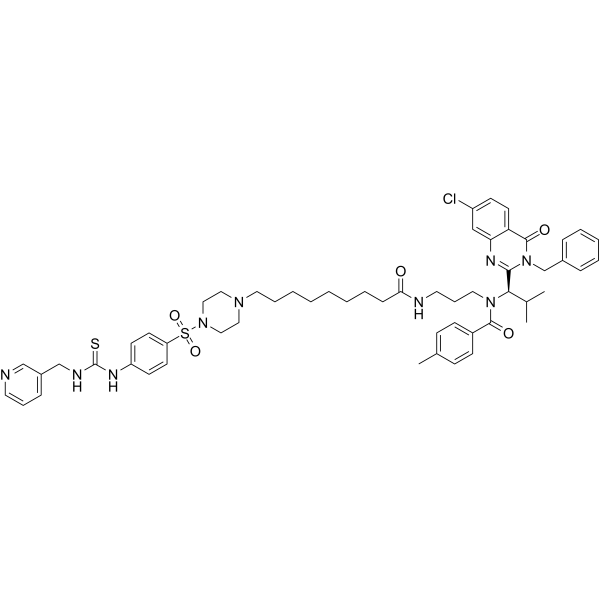
    LUF7996 is a CCR2 PROTAC Degrader degrading CCR2 with DC50 = 2.6 μM. LUF7996 demonstrates engagement of both and the E3 ligase cereblon and displays sustain and concentration-dependent degradation of CCR2. LUF7996 reliance on the lysosomal pathway to induce CCR2 degradation. LUF7996 efficiently inhibits monocyte migration in virto .
    LUF7996
  • HY-183660

    Autophagy Amyloid-β Tau Protein Neurological Disease
    F-SLOH is a brain-penerant and orally active TFEB activator and amyloid-β inhibitor with an IC50 of 3.4 μM against amyloid-β. F-SLOH promotes nuclear translocation of TFEB, driving autophagy and lysosomal biogenesis. F-SLOH reduces amyloid-β oligomers and Tau aggregates via autophagy lysosomal degradation pathway. F-SLOH can be used for the research of Alzheimer’s disease .
    F-SLOH
  • HY-180222

    CDK Cancer
    KGA-4066 is a novel non-ATP-competitive CDK2 inhibitor. KGA-4066 inhibits CDK2/Cyclin A2 with an IC50 value of 236.7 nM, disrupts their interaction, promots CDK2 degradation via the lysosomal pathway. KGA-4066 has anticancer activity against hepatocellular carcinoma .
    KGA-4066
  • HY-183717

    Cancer
    M4K3233 is a selective ALK2 PROTAC degrader with a pDC50 of 7.3 and a pIC50 of 6.6. M4K3233 recruits CRBN to form a ternary complex with ALK2, mediating ALK2 degradation via the proteasomal and lysosomal pathways. M4K3233 induces moderate downregulation of RIPK2 and significant downregulation of SIK3 in mammalian cells. M4K3233 is applicable to research related to glioblastoma .
    M4K3233

Inquiry Online

Your information is safe with us. * Required Fields.

Salutation


Country or Region *

Applicant Name *


Organization Name *

Department *


Email Address *


Product Name *

Cat. No.


Requested quantity *

Phone Number *


Remarks

Inquiry Online

Inquiry Information

Product Name:
Cat. No.:
Quantity:
MCE Japan Authorized Agent:

