8 Results for "

marine lipids

" in MedChemExpress (MCE) Product Catalog:
Products (8)

8 Results for "marine lipids" in MCE Product Catalog:

Cat. No.: HY-W750676
CAS No.: 7542-45-2
Synonyms: AstaREAL; AstaXin; BioAstin
Target:  

Endogenous Metabolite

Research Areas:  

Metabolic Disease

rac-Astaxanthin is a carotenoid pigment found primarily in marine animals including shrimp and salmon. It is a potent lipid-soluble antioxidant.
loading...
    loading...
Cat. No.: HY-W750676R
CAS No.: 7542-45-2
Synonyms: AstaREAL (Standard); AstaXin (Standard); BioAstin (Standard)
(rac./meso)-Astaxanthin (Standard) is the analytical standard of (rac./meso)-Astaxanthin. This product is intended for research and analytical applications. rac-Astaxanthin is a carotenoid pigment found primarily in marine animals including shrimp and salmon. It is a potent lipid-soluble antioxidant.
loading...
    loading...
Cat. No.: HY-N12726
CAS No.: 2977255-36-8
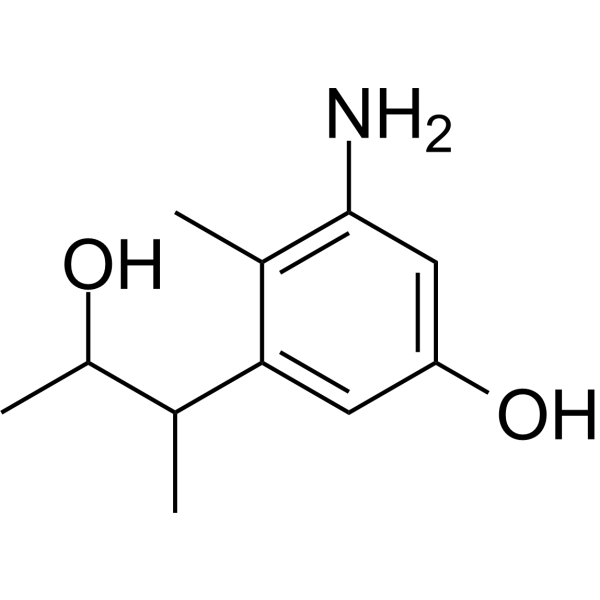
Halociline, a derivative of alkaloids, that can be isolated from the marine fungus Penicillium griseofulvum. Halociline targets MAPK1, MMP-9, and PIK3CA in gastric cancer cells, potentially mediated by diverse pathways including cancer, lipid metabolism, atherosclerosis, and EGFR tyrosine kinase inhibitor resistance. Halociline possesses antimicrobial, antioxidant and biofilm inhibitory activities .
loading...
    loading...
Cat. No.: HY-124187
CAS No.: 493015-74-0
Purity:  ≥98.0%
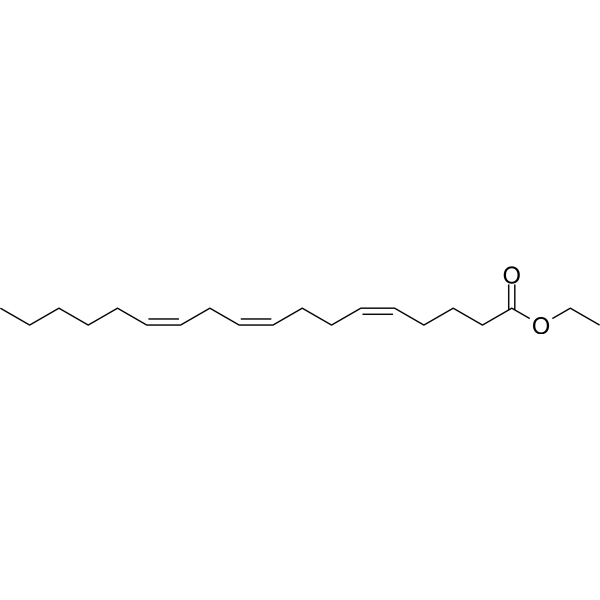
Synonyms: Ethyl pinolenate
Research Areas:  

Others

Pinolenic acid is a polyunsaturated fatty acid found in the seed oils of red pine (Pinus orientalis) and maritime pine (Pinus pinaster). Both oils were found to have lipid-lowering properties. A diet containing marine pine nut oil (MPSO) reduces HDL and ApoA1 levels in transgenic mice expressing human ApoA1. MPSO was found to reduce cholesterol efflux in vitro. Korean pine nut oil supplements may help obesity by reducing appetite. People who take this oil experience an increase in the satiety hormones CCK and GLP-1 and a decrease in appetite. The activity of the oil is attributed to pinolenic acid. Pinolenic acid is not metabolized to arachidonic acid and can reduce the level of arachidonic acid in the phosphatidylinositol fraction of HepG2 cells from 15.9% to 7.0%. Pinolenic acid ethyl ester is a neutral, more lipophilic form of the free acid.
loading...
    loading...
Cat. No.: HY-N12199
CAS No.: 51592-59-7
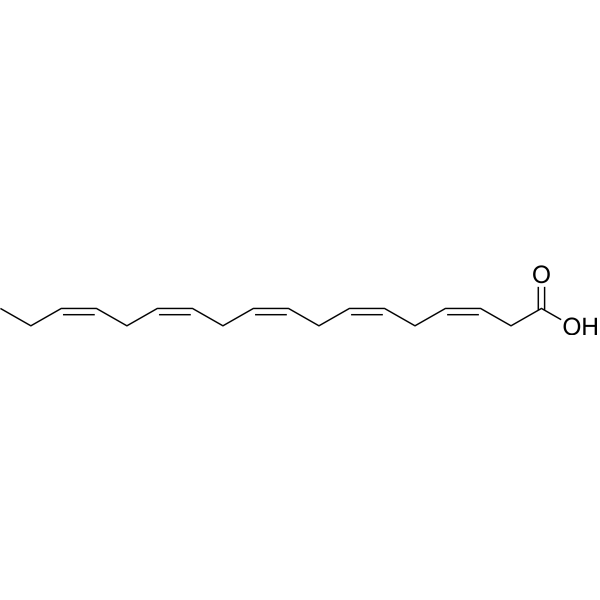
All-cis-3,6,9,12,15-octadecapentaenoic acid is an unsaturated fatty acid and can be isolated from the alga Gymnodinium kowalevskii .
loading...
    loading...
Cat. No.: HY-W414697
CAS No.: 40289-37-0
Synonyms: D-Ribo-phytosphingosine (C17 base)
Target:  

Bacterial

Research Areas:  

Others

4-Hydroxysphinganine C17 base (D-Ribo-phytosphingosine C17 base), also known as D-ribo-phytosphingosine or PHS, is a crucial compound present in the membranes of fungi, plants, bacteria, marine organisms, and mammalian tissues. It plays a vital role in preserving the structural integrity of membranes, regulating cellular growth, and mediating the heat stress response in yeast. Additionally, PHS serves as a precursor for the synthesis of important lipid mediators such as PHS 1-phosphate, inositol phosphorylceramide, and KRN7000 (the α-anomer of galactosylceramide). Furthermore, this phospholipid promotes keratinocyte differentiation, making it a valuable active ingredient in cosmetic formulations.
loading...
    loading...
Cat. No.: HY-152940A
CAS No.: 1639008-30-2
Synonyms: C24:1 α-glucosylceramide
Target:  

Endogenous Metabolite

Research Areas:  

Inflammation/Immunology

αGlcCer is a glycosphingolipid, which was originally identified in marine sponges. αGlcCer is a lipid antigen for invariant natural killer T (iNKT) cells, and stimulates iNKT cells.
loading...
    loading...
Cat. No.: HY-N12630
CAS No.: 65318-21-0
Synonyms: Mycosporine-Gly
Mycosporine glycine (Mycosporine-Gly) is a mycosporine-like amino acid derived from marine organisms, which possesses free radical scavenging, antioxidant, anti-inflammatory and photoprotective activities . Mycosporine glycine inhibits the UV-induced upregulation of COX-2 mRNA and gene expression levels, scavenges free radicals, ROS and peroxyl radicals, and inhibits free radical chain lipid peroxidation and phosphatidylcholine peroxidation. Mycosporine glycine restores PCOLCE and elastin levels suppressed by ultraviolet radiation, alleviates photooxidative stress and UV-mediated skin cell damage. Mycosporine glycine can be used in studies related to UV-induced skin inflammation, skin photoaging and skin damage .
loading...
    loading...

