
15 Results for "

neuronal development

" in MedChemExpress (MCE) Product Catalog:
Products (15)

15 Results for "neuronal development" in MCE Product Catalog:

3
3 Cited Publications
Cat. No.: HY-P99407
CAS No.: 2097151-87-4
Synonyms: VX 15/2503

Target:  

Inhibitory Antibodies

Research Areas:  

Neurological Disease Cancer

Pepinemab (VX 15/2503) is a human monoclonal antibody against SEMA4D, a signalling protein 4D (SEMA4D), also known as CD100, which is a regulator of neuronal development and plays a role in a variety of cellular processes. Pepinemab can be used in the study of various neurodegenerative diseases such as Alzheimer's disease by blocking the activity of SEMA4D .
loading...
    loading...
2
2 Cited Publications
Cat. No.: HY-B1941
CAS No.: 140-66-9
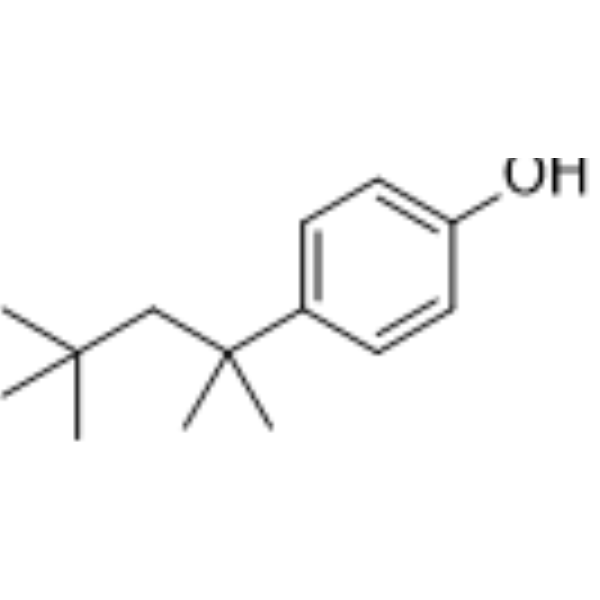
4-tert-Octylphenol, a endocrine-disrupting chemical, is an estrogenic agent. 4-tert-Octylphenol is also a biodegradation product of non-ionic surfactants alkylphenol polyethoxylates. 4-tert-Octylphenol induces apoptosis in neuronal progenitor cells in offspring mouse brain. 4-tert-Octylphenol reduces bromodeoxyuridine (BrdU), mitotic marker Ki67, and phospho-histone H3 (p-Histone-H3), resulting in a reduction of neuronal progenitor proliferation. 4-tert-Octylphenol disrupts brain development and behavior in mice, which is promising for reserch of immune response, neuro-related diseases and ethology .
loading...
    loading...
Cat. No.: HY-P1149
CAS No.: 307297-39-8
Synonyms: Epithalon; Epithalamin
Target:  

Telomerase

Research Areas:  

Neurological Disease Cancer

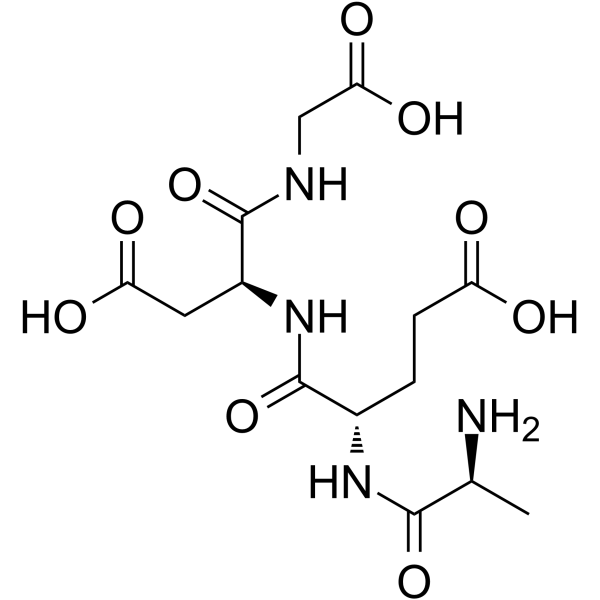
Epitalon is an anti-aging agent and a telomerase activator. Epitalon has an inhibitory effect of the on the development of spontaneous tumors in mice, has geroprotective actions and intranasal administration increases neuronal activity. Epitalon can be used for cancer, old age and Retinitis Pigmentosa .
loading...
    loading...
Cat. No.: HY-P1149A
Synonyms: Epithalon TFA; Epithalamin TFA
Target:  

Telomerase

Research Areas:  

Neurological Disease Cancer

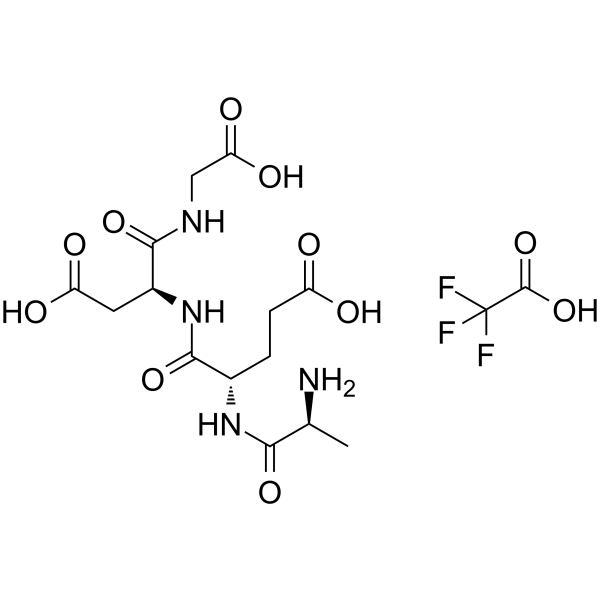
Epitalon TFA is an anti-aging agent and a telomerase activator. Epitalon TFA has an inhibitory effect of the on the development of spontaneous tumors in mice, has geroprotective actions and intranasal administration increases neuronal activity. Epitalon TFA can be used for cancer, old age and Retinitis Pigmentosa .
loading...
    loading...
Cat. No.: HY-21197
CAS No.: 375-85-9
Synonyms: Perfluoroheptanoic acid; Tridecafluoroheptanoic acid; PFHpA
Perfluoroenanthic acid (Perfluoroheptanoic acid) is a kind of perfluoroalkyl carboxylic acid organic pollutant. Perfluoroenanthic acid has environmental persistence and bioaccumulation, and exposure can occur via oral, dermal and other routes. Perfluoroenanthic acid exhibits reproductive toxicity, neurotoxicity, hepatotoxicity, immunotoxicity and endocrine-disrupting effects. Perfluoroenanthic acid exerts definite adverse effects on development, spermatogenesis, neuronal activity and liver tissue .
loading...
    loading...
Cat. No.: HY-10965
CAS No.: 136199-02-5
Purity:  99.68%
Synonyms: KW-3902
Target:  

Adenosine Receptor

Research Areas:  

Neurological Disease

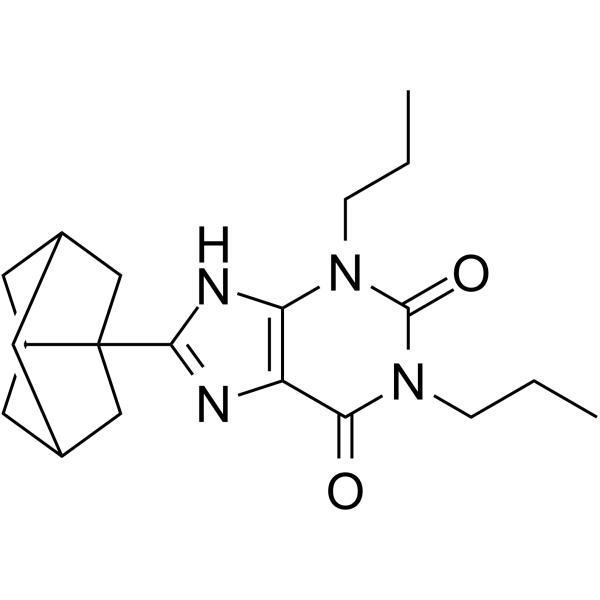
Rolofylline (KW-3902) is a potent, selective adenosine A1 receptor antagonist that is under development for the treatment of patients with acute congestive heart failure and renal impairment. Rolofylline is metabolized primarily to the pharmacologically active M1-trans and M1-cis metabolites by cytochrome P450 (CYP450) . Rolofylline is alleviating the presynaptic dysfunction and restores neuronal activity as well as dendritic spine levels in vitro, is an interesting candidate to combat the hypometabolism and neuronal dysfunction associated with Tau-induced neurodegenerative diseases .
loading...
    loading...
Cat. No.: HY-111527
CAS No.: 896203-18-2
Purity:  99.92%
Target:  

Calcium Channel

Research Areas:  

Neurological Disease

PPZ2 is a diacylglycerol (DAG)-activated TRPC3/TRPC6/TRPC7 channel activator with activity in promoting neuronal development and survival. PPZ2 activates recombinant TRPC3/TRPC6/TRPC7 channels in a dose-dependent manner without affecting other TRPC channels. PPZ2 elicits cation currents and calcium ion (Ca(2+)) influx in cultured central neurons. PPZ2 is able to induce BDNF-like neurite outgrowth and neuroprotection, an effect that disappears after TRPC3/TRPC6/TRPC7 knockdown or inhibition. PPZ2 also increases the activation of the calcium-dependent transcription factor cAMP response element binding protein. The effects of PPZ2 suggest that calcium signaling mediated by activation of DAG-activated TRPC channels plays an important role in its neurotrophic effects .
loading...
    loading...
Cat. No.: HY-P11322
CAS No.: 2912290-24-3
Research Areas:  

Neurological Disease

NHIP peptide is a peptide segment containing 20 amino acids located in the nucleus of the cell. NHIP is highly expressed in neuronal derived cells such as LUHMES cells. NHIP peptide can promote the proliferation of 293T cells. NHIP peptide regulates gene networks related to neural development and autism spectrum disorder (ASD) .
loading...
    loading...
Cat. No.: HY-174782
Target:  

mRNA

Research Areas:  

Inflammation/Immunology

Human ACVR2B mRNA encodes the human activin A receptor type 2B (ACVR2B) protein, a receptor that transduces the activin signal from the cell surface to the cytoplasm and is thus regulating many physiological and pathological processes including neuronal differentiation and neuronal survival, hair follicle development and cycling, FSH production by the pituitary gland, wound healing, extracellular matrix production, immunosuppression and carcinogenesis.
loading...
    loading...
Cat. No.: HY-10965R
CAS No.: 136199-02-5
Synonyms: KW-3902 (Standard)
Rolofylline (Standard) is the analytical standard of Rolofylline. This product is intended for research and analytical applications. Rolofylline (KW-3902) is a potent, selective adenosine A1 receptor antagonist that is under development for the treatment of patients with acute congestive heart failure and renal impairment. Rolofylline is metabolized primarily to the pharmacologically active M1-trans and M1-cis metabolites by cytochrome P450 (CYP450) . Rolofylline is alleviating the presynaptic dysfunction and restores neuronal activity as well as dendritic spine levels in vitro, is an interesting candidate to combat the hypometabolism and neuronal dysfunction associated with Tau-induced neurodegenerative diseases .
loading...
    loading...
Cat. No.: HY-B1941R
CAS No.: 140-66-9
4-tert-Octylphenol (Standard) is the analytical standard of 4-tert-Octylphenol. This product is intended for research and analytical applications. 4-tert-Octylphenol, a endocrine-disrupting chemical, is an estrogenic agent. 4-tert-Octylphenol is also a biodegradation product of non-ionic surfactants alkylphenol polyethoxylates. 4-tert-Octylphenol induces apoptosis in neuronal progenitor cells in offspring mouse brain. 4-tert-Octylphenol reduces bromodeoxyuridine (BrdU), mitotic marker Ki67, and phospho-histone H3 (p-Histone-H3), resulting in a reduction of neuronal progenitor proliferation. 4-tert-Octylphenol disrupts brain development and behavior in mice, which is promising for reserch of immune response, neuro-related diseases and ethology .
loading...
    loading...
Cat. No.: HY-145858
CAS No.: 2756846-09-8
Target:  

Ferroptosis

Research Areas:  

Cancer

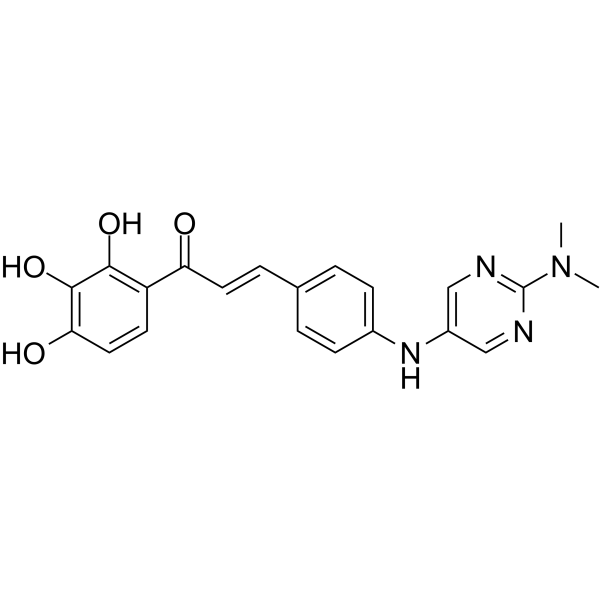
Chalcones A-N-5 is a trihydroxy chalcone derivative compound. Chalcones A-N-5 doesn’t show cytotoxicity at the concentration lower than 100 µM (with IC50 > 1 mM), but has a significant effect on promoting cell proliferation. Chalcones A-N-5 potentially promotes neuronal cell growth in the damaged brain tissue. Chalcones A-N-5 also inhibits ferroptosis induced by RSL or erastin and reduces the lipid peroxidation levels induced by Aβ1-42 protein aggregation. Chalcones A-N-5 is a promising molecular skeleton candidate for further development of lead compound for in vivo test to research AD .
loading...
    loading...
Cat. No.: HY-174584
Target:  

mRNA

Research Areas:  

Neurological Disease

Human MEF2A mRNA encodes the human myocyte enhancer factor 2A (MEF2A) protein, a DNA-binding transcription factor that activates many muscle-specific, growth factor-induced, and stress-induced genes. MEF2A is involved in several cellular processes, including muscle development, neuronal differentiation, cell growth control, and apoptosis.
loading...
    loading...
Cat. No.: HY-L013
3,911 compounds

Neuronal Signaling is involved in the regulation of the mechanisms of the central nervous system (CNS) such as its structure, function, genetics and physiology as well as how this can be applied to understand diseases of the nervous system. Every information processing system in the CNS is composed of neurons and glia, neurons have evolved unique capabilities for intracellular signaling (communication within the cell) and intercellular signaling (communication between cells). G protein-coupled receptors (GPCRs), including 5-HT receptor, histamine receptor, opioid receptor, etc. are the largest class of sensory proteins and are important therapeutic targets in Neuronal Signaling. Besides, Notch signaling, such as β- and γ-secretase, also plays multiple roles in the development of the CNS including regulating neural stem cell (NSC) proliferation, survival, self-renewal and differentiation. GPCR dysfunction caused by receptor mutations and environmental challenges contributes to many neurological diseases. Notch signaling in neurons, glia, and NSCs is also involved in pathological changes that occur in disorders such as stroke, Alzheimer's disease and CNS tumors. Thus, targeting Neuronal Signaling, such as notch signaling and GPCRs, can be used as therapeutic interventions for several different CNS disorders.

MCE designs a unique collection of 3,911 Neuronal Signaling-related compounds that act as a useful tool for the research of neuronal regulation and neuronal diseases.

Cat. No.: HY-21197S
CAS No.: 2328024-55-9
Synonyms: Perfluoroheptanoic acid-13C4; Tridecafluoroheptanoic acid-13C4; PFHpA-13C4
Perfluoroenanthic acid- 13C4 (Perfluoroheptanoic acid- 13C4) is the 13C-labeled Perfluoroenanthic acid (HY-21197). Perfluoroenanthic acid (Perfluoroheptanoic acid) is a kind of perfluoroalkyl carboxylic acid organic pollutant. Perfluoroenanthic acid has environmental persistence and bioaccumulation, and exposure can occur via oral, dermal and other routes. Perfluoroenanthic acid exhibits reproductive toxicity, neurotoxicity, hepatotoxicity, immunotoxicity and endocrine-disrupting effects. Perfluoroenanthic acid exerts definite adverse effects on development, spermatogenesis, neuronal activity and liver tissue .
loading...
    loading...
  • 1

