
13 Results for "

oncologic

" in MedChemExpress (MCE) Product Catalog:
Products (13)

13 Results for "oncologic" in MCE Product Catalog:

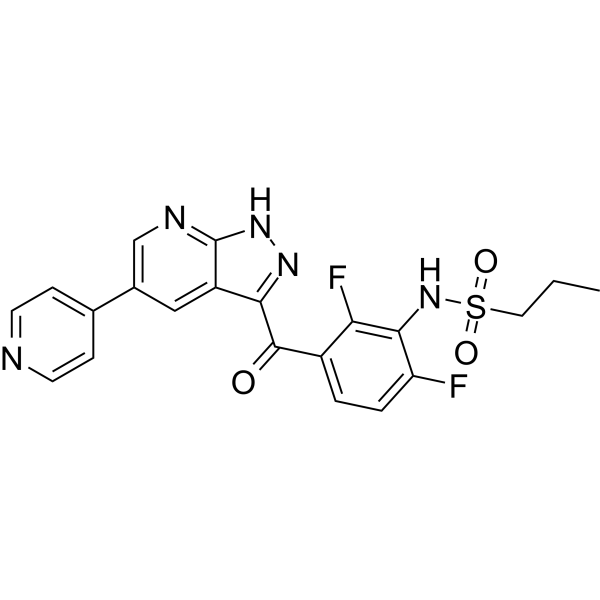
Cat. No.: HY-152860
CAS No.: 2369583-33-3
Purity:  99.94%
Synonyms: HRX-0215
Research Areas:  

Cancer

Darizmetinib (HRX-0215) is an orally active, potent and selective inhibitor of mitogen-activated protein kinase kinase 4 (MKK4). Darizmetinib leads to enhancement of the MKK7 and JNK1 signaling pathways, thereby activating the transcription factors ATF2 and ELK1, promoting cell proliferation and liver regeneration. Darizmetinib is promising for research of preventing liver failure after extensive oncological liver resections or transplantation of small liver grafts .
loading...
    loading...
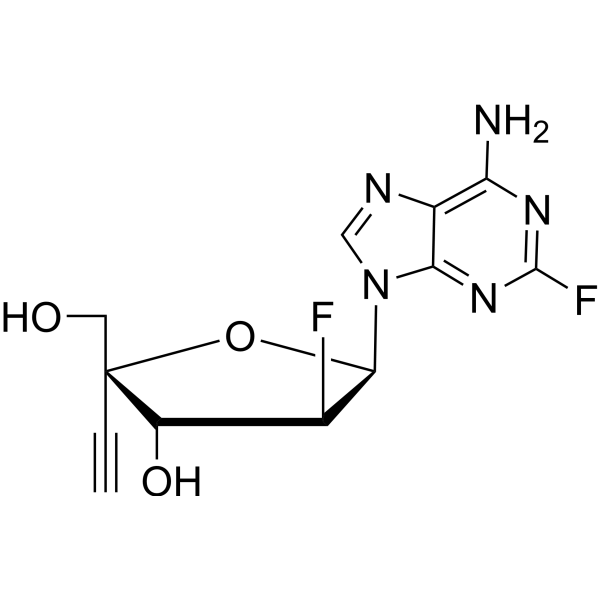
Cat. No.: HY-148191
CAS No.: 1030595-07-3
Purity:  99.32%
CL-197 is an orally active and long-acting purine anti-HIV nucleoside reverse transcriptase inhibitor (NRTI). CL-197 has potential effect on the research of viral, oncological and cerebrovascular diseases . CL-197 is a click chemistry reagent, it contains an Alkyne group and can undergo copper-catalyzed azide-alkyne cycloaddition (CuAAc) with molecules containing Azide groups.
loading...
    loading...
Cat. No.: HY-162424
CAS No.: 3057611-79-4
Research Areas:  

Cancer

ZBP1/RIP3/MLKL activator 1 (compound 3a) is a synthetically derived quinoline compound. ZBP1/RIP3/MLKL Activator 1 induces DNA damage, enhances intracellular levels of reactive oxygen species (ROS), and triggers apoptosis via the caspase pathway. Furthermore, when apoptosis is inhibited, ZBP1/RIP3/MLKL Activator 1 promotes necroptotic cell death through the ZBP1-RIP3-MLKL pathway. ZBP1/RIP3/MLKL Activator 1 is utilized in oncological research, particularly in the selective targeting of cells with impaired apoptotic function .
loading...
    loading...
Cat. No.: HY-P99723
CAS No.: 2168561-26-8
Synonyms: BCD-135

Target:  

PD-1/PD-L1

Research Areas:  

Cancer

Manelimab (BCD-135) is a monoclonal antibody targeting PD-L1 with PD-L1 inhibitory activity. Manelimab blocks the interaction between PD-L1 and PD-1 to abrogate the immunosuppressive signals of T cells in the tumor microenvironment. Manelimab is applicable for tumor-related research .
loading...
    loading...
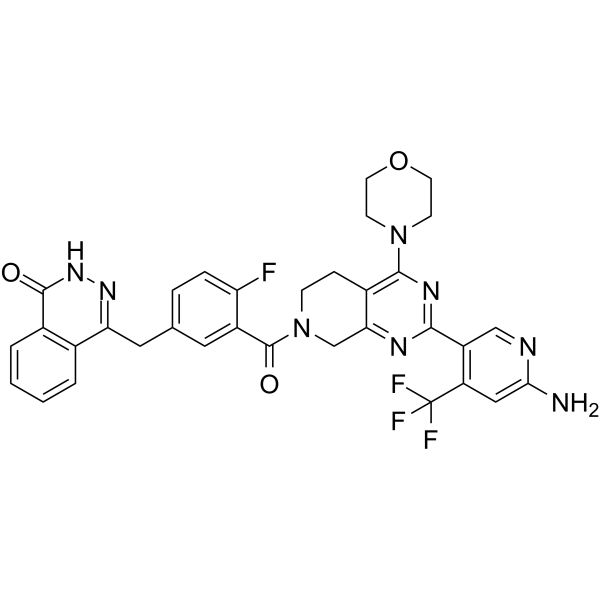
Cat. No.: HY-133124
CAS No.: 2337386-47-5
Purity:  99.43%
Target:  

PARP PI3K Apoptosis

Research Areas:  

Cancer

PARP/PI3K-IN-1 (compound 15) is a potent PARP/PI3K inhibitor with pIC50 values of 8.22, 8.44, 8.25, 6.54, 8.13, 6.08 for PARP-1, PARP-2, PI3Kα, PI3Kβ, PI3Kδ, and PI3Kγ, respectively. PARP/PI3K-IN-1 is a highly effective anticancer compound targeted against a wide range of oncologic diseases .
loading...
    loading...
Cat. No.: HY-138746
CAS No.: 2573869-16-4
Target:  

EGFR

Research Areas:  

Cancer

EGFR-IN-15 (compound I-005) is a EGFR inhibitor with an IC50 of 4 nM. EGFR-IN-15 can be used for oncological diseases research .
loading...
    loading...
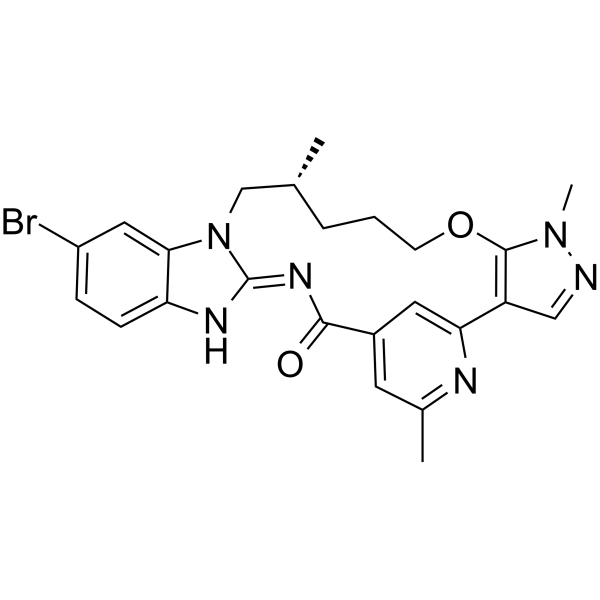
Cat. No.: HY-W109401
CAS No.: 1431411-18-5
SIRT-IN-6 (Compound 14) is a pan-inhibitor of SIRT1/2/3 with IC50 values of >50 μM. SIRT-IN-6 is promising for research of metabolic, inflammatory, oncologic and neurodegenerative disorders .
loading...
    loading...
Cat. No.: HY-151094
Target:  

Monoamine Oxidase

Research Areas:  

Neurological Disease

FTEAA is a 4-styrylpiperidine inhibitor. FTEAA exhibits potent inhibitory effect towards both monoamine oxidase with IC50s of 0.52 μM (MAO-A), 1.02 μM (MAO-B), respectively. MAO inhibitors can be used for cardiovascular, neurological and oncological disorders research .
loading...
    loading...
Cat. No.: HY-132129
CAS No.: 2359690-13-2
Target:  

Ras SOS1

Research Areas:  

Cancer

SOS1-IN-2 (Compound 1-1) is an inhibitor of SOS1 with an IC50 value of 5 nM. SOS1-IN-2 can be used in tumor research .
loading...
    loading...
Cat. No.: HY-L100
146 compounds

Cancer is a multi-step process which involves initiation, promotion and progression. Chemical carcinogens can alter any of these processes to induce their carcinogenic effects. People are continuously exposed exogenously to varying amounts of chemicals that have been shown to have carcinogenic or mutagenic properties in experimental systems. Exposure can occur exogenously when these agents are present in food, air or water, and also endogenously when they are products of metabolism or pathophysiologic states such as inflammation. The administration of chemical carcinogens is one of the most commonly used methods to induce tumors in several organs in laboratory animals in order to study oncologic diseases of humans. MCE offers a unique collection of 146 chemical carcinogens which have been identified with carcinogenic activity either in humans or in animal models. MCE Tumorigenesis-Related Compound Library is a powerful tool for studying oncologic diseases of humans. Standard opration based on safety data sheet will not cause harm to the body.

Cat. No.: HY-186084
CAS No.: 3098298-20-2
Target:  

ACSL Family

Research Areas:  

Metabolic Disease Cancer

ACSL5-IN-4 (the 9th compound in Table 115) is an ACS5 inhibitor, with its IC50 value for hACS5 being less than 100 nM. ACSL5-IN-4 can be used for research in digestive and oncological diseases .
loading...
    loading...
Cat. No.: HY-187273S
[U- 15N]-Cys-C is the 15N-labeled Cys-C. Cystatin C (Cys-C) is a highly sensitive biomarker of renal function that is unaffected by factors such as age; it is also associated with the pathological progression of oncological, cardiovascular, and neurological diseases. This isotope can be used in NMR studies of disease mechanisms and in mass spectrometry analysis.
loading...
    loading...
Cat. No.: HY-L009M
271 compounds

Kinases is a class of enzymes that adds chemicals called phosphates to other molecules, such as sugars or proteins. Protein phosphorylation serves as a critical regulatory mechanism for numerous cellular processes including cell division, metabolism, and signal transduction, with approximately 50% of cellular functions in humans being regulated by kinase activity. In drug discovery, kinases represent a major category of therapeutic targets, and kinase inhibitors constitute an important class of pharmaceuticals that block the activity of specific disease-associated enzymes, particularly in cancer and inflammatory disorders. Small molecule kinase inhibitors represent one of the fastest-growing drug categories, having received U.S. Food and Drug Administration (FDA) approval for both oncological and non-oncological indications. As of September 2023, over 70 FDA-approved small molecule kinase inhibitors are commercially available.

The MCE Kinase Inhibitor Library Mini contains 271 kinase inhibitors primarily targeting protein kinases (VEGFR, EGFR, BTK, CDK, Akt, etc.), lipid kinases (PI3K, PI4K, SK, etc.), and carbohydrate kinases. This collection includes 1-3 highly specific representative compounds per target, optimized for screening of kinase-related drug targets in pharmaceutical research.

  • 1

