

1. Search Result
Search Result
Results for "

opioid analgesic

" in MedChemExpress (MCE) Product Catalog:

155

Inhibitors & Agonists

1

Screening Libraries

31

Peptides

1

Inhibitory Antibodies

16

Natural
Products

15

Isotope-Labeled Compounds

Targets Recommended:
Cat. No. Product Name Target Research Areas Chemical Structure
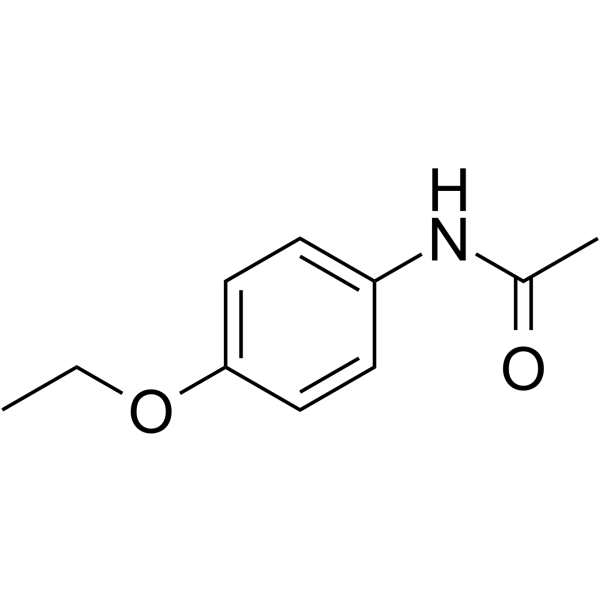
  • HY-B0476
    Phenacetin
    1 Publications Verification

    Acetophenetidin

    COX Inflammation/Immunology
    Phenacetin (Acetophenetidin) is a non-opioid analgesic/antipyretic agent. Phenacetin is a selective COX-3 inhibitor. Phenacetin is used as probe of cytochrome P450 enzymes CYP1A2 in human liver microsomes and in rats .
    Phenacetin
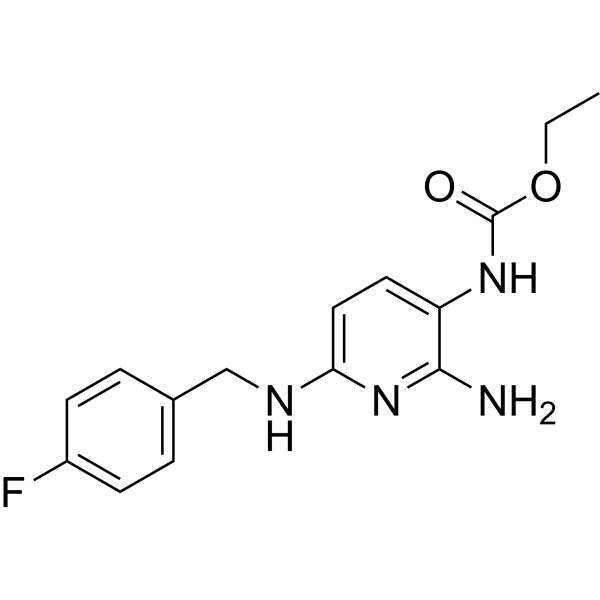
  • HY-17001A
    Flupirtine
    1 Publications Verification

    D 9998

    Potassium Channel iGluR GABA Receptor Neurological Disease Inflammation/Immunology
    Flupirtine (D 9998) is an orally active, blood-brain barrier-crossing non-opioid analgesic and neuroprotective agent. Flupirtine is a neuronal potassium channel opener (Kv7 activator), a NMDA receptor antagonist and a GABA receptor activator. Flupirtine stabilizes blood-brain-barrier integrity, reduces oxidative stress and brain leukocyte infiltration, enhances angioneurogenesis, suppresses calcium influx, stabilizes neuronal resting membrane potential, and counteracts focal cerebral ischemia. Flupirtine exhibits analgesic, muscle relaxant properties, protects neurons from excitotoxic, ischemic, or cytokine-mediated death. Flupirtine functions as a non-opioid analgesic without antipyretic or antiphlogistic properties, shows no relevant affinity to opiate receptor. Flupirtine can be used for the research of focal cerebral ischemia, pain, Alzheimer’s disease, or multiple sclerosis .
    Flupirtine
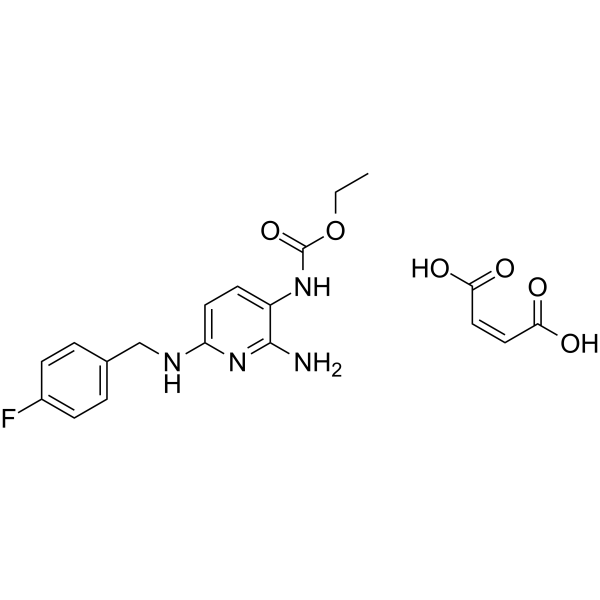
  • HY-17001
    Flupirtine Maleate
    1 Publications Verification

    D 9998 Maleate

    Potassium Channel iGluR GABA Receptor Neurological Disease Inflammation/Immunology
    Flupirtine (D 9998) Maleate is an orally active, blood-brain barrier-crossing non-opioid analgesic and neuroprotective agent. Flupirtine Maleate is a neuronal potassium channel opener (Kv7 activator), a NMDA receptor antagonist and a GABA receptor activator. Flupirtine Maleate stabilizes blood-brain-barrier integrity, reduces oxidative stress and brain leukocyte infiltration, enhances angioneurogenesis, suppresses calcium influx, stabilizes neuronal resting membrane potential, and counteracts focal cerebral ischemia. Flupirtine Maleate exhibits analgesic, muscle relaxant properties, protects neurons from excitotoxic, ischemic, or cytokine-mediated death. Flupirtine Maleate functions as a non-opioid analgesic without antipyretic or antiphlogistic properties, shows no relevant affinity to opiate receptor. Flupirtine Maleate can be used for the research of focal cerebral ischemia, pain, Alzheimer’s disease, or multiple sclerosis .
    Flupirtine Maleate
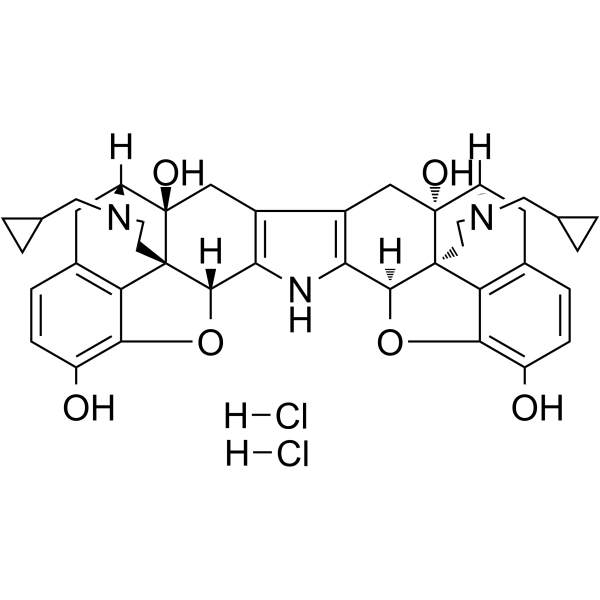
  • HY-100903
    Norbinaltorphimine dihydrochloride
    Maximum Cited Publications
    7 Publications Verification

    nor-Binaltorphimine dihydrochloride; nor-BNI dihydrochloride

    Opioid Receptor Neurological Disease
    Norbinaltorphimine dihydrochloride (nor-Binaltorphimine dihydrochloride; nor-BNI dihydrochloride) is a selective, long-acting competitive antagonist of the κ-opioid receptor. Norbinaltorphimine dihydrochloride blocks κ-opioid receptor-mediated analgesic effects, and inhibits butorphanol-induced changes in κ-opioid receptor binding kinetics, desensitization and down-regulation. Norbinaltorphimine dihydrochloride suppresses specific opioid withdrawal symptoms, precipitates withdrawal behaviors in butorphanol-dependent rats, and serves as a molecular probe for studying κ-opioid receptor-agonist interactions. Norbinaltorphimine dihydrochloride is applicable to research related to neurological disorders such as pain .
    Norbinaltorphimine dihydrochloride
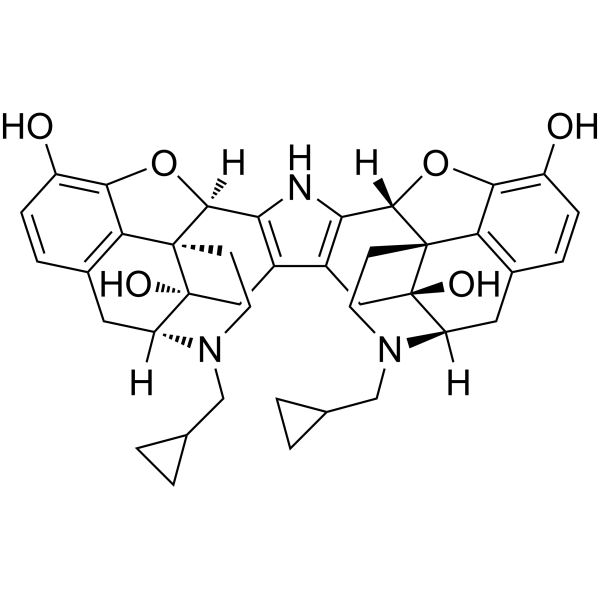
  • HY-117040
    nor-Binaltorphimine
    Maximum Cited Publications
    7 Publications Verification

    Norbinaltorphimine; NorBNI

    Opioid Receptor Neurological Disease
    nor-Binaltorphimine (Norbinaltorphimine; NorBNI) is a selective, long-acting competitive antagonist of the κ-opioid receptor. nor-Binaltorphimine blocks κ-opioid receptor-mediated analgesic effects, and inhibits butorphanol-induced changes in κ-opioid receptor binding kinetics, desensitization and down-regulation. nor-Binaltorphimine suppresses specific opioid withdrawal symptoms, precipitates withdrawal behaviors in butorphanol-dependent rats, and serves as a molecular probe for studying κ-opioid receptor-agonist interactions. nor-Binaltorphimine is applicable to research related to neurological disorders such as pain .
    nor-Binaltorphimine
  • HY-145404
    Mitragynine pseudoindoxyl
    1 Publications Verification

    Opioid Receptor Metabolic Disease
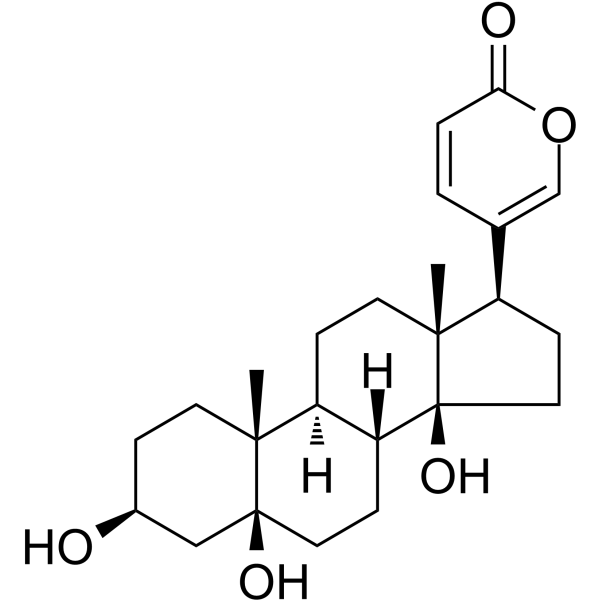
    Mitragynine pseudoindoxyl is a potent orally active agonist of the μ-opioid receptor (MOR-1, Ki=0.8 nM) and an antagonist of the δ-opioid receptor (DOR-1, Ki=3.0 nM). Mitragynine pseudoindoxyl has moderate affinity for the κ-opioid receptor (KOR-1, Ki=24 nM) and does not recruit β-arrestin-2, acting through G protein-mediated signaling pathways without β-arrestin-2-related activation. Mitragynine pseudoindoxyl produces potent analgesic activity through a mixed μ-agonist/δ-antagonist mechanism, with low side effects such as physical dependence, respiratory depression, and constipation, and no rewarding or aversive behaviors. Mitragynine pseudoindoxyl reduces hyperactivity, inhibits GI transit, and enhances characteristics, making it a potential analgesic .
    Mitragynine pseudoindoxyl
  • HY-W345510

    Neprilysin Neurological Disease
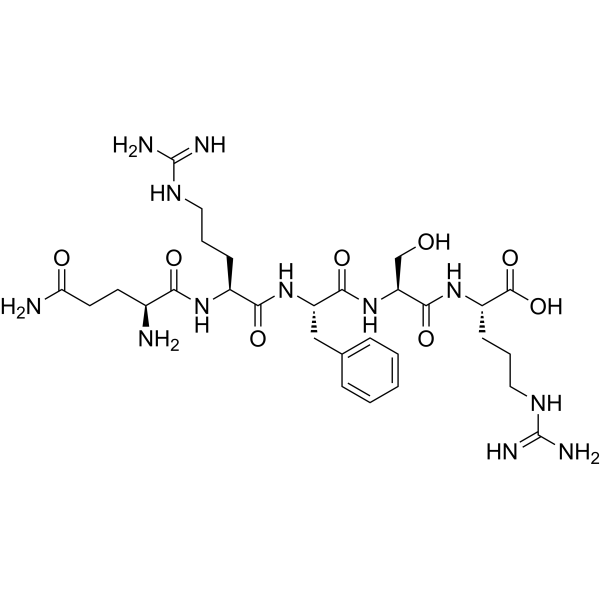
    Opiorphin, an opioid peptide, is a potent enkephalin-inactivating zinc ectopeptidases in human inhibitor. Opiorphin inhibits two enkephalin-catabolizing ectoenzymes, human neutral ecto-endopeptidase, hNEP (EC 3.4.24.11) with an IC50 value of 11 μM, and human ecto-aminopeptidase, hAP-N (EC 3.4.11.2). Opiorphin displays potent analgesic activity by activating endogenous opioid-dependent transmission .
    Opiorphin
  • HY-P3445A

    HSK21542 acetate

    Opioid Receptor Neurological Disease
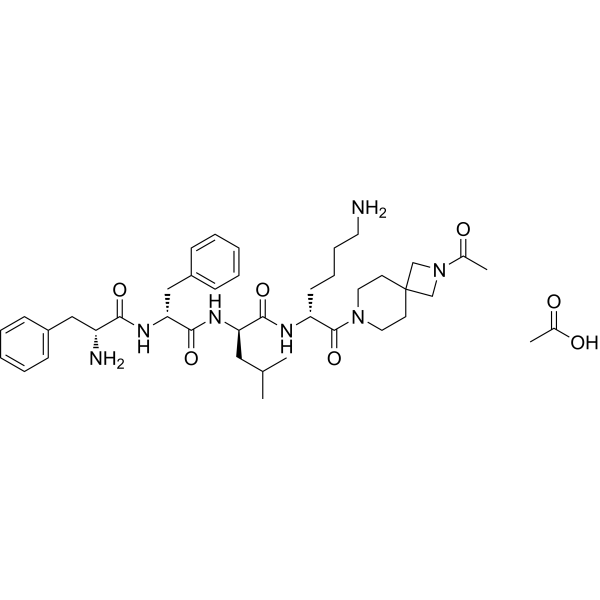
    Anrikefon (HSK21542) acetate is a kappa opioid receptor agonist with analgesic effect .
    Anrikefon acetate
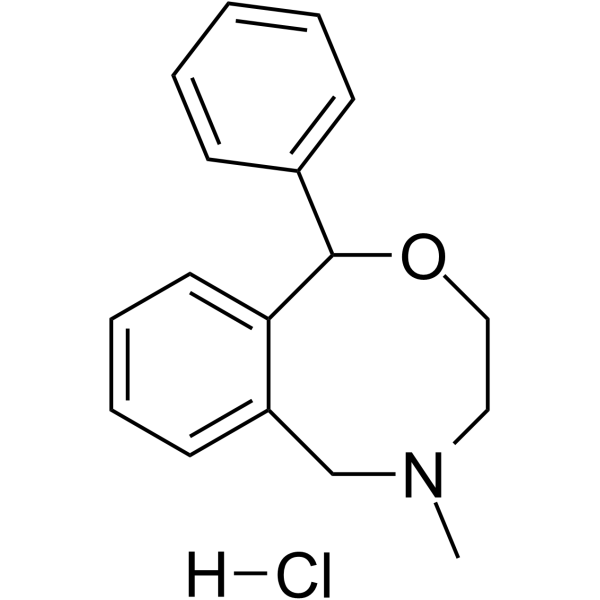
  • HY-B1057
    Nefopam hydrochloride
    3 Publications Verification

    Fenazoxine hydrochloride

    β-catenin Neurological Disease Cancer
    Nefopam hydrochloride (Fenazoxine hydrochloride) is a centrally-acting but non-opioid analgesic drug, for the relief of moderate to severe pain. Nefopam hydrochloride targets β-catenin protein level in mesenchymal cells in-vitro and in-vivo .
    Nefopam hydrochloride
  • HY-17391

    Adenosine Receptor Endocrinology
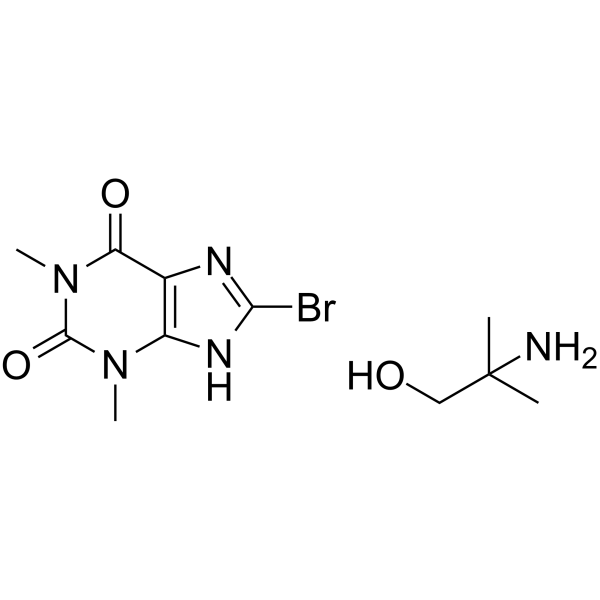
    Pamabrom is a diuretic that acts on the opioid receptor-nitric oxide (NO) -cyclic guanosine monophosphate (cGMP) -K + channel pathway. Pamabrom exerts peripheral antinociceptive activity by activating this pathway. The mechanism involves activating opioid receptors, promoting the release of nitric oxide, and then influencing cyclic guanosine monophosphate and K channels to produce an analgesic effect. Pamabrom is orally active and is mainly used in the research and treatment of premenstrual syndrome and primary dysmenorrhea[1].
    Pamabrom
  • HY-P3445

    HSK21542

    Opioid Receptor Neurological Disease
    Anrikefon (HSK21542) is a kappa opioid receptor agonist with analgesic effect .
    Anrikefon
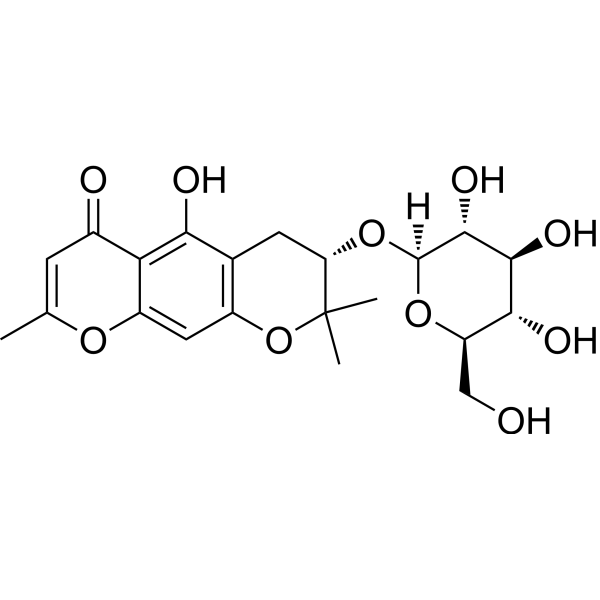
  • HY-N0398

    Opioid Receptor Neurological Disease
    Sec-O-Glucosylhamaudol is a natural compound extracted from Peucedanum japonicum Thunb, decreases levels of μ-opioid receptor, with analgesic effect .
    Sec-O-Glucosylhamaudol
  • HY-109054A

    Drug Metabolite Opioid Receptor Neurological Disease
    O-Desmethyltramadol hydrochloride is the main active metabolite of tramadol (Tramadol) and can cross the blood-brain barrier. O-Desmethyltramadol hydrochloride mainly exerts its analgesic effect by activating the µ-opioid receptor (µ-OR) .
    O-Desmethyltramadol hydrochloride
  • HY-112692

    Opioid Receptor Neurological Disease
    AT-121 is a bifunctional nociception and mu opioid receptor agonist, with Kis of 3.67 and 16.49 nM, respectively. AT-121 is a safe, non-addictive analgesic, and shows antinociceptive and antiallodynic effects .
    AT-121
  • HY-109054

    Drug Metabolite Opioid Receptor Neurological Disease
    O-Desmethyltramadol is the main active metabolite of tramadol (Tramadol) and can cross the blood-brain barrier. O-Desmethyltramadol mainly exerts its analgesic effect by activating the µ-opioid receptor (µ-OR) .
    O-Desmethyltramadol
  • HY-101205

    Opioid Receptor Cardiovascular Disease Neurological Disease
    ICI-199441 hydrochloride is a potent and selective κ-opioid receptor agonist with analgesic effects. ICI 199441 hydrochloride can improve heart resistance to ischemia/reperfusion .
    ICI-199441 hydrochloride
  • HY-P1329A
    CTOP TFA
    1 Publications Verification

    Opioid Receptor Neurological Disease
    CTOP TFA is a potent and highly selective μ-opioid receptor antagonist. CTOP TFA antagonizes the acute analgesic effect and hypermotility. CTOP TFA enhances extracellular dopamine levels in the nucleus accumbens. CTOP TFA dose-dependently enhances locomotor activity .
    CTOP TFA
  • HY-P1866A
    β-Endorphin, equine TFA
    1 Publications Verification

    Opioid Receptor Neurological Disease
    β-Endorphin, equine TFA is an endogenous opioid peptide, which binds at high affinity to both μ/δ opioid receptors. β-Endorphin, equine TFA has analgesic properties .
    β-Endorphin, equine TFA
  • HY-P2626

    Opioid Receptor Neurological Disease
    [D-Ala2]-Met-Enkephalin, an opioid peptide, is a potent opioid agonist. [D-Ala2]-Met-Enkephalin inhibits ACh-induced and suckling-induced oxytocin (OT) release .
    [D-Ala2]-Met-Enkephalin
  • HY-101230

    Opioid Receptor Neurological Disease
    ICI 174864 is a selective and brain-penetrant δ-opioid receptor antagonist with Ke values of 22.0 nM to 30.6 nM at δ-opioid receptor in mouse vas deferens. ICI 174864 selectively blocks biological effects mediated by the δ-opioid receptor agonist DPDPE (HY-P1334) after central administration. ICI 174864 reverses hypotension in rats with endotoxic shock and inhibits acetic acid-induced writhing in mice. ICI 174864 can be used for the research of opioid receptor subtypes, endotoxic hypotension and analgesic pathways .
    ICI 174864
  • HY-19876

    Debio-0827

    Opioid Receptor Aminopeptidase Neprilysin Neurological Disease Metabolic Disease
    PL37 (Debio-0827) is an orally active Enkephalinase dual inhibitor (dual inhibition refers to the simultaneous inhibition of Neutral Endopeptidase and Aminopeptidase N activities). PL37 exerts its anti-hyperalgesic effects by activating μ-opioid receptors (µ-opioid receptors), with an ED50 value of 13.4 mg/kg for analgesic effects in mice. PL37 can be used to study diabetic neuropathic pain .
    PL37
  • HY-178235

    Opioid Receptor Neurological Disease
    MDAN-21 is a bivalent opioid ligand that contains both μ-opioid receptor agonists and δ-opioid receptor antagonists. MDAN-21 has a strong analgesic effect and does not produce tolerance in mouse studies. MDAN-21 can effectively inhibit the withdrawal of morphine dependent monkeys and alleviate abnormal pain in the study of rhesus monkeys. MDAN-21 can be used for the study of allodynia .
    MDAN-21
  • HY-U00031

    EN3324

    Opioid Receptor Neurological Disease
    Axomadol (EN3324) is a centrally active analgesic agent with opioid agonistic properties and inhibitory effects on the reuptake of monoamines .
    Axomadol
  • HY-P3548

    Opioid Receptor Neurological Disease
    [D-Ala2]-Met-Enkephalinamide, an opioid peptide, is a potent opioid agonist. [D-Ala2]-Met-Enkephalinamide decreases bile flow by a central mechanism. [D-Ala2]-Met-Enkephalinamide has analgesic properties .
    [D-Ala2]-Met-Enkephalinamide
  • HY-P2572

    Opioid Receptor Neurological Disease
    Deltakephalin is a potent, selective opiate δ-receptor agonist. Deltakephalin has analgesic properties .
    Deltakephalin
  • HY-P3550

    β-LPH (60-65); [Arg0] Met-Enkephalin

    Opioid Receptor Neurological Disease
    β-Lipotropin (60-65) (β-LPH (60-65)), an opioid peptide, is a potent opioid agonist .
    β-Lipotropin (60-65)
  • HY-N12180A

    Opioid Receptor Bacterial Fungal Infection Neurological Disease
    Hodgkinsine is an opioid receptor agonist and NMDA receptor antagonist, which has analgesic and anti-injurial effects. In addition, Hodgkinsine has antiviral, antibacterial and antifungal activities .
    Hodgkinsine
  • HY-P1329

    Opioid Receptor Neurological Disease
    CTOP is a potent and highly selective μ-opioid receptor antagonist. CTOP antagonizes the acute morphine-induced analgesic effect and hypermotility. CTOP enhances extracellular dopamine levels in the nucleus accumbens. CTOP dose-dependently enhances locomotor activity .
    CTOP
  • HY-W1121939

    Opioid Receptor Neurological Disease Inflammation/Immunology
    Perillyl acetate is a monoterpene found in in essential oils of plants and is synthesized from perillyl alcohol (HY-N7000). Perillyl acetate can activate the μ-opioid receptor and exert potent analgesic activity. Perillyl acetate can be used for the research of inflammation and neurological disease such as arthritis .
    Perillyl acetate
  • HY-110230

    D 9998-d4 hydrochloride

    Isotope-Labeled Compounds Potassium Channel iGluR GABA Receptor Neurological Disease Inflammation/Immunology
    Flupirtine-d4 (D 9998-d4) hydrochloride is the deuterium labeled Flupirtine hydrochloride (HY-W709349). Flupirtine hydrochloride is an orally active, blood-brain barrier-crossing non-opioid analgesic and neuroprotective agent. Flupirtine hydrochloride is a neuronal potassium channel opener (Kv7 activator), a NMDA receptor antagonist and a GABA receptor activator. Flupirtine hydrochloride stabilizes blood-brain-barrier integrity, reduces oxidative stress and brain leukocyte infiltration, enhances angioneurogenesis, suppresses calcium influx, stabilizes neuronal resting membrane potential, and counteracts focal cerebral ischemia. Flupirtine hydrochloride exhibits analgesic, muscle relaxant properties, protects neurons from excitotoxic, ischemic, or cytokine-mediated death. Flupirtine hydrochloride functions as a non-opioid analgesic without antipyretic or antiphlogistic properties, shows no relevant affinity to opiate receptor. Flupirtine hydrochloride can be used for the research of focal cerebral ischemia, pain, Alzheimer’s disease, or multiple sclerosis .
    Flupirtine-d4 hydrochloride
  • HY-P3223A

    Opioid Receptor Neurological Disease
    Biphalin acetate, a BBB-penetrable opioid peptide analog, contains two active enkephalin pharmacophores.Biphalin acetate has high affinity for opioid receptors. Biphalin acetate shows analgesic effect in acute, neuropathic, and chronic animal pain models. Biphalin acetate is also an antiviral, antiproliferative, anti-inflammatory, and neuroprotective agent .
    Biphalin acetate
  • HY-121854A

    Opioid Receptor Inflammation/Immunology
    Bromadoline maleate is an opioid analgesic selective for the μ-opioid receptor, exhibiting analgesic activity in various biological fluids. Bromadoline maleate has been successfully quantified alongside its N-demethylated metabolites in human and canine samples.
    Bromadoline maleate
  • HY-145369

    Opioid Receptor Neurological Disease
    DS34942424 is an orally potent analgesic without mu opioid receptor agonist activity.
    DS34942424
  • HY-P1866

    Opioid Receptor Neurological Disease
    β-Endorphin, equine is an endogenous opioid peptide, which binds at high affinity to both μ/δ opioid receptors . Analgesic properties .
    β-Endorphin, equine
  • HY-171758

    Opioid Receptor Neurological Disease
    BU72 is a highly potent and long-acting agonist of μ and κ opioid receptors, and also has a partial agonist effect on δ opioid receptors (EC50 values are 0.054, 0.033, and 0.58 nM, respectively). BU72 has a strong and long-lasting analgesic effect, which is mainly mediated by μ opioid receptors. BU72 has a long-lasting activity and can partially reverse the analgesic effect of morphine. BU72 can be used in the study of opioid dependence .
    BU72
  • HY-170310

    Opioid Receptor Neurological Disease
    AP-238 is a a new synthetic opioid (NSO), and acts as an agonist for μ-opioid receptor (MOR) with an EC50 of 248 nM. AP-238 exhibits analgesic activity .
    AP-238
  • HY-N15180

    (-)-Corynantheidine

    Opioid Receptor Neurological Disease
    Corynantheidine ((-)-Corynantheidine) is a mu-opioid receptor (MOR) partial agonist that shows MOR-dependent analgesic effects in mice .
    Corynantheidine
  • HY-173030

    Opioid Receptor Neurological Disease
    Opioid receptor agonist 1 (Compound 2638-28) is the orally active agonist for opioid receptor that exhibits good affinity to MOR, DOR and KOR with Ki of 5, 24 and 212 nM, respectively. Opioid receptor agonist 1 exhibits analgesic activity in mouse warm water tail flick models and acetic acid writhing models .
    Opioid receptor agonist 1
  • HY-173016

    Opioid Receptor Neurological Disease
    HINT1-IN-1 (Compound 8) is the inhibitor for histidine triad nucleotide-binding protein 1 (HINT1) with a Ki of 1.14 μM. HINT1-IN-1 affects the cross-regulation between μ-opioid receptor (MOR) and NMDA receptor (NMDAR). HINT1-IN-1 enhances the analgesic effect of morphine without causing opioid tolerance and has independent analgesic effects in mouse model .
    HINT1-IN-1
  • HY-163667

    Opioid Receptor Neurological Disease
    Atoxifent is a potent μ-opioid receptor agonist (EC50=0.39 nM). These receptors are found in brain regions that control pain, emotions, habitual learning, and cognition. Atoxifent exhibits strong analgesic effects and a lower risk of respiratory depression. Atoxifent can be used for research in opioid pharmacology and signal transduction .
    Atoxifent
  • HY-128624

    Opioid Receptor Neurological Disease
    DS39201083, a Conolidine derivative, is a potent and orally active analgesic agent. DS39201083 shows no agonist activity at the mu opioid receptor. DS39201083 can be used for the study of neurological diseases .
    DS39201083
  • HY-B1279AS

    Dipyrone-d3; Methamizole-d3 sodium

    Isotope-Labeled Compounds COX Neurological Disease Inflammation/Immunology
    Metamizole-d3 sodium is the deuterium labeled Metamizole sodium. Metamizole sodium is a non-opioid compound with excellent analgesic and antipyretic effects. Metamizole sodium is a cyclooxygenase-3 (COX-3) inhibitor .
    Metamizole-d3 sodium
  • HY-112692A

    Opioid Receptor Neurological Disease
    AT-121 hydrochloride is a bifunctional nociception and mu opioid receptor agonist, with Kis of 3.67 and 16.49 nM, respectively. AT-121 hydrochloride is a safe, non-addictive analgesic, and shows antinociceptive and antiallodynic effects .
    AT-121 hydrochloride
  • HY-106601A

    LY-150720 hydrochloride

    Opioid Receptor Neurological Disease
    Picenadol (LY-150720) hydrochloride is an opioid mixed agonist-antagonist analgesic. Picenadol hydrochloride is an external racemic mixture, where its d-isomer (LY136596) is a potent μ-opioid receptor agonist, and the l-isomer (LY136595) is a weak μ-receptor competitive antagonist, which can inhibit the agonist effect and reduce the risk of dependence. Picenadol hydrochloride has anticholinergic activity .
    Picenadol hydrochloride
  • HY-P5907

    Opioid Receptor Neurological Disease
    Helianorphin-19 is a potent and selective κ-opioid receptor (KOR) activator with a Ki of 21 nM and an EC50 of 45 nM. Helianorphin-19 exhibits strong KOR-specific peripheral analgesic activity in a mouse model of chronic visceral pain .
    Helianorphin-19
  • HY-153471

    Opioid Receptor Infection Inflammation/Immunology
    MOR agonist-1 is a MOR (μ-opioid receptor) agonist. MOR agonist-1 has good analgesic effect. MOR agonist-1 can be used for the research of pain and pain-related disorders .
    MOR agonist-1
  • HY-N11960

    Opioid Receptor Inflammation/Immunology
    Ignavine is a conformational modulator of μ-opioid receptors (IC50 = 2.0 μM). Ignavine exhibits a concentration dependent bidirectional regulatory effect in vitro. Ignavine has analgesic activity. Ignavine can be used for research on pain related conditions .
    Ignavine
  • HY-P5131

    Opioid Receptor Others
    [Dmt1]DALDA is a potent and long-acting analgesic binds to the mu opioid receptor with high affinity and selectivity. [Dmt1]DALDA is a full agonist at hMOR (Kd = 0.199 nM) and hDOR, but only partial agonist against hKOR .
    [Dmt1]DALDA
  • HY-B1057S1

    Fenazoxine-d4 hydrochloride

    Isotope-Labeled Compounds β-catenin Neurological Disease
    Nefopam-d4 (hydrochloride) is deuterium labeled Nefopam (hydrochloride). Nefopam hydrochloride (Fenazoxine hydrochloride) is a centrally-acting but non-opioid analgesic drug, for the relief of moderate to severe pain. Nefopam hydrochloride targets β-catenin protein level in mesenchymal cells in-vitro and in-vivo .
    Nefopam-d4 hydrochloride
  • HY-105604

    Opioid Receptor Neurological Disease
    Anilopam is an opioid analgesic belonging to the benzazepine class and acts as an agonist at opioid receptors .
    Anilopam

Inquiry Online

Your information is safe with us. * Required Fields.

Salutation


Country or Region *

Applicant Name *


Organization Name *

Department *


Email Address *


Product Name *

Cat. No.


Requested quantity *

Phone Number *


Remarks

Inquiry Online

Inquiry Information

Product Name:
Cat. No.:
Quantity:
MCE Japan Authorized Agent: